
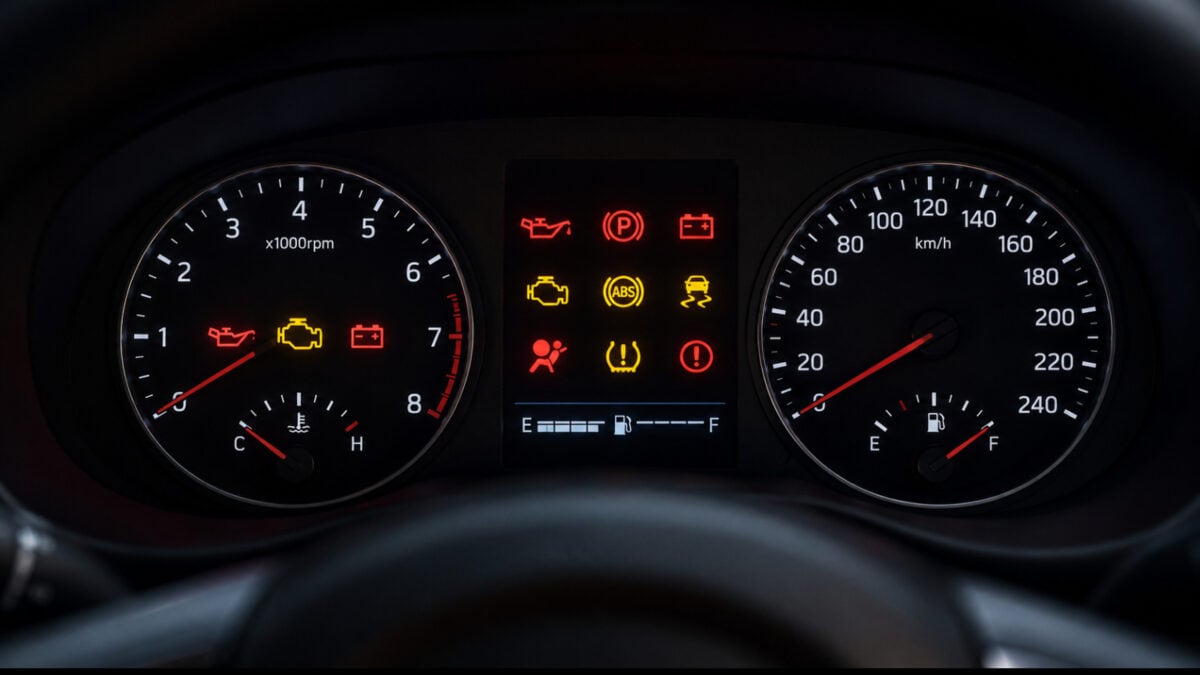
In modern cars, different warning lights installed on the dashboard are a mirror of the health condition of the vehicle. These lights provide instant notification of problems with the engine, brakes, battery, tires and other critical systems. Red lights are worth immediate attention, while yellow/orange lights indicate caution. Due to increase in temperature in summer, there is extra pressure on the engine, cooling system, battery and tires, due to which these lights can come on more often.
Many drivers ignore these, but this can lead to major problems like engine damage, brake failure or sudden breakdown. In summer, it is common for coolant to burn quickly, battery fluid to dry up and tire pressure to increase. Therefore, it is important to understand these lights and take timely action. Let us know what kind of lights come on on the dashboard and what do they mean?
Dashboard lights and what they mean
There are many standard lights on the dashboard of the car. The check engine light (engine outline) indicates a problem with the engine or emissions system. It can be yellow or red in colour. Engine temperature warning (thermometer icon) indicates engine overheating. The battery light (battery symbol) indicates a malfunction of the charging system.
The oil pressure light (oil can) indicates low pressure or lack of engine oil. Tire Pressure Monitoring System (TPMS) lights up when there is too much or less air in a tyre. The ABS light indicates a problem with the anti-lock braking system, while the brake warning indicates a low handbrake or brake fluid. Other lights include low fuel, airbag, traction control etc. Decide priority based on their color. Don't ignore red light.
| icon | name of light | meaning/sign |
|---|---|---|
| 🌡️ | engine temperature warning | This is a sign of engine overheating. |
| 🛢️ | oil pressure light | Engine oil pressure is low or there is lack of oil. |
| 🔋 | battery light | There is a fault in the charging system or alternator. |
| 🛑 / ⚠️ | brake warning | Handbrake engaged or brake fluid low. |
| 👤 / 🪂 | airbag light | There is a malfunction in the airbag system. |
| ⚙️ / ⚠️ | check engine light | There is a problem with the engine or emissions system. |
| (ABS) | abs light | There is a malfunction in the anti-lock braking system. |
| ⚠️ / 🛞 | TPMS | The air pressure in a tire is too low or high. |
| 🚗💨 | traction control | Tire grip is decreasing or there is a malfunction in the system. |
| ⛽ | low fuel | There is very little fuel (petrol/diesel) left in the tank. |
Why be more careful about these lights in summer?
Summer season is challenging for the car. When the outside temperature goes above 40 degrees, the engine temperature increases rapidly, which puts a burden on the cooling system. The temperature light may come on when the coolant level is low or there is a problem with the radiator, ignoring which may cause the head gasket to blow.
Heat has the worst effect on the battery. The fluid evaporates, the chemical reaction accelerates and the life of the battery gets reduced. The possibility of battery failure doubles in summer. The air in the tires gets heated and expands, due to which the pressure increases and there is a risk of blowout. The TPMS light often comes on for this reason. Additionally, heat can affect wiring and sensors, leading to false warnings.
What to do when the light goes out
- Take immediate action: When a red light (like temperature or oil) comes on, stop the vehicle at a safe place, turn off the engine and let it cool.
- Yellow Light: Go to the nearest service centre. Get the check engine light diagnosed with an OBD scanner.
- Preventive Maintenance in Summer: Check coolant, brake fluid, oil regularly. Check tire pressure in the cold morning. Keep battery terminals clean. Use sunshade in parking. Get serviced before a long drive.
Summary: Ignoring dashboard lights can prove costly. Being careful in summer not only increases the lifespan of the vehicle, but accidents can also be avoided. Every driver should read the manual and have basic knowledge. Safe driving can be ensured with timely maintenance.