Kia Syros EV vs Tata Nexon EV: Which electric SUV is right to buy? Know

Kia Syros EV vs Tata Nexon EV: Which electric SUV is right to buy? Know

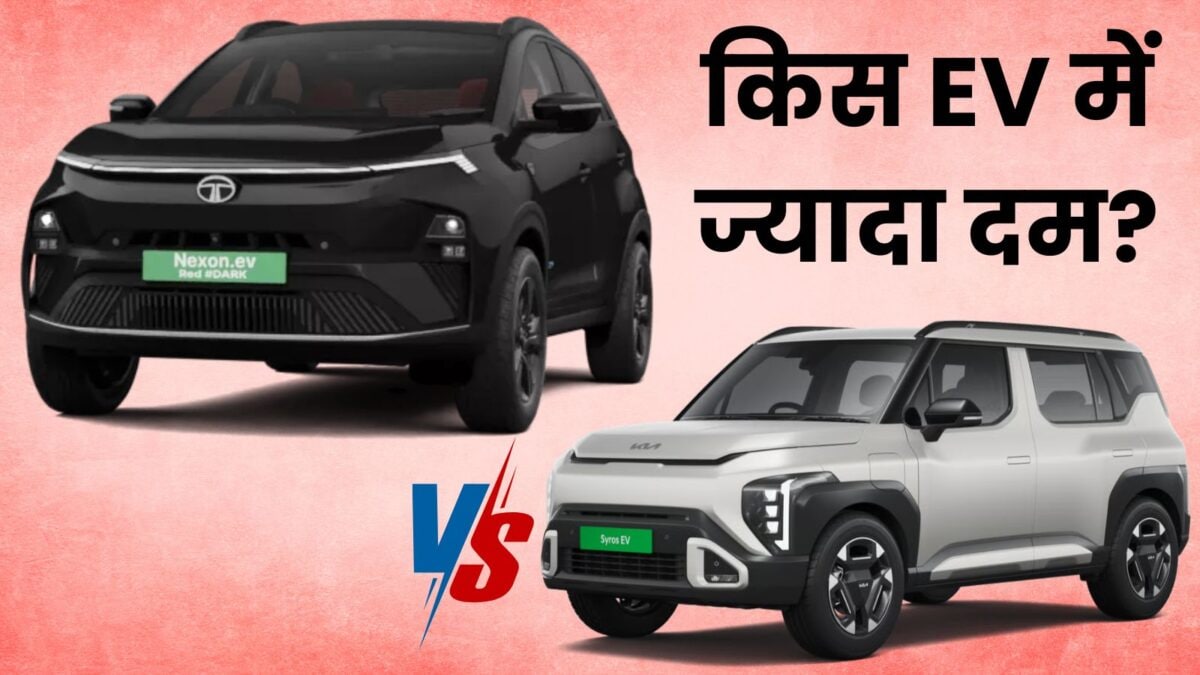
Kia Syros EV vs Tata Nexon EV: There is strong competition in the Indian EV market. The recently launched Kia Syros EV and the popular Tata Nexon EV are giving tough competition to each other in the sub-compact electric SUV segment. Both the cars come with stylish design, modern features and good range, which are suitable for city driving and highway trips.

Ex-showroom price of Cyros EV starts at ₹13.49 lakh and ex-showroom price of Nexon EV starts at ₹12.49 lakh. The Cyros EV comes with two battery options (42 kWh and 51.4 kWh), while the Nexon EV has 30 kWh and 45 kWh packs available. Cyros EV can be made even more affordable with BaaS (Battery as a Service). Let's take a look at the details of both of them, from design to powertrain.

Design and interior

The Kia Syros EV has bold, boxy and EV-specific styling. It can be purchased with LED lights, closed grill and sleek profile. It looks slightly longer and taller than the Nexon EV. The design of Tata Nexon EV is muscular and modern, with connected LED lights and attractive alloy wheels. Both offer a premium look on the road, but the stance of the Cyros EV seems more family-oriented.

The cabin of Cyros EV is spacious and premium. It has a 30-inch panoramic Trinity display (dual 12.3-inch screen), panoramic sunroof, ventilated seats, ambient lighting and Harman Kardon sound system. The Nexon EV also has good space, a 12.3-inch touchscreen, JBL sound and ventilated seats, but the cabin of the Cyros EV feels more luxurious and modern.

Features and safety

Both have wireless charging, 360° camera, wireless Android Auto/Apple CarPlay and connected tech. The Cyros EV comes with Level-2 ADAS, V2L/V2V charging and a larger display in the higher variants. ADAS is also available in the Nexon EV, but the feature list of the Cyros EV seems a bit richer.

The Tata Nexon EV's 5-star BNCAP rating is its strong point, along with 6 airbags, ESP and strong structure. Cyros EV also comes with 5-star safety package, 6 airbags, 360° camera and level-2 ADAS. Both are safe options for the family.

Battery, Motor and Range

The Cyros EV's 51.4 kWh battery pack delivers 526 km range (ARAI) and the 171 hp / 255 Nm motor. The 42 kWh variant produces 135 hp with a range of 443 km. It has 100 kW DC fast charging support.

The Nexon EV's 45 kWh pack delivers 489 km range and 142 hp / 215 Nm (30 kWh: 275 km). Charging is a little slow. Syros EV is ahead in range and power. According to your budget and needs, you can choose any one of these electric SUVs.

Source link

Tata Sierra EV vs Mahindra BE 6: Who is better in price, range, features? Know

Tata Sierra EV vs Mahindra BE 6: Who is better in price, range, features? Know

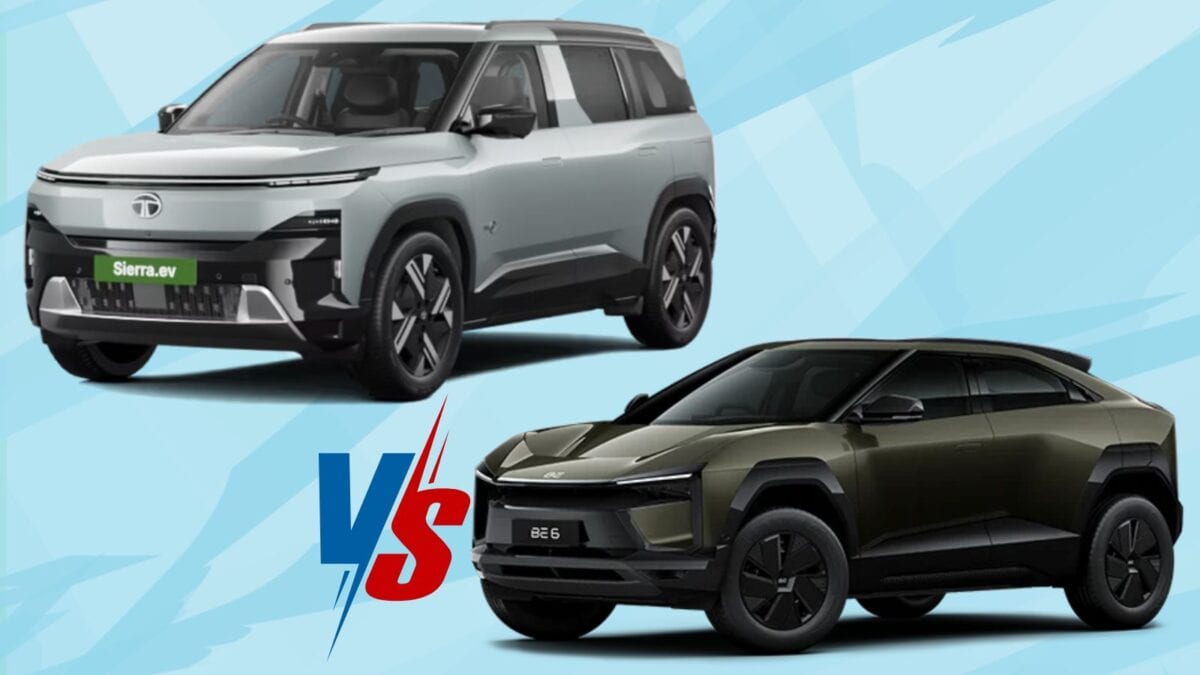
Tata Sierra EV vs Mahindra BE 6: The demand for electric vehicles is increasing rapidly in the Indian auto market. Meanwhile, two strong contenders, Tata Motors' Sierra EV and Mahindra's BE 6 are in direct competition with each other. Both mid-size electric SUVs are coming with premium features, long range and modern design, which will attract families and adventure lovers. Talking about the price, the recently launched Sierra EV can be purchased starting from ₹ 18.79 lakh to ₹ 25.99 lakh (ex-showroom) and BE 6 can be purchased between ₹ 18.90 lakh to ₹ 26.90 lakh.

Sierra EV has been launched as an EV incarnation of the iconic Sierra, with retro-modern looks and Tata's strong EV technology. Whereas BE 6 is part of Mahindra's new Born Electric lineup, which focuses on bold styling and performance. Both the models are 5-seater and are ready for Indian roads. Let us know which of these is going to be a more profitable deal to buy?

Design and interior

The Tata Sierra EV has a combination of the classic Sierra's upright bonnet, split LED headlamps and a blanketed grille. It is 4340 mm long, 1841 mm wide and 1750 mm high, with a dual-tone roof and flush door handles. Mahindra BE 6 is more modern and bold. It is 4371 mm long, 1907 mm wide, 1627 mm high and its ground clearance is 207 mm. The styling of BE 6 looks more sporty and muscular.

The cabin of Sierra EV is premium. It can be bought with triple screen setup (10.25-inch cluster, 12.3-inch infotainment and passenger display), ventilated seats, JBL audio with Dolby Atmos, HUD and panoramic sunroof. The BE 6 also feels luxurious, but the space and material quality of the Sierra EV may seem slightly better. Both have good leg and headroom.

Features and safety

Both have features like wireless charging, dual-zone AC, 360° camera and level-2 ADAS. The Sierra EV has the edge with a powered tailgate and a better sound system, while the BE is stronger on 6 terrain modes and connected tech.

In terms of safety, Sierra EV has 6 airbags, 540° camera and strong structure. BE 6 also comes with good safety features. Both expect a 5-star rating.

Battery, Motor and Range

The Sierra EV is available in two options – 63 kWh (565 km MIDC) and 75 kWh (665 km MIDC, 624 km in AWD). 63 kWh produces 235 bhp and 75 kWh dual-motor gives 300+ bhp and 504 Nm torque. BE 6 has 59 kWh (557 km) and 79 kWh (683 km) batteries, which provide 228-282 bhp and 380 Nm torque. In real-world both can give a range of 450-500 KM. Fast charging is available in both.

Source link

Tata Sierra EV vs Hyundai Creta Electric: Which electric SUV has more power?

Tata Sierra EV vs Hyundai Creta Electric: Which electric SUV has more power?

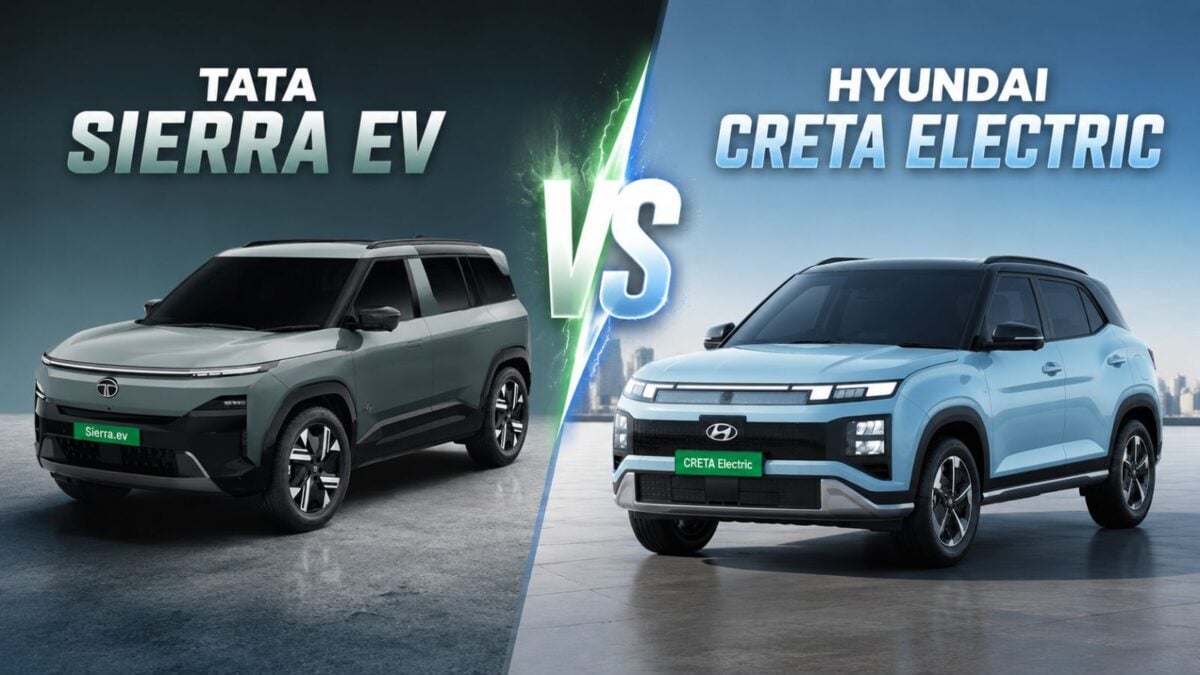
Tata Sierra EV has arrived in the Indian market after a long wait. It also competes with Hyundai Creta Electric in the market. If we look at the prices of both, Tata Sierra EV can be purchased for ₹ 18.79 lakh (Pure 63 kWh RWD) to ₹ 25.99 lakh for the top variant. Whereas, Hyundai Creta Electric starts at ₹ 18.03 lakh (Executive 42 kWh) and the top variant goes up to around ₹ 24.70 lakh.

Both offer a premium EV experience in the compact SUV segment, but the Sierra EV offers more range and power, while the Creta EV emphasizes on brand value, refined drive and value-for-money. Customers can now choose based on space, features and real-world performance. Both these models will further accelerate India's EV transition. Let us know which of these two will be more profitable to buy in terms of design, battery and range?

Design and interior

Tata Sierra EV comes with retro-modern look. Upright bonnet, split LED headlamps, blanked grille, two-tone roof and flush door handles. It looks as strong and adventurous as the petrol/diesel Sierra. The Hyundai Creta Electric is more futuristic and sleek with its Morse-code 'H' logo. The Creta has more mainstream appeal with its EV-specific closed grille and smooth lines, while the Sierra offers bold and unique styling.

Talking about the cabin, Sierra EV gets triple-screen setup (dashboard), panoramic sunroof, ventilated seats, JBL 12-speaker Dolby Atmos sound and premium materials. The Creta Electric comes with dual 10.25-inch screens, panoramic sunroof, ventilated front seats and Bose audio. Both are spacious 5-seaters, but the cabin of the Sierra feels a little more premium and technology-heavy. The interior of Creta is refined and user-friendly.

Features and safety

Both have L2+ ADAS, 360° camera, wireless charging, V2L and connected tech. Sierra has features like extra auto park assist, in-car gaming, 540° camera and boost mode. The Creta has an EV-specific UI, voice sunroof and a good infotainment system. Sierra looks a little ahead in features.

Talking about safety, Tata Sierra EV gets 6 airbags as standard, strong Acti.ev+ platform and advanced ADAS. Creta Electric is also expected to have 6 airbags, ESC, ADAS L2+ and good safety rating. Tata's EVs have generally proven to be strong in structural safety.

Battery, Motor and Range

Tata Sierra EV has 63 kWh (565 km MIDC) or 75 kWh (665 km MIDC, RWD) battery options. An AWD dual-motor setup is also available with the RWD motor (235 bhp). It can reach the speed of 0-100 kmph in just 5.8 seconds. The Creta Electric can be bought with a 42 kWh (420 km) or 51.4 kWh (510 km) battery pack. The Sierra clearly offers better range, power and performance, while the Creta is efficient for daily use.

Source link