EV charging solutions provider Tata Power is powering electric vehicles of fans who are pulling up to the 2023 Cricket World Cup venues in their battery-powered models. The company has listed out its EV charging stations closest to all the World Cup venues across India. Thanks to the company’s extensive EV charging network, cricket fans are being encouraged to use green mobility.
By: HT Auto Desk | Updated on: 22 Oct 2023, 17:33 PM
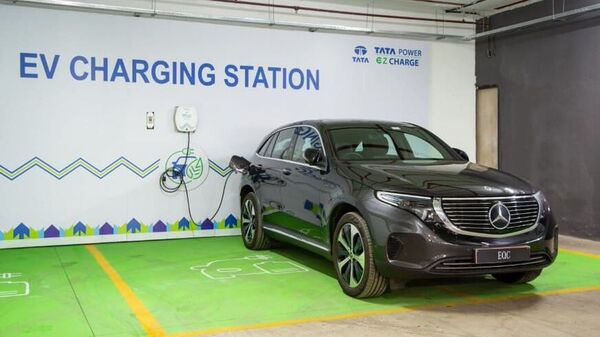
A Mercedes EQC electric SUV charges at a Tata Power EZ EV charging station.
Tata Power’s nation-wide EV charging network is spread over 420 cities with more than 59,000 home chargers, 4,900 public and semi-public charging points, and 430 bus charging stations. These charging solutions are present at diverse and strategic locations across the country, providing easy accessibility to those in need.
ATata Power charging facility is located at The Oberoi Mumbai at Nariman Point, which is just 1.6 kilometres far from the Wankhede Stadium in Mumbai. Similarly, a charging station is located two kilometres away from the Arun Jaitley Stadium in Delhi, 450 m away from the M Chinnaswamy Stadium in Bengaluru and 1.1 kilometres away from the Eden Gardens in Kolkata, 2.5 kilometres away from the M.A. Chidambaram Stadium in Chennai, 1.5 kilometres away from the Rajiv Gandhi International Stadium in Hyderabad, to name a few.
The company says that it has been strategically installing EV charging points at diverse locations across the country to build an extensive and reliable network. All these charging stations are open 24 X 7 and monitored real-time by the Network Operation Centre located in Mumbai.
EV drivers can also navigate to their closest charging point using the EZ Charge app, book their charging slots in advance and pay with the EZ Charge card. “The hassle-free EZ Charge experience will ensure that fans can make the journey to witness their favourite teams play, knowing that their EVs will have the swift and EZ Charge they need,” said the company.
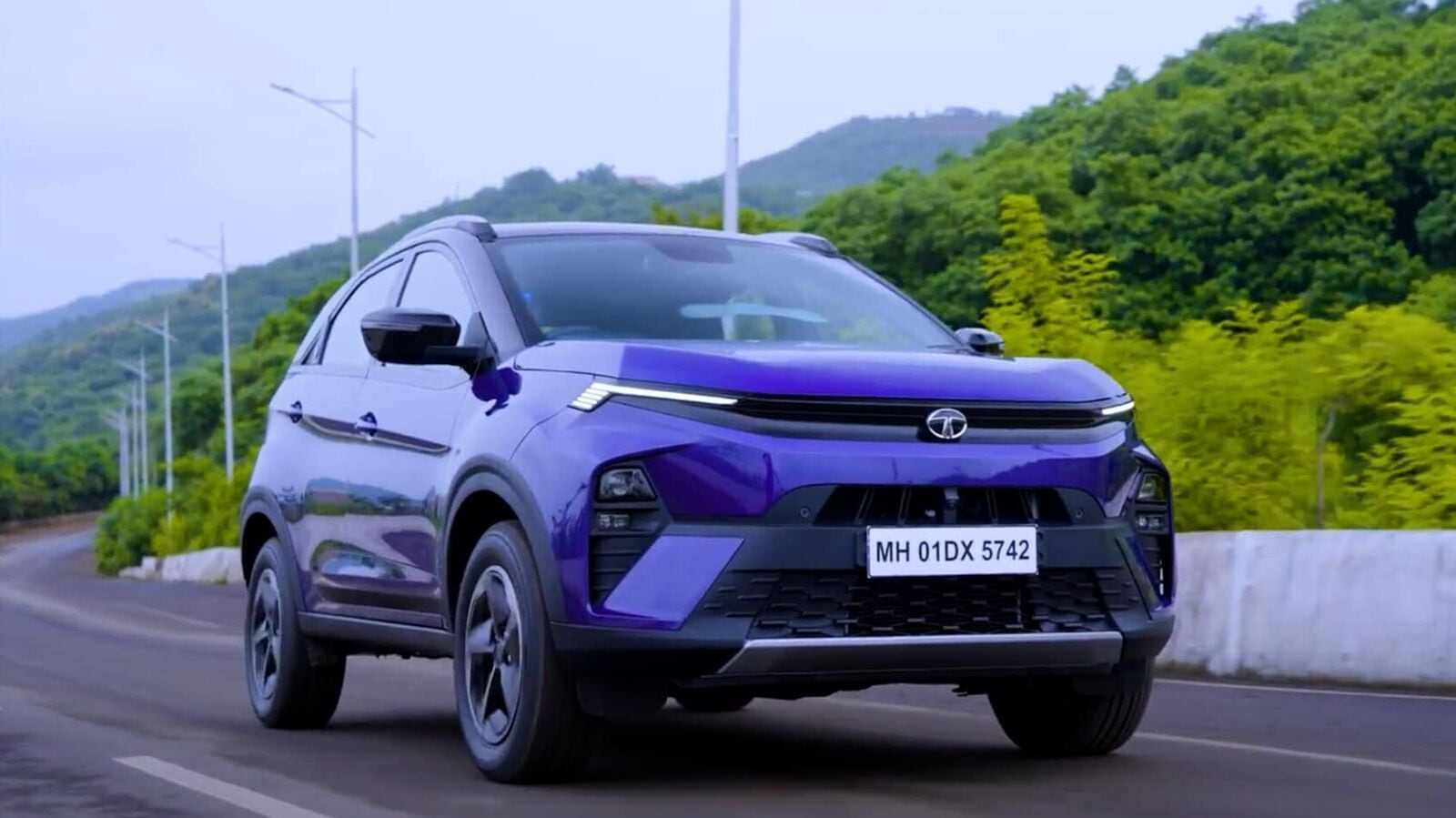
Tata Motors launched the Tata Nexon facelift in India a few weeks ago. The facelifted iteration of the Nexon SUV comes with a wide range of updates on the design front, while on the feature front too, it gets an array of fresh features powered by advanced technologies. With the facelift, Tata Nexon has certainly enhanced its appeal further, as well as the automaker ramped up the compact SUV’s competition against rivals like Maruti Suzuki Brezza.
By: HT Auto Desk | Updated on: 22 Oct 2023, 16:36 PM
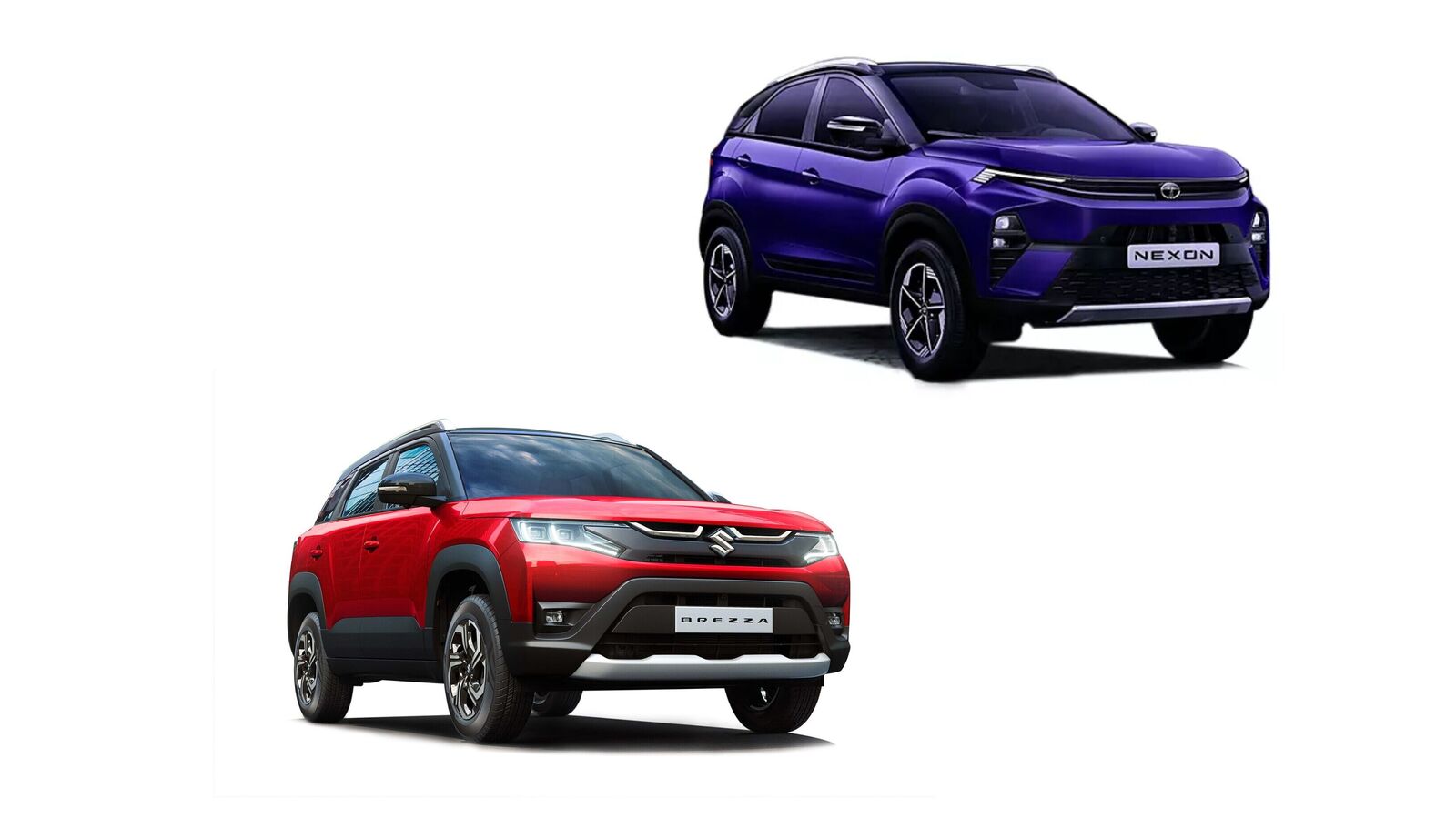
Tata Nexon facelift has been launched with significant design updates and an array of fresh features adding more appeal to the compact SUV, and re-energising its competition against Maruti Suzuki Brezza.
Both the Maruti SuzukiBrezza and the TataNexon sit in a segment which is one of the most competitive categories in the Indian passenger vehicle market. With the rising demand for SUVs and crossovers over the last few years, several automakers have been aiming to grab a sizeable chunk of the Indian SUV segment with their products. However, both Tata Motors and Maruti Suzuki have been able to grab a lot of attention from buyers thanks to their products like Nexon and Brezza respectively.
Here is a comparison between the Tata Nexon facelift and Maruti Suzuki Brezza, based on feature and safety
Specifications Comparison
Tata Nexon
Maruti Suzuki Brezza
Engine
1199.0 to 1497.0 cc
1462.0 cc
Transmission
Manual & Automatic
Manual & Automatic
Mileage
N/A
N/A
Fuel Type
Petrol,Diesel
Petrol,CNG
Tata Nexon facelift vs Maruti Suzuki Brezza: Feature
Both the Tata Nexon facelift and Maruti Suzuki Brezza come equipped with an array of features. The Brezza gets a blend of classic design elements with modern touches. It gets an analogue instrument cluster paired with modern features such as a HUD and a nine-inch touchscreen infotainment system positioned at the centre top of the centre console.
Tata Motors, on the other hand, gets a fully digital instrument cluster, and a large 10.2-inch touchscreen infotainment system. The Nexon facelift carries several design elements from the Tata Curvv concept. However, it appears more inclined towards digitalisation compared to the Maruti Suzuki Brezza.
Watch: Tata Nexon facelift first drive review: Can it set the benchmark higher?
Both the compact SUVs come with features like climate control with rear AC vents, electric sunroof and wireless smartphone mirroring technology for the touchscreen infotainment system. Nexon comes with some additional comfort-focused features including the ventilated and height-adjustable front seats, and an illuminated logo-equipped multifunction steering wheel. The Brezza comes with LED fog lamps and HUD adding more value compared to the Nexon facelift.
Watch: 2022 Maruti Suzuki Brezza facelift: First Drive Review
Tata Nexon facelift vs Maruti Suzuki Brezza: Safety
Both the Tata Nexon facelift and Maruti Suzuki Brezza come equipped with a wide range of safety features including six airbags, ABS with EBD, traction control, ISOFIX child seat mounting points etc. The Nexon pre-facelift version received a five-star safety rating in the Global NCAP crash test. While the facelifted version is yet to undergo such a crash test, expect it to come with a more advanced safety quotient, as Tata Motors has hinted.
On the other hand, the Maruti Suzuki Brezza has not been subjected to either a Global NCAP or Bharat NCAP crash test so far. However, the pre-facelift model had scored a four-star rating on the Global NCAP crash test.
Tata Motors on Thursday announced that the company will officially launch the updated versions of the Safari and Harrier SUVs in the market on October 17. Bookings for both Tata Safari and Harrier had been opened just last week.
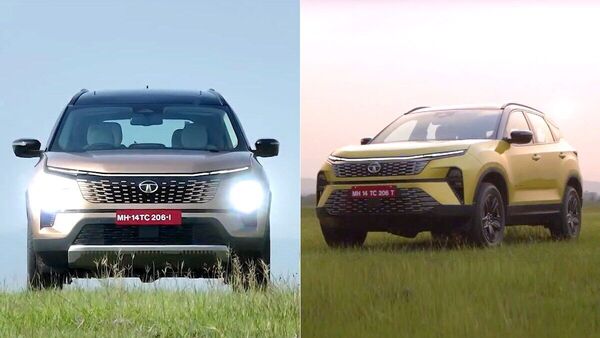
Tata Harrier and Safari SUVs are the flagship models from the company in India.
Both Tata Safari and Harrier are now promising some very significant updates to the styling on the outside while also sporting a number of updates in the cabin and crucial feature updates as well. While the Safari is a three-row vehicle that is positioned more as a family vehicle, the Harrier once again targets a younger-SUV-buying audience.
The Indian car market is being powered by a sustained demand for SUVs and in this space, Tata Motors has managed to create a solid mark with both the Safari and Harrier. While only offered with a diesel engine option which means those interested in a petrol motor remain sidelined, the sales figures of both vehicles remain a firm indication of the respective popularity.
While Harrier was first launched in the market back in 2019 and Tata Motors has since sold over one lakh units of the model, the Safari was introduced in 2021 and approximately 46,000 units has been sold thus far.
What’s new in the updated Tata Safari?
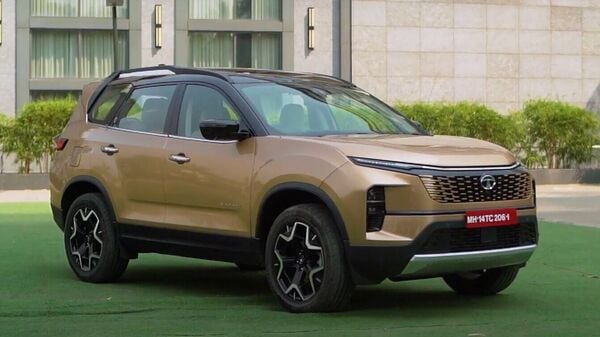
The updated Tata Safari stands on 19-inch alloy wheels and comes in multiple personas.
The facelift Tata Safari has a completely reworked front face which is highlighted by a new grille and updated casing for the head lights and fog lights. Stretching across the nose is an elongated DRL light bar which comes with ‘Welcome’ and ‘Goodbye’ signature illumination. The stretched light bar also makes its way to the rear of the SUV while the alloy design has been updated as well. In the cabin, the Tata Safari gets a new 12.3-inch infotainment screen with JBL Sound Modes, a 10-inch all-digital driver display, support for Amazon Alexa and Google Home – apart from native Tata voice command integration, dual-zone climate control, mood lighting, air purification system, panoramic sunroof, wireless phone charging, and more.
What’s new in the updated Tata Harrier?
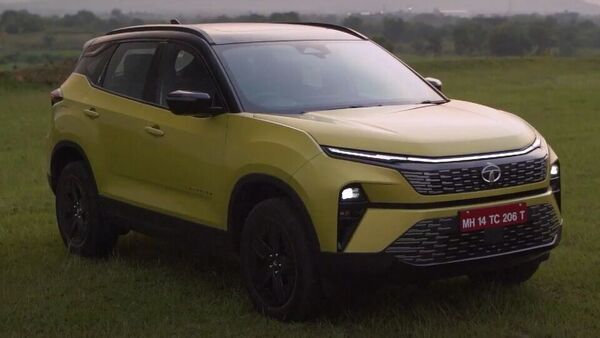
The updated Tata Harrier is offered in new and bolder body shades.
The facelift Harrier also sports a much fresher look and is now claiming to be sportier rather than all-out muscular. It gets an updated grille on the face and the an updated vertical housing for the head lights and fog lights. It too sports the same stretched DRL bar on the face as the Safari, and the same stretched tail light LED bar. The alloy design has been changed too. In the cabin, the feature list is similar to what is also offered on the updated Safari.
Tata Safari and Tata Harrier: Key specifications
Tata Motors has not brought any changes to the mechanics of both Safari and Harrier. The capable 2.0-litre diesel motor continues to do duty and is paired with both automatic and six-speed manual stick.
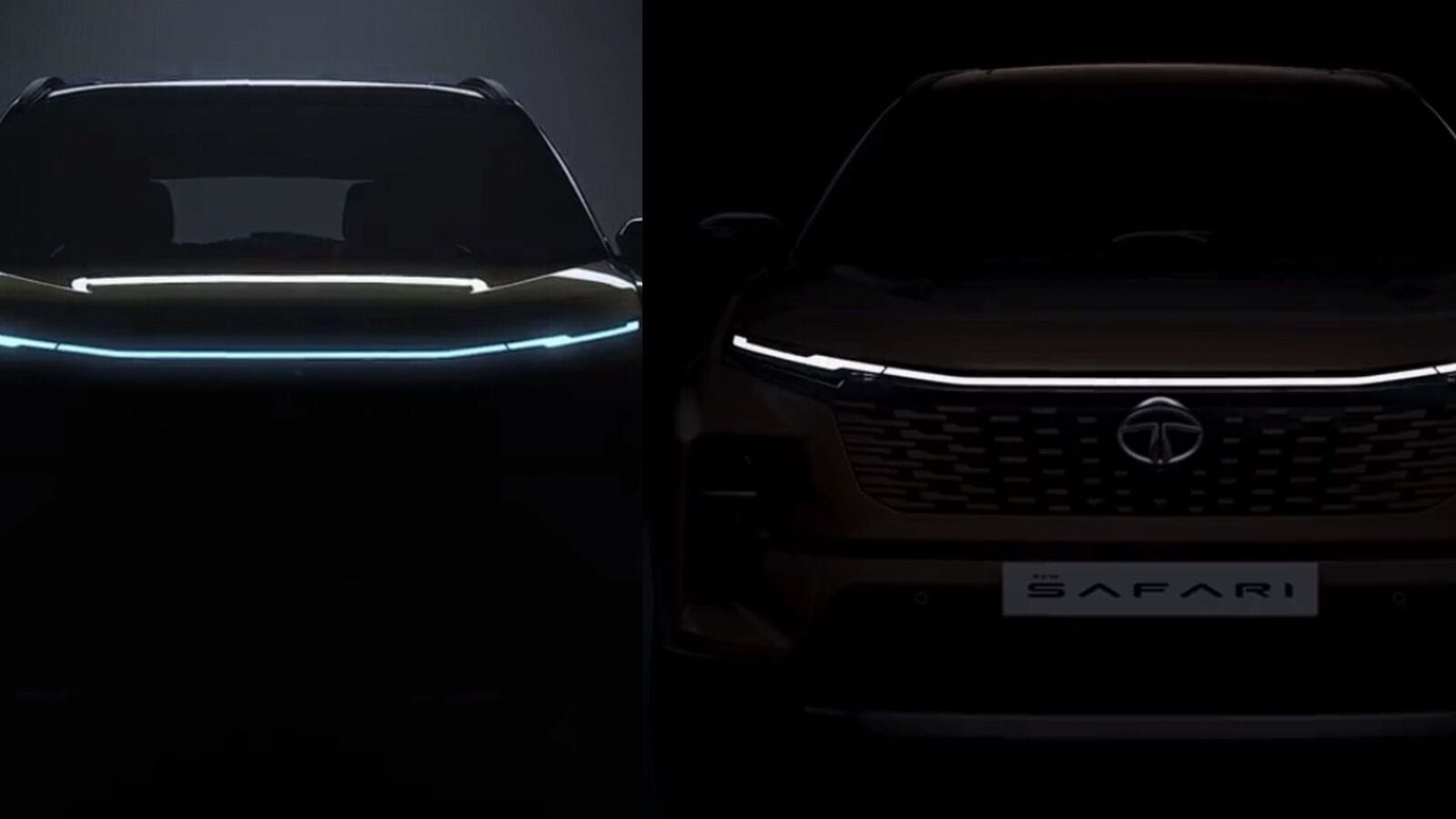
Tata Motors has officially teased the facelifted version of the Harrier and Safari for the very first time. The manufacturer will start accepting bookings of the Harrier and Safari facelift on 6th October. The updated SUVs will come with a revamped design language that will look like Curvv. The interiors will also be updated and there is a possibility that Tata might also introduce the petrol engine finally.
By: Paarth Khatri | Updated on: 03 Oct 2023, 18:17 PM
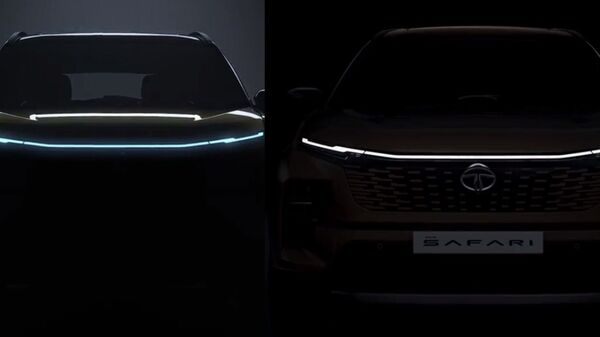
The Harrier and Safari will now come with a connected lightbar in the front.
Tata will continue to sell the Harrier and Safari with a Fiat-sourced 2.0-litre diesel engine that produces 168 bhp and 350 Nm of peak torque. It comes mated to a 6-speed manual gearbox or a 6-speed torque converter automatic transmission. There is a possibility that Tata will also introduce its new 1.5-litre petrol engine that uses direct-injection technology. It puts out 168 bhp and 280 Nm of peak torque.
The updated design language means that up-front there will be a split headlamp setup with the LED Daytime Running Lamp connected via a light bar. The main headlamp housing is new and is now positioned vertically. The grille on the Safari does look more up-market than the one found on the Harrier. It will probably be a big distinguishing factor between both the SUVs. On the sides, there will be a new set of alloy wheels. At the rear, it is expected that Tata will carry the same tail lamp setup but now there will be a connected lightbar.
The interior will also get a new steering wheel that has a digital Tata logo. There is a possibility that the manufacturer will bring in the new infotainment system and the digital instrument cluster from the Nexon to the Harrier and Safari. The HVAC controls will also be updated that debuted on the Nexon. Apart from this, the dashboard can be redesigned as well.
Tata Motors on Sunday announced in a regulatory filing that the automaker registered a five per cent sales slump in September in the passenger vehicle segment. The homegrown automobile manufacturer claims to have sold a total of 45,317 cars last month, down five per cent from 47,864 units registered in the same month a year ago.
By: HT Auto Desk | Updated on: 01 Oct 2023, 17:37 PM
Tata Motors is expecting to see sales growth during the festive season thanks to the new product launches.
Domestic sales of Tata Motors’ passenger vehicle sales in September were down by six per cent at 44,809 units. In comparison, the auto manufacturer sold 47,654 units in the same month last year. Export numbers in the segment have jumped 142 per cent to 508 units last month, up from 210 units registered in September last year.
Watch: 2023 Tata Nexon EV facelift first drive review: Best-seller gets even better?
Total passenger vehicle sales in the second quarter of the current financial year too were down by three per cent to 138,939 units, as compared to 142,851 units sold between July and September 2023. Domestic sales of Tata passenger vehicles were down by 2.7 per cent to 137,950 units in the same period, as compared to 142,325 units recorded in the corresponding period of last fiscal.
While the overall passenger vehicle sales slumped marginally for the homegrown automobile manufacturer, sales of electric vehicles have recorded impressive growth. Tata Motors has registered a whopping 57 per cent growth in the electric vehicle segment with its models like the Nexon EV, Tigor EV and Tiago EV. The automaker claims to have sold 6,050 electric cars last month, up from 3,864 EVs sold in the same month a year ago. In the second quarter of the current financial year, Tata Motors sold 18,615 electric cars, up 55 per cent from 12,041 units sold in the same period a year ago.
Watch: Tata Nexon facelift first drive review: Can it set the benchmark higher?
Speaking about the sales performance, Shailesh Chandra, Managing Director of Tata Motors Passenger Vehicles Ltd. and Tata Passenger Electric Mobility Ltd., said that the PV sales remained strong in the second quarter of this financial year thanks to the new product launches. “Passenger vehicle sales remained strong in Q2 FY24 driven by new launches and pre-festive offtakes. Tata Motors posted quarterly sales of 138,939 cars and SUVs in Q2 FY24, 2.7 per cent below our highest-ever quarter, Q2 FY23. Our EV business continues its strong momentum and has posted growth of about 55 per cent year-on-year. In Q2 FY24, we extended our innovative twin-cylinder CNG offering to Tiago, Tigor and Punch, which have been received well by the market. This quarter also saw the launch of the new generation Nexon and Nexon.ev, which have received an overwhelming market response. We had proactively reduced supplies of the outgoing models this quarter to enable a smooth transition to the new generation models,” he said further adding that with the deliveries commencing of its new products, Tata Motors is expecting higher sales volumes in the festive season and beyond.
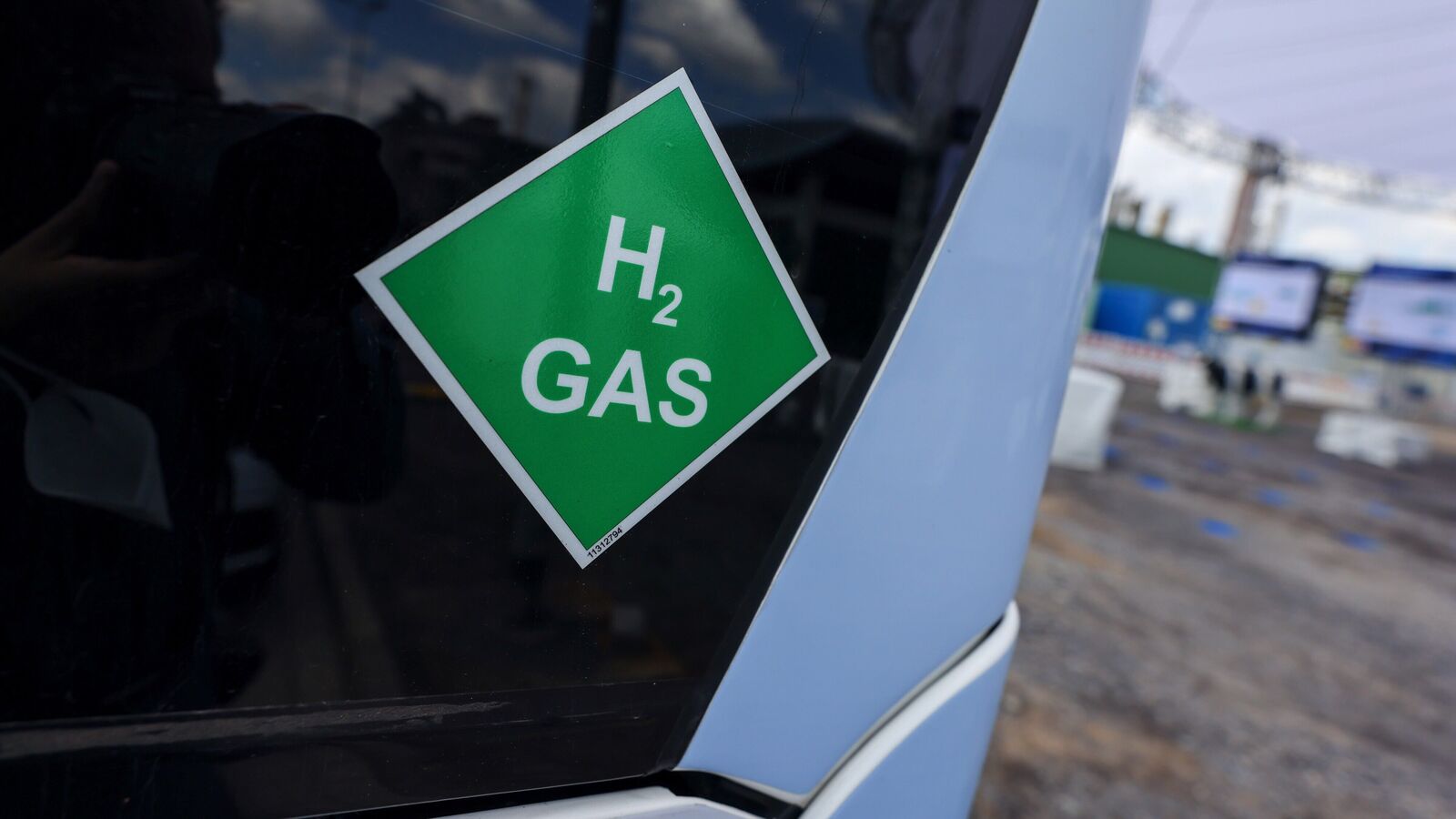
Under this initiative, Indian Oil Corporation (IOCL) has embarked on a meticulously designed program to conduct operational trials of 15 Fuel Cell buses powered by Green hydrogen.
These trials will encompass designated routes in Delhi, Haryana, and Uttar Pradesh. The project’s inaugural moment saw the launch of the first set of two fuel cell buses from India Gate. This program is the first of its kind in India to dispense green hydrogen at 350 bar pressure for operating fuel cell buses.
Furthermore, Indian Oil has established a cutting-edge dispensing facility at its research and development (R&D) campus in Faridabad. This facility can refuel green hydrogen produced through electrolysis using solar photovoltaic panels.
According to SM Vaidya, Chairman of Indian Oil, the launch of these two buses signifies the commencement of a comprehensive assessment of the performance and durability of this new technology. The trial period, spanning more than 3 lakh kilometres across all buses, will generate vital data that will serve as a national repository.
This repository is expected to play a pivotal role in shaping the future of zero-emission mobility in India, powered by green hydrogen. In his address, Hardeep Singh Puri emphasized, the Indian government’s commitment to clean and green energy. Hardeep Singh Puri said, “The Future of our transport will be on green hydrogen”.
BMW is among the automakers who have been working on hydrogen fuel cell technology over the last few years, as hydrogen could be a potential green and clean fuel for future cars.
India’s endeavours in the realm of low-carbon development, including emerging fuels like hydrogen and biofuels, are central to these efforts. Puri said, “India has one of the largest synchronous grids in the world, capable of handling intermittent renewable energy and we have achieved ‘One Nation-One Grid-One Frequency’.”
India, with its extensive synchronous grid capable of handling intermittent renewable energy, is poised to be a global champion in hydrogen production and exports. “We have recently witnessed the launch of the world’s first Bharat Stage 6 (BS 6) (Stage II) Electrified Flex Fuel vehicle prototype that encompasses both the flex fuel engine as well as an electric powertrain that offers higher use of ethanol combined with better fuel efficiencies. With Industry and Government collaboration, India is on its way to becoming a global hub for cleaner technologies and achieving self-reliance in energy soon”, Puri said.
Hydrogen, hailed as the fuel of the future, holds immense potential in helping India achieve its decarbonization targets. The global demand for hydrogen is projected to surge four to seven times by 2050, reaching 500-800 million tonnes. Domestically, demand is set to quadruple, from the current 6 million tonnes to 25-28 million tonnes by 2050.
The Ministry of Petroleum and Natural Gas is actively driving initiatives related to green hydrogen, including production and utilization in refineries, hydrogen blending in natural gas pipelines, localization of electrolyzer-based technologies, and promoting bio-pathways for green hydrogen production.
Fuel cells, the heart of these green hydrogen-powered buses, employ hydrogen and air to generate electricity for propulsion.
These buses are environmentally friendly, with the only byproduct being water, offering a stark contrast to conventional buses running on diesel and petrol.
Fuel cells are also highly efficient compared to internal combustion engines. Fuel cells boast an electrical efficiency of 55-60 per cent, a notable improvement over the thermal efficiency of 25 per cent for conventional internal combustion engines.
These buses are set to achieve a remarkable fuel economy of around 12 km per kilogram of hydrogen, compared to 2.5-3 km per litre for diesel buses.
Hardeep Singh Puri commended IOCL and Tata Motors for their collaborative efforts in developing indigenous solutions for fuel cells and hydrogen infrastructure for heavy-duty buses in passenger transport applications.
Puri stated, “I would like to congratulate the IOCL team for undertaking this collaborative approach along with Tata Motors for the development of indigenous solutions pertaining to Fuel Cell and hydrogen infrastructure in the country, for heavy-duty buses for passenger transport application. I am sure that the ecosystem developed through efforts like these can integrate a larger economy with the energy sector”.
He stressed that this green hydrogen-powered bus initiative could potentially transform India into a net exporter of clean hydrogen energy and set a global precedent in technology transfer and green hydrogen production.
The initiative has plans to soon operate an additional 15 fuel cell buses in the National Capital Region (NCR). Minister Puri expressed his commitment to closely monitoring this project, highlighting its importance on the national stage and its potential to revolutionize city transport in India.
India’s foray into green hydrogen technology signifies a significant stride toward achieving energy self-reliance and global leadership in the realm of sustainable energy solutions.
Tata Motors has tasted pretty good success with the Nexon EV. The pure electric version of the compact SUV was launched as the first-ever electric car from the homegrown brand. Since its launch, the Nexon EV has helped the automaker to grab around 80 per cent of the Indian electric car market. The facelifted iteration of the car aims to further strengthen the company’s grip in the segment.
Watch: 2023 Tata Nexon EV facelift first drive review: Best-seller gets even better?
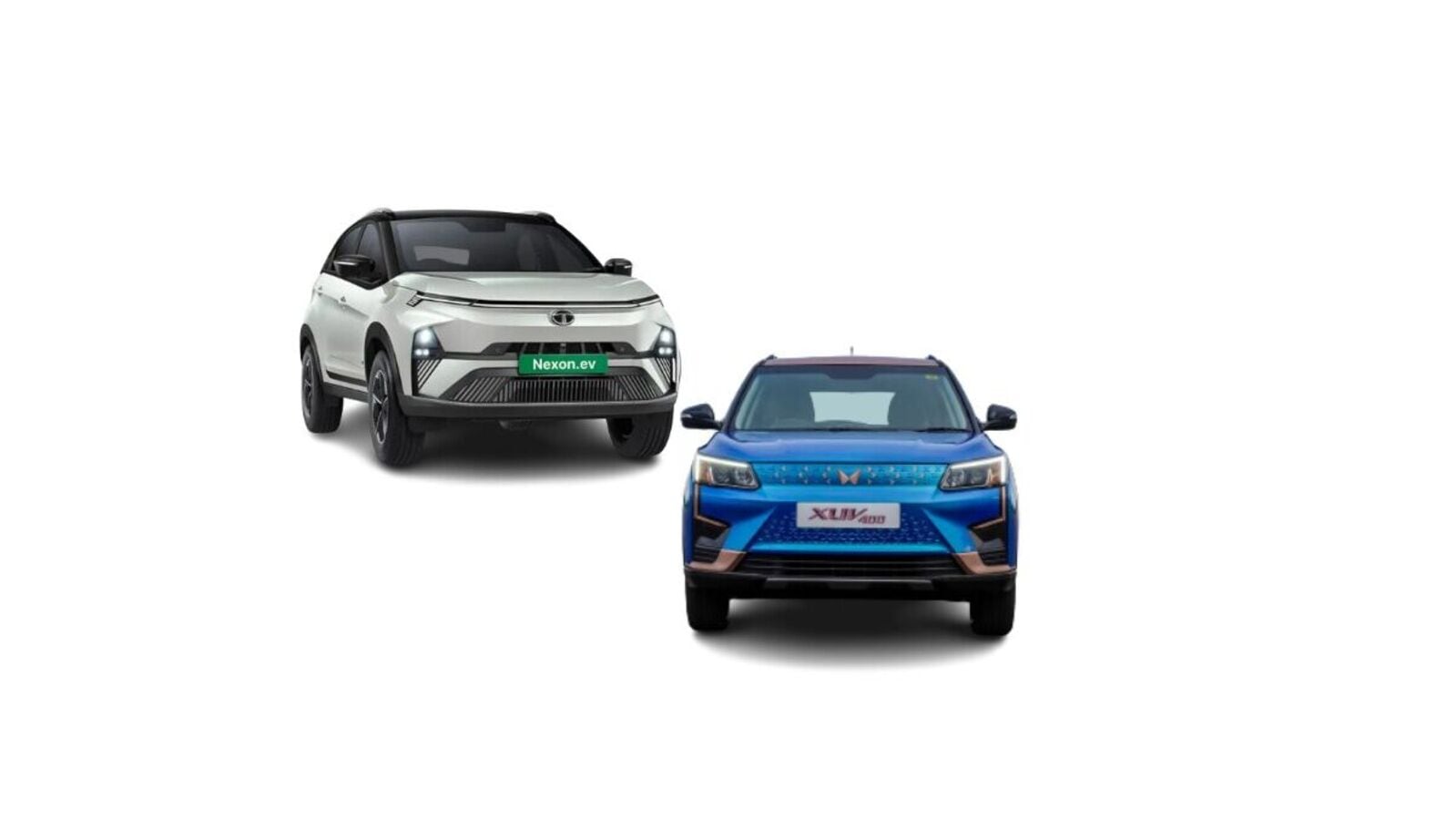
Here is a price comparison between the 2023 Tata Nexon Ev facelift and its closest competitor Mahindra XUV400.
2023 Tata Nexon EV facelift vs Mahindra XUV400: Price
The 2023 Tata Nexon EV facelift is priced between ₹14.74 lakh and ₹19.94 lakh (ex-showroom). Available in six trim options, the SUV comes available in two different powertrain variants: Long Range and Mid Range. The Nexon Ev facelift trims are Creative Plus, Fearless, Fearless Plus, Fearless Plus S, Empowered and Empowered Plus.
On the other hand, the Mahindra XUV400 comes available in trim options: EC Standard, EC Fast and EL (Long Range). This electric compact SUV is available at a pricing range of ₹15.99 lakh and ₹19.19 lakh (ex-showroom).
The all-new 2023 Tata Nexon EV facelift clearly comes undercutting its closest rival Mahindra XUV400 EV, as the base variant of the Nexon EV facelift, which is the Creative Plus is priced lower than the Mahindra XUV400 EV’s base variant EC Standard that comes priced at ₹15.99 lakh (ex-showroom).
Maruti Suzuki plans to invest a whopping ₹45,000 crore to double its annual production capacity in the next eight years, reported PTI. Maruti Suzuki India’s chairman RC Bhargava reportedly said on Tuesday that the automaker plans to produce 40 lakh cars annually by 2031 with the influx of investment it is making to double production capacity. This comes at a juncture when the Indian auto industry like the rest of the global automobile industry is witnessing the introduction of new technologies and Maruti Suzuki is aiming to take a lead in that.
By: HT Auto Desk | Updated on: 29 Aug 2023, 15:25 PM
Besides focusing on doubling production capacity to 40 lakh cars annually by 2031, Maruti Suzuki is also emphasising on development of new technology for its vehicle fleet.
Despite being the largest car brand in India, Maruti Suzuki is yet to penetrate the EV segment, while Tata Motors, Hyundai, MG Motors and Mahindra along with several luxury car brands have already launched their respective products in the country’s electric car segment. Speaking about this, Bhargava accepted that the company is late in the segment but believes that it will not impact the brand by damaging its ability to get an adequate market share in the space.
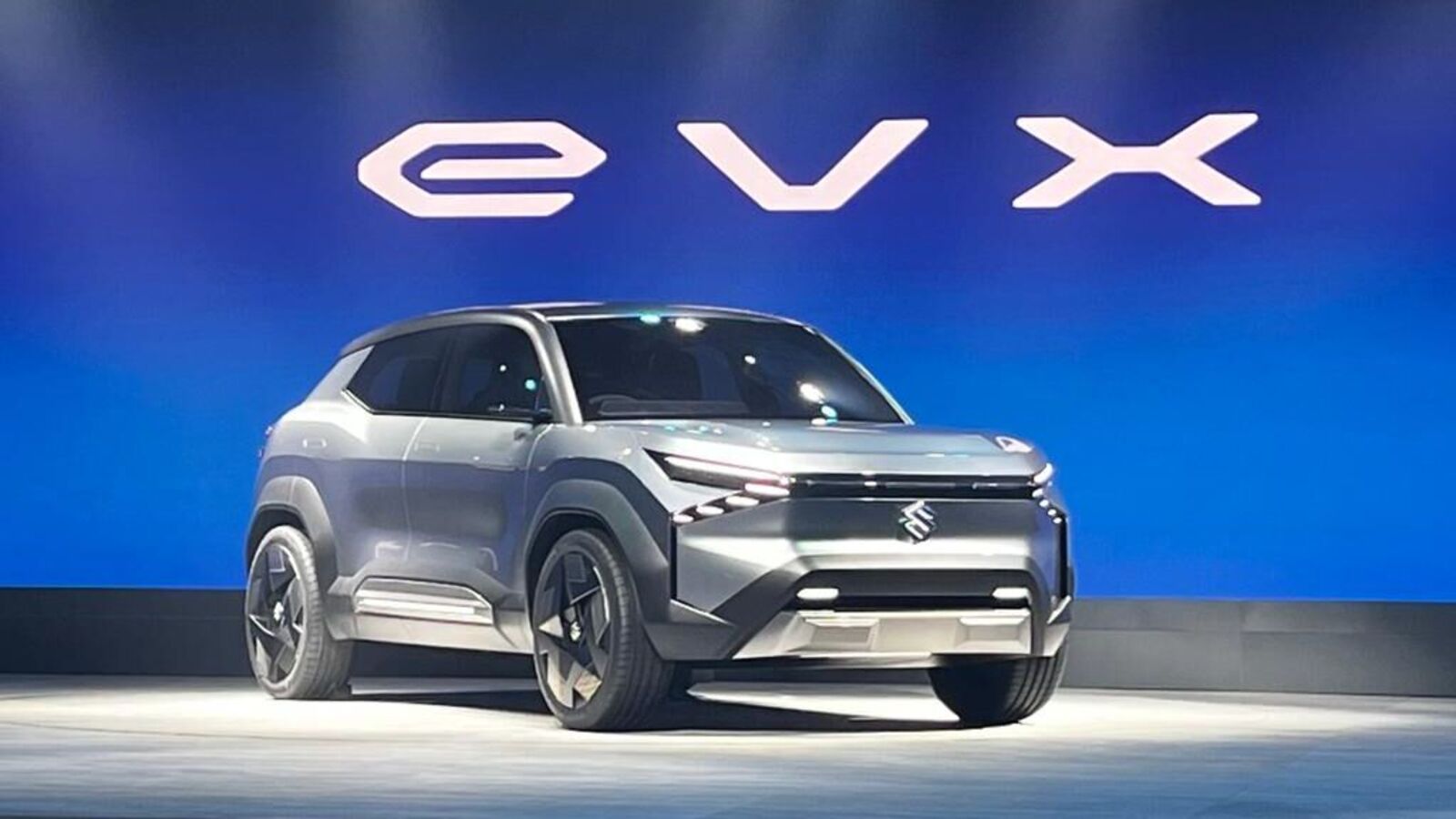
Watch: Maruti unveiled eVX EV Concept at Auto Expo 2023
He also said that Maruti Suzuki aims to launch six electric cars by the decade’s end, which would give it a strong position in the market. “Yes, we are behind some companies in launching EV but that does not mean that we are late in the market or that when we are coming in 2024-25, we will have in any way damaged our ability to get an adequate market share,” he added.
As Maruti Suzuki is thriving towards greener and cleaner powertrain technology, it will increasingly focus on a wide range of new technologies including electric vehicles, hybrids, CNG, ethanol and compressed biogas in the coming days, said Bhargava. Speaking about these technologies, he also said that it is difficult to predict what will happen in the next eight to ten years.
Bhargava also said that Maruti Suzuki has reached the 20 lakh units annual production and sales milestone. Now, it is aiming to double that figure by reaching the 40 lakh units annual production and sales milestone, he said. The plan will be part of the automaker’s ‘Maruti 3.0’ strategy, under which the company is targeting to add another 20 lakh units of production capacity with about 28 different car models in the market by FY 2030-31.
The Maruti Suzuki chairman said that the era ahead is going to be a very uncertain and challenging one. “The era before us is going to be a very uncertain era, a very challenging era. Putting up these two million cars itself will cost us something close to ₹45,000 crore. It depends how inflation goes but at the moment we estimate the cost about ₹45,000 crore for two million cars,” Bhargava said.
Powering the Punch iCNG is a 1.2-litre, three-cylinder engine that produces 84.82 bhp of max power and a peak torque output of 113 Nm while running on petrol. On CNG, the power output falls to 75.94 bhp whereas the torque output decreases to 97 Nm. The engine comes mated to a 5-speed manual gearbox or a 5-speed AMT. However, the CNG powertrain only gets a 5-speed AMT.
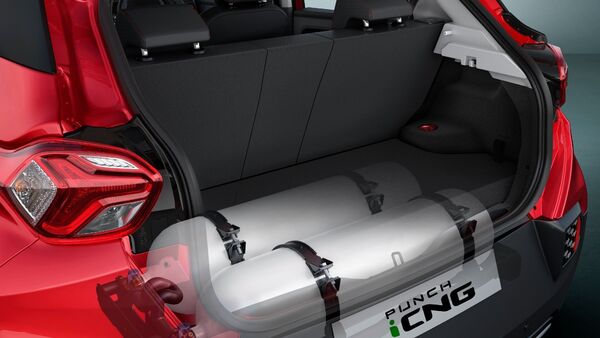
One of the biggest distinguishing features of Tata’s iCNG range is the use of dual-cylinder tech. Instead of using one large CNG cylinder, Tata Motors is using two small 30-litre cylinders which means the total capacity is rated for 60 litres. The cylinders are placed in the floor well of the boot. This means that there is still a usable boot space available for the occupants to store their luggage and other stuff.
Being a Tata, the CNG vehicles also come with several safety features. It gets a leak detection feature and Tata is using high-quality stainless steel and rust and corrosion-resistant materials. There is also thermal incident protection in which the CNG supply to the engine is cut off automatically and the gas in the cylinder is released into the atmosphere automatically. There is also a microswitch that makes sure that the car does not start if the fuel lid is open.
Cosmetically, the brand has not made any changes apart from the new iCNG badging. The cabin gets a CNG button that is used to switch the fuel supply from CNG to petrol or vice versa. The instrument cluster is updated to show a CNG gauge.
The Tata Punch CNG will come with twin-cylinder technology that brings two 30-litre tanks under the boot space, for a more practical storage solution
Commenting on the launch, Mr. Vinay Pant, Head-Marketing, Tata Motors Passenger Vehicles Ltd., said: “Building further on our success with the Altroz iCNG, and to make the CNG segment even more hotly contested, we are excited to introduce the twin cylinder technology in not just one but three products today – the Tiago, Tigor and the much awaited and loved sub compact SUV, the Tata Punch. Since its debut at the Auto Expo 2023, the Punch iCNG has been one of the most awaited products in this segment. With its uncompromised boot space and high end feature upgrades, the Punch iCNG demonstrates the go anywhere attitude of an SUV, which is engineered to meet the constantly evolving requirements of customers, who are tech savvy and demand best in class features along with an environment friendly and economical product. I am confident that these introductions put together will make our CNG line up appealing, holistic and stronger than ever.”
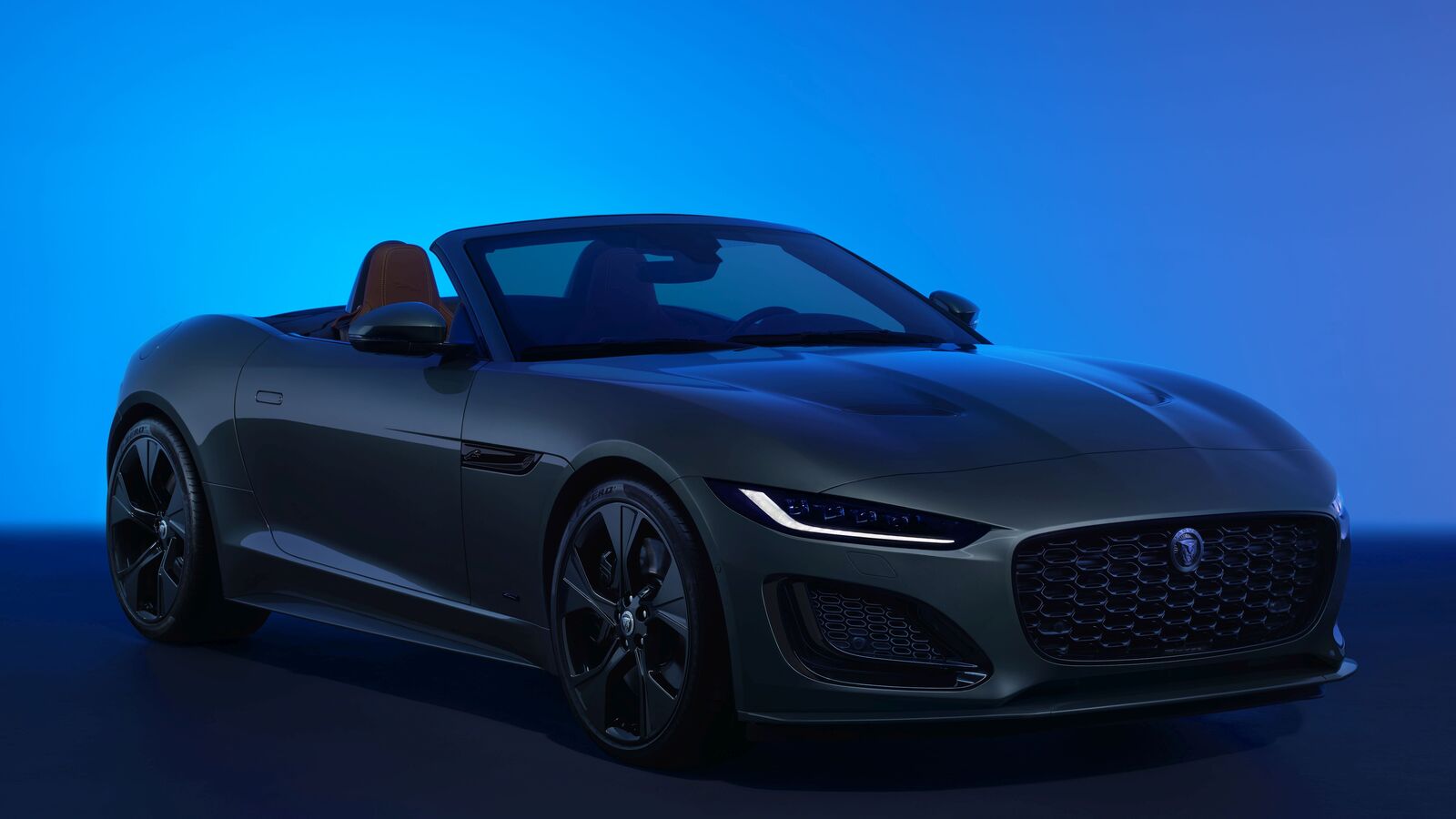
Tata Motors-owned British luxury car brand Jaguar aims to bounce back from mediocrity. To achieve that target, the automaker plans to tap rich American buyers with polarizing designs. Auto News has reported that the automaker is targeting 20 million millionaires in the US who could be its potential customers in an attempt to salvage the brand. Jaguar Land Rover CEO Adrian Mardell believes that chasing volume has impacted the brand negatively and in a revised strategy, the company aims to change that situation.
The report has quoted Mardell saying that Jaguar will aim for a lower volume and higher price positioning, which will be the right thing to do for the company. This would make the Jaguar cars more elusively premium, raising the bar. He pointed to the fact that during the 1990s, Jaguar was highly successful in the North American market, when its cars were more expensive and targeted a wealthier demographic than the brand has been chasing for the last 20 years.
The JLR chief further conceded that the automaker’s strategy to chase volume during the previous two decades, first under Ford and then Tata Motors, has resulted in it losing touch with the wealthy car buyer community. He also admitted that it is a lot of work to build that brand equity. In order to bring back the luxury glory to the brand, Jaguar is focusing on fearless designs, which would be conceived to shock and reengage wealthy buyers.
The auto company’s design chief Gerry McGovern said that the brand will not worry about being loved by everybody. “What we will not worry about is being loved by everybody, because that is the kiss of death,” he said further adding that this is what has put Jaguar in the situation it is in today, which is with no equity whatsoever.