Honda 2Wheelers, the second largest two-wheeler manufacturer in India after Hero MotoCorp is readying a new motorcycle, which is possibly going to be a model in the 160-180 cc segment and will challenge Bajaj Pulsar models. The motorcycle is ready to be introduced to the market on August 2. The Japanese two-wheeler brand has already teased the motorcycle through a social media post giving us a clue of what it could bring.
By: HT Auto Desk | Updated on: 31 Jul 2023, 15:40 PM
The upcoming Honda two-wheeler is expected to be a new premium commuter from the company.
The upcoming Honda motorcycle slated to debut on August 2 gets a chunky muscular fuel tank and fuel tank extensions, which show the model’s sporty character. The LED taillight makes sure the bike will come with a premium feel. Expect it to feature a sharp-looking LED headlamp as well, in line with several other Honda motorcycles in the same segment. That said, the turn indicators would come carrying conventional bulbs. Expect the motorcycle to come with a split seat setup, which will enhance its practicality.
Expect it to be based on the Honda Unicorn, which has been one of the successful products from the brand. Powering the motorcycle would be the same engine as the Honda Unicorn. The 162 cc single-cylinder air-cooled motor would be tuned differently though. Expect it to churn out slightly higher power and torque than the Unicorn. Upon launch, the new Honda motorcycle would challenge the Bajaj Pulsar 150, Yamaha FZ-Fi and the TVS Apache RTR 160.
In the 160 cc segment, Honda Unicorn has been raking in numbers. While the auto company introduced the XBlade too, it has not been able to set the sales chart on fire ever. Considering that and the fact that the 160 cc has become one of the most in-demand segments for consumers, the new model looks like a legitimate effort from the company to make a dent in the category.
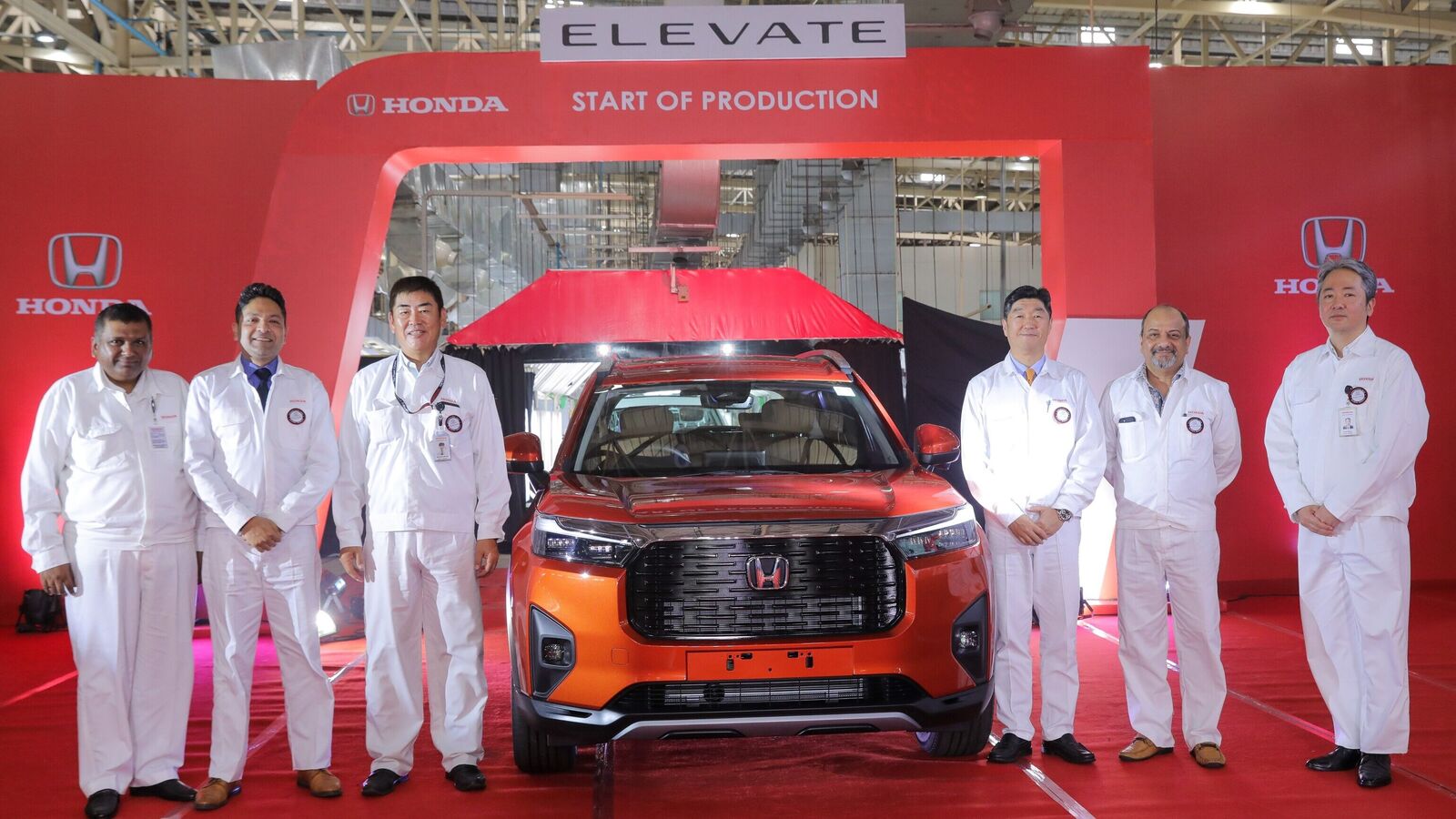
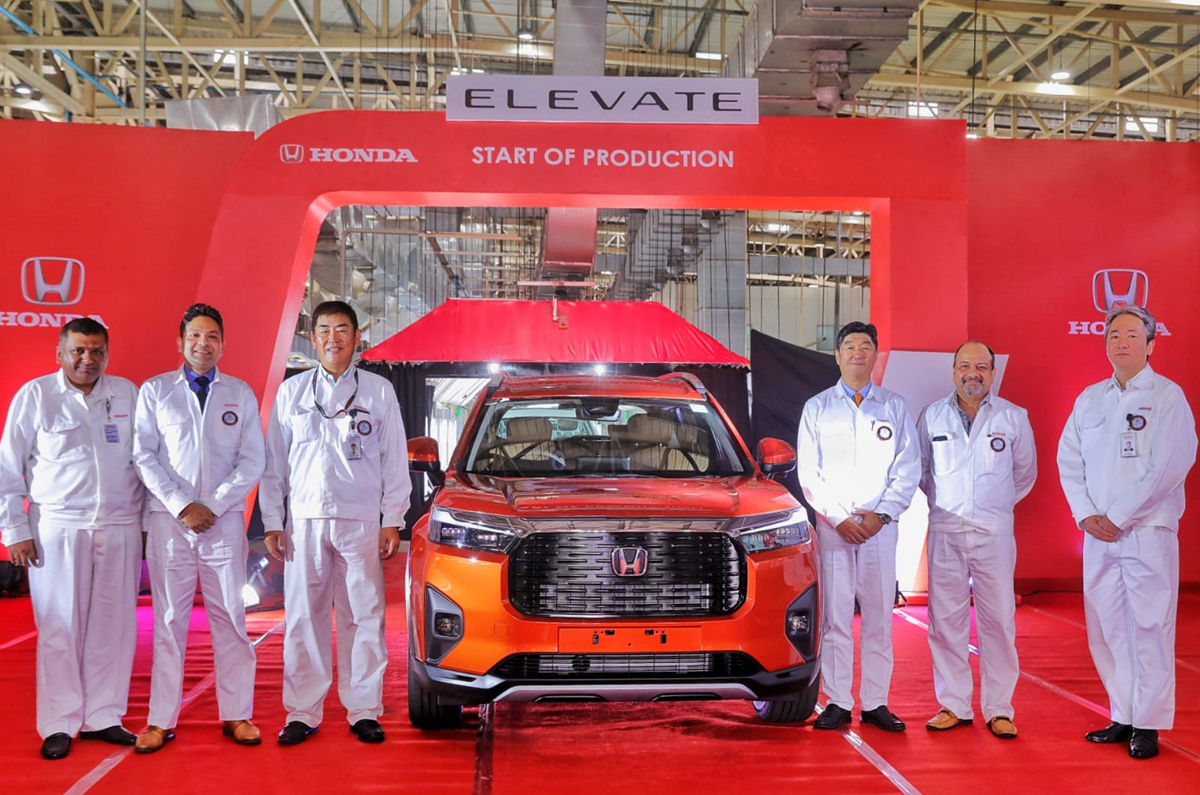
Honda Cars India (HCIL) has announced that it has started production of the new midsize SUV Elevate at its manufacturing facility in Tapukara in Rajasthan. The automaker has also said that the Honda Elevate comes with more than 90 per cent localisation, which would help it to price the SUV aggressively when the car goes on sale across the country in September this year, right ahead of the festive season.
By: HT Auto Desk | Updated on: 31 Jul 2023, 15:03 PM
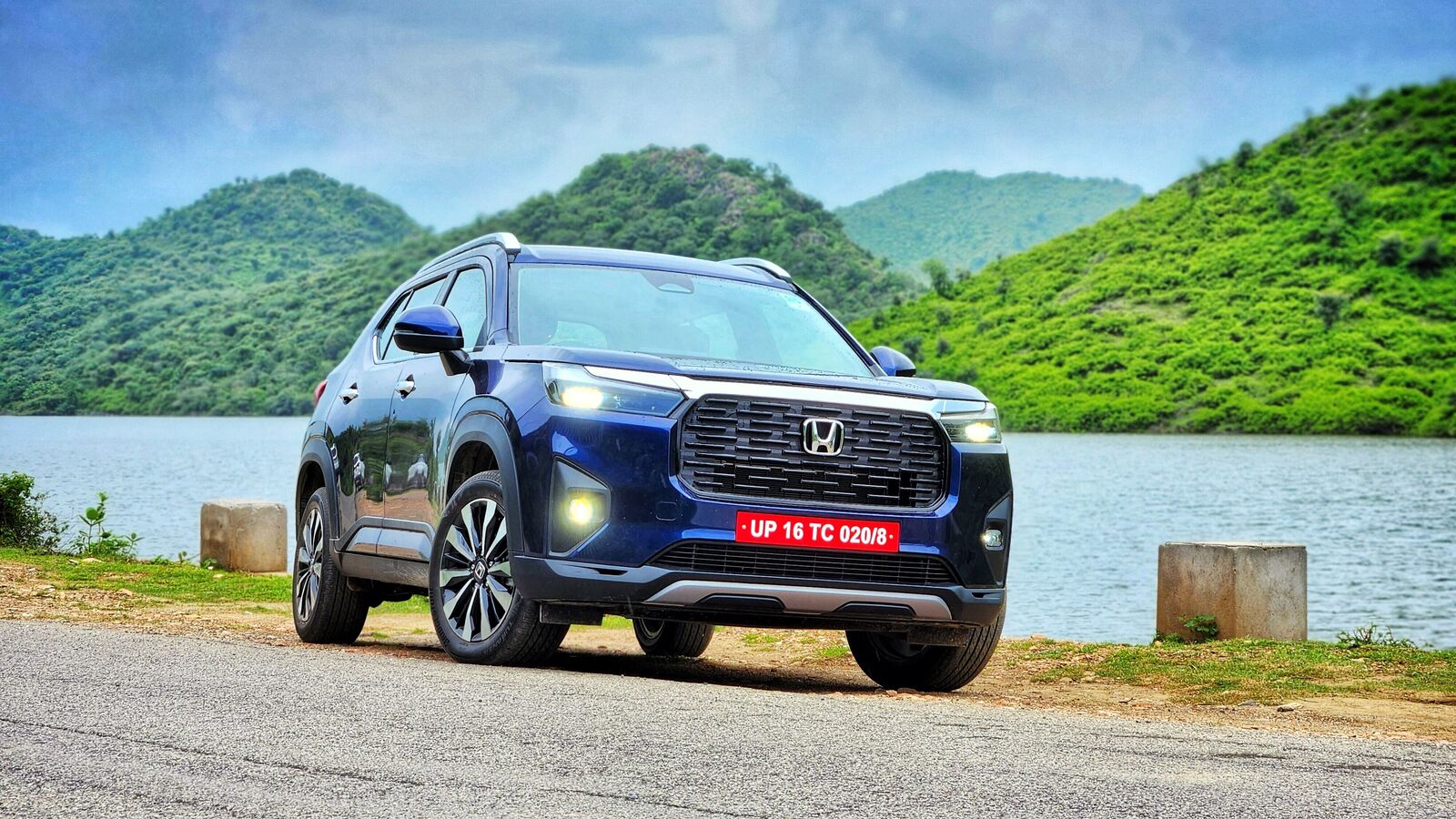
Honda Elevate comes as the new midsize SUV from the Japanese car brand, slated to go on sale right ahead of the festive season.
The Honda Elevate will be the automaker’s global SUV, made in India. Besides being slated to be launched in September, deliveries of the car will commence in the same month, said Honda Cars India. The automaker has already started accepting pre-launch bookings for the Elevate across India. The SUV has already been unveiled and grabbed the attention of the automotive community with its masculine design.
Watch: Honda Elevate SUV unveiled in India: First Look
The SUV has been designed following the automaker’s styling ethos of Man Maximum Machine Minimum. The car brand claims that the SUV offers an incredibly spacious interior with spacious headroom, knee room, leg room and a generous 458 litres of cargo space. The SUV carries a bold and masculine exterior with a flat front profile. The overall design of the car commands a strong road presence.
The Honda Elevate will be available in a wide variety of exterior colour options, including single-tone and dual-tone options. The exterior colour options for the SUV include Phoenix Orange Pearl, Obsidian Blue Pearl, Radiant Red Metallic, Platinum White Pearl, Golden Brown Metallic, Lunar Silver Metallic, and Meteoroid Gray Metallic.
Powering the Honda Elevate is a 1.5-litre iVTEC DOHC petrol engine. The engine is available with the option of a six-speed manual gearbox and a CVT. This engine can produce a power output of 119 bhp and 145 Nm of maximum torque at 4,300 rpm.
Speaking about the production commencement of the SUV, Takuya Tsumura, President and CEO of Honda Cars India Ltd., said that it is a significant milestone for the company. He also said that ever since its global unveiling, the Elevate has received an overwhelming response from customers across the country.
Honda says Elevate has more than 90 percent local content; is being built at Tapukara alongside the City and the Amaze.
Honda India has commenced series production of the Elevate SUV, its most important launch for our market in recent times. The Elevate will go on sale sometime in September this year.
Honda Elevate gets a single 1.5-liter petrol option
Two gearbox choices on offer
Honda Sensing ADAS bundle available on top variant
Honda Elevate: from India to the world
The Elevate is being built at Honda India’s Tapukara plant that also builds models like the City and the Amaze sedans. Honda says India is the first country where the Elevate is being manufactured, and it will be sold not just in the domestic market, but will also be exported overseas. The brand also said that the made-in-India Elevate SUV has more than 90 percent localized content. Bookings for the Elevate are already underway and deliveries would commence as soon as prices are announced, sometime in September this year.
Honda Elevate: powertrain and fuel efficiency
The Elevate gets a sole petrol engine option that’s shared with the City sedan. Its a 121hp, 145Nm, 1.5-litre, naturally aspirated petrol engine mated to either a 6-speed manual or a the 7-step CVT automatic gearbox. The Elevate will not come with a petrol hybrid powertrain. There are talks of a full-EV iteration based on the Elevate which will join the line-up in future.
As for fuel economy, the Elevate 1.5 petrol-MT has a claimed economy of 15.31kpl, whereas with the CVT, it delivers 16.92kpl. It has a 612km range with a 40-litre tank for the manual and 679km on the automatic.
Honda Elevate: variants and features
The Elevate is on offer with four trims: SV, V, VX and ZX. As far as features go, the entry-level Elevate gets LED projector headlamps, automatic climate control, 16-inch steel wheels and dual front airbags. The top-spec Elevate ZX gets the 10.25-inch touchscreen, six airbags, Honda Sensing ADAS suite, eight speakers, leatherette brown upholstery, soft-touch dashboard and auto-dimming interior day/night mirror.
Honda Elevate expected pricing launch timeline
Dealer sources tell us that the Elevate will start at around Rs 12 lakh, with the top variant being priced around Rs 17 lakh (ex-showroom). It will see stiff competition from the Hyundai Creta and the recently launched Kia Seltos facelift, which get more features and an option of a diesel engine, the Maruti Suzuki Grand Vitara and the Toyota Hyryder, which also get petrol-hybrid powertrain, and the Skoda Kushaq and the Volkswagen Taigun SUVs.
Mitch Evans won the London E-Prix, but P2 was enough for Dennis to claim the Formula E title.
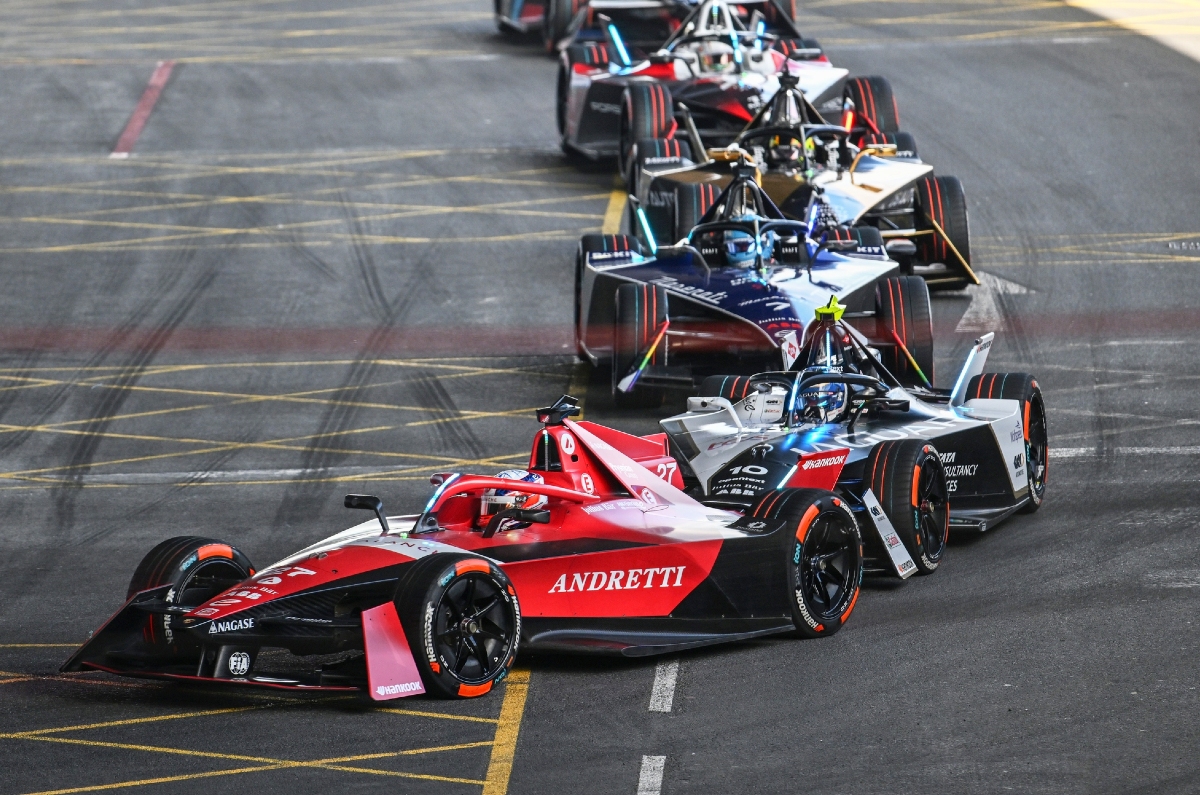
Andretti driver Jake Dennis clinched the 2023 Formula E world championship title with one race to spare, after successfully navigating a chaotic London E-Prix.
Jaguar’s Mitch Evans won the race, which saw two red flag stoppages. But a retirement wiped out Nick Cassidy’s championship hopes, and a P2 finish was enough for Dennis to seal the title.
Dennis seals title after finishing P2
Evans wins London E-Prix, Buemi P3
Mahindra’s Di Grassi goes from P20 to P7
Cassidy out of running after Buemi collision
Dennis headed into the race with a 24 points lead over Cassidy, who started from pole. After leading in the early stages, Cassidy dropped a few places after taking his attack mode, and this is where his race started to unravel. While trying to overtake teammate Sebastien Buemi, two made contact, dislodging Cassidy’s front wing.
After pitting for a new front wing, he was able to rejoin the grid and progressed up to 16th place. But his race couldn’t be salvaged and eventually had to retire.
Dennis crowned 2023 Formula E champion in London
With Cassidy out, Evans – who at this point was in the lead – was the only driver who could stop Dennis from sealing the title; but all Dennis had to do was ensured he finished third. In typical Formula E fashion, this was going to be far from easy.
He had to deal with missing his Attack Mode loop multiple times and two red flag stoppages. In the end, it was a three-lap sprint to the chequered flag. Dennis was up to third place by this time, but he had to hold off Buemi, who had more useable energy than him.
While Evans crossed the line to take victory ahead of Antonio Felix da Costa, Dennis successfully fended off Buemi to become Formula E’s first British world champion. He’s also handed Andretti their first-ever Formula E title; the American team has been part of the series since its inception.
Dennis was eventually promoted to second after da Costa was handed a three-minute time penalty for a technical infraction. This also promoted Buemi to the final spot on the podium.
“I am lost for words, honestly. It means so much to me, the boys standing out there, we have had everything thrown at us, honestly it felt like everyone was racing against us, but Jesus Christ! We have just become world champion! I am so happy for myself, the team, everyone; we deserve this so much,” exclaimed Dennis.
Mahindra scores points
After a couple of difficult rounds, Mahindra Racing finished in the points in London. Lucas di Grassi pulled off a spirited recovery drive from P20 to P7, while teammate Roberto Merhi crossed the line in P16.
2023 Formula E championship standings
While the Drivers’ Championship has been wrapped up, the Teams’ Championship is very much still up for grabs. With just one more race in London to go, Jaguar TCS Racing is level on points with customer team Envision Racing (with 268 points). Porsche is third overall with 241 points, while Andretti is fourth with 236 points.
Mahindra has teased its new pickup truck, slated to debut on August 15 in Cape Town, South Africa. The homegrown auto manufacturer has dubbed this as the concept form of a global pickup truck. The pickup truck is expected to be based on the Mahindra Scorpio N platform. The upcoming Mahindra Thar five-door too will be based on the same architecture. It will carry the legacy of the Mahindra Scorpio pickup truck, which has been in business for several years. Besides this, the automaker is also expected to showcase some more of the brand’s future mobility plans.
By: HT Auto Desk | Updated on: 30 Jul 2023, 09:28 AM
The Mahindra Scorpio N pickup concept will carry the legacy of the Mahindra Scorpio pickup truck and it will first break cover in South Africa.
Internally codenamed Z121, the new pickup truck will come with a longer wheelbase than the standard Scorpio N SUV. This will enable the pickup truck to accommodate a larger cargo deck. For reference, the MahindraScorpio Classic has a 2,600 mm wheelbase, while the pickup version of this SUV comes with a wheelbase well over 3,000 mm allowing the latter to have a cargo deck.
Mahindra has not revealed further details of the upcoming pickup truck concept, however, the teaser indicates that it will be well capable of tackling hard road challenges. A few design elements of the pickup truck concept include a double-cab body style, rugged looking front grille and chunky off-road spec tyres wrapping around large wheels.
Expect the production version of the Mahindra Scorpio N pickup truck to come to the market by 2025. It could arrive in both single and double-cab body styles. Speaking about the powertrain, the pickup truck could share the same petrol and diesel engines as the SUV. Also, there would be manual and automatic transmission options for the pickup truck. Expect it to come in both 2WD and 4WD options. It is not clear if the upcoming Mahindra Scorpio N pickup truck will replace the current Scorpio pickup or would sell alongside it.
By: HT Auto Desk | Updated on: 29 Jul 2023, 15:17 PM
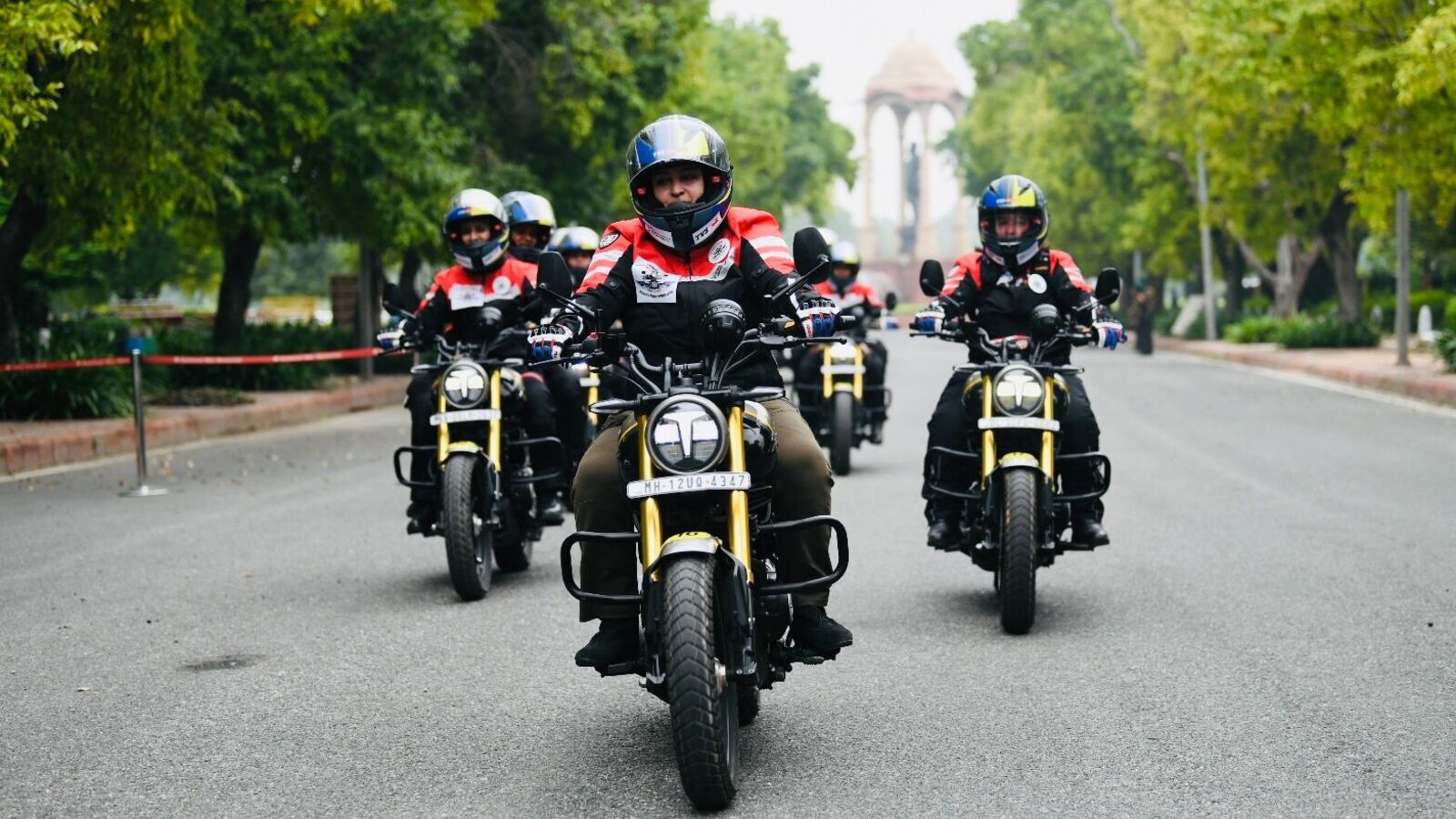
A contingent of 25 women riders atop TVS Ronin motorcycles, representing the Indian Army embarked on a 7-day ride from New Delhi to Dras to celebrate the the 24th Kargil Vijay Diwas. The rally was called Nari Sashaktikaran and the all-women squad reached Kargil War Memorial on the 26th of July 2023 which is when the 24th Kargil Divas was being celebrated.
25 women riders atop TVS Ronin bikes have embarked on a seven-day ride from Delhi to Dras.
The rally spanned over a distance of approximately 1,000 km through the plains of Haryana, Punjab and the mountains of Jammu & Kashmir and Ladakh before reaching the Kargil War Memorial in Dras.
The Indian army used the TVS Ronin. It uses an oil-cooled, single-cylinder engine that produces 20.4 PS and a peak torque of 19.93 Nm. It is priced between ₹1.49 lakh and ₹1.69 lakh. Both prices are ex-showroom.
Speaking on the occasion, Mr. Vimal Sumbly, Head Business – Premium at TVS Motor Company said, “We are proud to have associated with the Indian Army, which symbolises strength, valour, and dedication. At TVS Motor Company, we believe in supporting initiatives that embody the spirit of patriotism and empowerment, and the collaboration with the Indian Army represents our commitment to nurturing the spirit of adventure and resilience, particularly amongst women riders. The Nari Sashaktikaran Women Motorcycle Rally on the TVS Ronin was flagged off to commemorate 24 years of Kargil Vijay Diwas where a 25 member team rode from Delhi to Kargil War Memorial, Dras (Ladakh), where the ride was flagged in. This ride not only showcased the courage and determination of these incredible women riders but also paid tribute to the brave women who serve in the Indian Army. We are honoured to have been a part of this momentous journey with them as they rode the TVS RONIN as their choice of ride traversing the treacherous journey till Kargil, and aim to inspire more women to break barriers, challenge stereotypes, and create their unique paths of success.”
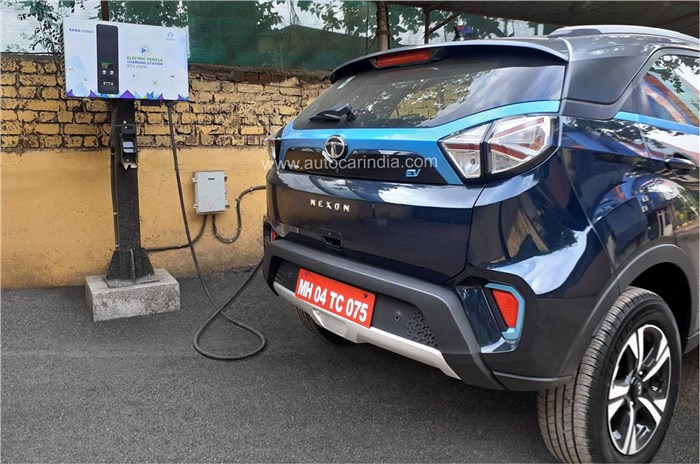
Charging an EV can be as simple as plugging in a phone, but there are considerations to be kept in mind.
Published On Jul 29, 2023 10:30:00 AM
Living with all manner of electric vehicles, we’ve realised that before you even get to range anxiety, there’s sometimes plug-in worry. Not the nail-biting kind, but stuff like, will it charge fast enough, or why does your car have a different plug and can you charge it at any outlet? So here’s our guide to help you know more about charging an EV.
What are the different ways to charge?
15Amp
Let’s begin with the familiar 15A AC (Alternating Current) plug point. Yes, the broad 3-pin socket that you plug in your heavy-duty appliances at home can also power up your EV, and as the 15A point is pretty ubiquitous, it’s convenient. But with an output of just 3.3kW, it’s also slow.
Still, for a small battery, an overnight charge will easily top it up. For example, the Citroen eC3’s 29.2kWh battery pack can go from 10-100 percent in 10.5 hours on a wall socket. But larger batteries can take well over a day. So the 15A socket works best for small batteries like in electric two-wheelers and smaller cars, and since it’s easy to find, the 15A socket is also a good back-up in case you are stranded.
AC Fast charger
Next up is the AC wall charger. These are units that, like the 15A socket, also deliver AC power but at a higher wattage, typically somewhere between 7kW and 22kW. They are pretty compact, can be installed at homes and most companies offer such a charger with their products. For instance, the Tiago EV has an optional 7.2kW charger that can charge the 24kWh battery from 10-100 percent in 3 hours 35 minutes, whereas the standard 3.3kW charger takes 6 hours 20 minutes.
DC fast charger
In general, batteries function on direct current; even when you plug in your phone, the charger converts electricity from AC to DC to charge your phone’s battery. It’s the same with EVs too. However, you can bypass the AC to DC convertor of your EV and allow the batteries to soak in some direct current. You do this by plugging into a DC charger, which converts the grid’s alternating current to direct current and sends that straight to your battery. In this way, EVs so designed can handle a much higher charging rate. Taking the Tiago EV as an example again, Tata Motors says the 24kWh battery on a DC fast charger with a 50kW output will take 57 minutes to go from 10 to 80 percent.
These chargers aren’t for home use though, they are large and need special installation, and thus, are only found at specific public charging outlets. The speed of DC chargers is also increasing and today, some chargers can go up to 350kW. In India, companies like Kia, for example, have installed 240kW DC chargers, but remember, while your vehicle may be able to handle a DC charger, the maximum speed at which it will take on the direct current will depend on what it’s designed to handle plus other limiting factors, details of which we will get into later in this article. On a DC charger, you also have the option to select either the time, energy or total cost that you want to charge with.
V2V Charging
Much like siphoning fuel from one car to fill another, you can also use the battery charge of one vehicle to top up another, but this is generally very slow and best only if a car is stranded. For this to work, both vehicles – donor and recipient – need to be designed for V2V charging as beyond the ability to reverse the flow of electricity, both vehicles’ onboard power electronic systems need to be able to communicate with each other to allow the exchange to take place. This isn’t very common, but there are a few models capable of this; the Hyundai Ioniq 5 and Kia EV6, for instance. Besides this method, an EV low on charge can also be plugged into another EV that has a regular 3-pin AC outlet.
Does an EV charge at the same speed all through?
That’s a common query; most people expect the battery to charge at its maximum rate continuously. However, that’s not always the case. On slow and medium AC chargers, the power flow is at pretty much the same rate, so an EV will charge at roughly the same speed all through with only a small period of slow charging at the start and finish. However, on a DC charger, the power flow delivery is shaped like a step curve, which rises quickly and then descends as the vehicle charges. This is to protect the battery from overheating and overcharging individual cells. When a battery is in use – discharging or charging – it heats up, and to keep heat build-up in check, the charging pace is slowed as the battery gets fuller. Additionally, since no two cells are identical, they charge at slightly different speeds, thus, towards the end of any charge cycle when some cells are full and others may not be, the charging pace is slowed down so that empty cells can continue charging, while the full ones are not damaged.
The DC charging curve varies from model to model, typically the pace rises to a peak quickly, after which it gradually drops, and at 80 to 90 percent, it drops rapidly. This rapid slowdown post 80 percent is also why many EV owners feel that it’s good etiquette to not keep charging past that mark while on a public charger. The time taken is disproportionately long for the range gained, thus unplugging and allowing the next customer to charge is a nice thing to do. Charging to 80 percent is also a recommended way of preserving your battery life.
Other limiting factors
Ambient Temperature
There are other factors that also play a part in charging speed and one of them is ambient temperature. Remember Goldilocks, who didn’t like her porridge too hot or too cold? Batteries, too, are just like that and do not like extreme temperatures. The ideal operating temperature is roughly between 15 to 25°C, so in both very low or very high temperatures, the charging pace drops.
Load
Another factor is load. Most EVs allow you to use some systems while charging, for instance, you can sit inside your car with the HVAC system running while it charges. Naturally, this will take longer for your car to charge up, not just because the battery is also powering some systems, but also because the battery management system will slow things down to manage heat.
What are the different types of charger plugs available
As we had with mobile phones – and still do to a small extent – different EV manufacturers use different types of charging connectors and that’s based on the region they are from. And before you ask, it’s likely going to be a long while before there is a global standard.
Let’s begin with AC connectors: North American and Japanese manufacturers use the Type 1 – J1772 connectors, and these only make use of single phase electricity and are thus slow. The IEC 62196 – Type 2, also called the Mennekes connector, is used by the Europeans and can use the three-phase electric connection. Interestingly, it uses the same Type 1 – J1772 signalling or communication protocol, and thus, carmakers use either type of plug depending on the market it is sold in without having to reconfigure the entire charging system. China uses the GB/T connector, which looks much like the Type 2 plug, however, the cables are reversed and thus GB/T connector is not compatible with the Type 2. Meanwhile, Tesla uses its own propriety connector that can handle AC and DC current, however, some of its models like the Model X, which is sold in Europe, also have the Type 2 plug. In India, it’s the Type 2 that is in use, though early models like the Mahindra e2O and the older Tigor EV used different connectors.
Moving on to DC chargers, there are various types as well. Let’s start with the CCS (Combined Charging System), which is an interesting set-up wherein two additional pins are added to the bottom of the Type 1 and Type 2 AC plug, and thus, form the CCS 1 and CCS 2 plug, respectively. The added pins handle the actual charging, while the AC pins only handle the communication and Earthing. In this way, cars save space as they do not need two separate AC and DC ports, which is the case with the third type of DC charger – the CHAdeMO plug used by Japanese manufacturers in addition to the Type 1 AC plug. For DC charging, China also uses an additional GB/T plug with a different pin arrangement from the AC GB/T plug. Given that the Type 2 AC plug is used in India, the CCS 2 is in use for DC charging here.
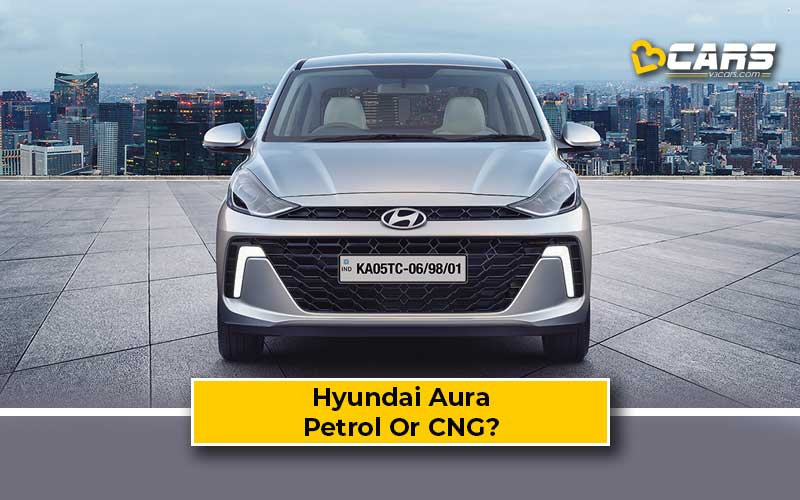
If you’re wondering whether you should buy the Hyundai Aura petrol or CNG then this article will help you come to a conclusion. Here, we’ll take the latest ex-showroom prices of the Aura and look at the price difference. Based on the current petrol and CNG prices, we’ll calculate the kilometres you need to drive the car to recover the higher upfront cost. This should help you decide which engine option of the Aura will work best for you and save you money in the long run. Let’s start with the difference in their ex-showroom prices.
Hyundai Aura Petrol Vs CNG – Price Comparison
Let’s look at the latest ex-showroom prices of the Hyundai Aura petrol and CNG to see what extra cost you’re paying for the Aura CNG over the Aura petrol.
HYUNDAI AURA PETROL VS CNG PRICES
EX-SHOWROOM DELHI (AUG 2023)
Variants
Petrol Prices
Difference
CNG Prices
S Manual
Rs. 7,17,900
Rs. 95,000
Rs. 8,12,900
SX Manual
Rs. 7,95,300
Rs. 95,000
Rs. 8,90,300
For the Aura CNG manual, you’re paying Rs. 95,000 more than the Aura petrol.
Hyundai Aura Petrol Vs CNG – Running Cost Calculation – Aug 2023
Now, let’s compare the per kilometre fuel cost you’ll incur with both the engine options. For this, we’ll use the latest petrol and diesel prices in Delhi and the official mileage figures as a baseline.
HYUNDAI AURA
COST PER KM (AUG 2023)
Petrol
Difference
CNG
Fuel Price Delhi
Rs. 96.76
Rs. 23.17
Rs. 73.59
Manual Mileage
20.50kmpl
7.50km
28.00kmpl
Manual Cost Per KM
Rs. 4.72
Rs. 2.09
Rs. 2.63
At the current fuel prices, the Hyundai Aura petrol manual will cost you Rs. 2.09 more than the Hyundai Aura CNG manual for every kilometre you drive.
Kilometres To Breakeven With Hyundai Aura CNG
HYUNDAI AURA PETROL VS CNG
KM TO RECOVER (AUG 2023)
Variants
KM to Recover
S Manual
45,416km
SX Manual
45,416km
You’ll have to cover 45,416 km with the Hyundai Aura CNG manual to recover the extra price you pay upfront over the Aura petrol.
Should You Buy Hyundai Aura Petrol Or CNG?
With the Aura CNG, you’ll sacrifice a little bit on the performance front as the car will have a lower power and torque output when running on CNG. You’ll also give up most of the boot space. Moreover, you might have to frequently visit the CNG station as the tank range is very less with CNG cars. If your city doesn’t have enough CNG stations, then the Aura CNG may not be feasible at all for you.
However, if you can live with these compromises, then you can recover the higher upfront cost of the CNG model in just over 45,500km.
You can use our Fuel Cost Calculator to see how any petrol, diesel or CNG car will cost to run based on the latest fuel price in your city.
By: HT Auto Desk | Updated on: 28 Jul 2023, 15:10 PM
Audi Group has reported good performance in the first half of the year despite major challenges. Between January and June, the brand group delivered a total of 9,19,548 models. This consists of Audi, Bentley, and Lamborghini vehicles. This corresponds to an increase of more than 15.3 per cent compared with the previous-year period.
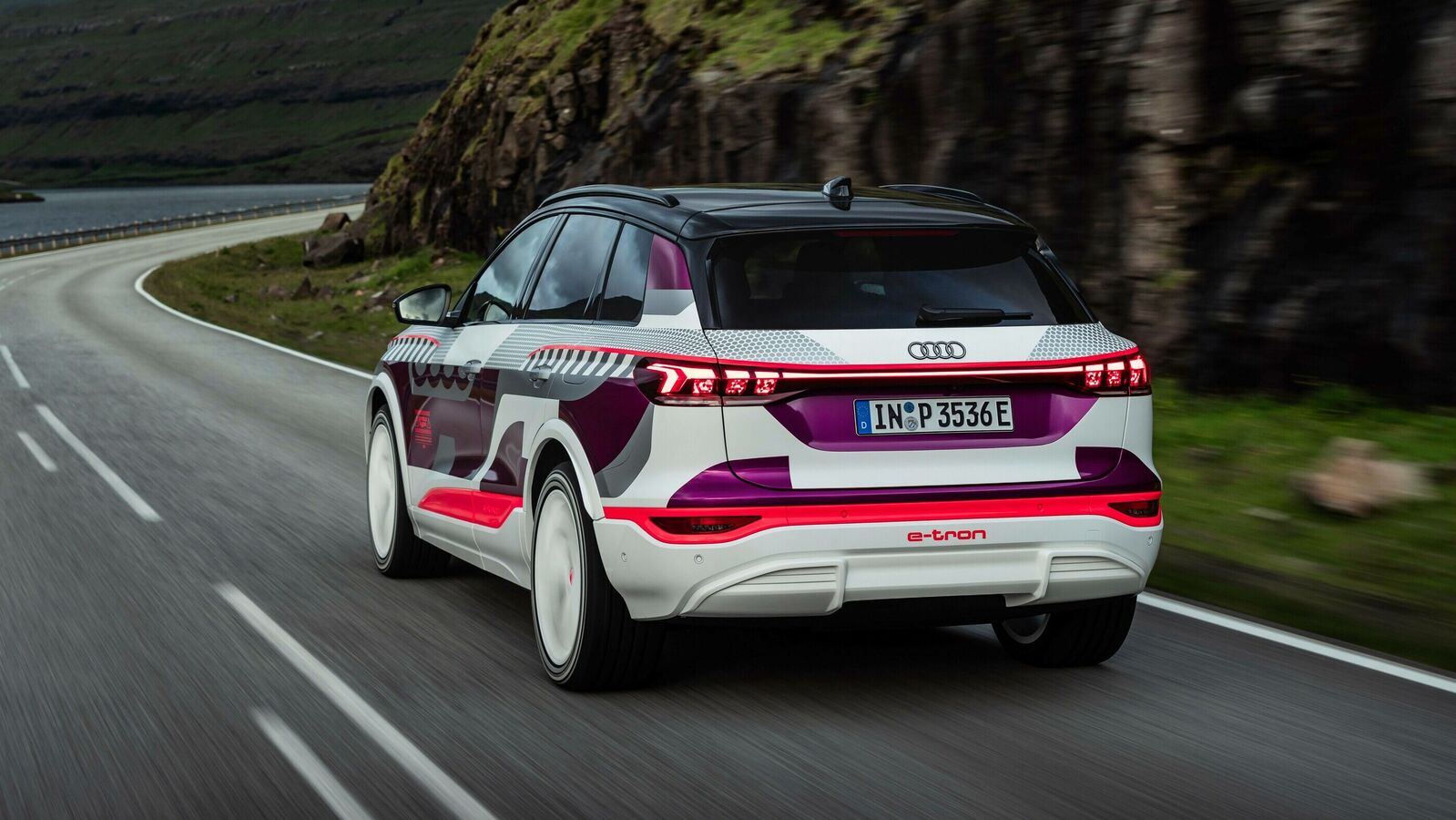
Image of Audi Q6 e-tron used for representational purposes only.
The Group increased its deliveries, particularly in Europe and the USA. Revenue grew by 14.4 per cent to €34.2 billion, with an operating profit of €3.4 billion. The sales of electric models also saw an increase of over 50 per cent as they delivered 75,647 electric vehicles. The Audi Q4 e-tron made the greatest contribution to this.
The manufacturer is planning to introduce more than 20 new models out of which more than ten will be fully electric. Audi is currently planning to launch the Audi Q6 e-tron. The electric crossover will be the first model to be based on the newly developed Premium Platform Electric or PPE. The platform is co-developed with Porsche and will be used for the Audi A6 e-tron and Porsche Macan as well.
The battery pack on the Q6 e-tron is expected to measure 100 kWh and will come equipped with two electric motors. It is expected that the max power output will be close to 500 hp in the top-spec version. The driving range on a single charge could be around 600 km and the battery pack would be able to charge from 10 per cent to 880 per cent in just 20 minutes using fast charging.
Watch: Audi Q8 etron: First drive review
In the Indian market, Audi will launch the Q8 e-tron on August 18th. It will replace the e-tron which was Audi’s first EV for India. Audi will sell the Q8 e-tron as well as Q8 e-tron Sportback in the Indian market. The Sportback is essentially the same model but with a sloping roofline with a better drag co-efficient figure.
Honda Cars is all set to launch the Elevate SUV, its first in years in India, weeks before the upcoming festive season. The Japanese auto giant has already started to accept bookings for the Hyundai Creta, Kia Seltos rival. According to latest information, the Elevate SUV has already garnered a healthy number in terms of bookings. In fact, sources say that one may have to wait up to four months to drive home the latest Honda SUV once it hits the roads.
By: HT Auto Desk | Updated on: 28 Jul 2023, 12:37 PM
Honda Cars is expected to launch the Elevate SUV ahead of the festive season. The Elevate will be the only SUV in Honda’s lineup for India.
Honda Elevate SUV is expected to launch in India in September. The bookings for the Elevate SUV was opened in July by the carmaker. Honda Elevate SUV made its official debut in June. It is the first compact SUV from the Japanese carmaker in India, which has been developed specifically for the Indian customers and will hit be launched here first ahead of other countries. Honda’s foray into the compact SUV segment is relatively late considering how some of the Korean rivals as well as fellow Japanese carmakers have already got a stronghold in the segment.
Honda will offer the Elevate SUV in four variants called the SV, V, VX and ZX. The Elevate SUV will be offered in seven single colour options which include Platinum White Pearl, Lunar Silver Metallic, Obsidian Blue Pearl, Radiant Red Metallic, Golden Brown Metallic, Meteoroid Gray Metallic and Phoenix Orange Pearl. There will be three dual-tone options available on the CVT variants which include Phoenix Orange Pearl with Crystal Black Pearl Roof, Platinum White Pearl with Crystal Black Pearl Roof and Radiant Red Metallic with Crystal Black Pearl Roof.
Under the hood, the Elevate SUV will be offered with a 1.5-litre DOHC i-VTEC petrol engine, which is also used for the HondaCity sedan. This engine churns out 121 PS of power and 145.1 Nm torque. The engine is available with a six-speed manual gearbox and there is an advanced CVT on offer. Honda has recently revealed the fuel efficiency figures of the Elevate SUV. Honda says that the Elevate SUV has a mileage of 15.31 kmpl in manual variants while the CVT versions will offer 16.92 kmpl of mileage.
Watch: Honda Elevate SUV unveiled in India: First Look
In terms of size, the Honda Elevate SUV is bigger than Hyundai Creta. It stands 4,312 mm in length, 1,790 mm in width and 1,650 mm in height along with 220 mm of ground clearance, which is around 30 mm more than the Korean rival. The Elevate also offers 458 litres of boot space.
Honda Elevate will also become the latest compact SUV to offer ADAS through its Honda Sensing technology, also used in City. In fact, the Elevate SUV is going to be the only model in India to be offered with ADAS functionality even in the manual variants.
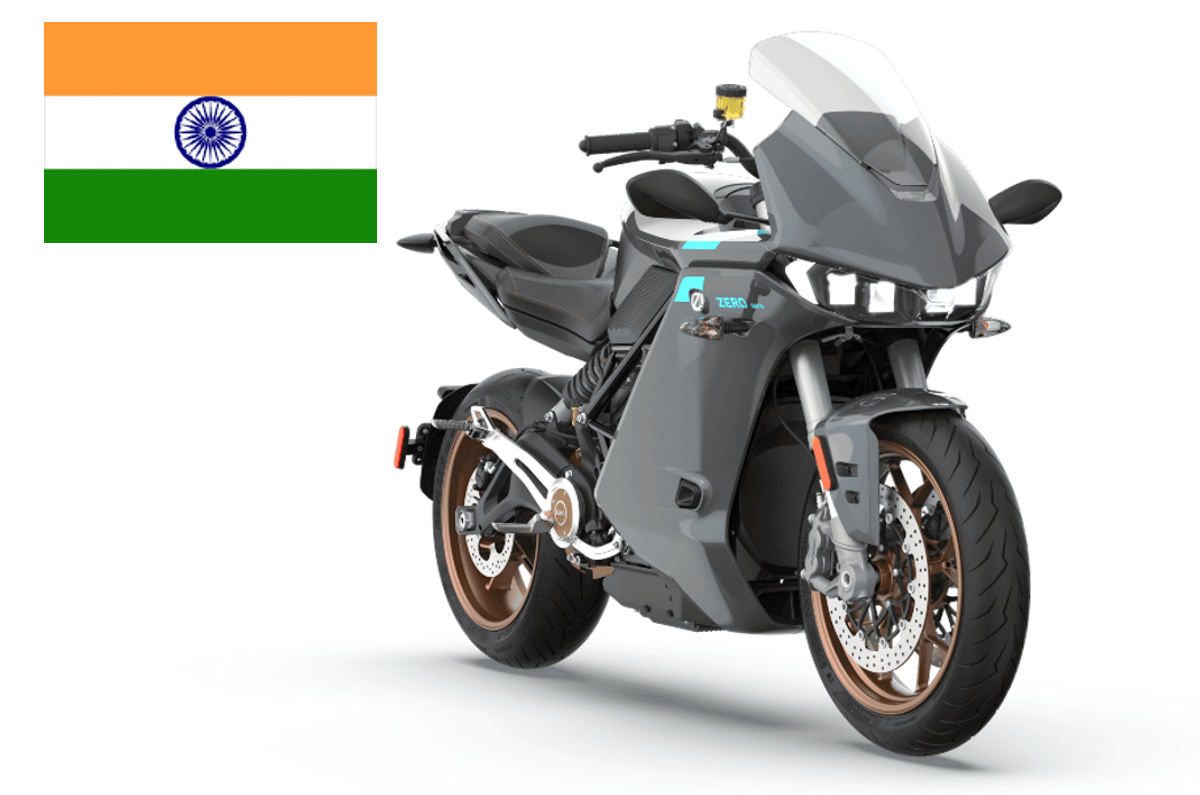
Hero MotoCorp’s annual report now reveals there has been a significant development in its partnership with Zero Motorcycles which now allows Hero to co-develop premium electric motorcycles. This opens the door to a premium Hero (or even Vida) badged electric bike down the road.
By diversifying its EV portfolio, the company aims to ‘capture a wider customer base’ and ‘capitalise on the global shift towards electric mobility’. This collaboration combines the expertise and technology of Zero’s in-house developed powertrain with the scale of manufacturing, sourcing, and marketing of Hero MotoCorp. The annual report doesn’t state who will be building the Zero EVs in India but in all likelihood, it will be Hero MotoCorp itself.
Zero’s range comprises two distinct categories – street and dualsport. The former comprises five machines – SR/S, SR/F, SR, S and FXE – while the latter consists of four options – DSR/X, DSR, DS and FX. Hero will be bringing the Zero portfolio into India, and with the lineup being fully manufactured in India, pricing should be quite competitive.
Hero already has made inroads into the burgeoning EV sector with its EV-specific subsidiary, Vida. Under the Vida umbrella, the company retails the V1 Pro electric scooter, and to read our review of it, tap here.
Currently, the only high-performance electric motorcycle in India is the homegrown Ultraviolette F77, and to read our review of the top-spec Recon variant, tap here.
The new-generation Toyota Land Cruiser Prado is all set to make its global debut on August 1, 2023. The automaker has announced the world premiere date on its social media handles with the new Prado set to be unveiled in the US. This is also the first time that the Land Cruiser Prado will be going on sale in North America.
By: HT Auto Desk | Updated on: 27 Jul 2023, 17:50 PM
The fifth-gen Toyota Land Cruiser Prado will take several cues from the J60 generation Land Cruiser produced in the 1980s
The fifth-generation Toyota Land Cruiser Prado will be badged as just the ‘Land Cruiser’ in North American markets, while all other markets including India will continue to use the Prado name. The latest teaser reveals a more detailed look at the new Land Cruiser Prado like the squared-off headlamps, rectangular grille with the egg grate design and the ‘Toyota’ badging in the centre.
The new Toyota Land Cruiser Prado will be sharing its underpinnings with the Lexus GX that made its global debut earlier this year. Expect the new Prado to be as boxy as the GX including the LED taillights that will also get a retro appearance. Both seem to be inspired by the J60 generation Land Cruiser built in the 1980s. Much like its predecessors, the new Land Cruiser Prado will also be a three-row SUV.
The new-gen offering will be based on Toyota’s TNGA-F platform with powertrain options ranging from petrol, petrol-hybrid and diesel depending on the market. India is expected to get the new-gen Land Cruiser Prado in the future, possibly with only the diesel engine. The automaker introduced the new-generation Land Cruiser 300 late last year and the SUV was quick to be sold out despite its high price tag of ₹2.10 crore (ex-showroom, India). Interestingly, the Lexus GX is also likely to make its way to the Indian market in a few months from now.
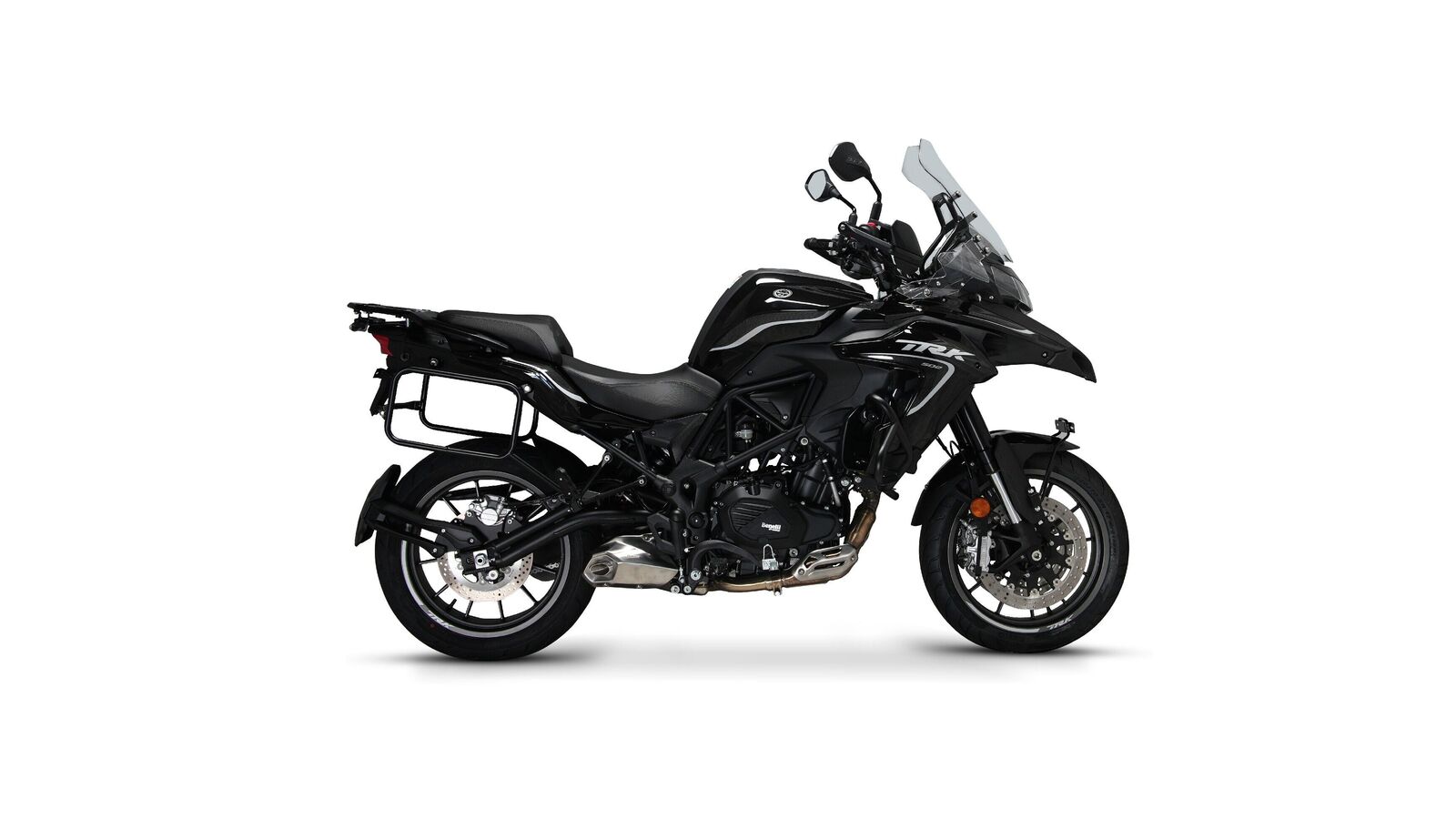
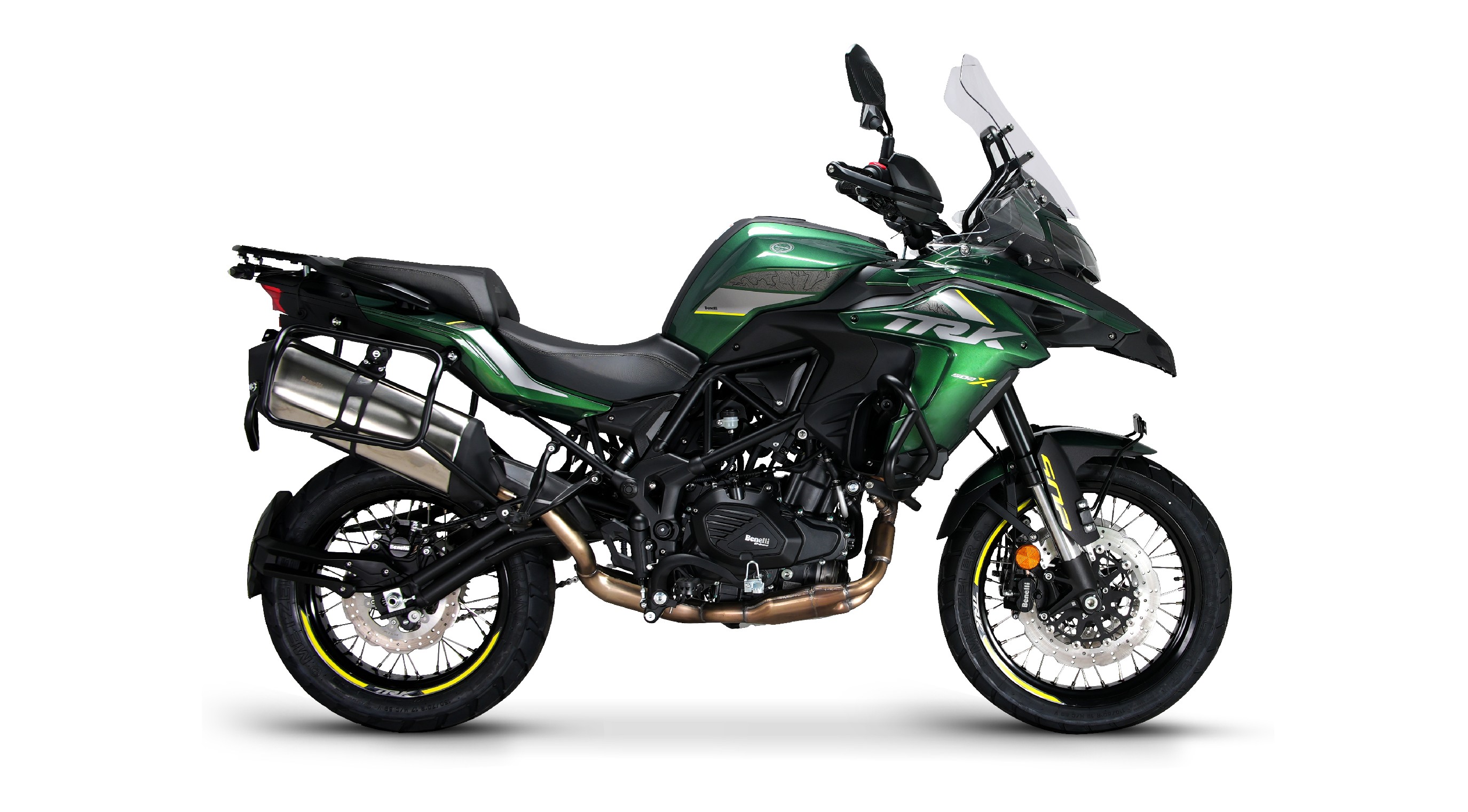
Adishwar Auto Ride India Pvt. Ltd (AARI), part of the Mahavir Group, has announced new colour options for the Benelli TRK 502 and TRK 502X adventure motorcycles. The 2023 Benelli TRK 502 is now available in Grey, White and the new Black and Forest Green colour options. Meanwhile, the 2023 Benelli TRK 502X gets four colours including Grey, White, Yellow and the new Forest Green shade.
By: HT Auto Desk | Updated on: 27 Jul 2023, 15:04 PM
The 2023 Benelli TRK 502 gets the new Black and Forest Green colour options
The update also comes with a price hike of 25,000 on the MY2023 models. The Benelli TRK 502 is now priced at ₹5.85 lakh, while the TRK 502X is priced at ₹6.35 lakh. All prices are ex-showroom, India. The new colours have been introduced right in time as the buying sentiment is at a high with the festive season coming closer. Benelli dealerships are accepting bookings for the TRK range for a token amount of ₹10,000 while deliveries have also begun.
The 2023 Benelli TRK 502X is now available in a new Forest Green shade in addition to the existing three colours
Both the Benelli TRK 502 and TRK 502X draw power from the same 500 cc liquid-cooled, parallel-twin motor tuned for 47 bhp at 8,500 rpm and 46 Nm of peak torque at 6,000 rpm. The TRK 502X gets spoked wheels as opposed to alloys on the TRK 502. In terms of equipment, the TRK range gets crash guards and knuckle guards as standard, a tall windscreen, rear pannier mount brackets, an adjustable handlebar, wide seats for the rider and pillion, as well as backlit switchgear, engine heat air ducts, a 20-litre fuel tank, engine bash plate and more.
Furthermore, the Benelli TRK 502 and TRK 502X get a three-year/unlimited-kilometre warranty as standard, along with 24×7 roadside assistance. The bikes compete against the Moto Morini X-Cape, Kawasaki Versys 650, Honda CB500X and the like.
Several interior elements from the Sierra and Curvv concepts have been carried forward into production.
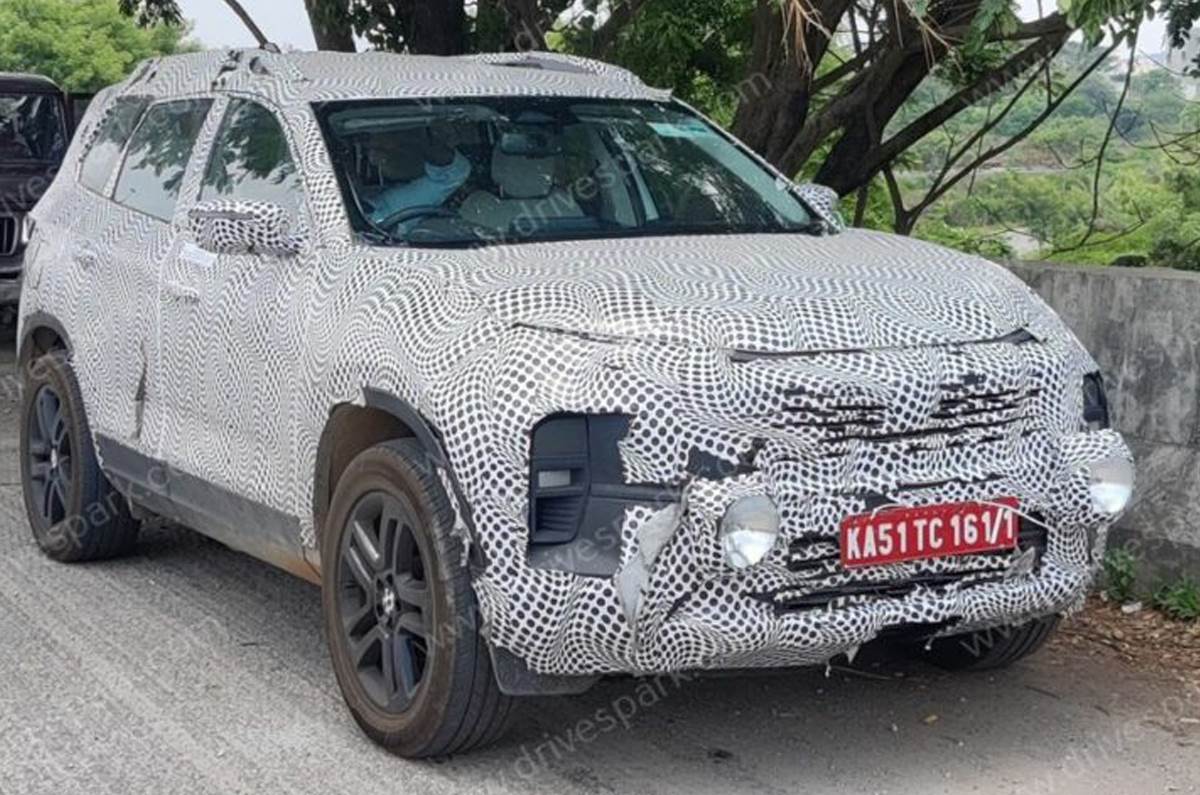
We have already reported to you numerous interior and exterior spy images of the upcoming Tata Safari facelift, but for the first time, we have a completely undisguised look at the dashboard of the updated SUV. And as was expected, it gets a complete design overhaul that looks notably more premium and packs in a lot more tech.
Safari facelift interior will have very few physical controls
Infotainment screen likely larger than 10.25-inches
Will get new two-spoke flat-bottom steering wheel
Tata Safari facelift interior spied undisguised
The first impression looking at the image is that it appears a lot richer. Tata has even incorporated a few design elements from the Curvv and Sierra EV interior concepts here into production with the Safari facelift. The four-spoke, flat-bottom steering wheel, for instance, is exactly what it was on the Sierra EV concept at Auto Expo 2023. It features a couple of toggle switches and haptic buttons at either end, while the centre portion gets a gloss black finish that’ll likely also have an illuminated Tata logo.
We can also clearly see the gloss black panel for the HVAC controls – it features two bands of haptic buttons with two toggle switches that’ll likely be for temperature and blower controls – again, identical to what Tata had previewed with the Curvv and Sierra EV concepts. The infotainment system on the Safari facelift also seems all-new; it has sharp edges as opposed to the rounded edges on the current 10.25-inch screens on the Safari Red Dark Editions, and as such, appears larger too. Tata could also provide an updated software interface with the new infotainment system.
Additionally, we can notice leatherette padding with contrast double-stitching for the lower portion of the dashboard, while the upper portion gets a full-width, coloured, gloss dashboard insert as opposed to faux wood-like trim on the current model. The central AC vents continue with a trapezoidal shape, but are now inverted and a lot sleeker as well, and there’s also a full-digital instrument cluster replacing the semi-digital unit on the current model.
Tata has also majorly revised the centre console area – the gear lever is smaller, stubbier and appears more sophisticated, while the rotary dial is larger and looks similar to the knurled unit on the Nexon EV Max with a circular digital screen. The grab handles, meanwhile, have been retained as is. There’s also no major change to the door pads either.
The Safari facelift will also get a major design overhaul on the outside.
Notably, the updated SUV will have very few physical interior controls, but thankfully, key functions like temperature and blower settings, volume controls and drive modes appear to be operated by physical dials and toggle switches. You can expect the interior design to be mirrored in the Harrier facelift, while a lot of these elements will also be shared with the Nexon facelift. The Safari will also be majorly updated on the outside, more about which you can read here.
Tata Safari facelift powertrain options
At launch, the Safari will remain mechanically unchanged. It will carry over the current 170hp, 2.0-litre diesel engine that’s offered with 6-speed manual and automatic gearboxes. Tata’s new 1.5-litre turbo-petrol engine that’s currently under development is only expected to join the line-up much later.
Tata Safari facelift launch timeline
Tata Motors has a slew of SUV launches lined up for the upcoming festive season, and the Safari facelift, along with the updated Harrier, is expected to arrive around September 2023. However, given the step-up in quality and equipment, expect a significant step-up in the pricing as well.
Bajaj Auto Ltd. has announced that the deliveries of the Triumph Speed 400 will be starting by the end of this month from authorised Triumph dealerships. The manufacturer has announced that have started dispatching the Speed 400 to the dealerships. Triumph Speed 400 is priced at ₹2.33 lakh ex-showroom and the amount of the booking is ₹10,000.
By: HT Auto Desk | Updated on: 26 Jul 2023, 15:19 PM
The Speed 400 shares its underpinnings with the Scrambler 400 X
The motorcycle was initially priced at ₹2.23 lakh and the booking amount was set to ₹2,000. However, this was only introductory pricing that is no longer applicable. Apart from the Speed 400, Triumph also showcased the Scrambler 400 X which will be going on sale later in October this year.
The motorcycles will be produced at Bajaj Auto’s new plant in Chakan. It is called Chakan 2 and it will also be producing KTM motorcycles. The company plans to have about 30 outlets, up from the existing 15 dealers by the end of July, moving up to 100 by March 2024.
Powering both motorcycles is a new TR-series engine. It is a 398 cc single-cylinder, liquid-cooled engine tuned for 39.5 bhp of max power and 37.5 Nm of peak torque. It comes mated to a 6-speed gearbox with slip and assist clutch.
The motorcycle is equipped with only essential features. It gets dual-channel ABS, switchable traction control and an analogue speedometer with a small digital display that shows various other information but there is no Bluetooth connectivity on offer.
Watch: Triumph Speed 400 Review: Worth the hype?
Suspension duties are performed by 43 mm upside-down Big Piston forks in the front and a gas-charged monoshock at the rear with pre-load adjustment. Braking hardware consists of a 300 mm disc in the front and a 230 mm disc at the rear. There are 17-inch alloy wheels wrapped in tyres sourced from Apollo and MRFs. The frame on duty is a new perimeter unit that is bolted onto a sub-frame.
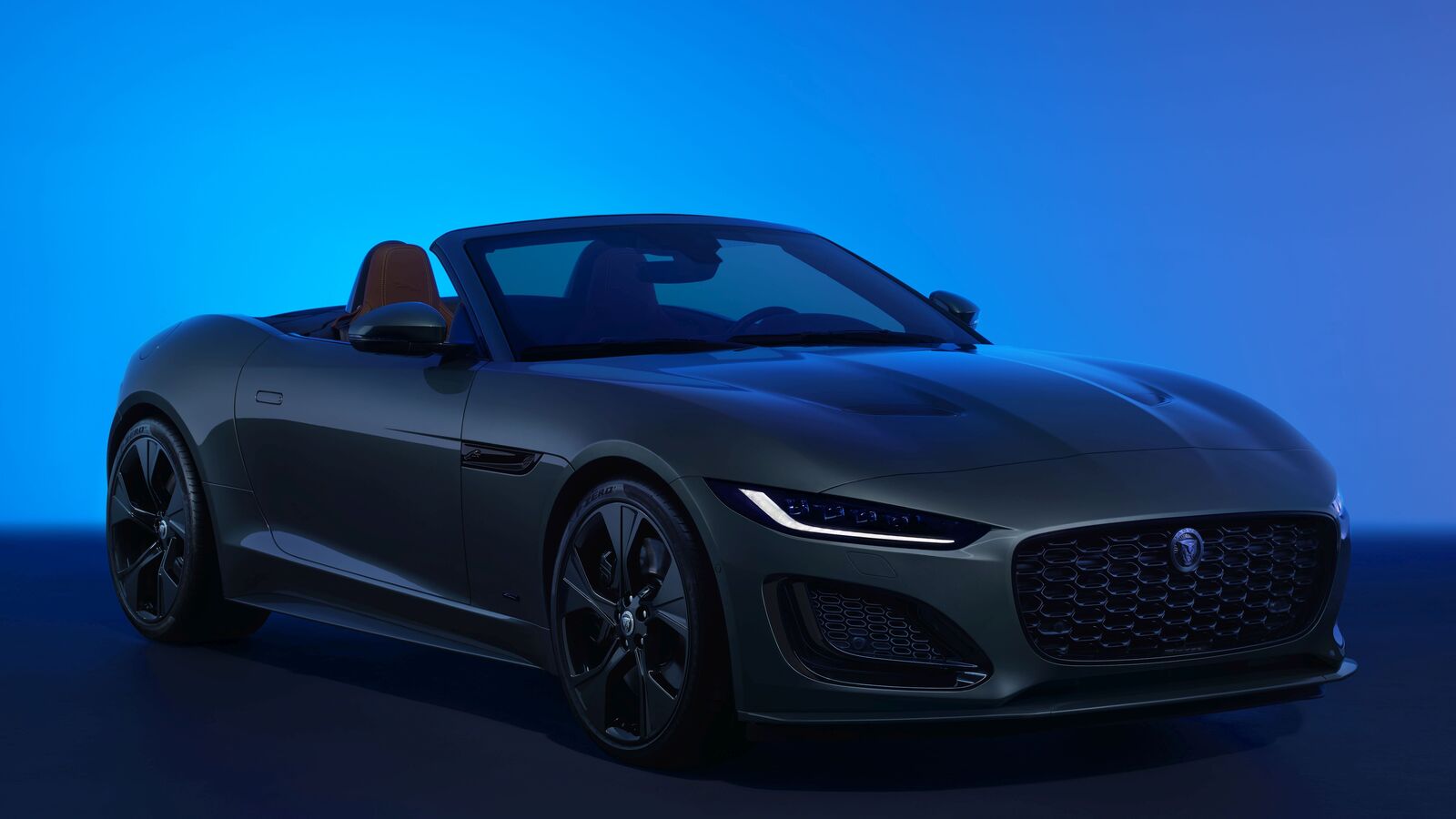
Tata Motors-owned British luxury car brand Jaguar aims to bounce back from mediocrity. To achieve that target, the automaker plans to tap rich American buyers with polarizing designs. Auto News has reported that the automaker is targeting 20 million millionaires in the US who could be its potential customers in an attempt to salvage the brand. Jaguar Land Rover CEO Adrian Mardell believes that chasing volume has impacted the brand negatively and in a revised strategy, the company aims to change that situation.
The report has quoted Mardell saying that Jaguar will aim for a lower volume and higher price positioning, which will be the right thing to do for the company. This would make the Jaguar cars more elusively premium, raising the bar. He pointed to the fact that during the 1990s, Jaguar was highly successful in the North American market, when its cars were more expensive and targeted a wealthier demographic than the brand has been chasing for the last 20 years.
The JLR chief further conceded that the automaker’s strategy to chase volume during the previous two decades, first under Ford and then Tata Motors, has resulted in it losing touch with the wealthy car buyer community. He also admitted that it is a lot of work to build that brand equity. In order to bring back the luxury glory to the brand, Jaguar is focusing on fearless designs, which would be conceived to shock and reengage wealthy buyers.
The auto company’s design chief Gerry McGovern said that the brand will not worry about being loved by everybody. “What we will not worry about is being loved by everybody, because that is the kiss of death,” he said further adding that this is what has put Jaguar in the situation it is in today, which is with no equity whatsoever.
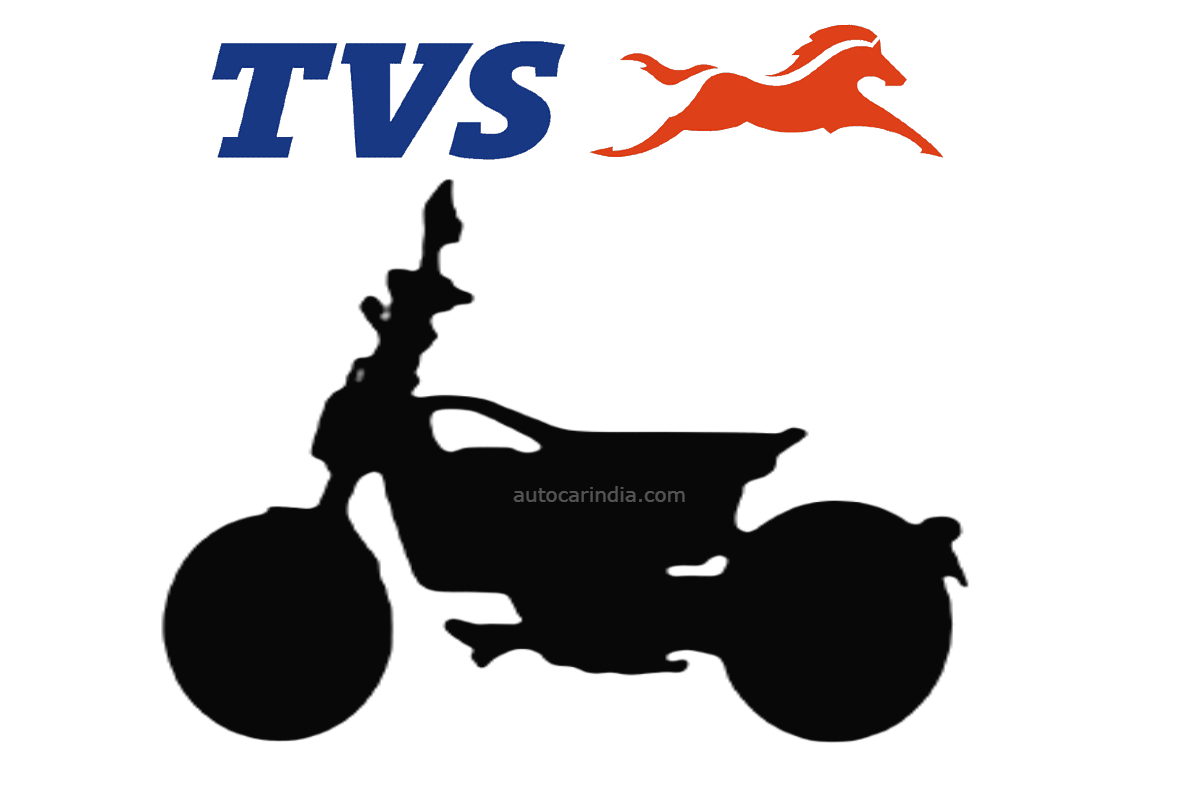
TVS and BMW are already in a partnership, and share the 310 platform that’s currently spawned three bikes for the Bavarian bikemaker and one for the Indian manufacturer. Now, according to an investor call, we’ve learnt that the recently revealed BMW CE 02 has also been designed, developed and built by TVS.
A couple of weeks ago, the Hosur-based manufacturer announced that it will soon be launching a brand new “electric-flying launch that will defy the status quo in mobility”. We have already established that this will be not be under the iQube umbrella, and given the fact that the CE 02 is being manufactured by TVS, we could also see a TVS product on the CE 02 platform.
When the BMW CE 02 was unveiled, the Bavarian manufacturer was very particular in stressing this wasn’t to be pigeonholed into the broad terms of either an electric scooter or bike. The full-fat version of the CE 02 makes 15hp and has a claimed range of 90km. It weighs in at 132kg and has a claimed top speed of 95kph.
The invite for the new TVS EV launch on August 23 mentions that “Thrill has a date”. If this new EV is indeed based on the CE-02 it could well be a sporty, youthful and performance-oriented product going by BMW’s impressive numbers.
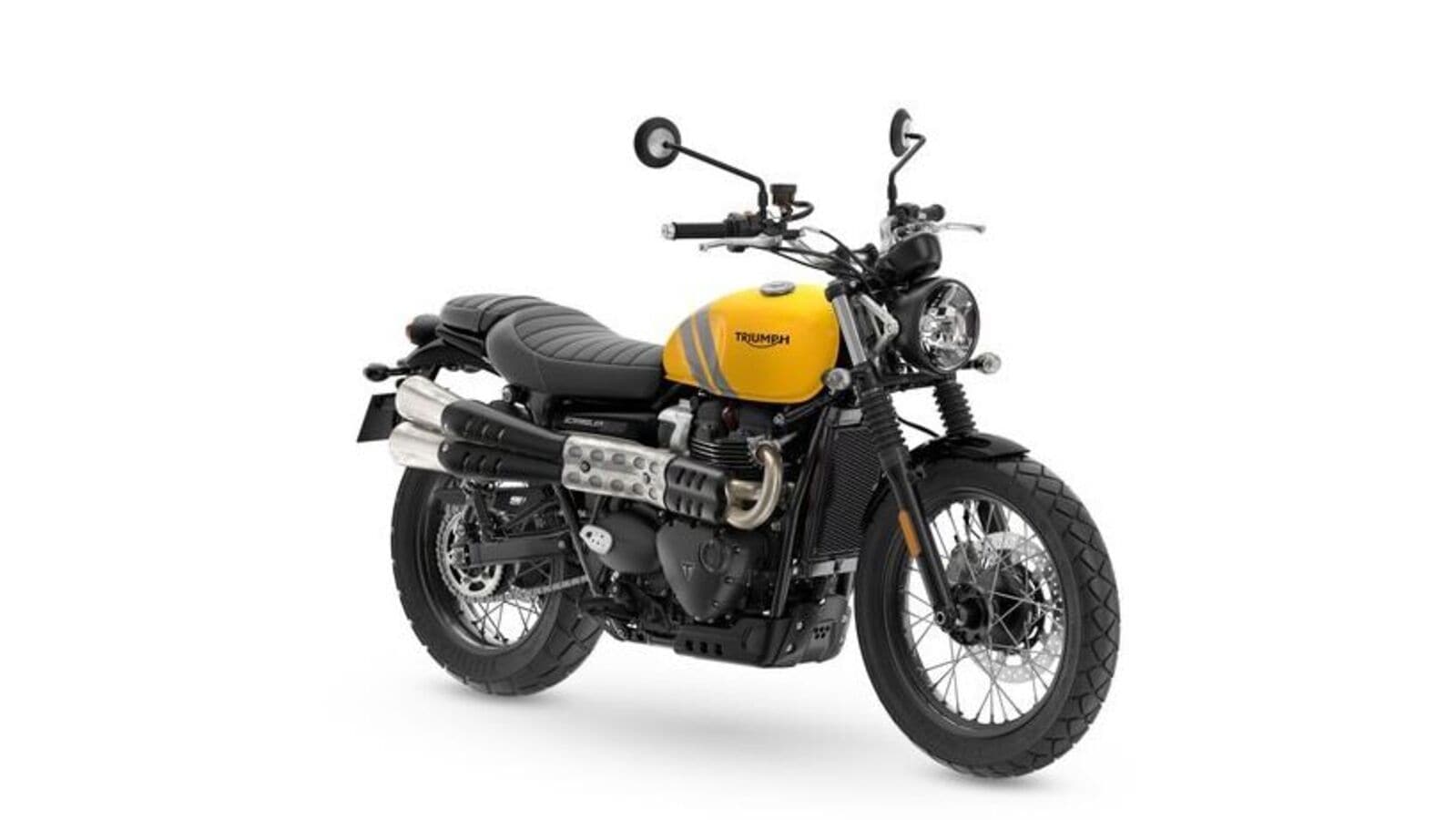
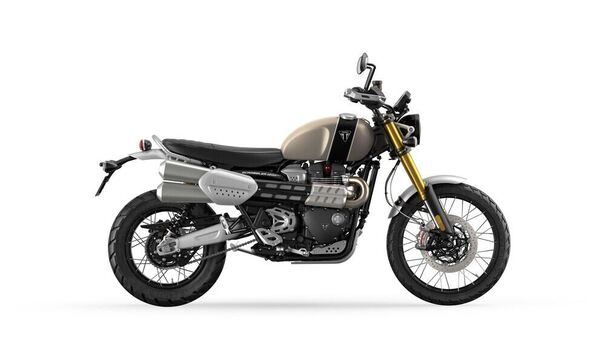
विजयोल्लास ने वैश्विक स्तर पर 2024 स्क्रैम्बलर 1200 और स्क्रैम्बलर 900 का अनावरण किया है। दोनों मोटरसाइकिलें अब नई रंग योजनाओं में पेश की गई हैं। निर्माता ने मोटरसाइकिल के समग्र डिजाइन में कोई बदलाव नहीं किया है। इंजन और अन्य यांत्रिक घटक भी वही रहते हैं। दोनों मोटरसाइकिलों के इस साल के अंत या अगले साल की शुरुआत में भारतीय बाजार में पहुंचने की उम्मीद है।
द्वारा: पार्थ खत्री | को अपडेट किया: 25 जुलाई 2023, 13:49 अपराह्न
कॉस्मिक येलो में ट्रायम्फ स्क्रैम्बलर 900
स्क्रैम्बलर 900 अब दो नई रंग योजनाएं मिलती हैं। इसमें कॉस्मिक येलो और ग्रेफाइट है। दोनों जेट ब्लैक मडगार्ड, फ्रेम काउल और रियर पैनल के साथ आते हैं। ये कलरवेज़ मैट खाकी और जेट ब्लैक विकल्पों के साथ बिक्री पर उपलब्ध होंगे।
स्क्रैम्बलर 1200 केवल एक नया पेंट विकल्प मिलता है, जो मैट सैंडस्टॉर्म है। यह सैफायर ब्लैक, मैट खाकी और मैट जेट ब्लैक के साथ बिक्री पर उपलब्ध होगा। फ्यूल टैंक, हेडलाइट बाउल और साइड पैनल पर पट्टी जेट ब्लैक रंग में तैयार की गई है। बेंच सीट भूरे रंग की योजना में तैयार की गई है।
स्क्रैम्बलर 900 270-डिग्री क्रैंक के साथ 900 सीसी, लिक्विड-कूल्ड पैरेलल-ट्विन इंजन के साथ आता है। यह 7,250 आरपीएम पर 64.1 बीएचपी और 3,250 आरपीएम पर 80 एनएम का पीक टॉर्क आउटपुट पैदा करता है। ऑन ड्यूटी गियरबॉक्स 5-स्पीड यूनिट है।
फिर स्क्रैम्बलर 1200 है, जिसमें लिक्विड कूलिंग और 270-डिग्री क्रैंक के साथ 1200 सीसी, पैरेलल-ट्विन इंजन मिलता है। यह 7,250 आरपीएम पर 88.7 बीएचपी और 4,500 आरपीएम पर 110 एनएम का पीक टॉर्क आउटपुट देता है। यह स्लिप-एंड-असिस्ट क्लच के साथ 6-स्पीड गियरबॉक्स के साथ आता है।
मैट सैंडस्टॉर्म में ट्रायम्फ स्क्रैम्बलर 1200।
अभी हाल ही में, ब्रांड ने भारतीय बाजार में स्पीड 400 लॉन्च किया है। अगस्त के पहले सप्ताह से डिलीवरी शुरू होने की उम्मीद है। स्क्रैम्बलर 400 एक्स अक्टूबर 2023 में भी आ जाएगा जो स्पीड 400 के साथ अपना आधार साझा करता है लेकिन इसमें थोड़ा अलग बॉडीवर्क और मैकेनिकल घटक होते हैं।
प्रथम प्रकाशन तिथि: 25 जुलाई 2023, 13:49 अपराह्न IST
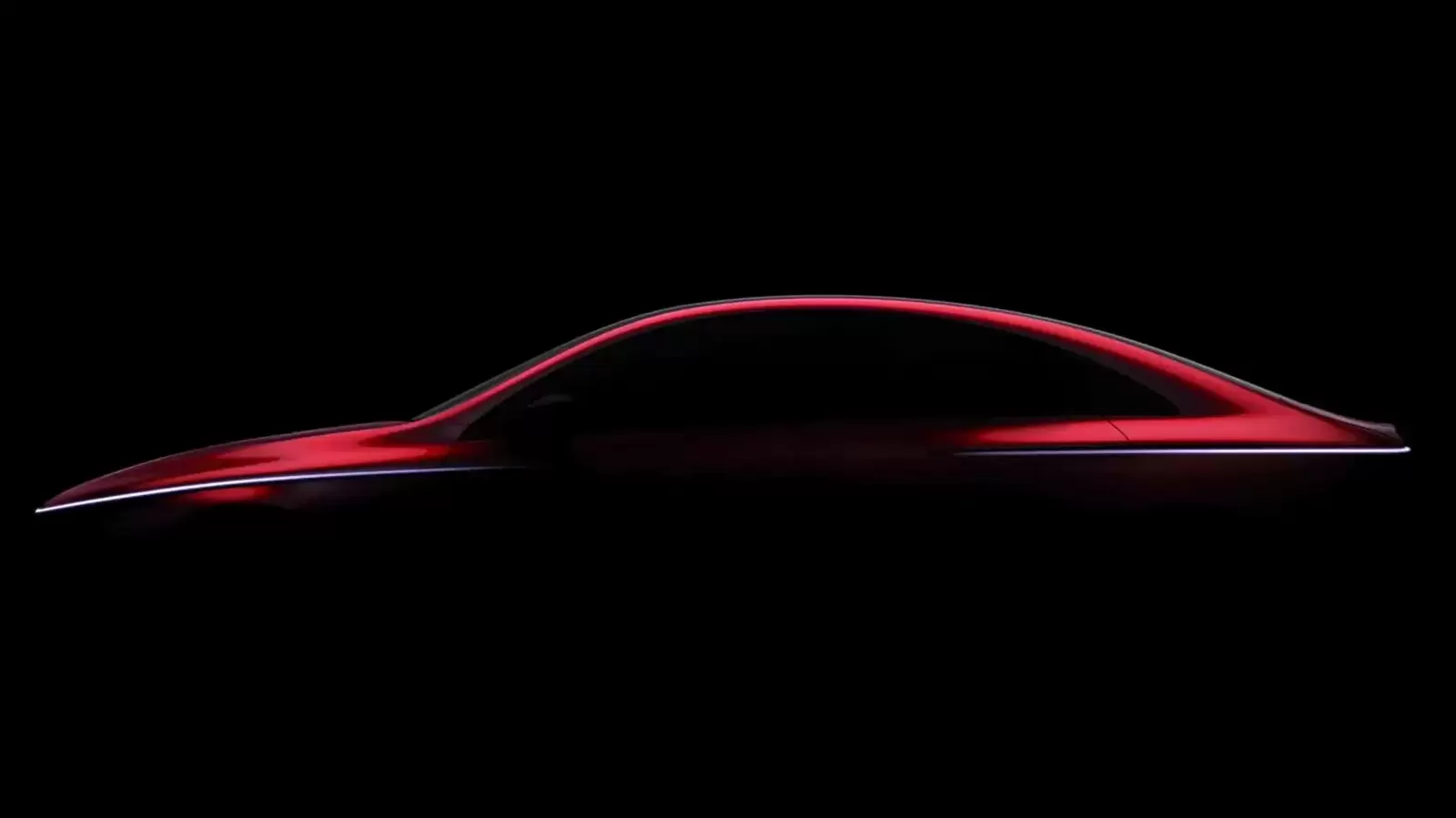
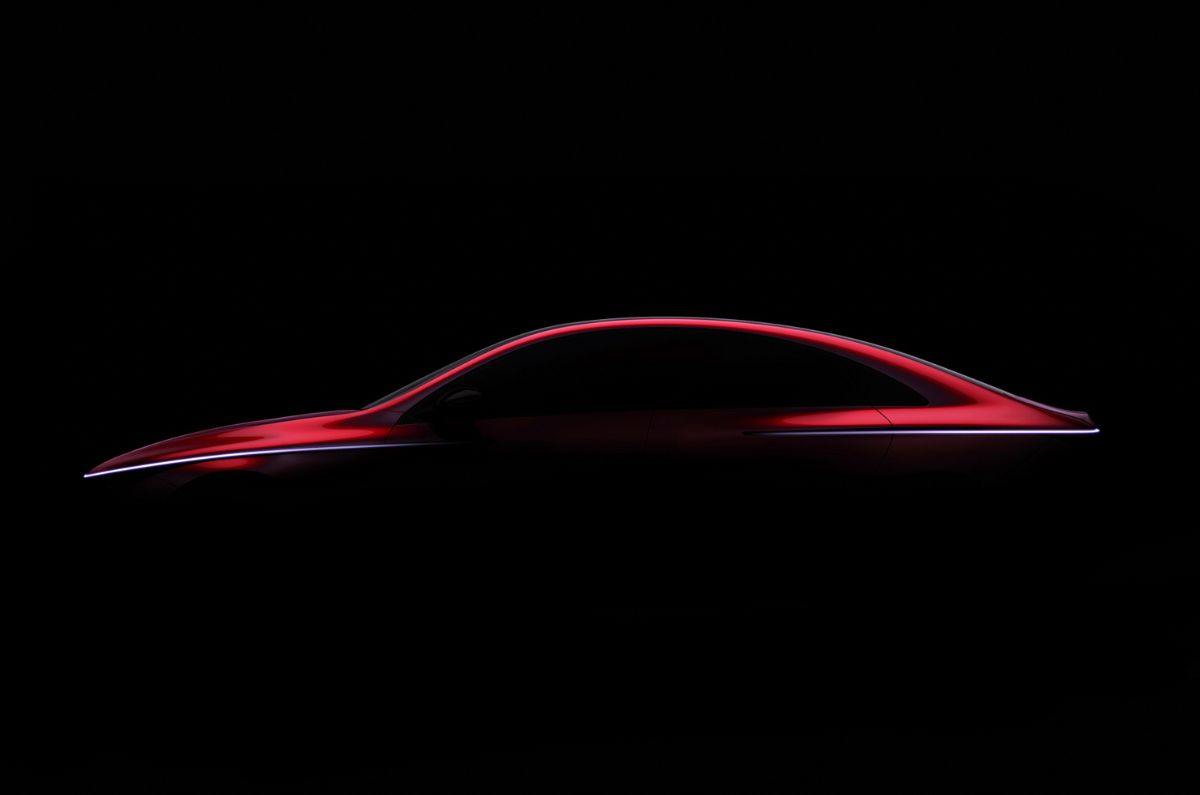
मर्सिडीज-बेंज एक नई कॉन्सेप्ट कार पर काम कर रही है जो जर्मन ब्रांड के एंट्री-लेवल लक्जरी मॉडल का पूर्वावलोकन करेगी। म्यूनिख जर्मनी में 2023 IAA मोबिलिटी ऑटो शो में इसके अनावरण से पहले। आगामी एंट्री-लेवल लक्ज़री सेडान को ब्रांड के ओवरहाल किए गए उत्पाद पोर्टफोलियो में महत्वपूर्ण भूमिका निभाने की उम्मीद है, जैसा कि 2022 में संकेत दिया गया था। मर्सिडीज-बेंज अपने उत्पाद पोर्टफोलियो को तीन श्रेणियों में विभाजित करने का लक्ष्य बना रही है और इस अवधारणा से प्राप्त आगामी मॉडल को बेस सेगमेंट एंट्री लक्ज़री में रखा जाएगा, अन्य दो सेगमेंट कोर लक्ज़री और टॉप-एंड लक्ज़री होंगे। संक्षेप में, लॉन्च पर, यह कॉन्सेप्ट सेडान पूर्वावलोकन करती है कि ब्रांड के लाइनअप के लिए प्रवेश बिंदु क्या होने वाला है।
द्वारा: एचटी ऑटो डेस्क | को अपडेट किया: 25 जुलाई 2023, सुबह 10:33 बजे
आगामी सेडान के एमएमए प्लेटफॉर्म पर चलने की उम्मीद है और यह विद्युतीकृत पावरट्रेन के साथ आ सकती है।
जर्मन लक्ज़री कार ब्रांड द्वारा छेड़ी गई कॉन्सेप्ट सेडान उस वाहन के सिल्हूट के समान दिखती है जिसे कंपनी ने 2022 में छेड़ा था। हालाँकि, नई छवि कुछ पहलुओं में थोड़ी अधिक स्पष्ट दिखती है। यह चिकने ग्रीनहाउस क्षेत्र, छोटे रियर डेक और बाहरी हिस्से में सफेद लहजे को दर्शाता है। टीज़र इमेज में हेडलैंप के पीछे से साइड प्रोफाइल के माध्यम से टेललाइट्स तक चलने वाली चिकनी क्रीज और अच्छी तरह से घुमावदार कूप जैसी छत भी दिखाई दे रही है। तस्वीर में ए-पिलर से जुड़े साइड-व्यू मिरर भी दिखाई दे रहे हैं। दिलचस्प बात यह है कि टीज़र इमेज में दरवाज़े के हैंडल नहीं दिख रहे हैं। हालाँकि, अवधारणा का समग्र डिज़ाइन ऑटोमेकर के वर्तमान स्टाइलिंग दर्शन से बहुत दूर नहीं जाता है।
टीज़र छवि प्रकट करने के बावजूद, मर्सिडीज बेंज अवधारणा के बारे में कोई विवरण नहीं दिया गया है। उम्मीद है कि यह एमएमए प्लेटफॉर्म पर चलेगा और इस साल सितंबर की शुरुआत में आईएए म्यूनिख में अनावरण के बाद यह 2024 में उत्पादन के रूप में शुरू हो सकता है। साथ ही, ऑटोमेकर के पूर्ण विद्युतीकरण के प्रयास के साथ, सेडान एक विद्युतीकृत मॉडल के रूप में भी आ सकती है। हालाँकि, हम इस सेडान के विद्युतीकरण की सीमा नहीं जानते हैं। दिलचस्प बात यह है कि एमएमए प्लेटफॉर्म आंतरिक दहन इंजन के साथ-साथ इलेक्ट्रिक पावरट्रेन को भी समायोजित कर सकता है।
इवेंट में 2023 IAA म्यूनिख और मर्सिडीज-बेंज के प्रदर्शनों के बारे में बोलते हुए, उम्मीद है कि कार ब्रांड अपनी भविष्य की इलेक्ट्रिक वाहन रणनीति का प्रदर्शन करेगा। कंपनी बिल्कुल नया खुलासा करेगी ई क्लास इवेंट में सभी टेरेन, जो बाकी मॉडल लाइनअप के साथ पावरट्रेन और स्टाइलिंग विवरण साझा करेंगे। कार्यक्रम में अन्य प्रदर्शनों में विज़न ईक्यूएक्सएक्स और विज़न वन-इलेवन शामिल होंगे।
प्रथम प्रकाशन तिथि: 25 जुलाई 2023, 10:33 पूर्वाह्न IST
संभवतः EQA सेडान कहलाने वाली यह बिल्कुल नई EV EQXX कॉन्सेप्ट कार से सीख लेगी।
मर्सिडीज सितंबर की शुरुआत में इस साल के म्यूनिख मोटर शो में एक नई कॉन्सेप्ट कार के साथ भविष्य के एंट्री-लेवल मॉडल का पूर्वावलोकन किया जाएगा। हमारी बहन प्रकाशन, ऑटोकार यूके समझता है कि नई अवधारणा नए सीएलए का पूर्वावलोकन करेगी, जिसे हाल ही में इन-हाउस-विकसित इलेक्ट्रिक और माइल्ड-हाइब्रिड पेट्रोल ड्राइवट्रेन के साथ 2025 की शुरुआत से पहले परीक्षण करते हुए देखा गया है।
दहन-संचालित ए-क्लास को हटाया जा सकता है
EQXX की तकनीक का उपयोग उत्पादन कारों में किया जाएगा
आईसीई मॉडल अगले साल तक मर्सिडीज के इलेक्ट्रिक कार प्लेटफॉर्म का उपयोग करेंगे
मर्सिडीज बेंज की नई इलेक्ट्रिक अवधारणा
मर्सिडीज-बेंज ने 2025 तक हर सेगमेंट में एक ईवी पेश करने के लिए प्रतिबद्ध किया है, और म्यूनिख में, यह अवधारणा इसमें शामिल हो जाएगी विज़न EQXX और दृष्टि एक-ग्यारहभविष्य के मॉडलों पर उपयोग की जाने वाली प्रौद्योगिकी का पूर्वावलोकन करने के लिए डिज़ाइन की गई अवधारणाएँ भी।
संभवतः EQA सेडान कहलाने वाली, नई अवधारणा को “वर्ग-अग्रणी नवाचार, डिजाइन और डिजिटल अनुभव के लिए दृष्टि” प्रदान करने के लिए डिज़ाइन किया गया है और यह EQXX से सीखने पर आधारित होगी, जो परीक्षण में, एक बार चार्ज करने पर स्टटगार्ट से गुडवुड तक 1,202 किमी की यात्रा करने में सक्षम थी।
मर्सिडीज बेंज के भविष्य के मॉडल
अगले तीन वर्षों में जर्मन कंपनी अपनी इलेक्ट्रिक फर्स्ट रणनीति के तहत कॉम्पैक्ट कार लाइन-अप के पुनर्गठन के हिस्से के रूप में तीन अन्य ‘एंट्री-लेवल लक्ज़री’ मॉडल पेश करेगी।
इसमें एक लाइन-अप सरलीकरण शामिल होगा, जिससे कॉम्पैक्ट मॉडलों की संख्या सात से घटकर चार हो जाएगी, और अंततः दहन-संचालित को खत्म कर दिया जाएगा। एक वर्ग।
मर्सिडीज मॉड्यूलर आर्किटेक्चर (एमएमए) प्लेटफॉर्म पर आधारित कारों में ट्रांसमिशन टनल और स्लिम बैटरी पैक की कमी के कारण पुराने आईसीई मॉडल की तुलना में अधिक विशाल इंटीरियर होने की संभावना है। उच्च-मार्जिन वाली लक्जरी कारों पर अधिक ध्यान केंद्रित करने की मर्सिडीज की प्रतिज्ञा के अनुरूप, वे अंदर से अधिक शानदार भी होंगे।
मर्सिडीज बेंज EQXX
ईक्यूएक्सएक्स को फर्म के नए एमएमए प्लेटफॉर्म पर भी आधारित किया गया था, जिसे अगले साल तक आईसीई मॉडल के तहत पेश किया जाएगा और संभवतः इस अज्ञात अवधारणा के तहत फीचर दिया जाएगा। EQXX वास्तविक दुनिया में 998 किमी से अधिक की रेंज का वादा करता है – जो मौजूदा फ्लैगशिप EQS से 268 किमी अधिक है।
मर्सिडीज ने पहले ही पुष्टि कर दी है कि EQXX में इस्तेमाल की गई तकनीक का इस्तेमाल उसकी उत्पादन कारों में किया जाएगा, एक प्रवक्ता ने हमें बताया: “इस प्रौद्योगिकी कार्यक्रम से कई नवाचार जल्द ही हमारे उत्पादन वाहनों में अपना रास्ता खोज लेंगे”।
उन्होंने आगे कहा, “विशिष्ट घटकों और प्रौद्योगिकियों के साथ-साथ, इसमें अत्यधिक चुस्त, बहु-विषयक विकास दृष्टिकोण के साथ-साथ विकास प्रक्रिया के दौरान उपयोग किए जाने वाले सॉफ़्टवेयर और डिजिटल उपकरण भी शामिल हैं।”


.jpg&c=0)
.jpg&c=0)
.jpg&c=0)