The tests were supposed to begin in October, but were delayed due to the festive season.
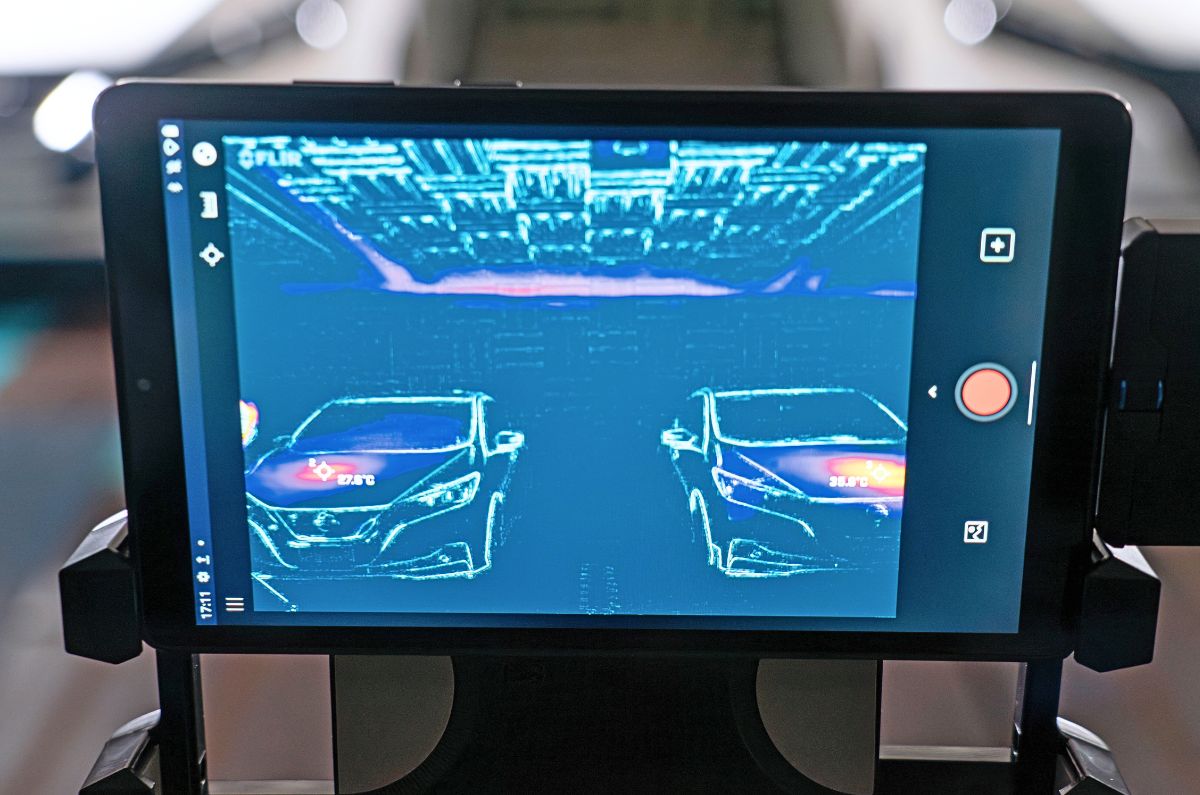
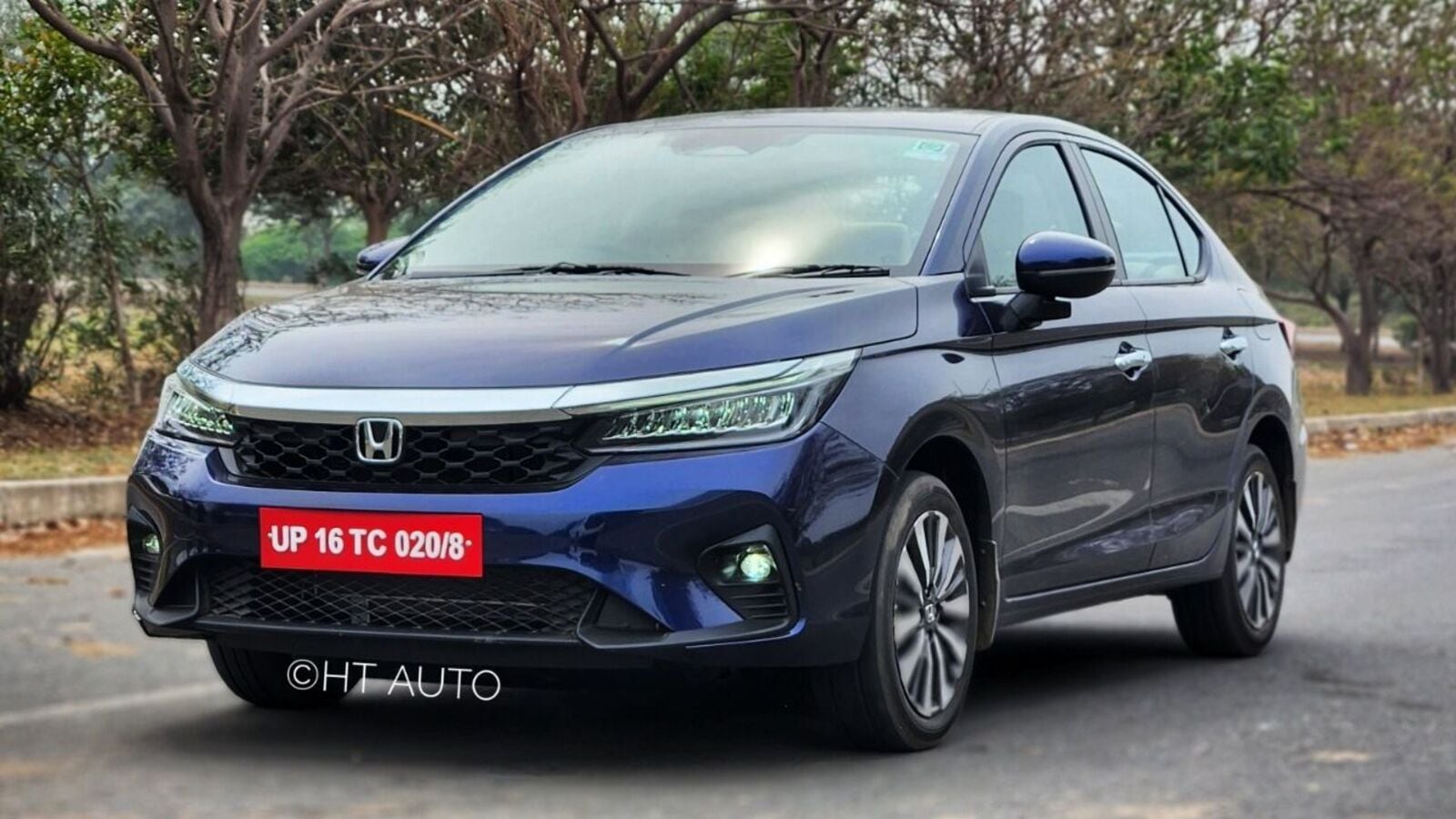
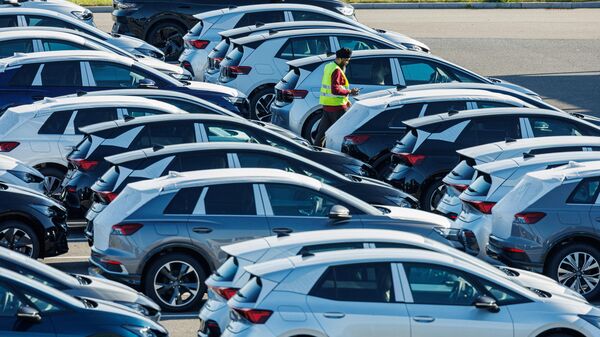
The Government of India’s Bharat New Car Assessment Programme (BNCAP) has completed its first round of crash testing, with results expected this week or by the end of this month. This will help buyers make a more informed purchase decision. Bharat NCAP tests were supposed to begin on October 15th, but were pushed back to December 15th due to the busy holiday season.
While testing agencies have already submitted their evaluations, the formal process of assigning star ratings from 1-5 will be announced by the Central Institute of Road Transport (CIRT) Pune, which is the programme manager for the car assessment plan.
Hyundai, Kia, Maruti and more have submitted cars for tests
Bharat NCAP to test ICE, CNG and EVs
Bharat NCAP test costs Rs 60 lakh; overseas test costs Rs 2.5 crore
Bharat NCAP results
Mahmood Ahmed, additional secretary, Ministry of Road Transport and Highways, told our sister publication Autocar Professional that the “government’s BNCAP programme is on track. We are hoping to share the results as soon as possible, which could be this week or before the end of the year.”
According to Autocar Professional, senior government officials are considering holding a mega event at which Road Transport Minister Nitin Gadkari and Bharat NCAP officials will likely announce the ratings. However, the plan is currently being debated, which explains why the ratings are yet to be announced on the BNCAP website.
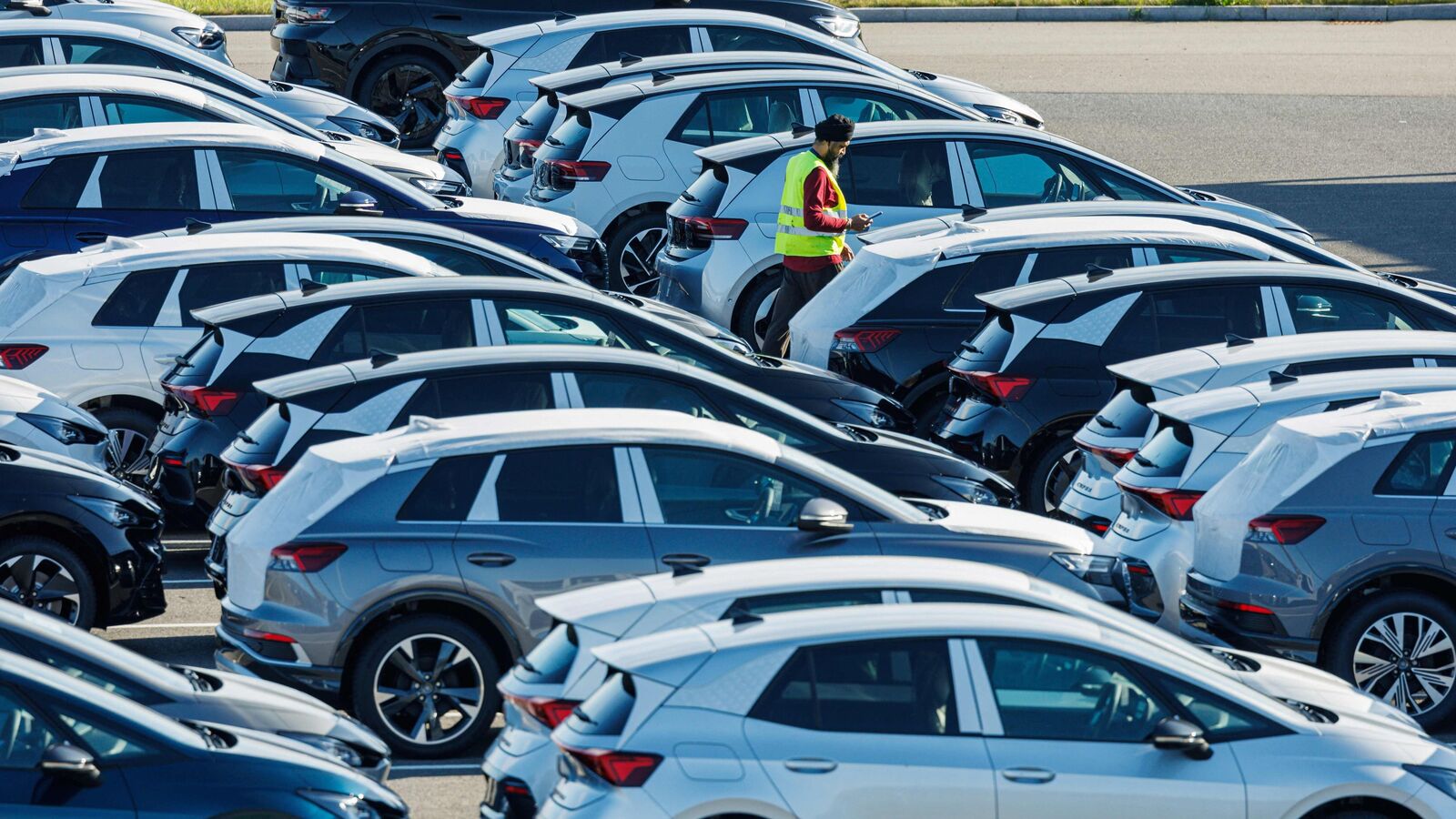
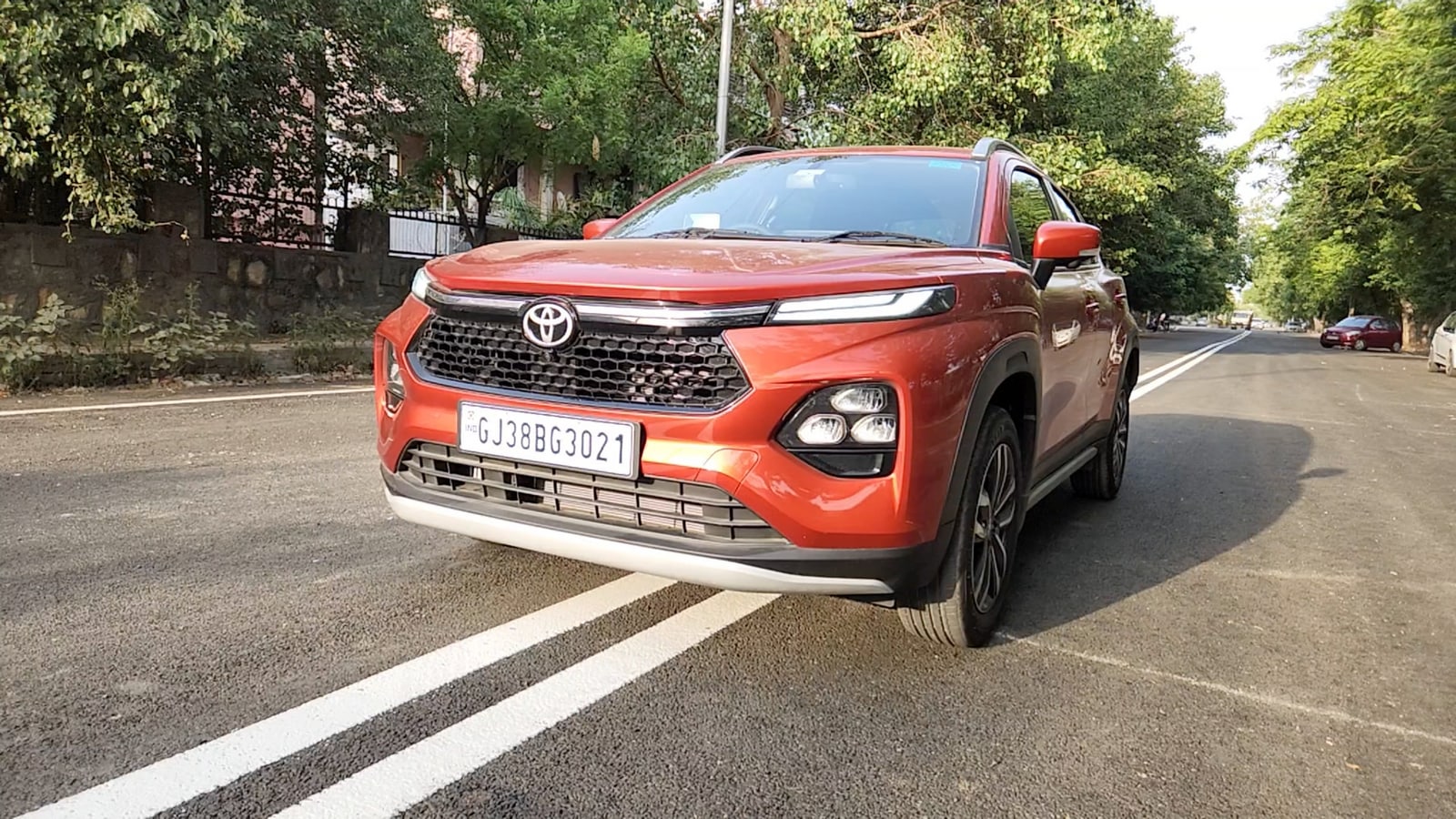
Prominent manufacturers who have submitted their models for the first round of crash tests include Hyundai, Kia, Maruti Suzuki, Mahindra, Toyotaand others. Bharat NCAP is a voluntary programme which tests the base variant of each car.
Bharat NCAP testing process
As part of the test regimen, Bharat NCAP conducts Adult Occupant Protection (AOP) and Child Occupant Protection (COP) tests on vehicles weighing up to 3,500kg, and gives them a safety rating between zero and five. However, while Global NCAP gives a separate rating for AOP and COP, Bharat NCAP will give a unified rating. The vehicles are picked at random by the Automotive Research Association of India (ARAI) and International Centre for Automotive Technology (ICAT) from authorised dealerships.
The crash test ratings of Bharat NCAP will apply to vehicles holding type approval, spanning across models with a seating capacity of up to eight, including the driver. Government officials went on to say that the testing regime includes evaluating and rating CNG, electric, and internal combustion engine vehicles. According to the guidelines, the testing agencies will conduct the frontal impact test at 64kph, the side impact test at 50kph and the pole side-impact test at 29kph.
During the programme’s launch, Gadkari had stated that over 30 models have already been nominated for testing, and added that a BNCAP test will cost Rs 60 lakh, while an overseas tests costs roughly Rs 2.50 crore.
Yamaha Motor India has finally launched the R3 and the MT-03 in the Indian market. They are priced at ₹4.65 lakh and ₹4.60 lakh respectively. Both prices are ex-showroom and the motorcycles will be sold through Yamaha’s Blue Square dealerships. As of now, the motorcycles come to India as a Completely Built Unit and it is expected that the manufacturer might drop the price if the demand is high enough for them to use the Completely Knocked Down route.
By: Paarth Khatri | Updated on: 15 Dec 2023, 18:28 PM
The Yamaha R3 and the MT-03 come into the Indian market via the import route.
At this price, the motorcycles are quite expensive. For reference, the KTM390 Duke costs ₹3.11 lakh ex-showroom and the recently launched Aprilia RS 457 is priced at ₹4.10 lakh ex-showroom. Because of the pricing, the Aprilia now seems more value for money as it will have more exclusivity factor and comes with more electronic aids as well.
Both motorcycles share the same 321 cc, liquid-cooled, parallel-twin engine that produces 41.4 bhp of peak power at 10,750 rpm and 29.6 Nm of maximum torque at 9,000 rpm. The engine is very smooth but because of its high-revving engine, the rider would need to twist the throttle in case he or she needs to exploit that power. Having said that, the engine is also tractable and does 100 kmph at 6,000 rpm without any vibrations.
Yamaha is using a 6-speed gearbox for the engine. Unfortunately, there is no slip-and-assist clutch on offer because of which under aggressive downshifting the rear does start to hop. Having said that the gearbox is quite smooth for the most part.
The R3 and the MT-03 are quite basic in terms of features. There is no traction control, riding modes or Bluetooth connectivity. The motorcycles only get a dual-channel ABS, all LED lighting and a digital instrument cluster that only shows basic information.
On the 40th anniversary of the iconic car, Bhargava gets candid on some rare, behind-the-scenes action of the company’s extraordinary journey.
Published On Dec 15, 2023 06:56:00 PM
Fairytale-like tales of the automobile industry don’t come any better than that of Maruti. It’s the car company that put our entire nation on wheels with the little 800. So 40 years ago, on December 14, 1983, when then Prime Minister Indira Gandhi handed over the key to the first Maruti 800 to Indian Airlines employee Harpal Singh – after he paid a measly Rs 47,500 – little did he or anyone imagine that Indian roads would never be the same again. This humble home on wheels went on to become a symbol of mobility that conquered our roads.
Hormazd: Mr Bhargava, you were there when the car was launched, that momentous occasion when Indira Gandhi handed over the key to Harpal Singh. Did you ever imagine what a revolution the Maruti 800 would spark?
Bhargava: You’re absolutely right. In December 1983, when the car was launched, I don’t think anyone anywhere had any inkling of what it would lead to – for the automobile industry in India, for our component industry, for manufacturing in India or for the whole concept of customer centricity that we now all talk about [it was virtually an unknown word back then]. And how India would transform from being known for poor quality and manufacturing into a hub whose products, including a sophisticated one like a car, are accepted in the best of markets the world over.
Hormazd: What makes the Maruti story even more captivating is that the government never planned to make a car. Do you think it was Sanjay Gandhi’s tragic death in a plane crash that made Maruti an emotional project for his mother?
Bhargava: If Sanjay Gandhi hadn’t passed away in that accident, there would have been no joint venture of this kind. We can only imagine what the state of automobiles in India would have been. After 1993 [when the automobile industry was delicensed], companies would have come in, but would the industry have grown the way it did? Because the way the component industry grew, the way small cars boosted the growth of motorisation in India, it would never have happened with the bigger multinationals. In fact, one of the reasons multinationals flocked to India back then was that we were the only country with a well-established, developed component industry. Look at the size of the component industry today, it’s unbelievable. It exports more than USD 20 billion worth of components at present.
Hormazd: Tell us about your experience during the negotiations with Suzuki.
Bhargava: We started our negotiations with Suzuki in April 1982; it took over two months to put all the licence agreements in place, and we finally signed the agreement in October 1982. While negotiating, we told Osamu Suzuki that we had to close the deal by October of that year. Suzuki was taken aback and didn’t think it could be done because they had been in talks with General Motors for two years at the time. But I insisted that we close it by August so that I could return to India and get the required government clearances.
The Japanese still have a relatively conservative mindset, and as a company, they have their own legal processes as well. We didn’t have a lawyer with us during the negotiations. It was just me and DS Gupta [marketing director, Maruti], with V Krishnamurthy [chairman of Maruti] in the background. Suzuki himself didn’t join any of the negotiations. All he said was to come to him if there was a problem or disagreement. We would travel to Tokyo frequently because Suzuki’s lawyer was based there. Our visits ranged from as long as two weeks to as short as an hour, after which we would return to India, and they would visit us for the next round of discussions. It was a continuous process, but we did manage to get the agreement completed and then pushed it through various government departments. We had no choice but to get it done by October 2, 1982.
Hormazd: Suzuki took just a 26 percent stake at the beginning of the joint venture. How did they arrive at that figure?
Bhargava: Suzuki had a limit on how much money they could put in. Also worried about the risks, they said the total cost of the project must be limited to USD 200 million, and that they would only take 25 percent equity. No more. Everything in the project had to be done within that cost.
Hormazd: But why 25 percent and not 26 percent? It would have been strategically better as that would have given them special rights and the power to block some key decisions.
Bhargava: Actually, from the very beginning, the government had directed us to get 40 percent foreign equity in the project. They, in fact, had refused to sign this agreement for just 25 percent. So we informed Suzuki of the Companies Act and about the additional rights they would have if they went from 25 to 26 percent in acquisition. This also garnered me a great deal of trust, as the guy helping them understand things they weren’t aware of. Next, I tried to convince them to jump to 40 percent from 26 percent. So we came up with a compromise: Suzuki agreed to increase to 40 percent, but over a period of five years, starting with an initial 26 percent stake. So that allowed the government to hold its own, and we got our 40 percent.
Hormazd: After tasting success for five years, Suzuki must have been delighted to raise their investment to 40 percent.
Bhargava: At that time, they were only too happy. They would have pumped in more funds to go even higher. I don’t think they anticipated the response we got. When we prepared a budget and projected a profit, Suzuki asked us, “How long have you guys been in the automobile industry?” I told him we had never been in the field, to which he responded saying we clearly knew nothing about it because this wasn’t how things worked! “You don’t make a profit in the first year. You don’t get customers to book cars they have never seen or are even in production,” he had said. I told him then that if it doesn’t happen, it doesn’t, but there was no harm trying. What did we have to lose? So when we got 1,20,000 bookings [within the first year], they were shocked!
Hormazd: But you couldn’t have fulfilled all those orders because you had capacity limits, right?
Bhargava: Our target was to make 20,000 cars in the first year, 40,000 in the next. The whole production plan had to be changed. The ratio between the vehicles had to be changed completely because it was all passenger cars. Vans were only a small part of the business.
Hormazd: Why couldn’t you increase capacity?
Bhargava: Despite such long waiting lists, we couldn’t raise the capacity at Maruti till 1992-’93 because it needed foreign exchange. Plus, nobody was willing to release the money it would require. Where was foreign exchange? We were in a crisis in 1991, and we’re talking about 1985 to 1991. How were we expected to get the money to set up a car plant? Even in 1991, the government had said we could expand only if we got a foreign loan to cover the cost. So we approached Axiom Bank in Japan and got aid to finance the foreign exchange part of our expansion. That’s how we got our next line in Gurgaon. Until then, we had to live with shortages.
Hormazd: What are your takeaways today, 40 years after delivering the first Maruti 800?
Bhargava: The most important of the lot is realising that we lose an enormous amount of knowledge and people’s capabilities because we don’t value experience as a form of learning; we only value academic degrees. If you train people on ways to channel their learnings, correctly utilise their experience and motivate them, it would add a lot of value to our functioning. Even the best of engineers can’t do this. When I say you must leverage the experiences of those who actually do the work, then you must be willing to make changes so they are motivated to listen to you, to learn from you and contribute to your company. You can’t do this if you take all the credit for what’s happening in the company.
Hormazd: How did Maruti get such an efficient workforce? Was it just the Japanese company systems and work culture, or more?
Bhargava: It was a number of factors. In fact, that’s part of what my new book is going to be all about. How did Maruti become different? What motivated the guys to work differently from what others were doing? Yes, our extensive exposure to Japan and training in Japan played a major role, and Suzuki’s support to Maruti was unparalleled. I don’t think the head of any car company does what he did. The level of interest he took, the amount of time he devoted to the project was amazing.
Hormazd: Lastly, which is your favourite Maruti car of all time? The model closest to your heart.
Bhargava: All models are special to me. Maruti, in itself, is special to me. But there’s no question that the car that drove our success, that drove India’s motorisation and made a car accessible to a large section of our population, was the Maruti 800. It symbolises India’s transformation from an old, obsolete car market to a modern automobile industry. No other model has played such a significant role in any auto market the world over.
Kia Sonet facelift SUV has been unveiled for India with host of changes. The Korean carmaker has upgraded the SUV which competes in the sub-compact segment. In its new avatar, the 2024 Sonet facelift comes across a more tech and feature-loaded version with sportier looks. Among its rivals, Tata Nexon also received major overhaul just a couple of months ago. It will be an interesting contest between the two when Kia launches the new Sonet next month.
Kia has unveiled the new Sonet facelift SUV with several updates, including some segment-first features. It will rival the likes of 2023 Tata Nexon SUV which was also overhauled massively in its latest iteration.
Kia has announced that pre-bookings for the Sonet facelift SUV will start from December 20. According to HT auto sources, the booking amount for the Sonet facelift will be ₹25,000. One can book the SUV through the nearest dealership or through Kia’s official website. Kia Sonet was first launched in India back in September, 2020. Sonet is Kia’s second best-selling model in India. Till November, the carmaker has sold nearly 2.83 lakh units across the country. Since then, this will be the first major update for the SUV that will aim to renew its rivalry with the likes of TataNexon, Maruti Suzuki Brezza, HyundaiVenue, Mahindra XUV300 among others.
With choices galore in the segment, which one should be your pick? Here is a quick comparison between 2024 Kia Sonet and Tata Nexon, two of the models which received updates most recently, to make an informed decision.
Kia Sonet facelift vs Tata Nexon facelift: Specs
The new Sonet has grown marginally compared to its predecessor in terms of dimension. The SUV now stands 3,995 mm in length and 1,790 in width which are similar to the existing dimensions of the Sonet. However, the height of the SUV has increased by 32 mm. It now stands at 1,642 mm instead of 1,610 mm earlier. The wheelbase of the Sonet facelift SUV also remains same at 2,500 mm. Kia will offer Sonet SUV in as many as seven trims. Unlike Tata Motors, Kia has not changed the nomenclature of the variants. There are 11 colour options to choose from, including the new Pewter Olive and two dual-tone exterior themes. Kia will also introduce the Matte Graphite colour exclusively for the X-Line trim.
Compared to Sonet, the new Nexon is similar in size but marginally wider by 14 mm. However, the height of the Nexon is slightly smaller than the new Sonet. Tata Motor offers the Nexon SUV in 11 variants. When it comes to choice of exterior colours, Nexon offers only six against 11 offered on Sonet.
Kia Sonet facelift vs Tata Nexon facelift: Features
Sonet embodies every essence a Korean car manufacturer stands for – feature-rich and loaded with new technology. The Sonet is the first SUV in its segment to be offered with ADAS technology, a feature none of its rivals have yet. This will give Sonet an edge over the likes of Nexon. The ADAS tech is offered with 10 features including lane keep assist, lane follow assist and lane departure warning. There are overall 25 safety features in Sonet, including six airbags as standard, which are more or less similar to what Nexon offers.
In terms of creature comfort, Sonet again stands apart among most its rivals, even Nexon. The updated cabin now comes with a dual digital screen, each measuring 10.25 inches, serving as infotainment system or driver display. Overall, Kia claims there are 25 segment-first features inside Sonet. These also include the likes of ventilated front seats, electric sunroof, air purifier, Bose sound system and power-adjustable driver seat.
Kia Sonet facelift vs Tata Nexon facelift: Engines, performance
Under the hood, Kia has kept things unchanged for the Sonet facelift SUV. There are three engines, including petrol and diesel, offered as choices. The 1.2-litre naturally-aspirated petrol engine is capable of churning out 82 bhp of power and 115 Nm of peak torque. The engine will come mated to a 5-speed manual gearbox. The second option is the 1.0-litre turbo petrol engine. Mated to either a 6-speed iMT and 7-speed DCT transmission, the engine can generate 118 bhp of power and 172 Nm of peak torque. The sole diesel engine is a 1.5-litre unit which can churn out 114 bhp of power and 250 Nm of peak torque. The only change here is the return of the 6-speed manual gearbox for diesel variants. It also gets a 6-speed automatic gearbox which is a better option than Nexon’s AMT unit.
As far as the new Nexon is concerned, the SUV comes powered by a more powerful 1.2-litre turbo petrol unit that can generate 118 bhp of power and 170 Nm of peak torque. The engine comes mated to either a 5-speed manual, 6-speed manual or a 7-speed DCA transmission units. The 1.5-litre diesel engine is equally powerful as that of the Sonet. Besides the AMT, Nexon diesel also comes mated to a 6-speed manual gearbox.
Mahindra Scorpio-N owners are still trying to get their heads around the surprising crash test results the SUV came up with at the Australasian NCAP (ANCAP). The flagship SUV from the carmaker, which is also their best-selling model in India, scored zero rating at the ANCAP crash tests held recently. What has surprised many that the Scorpio-N returned with a five-star rating at the Global NCAP crash test held not so long ago. Now, Mahindra and Mahindra has officially come out with its explanation and its way forward to make Scorpio-N safer in the future.
Mahindra Scorpio-N failed miserably at the crash tests conducted by Australasian NCAP returning with zero stars despite offering six airbags besides other safety features. Few months ago, the same car was awarded five-star rating by Global NCAP.
The Mahindra Scorpio-N tested by ANCAP came laced with several safety features including six airbags, Electronic Stability Control, ABS and EBD, ISOFIX seats among others. But these features were not enough for the SUV to even score a single rating at the test. Sharing the results, the ANCAP explained that the Scorpio-N failed the test due to lack of features like autonomous emergency braking and lane support system. Both these features are usually available with ADAS pack, which Mahindra does not offer with this SUV. The ANCAP also took serious note that the model does not have seatbelt reminders for the second and third rows, speed limit information, driver monitoring system, child presence detection and that the second and third row seats do not offer enough protection for children.
The Scorpio-N’s disappointing safety rating at the ANCAP has prompted Mahindra to announce that it will make necessary changes when the SUV undergoes mid-cycle update. The carmaker is now expected to offer ADAS in the SUV when the facelift arrives, a feature Mahindra offers only in the XUV700 SUV as of now. Reacting to the ANCAP safety rating, Mahindra and Mahindra issued a statement which read, “The ANCAP has specific requirements, which were updated on January 1, 2023, that include the mandate for certain safety features. We at Mahindra are committed to our promise of safety and are working towards meeting these unique safety regulations and requirements for Australia as part of our product mid-cycle update.”
Also watch: 2024 Kia Sonet facelift SUV: Safer, sportier and ready to challenge rivals
The Scorpio-N’s ANCAP safety rating shows how new car assessment program around the world can actually throw up different results for the same model. It is evident that, to be coined as one of the safest cars, one needs to have features highlighted by the agency in case of Scorpio-N. The result comes months after Scorpio-N became the first body-on-frame SUV to secure five-star rating at the Global NCAP crash tests under new safety protocols. It is one of the safest cars in India currently, placed right after TataHarrier and Safari, Volkswagen Taigun and Skoda Kushaq.
Mahindra and Mahindra had launched the Scorpio-N SUV in Australia in April this year, as well as in New Zealand a few months later. Mahindra also sells models like Thar among others in the continent. ANCAP is the safety rating agency for all new cars launched in these two countries.
Mahindra Racing has taken the wraps off the new livery on the M10Electro race car for the 2023/24 Formula E World Championship. The only Indian team on the grid, Mahindra Racing brings a sharper livery finished in a matte red, silver and desert grey colour scheme. The new design has been developed by the team in partnership with the folks at Mahindra Advanced Design Europe (MADE) in the UK.
By: Sameer Fayaz Contractor | Updated on: 14 Dec 2023, 22:45 PM
The 2024 Mahindra Racing M10Electro gets a new matte red shade, a first-ever for the team, along with silver and grey colours
The new Mahindra M10Electro gets a matte finish, which is a first in the team’s history. It also commemorates Mahindra Racing’s heritage in Formula E with 10 of the brand’s new twin-peak logos on the engine cover, one for each year of competition. The Indian team has been a part of Formula E since inception in 2014 with the championship heading into its tenth year of racing.
Mahindra Racing has a new driver lineup for the upcoming Formula E season with Edoardo Mortara and Nyck de Vries behind the wheel
Speaking about the new livery, Fred Bertrand, CEO – Mahindra Racing, said, “It’s a new chapter for everybody at Mahindra Racing, and I’m very excited to unveil our livery for Season 10, which reflects both this and celebrates our long-standing commitment to Formula E. We have a very proud history in the Championship as a team, and the objective is for the actions we are taking now, in the present, to help build a brighter future on track. I can’t wait to see the cars take to the track in Mexico in the new livery.”
The last ten years have been full of many highs and a few lows for the team. This includes five e-Prix wins, 24 podiums and 10 pole positions. The last season though was rather forgettable and the team is now looking at a resurrection of sorts with the upcoming outing. Speaking to HT Auto earlier this year, Fred Bertrand explained that the team was looking forward to the new season with development still underway on the Gen3 car but was looking at a stronger return in Season 11.
To achieve this, the team had to start on a clean slate that included bringing drivers Edoardo Mortara (2021 Formula E champion) and F1 driver Nyck de Vries on board. Both drivers with their crucial experience and insight will be instrumental in the team’s turnaround strategy. Mahindra Racing also signed Indian racing driver Kush Maini as its reserve driver for the upcoming season. A more competitive team and car are expected to leave a strong mark in the upcoming season that kicks off on January 13, 2024, in Mexico.
The updated Kia Sonet was officially unveiled to the world at an event in New Delhi on Thursday. The latest Sonet gets some very significant changes to its exterior design styling while now also boasting of ADAS or Advanced Driver Assistance System. To launch in India in the first quarter of calendar year 2024 and the bookings start on 20th December. The Kia Sonet will look to intensify its rivalry against the likes of Maruti Suzuki Brezza and Hyundai Venue, both of which were updated in 2022. It will also take on segment leaders Tata Nexon and Mahindra XUV300.
The updated Kia Sonet has received key styling updates on the outside and now comes with ADAS. There is, however, no change to the overall dimensions and mechanics of the model.
View all Images
The Sonet remains an extremely crucial model in the Kia India lineup and was the third launch here from the Koreans, after Seltos in 2019 and Carnival MPV in 2020. While the Seltos received a significant update earlier this year, the Sonet was beginning to look jaded. But not anymore.
While the Sonet sells in very respectable numbers in the domestic Indian car market, it is also exported to select countries from the company plant in Andhra Pradesh’s Anantapur. On obvious lines, the updated Sonet will also roll out from this same facility.
Kia Sonet: Key design updates
The Kia Sonet is a sub-four meter SUV from the Korean brand and sits below the Seltos SUV in the product pyramid. That said, exterior styling has been as crucial for the Sonet as it has for the Seltos. The updated Sonet continues to sport the Kia signature Tiger Nose grille but the DRL placement and design has been tweaked slightly. The headlight units and the front bumper have been refreshed as well.
Watch: Kia Sonet facelift SUV first look
At the back of the latest Sonet, there is now an LED light bar that connects the two tail lights. The design of these tail lights has been refreshed as well and is now visually closer to the lights at the back of the updated Seltos and the Carens MPV. On the side, the alloy design on the 16-inch wheels too has been reworked.
Kia Sonet: Colour options
The new Kia Sonet is available in eight single-tone colour options, two dual-tone hues and a matte shade that is exclusively for the X Line. The monotone colour choices are Olive, White, Silver, Grey, Black, Red, Blue and Clear White. The dual-tone hues are Red with a Black roof and White with a Black roof.
Kia Sonet: Key cabin highlights and features
Sonet has always been one of the most densely packed SUV models in terms of features. The model boasts of a 10.25-inch main touchscreen display and another 10.25-inch LCD driver display unit. It also gets a 360-degree camera, smart air purification system, a seven-speaker Bose sound system, electric sunroof and Kia Connect Skill with Amazon Alexa.
A closer look at the dashboard layout inside the updated Kia Sonet. The car now comes with over 70 connected features while also sporting a 360-degree cam view car location function.
Depending on the trim selected, the cabin colour and seat pattern would differ. The X Line gets Sage Green Leatherette seats with all-black interiors. The GT Line sports Black Leatherette seats with all Black interiors and White inserts. The Tech Line gets Black and Brown Leatherette seats as well as Black and Beige semi-leatherette seats.
Since there is no change in the overall dimensions of the new Kia Sonet, the cabin space in both rows, as well as the boot space, remains the same.
Kia Sonet: Dimensions (in mm)
Length
3,995
Width
1,790
Height
1,647
Wheelbase
2,500
The biggest bragging right however comes from the addition of ADAS and the Sonet now comes with Forward Collision Warning and Avoidance Assist, and Lane Keep Assist.
Kia Sonet: Engine and key specifications
There is no change in the mechanics of the updated Kia Sonet. The Sonet continues to come with two petrol engine options and a diesel motor. The 1.0-litre turbo petrol motor offers 118 bhp and 172 Nm of torque. The 1.2-litre petrol motor puts out 81 bhp and 115 Nm of torque while the 1.5-litre CRDi diesel engine develops 113 bhp and offers 250 Nm of torque.
The Kia Sonet facelift continues to come with a five-speed manual gearbox, six-speed manual gearbox, six-speed automatic transmission, six-speed iMT and seven-speed DCT unit.
The 2023 Valley Run saw some blistering quarter-mile times, with Fahim Zahran (Suzuki Hayabusa) and Vicky Sawant (BMW M5) bagging top honours.
The 11th edition of The Valley Run saw over 700 participants and 11,800 spectators gather at the Aamby Valley airstrip for three days of thrilling drag racing. The fastest times of the event were set by Fahim Zahran on his Suzuki Hayabusa and Vicky Sawant in his BMW M5.
Since the first edition held in 2013, The Valley Run has grown to become the crowning glory of India’s drag racing scene. Fahim Zahran set the fastest time of the 2023 edition, with a time of 9.359secs astride a Suzuki Hayabusa he personally tuned. As for the cars, Vicky Sawant set the fastest time of 9.971secs behind the wheel of a BMW M5 tuned by Super Car Club Garage.
Roshan Reddy completed the quarter-mile run in 11.712secs to take home the title of Fastest Indian Car of the Event, while Shahrukh Khan set a time of 11.622secs on his tuned Kawasaki Ninja 400 to clinch the title of Fastest Indian Bike of the Event.
There was also a big turnout from female racers. Uvashri Kannadasan Balajeyanthi and Shreya Singh took top honours in the cars classes. Over in the bikes classes, Shweta Chithrode and Samantha D’Souza emerged as the fastest female riders.
Along with the main drag races, the event also hosted a variety of special segments including drifting and stunt shows by Bad Boi Drifts and JK Tyre. At the end of three days of hard-fought racing, the trophies were handed out, and the event was made possible by the help of partners AMG Performance, JK Tyre, Monster Energy, Castrol Power1, Indian Oil XP100, Super Select, Cloud9, Paytm Insider and Inovexic.
“The 11th edition of The Valley Run was one of the biggest editions of the decade-old series. It had its lows and extreme highs. It also had racing incidents and the safety precautions taken showed how important it is for an event of this scale to move ahead without serious repercussions,” said Rongom Tagore Mukerji, director of Elite Octane (organiser of The Valley Run) and promoter of The Elite Cup.
“The Valley Run remains to be one of the most challenging events to execute at a remote location, but, at the same time, it’s special for the entire racing community. I would like to thank the participants for the tremendous support and patience, sponsors along with special guests. Lastly, the core team deserves all the accolades as their relentless efforts ensured that we could conclude the race classes successfully.”
The Valley Run 2023 results
Prize
Competitor name
Vehicle
Class
Time (secs)
Fastest Indian Car of the Event
Roshan Reddy
Skoda vRS
R2
11.712
Best Tuner – Indian Car
Venom Performance (Sreeram)
Skoda vRS
R2
11.712
Fastest Foreign Car of the Event
Vicky Sawant
BMW M5
N
9.971
Best Tuner – Foreign Car
Super Car Club Garage (Mushabbar Lakadwala)
BMW M5
N
9.971
Fastest Car – Diesel Car
Vikram Walia
BMW X3
L6
12.37
Best Tuner – Diesel Car
Mod my car India/Etuners Greece
BMW X3
L6
12.37
Fastest Indian Car with Engine Swap
Gaurav Shetty
Volkswagen Polo
R4
11.623
Best Tuner – Indian Car with Engine Swap
N1 Racing
Volkswagen Polo
R4
11.623
Fastest Foreign Bike of the Event
Fahim Zahran
Suzuki Hayabusa
E3
9.359
Best Tuner – Foreign Bike
Fahim Zahran
Suzuki Hayabusa
E3
9.359
Fastest Indian Bike of the Event
Shahrukh Khan
Kawasaki Ninja 400
C4
11.622
Best Tuner – Indian Bike
Mantra Racing
Kawasaki Ninja 400
C4
11.622
Fastest Driver Foreign Car – Female
Shreya Singh
McLaren 720S
K9
10.897
Fastest Driver Indian Car – Female
Uvashri Kannadasan Balajeyanthi
Skoda Octavia 1.8 TSI
M3
11.989
Fastest Rider Foreign Bike – Female
Shweta Chithrode
Suzuki Hayabusa
D2
9.904
Fastest Rider Indian Bike – Female
Samantha D’Souza
Kawasaki Ninja 400
C4
13.185
Elite Cup 2023 results
The 2023 Valley Run also doubled up as the final round of the The Elite Cup. Launched earlier this year, the series consisted of three high-profile drag racing events across the country. The first two rounds were held in Hosur and Hyderabad.
The next-generation KTM 390 Adventure is currently under development and is set to get massive upgrades over the outgoing version with a more off-road focus. And now, the latest spy shots that have emerged online are attributing towards the same. The 2025 KTM 390 Adventure was recently spotted testing in a near-production guise and the images reveal a great deal about the upcoming motorcycle.
By: HT Auto Desk | Updated on: 13 Dec 2023, 21:11 PM
The 2025 KTM 390 Adventure test mule reveals a slimmer, more Dakar Rally-inspired motorcycle with possibly a 21-inch front wheel (Cycle World)
The next-generation KTM 390 Adventure will get a massive overhaul with completely new styling and a slimmer design. The adventure tourer appears to be inspired by the Dakar rally bike with the semi-fairing, a high-set front fender and a slim rear. The bike also appears to get a new frame with the main frame being a trellis unit likely to be shared with the new-gen 390 Duke, while the subframe appears to be all-new and a square-section tubular unit. This should bring more flexibility to the 390 Adventure over the current model.
The next-generation KTM 390 Adventure will get a new chassis and the larger 399 cc liquid-cooled, single-cylinder engine that debuted on the 390 Duke (Cycle World)
The styling is radical as we’ve come to expect from KTM. The test mule gets vertically stacked LED headlamps surrounded by LED DRLs inspired by bigger models in the brand’s portfolio. The bike also appears to be running on 21-inch front and 18-inch rear spoked wheels, which will be a big departure from the current 19-inch front and 18-inch rear wheel setup. The move will help the 390 ADV become more off-road friendly and take on the competition rather well. Expect the alloy wheels to be available as an option with a more touring-friendly variant.
The 2025 KTM 390 Adventure is expected to arrive globally in the second half of next year (Cycle World)
Also expect to see upgrades to the adjustable suspension at the front and rear, while KTM will also add better braking systems with dual-channel ABS, cornering ABS and traction control. The big change on the new KTM 390 Adventure will be its newly-developed 399 cc, single-cylinder, liquid-cooled engine shared with the new 390 Duke. The motor is tuned for 45.3 bhp at 8,500 rpm and 39 Nm of peak torque at 6,500 rpm, mated with a 6-speed gearbox. The new motor was certainly impressive as we found on the KTM 390 Duke ride but also more tractable than before, which should work with the new 390 ADV.
Watch: 2023 KTM 390 Adventure: First ride review
More details should be available in the weeks to come. The new KTM 390 Adventure is expected to arrive in the second half of 2024 globally and will make its way to the Indian market soon after. Expect prices to see a hike with the latest iteration that will continue to be built in India for domestic and international markets. The 350-500 cc segment though is a lot more competitive this time and the KTM 390 ADV will take on the Royal Enfield Himalayan 450, and BMW G 310 GS in this space.
Lamborghini is a marquee brand in Italy, home to some of the most exotic carmakers, which makes its cars some of the most sought-after acquisitions for those with the need for speed and a pocket deep enough to fund it. However, time and again, we get a reminder that these exceptionally crafted machines can do a lot more than just speed runs and put that exceptional power to good use. A case in point is this Lamborghini Urus that has been specially created for the Italian Police to transport organs.
By: Sameer Fayaz Contractor | Updated on: 13 Dec 2023, 16:29 PM
The Lamborghini Urus Performante built for the Italian Police gets a special refrigerated compartment in the boot to deliver organs
This Urus Performante is the sixth vehicle offered by Lamborghini to the Italian Police. Much like the Lamborghini Gallardo and Huaracan supercars converted previously for police work, the new Urus Performante has been equipped with a special refrigerated compartment in the boot to deliver organs to those in need of a transplant. It also gets a second fridge to carry plasma.
The Lamborghini Urus for the Italian Police also get a fridge to carry plasma, an armoured weapon box, a dedicated area for a defibrillator and a flip-down message display
The Urus is a far more versatile offering than its mid-engined siblings, and this allowed Lamborghini to add an armoured weapon box, a dedicated area for a defibrillator and a flip-down message display mounted above the dashboard.
The Lamborghini Urus Performante also gets a special livery created by Lamborghini Centro Stile, the design division of the automaker. It combines the Italian Police’s classic blue shade with white, along with police logos made out of reflective film on the doors. A big Italian flag motif has been integrated as well. The Urus also has roof-mounted 360-degree LED blue lights and a dual-tone electric siren.
The Lamborghini Urus Performante continues to draw power from the 4.0-litre twin-turbo V8 with 657 bhp and 850 Nm of peak torque
With time being of the essence here, the V8 engine on the Urus Performante should get you from one location to another within time. The 4.0-litre twin-turbo engine produces 657 bhp and 850 Nm of peak torque. The performance SUV can sprint from 0-100 kmph in 3.3 seconds and gets a top speed of 306 kmph.
The new Lamborghini Urus Performante for the Italian State Police will join the fleet in 2024 and be used by the Highway Police. The SUV is another addition to a 20-year-long association and was handed over in a special ceremony in Rome earlier this week.
Taiwanese electric mobility solutions company Gogoro has forayed into the Indian market and has introduced its battery-swapping ecosystem and electric scooters in the country. The company unveiled its first “Smartscooter” for India in the form of the Gogoro CrossOver series and has opened its maiden battery-swapping stations in Delhi and Goa for B2B customers. The manufacturer’s electric scooters will be initially available for B2B customers.
By: Sameer Fayaz Contractor | Updated on: 12 Dec 2023, 22:04 PM
The Gogoro CrossOver GX250 is made in India and will be available initially for B2B customers as a last-mile delivery, fleet and logistics services offering
The Gogoro CrossOver electric scooter range is made in India and will roll out of the company’s facility in Maharashtra. The CrossOver series is built on an all-terrain frame and will be available in three models – CrossOver GX250, CrossOver 50 and CrossOver S. The CrossOver GX250 is immediately available to customers, while the 50 and S versions will be made available later in 2024. The company the CrossOver range promises a variety of storage, riding and customisation capabilities.
Speaking about its entry into the highly competitive Indian electric mobility space, Horace Luke, founder and CEO of Gogoro, said, “We are at the cusp of a dramatic change in the global urban transportation landscape, and with its more than 250 million mopeds and motorcycles India is well positioned to lead the shift to sustainable consumer and B2B transportation. The Gogoro CrossOver series embodies everything our brand has come to stand for and the new made-in-India CrossOver GX250 is optimized for riders in India with more seating space, greater storage and better ground clearance.”
While Gogoro’s first battery-swapping stations will be available in Delhi and Goa for B2B customers, it has announced expansion plans to roll out the service in Mumbai and Pune in the first half of 2024 with consumer availability in the second quarter of 2024.
The Gogoro CrossOver GX250 is the brand’s first made-in-India e-scooter and has been specifically adapted to suit the Indian customer’s needs. The company had run a pilot program in India previously and decided to integrate features as requested by the brand’s pilot riders.
The Gogoro CrossOver GX250 electric scooter offers a ground clearance of 176 mm, the highest ever on any model from the company. Power comes from a 2.5 kW (3.3 bhp) Direct Drive motor with a top speed of over 60 kmph. The company claims a range of 111 km on a single charge. Gogoro says the new frame increases the durability of the suspension system that can accommodate larger loads. It will come with 26 locking points with four cargo areas including a platform design headlight, foot, seat, and a rear cargo space. The rear seat can be flipped up or removed for additional cargo storage.
Luke further added, “Gogoro was uniquely created to introduce a mass market shift to sustainable energy in densely populated cities by establishing an intelligent battery-swapping ecosystem for vehicle refuelling that is safe, scalable and open. There has been significant demand in India for Gogoro battery swapping, Smartscooters and technologies and we are excited to be launching commercially with a variety of partners. On average, last-mile delivery riders ride more than six times the distance as consumer riders, so enabling these delivery riders to adopt smart sustainable electric transportation can have an accelerated impact on a city.”
Gogoro says the CrossOver GX250 will be the best alternative to gas-powered vehicles and will be well-suited to the specific market and industry needs in India. The company has already partnered with last-mile delivery companies like Zypp, as well as logistics fleets and taxi services to adopt its battery swapping and electric scooters. It is also working on establishing a shared mobility-as-a-service program.
Skoda Auto India will be increasing prices across its passenger vehicle range by up to two per cent with effect from January 1, 2024. Prices will increase on the Skoda Slavia, Kushaq and Kodiaq currently on sale in India and will be effective on the ex-showroom cost of the vehicles. In a statement, Skoda Auto said that the price hike is owing to rising supply, input and operational costs.
By: Sameer Fayaz Contractor | Updated on: 12 Dec 2023, 21:37 PM
The Skoda Slavia, Kushaq and Kodiaq are set to get more expensive by up to 2 per cent from January 1, 2024
Skoda joins the likes of Volkswagen, Audi, Maruti Suzuki, Mahindra, Tata Motors, Citroen, MG Motor India and more automakers who have announced price hikes for the new year. Price increments are rather common during the advent new calendar year but we’ve seen a consistent increase in prices throughout the year as well due to the rising inflation rates globally.
Skoda Auto’s range starts with the Slavia sedan and Kushaq SUV priced from ₹10.89 lakh onwards respectively. Both models are based on the MQB-A0-IN platform and share the 1.0-litre and 1.5-litre turbo petrol engine options. The former produces 113 bhp while the latter develops 148 bhp. Transmission options include the 6-speed manual and torque converter on the 1.0 TSI, while the 1.5 TSI gets the 6-speed manual and the 7-speed DSG automatic. The Skoda Kodiaq comes with the 2.0-litre TSI churning out 188 bhp paired with the 7-speed DSG gearbox.
Skoda Auto is expected to bring the Enyaq electric SUV to India in 2024. The company is also planning to bring more updates and special editions to the Slavia and Kushaq, keeping the models fresh amidst the refreshed rivals. Skoda dealers are also offering several year-end discounts across the range, so make sure to check with your local dealer for a good deal.
Over 62,000 units of the cumulative sales have been in the last eight months.
The Bajaj Chetak, the electric scooter from the Pune-based Bajaj Auto, has surpassed the 1,00,000-unit sales milestone in the Indian EV market. Launched in January 2020, the Chetak EV has taken 47 months to achieve cumulative sales of 1,04,200 units as of end-November 2023, as per SIAM wholesales industry data.
What’s notable is that 60 percent of the total 1,04,200 units have come in the first eight months of FY2024, reflective of the growing demand for the zero-emission Bajaj on two wheels. These 62,991 units sold in April-November 2023 are a handsome 172 percent increase over April-November 2022 (23,160 units), and 31,556 units more than the cumulative sales of FY2023 (31,435 units).
On the cumulative wholesales front in the ongoing fiscal year, Bajaj Auto is just 5,229 units behind Ather Energy, the No. 3 OEM after Ola Electric and TVS Motor Co (1,32,894 units). The company clocked its best-ever monthly sales in the festive month of October 2023: 12,137 units.
On the retail front, as per Vahan data, Bajaj Auto sold more Chetaks than Ather Energy e-scooters in the past two months. The legacy player maintains its newly claimed No. 3 rank with best-ever monthly sales of 11,668 units in November, up 29 percent, month-on-month (October 2023: 9,052 units). The scooter had a market share of 13 percent in November, quite a jump from the 4 percent it had in January 2023.
Bajaj looks to expand Chetak network
Bajaj is looking to ramp up production as well as expand its network of exclusive Chetak showrooms. The Chetak network, which has a presence in 141 cities across India, is to be expanded to 250 cities by March 2024.
The Bajaj Chetak is powered by a 2.9kWh battery, has a certified range of 108km on a single charge and a top speed of 63kph. The Chetak Premium’s highlights include a two-tone seat, body-coloured rear view mirrors, a satin black grab rail and matching pillion footrest castings. The Bluetooth-enabled Chetak app facilitates tamper alert, geofencing and over-the-air updates.
Earlier this month, Bajaj Auto launched a new avatar of the Chetak called the Urbane, costing Rs 1,15,000 in its standard form, and Rs 1,21,000 for an additional ‘Tecpac’, which unlocks more features and performance. The company website lists the Chetak Urbane as having slightly higher range (113km) than the current Chetak (108km). However, in the case of the Urbane, this is the IDC-certified range, while for the current Chetak Premium, 108km is its claimed real-world range (its IDC rating is 126km). The new Chetak Urbane gets the same 2.9kWh battery capacity as the current model.
The Chetak Urbane utilises the same colour LCD display as the Premium variant. In standard form, the Urbane offers a 63kph top speed, and comes with only one riding mode – Eco. With the ‘Tecpac’ installed, top speed rises to 73kph and the user gets a Sport riding mode as well.
Porsche redefines what you can expect from an electric SUV.
Published On Dec 12, 2023 04:30:00 AM
The Macan has been a runaway success for Porsche, both internationally and in India. An SUV that followed in the footsteps of the larger Cayenne – chronologically as well as on its steady rise up the charts – the Macan today is as much responsible for the success of Porsche as the Cayenne. Importantly, it seems to possess more Porsche DNA. Smaller, lighter, more compact and more agile – little wonder then that Porsche chose this to be its first all-electric SUV. And that’s not it; this is also the first Porsche legacy nameplate to get the all-electric treatment. And that’s huge.
Macan is the first Porsche legacy nameplate to get the all-electric treatment.
Porsche Macan EV platform, battery and exterior design
While the current Macan will continue to be on sale alongside the EV, just like the Taycan and Panamera co-exist, the Macan EV will have its work cut out. On its wide and strong shoulders sits the future success of Porsche’s EV range. Built on an updated version of Porsche and Audi’s Premium Platform Electric (PPE), the Macan EV runs an 800-volt architecture, similar to that of the Taycan for faster charging, better performance and greater efficiency. The Macan’s other big piece of hardware is the 100kWh battery, which Porsche says will be supplied as standard. The battery consists of 12 modules with prismatic cells, the ratio of nickel, cobalt and manganese standing at 8:1:1.
To allow for higher switching frequencies, Porsche has also used silicon carbide (SiC) as the semiconductor in the rear axle. And thanks to the 800-volt technology, the Macan EV can be charged at up to 270kW. This means the battery can be charged from 10 to 80 percent in less than 22 minutes, a figure similar to that of the Lotus Eletre. If the charging station only operates at 400 volts, the Macan virtually divides the battery pack into two 400-volt units (that run in parallel), so they can be charged faster. Also interesting is the Integrated Power Box (IPB) – it combines three components, the on-board AC charger, the high-voltage heater and the DC/DC converter, making for a lighter, more compact unit.
The battery can be charged from 10 to 80 percent in less than 22 minutes.
While we couldn’t see much due to all the camouflaging, what’s evident is that the nose will get Porsche’s recently elevated headlight-pod look. The split headlights are also likely to be similar to that of the Taycan. The profile of the car looks a bit lower slung and the doors are now pillarless. Also evident are bigger wheel wells, and there seems to be a larger multi-stage spoiler in the rear.
Porsche Macan EV motors and suspension
The PPE platform allows for a wide range of models with rear- and all-wheel drive, as well as models with staggered performance levels. The top-ranging Macan EV, for now, will get 612hp and 1,000Nm of torque. New-age permanent magnet synchronous motors are used for maximum power density. and what’s new over the Taycan is that a larger capacity water-cooling jacket is used. This keeps the e-motor more stable when loaded up and asked to deliver max power for long stretches. Also, like the Taycan, the magnets within the rotors (inside the motor) get double V lamination and the wires of the stators using the hairpin method, for a higher percentage of copper.
The Macan EV has a slight rear weight bias; it’s a Porsche after all.
What’s interesting is that Porsche has chosen to give the Macan EV a slight rear weight bias. The electric motor is placed well behind the rear axle so as to give the Macan EV a 48 to 52 percent front/rear ratio. Power is also sent to the wheels via a two-stage single-speed transmission. Instead of one large gear wheel, the transmission utilises two smaller wheels, hence two-stage, and this enables a particularly compact design. Fast switching also allows the Macan EV to be predominantly rear-wheel drive, with the intervention of the front axle delayed for the most part till the last moment.
The Macan can be bought with both air springs and steel springs. Two-way dampers are also specified with this car and offer a damping valve for both compression and rebound. In the front, the Macan EV has a double wishbone suspension, with a multi-link setup at the rear. The latter is connected to the body via an ‘elastically mounted’ sub-frame. In addition, the range-topping model also comes with Porsche Torque Vectoring Plus and an electronically controlled differential lock on the rear axle. A first for the midsize SUV is rear-axle steering. The suspension has also been specifically set up with the heavy but low-slung battery forming part of the dynamic package.
Porsche Macan EV ride & handling
Riding shotgun in a Macan EV is a transformational moment. It reminds me of being taken for a drive in an early Nissan GT-R prototype, the raw pace of the four-wheel-drive, turbo-charged sportscar and the leech-like grip displaying an all-new rung in the ladder of performance. The Macan EV too is demonstrated on a track, and here in Leipzig in Germany, the track consists of a collection of corners from the best tracks around the world.
The Macan EV gets rear-axle steering.
First up, however, acceleration from launch. Explosive is an understatement and the G force is so high, I involuntarily clench my abs as I gasp for breath. The Macan should weigh between 2.2 and 2.3 tonnes and with 1,000Nm of torque propelling it forward, expect supercar matching sprint times.
As soon as we enter the track, the test driver also makes full use of the 612hp, and the rear-wheel steering and the torque vectoring. He ‘backs’ the Macan EV into a long righthander, lifting off the accelerator and allowing the rear to come around, provoking a slide on purpose. And then what follows are some deft flicks from the steering wheel and some very purposeful prods on the right pedal just to keep the slide going. The very Porsche-like weight distribution of the Macan EV sure must help.
Top-of-the-line variants get 612hp and 1,000Nm of torque.
“What’s it like?” I ask, innocently. “Are the low-slung battery and lightning quick e-motors making it easier to slide?” Pat comes the reply: “Absolutely”. Needless to say, it feels like loads and loads of fun, and then after executing some neat, tidy and blisteringly quick corners, the test driver proceeds to execute some more lurid slides. The Macan is then even driven over rough ground; but here in Sport, you really can feel every lump and bump on the surface.
Porsche Macan EV: what to expect
The Macan EV should be everything you’d expect from a Porsche electric.
While it is too early to be specific, this is likely to be one of Porsche’s most fun cars yet. Fast, agile and clearly playful, it’s expected to be priced upwards of Rs 1.4 crore for the Turbo variant and could be launched in India in the middle of 2024. It should be everything you’d expect from a Porsche electric and more.
Tata Motors’ electric vehicle wing Tata Passenger Electric Mobility has tied up with as many as four EV charge point operators in India to bolster the EV charging infrastructure across the country. With the help of operators like Chargezone, Glida, Statiq and Zeon, Tata Motors plans to install around 10,000 new electric vehicle charging stations in the country in the next two years. The carmaker has signed a Memorandum of Understanding (MoU) with these charge point operators today (December 11).
By: HT Auto Desk | Updated on: 11 Dec 2023, 18:05 PM
Tata Motors is currently the leading manufacturer in the electric passenger vehicle segment. It also has one of the largest EV charging network across India.
Tata Motors is currently the leading manufacturer in the electric passenger vehicle segment. The carmaker has already sold more than 1.15 lakh electric vehicles across India. Tata offers three electric cars in its portfolio which includes the likes of Nexon EV, Tigor EV as well as Tiago EV. The carmaker is expected to launch at least three more electric vehicles within the next one year. Being the leader of the EV segment, Tata Motors also has one of the largest EV charging network across India with the help of Tata Powers.
The MoU signed between Tata Motors and the four charge point operators will use telematics insight from the carmakers and identify locations to set up the new EV charging stations. This would mean Tata Motors will be able to take help from these operators to install EV chargers at places where its electric vehicles sell the most or is most frequented by Tata’s electric vehicle owners.
Chargezone, Statiq, Zeon and Glida, also formerly known as Fortum Charge Drive India, are some of the leading EV charger operators in India. They have a combined EV charging network of around 2,000 stations spread across various cities in the country. The MoU with Tata Motors will extend the number to 12,000 within the next 12-15 months, said the carmaker. Balaje Rajan, Chief Strategy Officer at Tata Motors Passenger Vehicles and Tata Passenger Electric Mobility, said, “This collaboration will benefit from Tata Passenger Electric Mobility’s unparalleled EV usage insights, coupled with the CPOs’ innovative charging solutions and entrepreneurial spirit, and create 10,000+ additional charging points in the country by FY25.”
Also watch: 2023 Tata Nexo EV first drive review
Tata Motors and these four charge point operators will also work on a smart payment gateway for its customers to make it easy for them to recharge and pay. They are planning to roll out RFID cards which will be accessible at any of the charge points operated by these companies. Customers will also be able to avail benefits of loyalty programs as well as access dedicated customer care number.
Currently. Tata Motors has nearly 5,000 public EV charging stations across the country in collaboration with Tata Power. Tata Motors and Tata Power have also launched EZ Charge Card, a touch-based RFID card. Tata Motors has also tied up with Bharat Petroleum to set up 7,000 chargers over the next year.
China’s Huawei Technologies has asked Mercedes Benz and Volkswagen’s Audi if they are interested in buying small stakes in its smart car software and components firm, according to three people with knowledge of the discussions.
By: Reuters | Updated on: 11 Dec 2023, 16:44 PM
The Huawei Aito M7 is the debut car model from the Chinese smartphone maker.
The move is aimed at expanding its partnerships beyond Chinese brands, they said. Huawei, the target of U.S. sanctions since 2019, also hopes the presence of foreign investors would help defend the business from potential further geopolitical tensions, according to one of the sources who was briefed on the matter.
The Chinese technology giant said last month it will spin off its four-year Intelligent Automotive Solution (IAS) business unit which is seeking to become the dominant supplier of software and components for smart electric vehicles (EVs).
Sources have previously said the unit will be valued at somewhere between $28 billion and $35 billion.
Huawei held preliminary talks with Mercedes in recent weeks, according to two sources. One source said the German auto brand was offered a 3% to 5% stake with the valuation to be negotiated.
But Mercedes was not that interested as it wants to remain in charge of its software to sustain its premium brand positioning rather than outsource it to a supplier, the source added.
Audi’s level of interest in Huawei’s offer could not be immediately determined.
However, two of the sources said Audi and Huawei are planning a partnership to develop autonomous driving technologies for Audi. Those technologies would be used in vehicles for the Chinese market from 2025 and which would be built by the German automaker’s venture with FAW Group.
The sources declined to be identified as the discussions were confidential.
Mercedes declined to comment on what it called speculation. Huawei and Volkswagen did not respond to requests for comment. The move by Huawei comes as global automakers in China increasingly seek to partner with Chinese companies, which have pulled ahead in developing high-end features for tech-savvy Chinese consumers. Volkswagen has been working with EV automaker Xpeng and autonomous driving chip designer Horizon Robotics to develop China-specific intelligent and connected electric cars.
Audi has also partnered with SAIC Motor to develop EVs in a segment for the Chinese market it did not previously have a presence in.
Richard Yu, who oversees Huawei’s smart car business, told a forum in April that it had been difficult for European, U.S. and Japanese companies to choose Huawei as their main supplier of intelligent solutions due to U.S. sanctions. “Therefore it’s a huge challenge because we have invested tremendously,” Yu said at the time.
While many of China’s most high-profile EV manufacturers like Nio and BYD rely on their own software, Huawei has formed partnerships with smaller electric car makers like Seres Group and some big older automakers like Chongqing Changan Automobile.
Changan Auto has said it will be an investor in Huawei’s smart car business once it is spun off, owning as much as 40% along with relevant parties.
Yu said in November that Huawei had invited Seres, Chery Automobile, Jianghuai Automobile Group and BAIC Motor to invest in the smart car firm and hoped FAW Group could join as well.
Dongfeng Motor is another potential investor in the firm, sources have said.
Launched in 1991, the Tata Sierra two-door SUV has reached a cult status in recent times and Tata Motors hinted at resurrecting the nameplate in an all-new electric avatar. The automaker unveiled the Sierra concept at the 2020 Auto Expo as a three-door offering and then as a five-door electric SUV at the 2023 Auto Expo. And now, a design patent related to the Sierra EV has been leaked online, promising the model’s imminent arrival.
By: HT Auto Desk | Updated on: 10 Dec 2023, 22:07 PM
The Tata Sierra EV is expected to arrive in showrooms in 2025
The design patent gives more details on the Tata Sierra EV and the elements that could likely go into production. The front profile remains largely unchanged with the LED strip running across the width of the SUV, while the headlamps are integrated into the bumper, which now gets vertical slats similar to the ones seen on the new Tata Nexon EV facelift. Other notable elements include the muscular haunches on the bonnet, a skid plate up front and body cladding on the sides. You can also make out the ‘.EV’ badge on the front doors, which will be more common on Tata’s EVs going forward.
The Tata Sierra EV concept was one of the showstoppers at the 2023 Auto Expo
Tata Motors is known to retain most elements from the concept on the production version and that seems to be likely with the Sierra EV as well. The flush door handles, flashy alloy wheels, and a slight heft on the D-pillar further add to the muscular look. The large windows and massive quarter glass should also bring a more roomy feeling at the back.
Details on the powertrain aren’t available yet but the upcoming Tata Sierra EV is expected to come with two electric motors, one on each axle, which will also bring all-wheel drive to the SUV. The interior is expected to be a big step up from Tata’s existing offerings and is likely to carry several elements from the concept version. Also, expect to see an advanced driver assistance system (ADAS) among other advanced tech.
The Tata Sierra EV is expected to be pitched as a lifestyle offering and is expected to enter production in 2025. It’ll be interesting if Tata also brings an internal combustion engine version with petrol and diesel powertrain options. The Sierra EV will take on the Mahindra Thar Electric that’s also expected to arrive in the latter half of the decade as a five-door offering. Meanwhile, Tata is gearing up to introduce the Curvv electric compact SUV in 2024, which will be followed up with the Curvv ICE a year later. The Tata Harrier EV is also slated to arrive next year.
Starting with the Renault Kwid, the MY2023 version gets a maximum discount of ₹50,000 including a cash discount of ₹20,000, an exchange benefit of ₹20,000 on select variants and an additional ₹10,000 cash discount for loyal customers. The hatchback also gets a corporate discount of up to ₹12,000, while rural buyers including farmers, sarpanch and Gram Panchayat members will get a ₹5,000 discount. The Kwid RXE variant and Urban Night Limited Edition only get loyalty and exchange benefits with no cash discounts available.
The Renault Kwid, Kiger and Triber get additional loyalty benefits for existing customers
The MY2023 Renault Triber also gets benefits up to ₹50,000 including a ₹20,000 cash discount on select variants, an exchange bonus of ₹20,000 and an additional ₹10,000 cash discount for loyal customers. Much like the Kwid, the Triber also gets a ₹12,000 corporate discount and a ₹5,000 cash discount for rural customers.
On the Renaut Kiger, the subcompact SUV gets maximum benefits of up to ₹65,000 including cash benefits up to ₹20,000 on the RXZ and ₹25,000 on the RXT and RXT (O) Turbo variants. The model also gets an exchange benefit of ₹20,000 in cash on select variants for loyal customers. The automaker will offer additional loyalty offers on submission of proofs by the customer. The Kiger RXE variant only gets loyalty benefits and no cash discount will be applicable. Similarly, the Kiger Urban Night Limited Edition gets only loyalty and exchange benefits.
Furthermore, the MY2023 Kiger gets a corporate discount of RS 12,000, while a rural of ₹5,000 is applicable for farmers, sarpanch and gram panchayat members. The automaker will also offer a ₹10,000 discount under the RELIVE scrappage program for users scrapping their old vehicles.
The aforementioned offers will vary depending on the dealership, region, colour, variant, and availability, among other factors. Please make sure to check the final discounts with your preferred dealer. Other automakers and dealers are also offering discounts on their respective offerings, so make sure to check out the market for the best deals this December. In related news, Renault announced service assistance to customers in Tamil Nadu and Andhra Pradesh in the wake of Cyclone Michaung.
There are multiple factors that can can significantly influence the outcome of a car crash.
Published On Dec 10, 2023 09:00:00 AM
Global NCAP tests are conducted at 64kph, so what will happen when a 5-star rated car meets with an accident at 65kph? (Princess Diana died in a Mercedes S-Class car crash.)
Mahesh, via email
Autocar India says: When it comes to Global NCAP ratings, if a car that has received a 5-star rating (where the frontal-offset crash test is conducted at a speed of 64kph) meets with an accident at a speed of 65kph, the outcome will depend on various factors such as the nature and severity of the collision, the design and safety features of the car, and the specific circumstances of the accident. A 5-star rating just indicates that the car has undergone safety tests conducted by a safety organisation, and has achieved the highest level of safety.
However, it’s important to note that even with a high safety rating, the outcome of a real-world accident can still vary. Factors like the angle of impact, the size and weight of the other vehicle involved, the use of seatbelts, the presence of additional safety features such as airbags and electronic stability control, among others, can significantly influence the outcome. Our view is that though Global NCAP crash tests are important, it is not the only measure of safety.
Therefore, it is crucial to follow proper safety practices, such as wearing seatbelts, properly adjusting headrests and using child restraint systems as applicable. Additionally, it is advisable to adhere to speed limits, drive attentively and ensure the car’s running without issues.