New Ford Endeavour & Ranger spotted at Chennai Port, interior spied

New Ford Endeavour & Ranger spotted at Chennai Port, interior spied

New Ford Endeavour & Ranger spotted at Chennai Port

[ad_1]

More images of the new Ford Endeavour SUV and Ford Ranger pickup have emerged online, showing the interior this time, hinting at an imminent arrival o

…
Ford Endeavour Ranger Spied
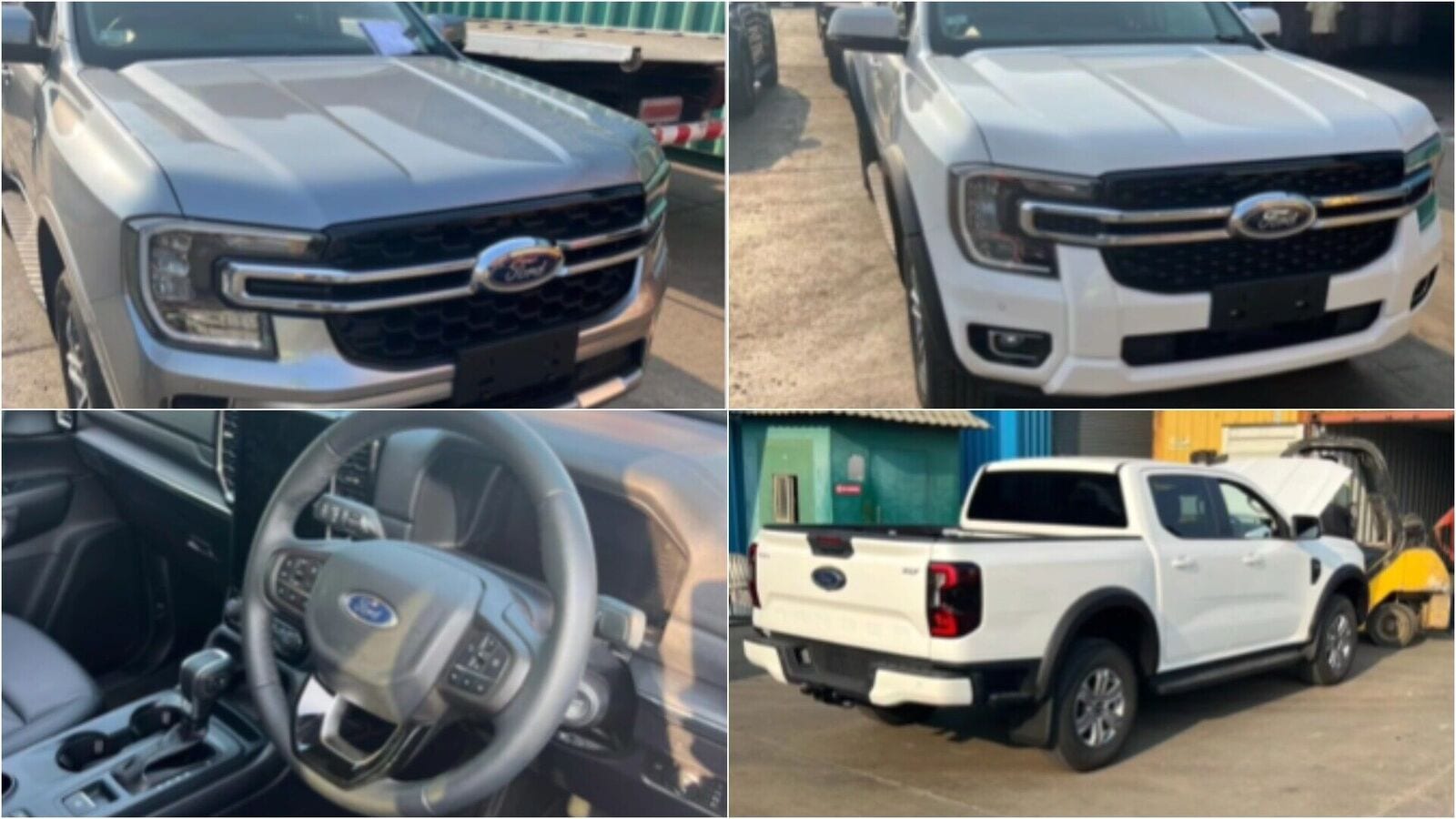
The new-gen Ford Endeavour and Ranger were spied on at the Chennai port recently, fuelling rumours of the American automaker’s return (Instagram/Weguide.auto)

The chatter around Ford’s return to the Indian market doesn’t seem to dying down. While the automaker is yet to officially make any announcement, rumours are rife that the American auto giant is planning for a comeback in 2025 and will start its new innings with the Endeavour (Everest in other markets) and Ranger models. Both models were recently spotted completely undisguised in Chennai, Tamil Nadu, and now more images of the SUV and pickup have emerged online, showing its interior.

The images appear to be from the Chennai port where the Ford Endeavour and Ranger seemingly landed before they were ferried to the company’s facility on flat-bed trucks. Both the new Endeavour and Ranger seen in the spy shots are right-hand drive models. While the Endeavour was a Ford staple, the Ranger never went on sale in India. That said, with the market maturing and the arrival of models like the Isuzu V-Cross and Toyota Hilux, Ford could consider bringing the pick-up this time.

Also Read : Endeavour to Mach-E: 5 Ford cars we would like to see in India

The spy images offer a glimpse at the interior of both offerings. The cabin gets soft-touch plastics, leather upholstered seats, a 12-inch touchscreen infotainment system with wireless Apple CarPlay and Android Auto, a digital instrument console, electrically adjustable front seats, ADAS and more. The features are available on the international version and it is likely that most of these features will be available on the India-spec model.

The new Ford Endeavour and Ranger are based on the T6 ladder-on-frame construction. Engine options will include the 2.0-litre diesel with a single turbo producing 180 bhp and 420 Nm, while the twin-turbo version churns out 210 bhp and 500 Nm. Expect to see the SUV and pick-up available with manual and automatic transmission choices.

It needs to be seen if Ford opts to bring the utility vehicles as Completely Knocked Down (CKD) or fully built units. The Endeavour’s return will bring back the age-old rivalry with the Toyota Fortuner, while also taking on the MG Gloster and Isuzu MU-X. That said, we still await an official announcement from the automaker.

First Published Date: 09 Mar 2024, 19:25 PM IST

[ad_2]
Source link
inspiringguru

Rivian gains as new launch R2 SUV attracts 68,000 strong early orders

Rivian gains as new launch R2 SUV attracts 68,000 strong early orders

[ad_1]
  • The smaller Rivian R2 SUV, which will start at $45,000, has attracted more than 68,000 reservations, CEO RJ Scaringe said in a post on X.
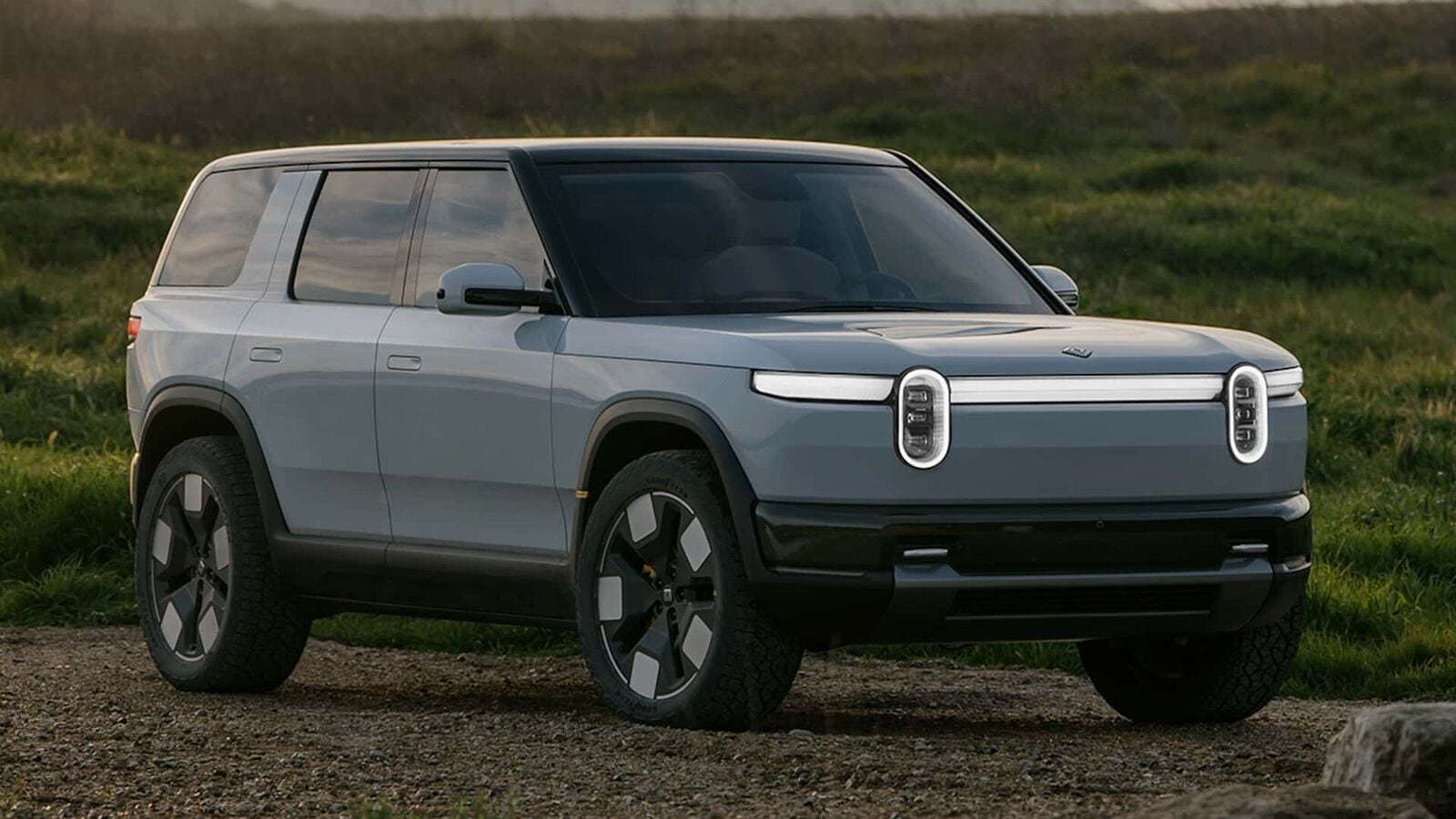
Rivian R2
The Rivian R2 will go on sale in the US in 2026 while order books are open for the electric SUV

Rivian’s shares closed more than 2 per cent higher on Friday as its cheaper R2 SUV racked up tens of thousands of reservations within hours of its launch, fueling optimism that the electric vehicle maker could expand in the mass-market segment. Unveiled on Thursday, the smaller R2 SUV, which will start at $45,000, has attracted more than 68,000 reservations, CEO RJ Scaringe said in a post on X.

Analysts also said that the Amazon-backed EV maker’s plan to produce the R2 at its existing U.S. factory and pause the construction of its second factory in Georgia may result in cost savings that will delay further fundraising.

Rivian gains as new launch R2 SUV attracts

The pause in its Georgia plant is expected to drive additional savings of more than $2.25 billion for Rivian compared to its prior forecast. It will also hasten R2 deliveries to the first half of 2026.

Cost savings will leave the company with enough cash on hand through R2’s start of production, “relieving considerable pressure to raise capital in the near term,” Deutsche Bank analyst Emmanuel Rosner said.

The Illinois plant, where Rivian also makes its electric delivery vans, can produce 215,000 vehicles a year after production of the R2 starts, the company said on Thursday.

“With this new product, Rivian can potentially break more into the mass market segment, which represents about half of total U.S. auto sales,” said analysts at Bank of America.

In a surprise move, the company also introduced the R3 and a more powerful R3X variant on Thursday. The R3 will be cheaper than the R2 and will be launched after it.

The reveals come when EV demand is rising at a slower pace than automakers had expected, weighing on shares of the companies this year. Rivian’s stock had nearly halved in value this year, before the launch on Thursday.

After Friday’s close, Rivian’s market value stands at $12.49 billion, around $264 million more than its close on Thursday. Since the R2 launch event, Rivian’s market value has increased by more than $1.7 billion.

Meanwhile, market leader Tesla has slashed prices to spur sales and is also pursuing a cheaper model.

“Given Tesla has shown little ambition to move into the SUV space, Rivian could be one of the few EV SUVs on the market that most investors will likely want to buy over the next 3-4 years,” Evercore ISI analyst Chris McNally said in a note.

First Published Date: 09 Mar 2024, 18:42 PM IST

[ad_2]
Source link
Rivian gains as new launch R2 SUV attracts

Dubai Autodrome track driving experience, BMW M240i, Dubai tourism

Dubai Autodrome track driving experience, BMW M240i, Dubai tourism

[ad_1]

With million-dollar cars, track days and amazing private collections, Dubai just might be one of the best holiday destinations for auto enthusiasts.

Published On Mar 09, 2024 09:30:00 AM

Think about an automotive-themed holiday and you invariably think of road trips in the Swiss Alps, top speed runs on the German Autobahn, cruising around the Italian lake district or perhaps a track day at Silverstone. But there’s another destination that’s closer to home, has some of the most insane and exclusive cars in the world, and a number of attractions to keep the auto enthusiast in you entertained – Dubai.

The Flat12 cafe is the place to visit for some great cars and coffee.

Dubai in February is a great place to be. The weather is perfect, there’s loads of events and gatherings happening, and of course, there’s the automobiles. If you are a keen car spotter, there isn’t a better place in the world than Dubai. From the huge showrooms flanking Sheikh Zayed road selling ultra-exclusive, multi-million dollar supercars and hypercars, to the exotics parked carefree on the streets and in mall parkings, it is truly a sight to behold. My personal street car spotting highlights were a Nissan Skyline GT-R (R34), a Mercedes-McLaren SLR and a Bugatti Chiron, and this was just the tip of the iceberg.

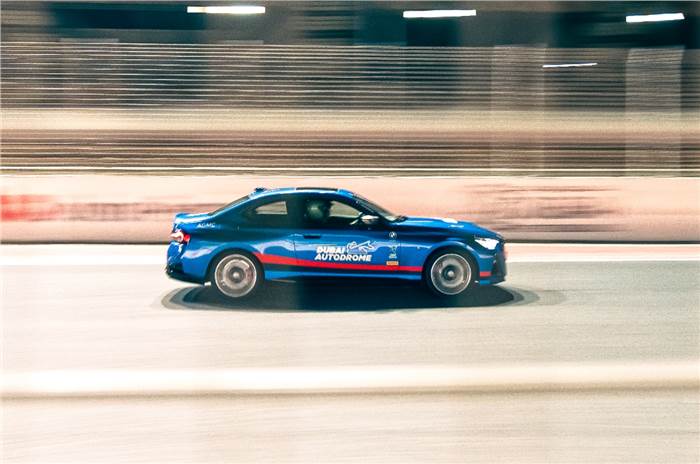
Agile and punchy BMW M240i was good fun to drive on the Dubai Autodrome.

A select few Indian media personnel were invited by Dubai tourism to experience what the city has to offer, and apart from some interesting and insightful ‘touristy’ activities planned, our event itinerary involved a few auto-centric activities. The one I was most excited about, by far, was the track driving experience. I had a lot of pent-up excitement before we even got to the Dubai Autodrome; after all this would be my first ever track drive experience. And that excitement only grew tenfold once we entered the track. The car park was littered with your ‘usual’ Dubai cars – Audi R8s, Lamborghini Huracans, Rolls-Royces, Dodge Challenger Hellcats and the likes. But through the half-drawn garage doors, I could see some really special track machinery. A Ferrari 488 Challenge Cup Car, plenty of Formula 4 open wheel race cars and even some superbikes.

Dubai Autodrome track experience

Post a quick briefing session, where we were told what to and what not to do out on the track, I got to meet the car I would be driving. It was a BMW M240i coupe, which with its sweet B58 straight six motor, rear wheel-drive configuration and short wheelbase was sure to be a hoot to drive. And it was! It was dusk by the time I got to the track but that didn’t stop me from enjoying myself. The focus was not on flat-out lap times but on proper track driving techniques and following the racing line. And to keep me in check, I was accompanied by Charles who was one of the instructors at the Dubai Autodrome; it was a good thing considering a near million dollar Ferrari Cup car was also on the track at the same time.

You can literally arrive and drive at the track.

And it wasn’t like this was open to just racing license holders or media people, anyone with a valid driving license can literally arrive and drive at the Dubai Autodrome. The choice of track weapons are also plentiful – the M240i, the M4 Competition, the Ferrari Challenge Cup cars and even an older Jaguar Formula 1 car!

Dubai car culture

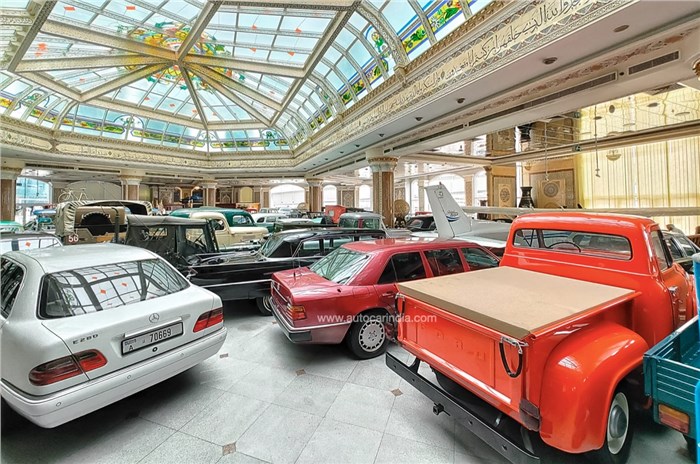
It’s not just the cars or the track driving experience that you’ve got to look forward to. There’s a bustling and growing car culture as well, with regular cars and coffee meets taking place, and one of the best places to experience this is the Flat 12 cafe. We visited this cafe that’s situated in a huge warehouse by Port Rashid, on a relatively off day. Still, there was some serious eye candy in store, from a mint condition Audi Quattro, to a Lancia Delta Integrale, two Jaguar E-Types (one was a restomod), a BMW M3 (E46), a Honda Integra Type R and a Porsche 911 (991.2), all on display inside the cafe. The delicious food and coffee was an added bonus. We also dropped by a special, private collection of some eclectic classic and vintage cars in the heart of Dubai, which also had a small aeroplane parked inside!

Seeing the Dubai skyline from behind the wheel of a car, in the sea, was an unusual experience.

The Marina is another place where Dubai really flexes its muscles, with huge shiny yachts parked in the harbour on one side and tall shiny skyscrapers on the other. This is also where I got to drive the Jet Car, which was essentially a jet ski with a car’s body. It was an unnerving experience, thanks to the choppy waters, but exciting and unique nonetheless.

Michelin-starred 11 Woodfire’s food was as delicious to eat as it was to look at. 

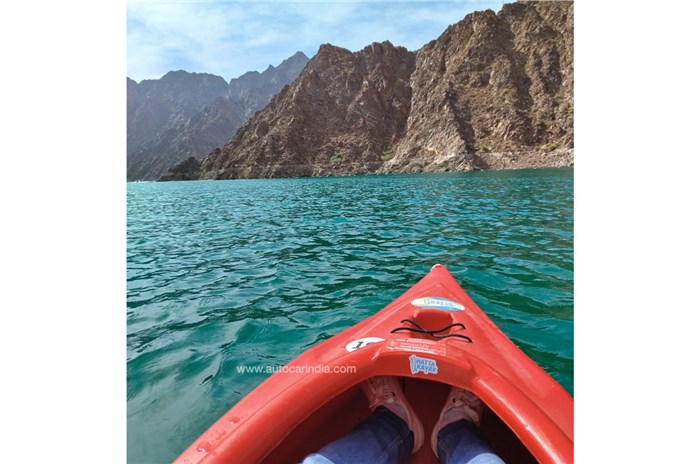
While in Dubai, I also got to experience some amazing food from around the world, with the highlight being 11 Woodfire, a Michelin star restaurant. Then there was the exhilarating Edge Walk, which is a 55-storey high platform that provides stunning, uninterrupted views of the entire city and the mammoth Burj Khalifa right in front. We also drove down to the town of Hatta, which is near the Oman border and experienced kayaking in the picturesque Hatta Dam reservoir. We also had an informative tour on honeybees and how they make the precious honey, which was concluded by a very sweet tasting session.

There was also an insightful tour on the life of honeybees. 

Mind you, these are just the experiences we had but Dubai has so much more to offer. From exotic car rentals, to dune bashing in the desert in Toyota Land Cruisers and Nissan Patrols, auto enthusiasts and tourists are well catered to in this city. This jewel in the middle of the desert should be on your bucket list of places to visit.

Copyright (c) Autocar India. All rights reserved.


[ad_2]

Source link
Women’s Day: Maruti Suzuki Arena sold over 9 lakh cars to women

Women’s Day: Maruti Suzuki Arena sold over 9 lakh cars to women

Maruti Suzuki Arena sold over 9 lakh cars to women

[ad_1]
  • Maruti’s new initiative is aimed at celebrating the growing number of women drivers and influencers in vehicle decisions across the country.
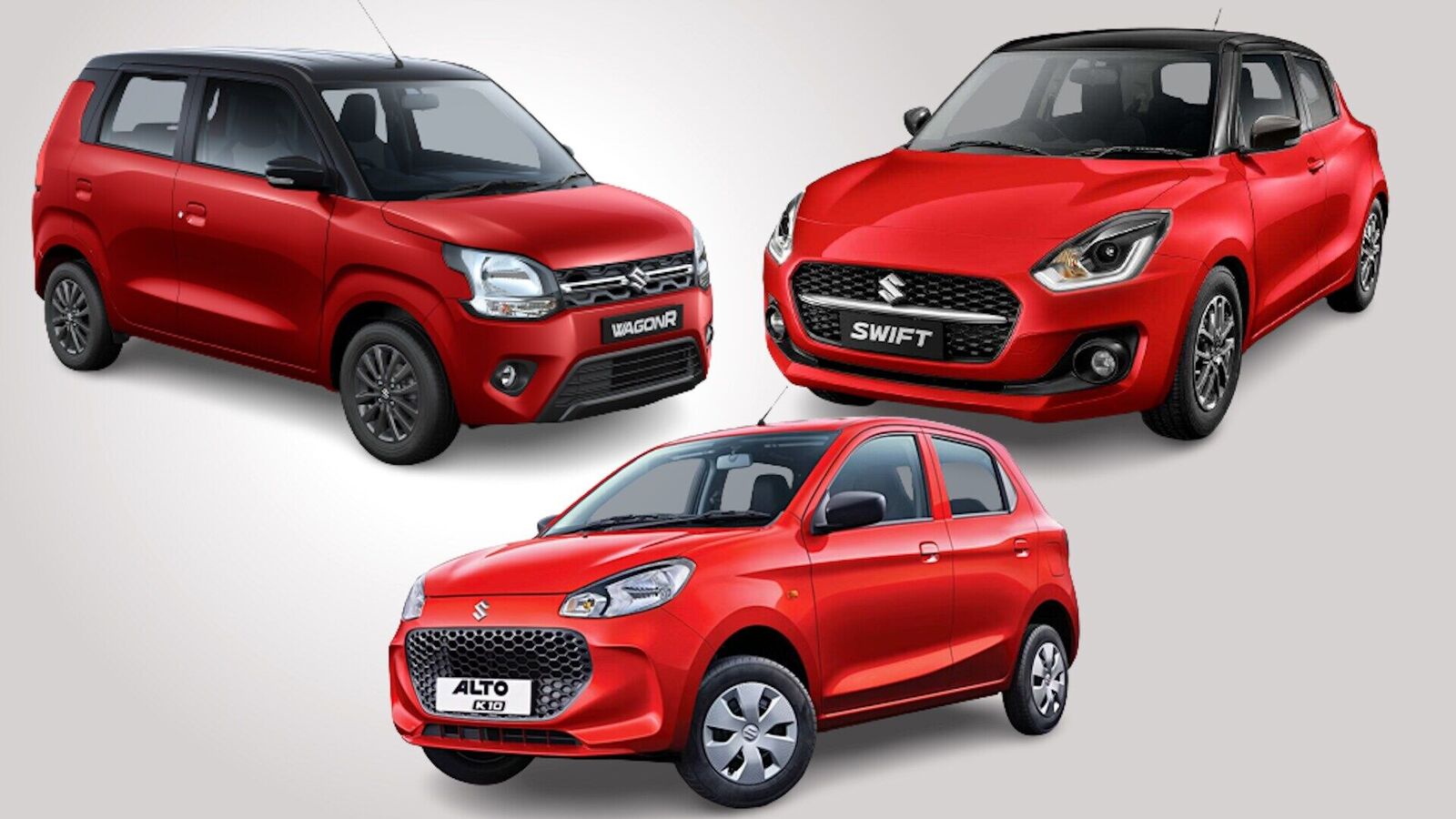
Maruti WagonR Swift Alto
Maruti Suzuki Arena sells majority of manufacturer’s vehicles.

On account of Women’s Day, Maruti Suzuki has announced that they have sold more than 9 lakh cars through their Maruti Suzuki Arena dealerships. In FY23-24, 28 per cent chose Maruti Suzuki’s cars which is up from 18 per cent in FY17-18. The brand will be launching a new campaign called ‘Arena Journeys’ under the Maruti Suzuki Arena. This initiative is aimed at celebrating the growing number of women drivers and influencers in vehicle decisions across the country.

The campaign will include short stories from four well-known women directors such as Tanuja Chandra, Alankrita Shrivastava, Sonam Nair, and Tahira Kashyap Khurrana. The directors will be narrating interesting stories of women.

The first short story will debut on 8th March. Commenting on the launch of the ‘Arena Journeys’, Mr. Shashank Srivastava, Senior Executive Officer, Marketing and Sales, said, “As industry leaders, Maruti Suzuki India Limited is proud to shine a spotlight on the rising number of women taking charge of the roads. We are proud of the fact that over 9 lakh women buyers have found their right match with Maruti Suzuki Arena. More than 28% of women in FY23-24 chose the brand value of Maruti Suzuki as a reason to purchase. Arena Journeys is more than just a campaign; it’s a testament to the brand’s dedication to inclusivity, empowerment, and customer-centricity.”

Also Read : Maruti Suzuki Jimny available with up to ₹1.50 lakh discounts

Currently, the brand is working on the launch of Swift which is expected to make its debut in the coming months. The hatchback will get some major revisions to the exterior and the interior will have some hints of the Baleno. The biggest change will be the new engine. It will be a new three-cylinder unit that will replace the current four-cylinder unit. Suzuki says that they did this in favour of better fuel efficiency and the engine is supposed to deliver better low-end torque.

First Published Date: 08 Mar 2024, 18:57 PM IST

[ad_2]
Source link

More Updates

Endeavour to Mustang Mach-E: Five Ford cars we would like to see in India

Endeavour to Mustang Mach-E: Five Ford cars we would like to see in India

Endeavour to Mustang Mach-E

[ad_1]
  • US–based auto giant Ford Motor is expected to return to India soon with models like new Endeavour SUV and Mustang Mach-E.
Ford Endeavour
Ford Everest, earlier sold as Endeavour SUV, is one of the most awaited cars from the US-based auto giants expected for a comeback in new avatar soon.

Ford Motor could soon to return to India as the US-based carmaker recently filed a few design patents for the domestic market and two of its global models spotted on Indian roads recently. Ford Motor has not officially made any statement on the future of Ford India yet. However, the carmaker is expected to make a comeback after two years after stopping production in 2022. From Figo to Ecosport, Ford has offered several popular models in India before it left the market. While these models may not return to India, here is a look at five global cars which one would like to see on Indian roads when Ford returns.

The Endeavour SUV, rival to Toyota Fortuner, is one of the most awaited models in India. The rival to Toyota Fortuner, Endeavour has been one of the best-selling models in the large SUV space before Ford stopped making cars in India. Recently, Ford Everest was seen on Indian roads, triggering speculation of the SUV’s return. Everest is basically the new generation avatar of the Endeavour SUV sold globally.

The Everest SUV spotted in India comes powered by a 2.0-litre turbo diesel or a 2.0-litre bi-turbo diesel engine. The turbo engine can churn out 168 bhp of power while the bi-turbo can generate 208 bhp of power. The torque output peaks at 405 Nm and 500 Nm. The turbo diesel engine uses a 6-speed automatic transmission whereas the Bi-turbo gets a 10-speed automatic transmission. Both gearboxes get SelectShift and Ford offers 4×2 as well as 4×4 drivetrains.

Ford Ranger

The Ranger pickup truck is another model that was spotted on Indian roads along with the Everest SUV. The Ranger, which could rival the likes of Toyota Hilux and Isuzu D-Max sold in India, is one of the smallest pickup trucks Ford offers in global markets.

Ford offers the Ranger pickup globally with three engine options. There is a 2.3-litre EcoBoost, 2.7-litre EcoBoost and a 3.0-litre EcoBoost. The 2.3-litre unit puts out 266 bhp of max power and 420 Nm of peak torque. Then there is the 3.0-litre unit that is rated for 399 bhp and 583 Nm. As of now, the 2.7-litre engine has not gone on sale. Ford says that they are targeting power and torque figures of 310 bhp and 542 Nm.

Ford Bronco

IF Ford was to have an SUV that can rival the likes of Mahindra Thar or Maruti Suzuki Jimny, it would probably be the Bronco. Ford launched the Bronco SUV in 2021 with both two-door and four-door 4X4 versions for the first time. Ford Bronco SUVs are offered in two powertrain options. There is a 2.7-litre EcoBoost V6 petrol engine which can produce 310 horsepower and 542 Nm of torque. It also comes equipped with a 2.3-litre EcoBoost four-cylinder engine which can churn out 270 hp of power and peak torque of 420 Nm.

Ford Mustang Mach-E

Ford used to sell the Mustang sports car in India before it wrapped up business three years ago. However, the Mustang can return to India in its new electric avatar when Ford makes a comeback. Ford Mustang Mach-E, which was recently trademarked in India, comes with up to 502 km of driving range. Ford offers the EV equipped with two battery choices – a 72 kWh unit and a 91 kWh unit.

Ford F-150 Lightning

As EV adoption in India grows and customers look forward to newer models, Ford may find an opportunity in the electric pickup segment with the F-150 Lightning. Launched for the first time in 2022, the F-150 Lightning is one of the most popular electric pickup trucks in the US.

The Ford F-150 Lightning pickup truck comes with a range of 482 km on a single charge. Equipped with dual electric motors, one on each axle, the electric pickup can achieve 563 horsepower and a staggering 1,050 Nm of peak torque. F-150 Lightning can go from 0 to 100 kilometres per hour in just four seconds. Ford claims that with a super fast DC charger, the F-150 Lightning can replenish around 87 kms of charge in just 10 minutes, charging the battery from 15 to 80% in just 41 minutes. The towing capacity of the F-150 Lightning, an important characteristic in pickup trucks, is 4.53 tonnes.

First Published Date: 08 Mar 2024, 15:51 PM IST

[ad_2]

Source link

BYD Seal vs Hyundai Ioniq 5: Which premium EV to go for

BYD Seal vs Hyundai Ioniq 5: Which premium EV to go for

BYD Seal vs Hyundai Ioniq 5: Which premium EV to go for

2023 hyundai ioniq 5 se standard range

[ad_1]

BYD Seal is the newest electric car in the Indian market and at its price points, will rival Hyundai Ioniq 5. The Seal EV will be offered with two pow

…

BYD Seal vs Hyundai Ioniq 5
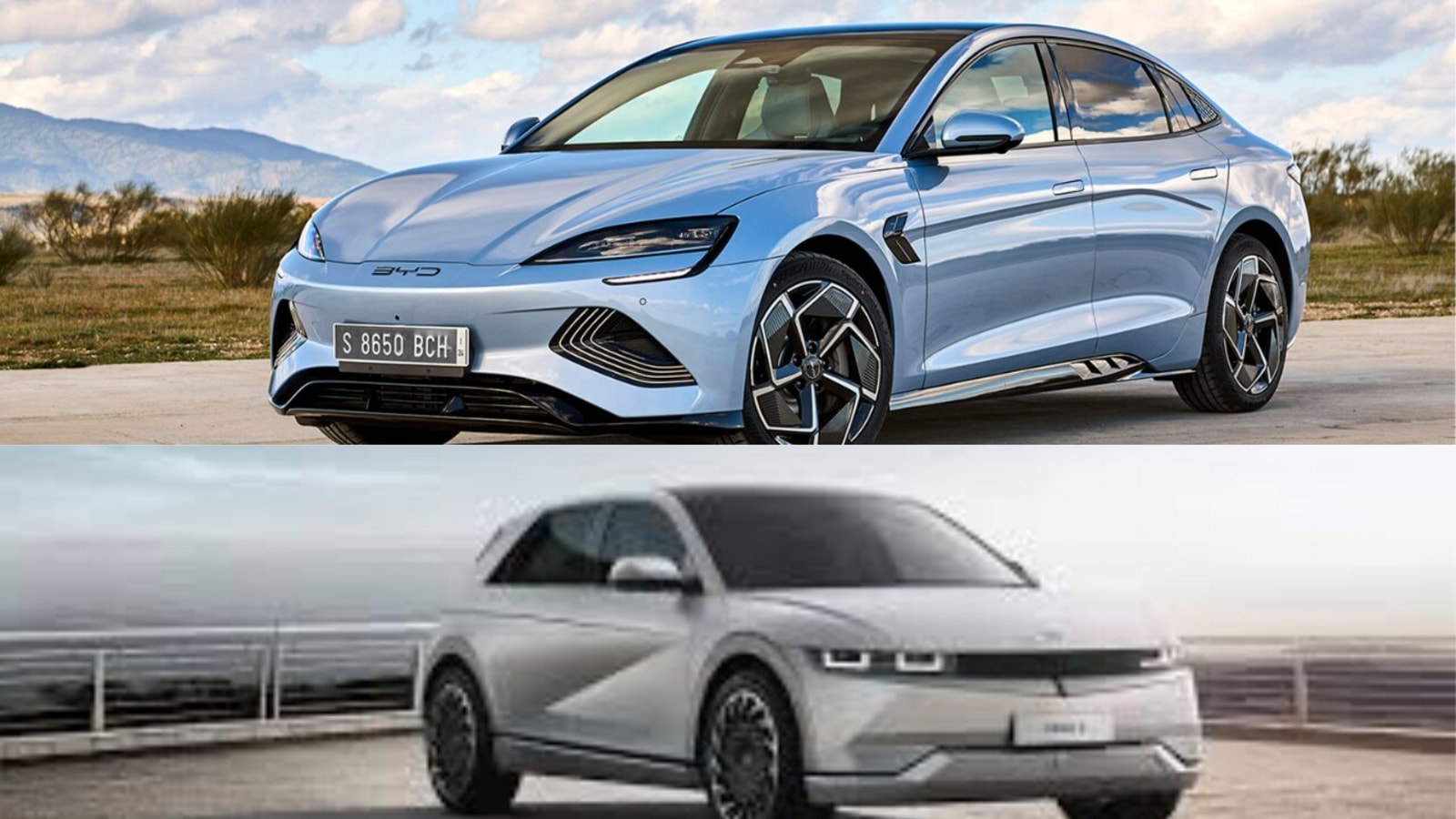
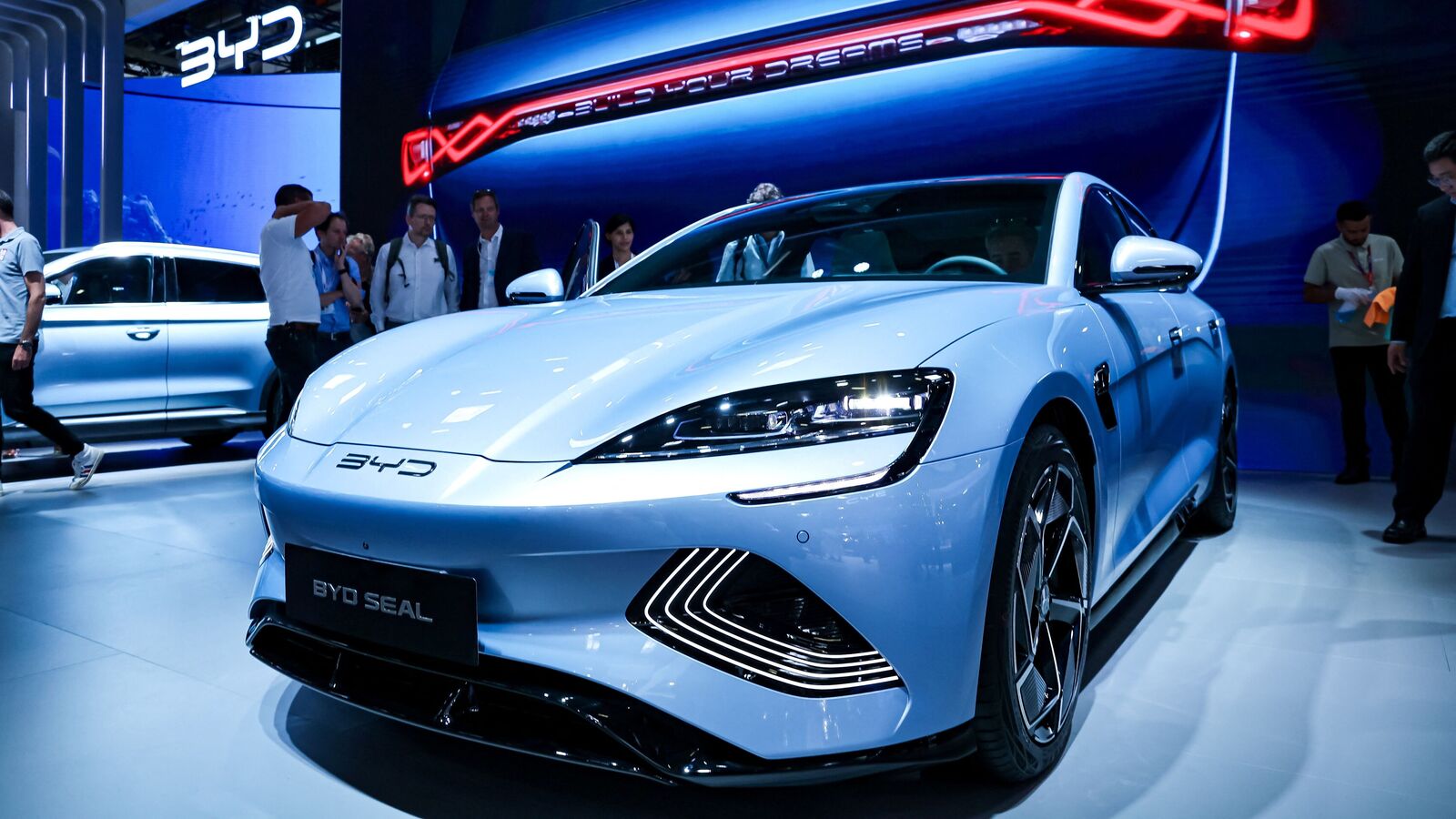
BYD Seal is the newest electric car in the Indian market and at its price points, will rival Hyundai Ioniq 5. The Seal EV will be offered with two powertrains and three variant options.

BYD, the Chinese EV giant, has made waves in the global market by surpassing Tesla as the largest EV maker worldwide. This remarkable achievement is credited to the cutting-edge technology found in BYD vehicles, particularly the revolutionary ‘blade battery’ tech, coupled with their competitive pricing. Recently, BYD took the Indian market by storm with the launch of its Seal, touted as a performance EV, at an unexpectedly competitive price point. Priced at ₹41 lakh ex-showroom, the Seal garnered immense interest, with over 200 bookings within just two days of its launch.

While the BYD Seal offers an enticing value proposition, brand recognition plays a crucial role in the Indian market. This is where the Hyundai Ioniq 5 comes into play. Priced similarly to the Seal, the Ioniq 5 benefits from the strong brand awareness of Hyundai and its extensive sales network, giving it an edge in the market.

To provide a comprehensive comparison between the BYD Seal and the Hyundai Ioniq 5, let’s delve into their pricing, specifications, range, and features.

2023 hyundai ioniq 5 se standard range

BYD Seal vs Hyundai Ioniq 5: Specifications

BYD Seal has been launched in India in three variants. First up is the base Dynamic variant, boasting a 61.44 kWh battery pack and a rear-wheel drive setup. With 201 bhp and 310 Nm of torque under the hood, this variant promises an impressive range of 510 kilometres on a single charge.

Moving up the ladder, the BYD Seal Premium comes equipped with an 82.56 kWh battery and retains the rear-wheel drive configuration. Packing a punch with 308 bhp and 360 Nm of torque, this variant offers the longest range of the trio, reaching up to 650 kilometres.

Also Read : BYD Seal EV launched in India at ₹41 lakh, gets up to 650 km of range

For those craving even more power, the top-of-the-line BYD Seal Performance variant delivers with its 82.56 kWh battery and all-wheel drive system. Generating a whopping 523 bhp and 670 Nm of torque with a slightly reduced claimed range of 580 kilometres.

The Dynamic variant capable of reaching 85 per cent charge in 37 minutes when plugged into a 110 kW charger. The Premium and Performance variants, on the other hand, can handle even faster 150 kW chargers.

On the other end of the spectrum, the Hyundai Ioniq 5 from Korea boasts a 72.6 kWh battery pack and an axle-mounted single electric motor producing 214 bhp and 350 Nm of torque. Hyundai claims an impressive charging time from 10-80 per cent in just 18 minutes using a 350 kW DC charger.

BYD Seal vs Hyundai Ioniq 5: Range

The larger battery size of the Seal has proven to benifial, offering impressive advantages across its range. The Dynamic variant boasts a claimed range of 510 km and can accelerate from 0-100 kmph in just 7.5 seconds. Stepping up to the Premium Range, drivers can expect even more exhilarating performance, with a 0-100 kmph acceleration time of 5.9 seconds and a claimed range of 650 km.

For those seeking the ultimate in performance, the Seal Performance variant delivers with a claimed range of 580 km and quick acceleration from 0-100 kmph in just 3.8 seconds.

Watch: Hyundai Ioniq 5 Review: First Drive Impressions

On the other hand, the Hyundai Ioniq 5 offers a competitive range of up to 630 kilometres, making it pretty comparable to the Seal’s Premium Range.

BYD Seal vs Hyundai Ioniq 5: Features

Step inside the BYD Seal, and you’ll be greeted by a three-spoke multi-function steering wheel, a digital driver’s display, and a touchscreen infotainment system that can rotate to suit your viewing angle. The EV also boasts a panoramic sunroof, a 360-degree camera, ventilated seats, wireless charging, and Level 2 ADAS features for a truly futuristic driving experience.

On the other hand, Hyundai’s electric crossover is no slouch in the features department either. Featuring a spacious interior with a 12.3-inch digital console and touchscreen infotainment system with wireless Apple CarPlay and Android Auto along with over 60 features of connected car technology and Bose sound system. It also gets dual-zone climate control, leather upholstery, ventilated seats with memory function, and more.

BYD Seal vs Hyundai Ioniq 5: Price

The BYD Seal pricing ranges between ₹41 lakh and ₹53 lakh (ex-showroom). The Dynamic and Premium variants of BYD Seal make it the most affordable option among the two EVs in this comparison. The sole variant of Hyundai Ioniq 5 is priced at ₹46 lakh (ex-showroom).

First Published Date: 07 Mar 2024, 18:57 PM IST

[ad_2]

Source link
BYD Seal vs Hyundai Ioniq 5: Which premium EV to go for

Best Cars

Hyundai Ioniq 5 price

Ford Ranger pick-up truck spotted in India alongside new-gen Endeavour

Ford Ranger pick-up truck spotted in India alongside new-gen Endeavour

[ad_1]

  • If Ford launches the Ranger in the Indian market, then it will go directly against the Toyota Hilux.
Ford Ranger
Ford Ranger is the smallest and most affordable pick-up truck in the lineup. (Photo courtesy: Instagram/carcrazy.india)

Recently, a new-gen Endeavour was spotted in Chennai but it was not alone. There was another flatbed truck right behind the Endeavour that was carrying a Ford Ranger which is the smallest pick-up truck in the manufacturer’s lineup. Ford Ranger shares its underpinnings with the Endeavour which is sold as Everest in the global market. As of now, it is not clear what the Everest and Ranger are doing in Chennai. What is interesting though is the fact that Ford India’s plant is on the outskirts of Chennai so there is a possibility that both vehicles are headed towards the plant.

Pick-up trucks are very popular in the global market but not everyone wants such a large vehicle on a daily basis. This is where the idea of small pick-up trucks was generated. In the global market, there are a few small pick-up trucks such as Volkswagen Amarok and Ford Ranger and now Kia has announced that they are also bringing a pickup truck soon.

In the global market, the Ford Ranger is offered with three engine options. There is a 2.3-litre EcoBoost, 2.7-litre EcoBoost and a 3.0-litre EcoBoost. The 2.3-litre unit puts out 266 bhp of max power and 420 Nm of peak torque. Then there is the 3.0-litre unit that is rated for 399 bhp and 583 Nm. As of now, the 2.7-litre engine has not gone on sale. Ford says that they are targeting power and torque figures of 310 bhp and 542 Nm.

Ford Ranger pick-up truck spotted in India

Also Read : Ford set for India return? New Endeavour SUV spyshot triggers speculation

Ford offers the Ranger in four models – XL, XLT, Lariat and Raptor. It seems like the model that was spotted in India was the XL trim which is the most affordable one that a person can buy. In India, we have the Toyota Hilux and the Isuzu D-Max V-Cross but the Ford Ranger is expected to cost more if it is launched here.

First Published Date: 07 Mar 2024, 16:03 PM IST

[ad_2]

Source link

Volvo XC40 Recharge price, single motor, E40, Plus, features, range, battery, EV, charging and performance

Volvo XC40 Recharge price, single motor, E40, Plus, features, range, battery, EV, charging and performance

Volvo XC40 Recharge price

[ad_1]

Single motor variant of the XC40 Recharge has a power output of 238hp, WLTP range of 475km.

Volvo has launched a new variant of the XC40 Recharge with a single motor mounted to the rear axle. Officially called the E60, the variant is dubbed the ‘Plus’ on the Volvo India website and is priced at Rs 54.95 lakh, ex-showroom, India. It is positioned below the dual-motor, AWD XC40 Recharge E80 (Ultimate) that’s priced at Rs 57.9 lakh, ex-showroom, India.

  1. Equipped with a 69kWh lithium-ion battery
  2. 0-100kph in 7.5 seconds 
  3. Misses out on Harman Kardon system and 360-deg camera

Volvo XC40 Recharge E60 single motor features

The E60 single-motor variant loses out on some features compared to the dual-motor model such as Pixel LED headlamps, fog lamps, 360-deg camera and a Harman Kardon sound system. That being said, the E60 variant gets features such as an 8-speaker sound system, two-zone climate control, a 12-inch digital driver’s display, a 9-inch infotainment unit, TPMS, park assist, 19-inch alloy wheels, panoramic sunroof, powered front seats and wireless phone charging to name a few.

However, being a Volvo, it continues to get a raft of safety features like 7 airbags and an ADAS suite that includes lane keep assist, adaptive cruise control, cross-traffic alerts and rear collision warning.

Volvo XC40 Recharge E60 single motor powertrain, battery and range

The Volvo XC40 Recharge E60’s power output stands at 238hp and 420Nm, which allows the SUV to complete the 0-100kph sprint in 7.3 seconds and reach a limited top speed of 180kph. The single motor variant gets a 69kWh Lithium-ion battery pack that has a WLTP range of 475km.

Volvo XC40 Recharge E60 single motor rivals 

The Volvo XC40 Recharge E60 single motor rivals other RWD EVs such as the recently launched BYD Seal Dynamic (Rs 41 lakh) and Premium (Rs 45.55 lakh), Hyundai Ioniq 5 (Rs 45.95 lakh) and the Kia EV6 GT Line (Rs 60.95 lakh).

Also see: 


[ad_2]
Source link
2023 Volvo xc40 recharge pure electric

Bajaj Pulsar NS125 vs Hero Xtreme 125R vs TVS Raider 125: Which one is your pick

Bajaj Pulsar NS125 vs Hero Xtreme 125R vs TVS Raider 125: Which one is your pick

Bajaj Pulsar NS125 vs Hero Xtreme 125R

[ad_1]

  • The newly launched updated version of Bajaj Pulsar NS125 comes competing with rivals such as Hero Xtreme 125R and TVS Raider 125.
Bajaj Pulsar NS125 vs rivals
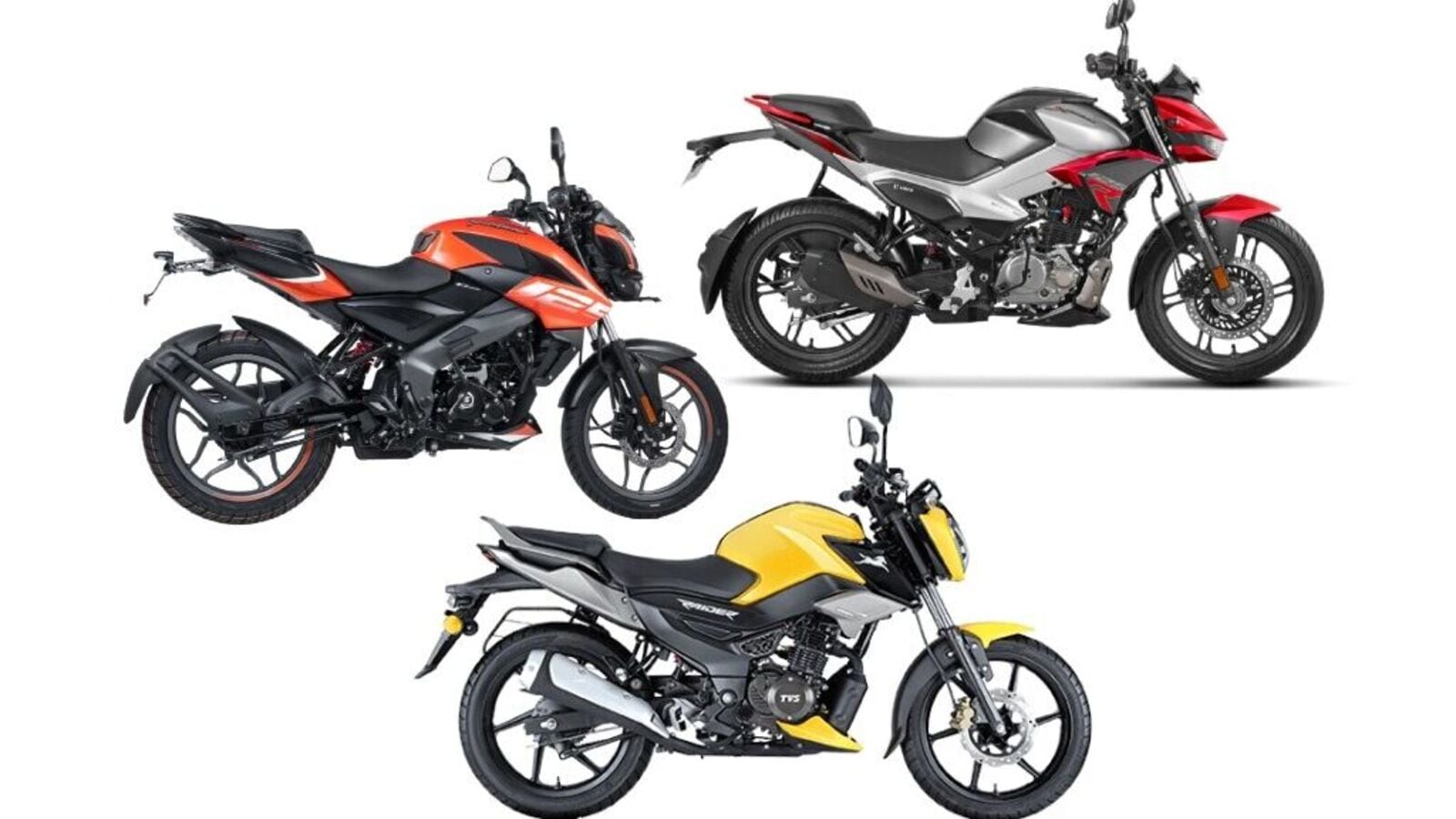
The newly launched updated version of Bajaj Pulsar NS125 comes competing with rivals such as Hero Xtreme 125R and TVS Raider 125.

The Indian motorcycle market is the largest in the world and it has been witnessing a massive paradigm shift in the last couple of years. Indian motorcycle buyers, especially young-age consumers are showing more interest in buying premium higher displacement engine-equipped models instead of mundane entry-level commuters with 100 cc or 110 cc engines. While technically, the 100 cc motorcycles are still in the market as entry-level models in the Indian market, consumers are increasingly focusing on 125 cc models even for commuting, which was not the case earlier.

This drastic shift in consumer preference has propelled the two-wheeler manufacturers to change their strategy as well. Instead of focusing on 100 cc or 110 cc motorcycles for volume sales, the two-wheeler manufacturers in India are increasingly emphasising on bigger bikes. This is why, the 125 cc, 160 cc or 200 cc motorcycles are growing in numbers in India.

Watch: 2021 TVS Raider: Road test review

Bajaj Auto is one of the major players in the premium motorcycle segment in the country and the auto company recently launched its updated Pulsar NS series models. The OEM launched the updated iteration of Pulsar NS125 in India alongside the Pulsar NS160 and Pulsar NS200 just a few days ago. With this, the Bajaj Pulsar NS125 comes competing with rivals such as Hero Xtreme 125R and TVS Raider 125.

Here is a price and specification-based comparison between Bajaj Pulsar NS125, Hero Xtreme 125R and TVS Raider 125.

Bajaj Pulsar NS125 vs Hero Xtreme 125R vs TVS Raider 125: Price

The updated version of the Bajaj Pulsar NS125 comes priced at ₹1.05 lakh (ex-showroom). The Hero Xtreme 125R is priced between ₹95,000 and ₹99,500 (ex-showroom). On the other hand, the TVS Raider 125 comes priced between ₹95,219 and 1.03 lakh (ex-showroom). The Hero Xtreme 125R comes as the most affordable model among these three motorcycles, while the Bajaj Pulsar NS125 sits at the top of the pricing chart.

Bajaj Pulsar NS125 vs Hero Xtreme 125R vs TVS Raider 125: Specification

The Bajaj Pulsar NS125 comes powered by a 125 cc DTS-i engine, paired with a five-speed transmission. This engine is capable of churning out 11.83 bhp peak power and 11 Nm of maximum torque.

The Hero Xtreme 125R gets power from a 125 cc single-cylinder engine mated to a five-speed transmission. This engine is capable of kicking out 11.4 bhp peak power at 8,250 rpm and 10.5 Nm of maximum torque at 6,500 rpm.

On the other hand, the TVS Raider 125 is powered by a 124.8 cc single-cylinder air and oil-cooled engine, mated to a five-speed gearbox. This engine churns out 11.22 bhp peak power at 7,500 rpm and 11.2 Nm of maximum torque at 6,000 rpm.

The Bajaj Pulsar NS200 generates the most power output among the three motorcycles, while the TVS Raider 125 has the most torque output on paper.

First Published Date: 06 Mar 2024, 16:47 PM IST

[ad_2]
Source link
New Bike 2024

Why India is in love with hybrid cars?

Why India is in love with hybrid cars?

Why India is in love with hybrid cars

[ad_1]
  • Hybrid cars have been increasingly becoming popular across India, bridging the gap between electric cars and ICE models.
Maruti Suzuki Grand Vitara
Hybrid cars have been increasingly becoming popular across India, bridging the gap between electric cars and ICE models.

Hybrid cars are gradually gaining higher traction in the Indian passenger vehicle market. Over the last few years, several automakers present in the Indian market have been shifting their focus on bringing in new cleaner and greener powertrain technologies. While the ultimate goal remains steady on battery electric vehicles, hybrid cars are bridging the gap between pure EVs and fossil fuel-propelled models that run on petrol or diesel.

Market data reveals that between September and November 2023, sales of hybrid cars surged significantly surpassing the electric car retail numbers. While electric car sales have been witnessing a marginal slowdown, in sync with the worldwide trend, hybrid cars are recording a ramp-up in growth. As the numbers testify, a total of 24,062 units of hybrid cars were sold between September and November last year, as against 21,455 units of battery electric cars.

The question is why Indians are in love with hybrid cars instead of pure electric vehicles.

Advantages of hybrid technology over pure ICE or EV

It is well known that hybrid cars offer the benefit of both worlds, internal combustion engines (ICE) and electric vehicles (EV), by combining a fossil fuel engine with an electric motor and a battery pack. By blending the best of both worlds, the hybrid powertrain technology not only ensures lower tailpipe emission compared to pure petrol or pure diesel models but also offers lower fuel consumption and longer driving range, eventually resulting in financial savings for the vehicle owners.

At the same time, hybrid powertrain technology comes at a cheaper cost compared to pure electric vehicles. Besides that, using a hybrid car boosts the consumers’ confidence in electrified propulsion technology. There are different types of hybrid powertrain technology available in the market, which include micro hybrid, mild hybrid, full hybrid and plug-in hybrid. In the first two variants, the electric motor acts as an assisting component for the internal combustion engine, which generates the actual propulsion power, while in the latter two variants, the electric motor itself can generate propulsion power for the vehicle with assistance from a battery pack. Many full hybrid or plug-in hybrid cars can run about 50-kilometre distance on electric power alone.

Watch: Do Hybrid Cars Make More Sense Than EVs In India? | All Things EV | HT Auto

Hybrid cars offer a cost-effective solution against pure ICE, EV and CNG models

In the last few years, several automakers in the Indian passenger vehicle market have launched their respective hybrid cars. Maruti Suzuki Grand Vitara, Toyota Urban Cruiser Hyryder, Honda City and Toyota Innova Hycross are some of the key passenger vehicles in the country, which currently are sold as hybrid models. Interestingly, the hybrid powertrain technology has penetrated not only the mass-market segment but the luxury segment as well. The reason behind this is the rising consumer demand for this tech.

Multiple factors have played their bit in this growth story of hybrid cars. Since the Covid-19 pandemic, demands for personal mobility have surged drastically. At the same time, sky-high petrol and diesel prices and the significantly high cost of acquisition for electric cars have paved the way for hybrid cars in India, which satiate the requirement for lower tailpipe emission in the face of tightening emission norms and growing concern for environmental pollution. Besides that, the promise of a longer driving range and lower fuel consumption too helped the growth of hybrid cars.

Petrol and diesel prices in India have shot up by around 41 per cent since 2019. In such a situation increased availability of CNG kits in the aftermarket and OEMs introducing petrol-CNG cars have offered the consumers a viable solution, but with that, the vehicle owners have to compromise on boot storage. Electric vehicles too have come up dramatically in the last few years, but even now, an electric car costs significantly more than its ICE counterpart. Besides that, other factors like confusion about the lifecycle of EVs, lack of charging infrastructure, and range anxiety have been hindering the desired growth of electric cars.

On the other hand, hybrid technology offers a key viable solution, where consumers don’t have to worry about range anxiety or compromise on the boot space of their vehicles while getting the benefit of both ICE and EVs. The consumers have understood this and shifting their focus accordingly. Buoyed by that, carmakers in India are increasingly focusing on bringing hybrid cars into the market, fuelling the cyclic growth in the segment.

First Published Date: 06 Mar 2024, 15:13 PM IST

[ad_2]
Source link

Hybrid Cars

Thats Why India is in love with hybrid cars.

Euro NCAP safety protocols danger of touchscreens, distracted driving

Euro NCAP safety protocols danger of touchscreens, distracted driving

Euro NCAP safety protocols danger of touchscreens

[ad_1]
Euro NCAP safety protocols danger of touchscreens, distracted driving

Touch-based car controls are inherently dangerous; more physical touchpoints could improve safety.

Touchscreens in cars were quite a novelty when they were first introduced, but in just a few years, they have completely taken over car interiors. In recent years, carmakers have been cramming even the most basic operations into touch panels, and more often than not, the usability and functionality has gone south.

Lately, some carmakers have started moving back to physical controls, in limited ways. In fact, carmakers in Europe are actually being encouraged to stop using touchscreens for basic functions in order to enhance road safety. As per a report by The Times, Euro NCAP is set to introduce a new set of rules for crash testing in January 2026 that will require vehicles to have physical controls for basic functions in order to score a full 5-star safety rating.

  1. Euro NCAP set to introduce new rules in January 2026
  2. Point to be awarded for having physical controls
  3. The proposition is still a work-in-progress

“The overuse of touchscreens is an industry-wide problem, with almost every vehicle maker moving key controls onto central touchscreens, obliging drivers to take their eyes off the road and raising the risk of distraction crashes,” said Matthew Avery, director of strategic development at Euro NCAP, to The Times.

Under the new set of rules that could come into effect in 2026, vehicles will need to be fitted with physicals buttons, dials or stalks for operations such as turn signals, hazard lights, horn and windscreen wipers to be eligible for the maximum safety rating.

Tesla, for instance, has completely removed stalks for indicators and wipers on the Model S. Meanwhile, a touch panel for the HVAC controls or integrating them into the infotainment system is also pretty common these days; think of the latest Tatas, Volkswagens and Skodas in India which have a touch panel.

These systems, however, are not the most intuitive to use as users have reported. But why are carmakers pushing screens then? The answer is simple – cost. A single touchscreen panel – usually made of plastic – is much more cost effective to produce than an array of buttons and dials.

Do note that Euro NCAP testing is voluntary, and this does not in any way mean carmakers will mandatorily have to fit physical controls in cars. However, Euro NCAP is backed by several EU governments and several carmakers regularly use these crash test results in their marketing campaigns in order to attract more buyers, so it could have a wider implication. Any risk of points being deducted during such assessments is likely to be taken into consideration.
This, however, is still understood to be work-in-progress, and the exact evaluation procedures haven’t been finalised yet. Reportedly, carmakers have also been made aware of this proposition and they support it.

Also See:

BNCAP to boost car, SUV safety in India


[ad_2]
Source link

Car 2024

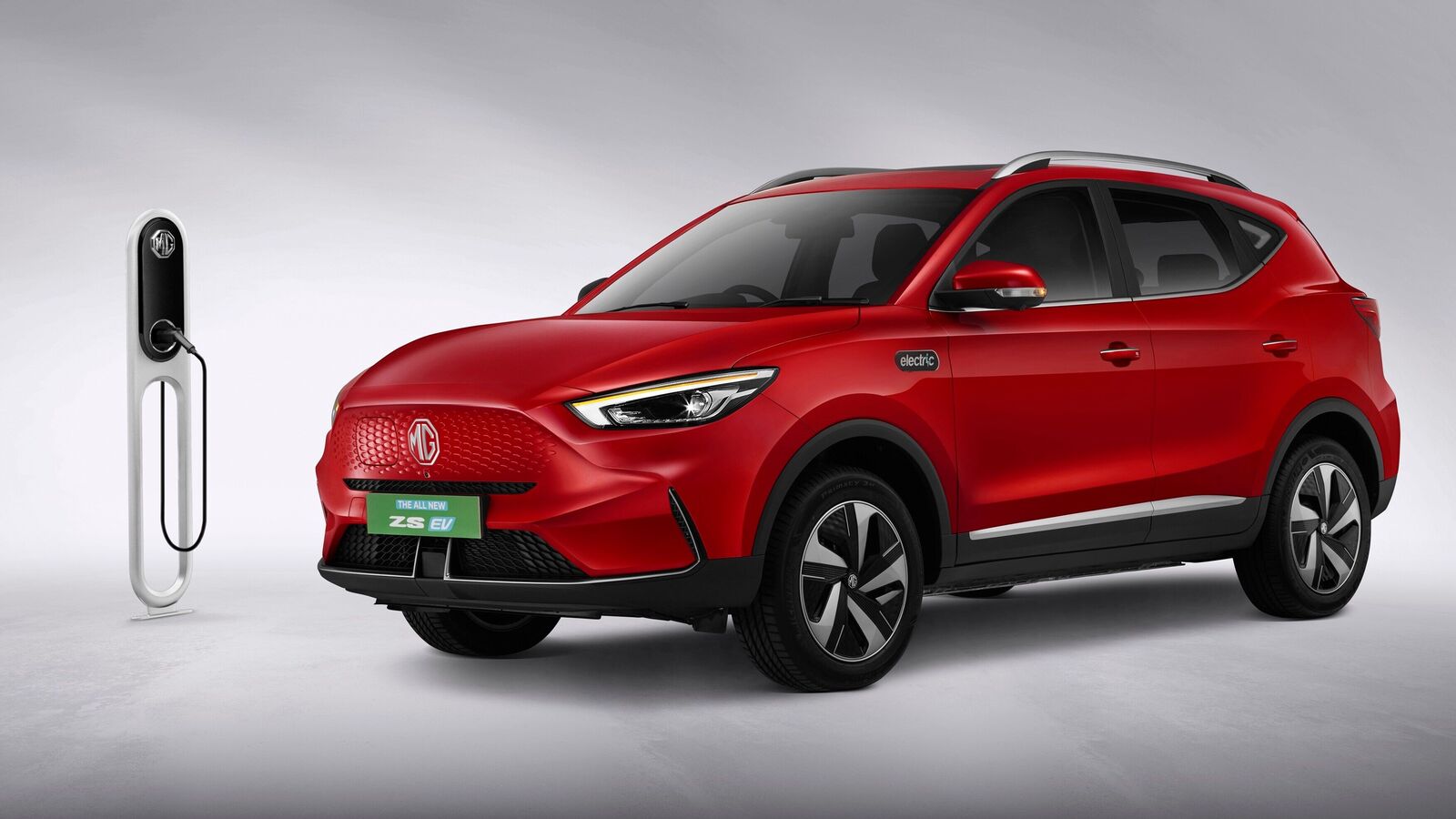
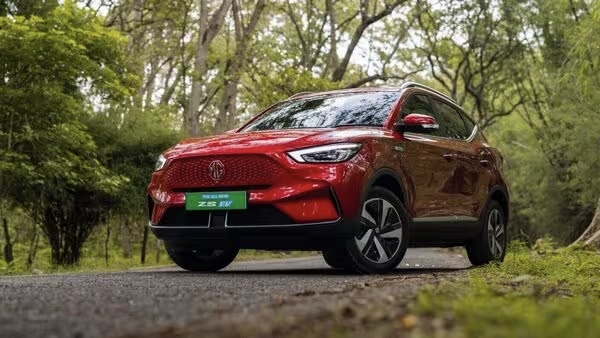
MG ZS EV launched in new mid-spec Excite Pro variant, priced at ₹19.98 lakh

MG ZS EV launched in new mid-spec Excite Pro variant, priced at ₹19.98 lakh

MG ZS EV launched in new mid-spec Excite Pro variant

[ad_1]
 

The new MG ZS EV Excite Pro brings the dual-pane panoramic sunroof to the electric SUV becoming the only sub ₹20 lakh EV to offer the feature. The model continues to come with other tech including over 75 connected features as well as Level 2 ADAS for additional safety. The model also packs a segment-first digital key, which allows the owner to start the car without using the physical key.

Also Read : MG Comet EV launched with fast charging, prices start at ₹8.24 lakh


The top variants remain unchanged on the MG ZS EV which continues to get 17 Level 2 ADAS features and more

The hardware has been carried over on the new ZS EV Excite Pro with power coming from the 50.3 kWh battery pack. The automaker claims a range of 461 km (certified) on a single charge, while the electric motor develops 174 bhp sending at the front axle. The feature list on the top variants comprises a 360-degree camera, a 10.1-inch touchscreen, wireless charging, a 7-inch digital console, and more. The model also comes with six airbags, ABS with EBD, ESC, Hill Descent Control, and more.

The MG ZS EV takes on the Tata Nexon EV and Mahindra XUV400 in the segment with both electric SUVs getting significant updates in recent times. The latest update should keep the ZS EV in check with the competition, offering better value to customers.

First Published Date: 05 Mar 2024, 20:46 PM IST

[ad_2]

Source link

BYD Seal Electric Battery-Motor Specs, Driving Range

BYD Seal Electric Battery-Motor Specs, Driving Range

BYD Seal Electric Battery-Motor Specs, Driving Range

[ad_1]

This article will provide you with information about the battery-motor specs, like power, torque, battery capacity, driving range and mileage details, of the BYD Seal electric sedan.

Considering the price range of the BYD Seal, it competes with the following cars:

BYD Seal

What Are The Battery-Motor Specs Of BYD Seal?

The battery and motor specifications of the BYD Seal are as follows:

BYD SEAL

BATTERY-MOTOR SPECIFICATIONS

Variant

Dynamic

Premium

Performance

Battery Capacity

61.4kWh

82.56kWh

82.56kWh

Power

204PS

312PS

530PS

Torque

310Nm

360Nm

670Nm

Transmission

Automatic

Automatic

Automatic

Range (Claimed)

510km

650km

580km

Charging Time (w/ 7.4kW AC)

12 hours

Charging Time (w/ 50kW DC)

45 mins

Mileage

8.30kmpu

7.87kmpu

7.03kmpu

What Is The Mileage Or Fuel Efficiency Of BYD Seal?

The BYD Seal has a mileage ranging from 7.03kmpu to 8.30kmpu, depending on the variant. This means that BYD Seal will cover 7.03 km to 8.30km for each unit or kWh of electricity.

Read more about how you can get the best mileage or fuel efficiency from your car:

10 Tips To Get The Best Mileage From Your Petrol, Diesel Or CNG Car

[ad_2]
Source link

Electric Cras

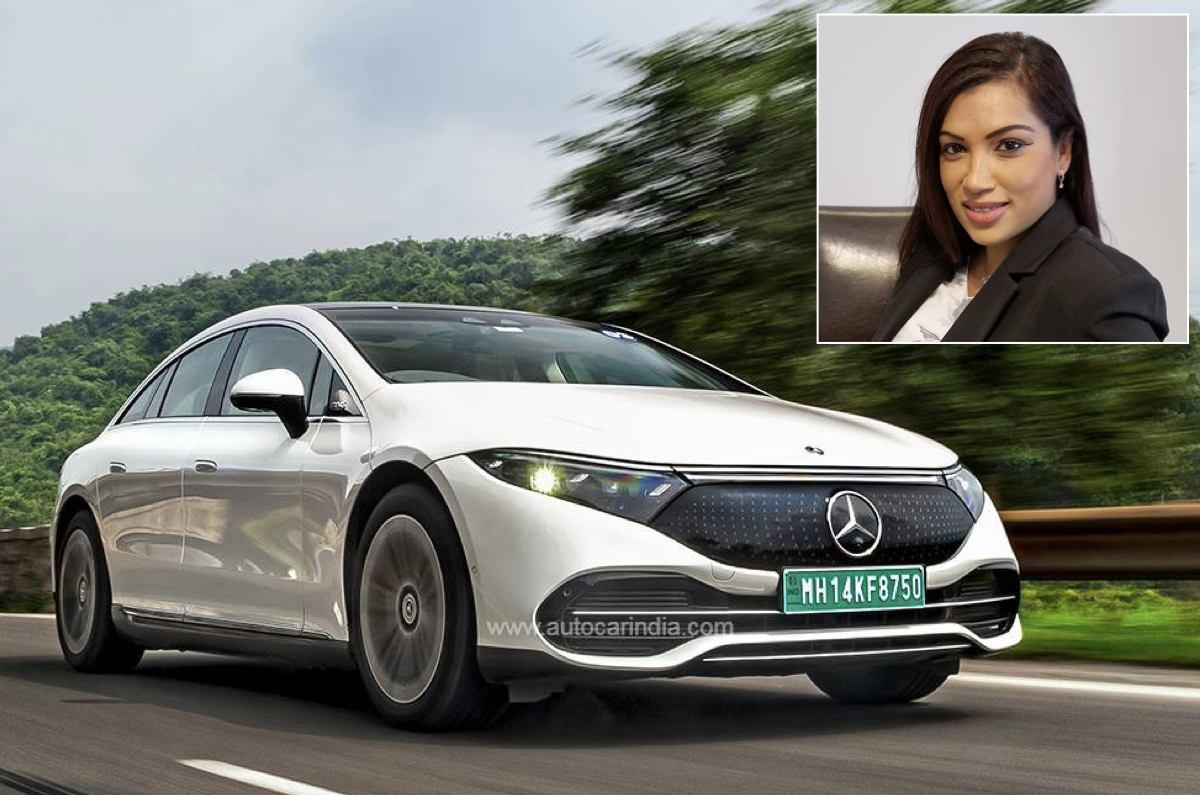
Mercedes EQE SUV, EQB SUV, EQS sedan, Mercedes India sales

Mercedes EQE SUV, EQB SUV, EQS sedan, Mercedes India sales

Mercedes EQE SUV, EQB SUV, EQS sedan, Mercedes India sales

[ad_1]
Mercedes EQE SUV, EQB SUV, EQS sedan, Mercedes India sales

Even as Mercedes dials back its electrification plans globally, its Region Overseas head believes India should stay on the EV track.

Mercedes-Benz announced last month that it would continue to sell combustion-engined cars – even in some developed markets – well into the 2030’s, contrary to its plan of transitioning into an all-electric brand by 2030 ‘wherever market conditions allow’.

However, while the company may be dialling back its EV plans elsewhere, it believes that electrification should stay on the fast track in India. Sagree Sardien, head of Region Overseas, Mercedes-Benz Cars, says, “For the Indian market, I think the better strategy would be to go electric as opposed to go to plug-in hybrids.”

Mercedes-Benz sells just one plug-in hybrid model in India, the AMG GT 4-door coupe. But it has three electric models – the EQS, the EQB, and the EQE SUVs – with plans to introduce three more this year.

‘Indian market committed to EVs’

Sardien explained that she sees India as a market committed to EVs and thus advises that the country “takes the journey faster to battery electric vehicles”. Sardien is also confident that the EV market will continue to grow for the brand. “Whilst we are at 4 percent EV penetration in India, we anticipate double-digit penetration going forward,” Sardien said. For reference, globally, Mercedes EVs account for 19 percent of its total sales.

Mercedes India had record sales in 2023 selling 17,408 units, which is close to its current 20,000 production capacity limit. However, Sardien says the company is ready to cater to any changes in demand patterns and volume. “The plant in Pune has adequate capacity to be able to handle 20,000. If the market demand changes, of course, we have the flexibility, scalability and speed to adapt. So, if for some reason the Indian market accelerates faster than anticipated, we can scale up equally.” Currently, the EQB and EQE SUVs are both brought in as CBUs, whereas the EQS is assembled locally.

Also see:

Mercedes EQS facelift teased showing traditional grille

Smaller Mercedes G-Class to be EV only, due by 2026

Mercedes-Benz GLA vs BMW X1 comparison: Diesel duel


[ad_2]
Source link


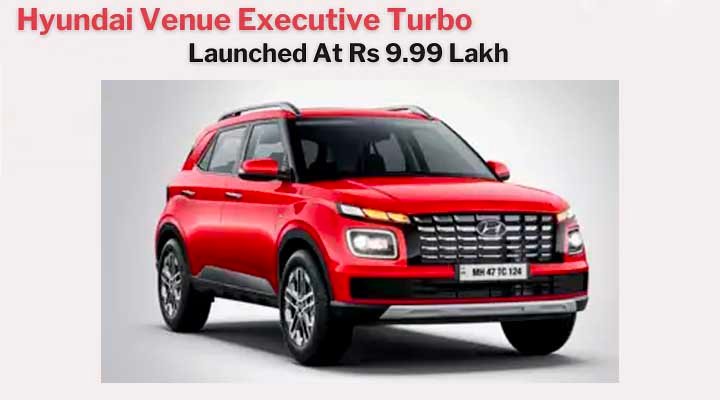
Hyundai Venue Executive Turbo launched at ₹9.99 lakh. Check what’s different

Hyundai Venue Executive Turbo launched at ₹9.99 lakh. Check what’s different

[ad_1]

Hyundai Venue Executive Turbo launched at ₹9.99 lakh

The Executive Turbo trim comes with 16-inch dual-tone stylized wheels, dark chrome on the grille, roof rails, shark fin antenna and an ‘Executive’ emblem on the tailgate. The interior gets a front centre armrest with storage, 2-step rear reclining seats, 60:40 split seats and adjustable headrests for all passengers.

There is an 8-inch touchscreen infotainment system, which comes with wireless Android Auto and Apple CarPlay and voice recognition. There is also a digital cluster with a TFT MID for the driver.

For safety, there are 6 airbags, 3 point seatbelts with seat belt reminders, Electronic Stability Control, Vehicle Stability Management, Hill Assist Control, automatic headlamps, tyre pressure monitoring system etc.

Powering the new variant is the same 1.0-litre three-cylinder turbocharged petrol engine. It puts out 118 bhp of max power at 6,000 rpm and a peak torque output of 172 Nm at 1,500 to 4,000 rpm. The Executive Turbo is only available with a 6-speed manual transmission. The engine also comes with an Idle Start/Stop system to enhance fuel efficiency.

Also Read : Hyundai Ioniq 5 facelift EV debuts with new N Line variant: See what has changed

Hyundai has also updated the Venue S (O) Turbo variant with an electric sunroof and map lamps for the passenger and the driver. This variant is available with a 6-speed manual gearbox and a 7-speed dual-clutch automatic transmission.

The new variant and feature additions should help in attracting more customers. Commenting on the announcement, Mr. Tarun Garg, COO,Hyundai Motor India

Ltd. said, “Hyundai has always made India ‘Live the SUV Life’. As we move forward on a path towards democratizing SUVs, we are excited to announce the Executive Turbo variant of the Hyundai Venue. This variant is poised to offer an optimum combination of thrilling performance & enhanced convenience features for the value-conscious new-age buyer. We are confident that the addition of the Executive variant of Hyundai Venue will further fuel India’s love for SUVs.”

First Published Date: 05 Mar 2024, 14:36 PM IST

New Car Updates

[ad_2]

Source link

BYD Seal Electric Battery-Motor Specs, Driving Range

BYD Seal Ground Clearance, Boot Space & Dimensions

[ad_1]

This article will give you details about the dimensions, or length, width, height and wheelbase of the BYD Seal. We’ll also look at the ground clearance, boot space, fuel tank capacity and tyre size of the BYD Seal.

The BYD Seal is 4800mm long, 1875mm wide and 1460mm tall. Bigger exterior dimensions give a car a stronger road presence. The Seal has a 2920mm long wheelbase. A longer wheelbase makes the car more stable at high speeds and gives better legroom in the back seat, while a shorter wheelbase makes the car more agile.

BYD SEAL DIMENSIONS

Length

4800mm

Width

1875mm

Height

1460mm

Wheelbase

2920mm

Ground Clearance

145mm

Boot Space

450L

Wheel Size (Base)

225/55 R18

Wheel Size (Top)

235/45 R19

The BYD Seal has a fuel tank capacity of  litres and a boot space measuring 450 litres. The Seal has a ground clearance of 145mm. The tyre size of the BYD Seal base model is 225/55 R18 and the top model rides on 235/45 R19 tyres. Cars running on bigger wheels provide better handling and styling. However, these advantages come at the cost of efficiency. Having bigger wheels means more metal and more rotating mass. Therefore, it adversely impacts your drivability, performance and mileage.

What Are The Dimensions Of BYD Seal?

The BYD Seal is 4800mm long, 1875mm wide and 1460mm tall.

What Is The Length Of BYD Seal?

The BYD Seal is 4800mm long. Here’s the length of Seal in other units like centimetres, metres, feet and inches:

BYD Seal Length

Millimetres

4800mm

Centimetres

480cm

Metres

4.8m

Inches

188.98in

Feet

15.75ft

What IsThe Width Of BYD Seal?

The BYD Seal is 1875mm wide. Here’s the width of Seal in other units like centimetres, metres, feet and inches:

BYD Seal Width

Millimetres

1875mm

Centimetres

187.5cm

Metres

1.875m

Inches

73.82in

Feet

6.15ft

What Is The Height Of BYD Seal?

The BYD Seal is 1460mm tall. Here’s the height of Seal in other units like centimetres, metres, feet and inches:

BYD Seal Height

Millimetres

1460mm

Centimetres

146cm

Metres

1.46m

Inches

57.48in

Feet

4.79ft

What Is The Fuel Tank Capacity Of BYD Seal?

The BYD Seal is an electric vehicle which does not come with a traditional fuel tank.

What Is The Wheelbase Of BYD Seal?

The BYD Seal has a wheelbase measuring 2920mm. Here’s the wheelbase of Seal in other units like centimetres, metres, feet and inches:

BYD Seal Wheelbase

Millimetres

2920mm

Centimetres

292cm

Metres

2.92m

Inches

114.96in

Feet

9.58ft

What Is The Boot Space Of BYD Seal?

The BYD Seal has a boot space measuring 450 litres. Here’s the boot space information of Seal in other units like cubic centimetres, cubic metres, cubic inches and cubic feet:

BYD Seal Boot Space

Litres

450L

Cubic Centimetres

450000cm3

Cubic Metres

0.45m3

Cubic Inches

27460.8in3

Cubic Feet

15.89ft3

What Is The Ground Clearance Of BYD Seal?

The BYD Seal has a ground clearance of 145mm. Here’s the ground clearance of Seal in other units like centimetres, metres, feet and inches:

BYD Seal Ground Clearance

Millimetres

145mm

Centimetres

14.5cm

Metres

0.145m

Inches

5.71in

Feet

0.48ft

Also read: BYD Seal Launched – Prices Start At Rs. 41.0 Lakh (Ex-showroom) | V3Cars

[ad_2]

Source link

BYD Seal EV to launch In India today: Check range, features price and specs

BYD Seal EV to launch In India today: Check range, features price and specs

[ad_1]

  • BYD, the Chinese EV giant, is set to launch the Seal in India on March 5, marking its third electric car introduction in the country.
BYD SEAL EV
BYD is set to launch the Seal EV on March 5. The company commenced the bookings for the EV earlier in February. (REUTERS)

Chinese new energy vehicle manufacturer BYD is gearing up to launch its third offering for the Indian market today (March 5th) – the Seal EV. The company commenced the bookings for the electric vehicle (EV) earlier in February.

Expected to be priced between ₹55 lakh and ₹60 lakh, the Seal EV will serve as BYD’s new flagship electric vehicle in India, joining the e6 MPV and the Atto3 crossover SUV, which are currently priced at ₹29.15 lakh and ₹33.99 lakh respectively. Both the prices are ex-showroom.

The BYD Seal EV is expected to come in a single variant, featuring an 82.5kWh battery pack that delivers a claimed range of 570km (WLTP Cycle) on a single charge. The sedan will be equipped with a rear axle-mounted motor that generates 230bhp and 360Nm of peak torque, accelerating from zero to 100kmph in under six seconds.

BYD Seal: Visual and technical details

In terms of dimensions, the Seal EV measures 4,800 mm in length, 1,875 mm in width, and 1,460 mm in height. Inspired by the Ocean X concept showcased in 2021, the Seal boasts an aerodynamic body with a drag coefficient of just 0.21 cd. Its exterior features crystal LED headlamps with boomerang-shaped LED DRLs and full-width LED taillights.

Also Read : BYD Seal U revealed with 500 km of range, is brand’s first plug-in hybrid SUV

Inside, the Seal offers a premium look with soft-touch materials. The dashboard is highlighted by a 15.6-inch rotating touchscreen infotainment system, similar to the one found in the Atto 3. The digital driver display is 10.25 inches. Additional features include a head-up display and two wireless charging pads.

BYD Seal: Safety

Safety is a key focus for the Seal, which has received a 5-star safety rating in Euro NCAP crash tests. The vehicle scored 89 per cent for adult occupants, 87 per cent for child occupants, 82 per cent for Vulnerable Road Users, and 76 per cent in Safety Assist.

Safety features include dual front airbags, belt pre-tensioners, belt load limiters, side airbags, a centre airbag, ISOFIX child seat mounts, airbag cut-off switch, seatbelt reminders, Autonomous Emergency Braking, Lane Assist System, and Fatigue/Distraction Detection.

First Published Date: 04 Mar 2024, 10:13 AM IST

[ad_2]

Source link

MG Hector gets new variants Shine Pro and Select Pro. Here’s what’s new

MG Hector gets new variants Shine Pro and Select Pro. Here’s what’s new

[ad_1]

  • MG Motor India introduced new variants Shine Pro and Select Pro to Hector SUV.
MG Hector
MG Motor India introduced new variants Shine Pro and Select Pro to Hector SUV.

MG Motor India on Monday announced the launch of new variants for its Hector SUV. Christened Shine Pro and Select Pro, the new variants come with enhancing options for the Hector buyers. The MG Hector remains the brand’s most popular SUV so far since its arrival in India as the brand’s introductory model in June 2019. The newly launched Shine Pro variant is priced at ₹15,99,800 (ex-showroom) and the Select Pro is priced at ₹17,29,800 (ex-showroom).

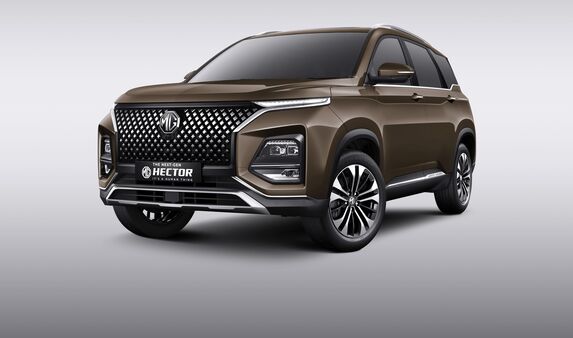
The SAIC-owned British car marque has stated that the new variants of the car come with India’s largest portrait-oriented HD touchscreen infotainment system, measuring 14 inches. The Select Pro variant gets a dual-pane panoramic sunroof and the Shine Pro comes with a single-pane electric sunroof. Both variants come with a new dashboard design and a host of features including wireless Android Auto and Apple CarPlay connectivity. Other features include a wireless charger, and a fully digital instrument cluster with a 17.78 cm embedded LCD display, a push start/stop button, floating light turn indicators, LED headlamps, and LED-connected taillights among others.

Watch: MG Hector 2023: First Drive Review | HT Auto

Speaking on the launch of the new variants of the MG Hector SUV, Gaurav Gupta, Deputy Managing Director, MG Motor India, said the Hector has made a bold statement with its commanding presence and has redefined the SUV landscape with a multitude of tech features and superior driving comfort with ADAS Level 2 and Connected features. “Each subsequent variant has set new benchmarks in the segment by offering a harmonious blend of comfort, advanced technology, and ergonomic design. Using insights from our market research, industry analysis, and customer feedback, we have introduced these two latest variants, underscoring our commitment to providing an elevated driving experience, characterized by performance and power, catering to the discerning preferences of SUV enthusiasts,” he added.

Mg Hector is available in both petrol and diesel engine options. The engine choices for the SUV include a 1.5-litre turbocharged petrol motor available with both manual and CVT gearbox options and a 2.0-litre turbocharged diesel unit available with a manual gearbox.

First Published Date: 04 Mar 2024, 15:38 PM IST

[ad_2]

Source link

Automotive Design School India, automobile design India, postgraduate, masters course

Automotive Design School India, automobile design India, postgraduate, masters course

Automotive Design School India, Automobile Design India


Automotive Design School India, automobile design India, postgraduate, masters course

Will offer courses such as a Master’s in Automobile Design & Management, and refresher courses and inductions for CXOs.

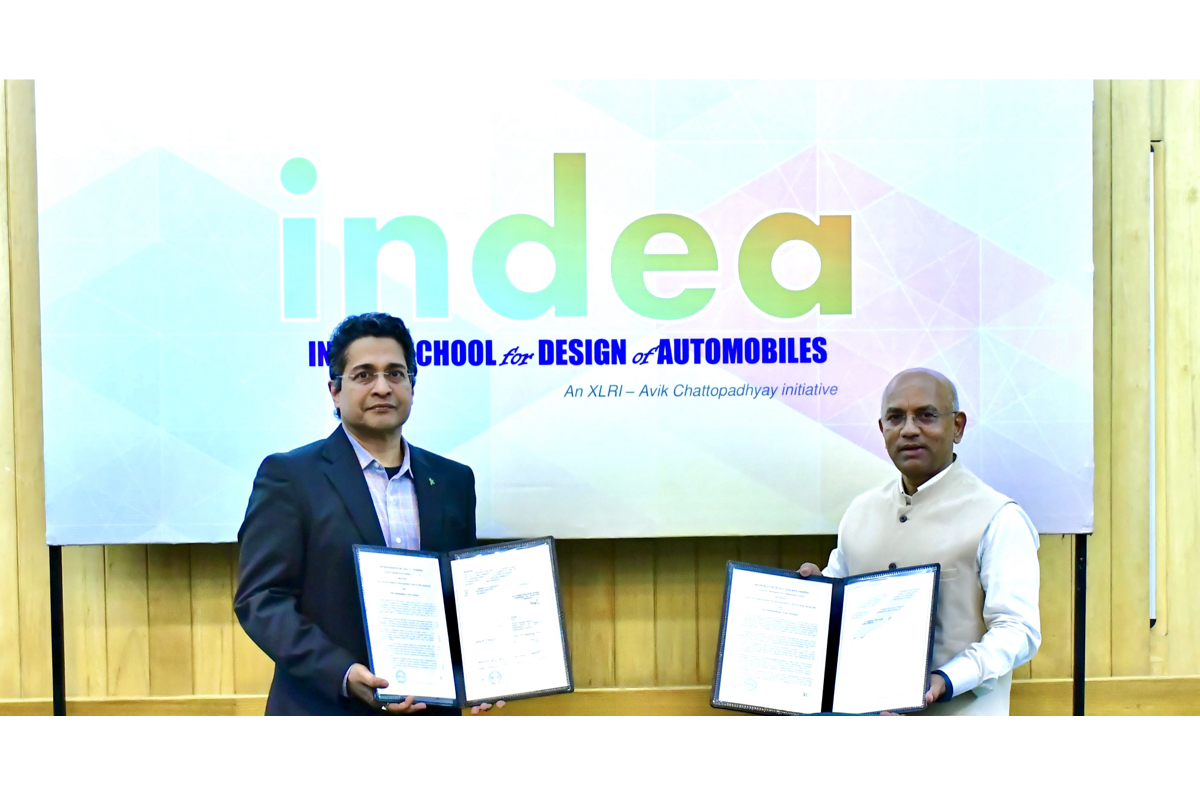
India is set to get its first dedicated automobile design institute, the Indian School for Design of Automobiles (INDEA). Set to begin by late 2025, Xavier School of Management (XLRI) will set up the institute in collaboration with automotive expert Avik Chattopadhyay. It will be located at the XLRI Delhi-NCR campus.

About the Indian School for Design of Automobiles

The main highlight of the institute is the one-year Master’s degree in Automobile Design & Management. According to the institue’s management, the course will have a class size of 20-25 students from all graduate schools, who will be selected after a screening process. Apart from going into the nitty-gritty details of automotive design, students will also be trained in managing design teams. It is worth noting that the specifics of the curriculum are being finalised. 

Apart from the master’s degree, there will also be refresher courses for automotive designers who want to fine-tune their skills, and inductions for chief experience officers (CXOs). The management is also considering offering a course on automotive restoration.


About the management 

XLRI is one of the oldest business schools in the country, and together with their former student, Chattopadhyay, has decided ‘to bridge the gap for skilled designers who also understand the nuances of management and customer preferences, creating well-rounded professionals for the Indian automotive industry.

While Indian universities such as the National Institute of Design, the Indian Institute of Technology and the Indian Institute of Management offer some automotive-related programmes, there is no dedicated institute for automobile design in the country. 

When asked about the recruitment problems faced in the Indian automotive design industry, Avik Chattopadhyay said, “The gap lies in the fact that schools are not specialised. Automotive designing ends up being one of the 17 or 21 courses that they offer. So, the industry ends up spending a lot of time making them unlearn and learn once again.”

Chattopadhyay went on to state that students will want to join INDEA because they will be able to get hands-on experience and it’ll also be a gateway into the industry. 

Dr Fr K S Casimir, director of the XLRI Delhi-NCR campus, threw light on the importance of creativity not just in education, but also in the betterment of the country. He said, “Creativity, innovation and originality will ensure that a country leapfrogs to that superpower status. We want to imbue the entire management education with a kind of spirit where we are able to even blunder into creativity.”

Also see: 

Pratap Bose on careers in auto design, Indian design schools and more


[ad_2]

Source link