By: HT Auto Desk | Updated on: 26 Mar 2024, 17:29 PM
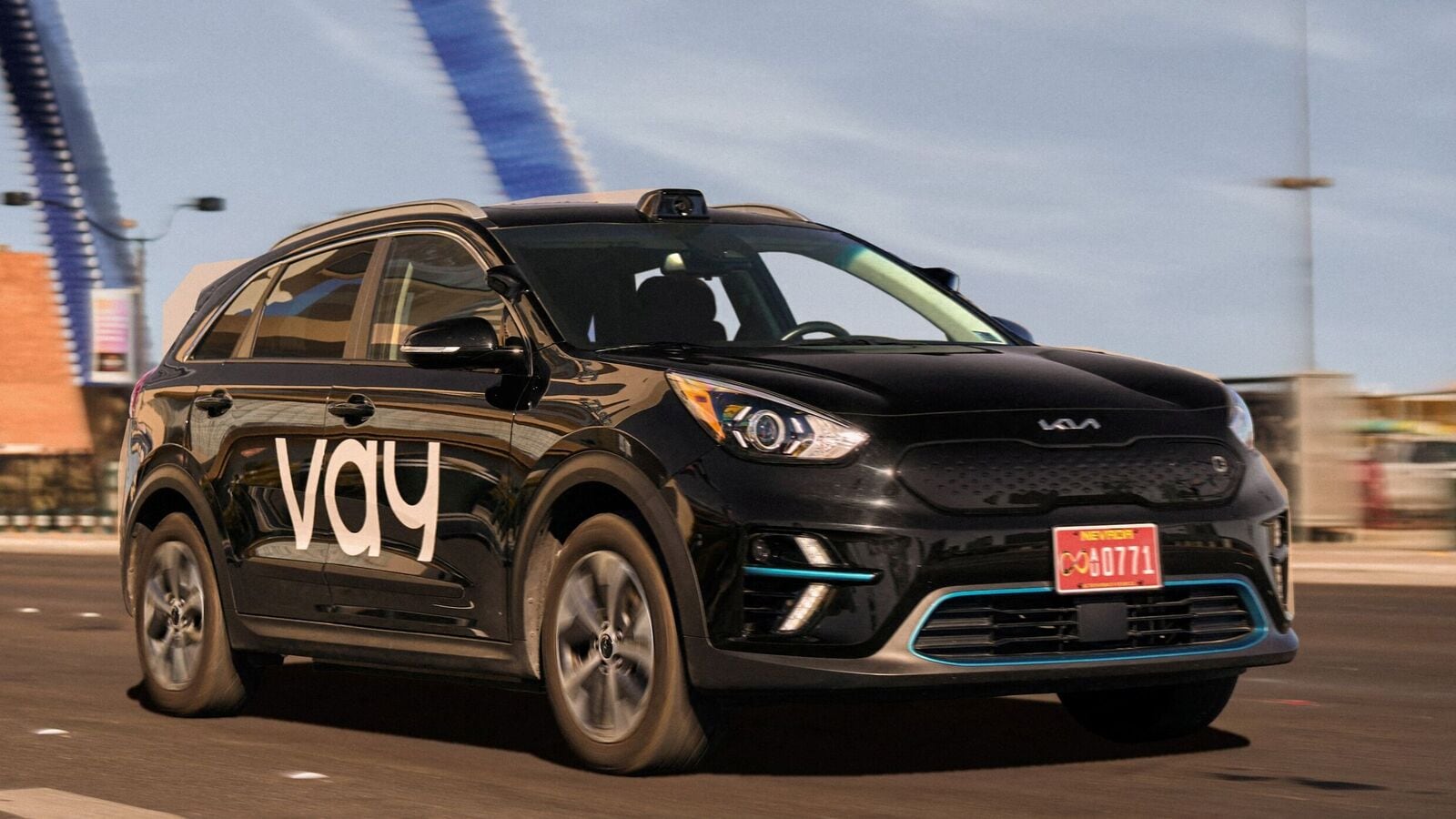
Autonomous driving vehicles use a set of technologies including radar, lidar sensors, and high-definition cameras to ensure a driving behaviour that i
…
Autonomous driving vehicles use a set of technologies including radar, lidar sensors, and high-definition cameras to ensure a driving behaviour that is safe and doesn’t require human interference.
Autonomous driving vehicles use a set of technologies including radar, lidar sensors, and high-definition cameras to ensure a driving behaviour that is safe and doesn’t require human interference. (via REUTERS)
Self-driving cars have been making headlines over the last one decade. Traditional car manufacturers have been working on this technology with a huge chunk of investment. Besides that, the technology startups and leading technology companies have also been working on the same system. One word that reflects the multi-dimensional disruptions that have been evolving the auto industry worldwide is CASE (Connected, Autonomous, Shared, Electric).
CASE refers to technologies like connected vehicles, autonomous driving technology, shared mobility and electric mobility. One of the major disruptions that is creating evolution in the global auto industry is self-driving or autonomous driving technology, which enables the vehicle to run without or with variable levels of human interference but doesn’t command complete manual intervention.
The self-driving vehicles or autonomous vehicles use a variety of sensors, actuators, radars, high-definition cameras, and powerful processors, which work in unison and come laced with an intelligent machine-learning system. These technologies create a map of the vehicle’s static and changing surroundings, enabling the car to navigate between intended destinations without or with variable levels of human interference.
Here is a list of technologies used by self-driving cars.
Radar
One of the most common devices used by autonomous driving vehicles is radar. The self-driving vehicles come equipped with radars located at various positions across the exterior, which help the vehicle’s onboard computer to determine the perceived distance and visuals to ensure safer driving behaviour.
Lidar sensors
Light detecting and ranging sensors, popularly known as Lidar sensors are frequently used in autonomous and semi-autonomous driving vehicles. The Lidar sensors are used to measure distance, detect road edges and identify lane markings. This eventually helps in creating safe and reliable driving behaviour.
High definition cameras
Many self-driving vehicles come equipped with high-powered cameras that capture the image of the surroundings of the vehicle and send those to the onboard computer. Paired with the radar and Lidar sensors, these cameras help the computer and the powerful processors to create a map of the surroundings of the vehicle. This map contains the data related to the roads, various objects, and distances between different objects, helping the vehicle to determine the safest and best route. These cameras also help the vehicle’s computer to detect and recognize the traffic signs.
By: Sameer Fayaz Contractor | Updated on: 25 Mar 2024, 18:26 PM
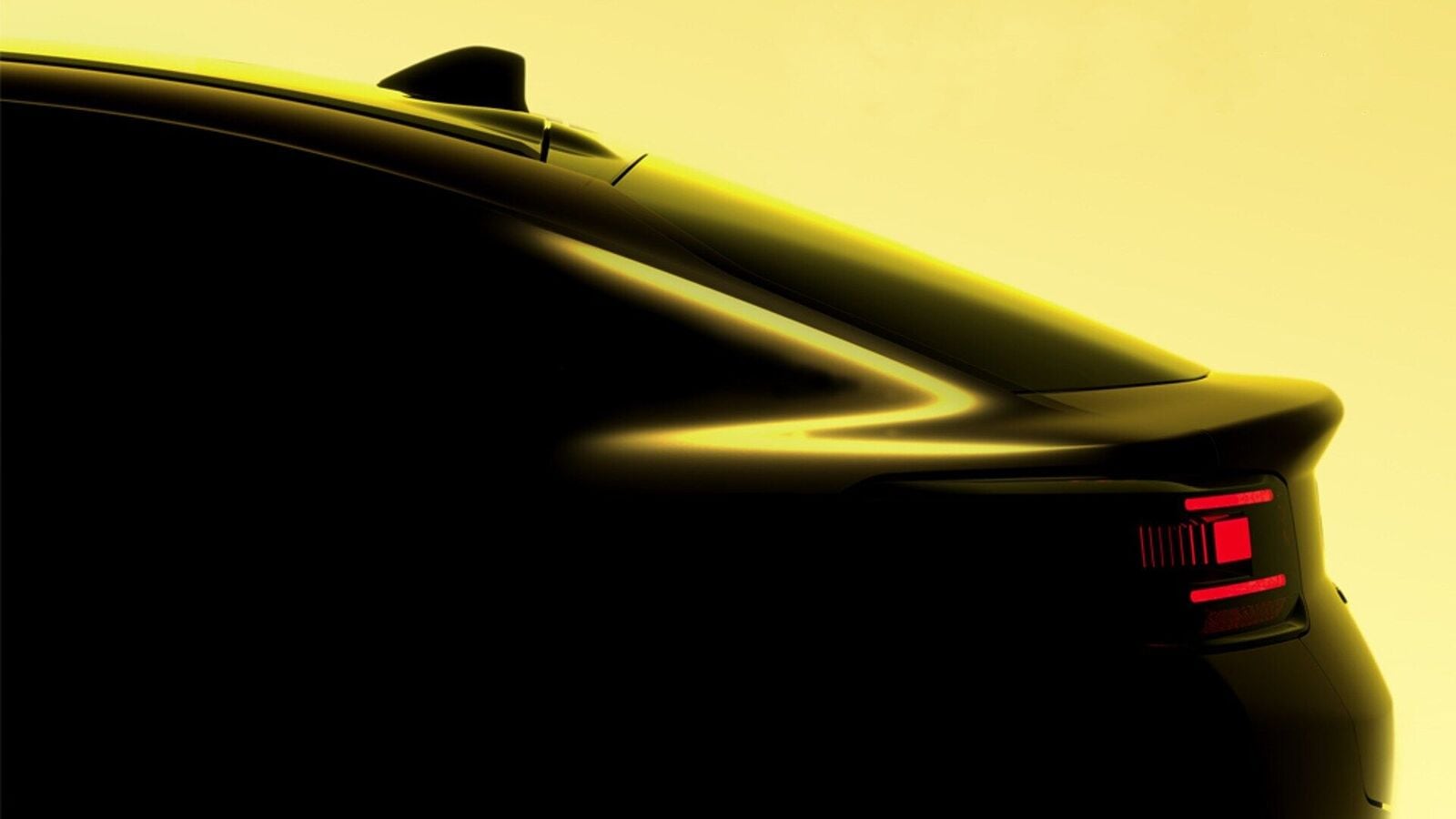
The Citroen Basalt Vision will be a compact coupe SUV based on the C-Cubed platform that also underpins the C3, eC3 and C3 Aircross models.
The Citroen Basalt Vision Compact Coupe SUV will be built for India and South America markets based on the C-Cubed platform
Citroen has announced it will be revealing the new Basalt Vision Coupe SUV on March 27, 2024, developed for Indian and South American markets. The Citroen Basalt Vision will be a compact coupe SUV based on the C-Cubed platform that also underpins the C3, eC3 and C3 Aircross models in the brand’s lineup.
The Citroen Basalt Vision compact coupe SUV teaser reveals the receding roofline as well as the distinctive LED taillight design. The raked rear windscreen merges into the boot and is expected to offer a sharply styled look to the SUV. Coupe SUVs are expected to be the next big design trend in the mass market space and Citroen will be early to the market taking on the upcoming Tata Curvv ICE in the segment.
The Citroen Basalt Vision is expected to be about the same size as the C3 Aircross SUV. That said, the model is likely to be a strict five-seater, unlike the seven-seater derivative of the C3 Aircross. Visually too, the Basalt Vision is expected to get a slightly different front and rear design over the existing C-Cube models for a more premium and upmarket appeal. That said, we expect Citroen’s signature grille and DRLs to feature on the new model, as well as the split headlamp setup.
The cabin is expected to borrow heavily from the new C3 Aircross but we expect improvements on the feature front among other changes. Expect the equipment levels to include a 10.1-inch touchscreen infotainment system with Apple CarPlay and Android Auto, a 7-inch digital instrument console, electrically adjustable ORVMs, connected features, climate control, keyless entry, push-button start/stop and more. Citroen could offer the coupe SUV only with the 1.2-litre turbo petrol motor to maintain its exclusivity.
Also Watch: Citroen eC3 gets ‘appalling’ zero-star safety rating at Global NCAP crash test
More details on the Citroen Basalt Vision Coupe SUV will be available later this week. The company is also said to have the C3X cross-sedan in the works for the Indian market. Make sure to keep watching this space for all the action and to know more about Citroen’s future plans for India.
By: HT Auto Desk | Updated on: 24 Mar 2024, 13:17 PM
Volkswagen India is aiming to achieve 15 per cent growth in 2024 and the lower tier cities are expected to play a key role in that strategy.
Volkswagen India is aiming to achieve 15 per cent growth in 2024 and the lower tier cities are expected to play a key role in that strategy.
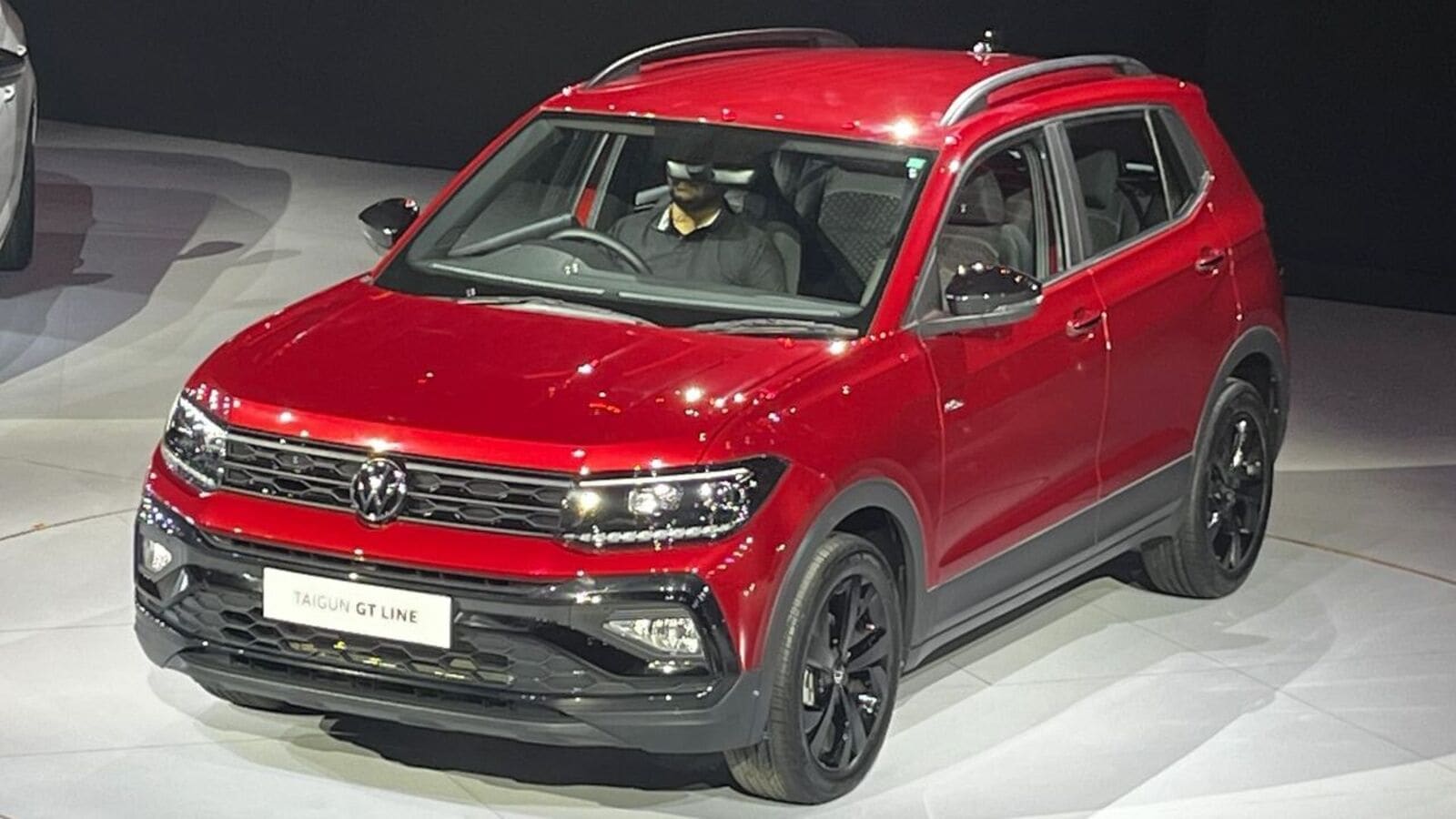
Volkswagen is planning to tap the performance-oriented car segment in India, PTI has reported. The German auto giant is reportedly seeking to cash in on the increasing demand for its premium performance-focused offerings across India. Also, the OEM is reportedly aiming to expand its business not only in the metro cities across India but in Tier 2 and Tier 3 cities as well. This comes as Volkswagen is aiming to grow its sales in India by 15 per cent in 2024.
The report claims that the auto manufacturer is mulling the idea to emphasise on its GT-badged passenger vehicles in India. The OEM claims to have sold around 44,000 cars in India in 2023. Currently, it sells models like the Taigun SUV and Virtus sedan which are available with GT trim, propelled by a 1.5-litre petrol engine. In an attempt to bring more affordability, Volkswagen has not brought a 1.0-litre petrol engine in its GT lineup as well. As the report indicates, the automaker is betting big on the new engine for its overall growth and to tap the performance-oriented vehicle segment in the country. The automaker unveiled the GT Plus Sport and GT Line just a few days ago. which will be launched soon.
Speaking about the brand’s strategy in India, Ashish Gupta, Brand Director at Volkswagen Passenger Cars India, said that with the GT trims on the Taigun and Virtus, VW has created a new segment, which is witnessing penetration by other OEMs as well. “Earlier, there was no sub-segment of a performance SUV or a performance sedan…So, when we introduced the GT on the Taigun and Virtus that basically created that space, which now everybody’s coming into,” he said.
Bullish on the growth of the performance-based sub-segment, Gupta said that it has been fuelled by evolving consumer preferences over a period of time with top-of-the-line features, safety and performance topping their demand list. He also stated that the consumers are willing to pay a premium for these features. “They’re not willing to compromise. So, definitely, this is a space which will continue to grow,” he reportedly asserted.
speaking further Gupta revealed that earlier, the GT was available only in a 1.5-litre petrol engine option, and around 35-40 per cent of sales were from the GT on both Taigun and Virtus. Gupta further stated that the growth of GT sales is not limited only to the metros and cities. “If I look at the GTs even in the Tier 2 and Tier 3 towns, almost 20 to 25 per cent of my sales are the GTs,” he said, further adding, “The GT has become iconic as a brand for us, and we want to get the maximum leverage out of the GT badge.”
By: HT Auto Desk | Updated on: 23 Mar 2024, 13:19 PM
The recall notice states that 286 examples of the Suzuki Jimny 3-door in Queensland, Australia, have been affected, which were manufactured between 2
…
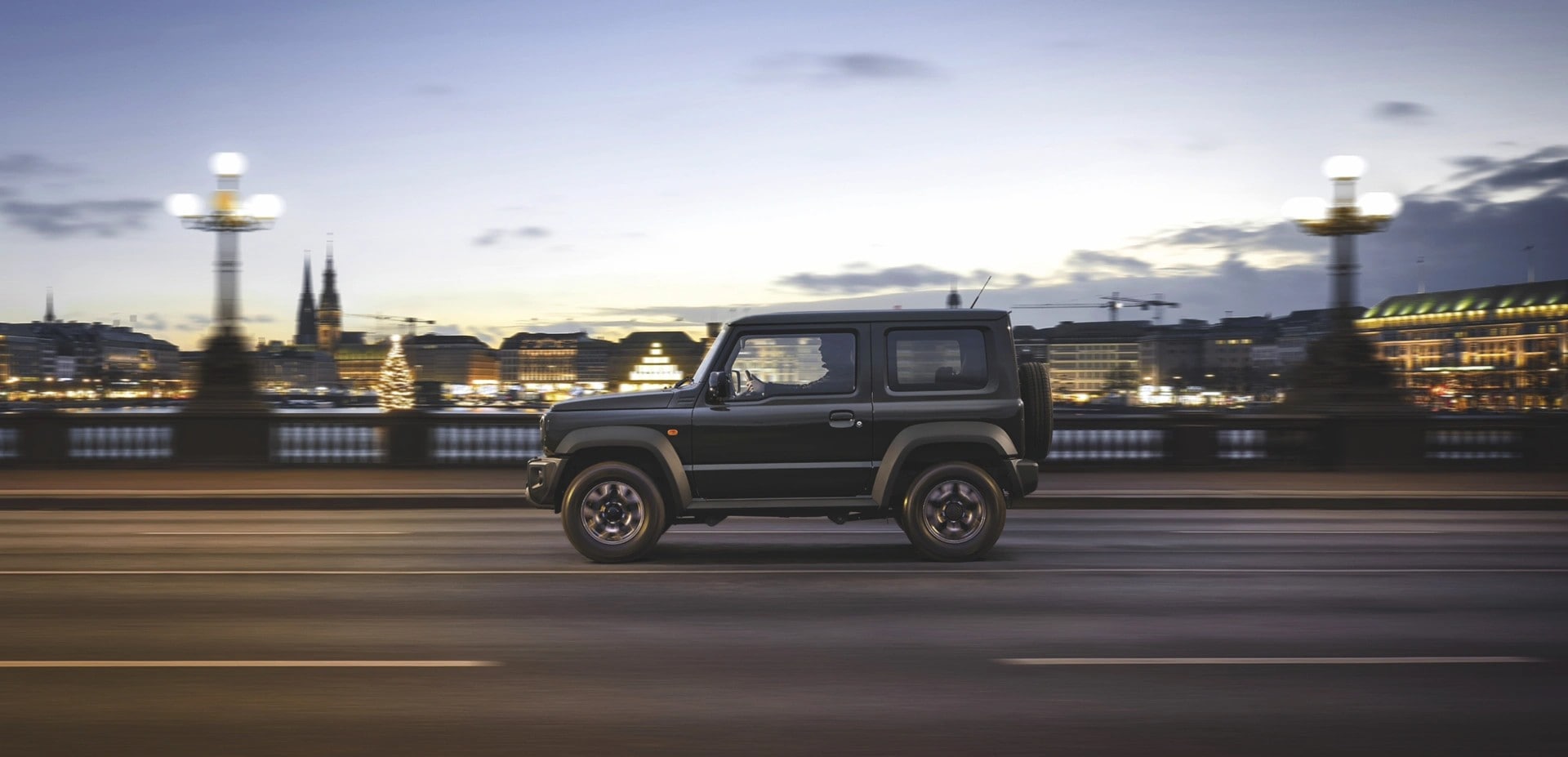
The recall notice states that 286 examples of the Suzuki Jimny 3-door in Queensland, Australia, have been affected, which were manufactured between 2018 and 2019.
Suzuki Queensland is a separate entity from Suzuki Australia and the latter is expected to issue a separate recall for the off-roader
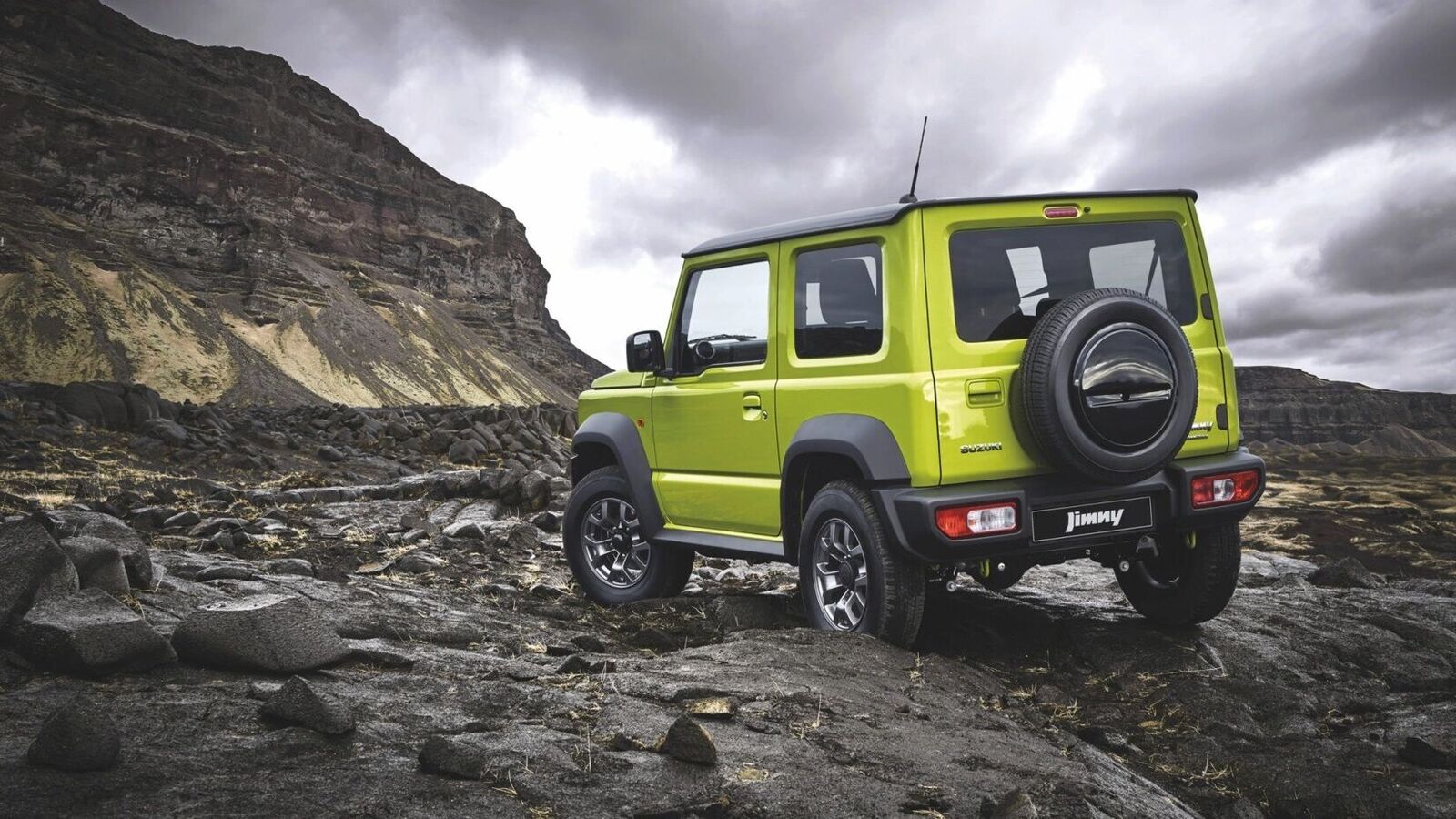
Suzuki Queensland has announced a recall involving 286 units of the Jimny 3-door off-roader in the land down under. The recall notice states that 286 examples of the Suzuki Jimny in Queensland have been affected, which were manufactured between 2018 and 2019. The company stated that a potential fault with the fuel pump on the SUV was likely.
The recall notice filed with the Department of Infrastructure in Queensland stated that the fuel pump impeller may swell and cause the fuel pump to stop working, due to a manufacturing defect. This could result in a loss of power on the off-roader.
The Suzuki Jimny 3-door is made in India and exported to a number of markets overseas
It needs to be noted that Suzuki Queensland is separate from Suzuki Australia, and is responsible for Suzuki cars imported and sold in the state. This does mean that Suzuki Australia could issue a separate recall for the Jimny 3-door for the same issue. Suzuki Queensland further said that it will be contacting customers of the affected vehicles and will schedule a service appointment to have the fuel pump replaced free of charge.
More recently, Maruti Suzuki also issued a recall in India for the Baleno and WagonR for a faulty fuel pump issue. Over 16,000 units were affected by either model and were manufactured in 2019 as well. The Suzuki Jimny for Australia is exported from India including the three-door version. The Jimny 5-door should not be affected by the recall, given a much later production timeline.
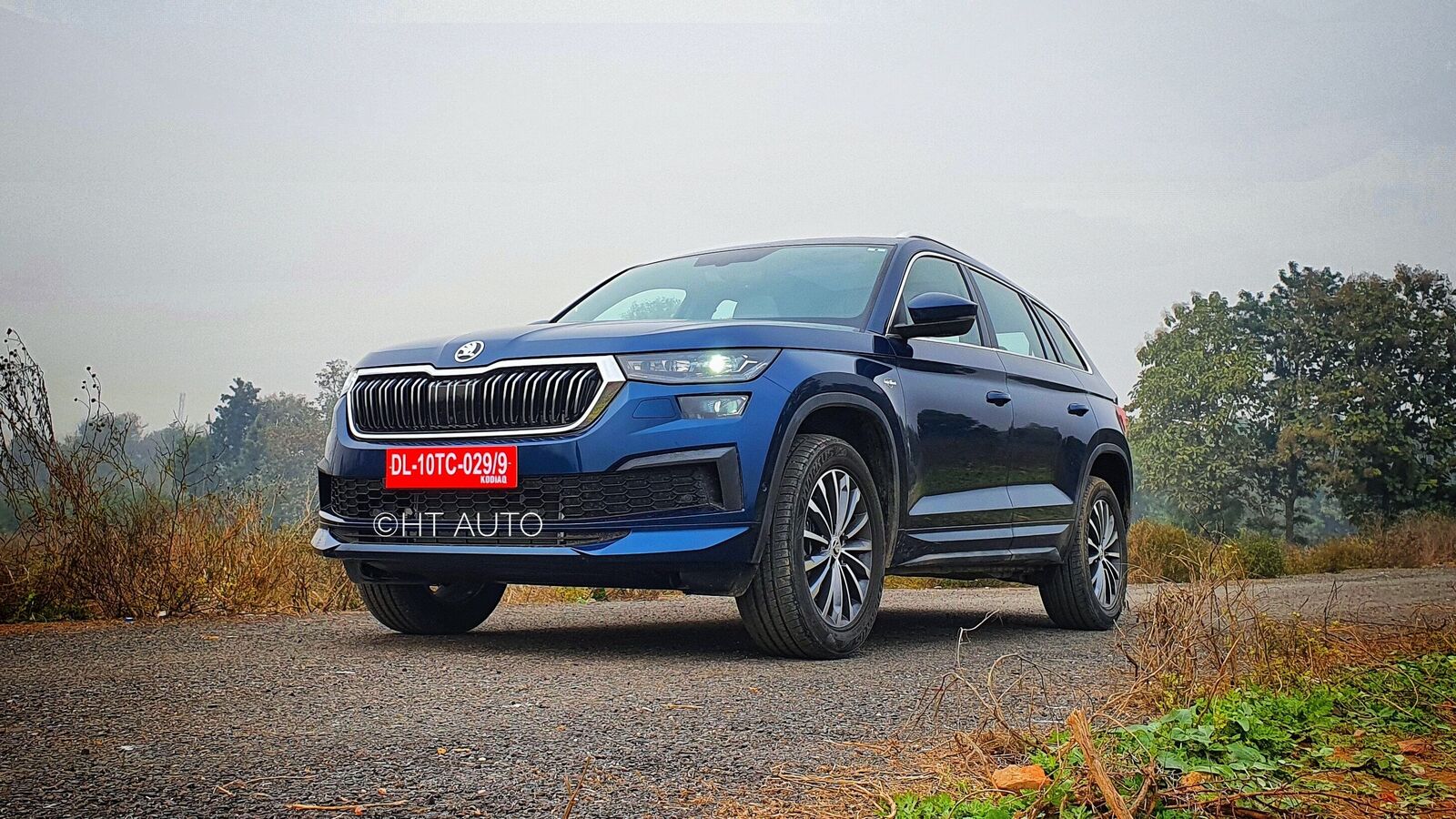
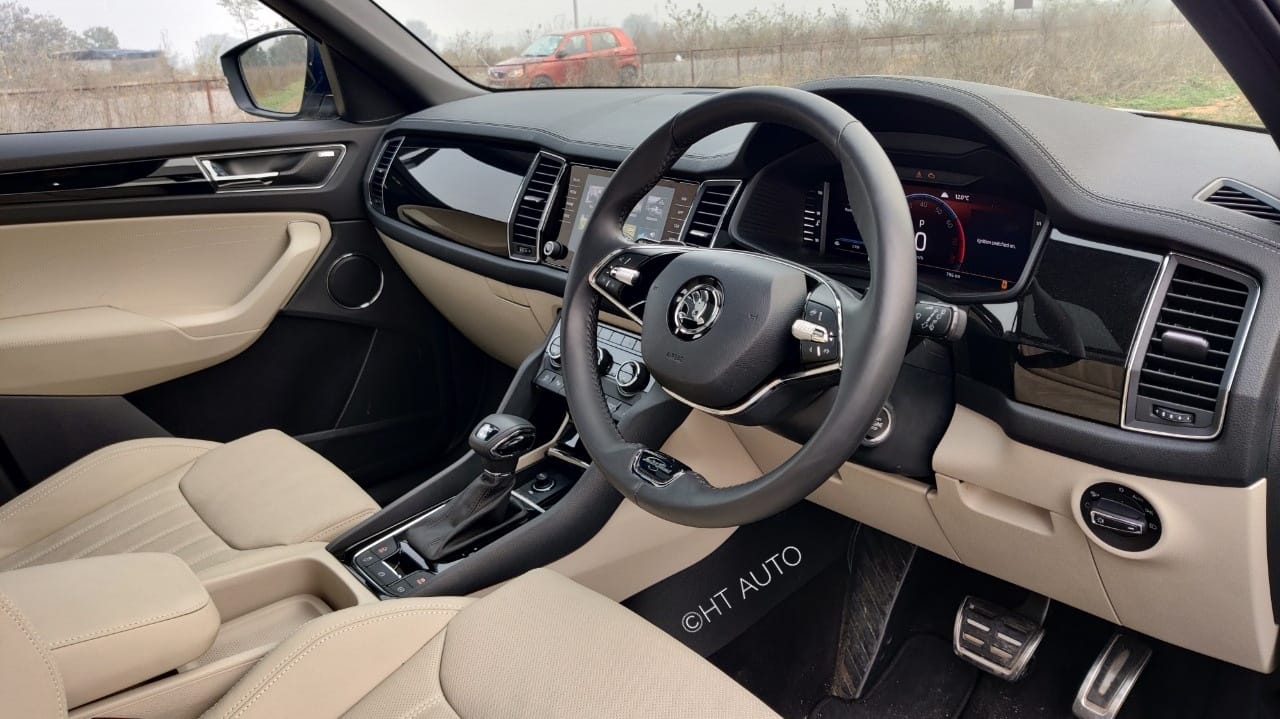
It’s unclear as to what prompted the price cut but this would be a good time to bring the Skoda Kodiaq home for those looking to get a comfortable and luxurious SUV. The Kodiaq has always been impressive with its top-notch build quality, feature-rich cabin and comfortable second row. It also gets a usable third row, accommodating children and young adults with ease.
The cabin of the Kodiaq offers top-notch quality coupled with plenty of storage space
The Skoda Kodiaq L&K variant previously retailed at ₹41.99 lakh (ex-showroom). Despite the price cut, the SUV retains all of its features. Power on the SUV comes from the 2.0-litre TSI petrol motor tuned for 188 bhp and 320 Nm of peak torque. The model is available in a single-spec option with the 7-speed DSG automatic transmission sending power to all four wheels.
The current generation Skoda Kodiaq has been around for a while and Skoda has already unveiled the new generation model globally. The next-generation Kodiaq is expected to arrive in India in 2025 and is expected to arrive via the Completely Knocked Down (CKD) route.
Also Watch: 2022 Skoda Kodiaq facelift SUV: First Drive Review
Skoda reportedly will also bring back the Superb and Octavia to the Indian market later this year. Reports suggest that the current generation Superb will be reintroduced as a Completely Built Unit (CBU). Furthermore, the company has the Enyaq electric SUV in the pipeline for India, while it recently announced the made-in-India subcompact SUV that will go on sale in 2025.
By: Sameer Fayaz Contractor | Updated on: 21 Mar 2024, 16:43 PM
Kia said the decision was hike prices was due to rising commodity prices and supply-chain-related inputs. It is also the first price adjustment this y
…
Kia said the decision was hike prices was due to rising commodity prices and supply-chain-related inputs. It is also the first price adjustment this year by the brand.
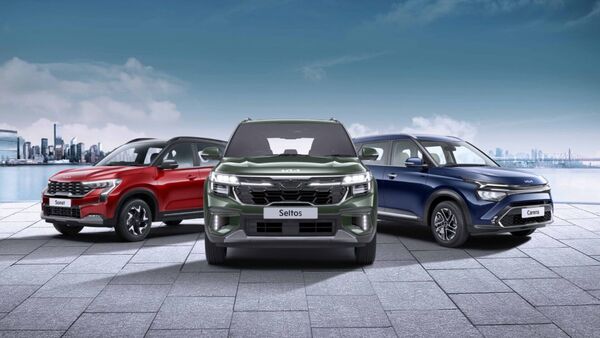
The price hike will affect Kia’s mass market models including the Seltos, Sonet and Carens. The increment will vary on the model and variant
Kia India has announced its plans to increase prices across its mass model range with effect from April 1, 2024. The Kia Sonet, Carens and Seltos prices will be hiked by up to three per cent from next month onwards. The automaker said that the decision was made due to the rising commodity prices and supply-chain-related inputs. Kia also emphasised that this was the brand’s first price adjustment this year.
Kia has not revealed the quantum of the price hike on each of the models but you can expect prices to vary depending on the model and variant. The Kia Sonet is the brand’s most accessible offering starting from ₹7.99 lakh, and going up to ₹14.69 lakh. The Kia Carens MPV is priced from ₹10.45 lakh, going up to ₹18.95 lakh. The Kia Seltos is the brand’s bestseller and starts from ₹10.90 lakh, going up to ₹20.30 lakh. All prices are ex-showroom.
Commenting on the price adjustment, Hardeep Singh Brar, National Head – Sales and Marketing – Kia India said, “At Kia, we consistently strive to deliver premium and technologically advanced products to our esteemed customers. However, due to the continuous increase in commodity prices, adverse exchange rate and rising input cost, we are compelled to implement a partial price hike. The company is absorbing a significant portion of the increase, allowing customers to continue driving their favourite Kia cars without a major dent in their pockets.”
Kia is one of the most prominent players in the Indian auto sector, having made a remarkable climb on the sales chart since its arrival in 2019. The automaker has sold nearly 1.16 million units in India and overseas with the Seltos contributing 6.13 lakh units, followed by the Sonet with over 3.95 lakh units, while the Carens has added 1.59 lakh units so far. The automaker also retails the EV6 premium electric SUV in the country, which arrives as a Completely Built Unit (CBU).
However, not all car modifications are permitted by the law of the land. In fact, performing some weird modifications to your car may lead you to legal trouble. Hence, if you are planning to modify your car, make sure not to do anything that may compromise the safety of everyone in and around the vehicle. Don’t do anything that weakens the strength of the car’s chassis. Also, don’t do anything that may impact the environment adversely.
If you are planning to modify your car, here is a comprehensive guide with a list of legal and illegal modifications in India.
Types of modifications
Usually, car modifications can be segmented into three categories: aesthetic, functional and performance.
Aesthetic modifications: The most common car modifications around us are aesthetic modifications. Generally, such modifications make the car visually distinctive but don’t add anything to the performance or utility. While some of these modifications are not allowed by the Motor Vehicle Act, some can be played with. Such customisation can be performed at the exterior and inside the cabin of the car.
Functional modifications: These modifications are usually done to make the use of vehicles more convenient for the driver and passengers. Usually, such modifications are aimed at providing better comfort and convenience to the occupants. These are generally based on accessories and not mechanical. Such customisation can be performed at the exterior and inside the cabin of the car.
Performance modifications: Performance modifications are meant to increase the performance of a car. An average car coming out of the OEM’s plant is tuned to find a perfect balance between performance and fuel efficiency. People who seek extra from their vehicle, often customise the vehicle’s powertrain.
Legal car modifications in India
Body kit installation: Body kit installation on a car is legal as long as it is fitted as a bolt-on and doesn’t interfere with the structure of the vehicle. Usually, these kits like body cladding, side panels, front splitter etc are often fitted to cars to enhance the looks of the vehicles. Many automakers too offer some body kits as factory fitment or dealer-level fitment, which come with the benefit of no impact on warranty.
Colour change: Changing a car’s colour is completely legal in India, but is subject to RTO’s approval. However, some colours like Army Green are only reserved for military vehicles and not available for civilian vehicles. If you are planning to change the colour of your car, make sure to get approval from the RTO first and also update the registration certificate specifying the paint as accurately as possible.
Body wrapping: Similar to colour change, body wrap for a car is legal in India. It is generally a vinyl wrap applied directly on the vehicle’s surface to protect the car’s original paint from damage from natural elements or minor impacts like scratches or scars. Besides this, it also enhances the glossy look of the car. The owner doesn’t require RTO approval for body wrapping if the wrap is of the same colour as the car. However, if the wrap is of a different colour than the exterior paint of the car, the RTO needs to be informed and the RC should be updated accordingly.
Aftermarket CNG kit installation: Installing an aftermarket CNG kit on a car is legal in India. However, ensure the vehicular documents are updated with the local RTO accordingly and the CNG kit fitment is mentioned in the registration certificate.
Suspension change: Change of suspension is legal as long as the upgrade does not increase or decrease the vehicle’s ground clearance significantly. Upgrading a suspension without hurting the ground clearance majorly can ensure the vehicle offers a more comfortable ride quality, especially considering the condition of the Indian roads.
Arrangement for differently abled: It is legal to make some changes to a car to suit the requirements of a differently-abled person. According to the amended Motor Vehicles Act, an orthopedically disabled person with a 40 per cent permanent disability or above can drive a car with a length less than or equal to four metres. He or she can drive a car with an engine capacity of 1,200 cc for petrol models and 1,500 cc for diesel vehicles. However, such cars should be registered as ‘Adapted Vehicles’ with the local RTO.
Modifications that impact the car’s structural integrity adversely, are prohibited by law.
Illegal car modifications in India
Additional lights: This is another category, which also often sees rule violations. According to the MV Act, any light placed over 1.5 metres from the ground is illegal. This means the cars with lights mounted to the rooftop are violating the rule. Also, all vehicles are legally prohibited to have more than four headlights. Besides that, any lights that blind a person at a distance of eight metres or less are illegal. The cars are legally restricted to come with any additional light positioned in the front and above the height of stock headlamps. Also, such additional lights are supposed to be covered when driving around the city.
Aftermarket exhausts: One of the most common modifications done by car owners in India is the fitment of aftermarket exhausts. This modification is done on both cars and motorcycles. While many such exhausts don’t make much difference to power output, some expensive ones do. However, the problem is that all these aftermarket exhausts come with painfully loud sounds. The amended MV Act mandates that any exhaust that is louder than 80 decibels is illegal. It is recommended to not fit such an exhaust unless it is approved by the RTO. While many motorists brazenly break this rule, doing so is illegal anyway.
Tinted screens: According to law, the screens at the front and the rear of any car must have at least 70 per cent visible light transmission. The sides of the car can be slightly darker and must have 50 per cent sunlight penetration capacity through them to the cabin of the car. While many cars often use very dark-tinted glasses, those are illegal as they not only hamper the vision of the driver but also prevent a clear view inside the car.
Bull bars: A common misconception is that bull bars enhance the safety of a vehicle. In reality, in case of a crash, the bull bar can critically damage the structure of the car and even impact the engine as well. Also, they pose a severe safety threat to pedestrians. While in India, many cars especially SUVs use aftermarket bull bars, they are illegal as they come bolted on the chassis and reduce the car’s structural integrity. It also impacts the airbags’ functionality adversely in case of a crash, posing a threat to the occupants inside the vehicle’s cabin.
Fancy number plates: Again, a widely practised illegal modification is using fancy number plates. As per Indian law, all cars must have a high-security number plate with 3D hallmarked IND lettering embossed on them.
Changing body type: If you are thinking of turning your sedan into a limousine by stretching it as long as possible, or turning it into a convertible by chopping off the roof, refrain from doing so. Making any kind of structural change to any car in India is strictly illegal. Doing so can make the chassis weak and pose a threat to the safety of people.
Engine swapping: No matter how tempted you feel to try a V8 motor on your SUV by spending lakhs of money, be assured that it is illegal. The registration certificate of the car mentions the chassis and engine number of the vehicle, and they must remain the same throughout the life of the vehicle. If you ever consider swapping your car’s engine, approach the local RTO first.
By: HT Auto Desk | Updated on: 19 Mar 2024, 18:14 PM
The BMW Vision Neue Klasse X concept previews a new design direction range, previewing an upcoming electric SUV from the automaker.
The BMW Vision Neue Klasse X concept will make its debut on March 21
BMW has dropped the first teaser for the upcoming Vision Neue Klasse X SUV, which will make its global debut on March 21, 2024. The BMW Vision Neue Klasse X concept previews a new design direction for the automaker’s SUV range and the teaser reveals a silhouette of the offering, which appears to be identical to the iX.
The BMW Vision Neue Klasse X concept is expected to preview the upcoming range of cars based on the Neue Klasse EV platform. The new architecture will spawn six new cars that will start rolling out in the second half of 2025.
BMW is said to be working on a new five-seater SUV that will replace the current iX3 in the company’s portfolio and is likely to pack around 600 bhp. This will be joined by the BMW i3 saloon, which will be based on the Neue Klasse concept showcased at the 2023 Munich Motor Show. More models will be added to the portfolio in the second half of the decade.
The upcoming Vision Neue Klasse X will take on the upcoming Porsche Macan EV and the newly introduced Audi Q6 e-tron. The offering will be built at BMW’s Debrecen facility in Hungary from 2025, while the automaker’s Munich, Germany, and San Luis Potosi, Mexico, facilities will also begin building Neue Klasses models from 2026 and 2027 respectively.
The BMW Neue Klasse platform will get the sixth-generation lithium-ion battery that has been developed in-house by BMW and comes with liquid cooling. More importantly, the new vehicles will be using the 800-volt electric architecture allowing 30 per cent faster charging times over the current BMW EV lineup. There’s also the new generation of electric motors that will power not only the Neue Klasse-based models but also the CLAR-based EVs.
More details on the Vision Neue Klasse X concept will be available later this week.
By: HT Auto Desk | Updated on: 18 Mar 2024, 13:08 PM
The Indian government is planning to introduce a GPS-based toll collection system across the country, replacing the current FASTag technology.
The Indian government is planning to introduce a GPS-based toll collection system across the country, replacing the current FASTag technology. (AP)
Ever since Union Minister for Road Transport and Highways, Nitin Gadkari announced that the government is planning to deploy a Global Positioning System (GPS) based toll collection system across India, the new technology has been making headlines. With this strategy, the government is planning to remove all the toll plazas or toll collection booths and enable GPS-based toll collection. This comes after FASTag became mandatory across India just a few years ago for all four-wheeled vehicles to enable automatic deduction of toll charges through Radio Frequency Identification (RFID) technology.
Under the FASTag regime, the vehicles come with a FASTag chip-based sticker positioned on the windshield of the vehicle. When the vehicle passes through the toll gate, a scanner scans the FASTag sticker and deducts the specific amount automatically. This system has significantly reduced the waiting time at the toll plaza for vehicles compared to the era when toll charges were paid through cash or card. Eventually, this technology has resulted in reduced travelling time for the vehicles, better transparency and lower congestion at toll plazas. Now, the government is aiming to bring a more updated technology for this function, which will work as a GPS-based system.
Just like the FASTag-based toll collection requires all vehicles to have a FASTag, the GPS-based toll collection system will make it necessary for all vehicles to have a GPS. The government plans to deploy this technology through a microcontroller with 3G and GPS connectivity. This will allow the NHAi or the regulatory agency to track the vehicle’s route through the GPS device onboard the car. It will transmit the data of how many toll roads the vehicles are taking, and how many toll gates the vehicles are passing through. Based on that, the estimated toll tax will be charged by the vehicle owner.
Difference between FASTag and GPS-based toll collection
FASTag uses RFID technology for automatic deduction of toll tax bringing convenience and transparency. It is like a wallet that allows the system to deduct the toll charges automatically whenever the vehicle passes through the toll plaza. The FASTag account is directly linked to the bank account or wallet.
On the other hand, the GPS-based toll collection will differ from FASTag. It will track the vehicle throughout the journey, which brings the concern related to privacy, as the system will be able to monitor the vehicle all along. The system will be vigilant of vehicle movement and collect toll tax through GPS.
By: HT Auto Desk | Updated on: 17 Mar 2024, 13:52 PM
The base variant of Dacia Duster SUV, which has influenced the upcoming new generation Renault Duster, has ditched the touchscreen infotainment system
…
The base variant of Dacia Duster SUV, which has influenced the upcoming new generation Renault Duster, has ditched the touchscreen infotainment system.
The base variant of the Dacia Duster SUV, which has influenced the upcoming new generation Renault Duster, has ditched the touchscreen infotainment system.
Before the launch of the Renault Kwid, the Renault Duster SUV remained one of the most successful cars from the French auto giant in the Indian market. Now, the car manufacturer is aiming to bring back the SUV to India again in late 2024. Renault has already unveiled the SUV a few months back. Based on the previously unveiled Dacia Duster, the new generation Renault Duster looks bolder than the model used to be sold in India.
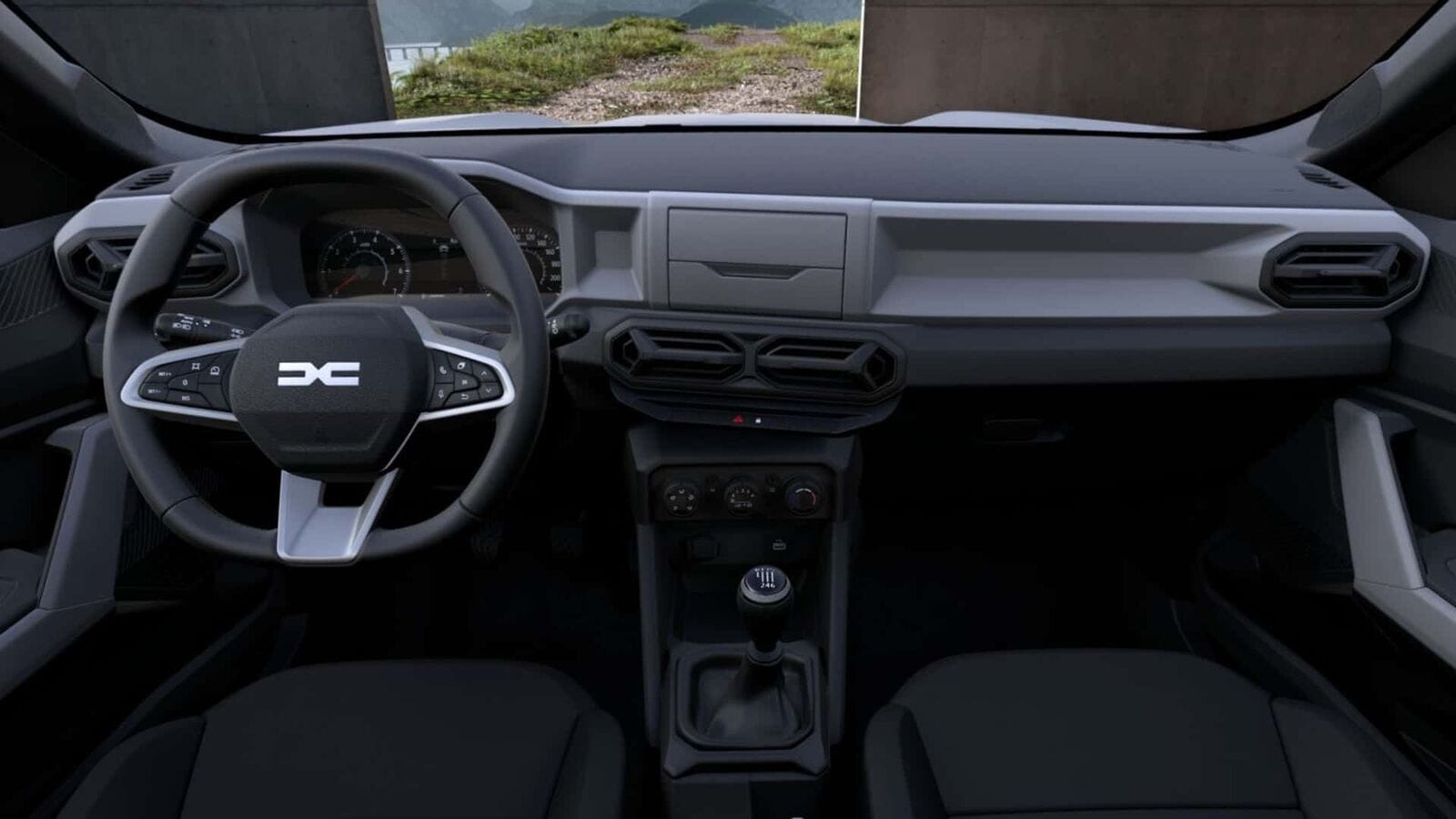
Now, a new image has surfaced revealing the interior of the Dacia Duster’s base variant, which possibly previews the interior of the upcoming Renault Duster’s base variant as well. As it appears, the base variant of the SUV would miss out on a touchscreen infotainment system. However, there is a panel where the consumers can install a touchscreen infotainment unit from aftermarket. Overall, the base variant of the Renault SUV may look spartan in terms of distal interfaces.
Watch: 2024 Renault Duster breaks cover with bolder design, new engine
Speaking of the styling and features, the three-spoke multifunction steering wheel would come featuring a new and chunky look. The steering may come similar to the Dacia Duster one and sport a flat vibe at the top and bottom, while it would carry a plethora of control buttons. While the base variant may miss out on the touchscreen infotainment system, it would come with a fully digital instrument cluster. Among other features on the dashboard, there would be sharp-looking AC vents with horizontal slats and rotary dials for climate control functions at the centre console.
Interestingly, the rise of touch-sensitive digital interfaces and capacitive touchpad screens in modern cars has become a safety concern. The drivers tend to take their eyes off the road to navigate through the menus on the touchscreen to access various features. This is a major issue the Euro NCAP has recently highlighted. Hence, the safety rating agency has stated that from 2026, it will penalize automakers by lowering the safety rating of a car that doesn’t have physical control buttons for certain functions.
While the entry-level variants of many cars often come sans any touchscreen infotainment systems, in the last few years, even affordable small cars come with such units. The upcoming Renault Duster will not come as an affordable model. Instead, it would be positioned above the Kiger as an upmarket SUV. Hence it would be interesting to see if Renault India introduces the touchscreen infotainment system in the base variant of the car or continues with the spartan look visible in the Dacia Duster’s base variant.
By: HT Auto Desk | Updated on: 16 Mar 2024, 18:12 PM
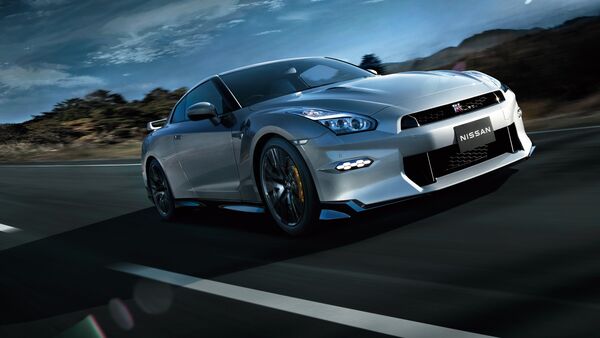
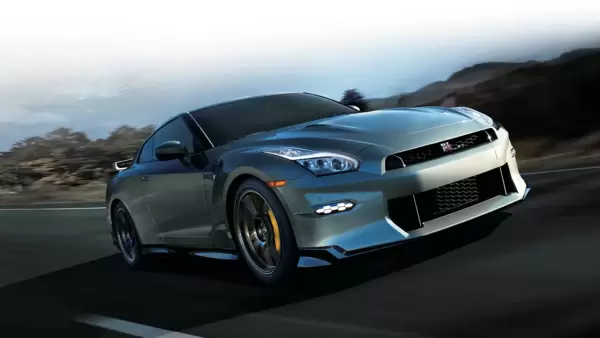
The 2025 Nissan GT-R has been revealed for Japanese markets and while not officially confirmed, this could be the last production model of the GT-R.
The 2025 Nissan GT-R could be driving into the sunset marking the end of an era
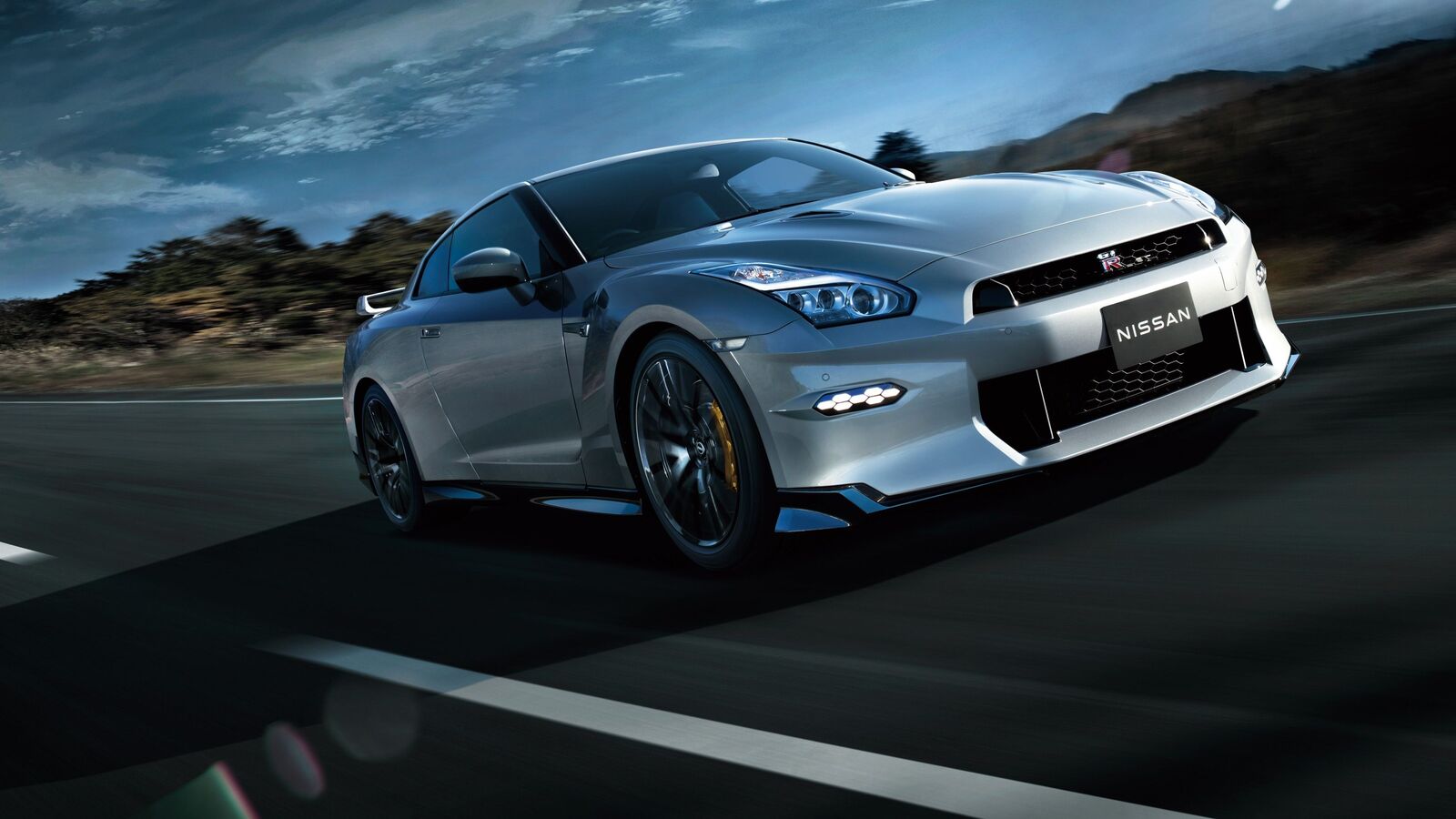
The Nissan GT-R is every bit of a cult and the longest of the modern era of supercars to stay in production. However, it now seems Nissan is ready to draw the curtains on its halo offering. The company has revealed the 2025 GT-R for Japanese markets and while it’s not officially confirmed, this could be the last production model of the GT-R.
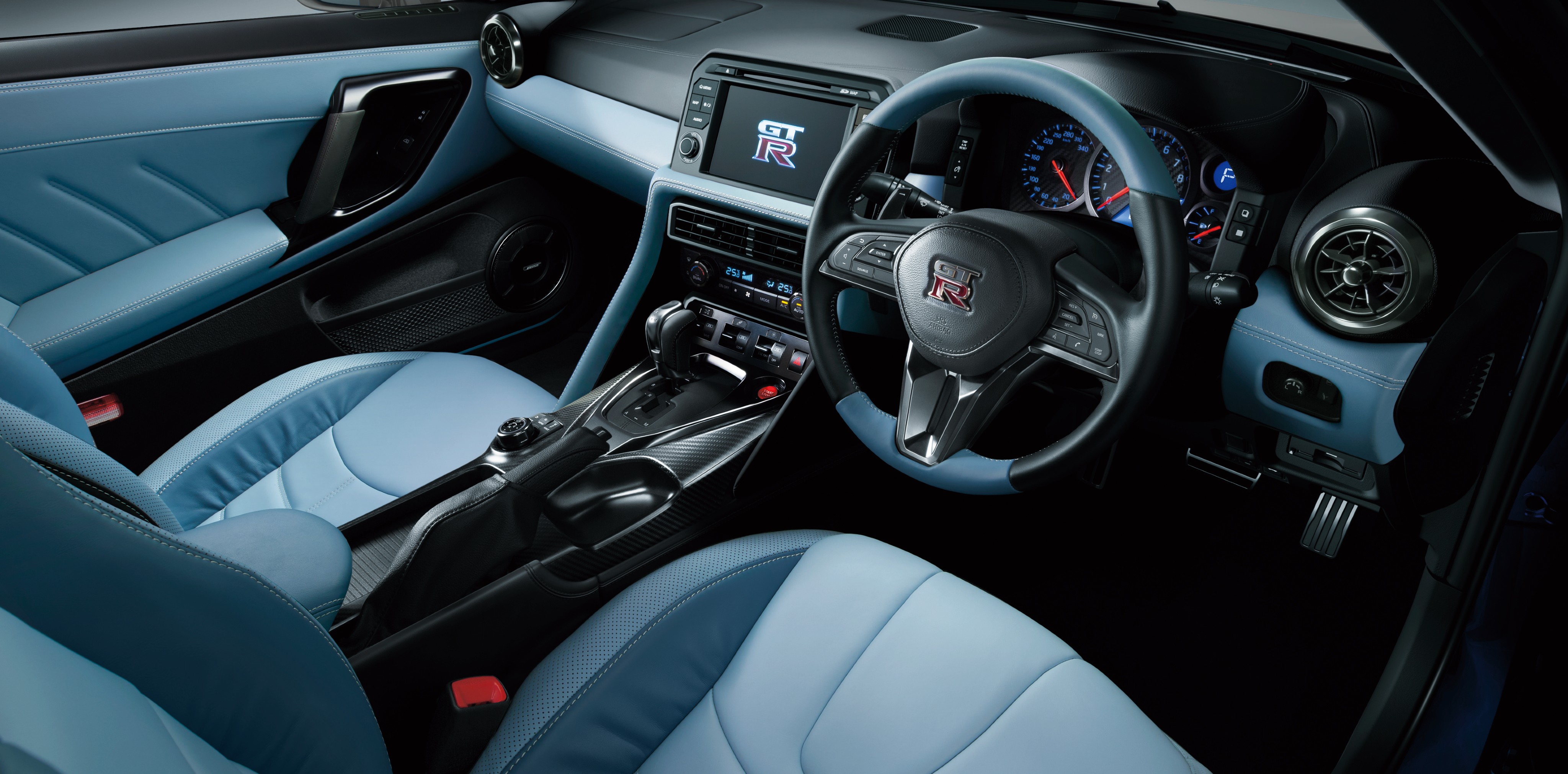
The 2025 Nissan GT-R arrives with minimal changes. The car gains a new Blue Heaven interior upholstery, while there’s a new T-Spec and Track Edition engineered by the brand’s performance division NISMO. Upgrades include new weight-balanced piston rings, connecting rods, and crankshafts. The Track Edition also gets aluminium certification plates and gold-coloured number plates in the engine bay.
The 2025 Nissan GT-R arrives with a new Blue Heaven upholstery on the new premium variant
Furthermore, Nissan says the 2025 GT-R will be sold in limited numbers although it does not suggest the number of units that will be sold. Another report suggests that the automaker has capped production to 1,500 units for the supercar.
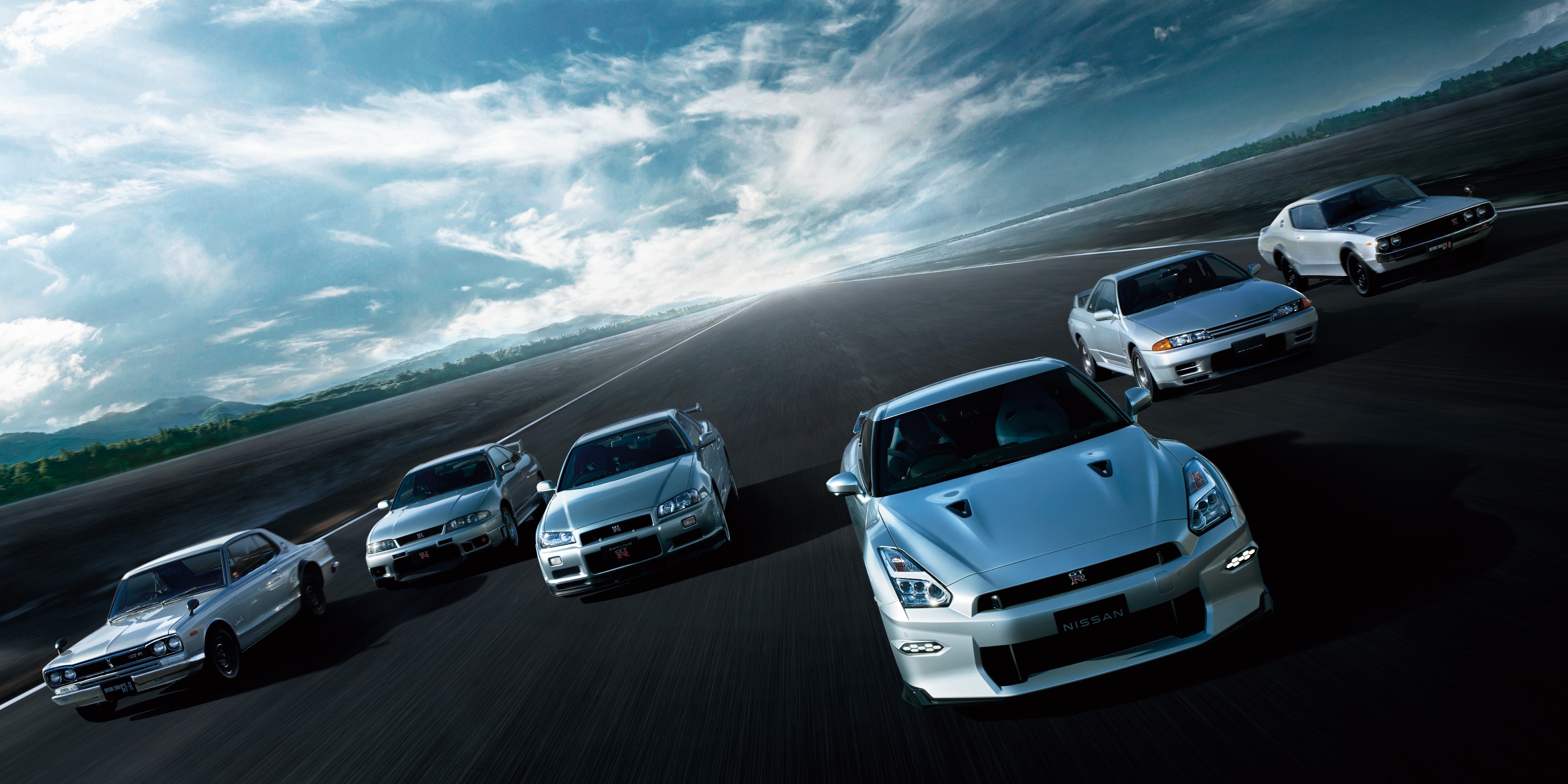
Fondly called the Godzilla, the 2025 GT-R could be the last time we see the model roll off the production line. The R25 GT-R entered production in December 2007, although development started back in 2000. The automaker released two concepts, one in 2001 at the Tokyo Motor Show and the GT-R Proto at the same event in 2005.
The Nissan GT-R is a supercar icon and could come back as an all-electric offering
We hope Nissan gives the GT-R a bigger and brighter send-off to the icon that has been an integral part of the automotive culture globally. Meanwhile, Nissan is said to be working on an all-electric GT-R that could arrive by the end of this decade. The automaker also showcased the Hyper Force concept at the 2023 Japan Mobility Show hinting at the same.
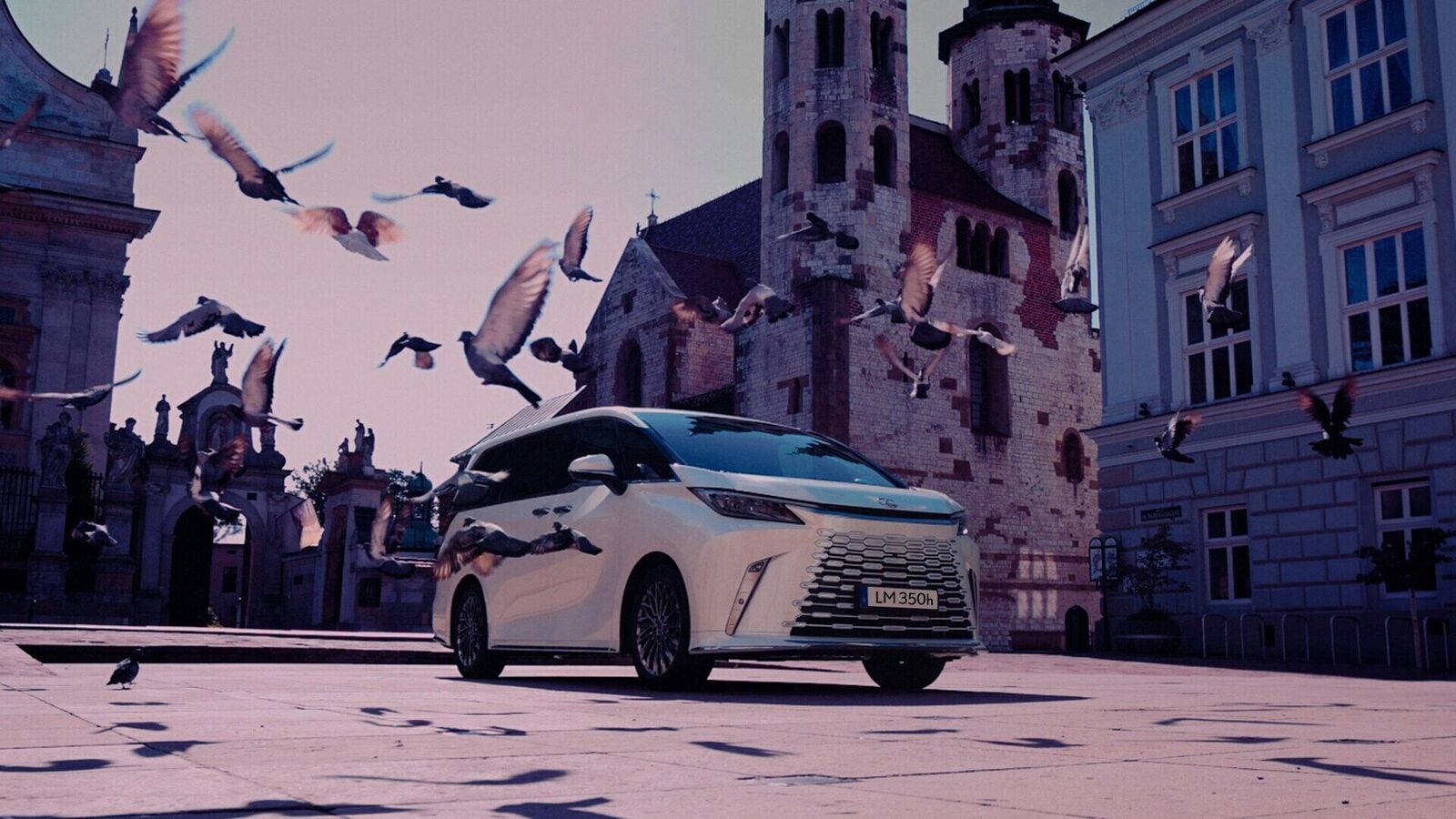
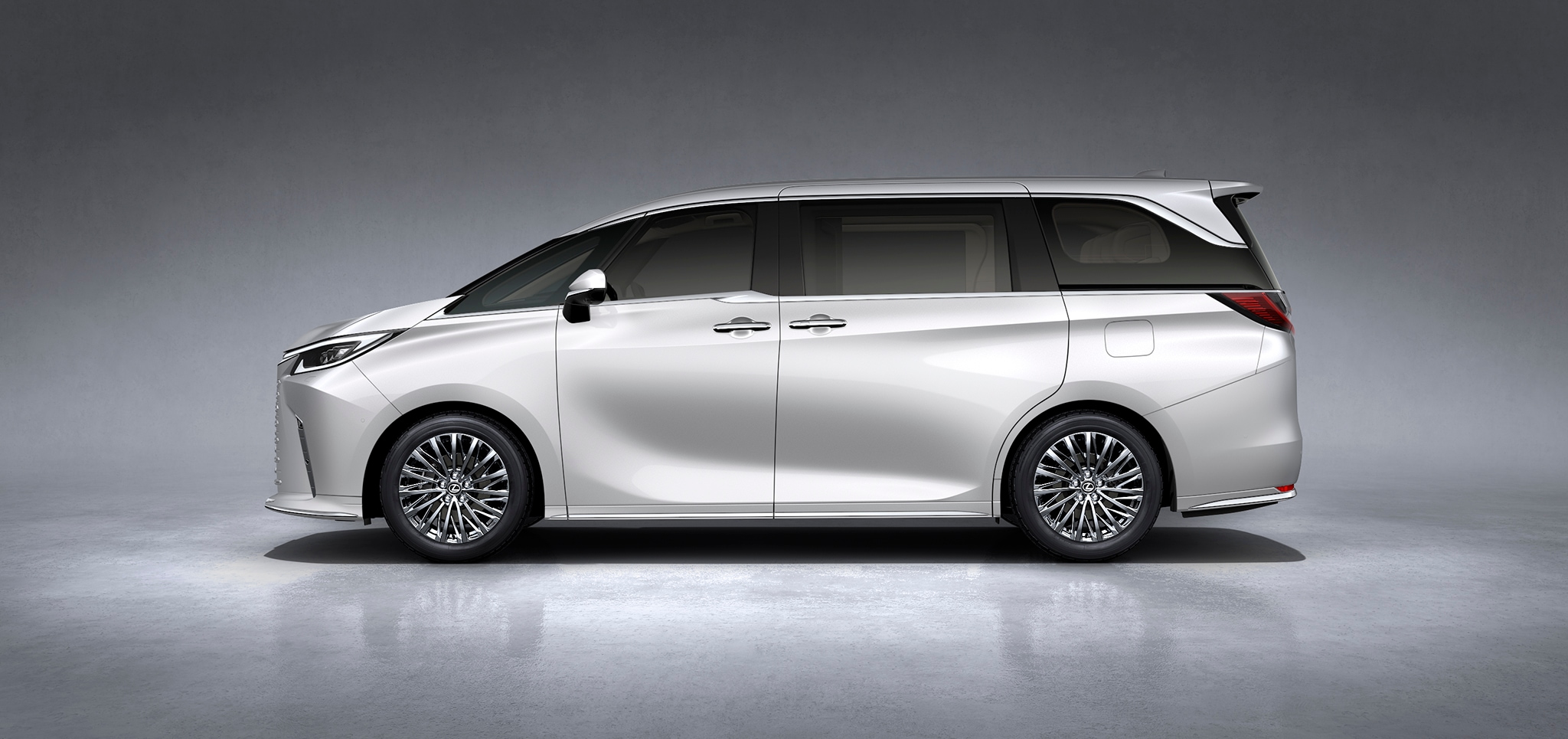
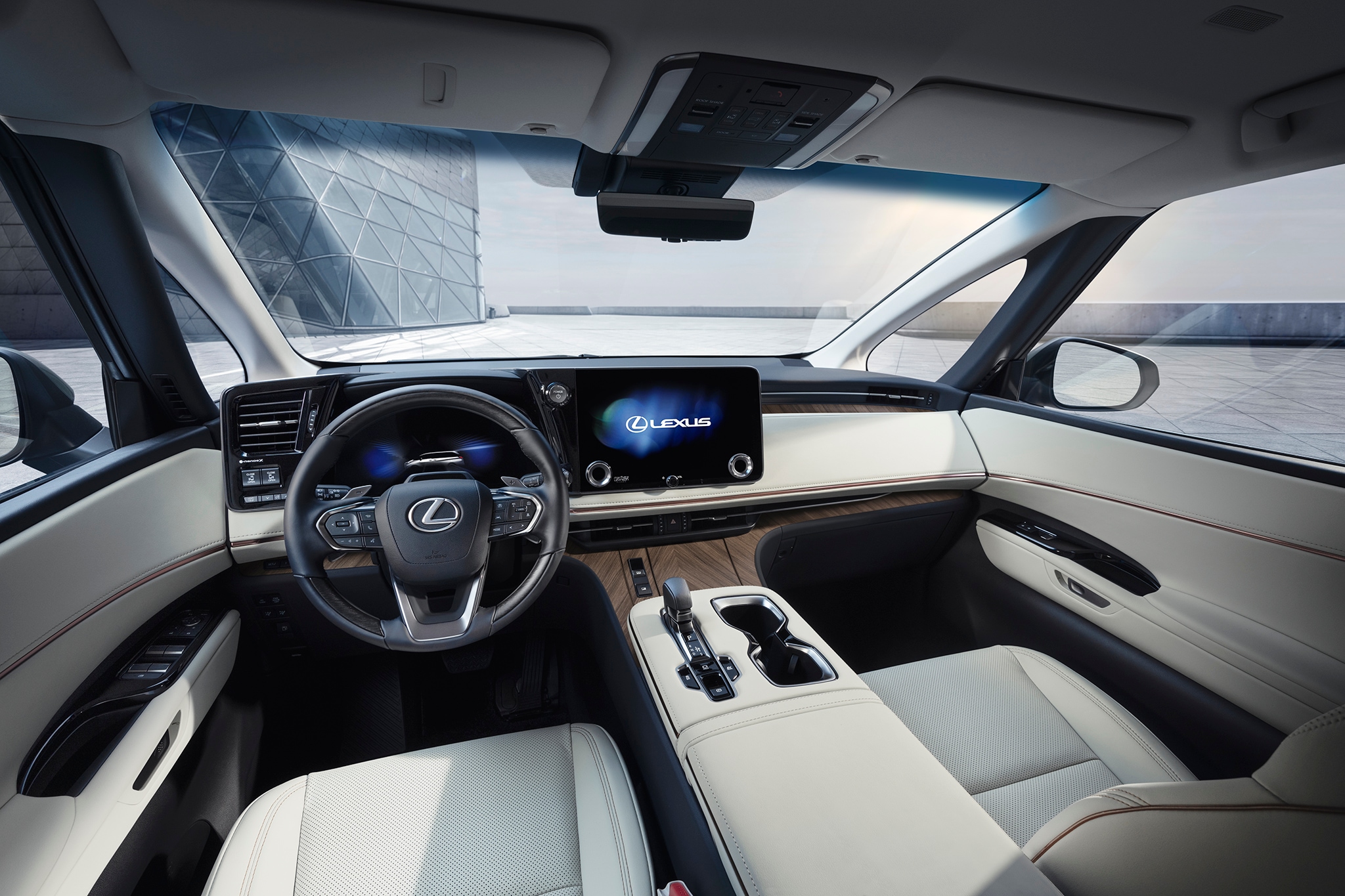
It’s noteworthy to mention that the Lexus LM 350h shares its underpinnings with the Toyota Vellfire that retails at ₹1.2 crore (ex-showroom). Both models are based on the GA-K modular platform but the Lexus looks a lot more exotic with its futuristic styling. The massive spindle grille takes centre stage, flanked by sharply styled LED headlamps and vertically stacked fog lamps. The rear sports a full-width LED taillight with a boxy design aimed to maximise cabin space.
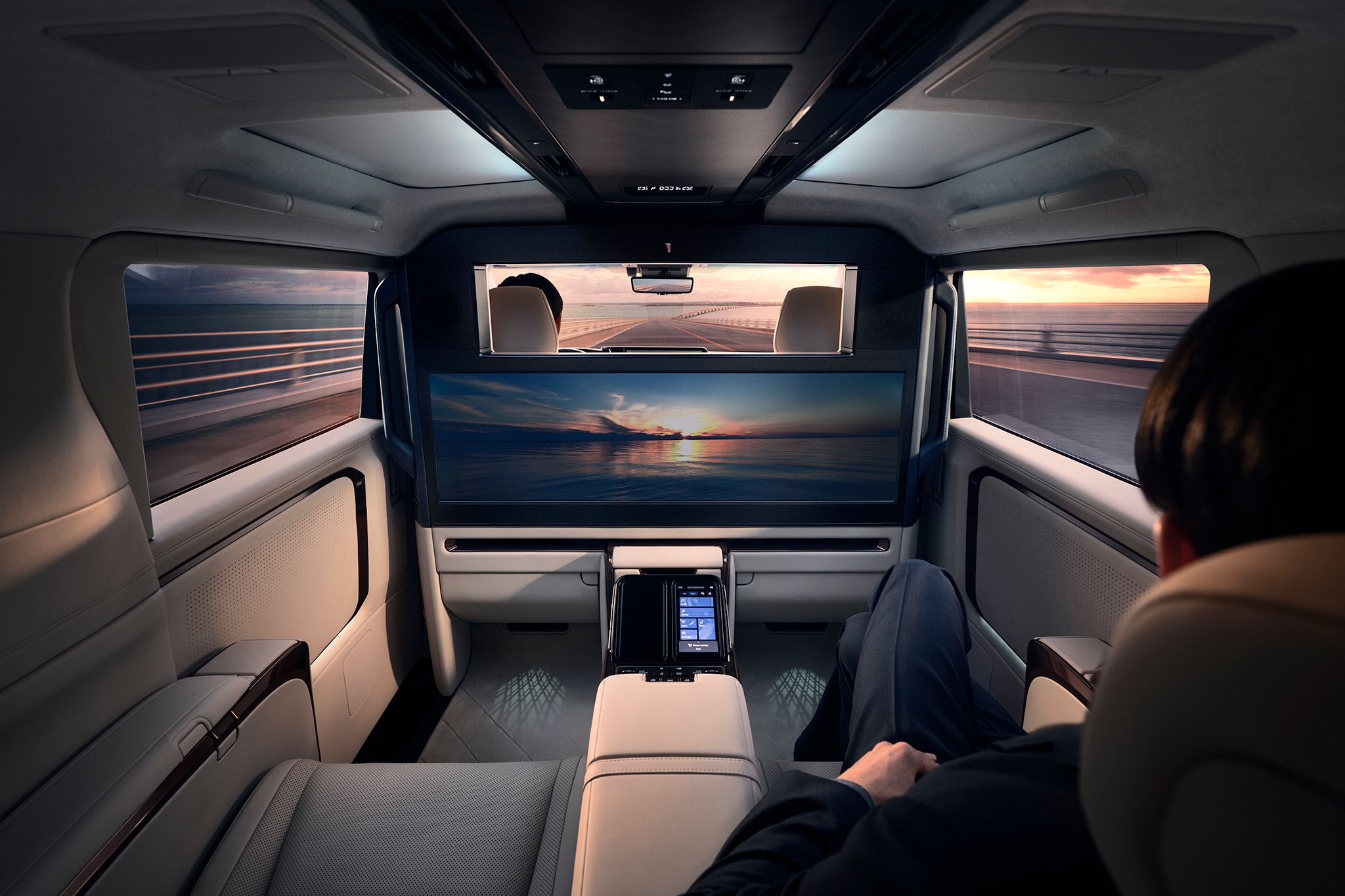
The Lexus LM 350h gets a 48-inch TV, 23 speakers, sensor-based climate control and an adaptive suspension
Speaking about the launch, Tanmay Bhattacharya, Executive Vice-President – Lexus India, said, “The debut of the all-new Lexus LM in India marks a pivotal moment for us, as we embark on a journey into the realm of ultra-luxury mobility. Upon announcing the commencement of its bookings last year, the new Lexus LM had become an instant hit in the country reiterating our belief that India is home to ultra HNIs who yearn for heightened indulgence & experiences. The majestic LM, with its exceptional comfort, innovative design, and unparalleled craftsmanship is poised to redefine the ultra-luxury mobility experience, meeting the expectations of our esteemed guests in India. We thank our guests for their patience as well as their faith in the brand and are confident that we will be able to begin deliveries of the majestic new LM by mid of this year.”
The LM name stands for ‘Luxury Mover’ and the four-seater configuration ensures the best is packed in the cabin. This includes a partition between the front and rear passengers. It also gets aircraft-style recliner seats, a 23-speaker surround sound system, pillow-style headrests, a refrigerator and a 48-inch television. Other features include fold-out tables, heated armrests, USB ports, wireless phone chargers, reading lights, vanity mirrors, and an umbrella holder.
The Lexus LM 350h is based on the GA-K modular platform shared with the Toyota Vellfire but gets futuristic styling, setting it apart
ower on the Lexus LM 350h comes from the 2.5-litre four-cylinder petrol-hybrid engine that develops 246 bhp and 239 Nm of peak torque, paired with an eCVT automatic transmission. The engine works with a nickel-metal hydride battery for higher efficiency. Power goes to all four wheels via the All-Wheel Drive (AWD) system.
The Lexus LM also gets an adaptive suspension for a pliant ride, while there’s a new sensor-based climate control that will adjust the temperature according to the passenger’s body. Furthermore, the MPV gets noise-reduction tyres, active noise control, and a digital rearview mirror. On the safety front, the LM 350h gets the Lexus Safety System+ 3 ADAS suite bringing a host of active and passive safety features.
The Lexus LM 350h competes against a host of luxury SUVs at its price point
The Lexus LM 350h sits right on top of the MPV segment in India with its jaw-dropping price tag. The model does not have a direct rival at the moment, but it does compete with top-of-the-line luxury SUVs including the Land Rover Range Rover, Mercedes-Maybach GLS, Bentley Bentayga, and the like.
By: HT Auto Desk | Updated on: 13 Mar 2024, 15:53 PM
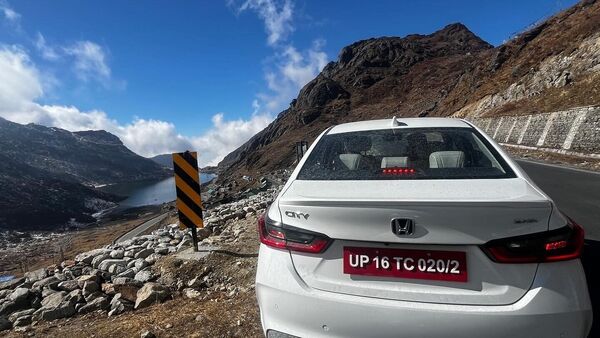
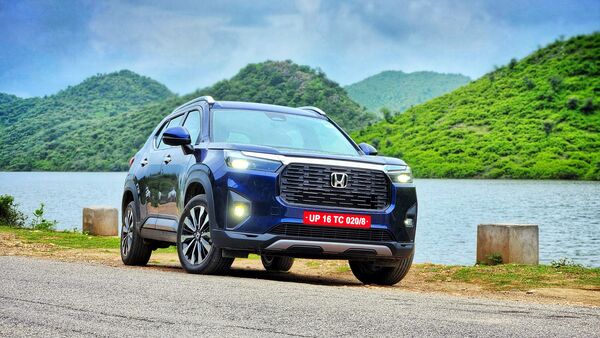
The price increment affects all three models from the automaker – Elevate, City and Amaze – and will be the second time from Honda this year.
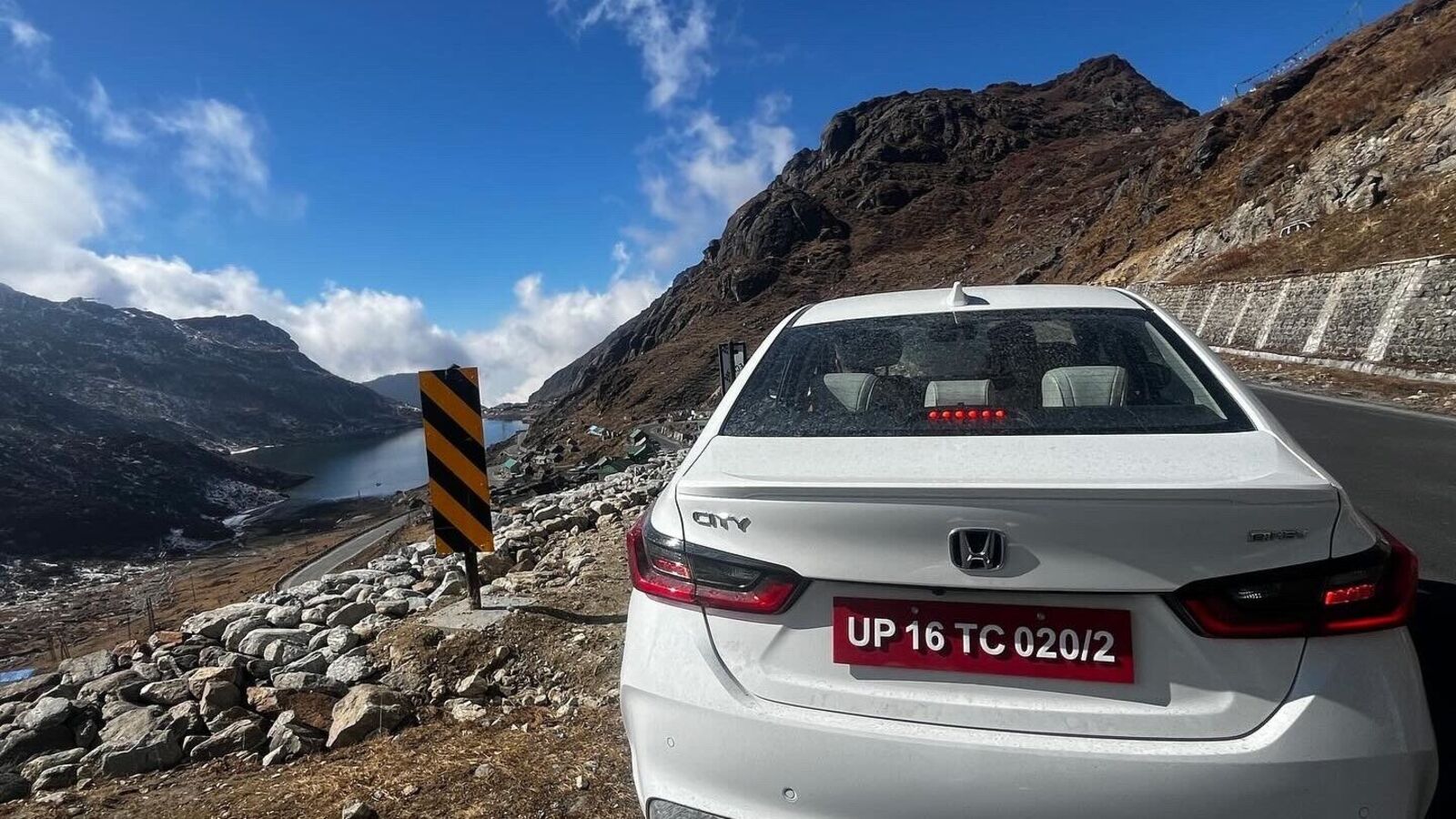
The Honda Elevate, City and Amaze are set to get their second price hike this year with effect from April 2024
Honda Cars India will be increasing prices across its model range from April 2024. This would be the second price hike from the company this year after increasing prices in January. The price increment affects all three models from the automaker – Elevate, City and Amaze.
The Honda Amaze is the brand’s most accessible offering and is priced from ₹7.16 lakh, while the Elevate is priced from ₹11.58 lakh. The Honda City is priced from ₹11.71 lakh onwards, while the City e:HEV hybrid is priced from ₹18.89 lakh. All prices are ex-showroom.
The Honda Elevate is currently priced from ₹11.58 lakh (ex-showroom) onwards, since prices were revised in January this year
Honda is yet to officially announce the price hike and we will get to know the exact quantum of the price hike only next month. In the meantime, the automaker has rolled out special year-end offers for March 2024. This includes a discount of up to ₹50,000 on the Elevate along with benefits of up to ₹90,000 on the Amaze. The Honda City gets the maximum discount of up to ₹1.20 lakh for March.
By: HT Auto Desk | Updated on: 12 Mar 2024, 18:26 PM
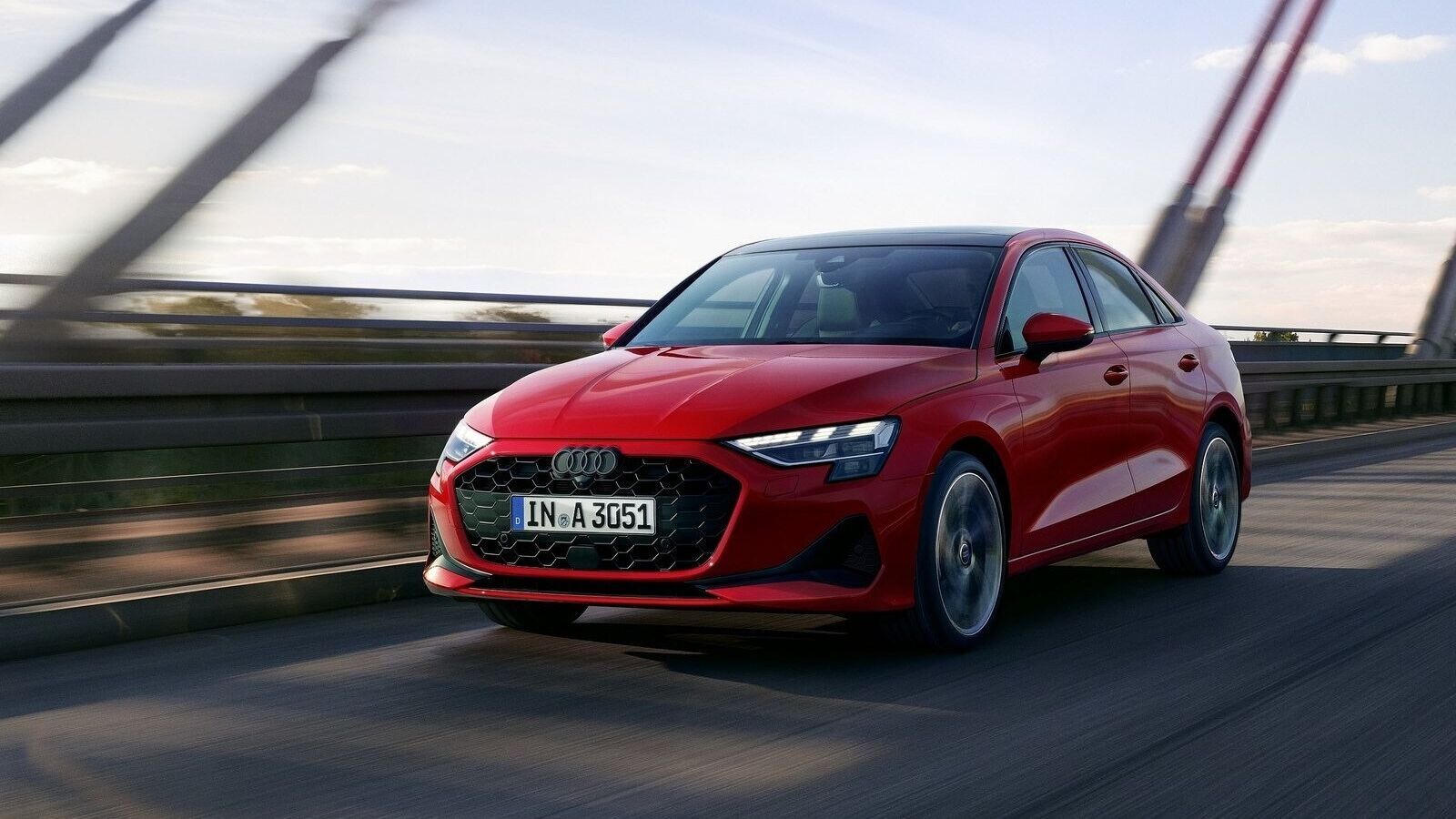
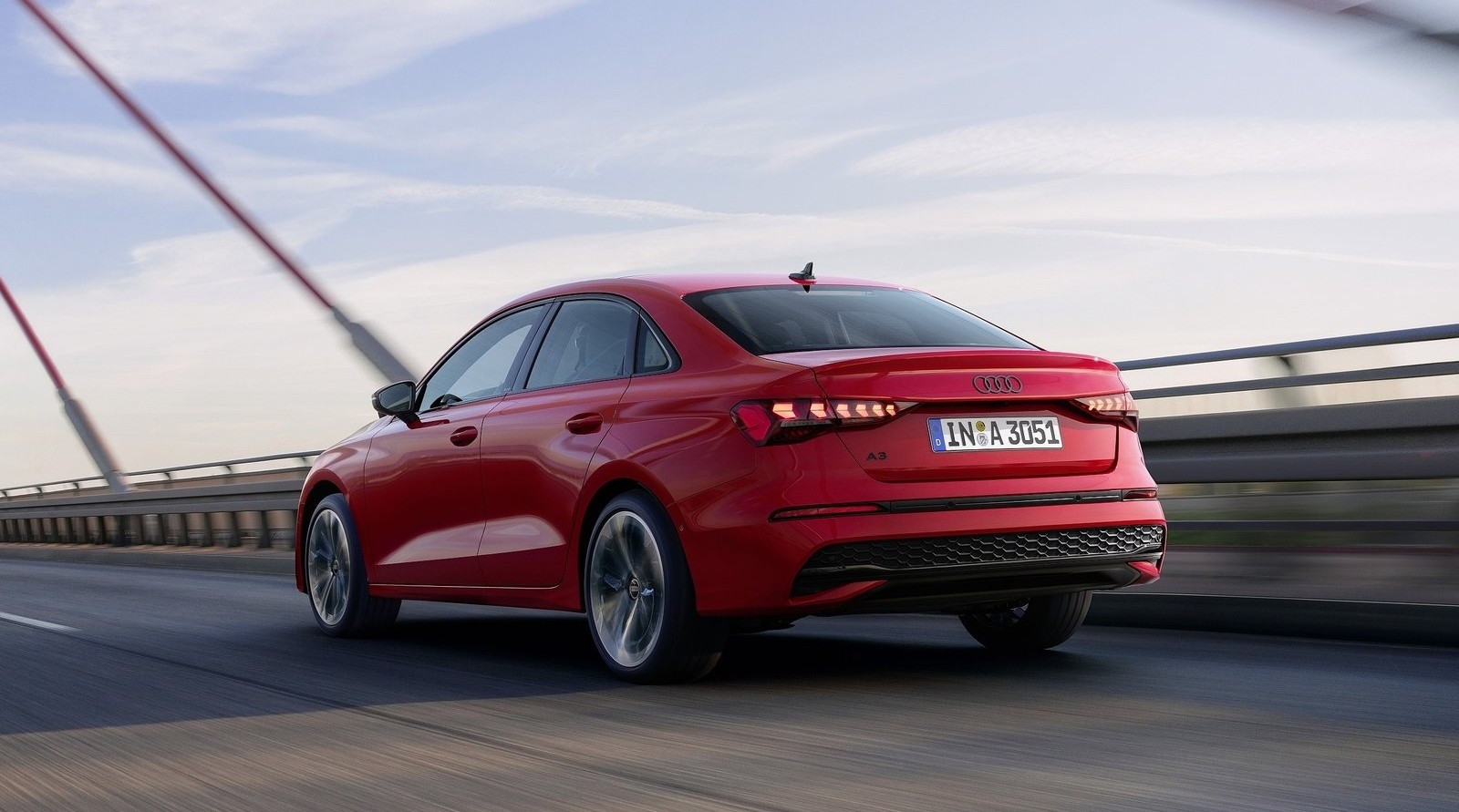
The 2025 Audi A3 facelift arrives with new styling, more standard equipment and new materials in the cabin.
The 2025 Audi A3 facelift gets a redesigned front with a new bumper, redesigned LED headlamps and more
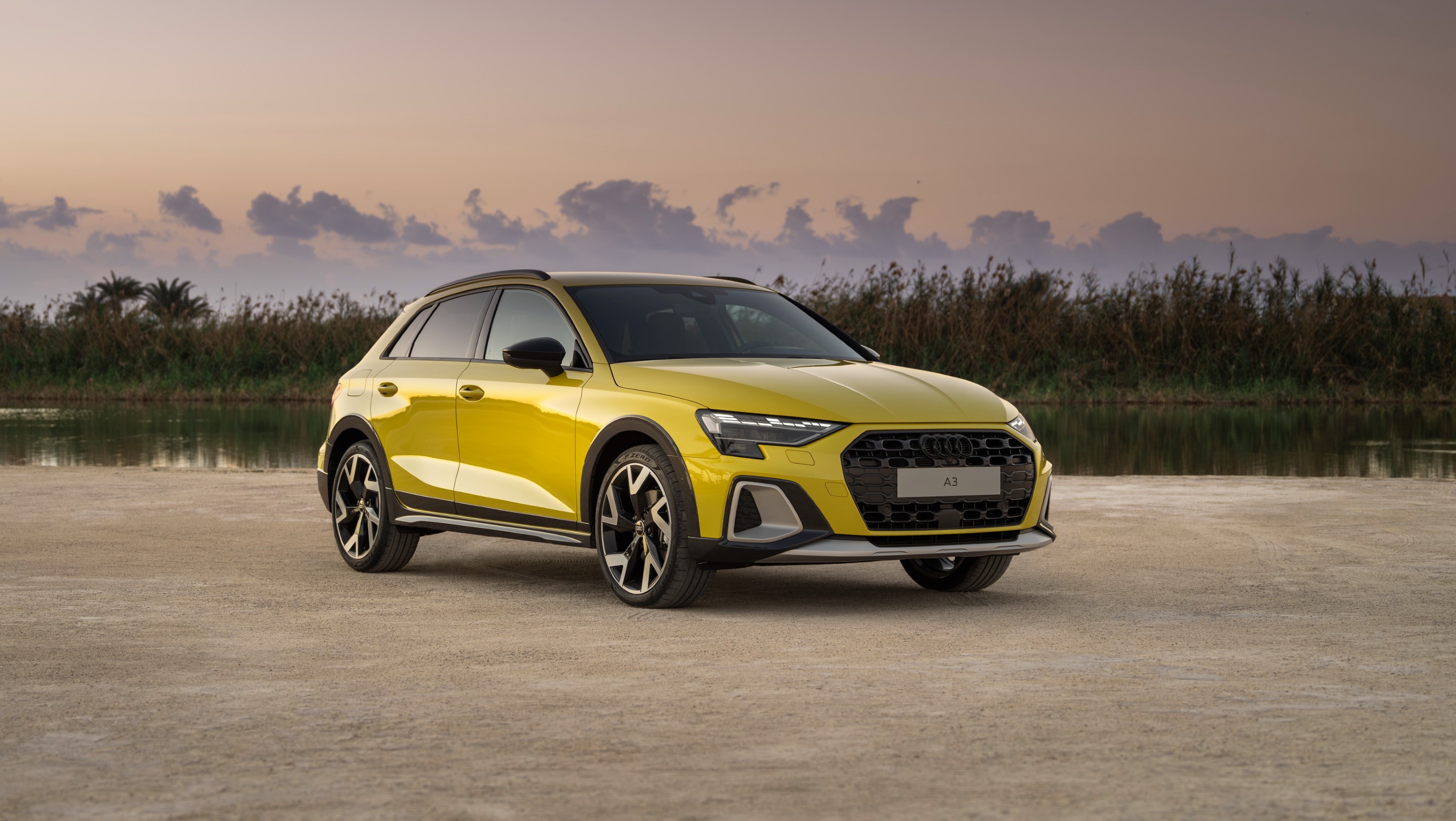
Audi AG has pulled the wraps off the 2025 A3 facelift bringing subtle yet significant updates to the popular seller. The 2025 Audi A3 facelift arrives with new styling, more standard equipment and new materials in the cabin. The A3 continues to be offered as a sedan, while there’s a new A3 allstreet that is more of a crossover between an estate and an SUV. The latter also gets a slightly rugged appearance along with 30 mm of extra ground clearance over the sedan.
The 2025 Audi A3 facelift gets a new hexagonal, frameless singleframe grille that’s new flatter and wider. The model looks more imposing from the front, along with redesigned headlights with Matrix LED lighting and four selectable signature LED DRLs. The revised front spoiler connects the two intakes on the sides of the new bumper and makes the model appear lower.
The 2025 Audi A3 facelift continues to sport a compact appearance with the nip and tuck bringing a fresh appeal
Meanwhile, the new Audi A3 allstreet gets a more rugged appearance. The model gets dark rocker side skirts, and wider wheel arches to accommodate the larger 17-inch wheels, as against the 16-inch alloys on the sedan. The suspension on the A3 allstreet also features a 15 mm higher ride height for added comfort.
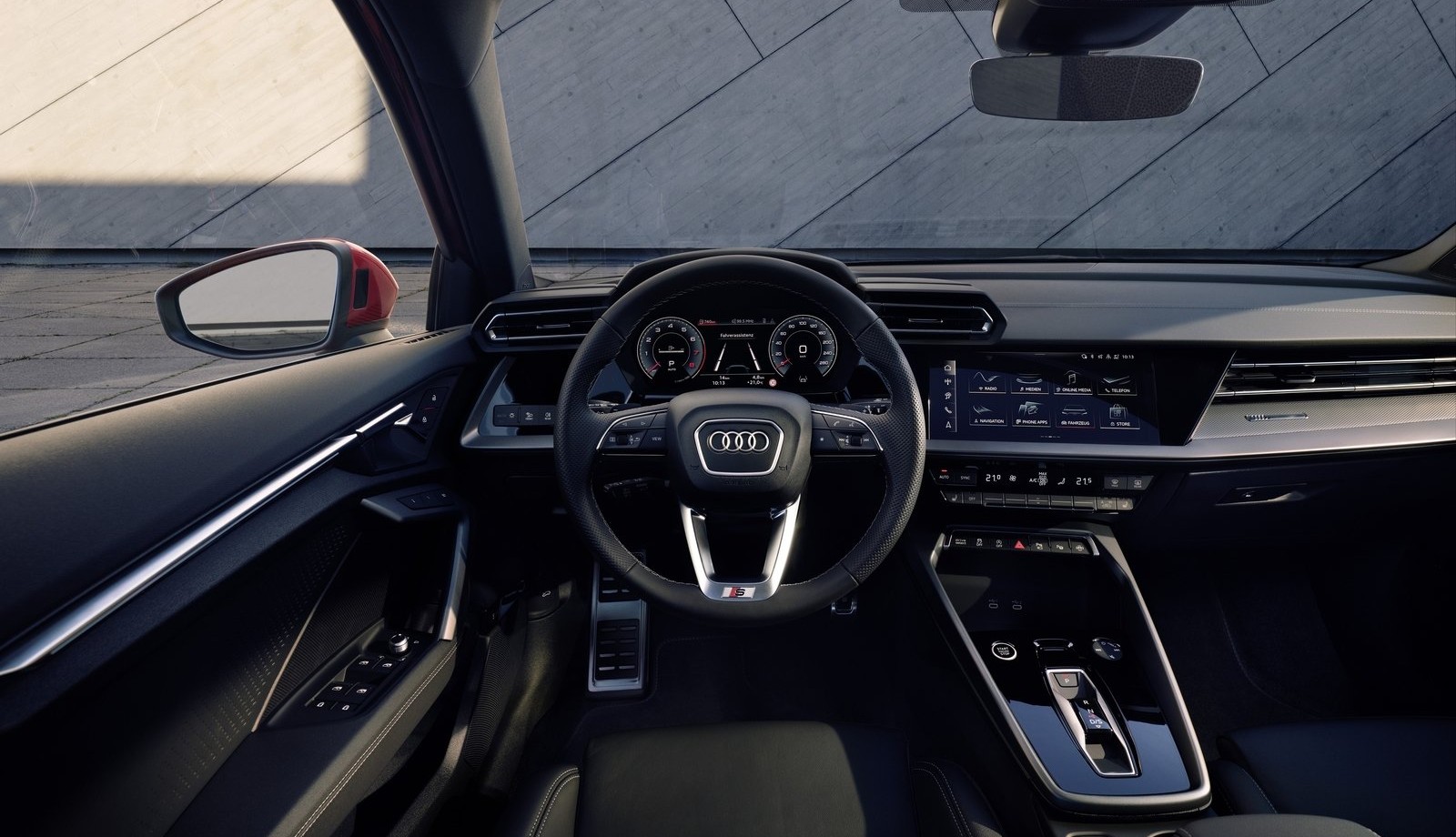
The cabin on the new Audi A3 has also received subtle revisions to the aesthetics. This includes a new design for the gear shifter, air vents, new lighting, and fabric inlays made out of 100 per cent recycled polyester. The cabin comes with a new three-spoke steering wheel, while there are new finishes across the cabin for a refreshed look. The A3 range now comes with a 10.1-inch touchscreen infotainment system with the Audi Virtual Cockpit. There are also two USB-C charging ports, and an updated MMI unit with voice command, Amazon Alexa compatibility and more.
The cabin gets new a design for the gear shifter and air vents, along with a revised steering wheel, and more standard equipment
Other features on the A3 facelift include adaptive cruise assist, high-beam assist, dual-zone climate control, as well as Audi Pre-sense with advanced driver assistance systems (ADAS). Engine options on the model include the 1.5-litre mild-hybrid turbo petrol and the 2.0-litre turbo diesel, both churning out 148 bhp and paired to the 7-speed S-tronic automatic transmission. Audi says a plug-in hybrid version will be added to the lineup at the end of the year.
The 2025 Audi A3 allstreet gets a raised suspension by 15 mm, while the ground clearance has gone up by 30 mm. It also gets larger wheels and side skirts for a rugged look
Audi has announced no plans to bring the A3 back to India. The model used to be extremely popular nearly a decade ago and was later replaced by the Q2 for a brief period as its most accessible offering. The Audi sedan range now starts with the A4 sedan in the country.
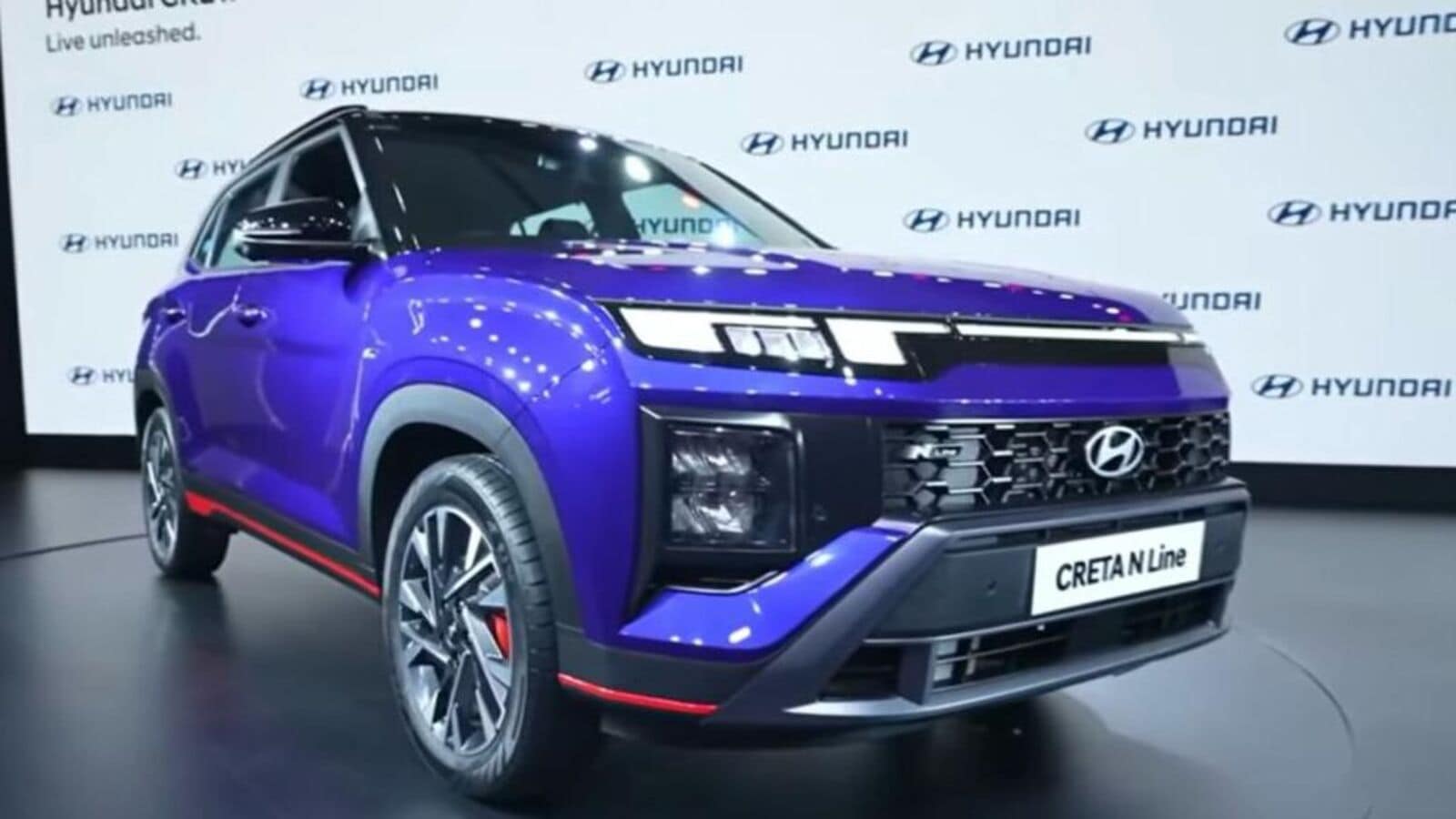
The launch of the N Line version of the Creta comes just two months after Hyundai launched the facelift version of the SUV earlier this year. The price of the Creta starts from ₹11 lakh (ex-showroom) and goes up to ₹20.15 lakh (ex-showroom) for the top-end version.
Hyundai Creta N Line: Variants and prices
Both the N8 and N10 variants of the Hyundai Creta N Line are offered in manual and automatic transmission options. While the price of the N8 variants ranges between ₹16.82 lakh and ₹18.32 lakh (ex-showroom), the top-end N10 variants will cost ₹19.34 lakh for the manual and ₹20.30 lakh (ex-showroom) for the automatic version. The Creta N Line is based on the top-spec Creta SX(O) variant.
Hyundai Creta N Line: Colour options
The Creta N Line will be offered in six colour options. These include three dual-tone exterior themes as well which will come with a black roof. The colours on offer are Atlas White, Abyss Black and Titan Grey Matte, Thunder Blue with Abyss Black roof, Shadow Grey with Abyss Black roof and Atlas White with Abyss Black roof.
Hyundai Creta N Line: Engine, performance
Under the hood, the Creta N Line will get the 1.5-litre four-cylinder turbo petrol engine which also powers the standard Creta SUV. However, unlike the standard version, the engine will get both six-speed manual and seven-speed dual-clutch transmission options. The output remains similar with 158 bhp of power and 253 Nm of peak torque. It can sprint from 0 to 100 kmph in just under 9 seconds. The SUV offers three drive modes: Eco, Normal and Sport while there are three traction control modes for snow, sand and mud.
Hyundai Creta N Line: Design
The SUV will stand out against the standard versions with some unique design changes typical of Hyundai N Line models. The exterior design has been updated with a new sporty front grille and the N Line logo. The SUV also gets a more aggressive front bumper with red accents to accentuate its sporty looks. On the sides, the Creta N Line gets side skirts with red accents and a new set of 18-inch diamond-cut alloy wheels with N Line badging as well as red front brake callipers. At the rear, it gets a twin-tip exhaust that is retuned to sound sportier than the standard Creta.
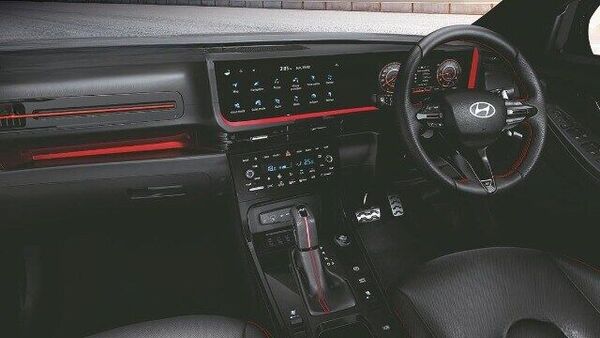
The interior of the Hyundai Creta N Line looks sportier with red accents on the dashboard, red bezel around the digital displays and N Line badging on the steering wheel and gearbox.
The interior gets an all-black treatment with N Line logo and red accents all around. The new steering wheel comes leather-wrapped with red stitching. The dashboard gets red inserts while the infotainment screen has a red bezel. The gear lever and seats also get N Line badging.
Hyundai Creta N Line: Features
In terms of features, the Creta N Line comes with all the features offered in the SX(O) variant of the SUV. These include 10.25-inch touchscreen display and digital driver display, wireless charger, panoramic sunroof, ventilated front seats, dual climate control, powered driver seat and more. As far as safety is concerned, the Creta N Line offers level-2 ADAS technology, a 360-degree camera, six airbags, Electronic Stability Control, Hill Assist Contro and more.
By: HT Auto Desk | Updated on: 10 Mar 2024, 10:18 AM
In a bittersweet finale, Nissan prepares to bid farewell to its iconic GT-R with a final limited-edition model for the 2025 model year. Insider report
…
In a bittersweet finale, Nissan prepares to bid farewell to its iconic GT-R with a final limited-edition model for the 2025 model year. Insider reports hint at an exclusive release of only 1,500 units, with a portion of these expected to be high-performance Nismo models.
In a bittersweet finale, Nissan prepares to bid farewell to its iconic GT-R with a final limited-edition model for the 2025 model year. Insider reports hint at an exclusive release of only 1,500 units, with a portion of these expected to be high-performance Nismo models.
The Nissan GT-R, an icon in the world of supercars, is gearing up for its swan song with a final limited-edition model slated for the 2025 model year. Despite being on the scene since 2007, the R35 generation GT-R has maintained its status as a supercar slayer, thanks to its impressive performance figures.
According to insider sources cited by Japanese publication Mag X, Nissan is set to unveil the final 2025 model year GT-R on March 14. Reports suggest that only 1,500 units will be produced, with approximately 300 of them expected to be Nismo models. However, it remains unclear whether these limited editions will be exclusive to the Japanese market or offered globally.
Details about the final model are scarce, but given that the 2024 GT-R received significant visual updates just 12 months ago, including new front and rear fascias, major upgrades for the 2025 version seem unlikely. Perhaps there will be some minor aerodynamic tweaks or adjustments to the trim levels, but a complete overhaul seems improbable, especially for a model that will be discontinued after producing just 1,500 units.
If the reports are accurate and 2025 indeed marks the final year of the R35 GT-R, enthusiasts can expect some commemorative touches to the sports model, such as special badges or decals. Mechanically, the regular variant is likely to retain the same 3.8-liter twin-turbo V6 engine found in the 2024 model, with 565 bhp and 632 Nm of torque. The GT-R Nismo variant could see a boost to 600 hp and 481 lb-ft (651 Nm) of torque.
When the GT-R first hit the market, it sent shockwaves through the supercar world, much like the original Honda NSX did in its time. It was one of the fastest production vehicles on the planet, capable of outpacing cars that cost significantly more. However, over the past 17 years, the supercar landscape has evolved, with lighter and more powerful competitors entering the market, outperforming the GT-R with ease.
While the 2025 GT-R may be the final chapter for the R35 generation, Nissan is likely to introduce a replacement in the near future. The form of the R36 model, however, remains a mystery. At the recent Japan Mobility Show 2023, Nissan teased the future with the Hyper Force concept, a GT-R-inspired model powered by electric motors capable of producing a staggering 1,341 bhp. This glimpse into the future suggests that the GT-R’s legacy of performance and innovation is far from over.
New Ford Endeavour & Ranger spotted at Chennai Port
[ad_1]
By: HT Auto Desk | Updated on: 09 Mar 2024, 19:25 PM
More images of the new Ford Endeavour SUV and Ford Ranger pickup have emerged online, showing the interior this time, hinting at an imminent arrival o
…
More images of the new Ford Endeavour SUV and Ford Ranger pickup have emerged online, showing the interior this time, hinting at an imminent arrival of the automaker.
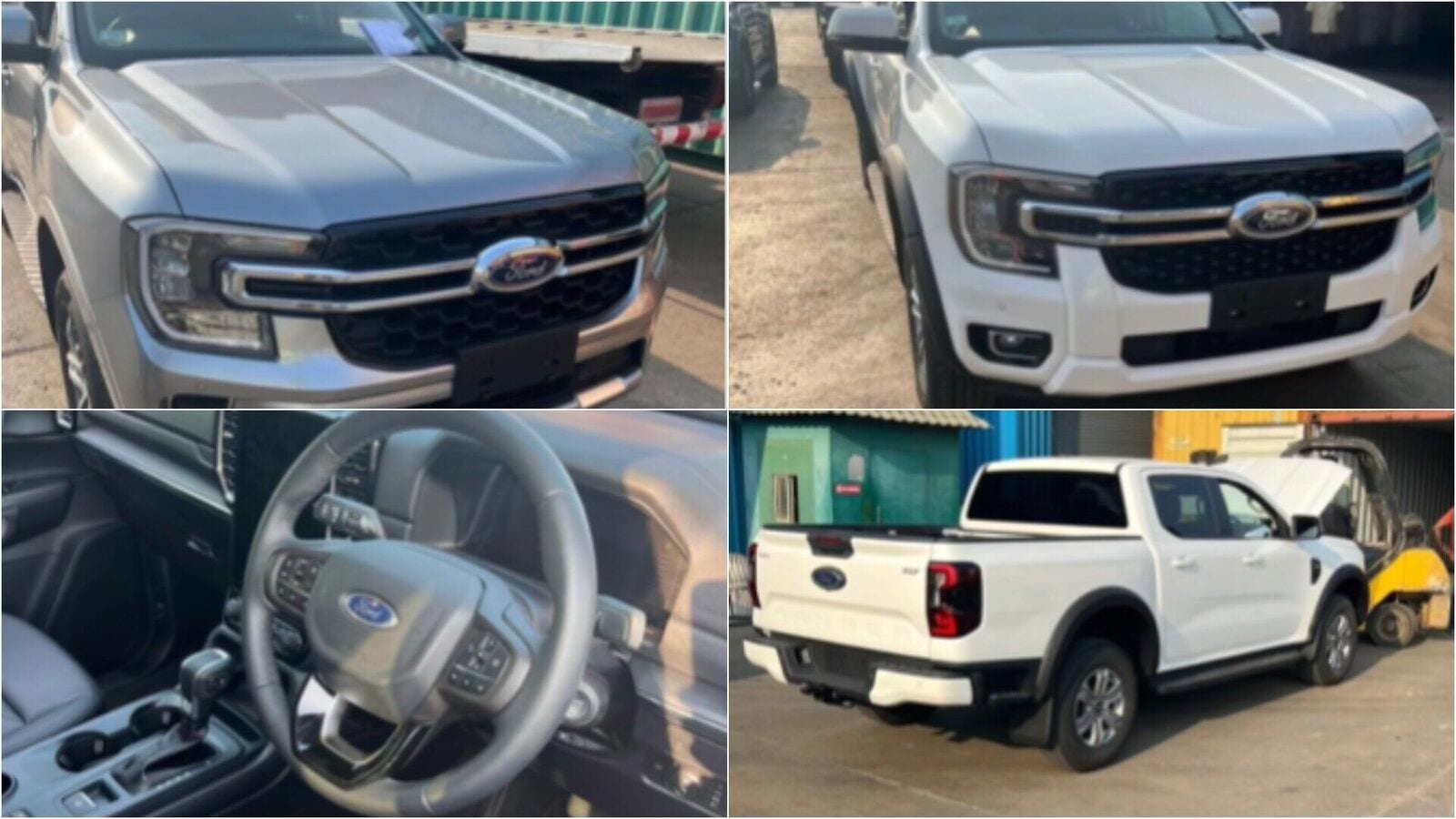
The new-gen Ford Endeavour and Ranger were spied on at the Chennai port recently, fuelling rumours of the American automaker’s return (Instagram/Weguide.auto)
The chatter around Ford’s return to the Indian market doesn’t seem to dying down. While the automaker is yet to officially make any announcement, rumours are rife that the American auto giant is planning for a comeback in 2025 and will start its new innings with the Endeavour (Everest in other markets) and Ranger models. Both models were recently spotted completely undisguised in Chennai, Tamil Nadu, and now more images of the SUV and pickup have emerged online, showing its interior.
The images appear to be from the Chennai port where the Ford Endeavour and Ranger seemingly landed before they were ferried to the company’s facility on flat-bed trucks. Both the new Endeavour and Ranger seen in the spy shots are right-hand drive models. While the Endeavour was a Ford staple, the Ranger never went on sale in India. That said, with the market maturing and the arrival of models like the Isuzu V-Cross and Toyota Hilux, Ford could consider bringing the pick-up this time.
The spy images offer a glimpse at the interior of both offerings. The cabin gets soft-touch plastics, leather upholstered seats, a 12-inch touchscreen infotainment system with wireless Apple CarPlay and Android Auto, a digital instrument console, electrically adjustable front seats, ADAS and more. The features are available on the international version and it is likely that most of these features will be available on the India-spec model.
The new Ford Endeavour and Ranger are based on the T6 ladder-on-frame construction. Engine options will include the 2.0-litre diesel with a single turbo producing 180 bhp and 420 Nm, while the twin-turbo version churns out 210 bhp and 500 Nm. Expect to see the SUV and pick-up available with manual and automatic transmission choices.
It needs to be seen if Ford opts to bring the utility vehicles as Completely Knocked Down (CKD) or fully built units. The Endeavour’s return will bring back the age-old rivalry with the Toyota Fortuner, while also taking on the MG Gloster and Isuzu MU-X. That said, we still await an official announcement from the automaker.
By: HT Auto Desk | Updated on: 07 Mar 2024, 16:48 PM
If Ford launches the Ranger in the Indian market, then it will go directly against the Toyota Hilux.
Ford Ranger is the smallest and most affordable pick-up truck in the lineup. (Photo courtesy: Instagram/carcrazy.india)
Recently, a new-gen Endeavour was spotted in Chennai but it was not alone. There was another flatbed truck right behind the Endeavour that was carrying a Ford Ranger which is the smallest pick-up truck in the manufacturer’s lineup. Ford Ranger shares its underpinnings with the Endeavour which is sold as Everest in the global market. As of now, it is not clear what the Everest and Ranger are doing in Chennai. What is interesting though is the fact that Ford India’s plant is on the outskirts of Chennai so there is a possibility that both vehicles are headed towards the plant.
Pick-up trucks are very popular in the global market but not everyone wants such a large vehicle on a daily basis. This is where the idea of small pick-up trucks was generated. In the global market, there are a few small pick-up trucks such as Volkswagen Amarok and Ford Ranger and now Kia has announced that they are also bringing a pickup truck soon.
In the global market, the Ford Ranger is offered with three engine options. There is a 2.3-litre EcoBoost, 2.7-litre EcoBoost and a 3.0-litre EcoBoost. The 2.3-litre unit puts out 266 bhp of max power and 420 Nm of peak torque. Then there is the 3.0-litre unit that is rated for 399 bhp and 583 Nm. As of now, the 2.7-litre engine has not gone on sale. Ford says that they are targeting power and torque figures of 310 bhp and 542 Nm.
Ford offers the Ranger in four models – XL, XLT, Lariat and Raptor. It seems like the model that was spotted in India was the XL trim which is the most affordable one that a person can buy. In India, we have the Toyota Hilux and the Isuzu D-Max V-Cross but the Ford Ranger is expected to cost more if it is launched here.
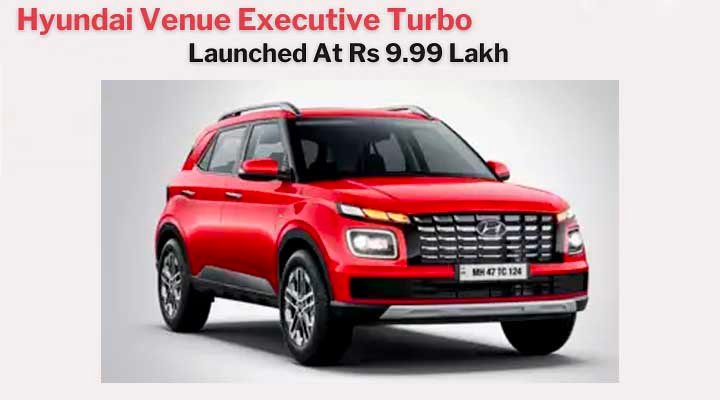
Hyundai Venue Executive Turbo launched at ₹9.99 lakh
The Executive Turbo trim comes with 16-inch dual-tone stylized wheels, dark chrome on the grille, roof rails, shark fin antenna and an ‘Executive’ emblem on the tailgate. The interior gets a front centre armrest with storage, 2-step rear reclining seats, 60:40 split seats and adjustable headrests for all passengers.
There is an 8-inch touchscreen infotainment system, which comes with wireless Android Auto and Apple CarPlay and voice recognition. There is also a digital cluster with a TFT MID for the driver.
For safety, there are 6 airbags, 3 point seatbelts with seat belt reminders, Electronic Stability Control, Vehicle Stability Management, Hill Assist Control, automatic headlamps, tyre pressure monitoring system etc.
Powering the new variant is the same 1.0-litre three-cylinder turbocharged petrol engine. It puts out 118 bhp of max power at 6,000 rpm and a peak torque output of 172 Nm at 1,500 to 4,000 rpm. The Executive Turbo is only available with a 6-speed manual transmission. The engine also comes with an Idle Start/Stop system to enhance fuel efficiency.
Hyundai has also updated the Venue S (O) Turbo variant with an electric sunroof and map lamps for the passenger and the driver. This variant is available with a 6-speed manual gearbox and a 7-speed dual-clutch automatic transmission.
The new variant and feature additions should help in attracting more customers. Commenting on the announcement, Mr. Tarun Garg, COO,Hyundai Motor India
Ltd. said, “Hyundai has always made India ‘Live the SUV Life’. As we move forward on a path towards democratizing SUVs, we are excited to announce the Executive Turbo variant of the Hyundai Venue. This variant is poised to offer an optimum combination of thrilling performance & enhanced convenience features for the value-conscious new-age buyer. We are confident that the addition of the Executive variant of Hyundai Venue will further fuel India’s love for SUVs.”
By: HT Auto Desk | Updated on: 04 Mar 2024, 15:38 PM
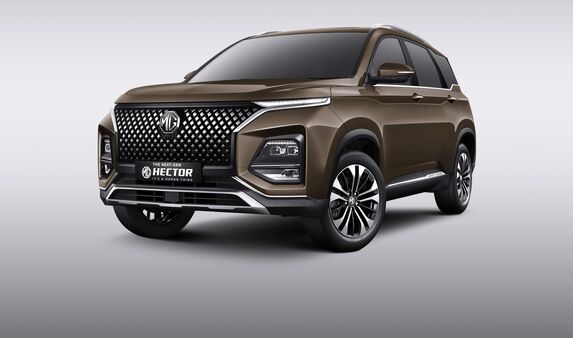
MG Motor India introduced new variants Shine Pro and Select Pro to Hector SUV.
MG Motor India introduced new variants Shine Pro and Select Pro to Hector SUV.
MG Motor India on Monday announced the launch of new variants for its Hector SUV. Christened Shine Pro and Select Pro, the new variants come with enhancing options for the Hector buyers. The MG Hector remains the brand’s most popular SUV so far since its arrival in India as the brand’s introductory model in June 2019. The newly launched Shine Pro variant is priced at ₹15,99,800 (ex-showroom) and the Select Pro is priced at ₹17,29,800 (ex-showroom).
The SAIC-owned British car marque has stated that the new variants of the car come with India’s largest portrait-oriented HD touchscreen infotainment system, measuring 14 inches. The Select Pro variant gets a dual-pane panoramic sunroof and the Shine Pro comes with a single-pane electric sunroof. Both variants come with a new dashboard design and a host of features including wireless Android Auto and Apple CarPlay connectivity. Other features include a wireless charger, and a fully digital instrument cluster with a 17.78 cm embedded LCD display, a push start/stop button, floating light turn indicators, LED headlamps, and LED-connected taillights among others.
Watch: MG Hector 2023: First Drive Review | HT Auto
Speaking on the launch of the new variants of the MGHector SUV, Gaurav Gupta, Deputy Managing Director, MG Motor India, said the Hector has made a bold statement with its commanding presence and has redefined the SUV landscape with a multitude of tech features and superior driving comfort with ADAS Level 2 and Connected features. “Each subsequent variant has set new benchmarks in the segment by offering a harmonious blend of comfort, advanced technology, and ergonomic design. Using insights from our market research, industry analysis, and customer feedback, we have introduced these two latest variants, underscoring our commitment to providing an elevated driving experience, characterized by performance and power, catering to the discerning preferences of SUV enthusiasts,” he added.
Mg Hector is available in both petrol and diesel engine options. The engine choices for the SUV include a 1.5-litre turbocharged petrol motor available with both manual and CVT gearbox options and a 2.0-litre turbocharged diesel unit available with a manual gearbox.