Hero MotoCorp’s electric two-wheeler arm Vida has unveiled the Lynx and Aero electric dirt bike concepts at EICMA 2023. The Vida Lynx is an electric dirt bike concept that promises quick acceleration with its light weight, while the Vida Acro is a modular electric dirt bike concept targeted at children between the ages of 3-9 years.
By: Sameer Fayaz Contractor | Updated on: 09 Nov 2023, 17:27 PM
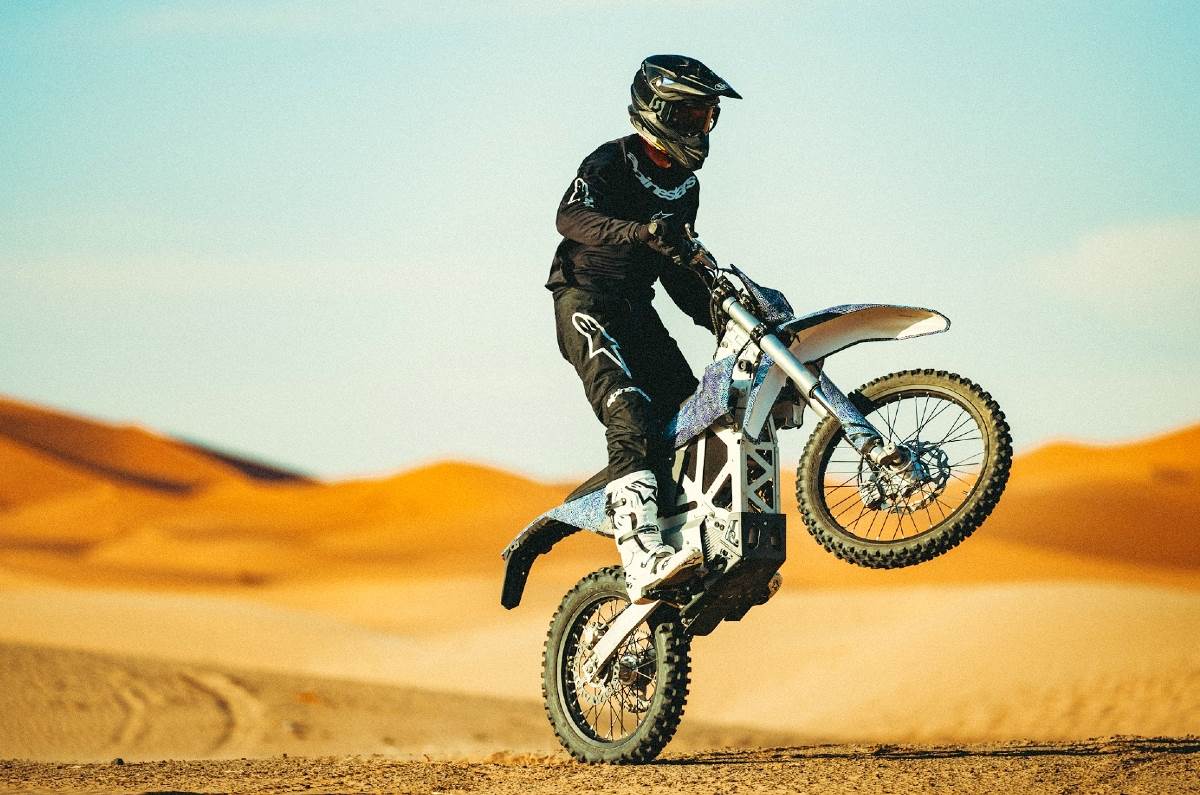
The Vida Lynx Concept is an electric dirt bike that weighs just over 80 kg with a 15 kW (20.1 bhp) motor
The Vida Lynx electric dirt bike’s design has been inspired by the lynx spotted wild cats, which are known for their agility in climbing. The company says that the Lynx e-bike mimics those qualities with the focus on having the best “ride and handling characteristics with the lowest possible weight.” Being an electric offering gives riders access to instant torque and silent operation, bringing more possibilities to the model.
The bike gets a suspension geometry for better weight distribution, allowing it to tackle rough terrains, while the new frame allows better front-to-rear weight distribution to optimise handling. Vida says that parameters like regenerative braking and traction control can be customised on the bike using a mobile app. The Lynx weighs a little over 80 kg and gets a 3 kWh battery pack that can last for about an hour. The electric motor churns out about 15 kW (20.1 bhp), promising an incredible power-to-weight ratio.
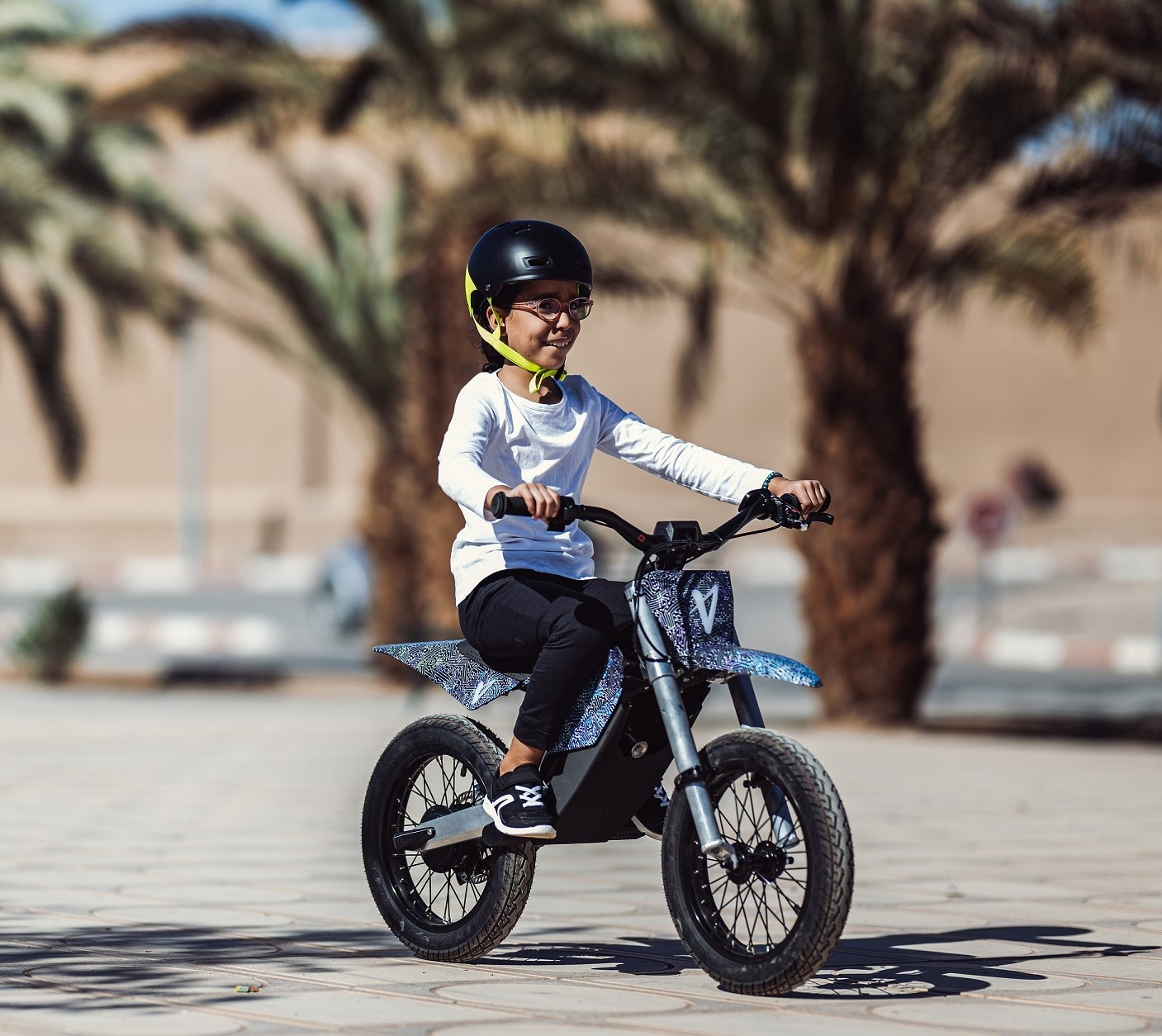
The Vida Acro concept showcases a modular frame that can be adjusted in three sizes to suit kids between the ages 3-9 years
Up next is the Vida Acro concept electric dirt bike that’s targeted at children. The electric mini bike for kids is scalable with its three-point adjustable frame that allows the chassis to increase or decrease in size within two minutes, depending on the child’s size and age. The adjustable mechanism allows the user to adjust the seat height, length of the bike and handlebar position, to ensure the ergonomics and ride remains uncompromised. The mini bike can be adjusted in three sizes.
The Acro comes with power tool battery packs that allow for easy swap and intra-compatibility. These batteries will be able to charge home appliances as well as the mini bike, helping users save costs. The mini electric dirt bike also comes with parental controls allowing parents to add a speed limiter, geofencing, remote ‘disable’ button to prevent mishaps and more.
Vida has not confirmed production plans for the Lynx and Acro just yet but is gauging customer interest at EICMA. Enough interest should help green-light the project, which is likely to make it to Europe first, where the company begins operations by mid-2024. India could also get the electric dirt bikes making them for a very interesting proposition.
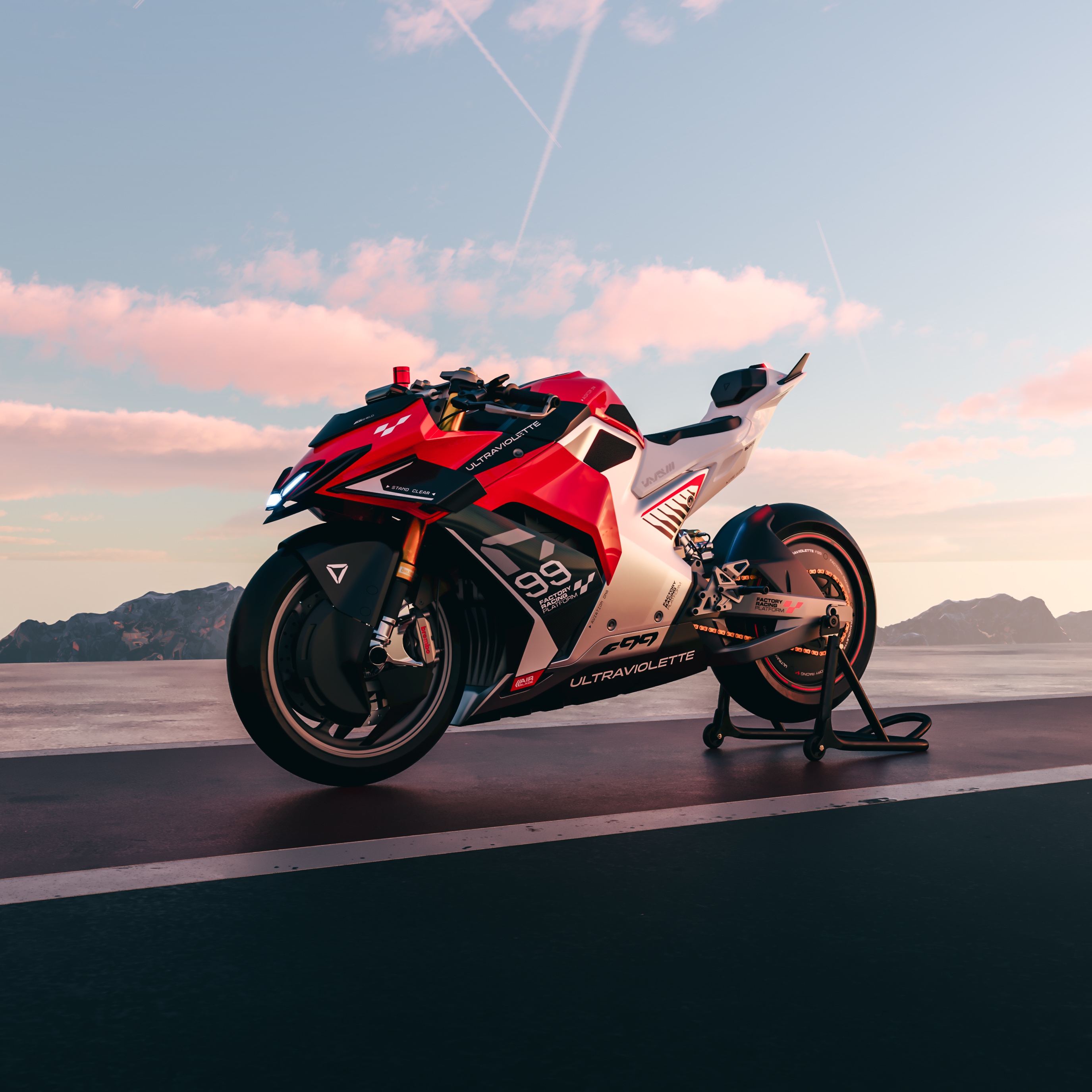
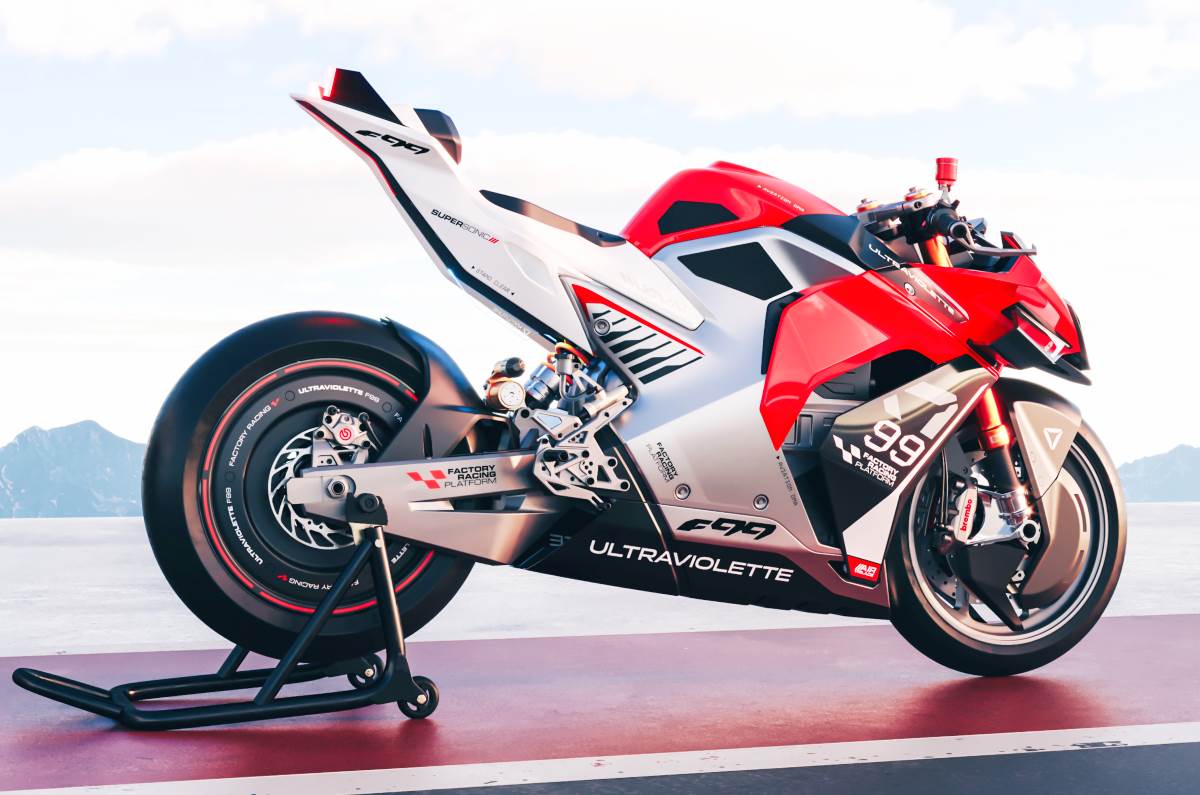
Bengaluru-based Ultraviolette Automotive unveiled the F77 electric motorcycle for international markets at EICMA 2023. A year after its India launch, the Ultraviolette F77 now enters the European market and will be priced between 9,000 and 11,000 Euros in Europe (subject to federal/state government incentives and taxes). The company will commence accepting bookings for the F77 in Europe from November 15 onwards on its website. Apart from the Euro-spec F77, Ultraviolette also showcased the F99 factory racing platform at EICMA 2023.
By: Sameer Fayaz Contractor | Updated on: 08 Nov 2023, 21:18 PM
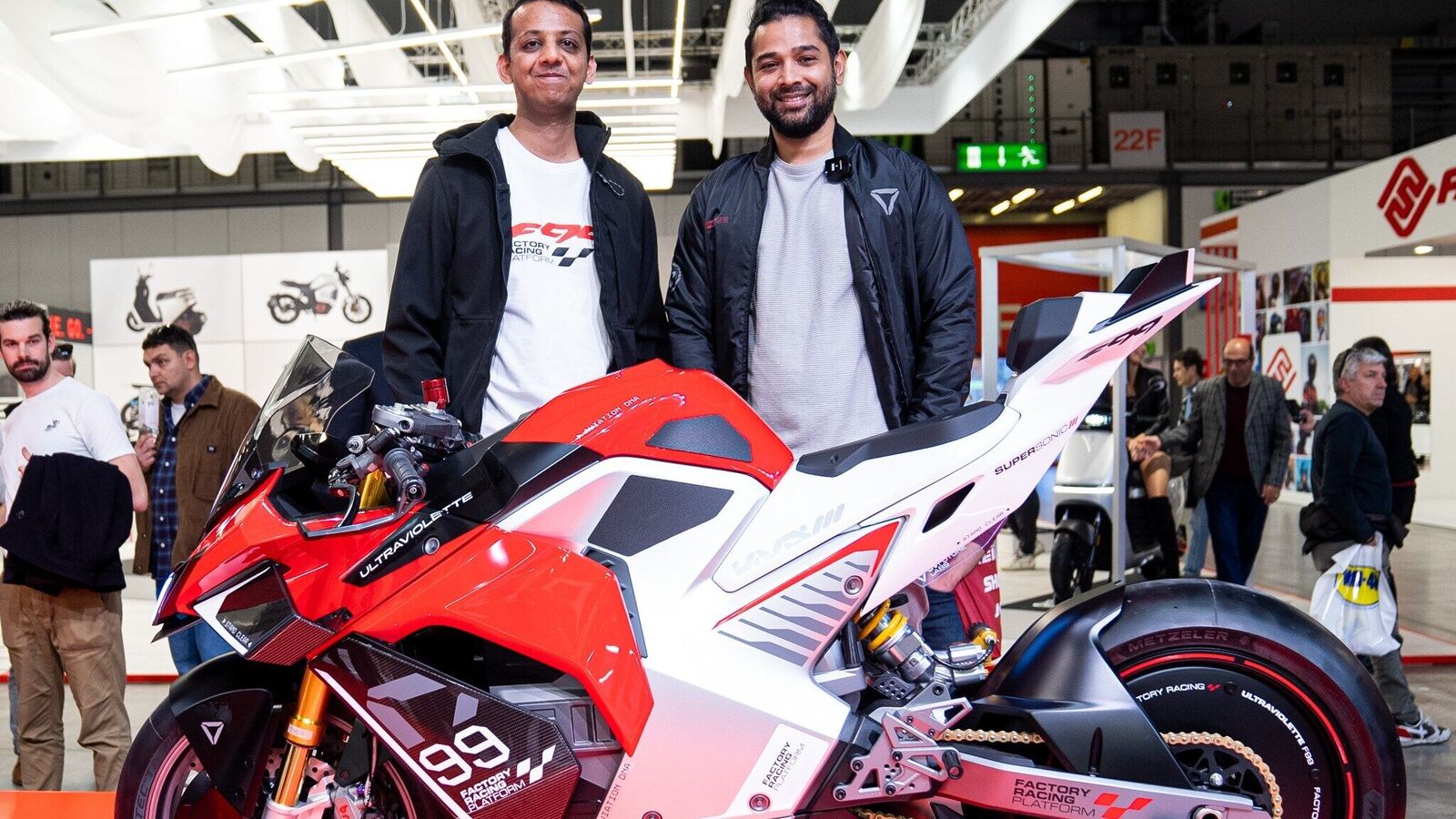
The European-spec Ultraviolette F77 at EICMA 2023 with co-founders Narayan Subramaniam and Niraj Rajmohan
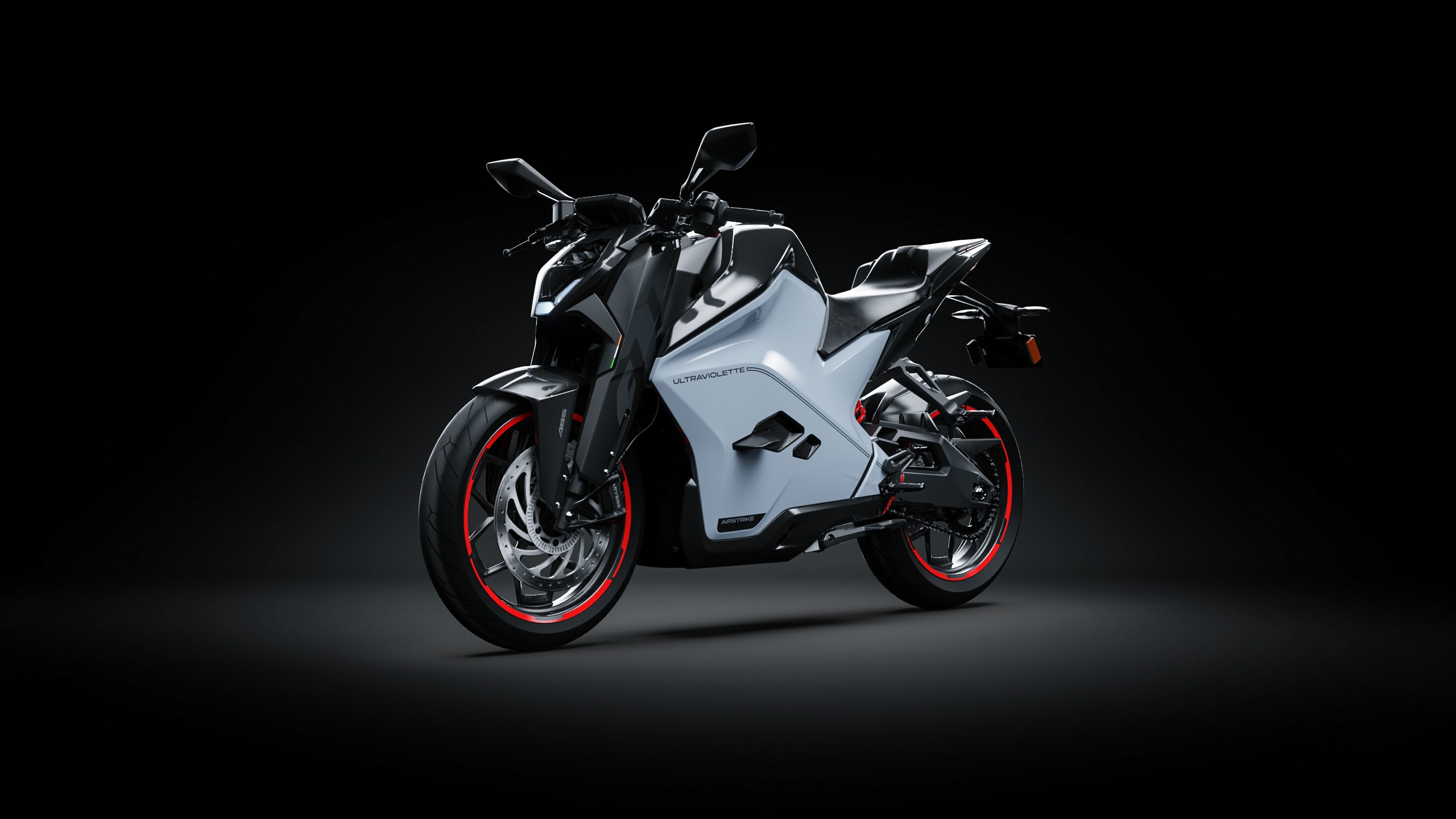
The Ultraviolette F77 electric motorcycle for Europe will arrive in three variants – Shadow, Laser and Airstrike. The styling remains the same while the electric motor develops 40 bhp and 100 Nm of peak torque, similar to the Indian version. The 10.3 kWh battery pack powers the PMS motor but the range for Europe is yet to be revealed.
Performance figures remain the same with 0-60 kmph coming up in 2.9 seconds and 0-100 kmph in 7.8 seconds. The bike gets three-level regenerative braking. The F77 has been completely designed and developed in India and will be exported from the manufacturer’s facility in Bengaluru. The electric motorcycle also gets three ride modes – Glide, Combat and Ballistic, apart from a host of connectivity features.
The F77 for Europe remains identical to the Indian version but the range is yet to be revealed from the 10.3 kWh battery pack
Speaking on the unveiling, Narayan Subramaniam, Co-Founder & CEO – Ultraviolette, said, We received an overwhelming response from enthusiasts across 190 countries, showing keen interest in the Ultraviolette F77. This energized our conviction to enter the European market, and EICMA 2023 is just the beginning, marking a significant milestone in our journey. As we set our sights on the global markets, the premiere of the F99 Factory Racing Platform further testifies to the passion, innovation, and relentless pursuit of excellence that started with the F77 and now seamlessly evolves into the F99. In an industry dominated by legacy players, we take pride in our role as catalysts of transformation in the realm of racing.”
Niraj Rajmohan, Co-Founder & CTO – Ultraviolette, added, “The F99 Factory Racing Platform exemplifies our vision to lead the way in global EV innovation. We take pride in driving innovation in the world of racing, providing state-of-the-art technology and unparalleled riding experiences, whether it’s on the track or the open road. Our entry into the European market marks an exhilarating milestone in our journey.”
The Ultraviolette F99 electric racing platform gets a carbon fibre components, liquid-cooled motor with 120 bhp, and a higher top speed of 265 kmph
With respect to the Ultraviolette F99 factory racing platform, the electric race bike builds on the F77 adding a full fairing. The e-bike incorporates carbon fibre in the construction of its active aerodynamics including the panels and winglets. Moreover, the electric motor is now liquid-cooled on the F99 helps take the maximum output to 90 kW (120 bhp) with 0-100 kmph coming up in just 3 seconds. The top speed has significantly increased to 265 kmph.
The Ultraviolette F99 has an aero drag coefficient of 0.45 and a low kerb weight of just 178 kg, which makes it easier to achieve high-performance numbers. The electric race bike platform was first unveiled at the 2023 Auto Expo but the EICMA version gets further revisions in design and performance. Ultraviolette anticipates the global launch of the F99 commercially by 2025. The platform can enable an advanced electric racing program in the future. Ultraviolette is currently speaking to European distributors to make their electric bikes easily accessible to customers in Europe.
Ultraviolette Automotive has taken the wraps off the updated F99 electric factory racing platform, which was earlier shown at the Indian Auto Expo. There have been a bunch of changes here now including a liquid-cooled powertrain, active aerodynamics and much more.
F99 racing platform
This platform has been two years in the making and the company says that aerodynamics have played a really important role in maximising the top speed of the F99. The air intakes at the front channel the air and compression behind forms an air curtain over the rider’s helmet at high speed. Carbon-fibre winglets on each side of the bike are activated when leaned over to further reduce drag and have 30 degrees of actuation.
The F99 makes 90kW peak power and weighs 178kg. It can go from 0-100kph in a claimed 3 seconds and has a top speed of 265kph, which is comparable to some Japanese 600cc supersports. The battery is still an air-cooled unit while the motor and controller both are liquid-cooled. The company says that the F99 will be launched globally in 2025.
The F99 uses a different frame to the F77 to handle the performance and has some top-spec components included Ohlins suspension at both ends as well as Brembo monobloc calipers. It uses 400-volt battery architecture as opposed to the F77’s 60-volt and even has an underbraced milled swingarm. The wiring harness and safety protocols have been significantly strenghtened for safety with higher voltage.
European-spec F77
The European-spec F77 e-bike is essentially the highest-spec Limited variant and thus has peak output figures of 30kW and 100Nm. Seeing as it carries forward the same 10.3kWh battery pack, its range should be comparable to the India-spec bike. To see what range figure we got when we put the F77 Recon through its paces in the real world, tap here.
The F77 will be priced between 9,000 – 11,000 Euros subject to federal / state government incentives and taxes. Ultraviolette will begin accepting registrations on its official website from November 15.
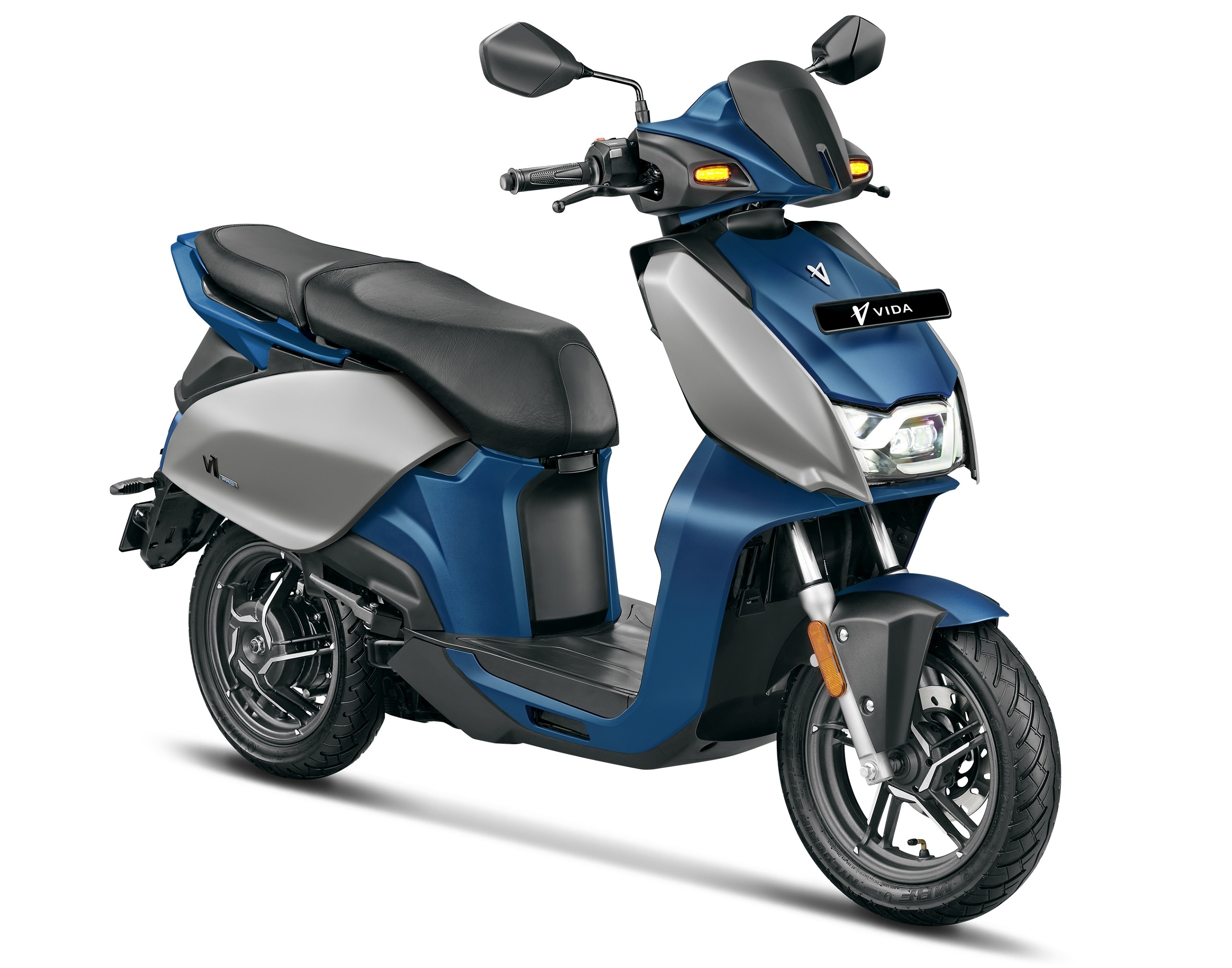
Hero MotoCorp has announced the foray of its electric two-wheeler brand Vida into the European market at the EICMA 2023 motorcycle show. The company will introduce the Vida electric brand in Europe starting with Spain and France, while also commencing operations in the UK. Hero will commence sales of the Vida V1 Pro electric scooter by mid-2024, joined by the new V1 Coupe single-seater variant, specifically designed for the European market.
By: Sameer Fayaz Contractor | Updated on: 07 Nov 2023, 22:38 PM
The Vida V1 Pro will go on sale in Europe and UK by mid-2024
The Vida V1 went on sale in India in October 2022 and the model now makes its way to Europe and the UK. The electric scooter will come with two removable batteries for flexible charging options, along with a host of features including cruise control, Boost mode, two-way throttle, keyless access and an OTA-enabled 7-inch TFT touchscreen console that will make it easy to bring more features in the future. Vida V1 for Europe is expected to be identical to the Indian version.
Hero has identified dealer partners in Spain, France, and the UK to retail the Vida V1
Furthermore, Hero will introduce the Vida V1 Coupe in Europe and the UK which will allow converting the standard two-seater V1 into a single-seater via an accessory, depending on the rider’s need and style. The V1 Coupe will not compromise on the functionality or practicality of the e-scooter. Hero MotoCorp has also confirmed that will introduce its premium motorcycle and scooter lineup as well in Europe in due course of time.
Speaking about foraying into Europe at EICMA 2023, Niranjan Gupta, CEO – Hero MotoCorp said, “We are excited to showcase our latest products and technologies to our stakeholders here who have come from around the world. We are collaborating with highly credible partners in the UK, Spain, and France to start commercial operations in each of these markets by mid-2024. We will first introduce our electric scooter VIDA V1 in these countries and then expand our offerings with high-capacity premium ICE motorcycles and scooters, which are showcased here. With our expertise in providing high-quality personal mobility solutions at accessible prices, we are confident that our new range of products will be appreciated by customers across geographies. Our aim is to “Innovate and Manufacture in India for the world” and we are changing gears to swiftly move ahead towards this target.”
Hero MotoCorp has identified distributors in each of the markets and said it is in the process of finalising the commercial agreements. The company has partnered with Motogb for distribution in the UK. The company has a 40-year-old history in retail and distribution of two-wheelers and associated ancillaries; spare parts, clothing, accessories and used bikes. Motogb has an independent dealer network of about 150 dealerships.
In France, Hero has tied up with GD France to distribute its electric scooters. The latter has over 20 years of experience in the two-wheeler and four-wheeler industry with a strength of over 300 dealerships. Lastly, the Indian two-wheeler giant has partnered with Noria Motors, a subsidiary of Onex Group to distribute the Vida brand in Spain. The Onex Group has over 35 years of experience in distributing two-wheelers and is said to be an expert in establishing a new brand in the country.
Vida Lynx electric dirt bike concept also shown, weighs just 82kg.
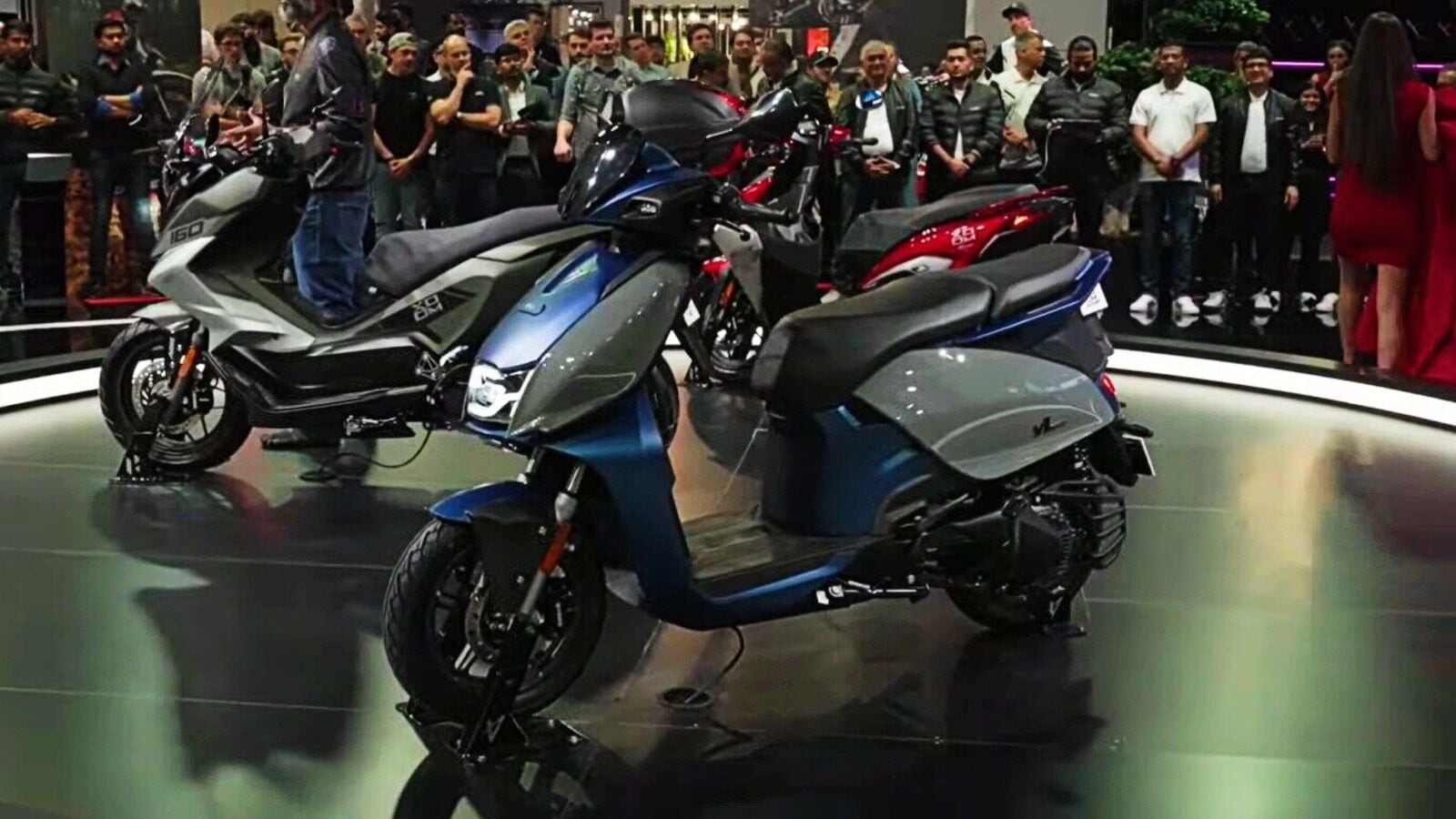
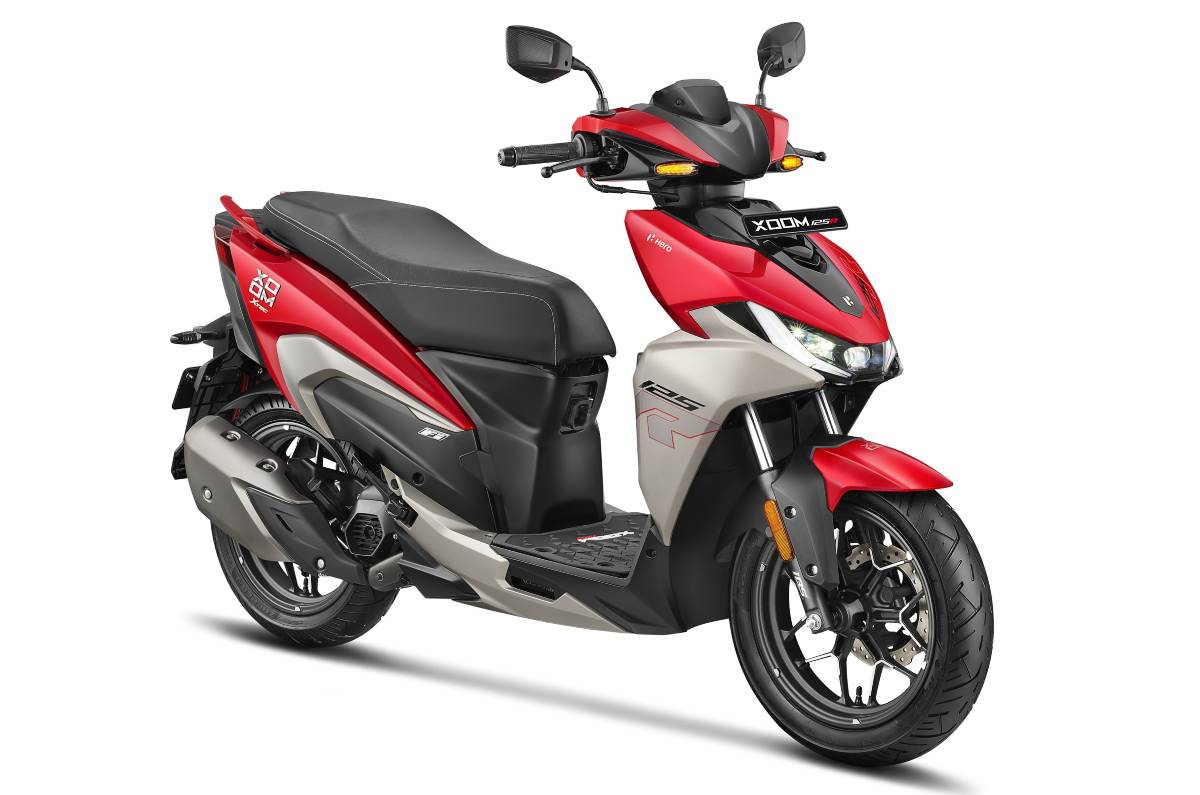
At EICMA 2023, Hero showcased new scooters under the Xoom brand, a new 250cc motorcycle concept as well as its future plans for its EV subsidiary – Vida.
The Xoom 160 is powered by a liquid-cooled, 156cc, single-cylinder engine making 14hp at 8,000rpm and 13.7Nm at 6,500rpm. This mill is equipped with Hero’s patented i3s stop-start technology and a silent starter. It weighs 141 kg, is suspended by a telescopic fork/twin shock absorber setup and runs on 14-inch wheels shod with dual-purpose tyres. The feature-set includes keyless ignition, a fully digital dash, remote seat opening and two split LED headlights.
The Xoom 125R will sit above the Xoom 110 in the lineup and is powered by an air-cooled, 124.6cc, single-cylinder mill making 9.5hp and 10.14Nm. This engine makes more power but is slightly down on torque compared to Hero’s other 125cc scooters. It has a fully digital dash that gets Bluetooth connectivity enabling turn-by-turn navigation. It is also equipped with sequential LED indicators, something only seen on high-end German luxury cars.
Alongside its ICE offerings, Hero also showcased its Vida V1 Pro e-scooter at the famed trade show. While the Vida V1 Pro stays mechanically identical to the model on sale currently, it now can be had in a ‘Coupe’ guise, which eliminates the rear seat.
Hero will launch the Vida brand in Europe and UK, starting with 3 countries for now with more planned for later. To this extent, Hero has signed distribution agreements in the United Kingdom, Spain and France. Hero will begin commercial operations here in mid-2024 and in due course, it will also bring its premium range of petrol motorcycles and scooters to these markets.
Under its Vida umbrella, Hero also showcased the Lynx e-dirtbike concept that weighs just 82kg while making 15kW (20.4hp) of peak power. It has a 3kWh battery pack which can power it for approximately an hour. Alongside the Lynx, Hero also showcased the Acro electric bicycle for children.
By: HT Auto Desk | Written By: Deepika Agrawal | Updated on: 06 Nov 2023, 16:19 PM
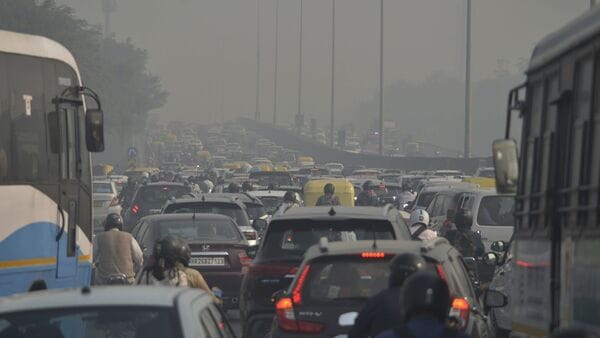
Delhi-NCR is covered with a thick layer of toxic air with the Air Quality Index (AQI) crossing the 400-mark over the last week. This has prompted the government to implement the final Stage 4 of its air pollution control plan, called the Graded Response Action Plan (GRAP). Further, the odd-even vehicle rule has made a comeback to the city after four years.
Delhi government has implemented GRAP Stage 4 and odd-even rule to curb air pollution in the national capital.
Vehicular pollution is a major contributor to the PM2.5 levels, which worsen the air quality. In a bid to reduce this and bring in a significant impact, it is important for common people to step up alongside the government initiatives. Below are a few ways you can contribute towards reducing vehicular pollution:
1. Avoid using ICE vehicles for small distances
Often people take out their vehicles to visit even a nearby shop or other places whereas these distances can easily be covered by walking or using cycles. Along with avoiding emissions, you will also get done some physical activity, which is good for health.
2. Drive efficiently
It is important to get your car regularly checked and serviced for cleaner emissions. One must also keep vehicle pollution under check. A poorly maintained car/two-wheeler would be a huge source of higher amounts of pollution and therefore further contribute to worsening AQI.
3. Use public transport when possible
In the era of ever-increasing traffic and vehicular pollution, one must consider using public transportation, whenever possible. If there is a direct metro line or a direct bus route to your destination, consider choosing that over riding your ICE vehicle all alone. Lesser vehicles on road will mean lesser emissions, thus lesser pollution.
4. Choose car-pooling/ride-sharing
Along with being a good way to reduce the numbers of vehicles on road, car-pooling is also a cost-effective way of travelling. You could form a group of people who travel to the same destination everyday and use one car. This will help you divide the expenses as well as reduce vehicular pollution. Some cab aggregators also offer car-pooling options.
5. Avoid idling your car
You should consider turning off the engine of your vehicle when stuck in traffic or a waiting at a signal, as long as it is safe to do so. This not only reduces emissions but also saves fuel and increases your vehicle’s mileage.
Xoom 125 with 14-inch wheels has been spied testing in India previously.
Alongside it’s new maxi-scooter, Hero will also be showcasing the Xoom 125 as well as an electric dirt bike under the Vida brand.
New Xoom variant to use 125cc engine
Likely to have 14-inch wheels, gets fresh styling
The teaser video shared by the manufacturer about the Xoom 125 shows a familiar-looking scooter to the Xoom but there are a few differences. For starters, the LED headlight appears to be slimmer and wider and the front indicators are now LEDs, as opposed to the halogen units on the current Xoom. We have already reported that Hero is working on a Xoom variant with 14-inch wheels previously and a test mule confirming this was also spied a while back. The Xoom 110’s mill is carried over unchanged from other 110cc Hero scooters, so its quite likely that the Xoom 125 will employ a similar approach as well.
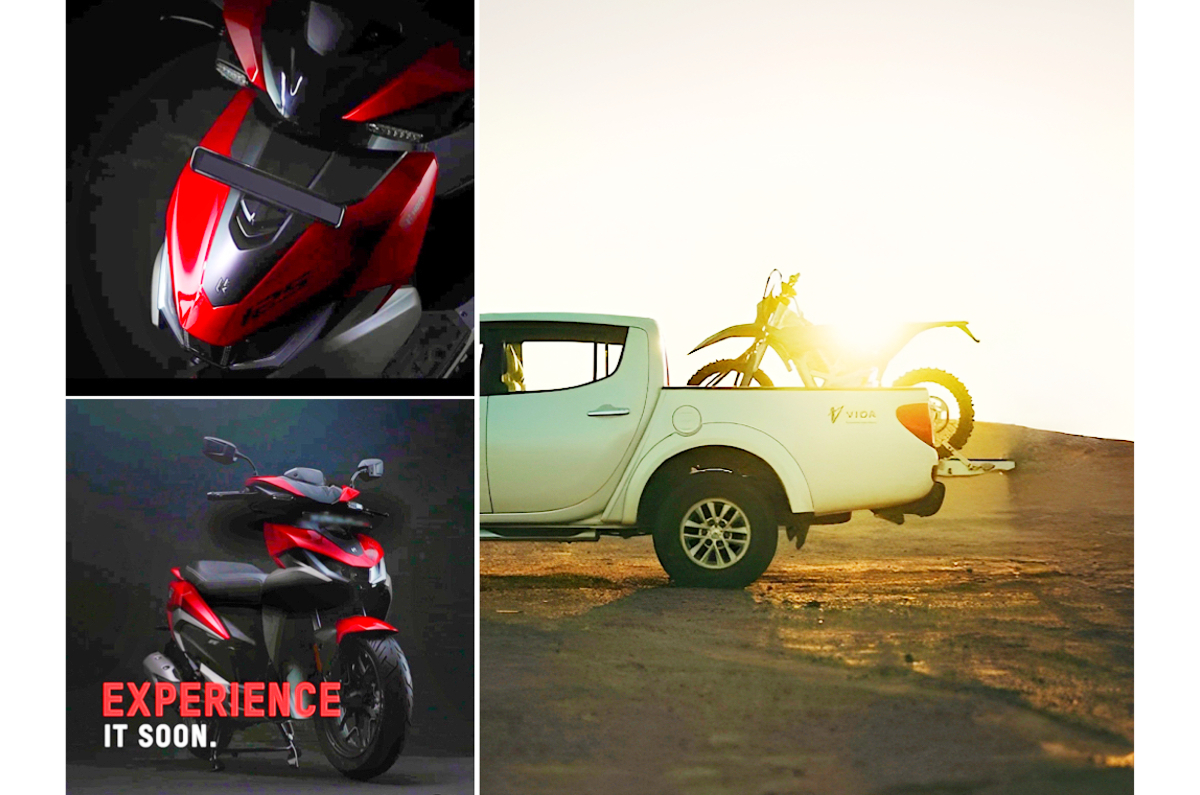
That’s not all as Hero will also be showcasing what seems to be an electric dirt bike under the Vida brand. Not much is known about this project but what can be seen is that it has a typical dirt bike silhouette with a tall, flat seat, wire-spoke wheels and a tall ‘beaky’ front fender. It remains to be seen whether this dirt bike will be sold as a road legal model or will be restricted to closed course usage only. We will be bringing you EICMA coverage straight from the event itself so make sure you’re tuned in to our website as well as our social media handles.
By: HT Auto Desk | Updated on: 05 Nov 2023, 15:46 PM
The Delhi Transport Department’s enforcement teams on Saturday slapped a fine of ₹20,000 on the owners of 162 cars/ SUVs for violating GRAP III restrictions imposed in the city in the view of hazardous levels of air pollution prevailing. GRAP III stands for Graded Response Action Plan stage III restrictions, which include a ban on operation of BS 3 petrol and BS 4 diesel four-wheelers.
Commuters make their way along a road amid heavy smoggy conditions in New Delhi on November 5, 2023. (AFP)
Enforcement teams have been deployed across the national capital in shifts, with focus on 13 pollution hotspots – Rohini, Dwarka, Okhla, Punjabi Bagh, Vivek Vihar, Wazirpur, Jahangirpuri, RK Puram, Bawana, Narela, Mundka, Mayapuri and Anand Vihar. As many as 84 such teams are spread across these areas for enforcement of restrictions related to four wheelers while 30 such teams are targeting two-wheelers round the clock.
These enforcement teams are further being supervised by nine teams led by inspectors. Eighteen enforcement teams are deployed on border areas around hotspots to monitor overloaded trucks, heavy vehicles, and BS 3 and BS 4 light motor vehicles. Additionally, sixteen other teams are working in shift of 4 PM to 12 AM, to tackle the congestion due to inter-state buses and other vehicles at major choke points.
Further, 41 teams have been deployed on identified 22 stretches of the Inner Ring Road and Outer Ring Road in two shifts to monitor and catch offending vehicles while 39 motorcycle patrolling teams have been deployed from 9 AM to 6 PM for enforcing PUCC violations.
Amid the deteriorating air quality in the national capital, only BS 4 emission standards-compliant light motor vehicles, electric vehicles, CNG vehicles, including buses are allowed to ply on the national capital’s roads. So far, 301 overloaded trucks have been impounded while 3,683 vehicle owners have been challaned for not having pollution under check, as per the officials.
Additionally, 340 buses were impounded for different violations and 4,031 challans were issued to owners for parking violations.
It’s an evolutionary update over the outgoing model; launch slated for 2024.
Just days after Suzuki debuted the new-gen Swift concept at the Tokyo Motor Show, multiple camouflaged test mules of the hatchback have already been spied testing on Indian roads. While the brand called it a concept, the model showcased at the motor show was nearly production-ready. The sighting of these camouflaged test mules on our roads confirms the imminent launch of the new Swift in our market next year.
New Swift gets evolutionary styling over its predecessor
Gets new 1.2-litre, three-cylinder Z-Series engine under the hood
India launch slated for next year
New-gen Maruti Suzuki Swift: what do the spy shots reveal?
The test mule is heavily camouflaged, but just a look at the headlamps and tail-lamps is enough to suggest that this indeed is the new-gen Swift. The design is unmistakably Swift, which means it’s mostly evolutionary over its predecessor. The headlamps and tail-lamps have retained their shape, but are sharper, it gets a redesigned grille and bumper design and there’s a strong shoulder line running the length of the car.
While Suzuki calls it the fourth-generation Swift, it is essentially a heavily updated version of the third-gen platform. This means the overall footprint of the hatchback is largely the same – it’s only 15mm longer, 40mm narrower and 30mm taller. The wheelbase remains unchanged at 2,450mm.
The interior is not visible on these test mules, but the interior of the model showcased at the Tokyo Motor Show had a lot of resemblance with that of the Baleno and Fronx. The floating touchscreen unit, steering wheel, instrument cluster, HVAC controls and several switchgears are already familiar from the newer crop of Maruti Suzuki models here in India.
The India-spec Swift, however, is not likely to get the ADAS features or rear disc brakes that the concept had at the Tokyo Motor Show. The test mule can also be seen sporting blacked-out wheels which are possibly 16-inch units.
New-gen Maruti Suzuki Swift: powertrain options
Under the hood, the new-gen Swift concept debuted an all-new 1.2 litre, 3-cylinder, naturally aspirated petrol engine at the Tokyo Motor Show. Codenamed Z12, this new engine will replace the current K-series 1.2 litre, 4-cylinder powerplant.
Detailed specifications are yet to be released, but sources tell us that the company has set high fuel efficiency targets, and, while power output is likely to remain similar to the K12 unit, torque would be higher. The Swift shown at the Tokyo Motor Show also had hybrid tech, however, sources say that the production-spec Swift in India will have the regular engine.
The new Maruti Suzuki Swift is expected to launch sometime in the second half of 2024 in India.
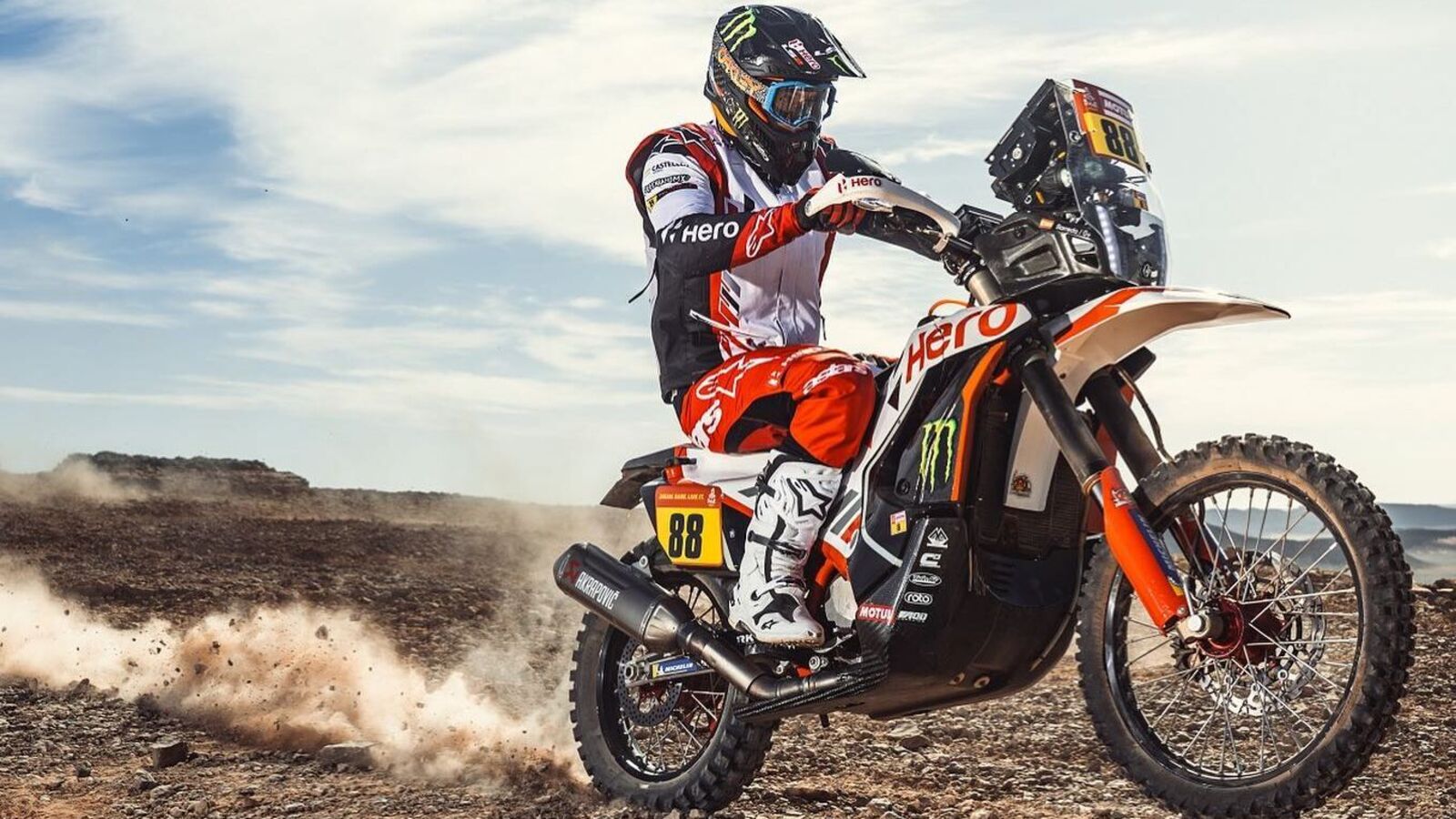
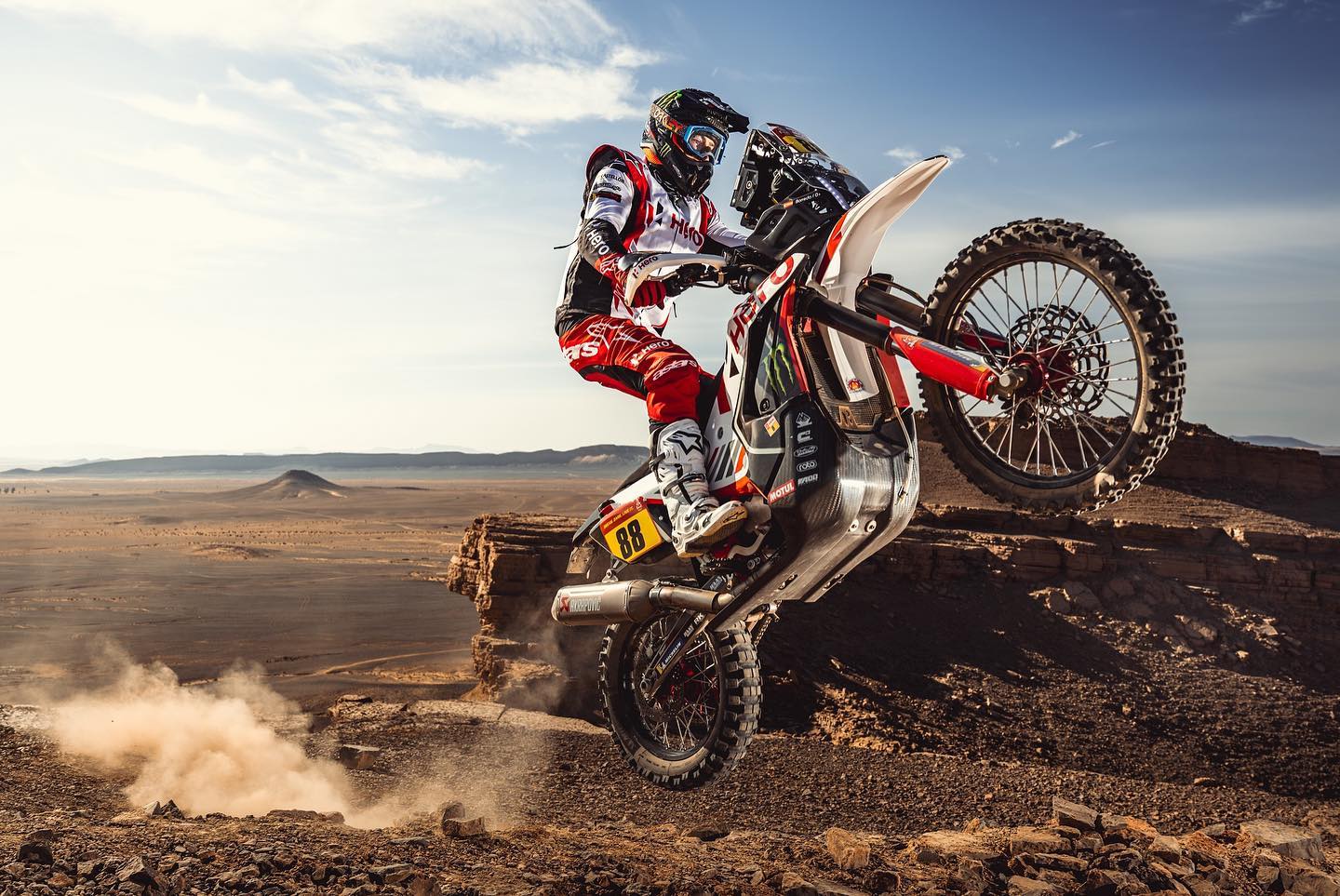
Spanish rider Joan Barreda Bort will be joining Hero MotoSports Team Rally for the 2024 Dakar Rally, the Indian team has announced. With Joan joining the Hero squad, the team completes its Dakar line-up for 2024. One of the top riders in rally-raid, Barreda holds a strong reputation and has been labelled as a ‘Dakar legend.’ The rider has won 12 international races and finished the Dakar Rally seven times in his illustrious career.
By: Sameer Fayaz Contractor | Updated on: 04 Nov 2023, 18:37 PM
Joan Barreda Bort joins Hero MotoSports Team Rally for the 2024 Dakar Rally
Barreda is also a five-time winner of the Spanish Baja, while also having taken victories in Merzouga, Andalucia, China Grand, Qatar Cross-Country rallies, and Rallye Des Pharaons over the years. The 40-year-old has had 13 consecutive Dakar Rally appearances with 30 Stage wins, earning the title of winning the maximum number of stages at the Dakar amongst active competitors in the Bikes category.
Joan Barreda Bort’s best Dakar finish was fifth, which he achieved in 2017 and 2022
Barreda’s best Dakar finish was an impressive fifth, which he achieved twice, in 2017 and 2022 respectively. He also won five stages out of the 13 in the 2014 Dakar Rally. For Barreda, coming to Hero will also reunite him with team manager Wolfgang Fischer for the second time. The rider worked with Fischer as well as the late Paulo Goncalves, with all three part of the same team in 2012.
Barreda’s arrival at Hero also comes at a time when the team has inked a partnership with Monster Energy for the upcoming season. Barreda will join existing riders Joaquim Rodrigues, Ross Branch and Sebastian Buhler at Hero. Rider Franco Caimi, who was part of the squad in the last Dakar, parted ways with Hero MotoSports earlier this year.
Hero MotoSports has had a positive run at Dakar in recent years. The seven-year-old team finished the 2023 season with an overall fourth place while bagging two stage wins in the process. The team is now ambitious to exceed its own limits in the 2024 season.
Joan Barreda Bort will compete directly under Hero MotoSports at the 2024 Dakar Rally in January, which will also be the inaugural race of the 2024 season of the FIM World Rally-Raid Championship (W2RC). Barreda will make his first public appearance with Hero at the upcoming EICMA Motorcycle Show in Milan on November 7.
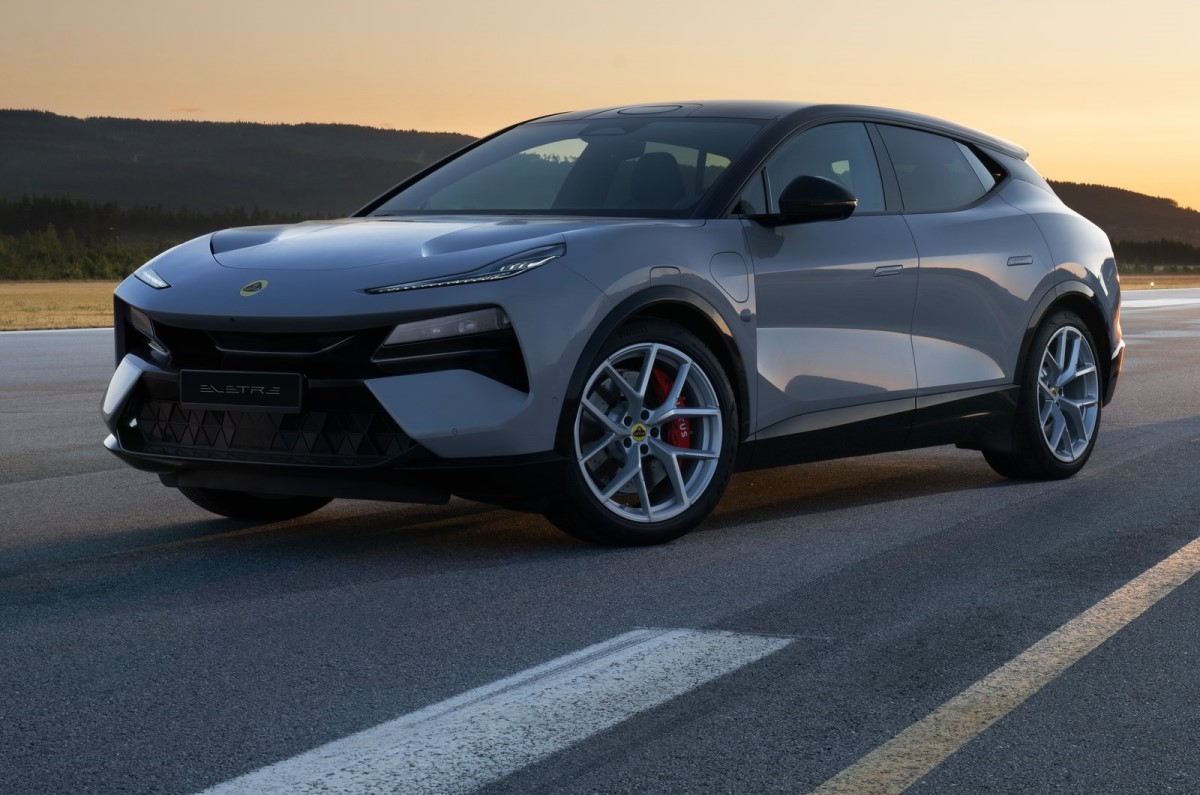
The Emira sportscar and Eletre EV SUV are likely to be the first to arrive.
Lotus, the renowned English sportscar brand, will enter the Indian market on November 9, 2023. Lotus, now owned by Chinese brand Geely, will be selling its models through Exclusive Motors of New Delhi, which will also act as distributor for the rest of the country.
Lotus ties up with Exclusive Motors of New Delhi to enter Indian market
The first outlet expected in New Delhi in early 2024
Wuhan-built Eletre EV SUV and Hethel-built Emira to be the first offerings
More details about Lotus’ India plans will be announced in the coming days, from which cars and which versions will be introduced, to when bookings will commence and deliveries are expected to begin. Sources tell us that the first two models are likely to be the petrol-powered Emira sportscar and the all-electric Eletre SUV. Both will be brought in as CBUs, and will carry hefty price tags as a result. More models are expected to follow the launch of these two, though no timeline or model names have been confirmed.
Lotus Emira
The Emira is typically Lotus – a lightweight sportscar that is meant to focus on agility and driving pleasure, rather than outright power or comfort, which makes it a spiritual successor to famous Lotus models like the Elise, Exige, Esprit, and Elan. Where the Emria differentiates itself from its predecessors is in the level of fit and finish and comfort features. The door pockets and cup holders, the digital instruments, and the central touchscreen add a degree of luxuriousness not before seen in the company’s cars.
Buyers in India will be able to choose from two powertrains – a 365hp, 2.0-litre four-cylinder AMG-sourced engine and a 406hp 3.5-litre V6 Toyota-sourced unit. The former will come paired with an 8-speed automatic, while the latter is expected to have a 6-speed gearbox; there is a 6-speed manual on offer with the V6 in international markets, though it is unlikely to be offered here.
Expect prices for the Emira to range between Rs 2.5-3 crore, ex-showroom, when it arrives at a showroom near you.
Lotus Eletre
While the Emira harks back to Lotus’ past, the Eletre looks to the brand’s future and panders to the SUV craze that has taken over the world. This striking-looking SUV will definitely draw eyeballs with its modern design, and the cabin is said to be spacious and bold as well.
Despite using 47 percent high-strength steel and 43 percent aluminium, the Eletre weighs in at a very un-Lotus-like 2,520kg. Still, this 5.1m long and 1.6m tall SUV is quite slippery, with a drag coefficient of 0.26, which helps achieve a maximum range of 600km on a single charge.
Lotus will offer the all-electric SUV in three forms – Eletre (611hp), Eletre S (611hp), and Eletre R (918hp). All three are powered by the same 109kWh battery – mounted under the floor – that runs on an 800V system, and that can be charged by a 350kW unit. Expect prices for the Eletre to range between Rs 2.5-3.1 crore, ex-showroom.
With EV demand slowing at home, and companies facing substantial import tariffs in the US as well as a European Union probe into Chinese subsidies, automakers view the region as a major growth opportunity that, so far, is largely untapped. Across the six Gulf states, including oil majors Saudi Arabia and the United Arab Emirates, electric cars account for just 0.4% of the passenger-vehicle market.
That’s got some of China’s best-known automakers flocking to the region. Chery Automobile Co. is planning to launch at least two new hybrids or EVs, while Xpeng Inc. and Zhejiang Geely Holding Group Co.’s premium Zeekr brand have started selling in Israel and making plans to expand into more countries in the region, including Qatar and Bahrain.
But Chinese firms’ efforts to build their presence face a raft of challenges, from simple economics — fuel is generally cheap in major oil producing countries — to a lack of brand awareness among potential buyers, scarce charging infrastructure and concerns about how well car batteries can handle the brutal heat of a Middle East summer.
“I think in the Middle East, it’s a mix. EVs are not ready in many places. As an idea, it’s great but growth is still very slow here. We do have EV cars in our company but the number of sales and inquiries are less,” said Ahmad Firoozi, a marketing manager from the Qatari distributor Nasser Bin Khaled Automobiles, which works with brands like MG Motor, and Geely-Volvo joint venture Lynk & Co.
There’s also the threat of the Israel-Hamas war escalating. Israel has vowed to destroy Hamas, which is designated as a terrorist group by the US and European Union, after the Oct. 7 onslaught by the militant group that left more than 1,400 Israelis dead.
Some of the top oil producers in the Middle East are making ambitious promises to transition away from the fossil fuels that have underpinned their economic growth, and shift to green technologies that are key to the world’s efforts to reduce emissions.
The UAE is investing as much as 200 billion dirhams ($55 billion) by 2030 to transform its energy strategy, and has pledged that EVs and hybrid cars will make up more than 50% of the national fleet by 2050, from 4% currently.
Saudi Arabia this year greenlit a manufacturing plant for Ceer, its first homegrown EV brand that’s set to start selling cars in 2025, and recently opened another with California-based maker Lucid Group Inc. The kingdom has already signed a $5.6 billion deal with premium Chinese automaker Human Horizons Technology that reflects the region’s interest in higher-end vehicles. Separately, the Abu Dhabi government this year took a 7% stake in China’s Nio Inc.
Chinese brands made up 16% of the 616,500 new vehicles sold in Saudi Arabia last year. The Gulf country was also the second-largest importer of Chinese cars in 2022, behind Mexico, before dropping to fifth place this year as exports to Russia and Europe picked up. Marques like MG are seeing fast growth in the UAE, posting an 86% surge in the first three months of this year, according to local media reports.
BYD Co. topped the EV sales chart for Israel and ranked fourth overall in vehicle sales in the first nine months of 2023. Of the roughly 16,000 foreign-made EVs imported to a free-trade zone in Jordan’s central governorate of Zarqa in the first half of the year, about 80% were made in China.
Auto firms are likely to benefit from China’s deepening economic ties with the Middle East, just as escalating trade tensions with Europe and the US ripple through the EV sector and risk throttling the industry’s ambitions abroad. That’s made the region a welcoming investment prospect and could help Chinese companies more easily access potential new funds and even skirt tightening import regulations in Western markets.
Within the Middle East, consumer tastes are evolving. Customers now see Chinese vehicles as durable, reliable, and with capabilities on par with German, American or Japanese cars that make them worth the money, said Hesham Amer, a UAE-based auto distributor who has worked with brands such as Guangzhou Automobile Group Co.
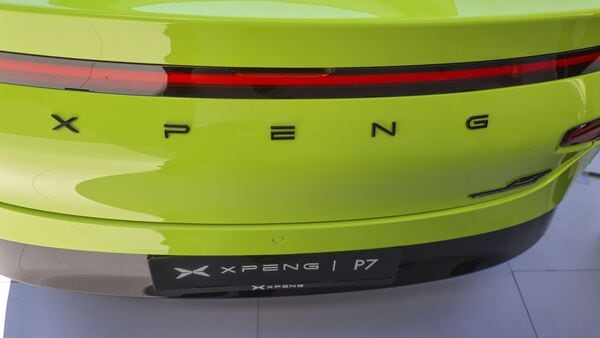
File photo: Branding on an Xpeng P7 electric vehicle (EV). (Bloomberg)
Fuel economics are starting to change in favor of EVs, too. While it’s still relatively cheap to run a gas-guzzler in many places — petrol costs between $2.18 to $2.35 per gallon in Saudi Arabia and Qatar — it’s financially savvy to have an EV in some countries. In the UAE, where the government sets petrol pricing higher at $3.43 per gallon, it costs about $50 to fill up a small sport-utility vehicle, compared with around $10 to fully charge a similar sized EV, according to Amer.
“The Middle East is probably the most promising for Chinese automakers,” said Yale Zhang, managing director at Shanghai-based consultancy Autoforesight Co. Wealthy customers may be particularly interested in an EV that has innovative in-car technologies and can rapidly accelerate like a Porsche, he said.
Chinese firms are also looking at how they can allay concerns about whether cars made abroad can withstand the extreme heat, sand and dust of the Middle East.
Peter Matkin, the head of research and development for Chery’s high-end marque Exeed, said one way the brand tests its cars’ durability is to leave a vehicle outside for an entire day during summer to see how the environment impacts materials. Some vehicles not specifically engineered for the Middle East start to creak after being parked outside for extended periods of time, he said.
Battery performance is also a top concern for automakers and consumers alike. During summers in Doha, where temperatures can soar to 50C (122F), the time needed to charge an EV from a 50-kilowatt commercial charger increases to as long as two-and-a-half hours from the typical 40 to 45 minutes, according to Sertac Bayhan, a senior scientist at the Qatar Environment and Energy Research Institute, part of Hamad Bin Khalifa University.
High temperatures, along with the need to run air conditioning constantly, means batteries drain quicker. One EV that underwent testing at the institute showed a range drop from 350 kilometers (217 miles) in winter to just 200 kilometers in summer. Batteries also degrade much faster in hotter climes, with capacity shortened by about 70% to 75% during the standard 10-year warranty period.
Even surmounting the technological hurdles won’t guarantee market share for Chinese firms. Charging infrastructure is sparse in many Middle East countries — the UAE has less than 900 charging stations currently, though has vowed to install 30,000 by the end of 2050. And while opinions about the quality of ‘Made in China’ vehicles improves, most brands remain relatively unknown in the region.
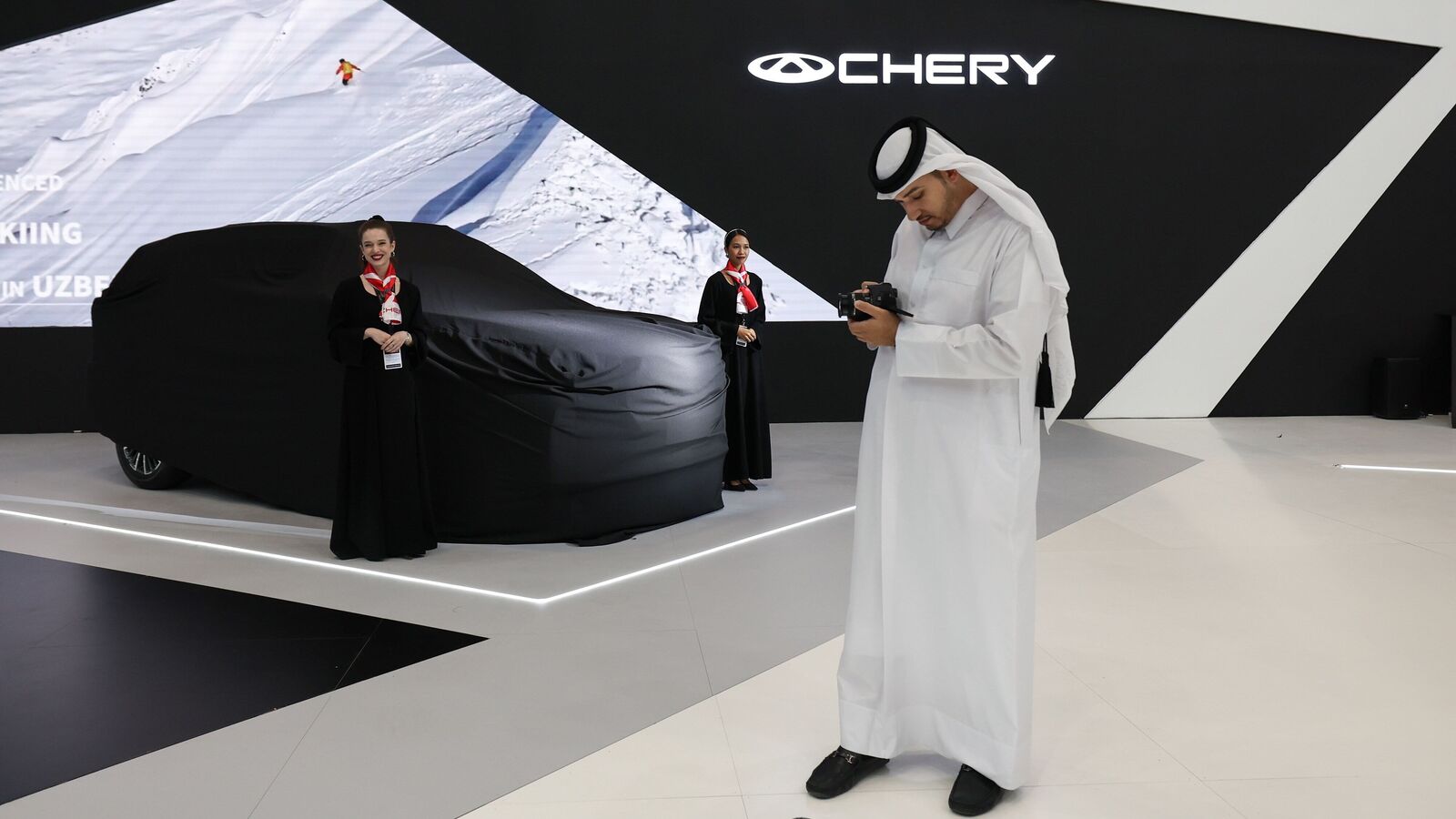
At October’s Geneva International Motor Show, which this year took place in Doha, booths for Chinese brands like Chery and Lynk & Co. attracted groups of interested onlookers, but the biggest crowds flocked to legacy names like Porsche and Lamborghini.
Established Western brands are also looking to muscle in on the Middle East market in competition with Chinese EVs.
Mercedes-Benz Group AG’s local dealer launched at least three electric models at the Doha show and Selvin Govender, who heads the firm’s marketing and sales for the Middle East and Africa, said he’s already seeing customer interest. Mercedes has recorded double-digit growth in EV sales in the UAE, and single-digit growth in Saudi Arabia, he said. For some attendees, their curiosity about Chinese EVs will take time to translate into actual sales.
Wafa and Mohamed, a Doha-based couple in their 30s who asked not to be identified by their last names due to privacy concerns, are considering replacing one of their three cars — a Corolla, a Lexus and a Porsche — with a Chery vehicle. But worries about the battery-powered vehicles’ performance in the Qatari summers mean they’re not likely to purchase one any time soon. “Maybe when everyone else starts driving an EV, then we’ll think about it,” Wafa said.
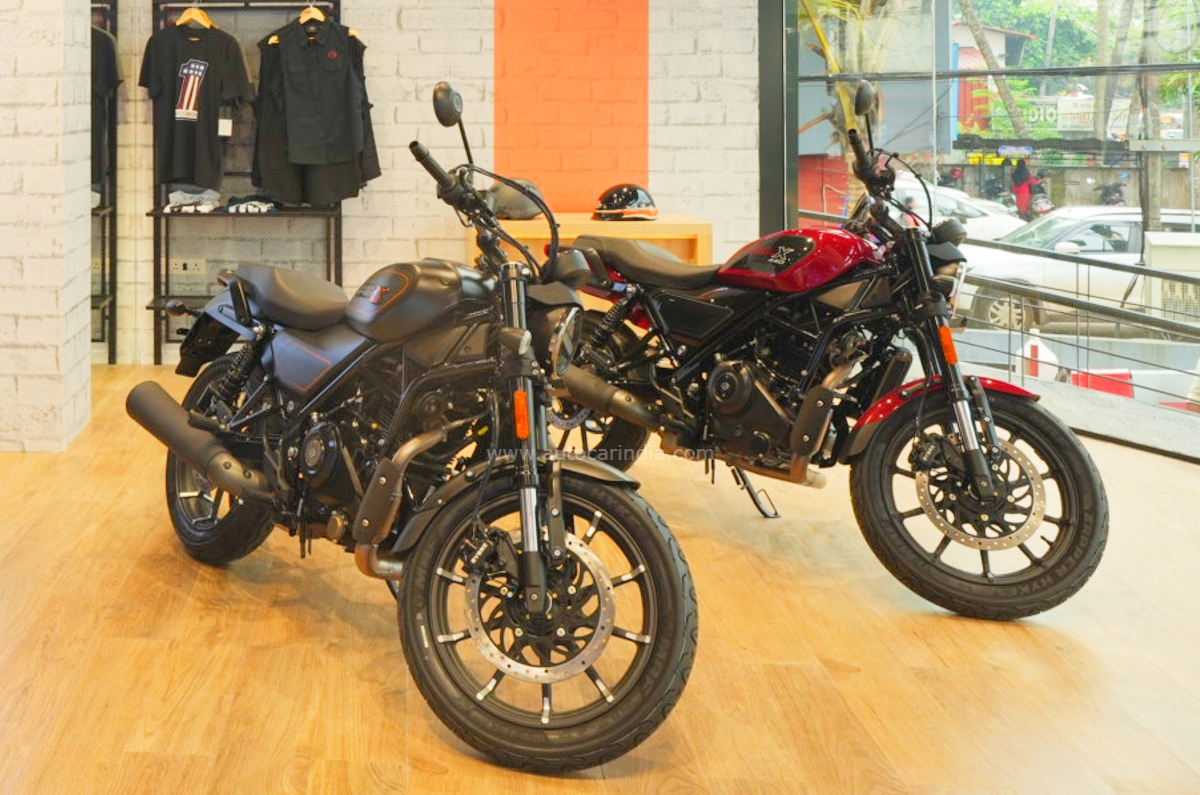
Harley Davidson X440 has 25,000 bookings so far while the order booklet for Karizma stands at around 14,000 units.
On the back of strong bookings of its premium bikes, Hero MotoCorp – is ramping up production for its premium models to 10,000 units a month. The maker of Splendor and Passion, which is aggressively looking at making a mark in the fast-growing premium two-wheeler market, plans to deliver about 30,000 to 40,000 units in the next four months.
Harley X440 deliveries commenced on October 15,2023
Over 2,000 Harley X440 units have been delivered so far
Hero to get its own version of Harley X440 next year
Speaking to analyst post Q2 earnings call Niranjan Gupta, CEO of Hero MotoCorp said, ” We will start with 10,000 units a month for both Karizma and Harley Davidson X440 and this will be augmented further going ahead. Our focus is on ensuring we win in this premium journey and get to a meaningful market share.”
The company is currently sitting on 25,000 units bookings of Harley Davidson X440 and 14,000 units of the Karizma XMR since it opened bookings.
A confident Gupta said, “Our win in premium journey has started off very well. Our strategy is to address it on all fronts – product portfolio, place, price and promotion. We have started deliveries of Harley 440 across 100 stores from 15th of October, we have so far delivered more than 2000 vehicles. We have got fresh 2000 bookings in the second window, our cumulative booking for Harley still stands at 250,00 plus, we expect to deliver, over the next four month, as the supplies get augmented, we will be able to deliver it a lot faster.”
The premium push is likely to continue in the forthcoming quarters. Hero MotoCorp is scheduled to launch its own version of Harley Davidson X440 in March of 2024.
“The product excitement will continue for the next 4-6 quarters,” assured Gupta.
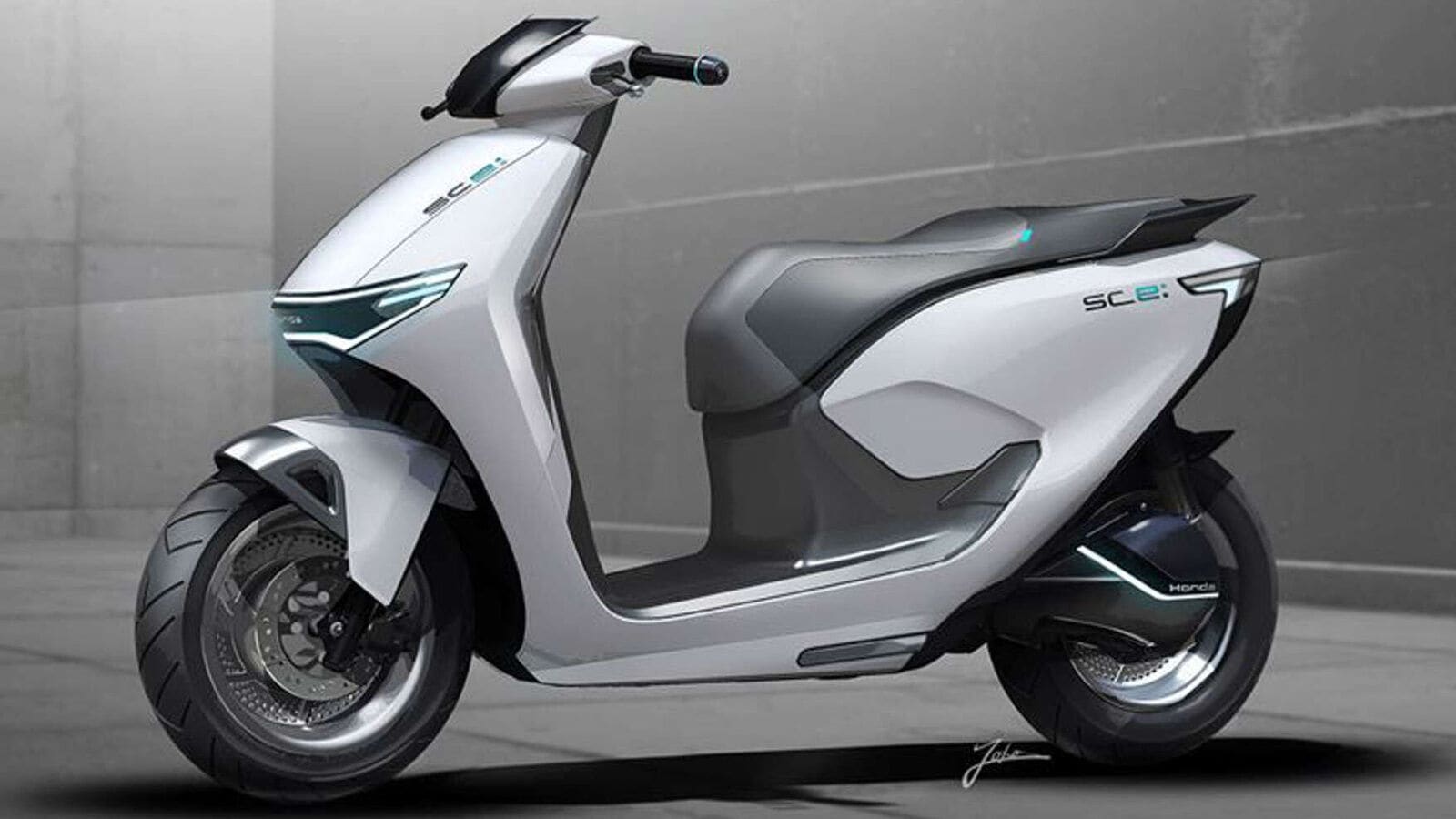
Honda is working on a range of electric two-wheelers globally that will arrive in the next few years and the company previewed one such model at the 2023 Japan Mobility Show with the SC e: concept. The Honda SC e: electric scooter concept is positioned above the EM:1 electric scooter, also showcased in the production guise at the auto show, and hints at a more family-oriented offering.
By: HT Auto Desk | Updated on: 02 Nov 2023, 18:04 PM
The Honda SC e: concept looks like a 125 cc equivalent electric scooter that could influence the future e-scooters from the manufacturer
The Honda SC e: looks like a more fleshed-out idea of an electric scooter and could be comparable to a 125 cc offering. The design language is modern yet appealing to a wider customer base with smoother lines, a contoured single-piece seat and a full-size pillion grab handle. The front apron houses the LED headlamp with the LED DRL that brings a signature element to the concept, while the 12-inch alloy wheels look nice and chunky with a perforated disc design. The turn indicators are finished in teal.
The SC e: concept draws power from a PMS mid-drive motor, while power will come from two Honda Mobile Power Pack e: battery packs. Each battery pack weighs 10 kg and will be placed under the seat. This leaves little room for practical under-seat storage space but will allow the flexibility to swap batteries and maximise productivity with the e-scooter. Honda does not confirm a range on the concept but it could offer a real-world range of about 100 km on a single charge. The top speed is likely to be around 70 kmph.
There’s no word on when the Honda SC e: concept will enter production. However, it will be interesting to see how much it will influence the electric scooters being designed for India. Honda 2Wheelers India has already announced its plans to introduce two electric scooters in the country by March 2024, one of which will use swappable batteries. The company is expected to bring an e-scooter for last-mile deliveries and one for private customers. The company is already setting up battery-swapping stations in India.
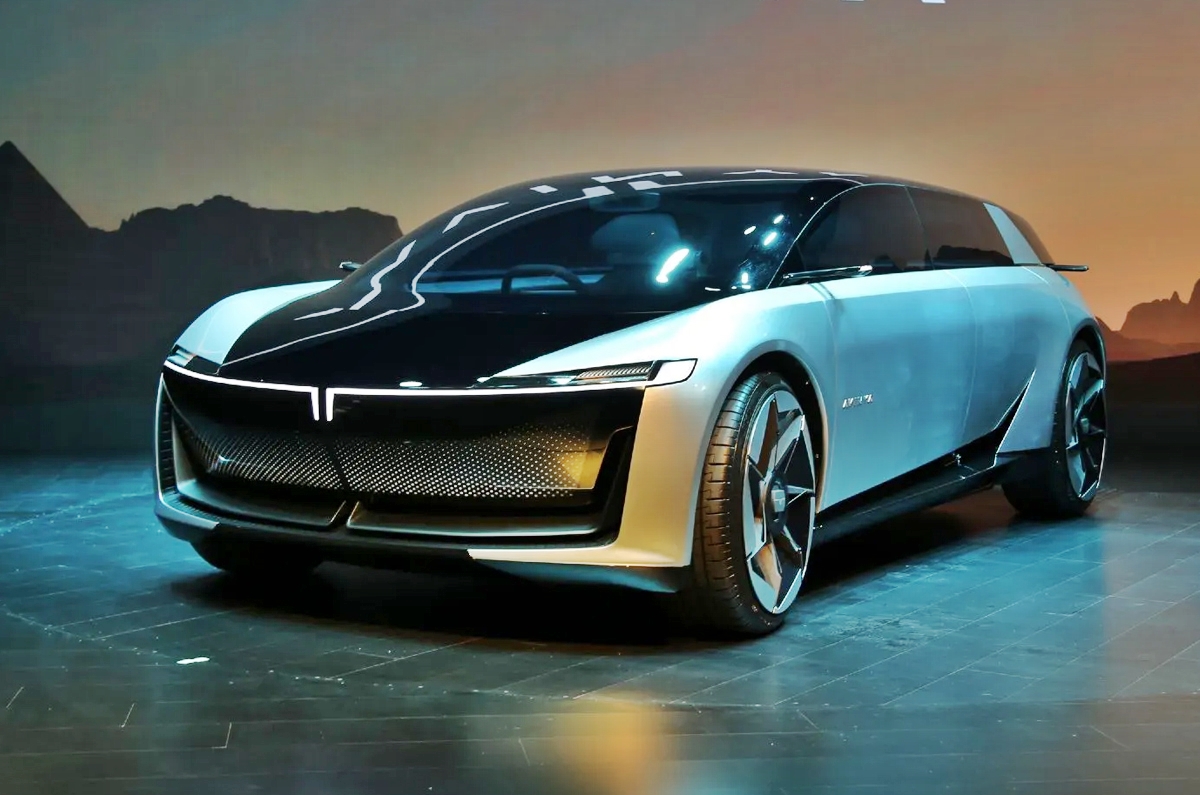
Avinya will not just be a car, but an architecture spawning an entire family of EVs.
As part of accelerating its transition to electric vehicle, Tata Motors has announced a strategic collaboration with its marquee brand Jaguar Land Rover to share the latter’s born-electric Electrified Modular Architecture (EMA). This EMA architecture will be used for its upcoming premium EV Avinya, said, P B Balaji, Group CFO of Tata Motors.
Tata Avinya due in 2025 to use JLR’s EMA born electric platform
To be shared with next-gen Evoque, Discovery Sport from JLR’s stable
Will be localised to keep costs competitive
Tata Motors and JLR sign MoU for EMA platform
Tata Passenger Electric Mobility Ltd (Tata’s electric vehicle subsidiary) and Jaguar Land Rover have signed a Memorandum of Understanding (MoU) for the licensing of JLR’s Electrified Modular Architecture (EMA) platform for a royalty fee (including electrical architecture, electric drive unit, battery pack and manufacturing know-hows) for the development of Tata’s upcoming born-electric vehicles.
Balaji explained that this is part of Tata Motors strategy to transition eventually to skateboard EVs – or Gen 3 products. “If you recollect, we had shared our plans of having Gen 1 – converted architecture, Gen 2 – flexible ICE and BEV architecture and Gen 3 – pure EV architecture. When we looked around for a platform for pure EVs, we realised that for Avinya, which was always planned to be premium, JLR architecture fits well,” added Balaji.
He also elaborated that Avinya will not just be a car, but an architecture which is likely to spawn a family or range of electric vehicles in the future. The Avinya concept was first showcased in 2022, and right from the onset, Tata Motors had plans of going global with it. It will therefore be significantly more premium than any of Tata’s existing vehicles, perhaps with similar positioning as its counterpart from JLR.
“It will reduce our development time, advance Tata Motors into advanced electrical and electronic architecture and prepare the brand for the future autonomous vehicles. It is a significant win-win strategy for both Tata Motors and JLR,” added Balaji.
Jaguar Land Rover’s EMA platform will be designed from the outset to accommodate advanced driver assistance systems and extensive cloud connectivity. JLR claims it will be capable of communicating with other cars and infrastructure, such as traffic control networks. The EMA platform is “engineered around the battery” with its flat floor allowing for maximum interior space. It will also be able to accommodate batteries of different chemistries.
In addition, the platform is claimed to allow for Software Over The Air (SOTA), Level 2+ autonomy and Feature Over The Air (FOTA) capabilities. The EMA platform will feature a highly integrated propulsion system with cell to pack battery technology, battery management and charging system. Further, the platform will also be eligible for 5-star safety rating and ultrafast charging technologies for high performance vehicles.
JLR’s EMA architecture to be localised
When the first batch of vehicles based on the EMA platform go into production from late 2024 onwards, it will initially be produced at JLR’s Halewood plant in the UK. Originally opened by Ford, the plant is already undergoing a conversion for production of battery electric vehicles. However, with the Avinya series of models that’s due from 2025, Tata Motors will be localising the EMA architecture here in India to keep costs competitive while still bearing a premium positioning.
This then is the second major joint project announced by Tata Motors and JLR. The Harrier and Safari SUVs are based on the Jaguar Land Rover Freelander D8 platform. However, the partnership on the EMA for a full vehicle development program is a major step up in level of collaboration between Tata Motors and JLR.
Honda Motorcycle and Scooter India (HMSI) on Wednesday announced that it has sold a total of 4,92,884 units last month, registering a growth of 10% over corresponding month a year ago. The company recorded 9% growth in the domestic market with 4,62,747 units while its exports grew by 29% with sales of 30,137 units last month.
By: HT Auto Desk | Updated on: 01 Nov 2023, 17:50 PM
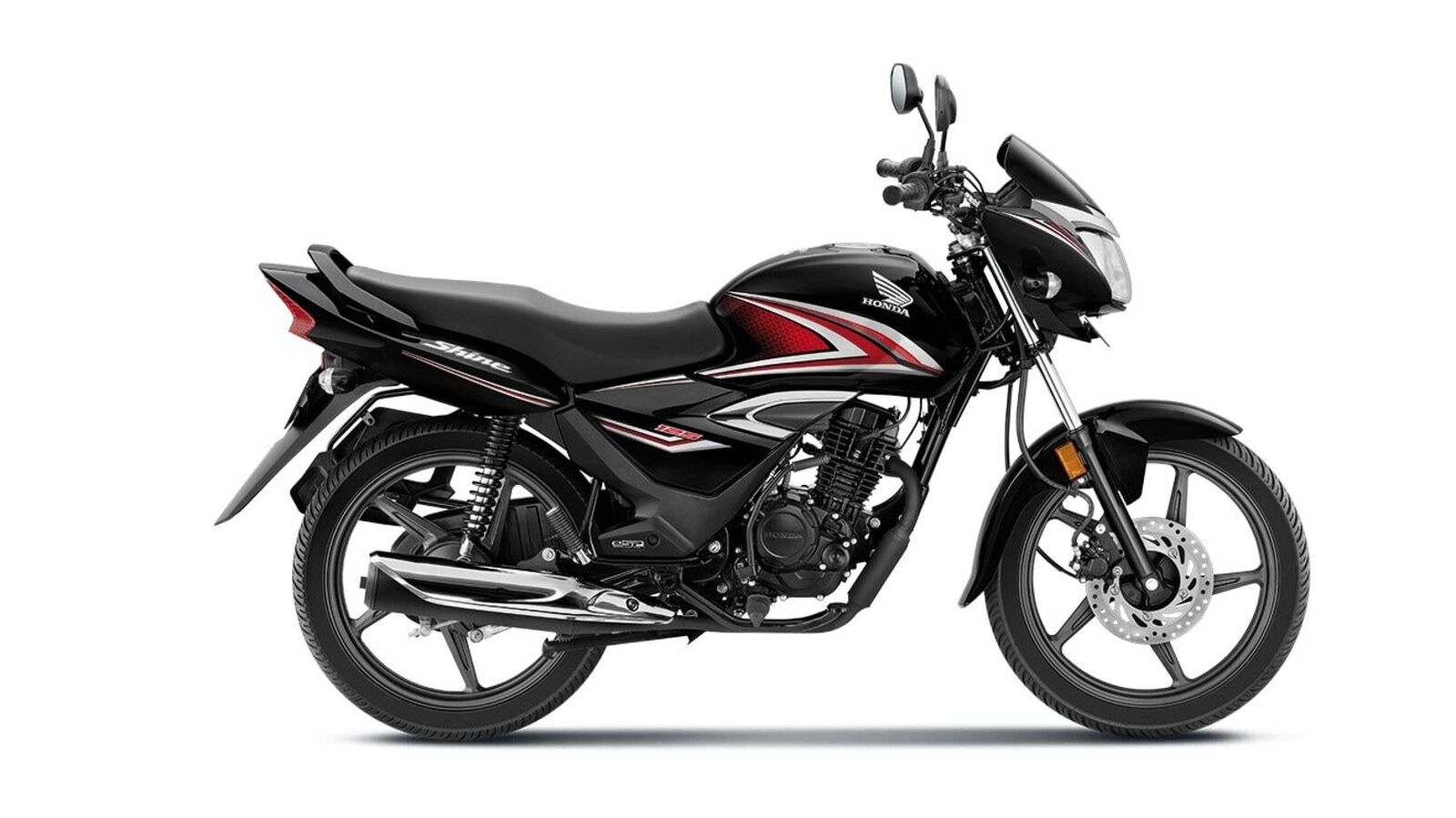
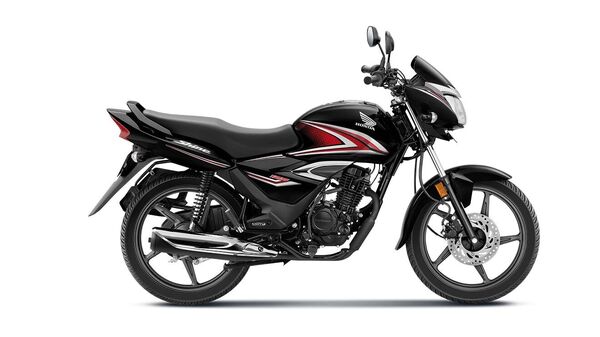
File photo of the 2023 Honda Shine 125.
October also saw various other milestones for the company such as achieving the feat of crossing 30 lakh customer milestone in Kerala. The company’s Shine brand in the125cc motorcycle segment crossed over 30 lakh customers in western India.
In terms of new launches, the company introduced the OBD2A compliant 2023 CB300R at a starting price of ₹2.40 lakh (ex-showroom, Delhi). The Neo Sports Café Roadster can be booked at the nearest BigWing dealerships.
It also introduced the new avatars of H’ness CB350 & CB350RS in Legacy Edition and New Hue Edition, respectively. The new special editions only get cosmetic changes over the standard models. They are priced at ₹2,16,356 and ₹2,19,357 respectively (ex-showroom, Delhi).
Customers can now book these motorcycles at BigWing dealerships and deliveries will commence soon across the country. The H’ness CB350 Legacy Edition comes in a new Pearl Siren Blue colour scheme. The latter features a new Sports Red and Athletic Blue Metalic paint scheme with attractive tank graphics and stripes on both wheels and fenders.
Recently, the company also launched the all-new adventure tourer XL750 Transalp and opened its bookings for the first 100 customers in select cities. The cities include Gurugram, Mumbai, Bengaluru, Indore, Kochi, Hyderabad, Chennai and Kolkata. Deliveries will begin from November. The motorcycle has been introduced in the country at an introductory price of ₹10,99,990 (ex-showroom, Gurugram). The premium adventure tourer is being brought into the country via the completely built-up (CBU) route from Japan and will be exclusively sold via the BigWing dealerships.
Data reveals that 33.8 percent of all road accidents resulted in fatalities last year.
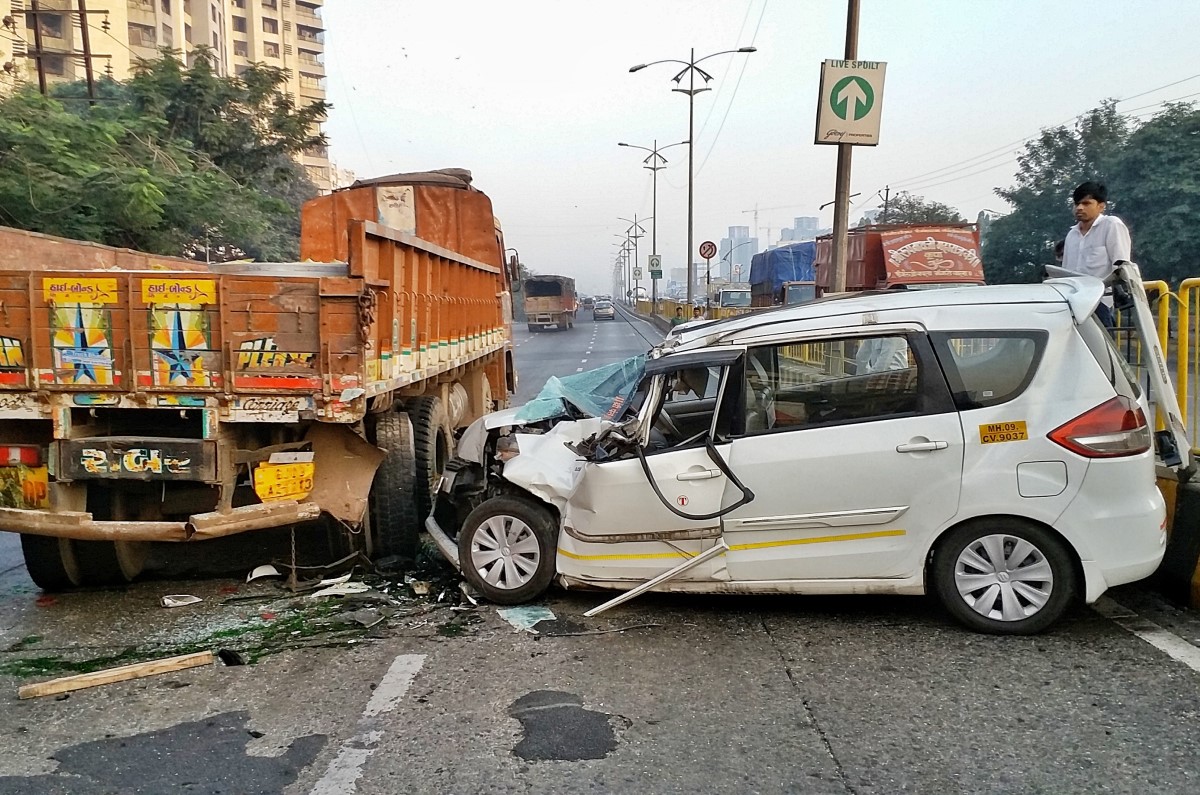
Road accidents claimed around 19 lives every hour in the country last year. Total accidents last year were 4,61,312, with fatal accidents amounting to 33.8 percent of that (1,55,781) and 4,43,366 injuries, according to the latest data released by the Ministry of Road Transport and Highways.
Tamil Nadu recorded highest number of accidents
Uttar Pradesh tops list of fatal accidents
Compared to the previous year, the number of road accidents in 2022 increased by 11.9 percent. Similarly, the number of deaths and injuries also saw a rise of 9.4 percent and 15.3 percent, respectively. These figures highlight the growing concern and urgency to address road safety issues in the country.
Minister for Road Transport and Highways, Nitin Gadkari, emphasised the wider implications of road accidents, stating, “Let us remember that the cost of road accidents is borne not only by the victims and their families but also by the economy as a whole, in terms of untimely deaths, injuries, disabilities and loss of potential income.”
State-wise accidents
Among the states, Tamil Nadu, with 64,105 accidents, recorded the highest number of road accidents in 2022 and accounts for 13.9 percent of the total. Madhya Pradesh followed closely behind with 54,432 accidents, representing 11.8 percent. In terms of fatalities, Uttar Pradesh topped the list with 22,595 deaths (13.4 percent of the total), followed by Tamil Nadu with 17,884 deaths, or around 10 percent of the total fatalities.
The category-wise distribution of accidents and fatalities reveals that the highways, with around 5 percent of total road network in the country, accounted for over 55 percent of total accidents and more than 60 percent of fatalities. Highways accounted for 36.2 percent of total persons killed in National Highways.
The worrying fact is that even with proactive steps taken by the government in the form of implementation of the Motor Vehicle Amendment Act 2019, which came into effect from September 1, 2019, has not helped in bringing down the accident rates. The MVA Act 2019 included provisions like a stiff hike in penalties for traffic violations, electronic monitoring of the same and enhanced penalties for juvenile driving, among others.
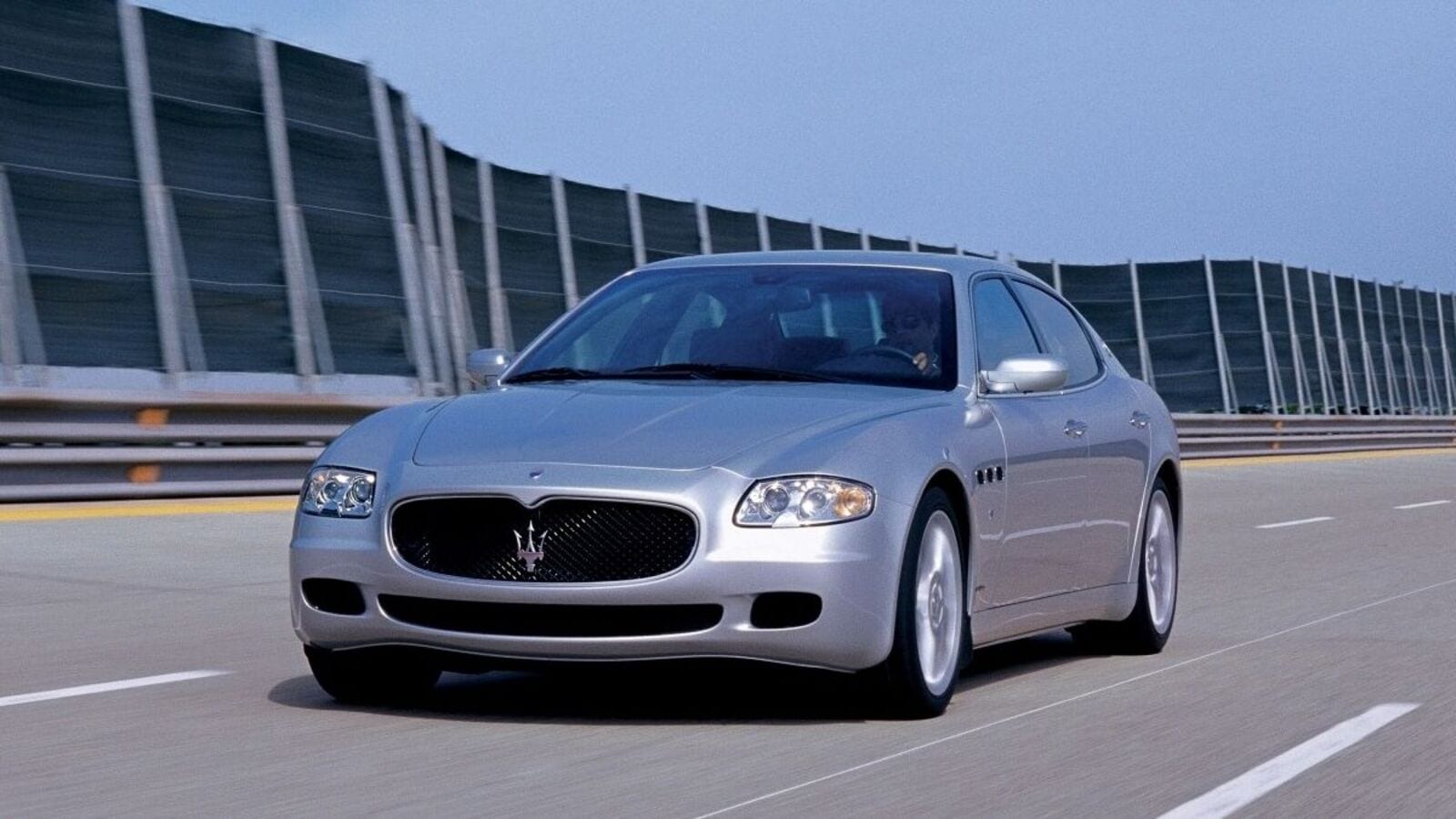
Italian luxury vehicle manufacturer Maserati has displayed the Quattroporte at the 45th Turin Motor Show, one of the biggest motoring events in the world. The luxury saloon completes its 60 years of existence this year, across six generations and more than 75,000 models produced. The car that debuted in the early 1960s, garnered acclaim and inspired successive generations.
By: HT Auto Desk | Updated on: 31 Oct 2023, 16:38 PM
Over the years, the Maserati Quattroporte has been known as a living room on the move with extremely welcoming spaces.
Over the years, the car has been known as a living room on the move with extremely welcoming spaces, regal allure and an official car. The initial version was able to reach 230 kmph thanks to its eight-cylinder racing-derived engine. In its latest and highest-spec version, the model can reach 0-100 kmph in just 4.5 seconds at a top speed of 366 kmph.
The Quattroporte has made its way to the garages of some thrill-seekers, of kings and princes, and found a limelight in the background of many memorable films. It has been featured in more than 60 productions, to be precise. The saloon has also been photographed on red carpets or while accompanying the highest-ranking officials at solemn events and the significant VIPs in industry.
A mainstay of the automotive landscape in the 20th century, the Quattroporte still remains relevant in the new millennium sixty years later. “Quattroporte is Maserati’s history. A car that tells our story and has prestigiously represented us in the world of saloon cars, for over half a century,” said CEO of Maserati, Davide Grasso.
The latest Quattroporte has taken the stage once again after many years, in its most modern version. It incorporates all the restyling, progress in engineering, changes in corporate structure and yet retains the exclusivity. “A source of pride for us and an acknowledgement of that distinctively Italian character that Maserati has always aimed to export around the world with its creations,” Grasso added.
As the iconic kaali peeli Padmini bids Mumbai farewell, we look back at what it was like to drive one.
Published On Oct 31, 2023 04:48:00 PM
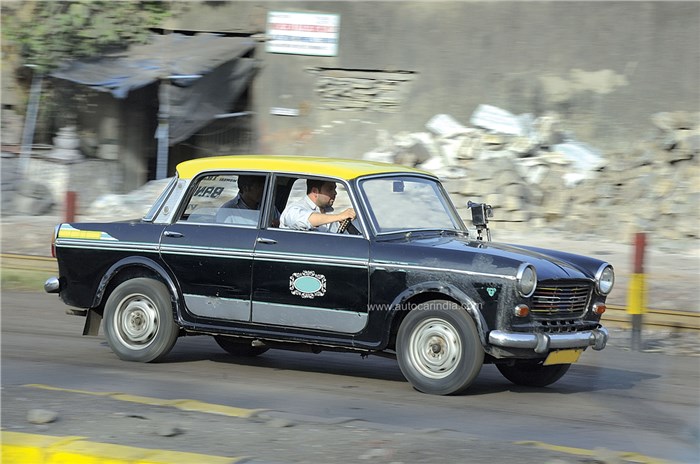
Think Bombay and the first image that pops up is that of Victorian buildings, red double-decker buses, and a compact Italian sedan from the ‘50s painted in yellow and black. The taxi, of course, is the Fiat 1100 D. A well-rounded family car in its time, later sold here as the Premier Padmini, it was enjoyable to drive in the right conditions, compact in dimension and reasonably practical.
This is probably why it made for such a successful taxi – first with a petrol engine, then a diesel, and finally running on CNG. Produced all the way from 1964 to 2001 (due to the licence raj), it was a car preferred by those who drove themselves and was only outlived by its compatriot, the even longer-running Hindustan Ambassador.
CNG feeder pipe to the carburettor and loose electric wires live in perfect harmony, radiator cap removed to reduce pressure.
Truth be told, it shouldn’t have been very successful as a taxi. It wasn’t as spacious or as comfortable as an HM Ambassador; it couldn’t carry as much luggage; and it didn’t ride quite as well either. Taxi drivers, however, loved it. It was ‘zippy’, compact, and agile and would make most gaps in traffic easily. What really set it apart, especially later in its extended life, was that it cost almost nothing to fix.
While the Fiat 1100 was pretty accomplished in its time and reasonably comfortable to ride in, the taxi fleet got tattier and rattier as the years went by. Soon, most were upwards of 20 years old, and that’s when we at Autocar India decided to drive one.
Steering wheel cover was a standard feature on the taxis.
But why test a 20-or-so-year-old taxi? The need to test the car came about from an argument with one of Mumbai’s finest practitioners of the art of ‘restrained aggression’ – a cab driver. He had tried his best to rear-end me as I stopped for a traffic signal and, to put it mildly, we exchanged a few words. “When have you last driven one of these?” he’d queried, pointing to his bedraggled Padmini. So, in the name of science, humanity and rank stupidity, we got ourselves behind the wheel of an old cab, testing equipment in hand.
Testing Mumbai’s iconic Premier Padmini kaali peeli
Having owned and driven three Fiat 1100s in the past, I thought I would be familiar with the car. Hah, what arrogance! Nothing, not even several taxi rides, with blown tyres, free-floating rear seats or severe alignment problems could have adequately prepared me. It’s no small exaggeration to state that none of the mechanical bits functioned as they should have. None. Okay, maybe the horn worked perfectly, but that was about it.
Start-up is a wheezy crrrrr, crrrr, crrr; hopeless, almost no sign of life. Finally, it starts. Then comes the difficult job of selecting first gear. The gear slots in, but only after grating severely, even with the clutch fully depressed. There was no turbo but, boy-oh-boy, is there lag. The delay can be counted in seconds.
Once the engine begins to rev, it’s maximum noise and no performance. We timed the car from 0-60kph; any more would have been too ambitious. It is slower than we even expect. So we tested it again. And it was slower still; overheating, stuttering and threatening to shut down. Tata Sumos and Mahindra Armadas back in the day were among the slowest cars we’d tested. They took between 11 and 12 seconds to do 0-60kph. This taxi took more than twice that time – 25.23sec.
All tyres have to be bald retreads.
What of stability, grip and braking you ask? Almost all cabs even back in the day ran an assortment of clapped-out tyres, many on their third or fourth retread. A large percentage are slicks, you regularly see others with the ply peeking through and punctures were common. Many cabs were also rotten to the core, their chassis bent and their floor pans drooping.
Once on the move, we discover there’s around 30deg of play on either side when you steer and you need to constantly correct to keep the taxi going straight. We conducted a full brake test – yes, we really were nuts. And here too the distance travelled is twice the worst braking figure we’ve ever recorded.
This taxi is so slow it takes 25sec to go from 0-60kph, twice as slow as the slowest car we’d tested then!
Though Fiat 1100s were accomplished cars in their prime, in the ’60s and ’70s, and performed all manner of roles well when maintained well in private hands, most Padmini taxis even over a decade ago were only fit for the junk heap. Devoid of any directional stability, and in possession of ineffective brakes, they were simply unfit for the road. No ifs, no buts. Just how badly would these cars have fared in a Global NCAP crash test? And how roadworthy or safe are some of our older taxis today? Does anyone care?









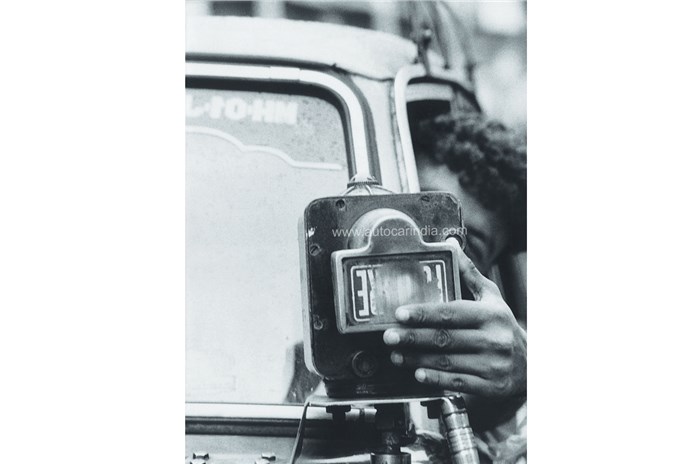
 CNG feeder pipe to the carburettor and loose electric wires live in perfect harmony, radiator cap removed to reduce pressure.

