Tesla braces for its first trial involving Autopilot fatality

Tesla braces for its first trial involving Autopilot fatality

Self-driving capability is central to Tesla’s financial future, according to Musk, whose own reputation as an engineering leader is being challenged with allegations by plaintiffs in one of two lawsuits that he personally leads the group behind technology that failed. Wins by Tesla could raise confidence and sales for the software, which costs up to $15,000 per vehicle.

Tesla faces two trials in quick succession, with more to follow. The first, scheduled for mid-September in a California state court, is a civil lawsuit containing allegations that the Autopilot system caused owner Micah Lee’s Model 3 to suddenly veer off a highway east of Los Angeles at 65 miles per hour, strike a palm tree and burst into flames, all in the span of seconds.

The 2019 crash, which has not been previously reported, killed Lee and seriously injured his two passengers, including a then-8-year old boy who was disemboweled. The lawsuit, filed against Tesla by the passengers and Lee’s estate, accuses Tesla of knowing that Autopilot and other safety systems were defective when it sold the car.

Musk ‘de facto leader of Autopilot team

File photo of Tesla CEO Elon Musk. (REUTERS)

The second trial, set for early October in a Florida state court, arose out of a 2019 crash north of Miami where owner Stephen Banner’s Model 3 drove under the trailer of an 18-wheeler big rig truck that had pulled into the road, shearing off the Tesla’s roof and killing Banner. Autopilot failed to brake, steer or do anything to avoid the collision, according to the lawsuit filed by Banner’s wife.

Tesla denied liability for both accidents, blamed driver error and said Autopilot is safe when monitored by humans. Tesla said in court documents that drivers must pay attention to the road and keep their hands on the steering wheel. “There are no self-driving cars on the road today,” the company said.

The civil proceedings will likely reveal new evidence about what Musk and other company officials knew about Autopilot’s capabilities – and any possible deficiencies. Banner’s attorneys, for instance, argue in a pretrial court filing that internal emails show Musk is the Autopilot team’s “de facto leader”.

Tesla and Musk did not respond to Reuters’ emailed questions for this article, but Musk has made no secret of his involvement in self-driving software engineering, often tweeting about his test-driving of a Tesla equipped with “Full Self-Driving” software. He has for years promised that Tesla would achieve self-driving capability only to miss his own targets.

Tesla won a bellwether trial in Los Angeles in April with a strategy of saying that it tells drivers that its technology requires human monitoring, despite the “Autopilot” and “Full Self-Driving” names. The case was about an accident where a Model S swerved into the curb and injured its driver, and jurors told Reuters after the verdict that they believed Tesla warned drivers about its system and driver distraction was to blame.

Stakes higher for Tesla

The stakes for Tesla are much higher in the September and October trials, the first of a series related to Autopilot this year and next, because people died.

“If Tesla backs up a lot of wins in these cases, I think they’re going to get more favorable settlements in other cases,” said Matthew Wansley, a former General Counsel of nuTonomy, an automated driving startup and Associate Professor of Law at Cardozo School of Law.

On the other hand, “a big loss for Tesla – especially with a big damages award” could “dramatically shape the narrative going forward,” said Bryant Walker Smith, a law professor at the University of South Carolina.

In court filings, the company has argued that Lee consumed alcohol before getting behind the wheel and that it is not clear whether Autopilot was on at the time of crash.

Jonathan Michaels, an attorney for the plaintiffs, declined to comment on Tesla’s specific arguments, but said “we’re fully aware of Tesla’s false claims including their shameful attempts to blame the victims for their known defective autopilot system.”

In the Florida case, Banner’s attorneys also filed a motion arguing punitive damages were warranted. The attorneys have deposed several Tesla executives and received internal documents from the company that they said show Musk and engineers were aware of, and did not fix, shortcomings.

In one deposition, former executive Christopher Moore testified there are limitations to Autopilot, saying it “is not designed to detect every possible hazard or every possible obstacle or vehicle that could be on the road,” according to a transcript reviewed by Reuters.

In 2016, a few months after a fatal accident where a Tesla crashed into a semi-trailer truck, Musk told reporters that the automaker was updating Autopilot with improved radar sensors that likely would have prevented the fatality.

But Adam (Nicklas) Gustafsson, a Tesla Autopilot systems engineer who investigated both accidents in Florida, said that in the almost three years between that 2016 crash and Banner’s accident, no changes were made to Autopilot’s systems to account for cross-traffic, according to court documents submitted by plaintiff lawyers.

The lawyers tried to blame the lack of change on Musk. “Elon Musk has acknowledged problems with the Tesla autopilot system not working properly,” according to plaintiffs’ documents. Former Autopilot engineer Richard Baverstock, who was also deposed, stated that “almost everything” he did at Tesla was done at the request of “Elon,” according to the documents.

Tesla filed an emergency motion in court late on Wednesday seeking to keep deposition transcripts of its employees and other documents secret. Banner’s attorney, Lake “Trey” Lytal III, said he would oppose the motion.

“The great thing about our judicial system is Billion Dollar Corporations can only keep secrets for so long,” he wrote in a text message.

First Published Date: 28 Aug 2023, 20:00 PM IST


Source link

2023 JK Tyre National Racing Championship Round 1 results

2023 JK Tyre National Racing Championship Round 1 results


Arjun S Nair also notched double wins in the JK Tyre Novice Cup.

The 2023 edition of the JK Tyre National Racing Championship (JK NRC) got underway, with Round 1 held at the Kari Motor Speedway.

Tijil Rao started the season on a strong note, securing two wins in the headlining LGB Formula 4 category. Arjun S Nair was another driver to score double wins, with a strong showing in the JK Tyre Novice Cup. Read on for the full results.

LGB Formula 4

The LGB Formula 4 category features made-in-India single seaters, powered by a 1,298cc Suzuki engine. Rao pulled off a last lap overtake to win the opening race, with his Dark Don Racing teammates, Arya Singh and Diljith TS, completing the podium. Race 2 saw the team take a 1-2 finish, this time with Singh defeating Rao.

Singh led most of Race 3, but MSport driver Ruhaan Alva gained ground quickly and passed him on the final lap to take victory. Alva looked set to win the reverse grid Race 4 as well, but spun out of the race. Rao ended up overtaking Diljith TS to score his second win of the weekend.

Results

Race 1

1. Tijil Rao (Dark Don Racing) – 23mins 21:171secs

2. Arya singh (Dark Don Racing) – 23mins 21:369secs

3. Diljith TS (Dark Don Racing) – 23mins 21:586secs

Race 2

1. Arya Singh (Dark Don Racing) – 22mins 28.087secs

2. Tijil Rao (Dark Don Racing) – 22mins 28.370secs

3. Viswas Vijayaraj (Ahura Racing) – 22mins 31.297secs

Race 3

1. Ruhaan Alva (MSport) – 22mins 09.037secs

2. Arya Singh (Dark Don Racing) – 22mins 09.084secs

3. Tijil Rao (Dark Don Racing) – 22mins 10.131secs

Race 4

1. Tijil Rao (Dark Don Racing) – 27mins 51.142secs

2. Diljith TS (Dark Don Racing) – 27mins 51.822secs

3.Saran Vikram Tmars (Mars Racing) – 28mins 05.523secs

JK Tyre Novice Cup

The Novice Cup is for amateurs taking their first steps into the world of formula car racing. Momentum Motorsports’ Arjun S Nair won both races on Saturday. But he failed to repeat this feat on Sunday, with his teammate Neythan McPherson and DTS Racing’s Joel Joseph winning a race each.

Results

Race 1

1. Arjun S Nair (Momentum Motorsports) – 13mins 23:275secs

2. Neythan McPherson (Momentum Motorsports) – 13mins 24:517secs

3. Joel Josheph (DTS Racing) – 13mins 27:272secs

Race 2

1. Arjun S Nair (Momentum Motorsports) – 13mins 41.982secs

2. Saishiva Sankaran (MSport) – 13mins 47.537secs

3. Abhay M (Msport) – 13mins 48.318secs

Race 3

1. Neythan McPherson (Momentum Motorsports) – 14mins 28.205secs

2. Aman Nagdev (MSport) – 14mins 28.801secs

3. Arjun S Nair (Momentum Motorsports) – 14mins 29.264secs

Race 4
1. Joel Joseph (DTS Racing) – 16mins 20.908secs

2. Arjun S Nair (Momentum Motorsports) – 16mins 21.077secs

3. Neythan McPherson (Momentum Motorsports) – 16mins 21.077secs 

Royal Enfield Continental GT Cup

The JK NRC also hosts the Royal Enfield Continental GT Cup, where amateur and professional riders compete together on the same grid astride identical, race-prepped Continental GT-R650s.

Anand R survived an incident-packed race and fended off Md. Samrul Zubair to win Race 1. The next race was won by Abhishek Vasudev, but Zubair made another podium appearance, this time in third place.

Results

Race 1

1. Anand R – 14mins 53.242secs

2. Md. Samrul Zubair – 14mins 53.806secs

3. Abhishek Vasudev  – 14mins 54.196secs

Race 2

1. Abhishek Vasudev – 13mins 53.248secs

2. Ullass Nanda – 13mins 53.651secs

3. Md. Samrul Zubair – 13mins 57.403secs

JK Tyre 250 Cup

The JK Tyre 250 Cup race, featuring the Suzuki Gixxer 250cc bikes, was won by Sarvesh Balappa. Polesitter G. Abhinav maintained a good pace, and even set the fastest lap — 1min 25.00secs — but that wasn’t enough to defeat Balappa, who started from P2 on the grid.

Results

1. Sarvesh Balappa – 15mins 16.345secs

2. Abhinav G – 15mins 19.623secs

3. Rohit Lad – 15mins 27.436secs

Also see:

New Chennai Street Circuit to host F4 India night race


Source link

Nissan plans to launch 19 new electric cars by 2030. Which will come to India?

Nissan plans to launch 19 new electric cars by 2030. Which will come to India?

Nissan is planning to launch 27 electrified cars globally by 2030 and 19 among them will be pure electric new models. The wide range of electric cars will be launched under both the Nissan and Infiniti brands, revealed Automotive News. The Japanese car brand has reportedly showcased the new generation Nissan Leaf EV at the brand’s annual dealer conference in Las Vegas earlier this week.

By: HT Auto Desk
| Updated on: 27 Aug 2023, 16:54 PM

Nissan aims to launch a total of 27 electrified cars by 2030 and 19 among them will be pure electric cars. (REUTERS)

The report claims that the upcoming electric cars from Nissan and Infiniti will include a crossover coupe that will replace the Leaf EV. Also, there will be a performance sedan that will take place the current internal combustion engine-powered Maxima. Besides that, there will be a pure electric crossover based on the CMF-EV architecture that underpins the Ariya crossover.

Also Read : Nissan recalls over 236,000 cars in this country. Here’s why

The report further claims that the next-generation Leaf EV will reportedly offer 25 per cent more range than the current iteration of the electric vehicle. It would come looking like a mini Ariya. The current Nissan Leaf has a range of 341 km on a single charge thanks to the 60 kWh battery pack. The upcoming one would come offering a 426 km range on a single charge.

Interestingly, Nissan is also working on solid-state battery technology that will ensure a significantly longer range compared to the current crop of lithium-ion battery packs. The next-generation Nissan Leaf EV will reportedly feature solid-state batteries and a dual-motor all-wheel drivetrain. Also, it claims to promise a high level of comfort and an energizing driving experience.

The EV offensive from the Japanese car brand is aimed at grabbing a large chunk of the global electric vehicle market that is bulging fast thanks to the growing focus on electric mobility from consumers, tightening emission norms and push from governments around the world through supportive incentives.

First Published Date: 27 Aug 2023, 16:54 PM IST


Source link
Rimac Nevera Nurburgring record: lap time, details, Time Attack edition, Tesla Model S time

Rimac Nevera Nurburgring record: lap time, details, Time Attack edition, Tesla Model S time

The previous record for fast production EV was set by the Tesla Model S Track Pack.

The Rimac Nevera has broken the Nurburgring lap record for a production electric car, posting a blistering time of 7min 5sec to complete a full lap of the 20.6km circuit. The Croatian company celebrated the record by launching a limited-edition Nevera called the Time Attack at Pebble Beach.

  1. Lap record was set by Croatian racing driver Martin Kodrik
  2. Nevera produces 1914hp, 2369Nm 
  3. Rimac also unveiled a limited edition Nevera Time Attack

Rimac Nevera Nurburgring lap time

Driven by Croatian racing driver Martin Kodrik, the Nevera shattered the previous record for a production EV of 20 seconds by the Tesla Model S Track Pack, which posted a time of 7:25.231. The Nevera produces 1,914hp and 2,369Nm from its four electric motors, and with its 120kWh battery pack, it has a range of up to 490km (WLTP).

Rimac Nevera Time Attack edition details

Alongside setting the lap record, Rimac also unveiled the first of the 12 Nevera Time Attack limited edition cars at Monterey Car Week in the USA. The first Nevera Time Attack is finished in black with highlights – twin stripes, lower half of the body, wheels as well as parts front and rear bumpers – finished in lightning green. Inside, it gets black Alcantara fabric with green contrast stitching and highlights on the seats and door panels, along with a ‘Time Attack: 1 of 12’ plaque.

Rimac Nevera’s other records 

Recently, the Nevera set 23 acceleration and braking records. It achieved a 0-400-0kph time of 29.93 seconds at a test track in Germany, however, less than a month later, the Koenigsegg Regera set a new record of 28.81 seconds. Additionally, the Nevera had done the 0-100kph sprint in just 1.81 seconds, and it also bested the times set by Autocar India in a Pininfarina Battista earlier this year.

Also see:

Rimac Nevera sets new 0-400-0kph record of 29.93 seconds

Mercedes AMG One sets new Nurburgring lap record of 6min 35.183sec


Source link

2024 Mercedes-Benz EQA, EQB facelifts unveiled with cosmetic tweaks, new features

2024 Mercedes-Benz EQA, EQB facelifts unveiled with cosmetic tweaks, new features

Mercedes-Benz has unveiled the 2024 EQA and EQB facelifts for the global markets with a bunch of updates. The 2024 Mercedes-Benz EQB and EQA facelift get cosmetic tweaks as well as new features, while there are improvements to the mechanicals as well. Both electric SUVs are one of the most affordable from the automaker and are expected to arrive in India at a later date. The EQB is already on sale here, which makes the arrival of the facelift imminent.

By: HT Auto Desk
| Updated on: 26 Aug 2023, 17:53 PM

The 2024 Mercedes-Benz EQB and EQA arrive with subtle changes on the cosmetic and feature front, and are likely to arrive in India next year

Visually, the facelifted Mercedes-Benz EQB and EQA electric SUVs get a new black panel grille with the star pattern, while there are new alloy wheels on offer. Most of the other cosmetic elements have been carried over. Inside, there’s a new 10.25-inch infotainment system as standard with an updated steering wheel with touch control panels borrowed from the newer EQ model range. The cabin gets the new brown lime open-pore wood trim for a premium feel.

Also Read : Mercedes EQE electric SUV to make India debut on this date

The 2024 Mercedes-Benz EQA and EQB get a new black panel grille with the star pattern and new aerodynamically optimised alloy wheels

Powertrain options on the 2024 EQA and EQB remain the same with the power output ranging between 187 bhp and 288 bhp, while peak torque output stands between 385 Nm and 520 Nm. Mercedes says it has been able to optimise range on either electric SUV with the EQA now returning 560 km (WLTP) on a single charge, up by 130 km over the pre-facelift version. This has been made possible by aerodynamic optimisation and new high-rolling-resistance-optimised tyres. On the other hand, the 2024 EQB gets a range of 536 km in the 250+ variant with a 70.5 kWh battery pack.

Other upgrades include a trailer hitch including ESP trailer stabilisation on the Mercedes EQB. This brings a towing capacity of 1,700 kg on the electric SUV. Both electric SUVs also get the Plug & Charge function that brings more convenient charging at public charging points. This will require the charging solution to be pre-determined with the Mercedes Me app and will ensure that the vehicle automatically connects with the charging station.

The 2024 Mercedes-Benz EQB gets a trailer hitch while both electric SUVs get Plug & Charge functionality via the Mercedes Me app

Furthermore, the 2024 Mercedes-Benz EQA and EQB get an optional Burmester surround sound system with a Dolby Atmos experience, the latest generation MBUX user interface with three customised display styles – Subtle, Sporty and Classic. Mercedes has also improved the sensor technology with a new mono-multipurpose camera and a new backup camera that makes safety systems like Active Lane Keeping Assist more accurate with steering intervention instead of ESP.

Both electric SUVs get a new 10.25-inch infotainment screen with the latest gen MBUX UI, optional Burmester sound system and improved sensors for safety tech

Mercedes will begin sending the EQA and EQB facelifts to European dealers by early 2024 and you can expect the EQB to land in India first. The EQA could also make its way to the market as the most affordable electric SUV from the German automaker. The EQB arrives as a Completely Built Unit (CBU), which could be the case with the facelifted version as well.

First Published Date: 26 Aug 2023, 17:53 PM IST


Source link
BNCAP crash test ratings, testing protocols, star ratings, differences and similarities with GNCAP

BNCAP crash test ratings, testing protocols, star ratings, differences and similarities with GNCAP

The Global NCAP will hand over the reins of Indian vehicle crash testing to Bharat NCAP, bringing an end to the ‘Safer cars for India’ programme.

Published On Aug 26, 2023 02:28:00 PM

The Ministry of Road Transport and Highways (MoRTH) recently launched the new Bharat NCAP norms that are set to come into effect from October 1, 2023. The programme has been formulated on the latest GNCAP protocols, and while most testing procedures and standards are identical between the two, there’s one major difference that sets them apart.

Global NCAP and Bharat NCAP: the one difference

Under GNCAP, the maximum a vehicle can score in Adult Occupant Protection (AOP) is 34 points, while under BNCAP, it’s 32 points. Both testing protocols award 16 points each for front and side impact test, but GNCAP awards two additional points for seat belt reminders – half a point for each of the front seats and 1 point for the second-row.

BNCAP, on the other hand, does not award any points for seat belt reminders. However, it mandates it for a 3-star rating or higher, albeit only for the front seats. The MoRTH had previously issued a draft notification mandating rear seat belt reminders, which was promptly followed up by manufacturers who installed it in their vehicles. So it’s strange that this has been given a miss.

Global NCAP and Bharat NCAP: the similarities

1. Child occupant protection – For child occupants, the scoring and assessment procedures are identical in both programmes. Both NCAPs award 16 points for the frontal impact test, 8 points for the side impact test, 12 points for CRS installation and 13 points for vehicle-based assessments such as ISOFIX usability, integrated CRS, provision of three-point seatbelts and more.

2. ESC requirement – As of 2023, ESC is optional without a minimum fitment rate, but from 2024, for vehicles to secure 3 stars or higher – under both GNCAP and BNCAP – it has to be a standard fitment. However, there is a clause involved in making ESC standard fitment. The protocols state that fitting ESC in cars must be a two-step process – as standard in the bestselling variant of the vehicle or in equal number in other variants. Both NCAPs also require manufacturers to make ESC standard across all variants within two years of the test result publication. In the same time period, it must also be offered as a ‘standalone’ option, and not combined with any other feature.

3. Side pole impact test – Both GNCAP and BNCAP state that for a vehicle to be tested for pole impact, it has to be fitted with some kind of head protection system, such as side and curtain airbags. Pole tests will not be allowed if side head protection systems are absent. For a 5-star rating, both NCAPs also require at least 50 percent of the vehicle’s variants to be fitted with head protection systems by the end of 2023, 70 percent by the end of 2024, 90 percent by the end of 2025 and 100 percent by 2026.

Interestingly, if a vehicle is tested for side impact in 2023, it could get a 3-star rating or higher, provided it qualifies all other criteria. This is regardless of whether it has a head protection system.

4. Pedestrian Protection – Lastly, Bharat NCAP requires all vehicles to comply with AIS100 norms which is similar to the UN127 norms that’s required by Global NCAP.

Also See:

Chandrayaan 3: Five key facts about the Pragyan moon rover

SUV vs Sub: Porsche Cayenne e-hybrid and Kalvari-class submarine

Copyright (c) Autocar India. All rights reserved.


Source link
Kinetic Energy delivers 200 Flex electric scooters to students in Madhya Pradesh

Kinetic Energy delivers 200 Flex electric scooters to students in Madhya Pradesh

Pune-based Kinetic Green Energy and Power Solutions Limited has announced it delivered over 200 Flex electric scooters to the Madhya Pradesh government. These electric scooters have been awarded to the government school students for their outstanding performance in class 12. The Kinetic Green Flex electric scooters were handed over to students in the presence of MP Chief Minister Shivraj Singh Chauhan in the city of Damoh.

By: HT Auto Desk
| Updated on: 25 Aug 2023, 19:51 PM

The Kinetic Green Flex electric scooters were awarded to the Madhya Pradesh government school toppers for their outstanding performance in class 12

The Kinetic Green Flex is a high-speed electric scooter that promises a range of 120 km on a single charge from its 3.1 kWh battery pack. The e-offering gets a detachable lithium-ion battery that takes about 3-4 hours to fully charge. The retro-styled e-scooter comes with a round headlamp, flat seat, BLDC hub motor and alloy wheels. The e-scooter has a top speed of 72 kmph.

Also Read : All-electric Kinetic Luna moped launch confirmed; likely to be called eLuna

Commenting on the occasion, Sulajja Firodia Motwani, Founder and CEO of Kinetic Green, said, “I congratulate the students who have performed exceptionally well in class 12. I am honoured that these students will be the proud owners of Kinetic Green Flex. This makes me extremely happy to see that this generation is readily adopting electric mobility. I would like to thank the Madhya Pradesh government for giving us the opportunity to support them in the success of the initiative. It is a significant step towards promoting sustainable transportation and reducing carbon emissions in India. I hope that the program will inspire more people to adopt electric vehicles in the country.”

Kinetic Green said that its dealers located in and around Madhya Pradesh made the delivery possible with support from the district education department. On the feature front, the model gets the Central Braking System (CBS), a Home mode that keeps a charge in reserve; an anti-theft alarm, a digital display and more. The Kinetic Green Flex is priced at 1.18 lakh (ex-showroom).

First Published Date: 25 Aug 2023, 19:51 PM IST


Source link
2023 Aston Martin DB12 price, bookings, features, performance and more

2023 Aston Martin DB12 price, bookings, features, performance and more


The latest GT from the British brand uses a 680hp version of its predecessor’s AMG-sourced V8.

The Aston Martin DB12 will hit Indian shores for an official launch on September 29, 2023, just four months after its global debut. The car will make its India debut at the British High Commission in New Delhi, and deliveries are expected to begin in the last few months of 2023.

The successor to the DB11, the lineage is clear to see in the car’s design, but there are differences. The grille is much larger, the nose entirely more aggressive, and the new swept-back headlamps feature the brand’s new LED DRL signature. Around the sides the lines are more aggressive too, including a huge air vent emerging from the front wheel arch. The front and rear tracks, meanwhile, have been widened by 6mm and 22mm respectively, and that shows in the stance as well.

Aston Martin DB12 engine and performance

The Aston Martin DB12 uses an updated version of its predecessor’s chassis and mechanicals. This includes the 4.0-litre twin-turbo V8 sourced from Mercedes-AMG, which has now been uprated to 680hp and 800Nm. The V12 engine option has been dropped entirely, although with a weight saving of 100kg as a result, real-world performance is said to be even greater. Power goes to the rear wheels via an 8-speed automatic gearbox and new electronic rear differential, 0-100kph is claimed to be covered in 3.6sec, while the top speed is said to be 325kph.

Aston calls the DB12 a ‘super tourer’, alluding to its greater performance and handling. This is aided by a 7 percent stiffer chassis, uprated adaptive dampers, and an entirely new ESC system, all of which are said to give it a “wider breadth of abilities”, both on the performance and comfort fronts.

Aston Martin DB12 interior and features

The Aston Martin DB12 has been given an entirely new interior, an area that drew some criticism in its predecessor. Apart from a greater use of higher-quality materials all around, customers can avail of a much greater deal of customisation than before via the brand’s Q catalogue of options. As before, the two-door Grand Tourer features a set of rear seats.

The bigger news comes is the brand’s new proprietary electronic architecture and infotainment system, which will soon make its way into other Aston Martins. Ditching the generations-old Mercedes system of the DB11, the new system includes a 12.3-inch digital instrument cluster, and a 12.3-inch touchscreen. The latter features, among other things, Apple Carplay and Android Auto, onboard 4G connectivity and over-the-air updates.

Aston Martin DB12 Price and Bookings

The Aston Martin DB12 is priced from Rs 4.80 crore, ex showroom – India, before options. Of course, with the brand’s extensive ‘Q’ customisation programme, this price could easily shoot up quite a bit as customers personalise their own coupe, which can be done here. India bookings for the new luxury sports coupe were opened in June this year, shortly after the car’s global debut.

Also See:

Aston Martin DBX 707 India video review

Aston Martin DBX 707 India review: 700 horsepower British Brute


Source link
Yuma Energy partners with MCD & BSES to set up battery swapping stations in Delhi

Yuma Energy partners with MCD & BSES to set up battery swapping stations in Delhi

Yuma Energy, a joint venture between Magna and Yulu, has announced setting up battery-swapping stations across Delhi to strengthen the national capital’s charging infrastructure. The energy-as-a-service company partnered with the Municipal Corporation of Delhi (MCD) and BSES Rajdhani Power Limited (BRPL) for the same with the first battery-swapping station inaugurated at Siri Fort Auditorium in Delhi.

By: HT Auto Desk
| Updated on: 24 Aug 2023, 19:19 PM

The first Yuma Battery swapping station in Delhi is located at Siri Fort Auditorium

Yuma Energy is one of the bigger players in the battery charging and swapping stations business. The company already has over 120 swapping stations located across Bengaluru, Gurugram, Mumbai, Navi Mumbai and Delhi. The company says it supports half a million swaps and serves 125,000 customers every month. Yuma’s primary customer base includes Q-commerce (quick commerce) and food delivery platforms.

Also Read : Yulu launches its first electric two-wheeler Wynn, priced at 55,555

Muthu Subramanian, Managing Director and General Manager, Yuma Energy said, “We thank MCD and BRPL for their ongoing support in helping accelerate electric mobility in the Delhi region. We look forward to working together as MCD and BRPL advance their green-mobility initiatives, and we continue to grow Yuma’s footprint in Delhi.”

“MCD is making an all-out effort to create an optimal e-mobility eco-system in Delhi through the establishment of EV battery swapping stations and EV charging stations. Inauguration of battery swapping station at Siri Fort Auditorium by Yuma Energy, an EV charging infra partner of BRPL will help augment EV transportation in Delhi. We hope Yuma will bestow a great EV charging experience to the citizens of Delhi through their state-of-the-art EV charging infrastructure,” said Sh. Amit Kumar, Deputy Commissioner, MCD.

Sanjeev Gupta, Senior VP – BSES Rajdhani Power Limited, said, “BSES is leading the efforts in putting up e-vehicle infrastructure in Delhi. This partnership to set up battery-swapping stations in the national capital is the latest testimonial in these efforts. We will continue to drive innovation along with like-minded partners to make Delhi the EV capital of India.”

While Yuma’s battery swapping stations primarily cater to Yulu’s electric bike fleet, the company aims to open its services to more OEMs and electric mobility operators in a bid to make swaps more accessible to the end user. This should also promote shorter swap times.

First Published Date: 24 Aug 2023, 19:19 PM IST


Source link
Mahindra Thar price, Thar 5 door launch date, new touchscreen details

Mahindra Thar price, Thar 5 door launch date, new touchscreen details

The Thar 3 door comes with a much smaller 7-inch infotainment screen at the moment.

The Mahindra Thar family is all set to expand with the introduction of the Thar 5-door early next year. It is already known that the more practical Thar 5-door will have a lot in common with its shorter 3-door sibling, however, the latest spy shots suggest that it could also receive minor styling tweaks and feature additions, including a much larger touchscreen system.

  1. Thar 5-door could get a bigger touchscreen
  2. Will come with petrol and diesel engine options
  3. Will also come with a single-pane sunroof

Mahindra Thar 5-door to be loaded with features

With the Thar 5-door, Mahindra will be targetting SUV buyers who want a practical vehicle that can be used for daily commuting as well as for off-road and outdoor sorties. Therefore, a longer features list and more creature comforts are expected on the 5-door version.

Spy shots have confirmed that some variants will get a sunroof, front and rear centre armrests and a few other features, including an all-new infotainment screen. The 3-door model currently comes equipped with a 7-inch touchscreen, while the unit seen on a latest test mule could be around 10-inches, or an even larger, and comes in a completely new housing that has a floating look.

Larger touchscreen seen on a latest test mule of the Thar 5-door.

Mahindra currently offers touchscreens in various sizes in its SUV line-up, starting with the 7-inch on the Thar 3-door, going up to an 8-inch on the Scorpio N, the 9-inch unit on the XUV300 and XUV400, and a large 10.25-inch version on the XUV700.

The 7-inch screen on the Thar 3-door has been criticised for its mediocre interface and display, and also for its relatively smaller size as opposed to 8-inch units that’s pretty much the norms on almost every other mainstream car or SUV. The larger screen on the Thar 5-door will then be a major step up.

Mahindra Thar 5-door launch early next year

The production-spec Thar 5-door with petrol and diesel engines will go on sale only next year. The brand currently has its hands full with over 2.8 lakh vehicles to be delivered; the Thar itself has over 68,000 open bookings as of August 2023. The SUV currently garners 10,000 fresh orders every month for the 2WD and 4WD models. Mahindra has confirmed that the Thar 2WD’s demand is skyrocketing and it currently has a 15-month waiting period. The more expensive Thar 4WD has around a five-month waiting period at most locations.

Apart from the Thar 5-door, Mahindra is also readying a major update on the XUV300 compact SUV for a 2024 launch. Last week, Mahindra also unveiled the Thar.e concept as well as a Scorpio N-based pickup truck concept at its Futurescape event in Cape Town, South Africa.

Image Credit – Charles Naveen

Also See:

Mahindra Thar.e concept walkaround video

Production-spec Mahindra BE.05 electric SUV teased 


Source link

We will be volunteering to get our cars crash tested: Maruti on Bharat NCAP

We will be volunteering to get our cars crash tested: Maruti on Bharat NCAP

The Union Minister for Road Transport and Highways, Nitin Gadkari launched India’s own crash test norms on Tuesday. It is called Bharat New Car Assessment Programme (Bharat NCAP) and it will be enforced across the country from October 2023. Now, Maruti Suzuki has announced that they will send out their vehicles to be tested under the Bharat NCAP crash test.

Maruti Suzuki S-Presso in Global NCAP crash test

This information was confirmed by CV Raman, CTO, Maruti Suzuki India. Moreover, Mr Rahul Bharti, Executive Officer of Maruti Suzuki also said that they will offer at least three models for Bharat NCAP crash testing in the first batch. As of now, the name of the models has not been confirmed. However, it can be the manufacturer’s recent launches such as Grand Vitara and new-gen Baleno.

The past record of Maruti Suzuki is not very strong when it comes to crash test ratings. The S-Presso, Alto and Eeco have scored zero stars in the adult safety rating and two stars in the child safety rating. The WagonR and Swift scored two stars in adult as well as child safety rating whereas the Ertiga scored three stars. The safest car that the Maruti Suzuki currently makes is the Brezza with four and two stars for adult and child safety ratings respectively.

According to CV Raman, CTO, Maruti Suzuki India, “It is a welcome step and we are proud as we had been working along with the government and test agencies in the discussions around formulation of the standards. We will be volunteering to get our cars tested under the BNCAP standards, which are same as the revised GNCAP protocols.

“Any car that is launched in India follows the mandatory safety standards set by the government. For consumers seeking extra safety information the Bharat NCAP system is an authentic and objective rating system to empower the customer to make an informed choice. Maruti Suzuki welcomes this initiative of the Government and will offer atleast 3 models for BNCAP testing in the first lot itself. At the same time, we would request all users to fasten seatbelts whether in the front or rear seats as that is the most critical factor in keeping passengers safe.” said Mr Rahul Bharti, Executive Officer, Maruti Suzuki

First Published Date: 23 Aug 2023, 17:21 PM IST


Source link

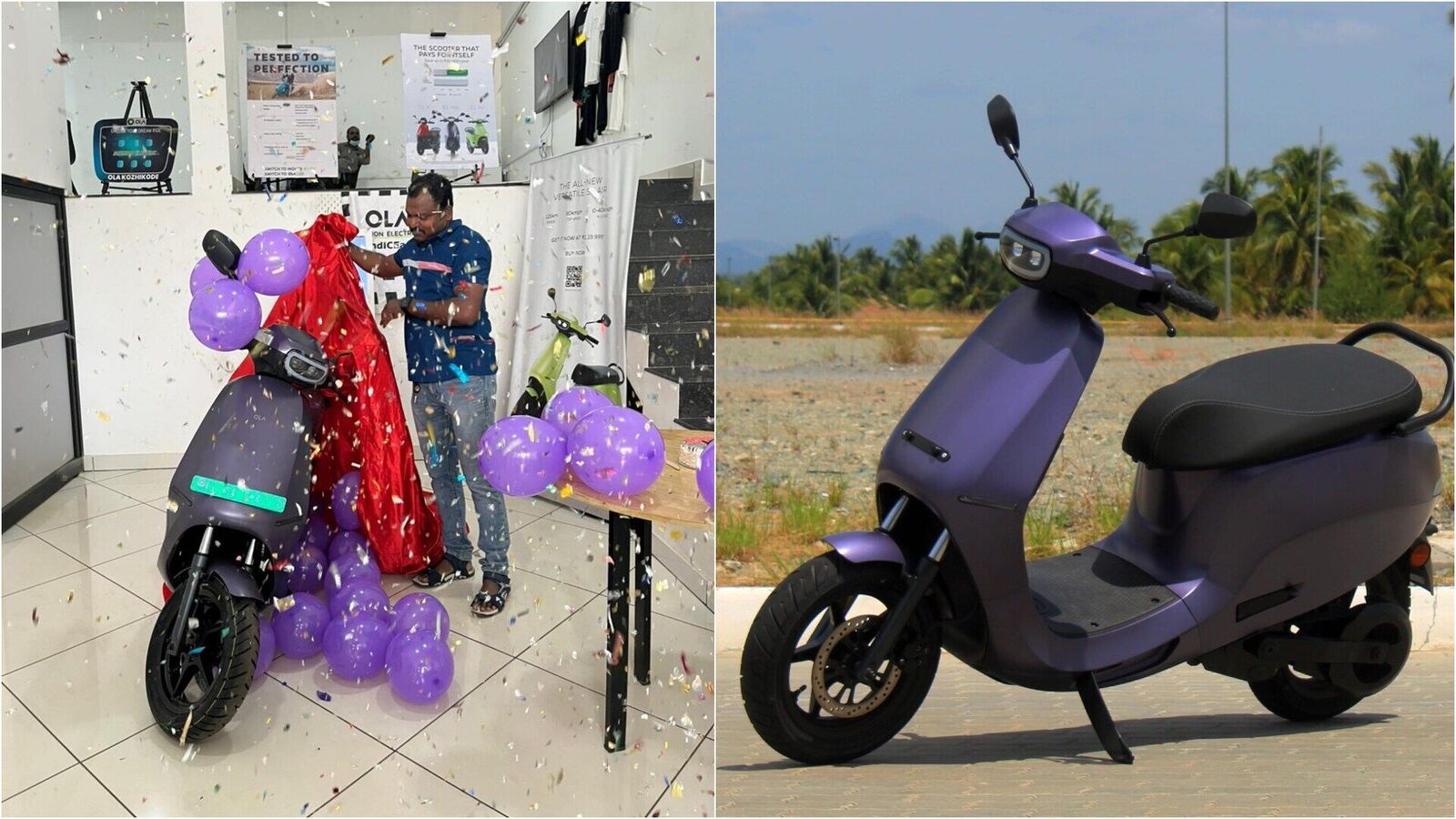
Ola Diamondhead price, M1 name trademarked, India launch details

Ola Diamondhead price, M1 name trademarked, India launch details

Alongside the Diamondhead, a trio of names starting with the prefix M1 have been trademarked.

A little over a week ago, Ola revealed its updated e-scooter line-up alongside four radical-looking electric bike concepts. Now, we have learnt that the company has also trademarked four names supporting those concepts. 

The most talked-about concept at the event was the Diamondhead sportbike, and Ola has trademarked that name, although it is unlikely to go into production featuring that same outlandish design. 

The three other trademarks are M1 Adventure, M1 Cruiser and M1 Cyber Racer. The first two names are pretty straightforward and leave nothing to the imagination when it comes to which e-bike they’ll find themselves on down the line. The third one could possibly be what Ola calls its interpretation of a roadster. 

Despite these trademark filings, we think an official launch is still quite some time away because at the Independence Day event, very few details of the bikes were shown and absolutely no specifications were shared. The only clue launch timeline shared was ‘end 2024’ mentioned on a presentation slide. 

Also See:

Ola S1 X launched at Rs 89,999, gets 3 variants


Source link

Hero confirms 210 cc engine for Karizma XMR, will get dual-channel ABS as well

Hero confirms 210 cc engine for Karizma XMR, will get dual-channel ABS as well

Hero MotoCorp is preparing to launch the Karizma XMR on 29th August in the Indian market. The manufacturer has been releasing new teasers and they even brought back Hrithik Roshan as the brand ambassador for the motorcycle. Now, the latest teaser that the manufacturer has released reveals new information about the engine of the Karizma XMR.

By: HT Auto Desk
| Updated on: 22 Aug 2023, 17:58 PM

Hero Karizma XMR will come with a new 210 cc engine.

The teaser shows 210 looking on the motorcycle which confirms that the Karizma XMR will come with a 210 cc engine. It is expected to be a liquid-cooled unit with a single-cylinder setup. The power output of the engine is not yet officially confirmed. However, it can be expected to be around 25 bhp whereas the torque output will be around 30 Nm. The gearbox on duty is expected to be a 6-speed unit.

Another thing that the teaser confirmed is that Hero is using DOHC or Double Overhead Cam Setup for the engine. This setup allows more intake which helps the engine in breathing better. Moreover, it also helps the engine to rev freely and higher.

Speaking of revving, the instrument cluster of the Karizma XMR has also been revealed which shows a redline of 10,000 rpm. Hero is using a digital instrument cluster which shows a gear position indicator on the left side, just below that there is a temperature gauge and below it there is time.

The centre stage is taken by a circular tachometer with a speedometer right between it. Below the speedometer, there is a screen that should show various information. On the right-hand side, there is a fuel gauge and there would be other information also that the cluster would show. For instance, service reminder, odometer and trip meters.

Also Read : Hero MotoCorp to bring Zero electric motorcycles to India. Will be locally built

Other features on offer that Hero has confirmed are LEDs for Daytime Running Lamp, headlamp and tail lamp. There will be a dual-channel Anti-lock braking system on offer. Hero will offer alloy wheels, telescopic forks in the front and a monoshock at the rear with disc brakes at both ends.

First Published Date: 22 Aug 2023, 17:58 PM IST


Source link

Lexus LM price in India; Toyota Vellfire details, launch date

Lexus LM price in India; Toyota Vellfire details, launch date


The Vellfire-based Lexus LM MPV gets two powertrain and seating options overseas.

Lexus India has released the first set of teasers of its upcoming LM MPV. The Lexus LM is now in its second generation and is based on the new Toyota Vellfire MPV, which recently launched in India. The second-gen LM MPV was revealed at this year’s Shanghai Auto Show a few months ago.

  1. Second-gen Lexus LM launch in the coming months
  2. Expected to get petrol-hybrid powertrain
  3. Gets noise-reducing wheels and tyres 

Lexus LM: first Lexus MPV for India

So far, the LM has been a China-only model and now at the global debut of its second-gen, Lexus announced that the new LM will be sold in left- and right-hand-drive layouts, and in markets like Europe, Asia, the Middle East, the United Kingdom and China as well. The new LM, which stands for Luxury Mover, has now been designed specially for customers who are not looking for a chauffeur-driven SUV.

New Lexus LM: platform and styling

The second-gen Lexus LM is now based on Toyota’s GA-K modular platform, which is a common base for a long list of cars, including the Camry, the Lexus ES, the Lexus RX and SUVs like the Toyota RAV4 and Highlander sold overseas. It gets the latest iteration of Lexus’ oversized grille, stylish headlamps and more. In profile, a reworked glasshouse and subtle creases throughout the length help reduce the slab-sided look.

Talking of dimensions, its length remains the same at 5,130mm; it is 1,890mm wide and 1,945mm high. Two seating options are on offer on the Lexus LM overseas. It comes with sliding doors on each side and sits on a set of 17-inch or 19-inch alloy wheels.

New Lexus LM MPV: more luxurious than Vellfire

The new Lexus LM is armed with features airline-style recliner seats, a 48-inch widescreen TV, a premium, 23-speaker surround-sound audio system and pillow-style headrests. Passengers also get fold-out tables, several USB ports, wireless phone chargers, reading lights and vanity mirrors, a fridge, rear gloveboxes and an umbrella holder. Lexus also offers a dimmable glass panel that can be raised or lowered for privacy.

The new LM also gets a new voice control system that Lexus says is the first in the world to cater specifically to rear passengers, while an overhead console controls the doors, storage compartments and cabin temperature. Rear passengers also get a separate smartphone-style control panel to adjust the climate, seat functions, interior lighting, window blinds and audio settings.

Sound deadening and insulation has been key for Lexus with the second-gen LM as it gets a specially designed headliner along with improved sealing enhancing insulation by 40 percent. The MPV also gets noise-reducing wheels and tyres, and active noise control that cuts sounds detected through a microphone while driving. Drivers benefit from a digital rear-view mirror, a panoramic-view monitor, a digital infotainment system and digital dials.

New Lexus LM MPV: petrol-hybrid powertrain options

Two petrol-hybrid powertrain options are available on the new Lexus LM. The 2.5-litre self-charging hybrid engine, seen on other Toyota and Lexus models, will be available on the Lexus LM350h, which also gets four-wheel drive as standard. This could be the powertrain option for India as well. There will also be a more powerful LM500h that will join the global line-up at a later stage.

New Lexus LM India launch details

Lexus showcased the first-gen LM earlier this year in India at Auto Expo. While the new LM is yet to make its India debut, going by fresh details shared by Lexus India, we expect a price announcement in our market in the coming months.

Also see:

New Lexus GX 550 revealed; previews future Land Cruiser Prado SUV

Lexus LBX revealed, becomes brand’s smallest model


Source link

Ultraviolette launches F77 Space Edition, gets aerospace-grade materials

Ultraviolette launches F77 Space Edition, gets aerospace-grade materials

Ultraviolette Automotive claims that the F77 Space Edition comes drawing inspiration from India’s advent towards space research and technology. It claims to come equipped with a wide range of aerospace-grade materials across the body. This means the pure electric motorcycle comes significantly higher priced than the standard version of the model, which is available at a starting price of 3.80 lakh (ex-showroom). The EV maker has also said that bookings for the F77 Space Edition will open on August 22 evening, on its official website. The bike will be produced in exclusively limited numbers, only 10 units.

Also Read : VJ Rannvijay Singha takes delivery of limited edition Ultraviolette F77 electric bike

Watch: Ultraviolette F77 electric motorcycle | Review

Speaking about the new special edition electric motorcycle, it claims to have been designed following the advanced electronics and technology used in modern aircraft. The bike gets custom machined aerospace-grade aluminium components ensuring high durability. Also, it claims to come wearing aerospace-grade paint.

The motorcycle promises to deliver a 307 km range on a single charge. Its high-performance motor churns out 39.94 bhp peak power and 100 Nm of impressive maximum torque output. It is capable of accelerating 0-60 kmph in just 2.9 seconds and can run at a top speed of 152 kmph.

Speaking on the launch of the Ultraviolette F77 Space Edition, Narayan Subramaniam, Co-Founder and CEO of Ultraviolette Automotive, said that the manufacturer aims to constantly push the boundaries of science and technology and the new special edition is the best way for that. “As the aerospace industry is where the pinnacles of technology are achieved, the F77 Space Edition proudly commemorates India’s celestial journey. The very same DNA is clearly reflected in the Ultraviolette F77 Space edition. Infused with aerospace grade attributes and a distinctive design ethos, the F77 Space Edition stands as a testament to our resolute commitment in charting the course for the future of electric mobility,” he added.

First Published Date: 21 Aug 2023, 15:28 PM IST


Source link

Geoffrey Emmanuel on podium in 2023 Malaysian Superbike Championship

Geoffrey Emmanuel on podium in 2023 Malaysian Superbike Championship


Making his Malaysia Superbike Championship debut at Sepang, the Indian rider finished third in both races.

Geoffrey Emmanuel made an impressive debut in the Malaysia Superbike Championship. The 18-year-old finished on the podium in both races, with a pair of P3 results at the Sepang International Circuit (SIC).

  • Emmanuel third overall in the championship
  • Also competing in JuniorGP World Championship

Geoffrey Emmanuel P3 at Sepang

Earlier this year, Emmanuel – son of seven-time National Champion Emmanuel Jebaraj – became the first Indian to compete in the FIM JuniorGP World Championship. The series is considered a crucial stepping stone to MotoGP.

Alongside his JuniorGP commitments, the young Indian is now undertaking a campaign in the 2023 Malaysian Superbike Championship. He’s competing astride a Honda CBR250 in the 250cc category (A class) with team Gusto Racing India.

Despite limited track time to prepare for his championship debut, he collected a pair of P3 finishes. It was an especially close finish in Race 1, with Emmanuel missing out on the second place by just 0.039 secs.

“It was a very challenging weekend for me. We had barely three days to set up the stock CBR250 bike, apart from learning the track. Racing at the SIC was a big opportunity for me and another step towards achieving my goal of making it to MotoGP,” he said, summing up his debut weekend.

“The race itself was very competitive, but I managed to hold my position till the finish and I am absolutely delighted that I made the podium in both races.”

2023 Malaysia Superbike Championship

This year’s Malaysia Superbike Championship comprises six races across three rounds – all to be held at Sepang. Round 2 is scheduled for September 8-10, followed by the finale round on December 15-17. 

Emmanuel is currently third overall with a total of 32 points, eight points behind second-placed M.Farid Hakimi Farid Sezli and 18 points behind championship leader Muhd Irfan Haykhal Amidi.

Also see:

MotoGP India guide: Tickets, track updates explained

MRF Tyres seals European Rally Championship title for second year running


Source link

Thar.e won’t be just a concept, confirms Anand Mahindra

Thar.e won’t be just a concept, confirms Anand Mahindra

Mahindra has already grabbed a lot of eyeballs in the global automotive sector with its recently unveiled Thar.e EV concept which previews a full-grown five-door ure electric iteration of the internal combustion engine-powered Thar SUV. Mahindra Group Chairman Anand Mahindra has now confirmed that it will not just remain as a showcase prototype but will enter production in the near future.

While unveiling the Mahindra Thar.e EV concept, the automaker hinted that it would enter production in 2025. Anand Mahindra has not shared any such timeframe for the production of the Thar.e electric SUV, but his social media post indicates that the concept will enter into production.

(Also read: Mahindra Thar.e electric SUV concept makes global debut with looks more rugged than Thar)

By: HT Auto Desk
| Written By: Mainak Das
| Updated on: 20 Aug 2023, 17:32 PM

Mahindra Thar.e EV concept previewed a full-grown five-door pure electric iteration of the internal combustion engine-powered Thar SUV.

In his social media post, Anand Mahindra wrote, that from the moment there was the prototype the company was committed to making it a reality. “Nope. Not just a concept. From the moment we all saw the prototype we were committed to making this a reality,” Mahindra wrote in his X (Previously Twitter) post, along with a video demonstrating the offroading capability of the pure electric prototype.

Watch: Mahindra Thar.e Concept EV: The future of off-road SUVs?

The newly unveiled Mahindra Thar.e concept is based on the automaker’s INGLO P1 EV platform instead of the ladder frame chassis that underpins the internal combustion engine-powered Thar SUV. This new platform is dedicated to electric vehicles and is claimed to enhance the rigidity of the vehicle as well as offering significantly higher safety for the occupants. Also, this platform claims to offer a long range for the EV, thanks to its capability to accommodate a large battery pack.

The Mahindra Thar.e electric SUV is expected to play a key role in the brand’s Born Electric range of electric cars that the auto company plans to introduce later this decade. Also, the homegrown automaker aims to become a major player in the country’s electric car market by producing two lakh units of EVs between 2027 and 2029.

First Published Date: 20 Aug 2023, 17:32 PM IST


Source link

Honda Elevate price, launch September 4, variant details

Honda Elevate price, launch September 4, variant details


A few units of the Honda Elevate SUV have begun reaching dealerships.

Honda is all set to launch its long awaited Elevate SUV on September 4, with static display vehicles now reaching dealerships. The Elevate is Honda’s contender in the ever growing midsize SUV market, which includes the Hyundai Creta, Kia Seltos and Maruti Grand Vitara, among others. 

  1. Honda Elevate prices could start at Rs 11 lakh (ex-showroom)
  2. Gets a 1.5-litre petrol engine with two gearbox options
  3. Customer test drives to commence soon

Honda Elevate powertrain, fuel efficiency

Post its global debut in India, in July, the Elevate was recently homologated for our market. The Elevate shares its powertrain options with the City – 121hp, 145Nm, 1.5-litre petrol mated to either a 6-speed manual or 7-step CVT automatic. Honda has confirmed that it will not offer a petrol-hybrid powertrain on the Elevate, but will launch an all-electric SUV in future.

As far as fuel efficiency goes, the manual Elevate returns a claimed 15.31kpl, while the CVT returns 16.92kpl. Expect the real-world figures to be slightly different.

The Honda Elevate is sized on par with its arch rival, the Hyundai Creta. It measures 4,312mm in length, 1,790mm in width and 1,650mm in height, and has a wheelbase of 2,650mm. The Elevate also gets segment-leading 220mm ground clearance.

Honda Elevate features and equipment

The Honda Elevate is available in four trims – SV, V, VX and ZX. The entry-level SV gets LED projector headlamps, automatic climate control, 16-inch steel wheels and dual front airbags.

The fully loaded Elevate ZX gets a 10.25-inch touchscreen, six airbags, a single pane sunroof, ADAS, eight speakers, leatherette brown upholstery, soft-touch dashboard and auto-dimming interior mirror. It also gets a unique Phoenix Orange exterior paint shade on this variant, along with a few, optional dual-tone shades.

Honda Elevate test drive details, expected pricing

Test drives for the Elevate will commence soon and dealer sources tell us that it is expected to start from Rs 11 lakh. The Elevate will rival the Hyundai Creta and the recently launched Kia Seltos facelift, which get more features and a diesel engine option, the Maruti Suzuki Grand Vitara and the Toyota Hyryder, which get petrol-hybrid powertrain options, and the Skoda Kushaq and the Volkswagen Taigun.

Image source

What are your thoughts on the Honda Elevate? Let us know in the comments section.

Also see: 

Honda Elevate to skip hybrid and go straight to EV

Honda Elevate review: Was it worth the wait?

Honda Elevate to get 4 variants, features revealed


Source link

In pics: Lamborghini Lanzador is brand’s first EV concept with over 1,300 hp

In pics: Lamborghini Lanzador is brand’s first EV concept with over 1,300 hp

The production version of the Lanzador will debut sometime in 2028.

By: HT Auto Desk
| Updated on: 19 Aug 2023, 17:27 PM

1/11

Lamborghini has unveiled its first electric vehicle in concept form. It is called Lanzador. The production version of the EV is expected to go on sale sometime in 2028. 

2/11

Lamborghini announced its its strategy and its roadmap towards decarbonization and electrification in 2021. Before the Lanzador concept, the brand showcased the Revuelto which is a replacement to the iconic Aventador and is powered by a V12 plug-in hybrid.

3/11

It took 2 years for Lamborghini to present a high-performance, electrified vehicle that remains true to the heart and soul of the brand.

4/11

The all-electric concept is a grand tourer with a 2+2 seating arrangement. This is not the first time that the manufacturer is building a four-door vehicle. In the past, they have showcased the Estoque concept which came with a four-door body style.

5/11

Lamborghini is using an electric motor on the front axle as well as at the rear axle. This give a permanent all-electric all-wheel drive to the Lanzador. There will also be e-torque vectoring feature on offer.

6/11

Lamborghini says that the total power output of electric motors will be over one megawatt which roughly translates to 1,340 bhp. The manufacturer says they will use new generation high-performance battery, which also ensures a long range

7/11

Lamborghini will also offer active aerodynamics. It will help in increasing the driving range as the car will be slip through air more efficiently. Apart from this, aerodynamics will also help in increasing downforce and cornering ability.

8/11

The aerodynamics also offer Aerodinamica Lamborghini Attiva (ALA) system which is a well-known technology used in the Huracán Performante and Aventador SVJ. It is considered to be one of the best in the industry because it increases the grip and downforce significantly.

9/11

The Lanzador will come with Lamborghini Dinamica Veicolo Integrata (LDVI) which is essentially a driving dynamics control system. There will be several sensors and actuators that will be integrated into the system which ensures precise driving behavior.

10/11

Lamborghini will use sustainable materials. There will be sustainably tanned leather, 100 per cent merino wool, regenerated carbon, synthetic fibres from recycled plastic and a 3D printed process for plastic.

11/11

The interior will also look modern but will still retain Lamborghini’s design language. There will be a digital screen for the driver as well as the passanger. 

First Published Date: 19 Aug 2023, 17:27 PM IST


Source link

Ford Mustang GTD details, powertrain, limited edition

Ford Mustang GTD details, powertrain, limited edition

Ford is targeting a sub-seven-minute lap time at the Nurburgring with the Mustang GTD.

The new Ford Mustang GTD is a carbonfibre-bodied, aerodynamically optimised, track-ready “technological tour de force” that takes the crown as Ford’s most powerful road car yet. It will be built in limited numbers starting late next year, and initially be sold in the North America. The GTD is said to have been conceived with the aim of creating “a Mustang to take on the best of European sports cars”.

Ford is targeting a sub-seven-minute lap time at the Nurburgring, a feat that would put the GTD on par with European supercars, including the Porsche 911 GT2 RS, Lamborghini Aventador SVJ and Mercedes-AMG GT Black Series. Designed and engineered in partnership with motorsport outfit Multimatic, which built the Ford GT supercar, the new arrival is effectively a road-legal reworking of the Mustang GT3 that will race at Le Mans next year. It falls under the IMSA Sportscar Championship’s GTD classification, for cars built to the FIA’s GT3 specifications.

Ford Mustang GTD engine, performance

A targeted output of more than 811hp from the heavily reworked, supercharged V8 makes the GTD the most powerful Mustang yet, outpunching even 2019’s snarling 709hp Shelby GT500.

The bespoke 5.2-litre engine is larger than that fitted to the standard road-going Mustang and packs a suite of motorsport-derived modifications – including a dry sump, dual air inlets and a titanium active-valve exhaust system (which generates “exceptional notes”) – in pursuit of Lamborghini-aping performance figures.

It delivers its reserves to the 345mm-wide rear wheels via a lightweight carbon fibre driveshaft and eight-speed transaxle – the latter fitted in place of a standard gearbox to ensure “near 50:50” front-to-rear weight distribution, and because simulations proved that to be the most effective way to “put power to the ground”.

Ford Mustang GTD suspension tweaks, aero

The GTD is equipped with semi-active suspension, which brings variable spring rates and a 40mm lower ride height in Track mode. A motorsport-inspired “short-long arm” set-up for the front suspension is said to boost stiffness and responsiveness, and the rear suspension is mounted to a lightweight tubular subframe, as it is in the GT3 car. The suspension control units are housed alongside the transaxle cooling system at the rear, where the boot used to be.

The GTD has a track that’s nearly 100mm wider than that of the standard Mustang, which, together with massive 325mm-wide front tyres (wider than the rear tyres of the GT) boosts grip and cornering stability substantially. Buyers are offered a choice of 20-inch forged aluminium wheels or optional magnesium items available on the GT3 racer.

The aero package is obviously lifted nearly wholesale from the GT3 racer, with a massive hydraulically adjustable rear wing, a vented bonnet, chunky air scoops, a beefy front splitter and a wind-cheating rear diffuser boosting downforce at speed and stability through bends.

Stopping power is provided by huge carbon-ceramic disks, engineered to resist fade under repeated braking.

Ford Mustang GTD interiors

Inside, the GTD is closer to the standard Mustang than the race car, retaining digital displays and the standard infotainment system with over-the-air software-update functionality.

Notably, though, the rear seats have been removed to save weight, the front seats are swapped for track-ready Recaro buckets and the rotary dial, build plaque and paddle shifters are all 3D-printed using titanium recovered from retired F22 fighter jets.

Ford hasn’t given a weight figure for the GTD, but the carbon body panels and stringent lightweight methods mean it’s likely to tip the scales at substantially less than the 1,768kg Mustang Dark Horse.

The previous-gen Mustang was on sale in India for a short period, but since exiting the Indian market, Ford does not sell any new cars here anymore.

Also see: 

Ford Mustang Mach-E review, test drive


Source link