Forgetting to retract the side stand of a motorcycle or a scooter is one of the major reasons for road crashes involving two-wheelers. Leading automotive component manufacturer Uno Minda has introduced a new range of side stand sensors and switches that can mitigate this problem and make riding safer for motorcyclists. The auto component supplier has revealed in an official statement that this range of side stand sensors and switches will be available for motorcyclists as an aftermarket accessory across India.
By: HT Auto Desk | Updated on: 30 Oct 2023, 17:17 PM
Uno Minda’s new side stand sensors are powered by magnetic sensor technology and ensure enhanced riding safety. (Representational image)
Uno Minda has claimed that the new side stand sensors and switches use advanced magnetic sensor technology. This technology disengages the engine circuit unit when the side stand is in an unsafe position, resulting in no propulsion for the motorcycle. The company claims that this technology ensures that bike riders ride safely. With the magnetic sensor-powered technology, the instrument cluster of the motorcycle gets an LED light indicator, which lights up when the side stand is in an unfavourable position, alerting the rider.
Several two-wheelers in India have been launched already with this technology. However, in those cases, the two-wheelers come equipped with the technology from the manufacturer. Uno Minda’s new range of side stand sensors will enable motorcyclists who have older models to get the same technology, enhancing their safety while riding.
Speaking about the launch, Anand Kumar, Head of Product & Strategy, Aftermarket Domain at Uno Minda Ltd., said that the side stand sensors are important because getting to a corner and having the side stand hit the road can lead to a crash. “We know that bikes generally come with a pre-installed side stand sensor. Side stand sensors are important because getting to a corner and having the side stand hit the road can lead to a crash. Uno Minda side stand sensors have been manufactured to cater to the durability requirements on India’s rocky trails,” he added.
The company has further claimed that the side stand sensor and switches are available across India at leading online and offline retail stores, at a price starting at ₹172. Also, the side stand sensors and switches come with a two-year warranty from the manufacturing date.
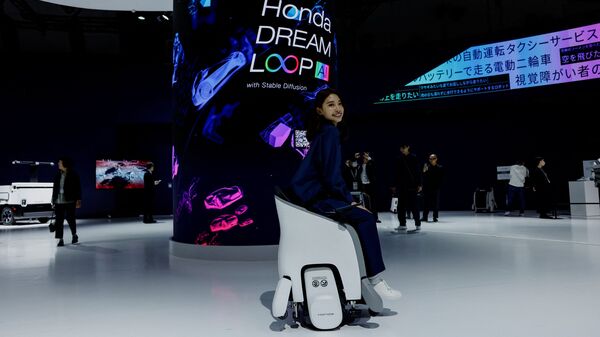
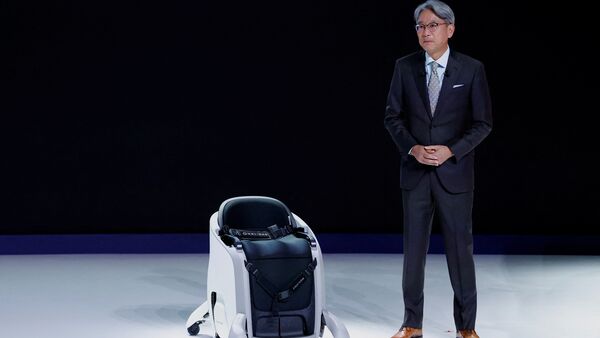
Users of the Honda UNI-ONE can steer this concept vehicle simply by shifting their body weight while sitting without using hands.
By: HT Auto Desk | Updated on: 29 Oct 2023, 17:56 PM
1/6
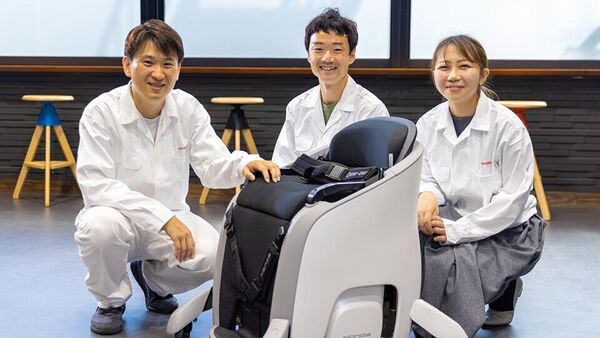
Honda Motor has displayed the UNI-ONE personal mobility concept at the ongoing Japan Auto Show, Users can steer this concept vehicle simply by shifting their body weight while sitting without using hands and thus perform certain tasks while moving. It has been designed to expand opportunities for users with mobility challenges.
2/6
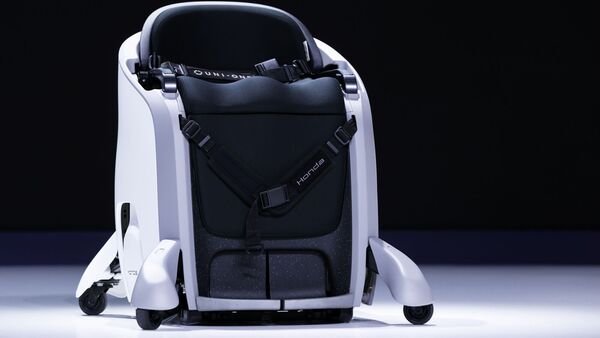
One of the unique features of the Honda UNI-ONE is that it changes its height. It takes the low position for more stability while the user is getting on, and shifts to the high position once moving, so that the user will have an eye level close to that of people who are standing.
3/6
A Honda UNI-ONE user can move in all directions just by shifting their body weight, thus using both hands freely. The idea is that having an eye level close to that of standing people enables natural communications while moving.
4/6
5/6
By using data such as inclination angle and angular velocity, the intension estimation controller performs calculations to estimate the user’s intentions, such as whether the user wants to stay in place, or to move toward which direction and at what speed. Based on the results of the estimate, the stabilization controller performs calculations to control the wheels so that the UNI-ONE does not lean too far and applies feedback control to achieve natural behavior that is neither too fast nor too slow.
6/6
UNI-ONE will be in Low Position Mode while the user is getting on, and in High Position Mode while the user is moving around with the balance control.
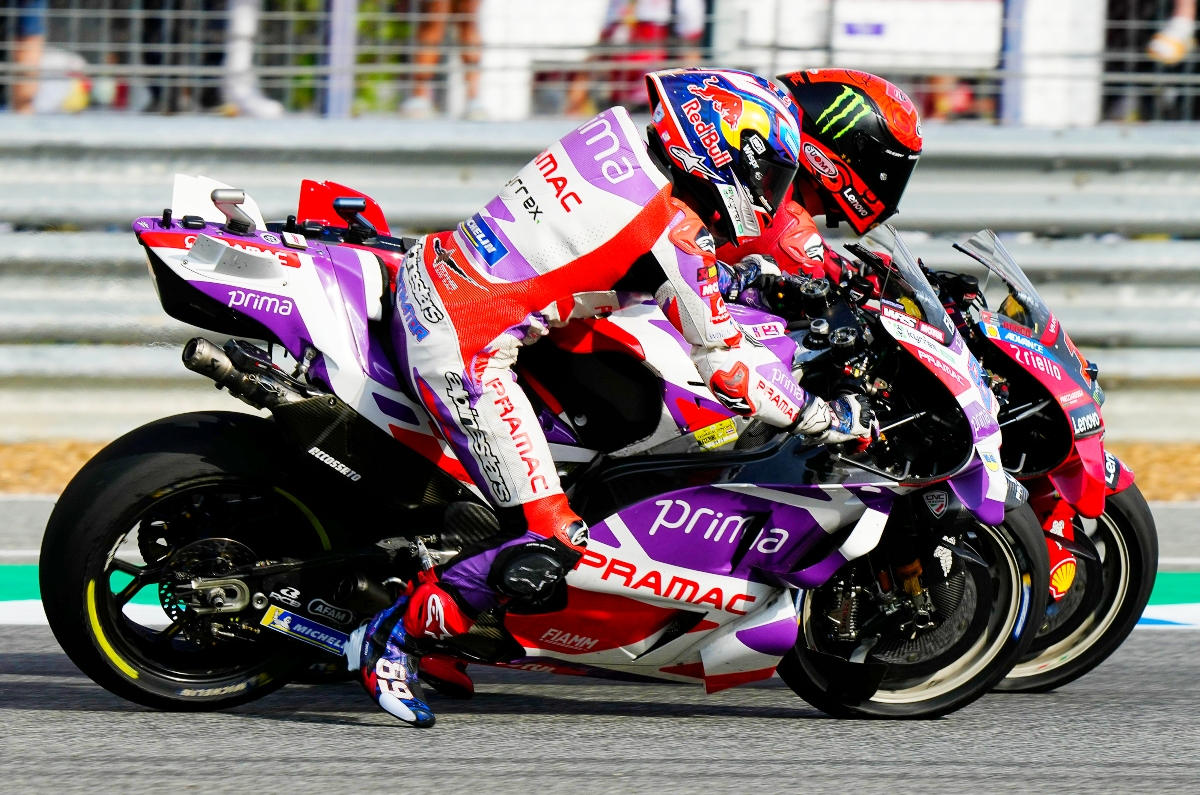
Bagnaia promoted to second after Binder was handed a penalty for exceeding track limits.
Just a week after he missed out on the podium in Australia, Jorge Martin took a hard-fought victory in the 2023 Thai GP. Red Bull KTM’s Brad Binder finished second on road, but he exceeded lap limits which meant he had to drop down to third. Factory Ducati rider and reigning world champion Francesco Bagnaia was promoted to second.
Just thirteen points separate Martin and Bagnaia
Martin won both Sprint and main races this weekend
Battle for the podium
Martin led for much of the Thai GP, but on a few occasions Binder was able to overtake him, although he couldn’t make it stick. Bagnaia had a poor start and at one point during the race was in eighth place. However, he was able to make his way through the field in due course and was running fourth behind Alex Marquez, when the Gresini Ducati rider crashed out.
Quartararo, Marquez finish in the top 7
Factory Yamaha rider Fabio Quartararo, who qualified tenth, claimed he had a “good feeling” on the bike this weekend and was able to replicate this success out on the track. He finished the main race in sixth place. Repsol Honda rider Marc Marquez (who is moving to Gresini Ducati next year) took the chequered flag in seventh place, after battling with Quartararo for much of the race. In 2019,Marquez took his eighth world title while battling with Fabio at this very circuit.
2023 MotoGP world championship standings
Despite wins in both the Sprint and feature-length races Jorge Martin is still thirteen points adrift of championship leader, Francesco Bagnaia. Bagnaia’s VR46 academy stablemate Marco Bezzecchi is third in the overall standings.
MotoGP heads to Malaysia in two weeks’ time, so keep watching this space for the latest developments.
By: HT Auto Desk | Updated on: 28 Oct 2023, 16:00 PM
Honda Motorcycle and Scooter India have announced special offers for the festive season. The brand is offering cashback of up to ₹5,000, zero down payment, no cost EMI, low rate of interest at 6.99 per cent and no hypothecation. With the Shine 100, the brand is giving a ‘100 pe 100’ offer. It is important to note that these offers are available only for limited and there are terms and conditions applied.
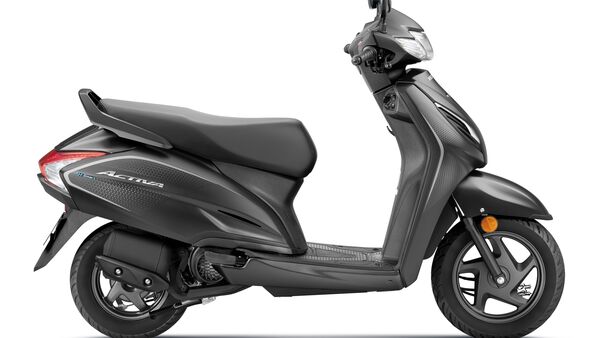
Image of Honda Activa Limited Edition in Matte Steel Black Metallic colour used for representational purposes only.
Honda recently launched the OBD2-compliant version of the CB300R in the Indian market. It is priced at ₹2.40 lakh (ex-showroom, Delhi) which is ₹37,000 less than what it was priced before. It competes against the Bajaj Dominar 400, TVS Apache RTR 310, KTM 390 Duke and BMW G 310 R.
Powering the CB300R is a 286 cc, single-cylinder engine that uses a DOHC setup and liquid cooling. It puts out 29.98 bhp of max power at 9,000 rpm and a peak torque output of 27.5 Nm at 7,500 rpm. It comes mated to a 6-speed gearbox with slip and assist clutch.
The manufacturer also launched a new limited edition model of the Activa. It is priced at ₹80,734 and ₹82,734 for the Standard and Smart variant respectively. Both prices are ex-showroom. The limited edition model only comes with cosmetic changes.
The Limited Edition will be sold in two new colour schemes. There is Pearl Siren Blue and Matte Steel Black Metallic. Honda has added black chrome accents and stripes to the body panels. The Activa 3D emblem gets premium black chrome garnish while the rear grab rail also gets a body color dark finish. Apart from this, Honda has added a set of alloy wheels to the DLX variant which means that the scooter comes with peace of mind of having tubeless tyres.
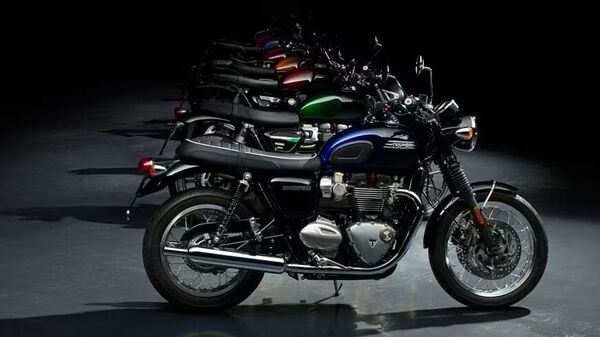
Triumph has unveiled a new Stealth Edition for its range of motorcycles. Motorcycles like the Scrambler 900, Bobber, Speed Twin 900, Speed Twin 1200, Speedmaster, Bonneville T120 and Bonneville T100 will be getting the new special edition. It is important to note that the Stealth Edition will go on sale only for one year and as of now, Triumph has revealed whether it is coming to the Indian market or not.
By: Paarth Khatri | Updated on: 27 Oct 2023, 18:04 PM
Triumph Stealth Editions only come with cosmetic upgrades over the standard versions of the motorcycles.
The eight motorcycles are finished in unique paint colours on the fuel tank. The Bobber gets purple, the Scrambler 900 gets orange, the Speed Twin 900 gets green, the Speed Twin 1200 and Speedmaster gets red, the Bonneville T120 gets black and blue whereas the Bonneville T100 gets only blue.
Triumph Motorcycles’ Chief Commercial Officer Paul Stroud said: “The Stealth Editions are simply stunning, and a brilliant demonstration of the skill and innovation of our paint team. It is a challenging, hand-crafted technique that gives each motorcycle a sophisticated and unique finish. For fans of our Bonnevilles, these Stealth Editions will be hard to resist.”
The Stealth Edition motorcycle range will reach the dealerships in February 2024. It will be priced slightly higher than the standard motorcycles. 2024 is also the year when Triumph will be discontinuing the Thruxton cafe racer motorcycle with a Final Edition. The Thruxton Final Edition is based on the Thruxton RS and it will arrive at dealers in Spring 2024.
Triumph Thruxton Final Edition is finished in an exclusive Competition Green paint scheme, with hand-painted gold lining and signed by the artist. Triumph says that the motorcycle is expected to become a collector’s item so they are offering a certificate of authenticity featuring the bike’s unique VIN number. Each of these special documents is signed by members of the Thruxton 1200 design team and Triumph’s CEO, Nick Bloor. A unique Final Edition engine badge will also be supplied with each motorcycle, with a gold-finished surround and a ‘Final Edition’ graphic infill.
By: HT Auto Desk | Updated on: 26 Oct 2023, 16:20 PM
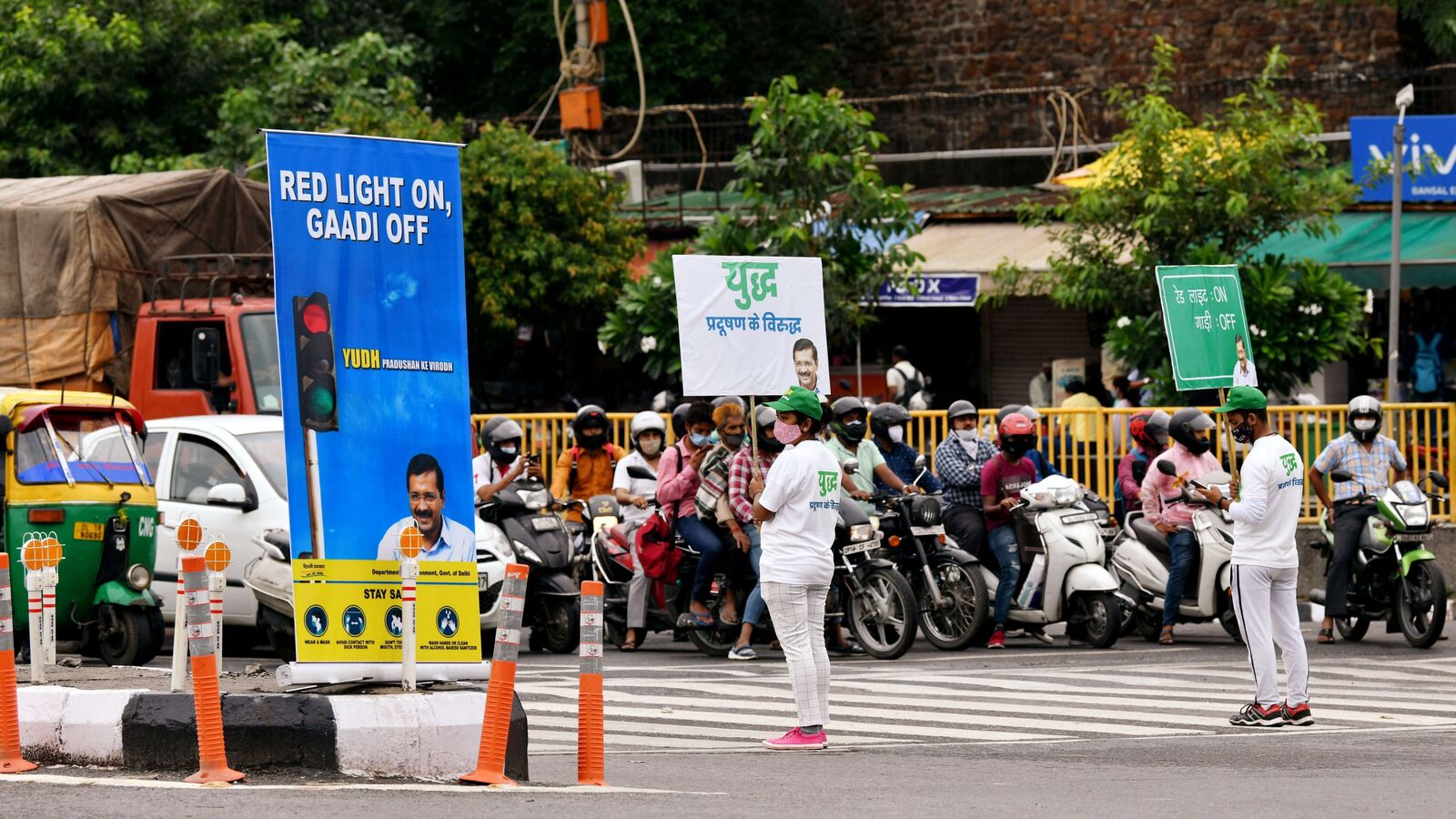
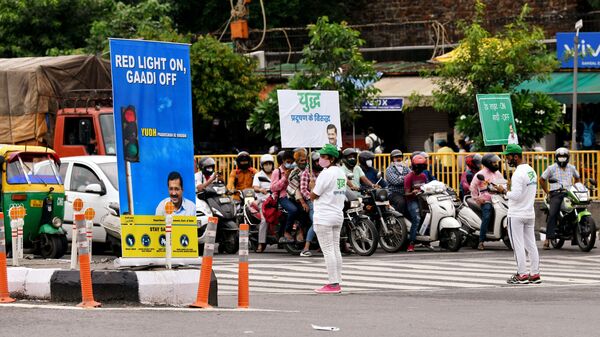
Delhi is all set to see the return of ‘Red Light on, Gaadi Off’ campaign this season as pollution level in the national capital continues to increase ahead of Diwali festival. Gopal Rai, Environment Minister of Delhi said that the state government is planning to bring back the campaign that aims to reduce vehicular pollution in the national capital region. Delhi and the neighbouring region have already implemented the Graded Response Action Plan or GRAP to reduce polluting vehicles from plying in the city. The government plans stricter action in coming days to keep pollution under check.
Volunteers hold placards at a traffic point as part of the Delhi government’s Red Light On, Gaadi Off campaign to reduce pollution level in the national capital, at ITO. (File photo) (ANI)
The ‘Red Light on, Gaadi Off’ campaign was first launched in 2020 to reduce vehicular pollution as part of the15-point action plan to curb air pollution in Delhi. Earlier, before Covid years, Delhi government resorted to odd-even scheme under which private vehicles with registration plates ending in odd and even numbers were allowed to ply on every alternate days to reduce pollution.
Speaking on bringing back the ‘Red Light on, Gaadi Off’ campaign, Gopal Rai said, “One of the major causes of pollution in the national capital is traffic. To reduce the overall pollution in Delhi, we’ve had to decrease the vehicle pollution. Thus, we are introducing a ‘Red Light on, Gaadi Off’ campaign to create awareness among the public to curb vehicle pollution. In the next phase of the Graded Response Action Plan (GRAP), eco-friendly bus service will be started. The work to introduce this bus service has already begun.”
The ‘Red Light on, Gaadi Off’ campaign promotes saving precious fuel as well as keep pollution levels in check. Drivers are encouraged to turn off their engines while waiting at traffic signals.
The national capital recorded ‘poor’ air quality on Thursday with the Air Quality Index (AQI) at 256. According to SAFAR-India, the air quality around Delhi University recorded ‘very poor’ clocking 316 AQI in the morning. Noida, Delhi’s neighbouring satellite city, recorded ‘poor’ air quality with AQI hovering at 269 while Gurugram was ‘moderate’ at 176 AQI.
360hp, coupe-SUV will be brought in as a CBU in limited numbers.
BMW has launched the X4 xDrive M40i in India at Rs 96.20 lakh, and the coupe-SUV, which will be brought in as a CBU, will be available in a single trim and sold in limited units.
Gets two paint options
20-inch wheels with run-flat tyres
Equipped with a 48V mild-hybrid system
BMW X4 M40i design
The BMW X4 M40i retains its sloping rear roofline, but is styled like the X3 SUV that it’s based on. The coupe gets a gloss matte black treatment on the kidney grille, grille surround, exhaust pipe, window surround and roof rails. The SUV is available in two metallic colours – Black Sapphire and Brooklyn Grey.
The X4 gets a staggered tyre setup – 245/45-R20 at the front and 275/40-R20 at the rear – with run-flats. The double-spoke alloy wheels are also finished in black and brake pads get red calipers.
BMW X4 M40i interior and features
On the inside, the X4 M40i gets BMW’s Vernasca Leather dashboard in black or tarcora red with carbon-fibre trim pieces. This model comes equipped with the M package, which includes unique pedals, a leather steering wheel and a M-specific display on the digital information cluster.
Other notable features on the X4 M40i include a 12.3-inch infotainment unit, ADAS, a panoramic sunroof, ambient lighting, 3-zone climate control, a Harman Kardon sound system, park assist, 360-deg camera, wireless charging and more.
BMW X4 M40i engine and performance
The BMW X4 M40i is powered by a 360hp, 500Nm, 3.0-litre 6-cylinder turbo-petrol engine, with power going to all four wheels via an 8-speed automatic gearbox. BMW claims that the X4 M40i can accelerate from 0-100kph in 4.9 seconds, with a top speed of 250kph.
BMW X4 M40i rivals
The Mercedes-AMG GLC 43 is a direct rival to the BMW X4 M40i, but it’s not on sale in India currently. Globally, the GLC 43 recently underwent a model update last month and it could come to India in the near future.
Interestingly, BMW also offers the X3 SUV in the M40i guise. And, at Rs 87.7 lakh, it is not only more affordable by Rs 8.5 lakh but also offers more headroom and boot space.
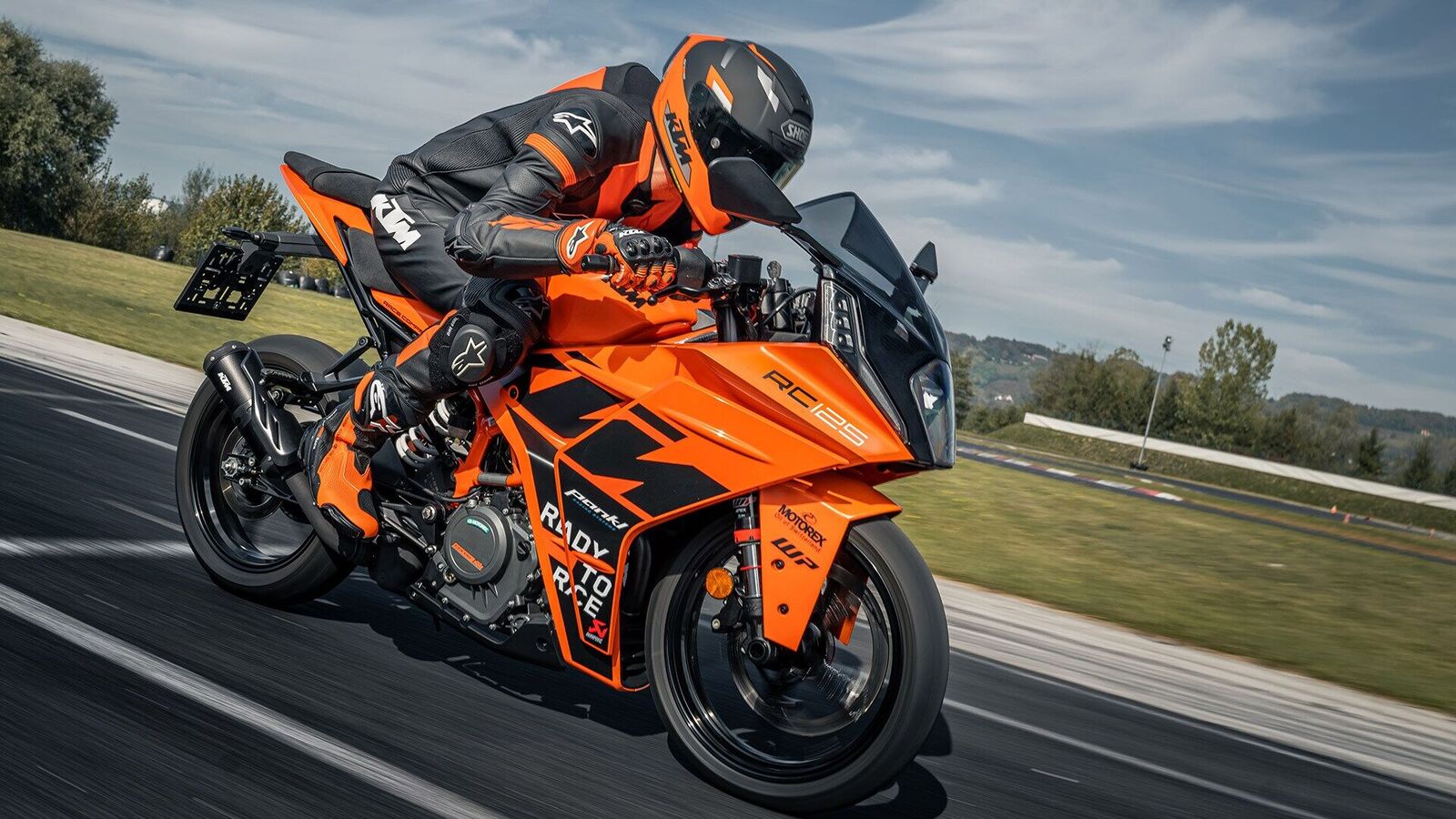
The KTM RC 125 is the brand’s most affordable full-faired offering in India and the motorcycle is one of the sharpest tools you get if you want to hone your riding skills. The 125 cc motorcycle borrows heavily from its older siblings right from the top-tier hardware, sharp design language and even the colour options. Does the KTM RC 125 make sense for you to buy this festive season? Let’s take a look at what the bike has to offer.
By: HT Auto Desk | Updated on: 25 Oct 2023, 20:18 PM
The KTM RC 125 is the brand’s most affordable fully-faired offering on sale
KTM is retailing the updated RC 125 that arrived last year. The motorcycle gets a single halogen unit with integrated turn signals that replace the previously found twin-projector headlamps. The Austrian bike maker has also used a tweaked the rear sub-frame on the motorcycle for a more spacious and flat pillion seat. The changes bring down the overall weight of the motorcycle by 3.4 kg, while the fuel carrying capacity has gone up to 13.7 litres.
The KTM RC 125 also gets a TFT instrument console with an ambient light sensor that adjusts to changing light conditions automatically. The handlebar also gets height adjustability up to 10 mm, to toggle between race and everyday riding.
Power on the 2023 KTM RC 125 comes from the tried and tested 124 cc, single-cylinder engine. The motor gets a larger airbox and offers better lower-end performance. The liquid-cooled motor is tuned to produce 14.7 bhp, which makes it one of the most powerful 125 cc offerings on sale in India. The motor is paired with a 6-speed gearbox.
With respect to the hardware, the RC 125 packs USD forks at the front and a monoshock at the rear. Braking duties are handled by a 320 mm disc at the front and a 230 mm unit at the rear. The motorcycle gets dual-channel ABS as standard with the Supermoto mode, sourced from Bosch. The KTM RC 125 takes on the Yamaha R15 V4 in the segment and both motorcycles are excellent machines to learn the track skills on. The RC 125 is priced at ₹1.90 lakh (ex-showroom, Delhi).
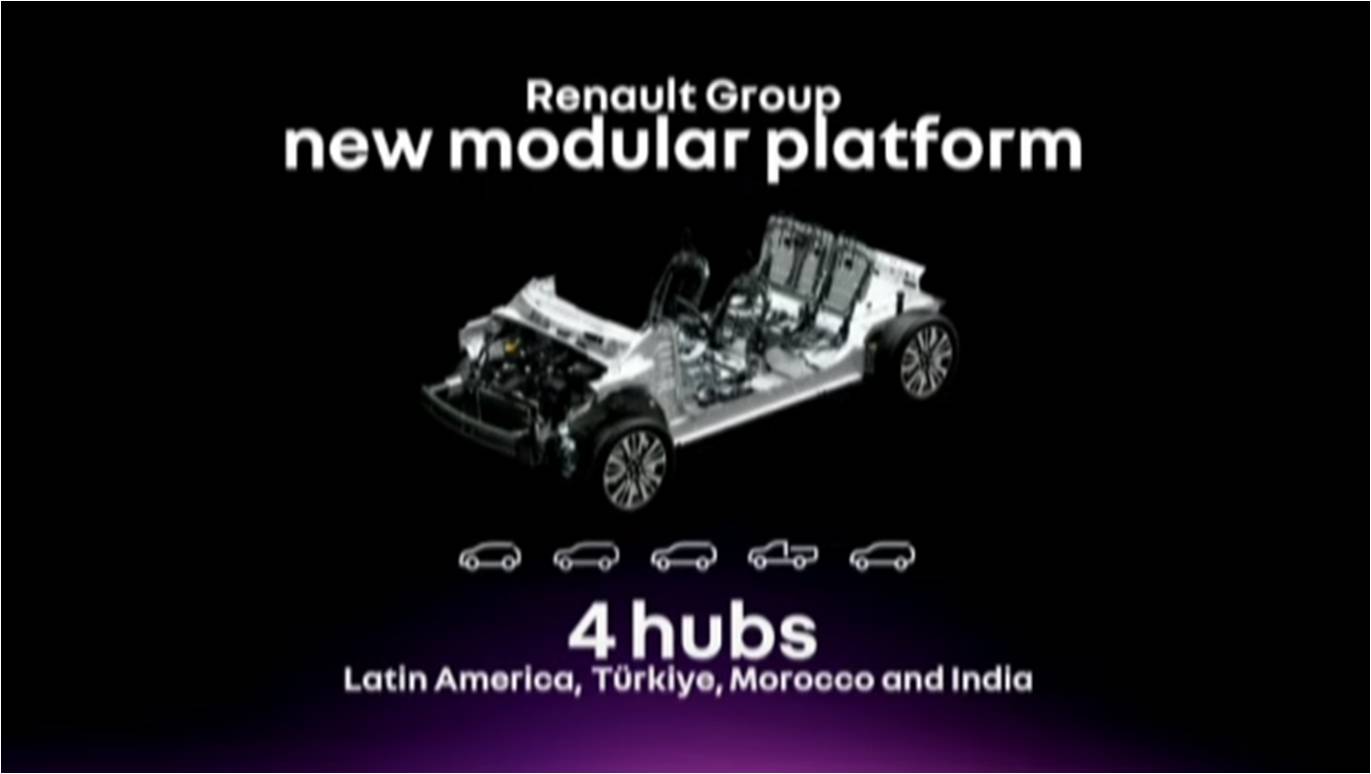
New modular platform will underpin five new models that will be produced from four production hubs, including India.
At the presentation of its ‘New International Gameplan 2027’ in Brazil, Renault announced two platforms that it says will form the basis of its new plan for regions outside Europe. Speaking at the event, Fabrice Cambolive, global CEO of Renault said that the platforms will underpin eight new models. All these models will be produced and launched outside Europe, with the last one scheduled to arrive no later than 2027.
Fully Flexible Platform
Curiously, Renault refrained from labelling the platform headed to India, with Renault brand product performance VP, Bruno Vanel, only describing it as “a fully new Renault group modular platform that will be used in four hubs beyond Europe.” The first market would be Latin America, followed by Turkey, Morocco and India.
Speaking about this platform, Vanel said, “It is scalable and flexible and capable of accommodating vehicles with a length between 4-5 metres, with four possible wheelbases from 2.6-3 metres. The platform is also capable of accepting a wide range of powertrains, including ICE (gasoline and diesel), flex-fuel, LPG, 48V hybrid and full-hybrid too. It would also offer two- and four-wheel-drive capability.”
CMA platform
The second platform is the Compact Modular Architecture (CMA) platform, which will be localised in South Korea in partnership with Geely and will be used to develop D- and E-segment vehicles. Renault also used the event to showcase two vehicles based on the new flexible platform; the Niagara Concept pickup and the Kardian SUV.
Niagara Concept Pickup
The Niagara concept pickup is scheduled to go into production ‘no later than 2027’. It is 4.9 metres in length, powered by a new E-tech hybrid 4X4 powertrain, comprising of a 48V mild-hybrid engine that powers the front axle, with an extra electric motor on the rear axle.
Renault Kardian SUV
The Renault Kardian SUV is the first of the eight new models announced and will debut a new 3-cylinder, 1.0-litre turbocharged gasoline direct injection motor that’s derived from the brand’s larger 1.3 litre unit.
‘New International Gameplan 2027’
Renault’s new international gameplan will see the French carmaker invest 3 billion Euros in the next four to five years. This is a part of what the brand is calling its ‘Renaulution’, where it aims to double its net revenue per unit sold outside Europe in 2027, when compared with 2019. It also says that one out of every three Renault cars sold outside Europe will either be hybrid or electric. Renault is currently present in 80 countries with 40 percent of its sales coming from outside of Europe.
Car production in Thailand dropped 8.45 per cent in September from a year earlier to 164,093 units, as domestic sales slumped, the Federation of Thai Industries said on Tuesday.
By: Reuters | Updated on: 24 Oct 2023, 14:53 PM
Image used for representational purpose (REUTERS)
Thailand’s domestic car sales in September contracted 16.27 per cent year-on-year following a revised 11.7 per cent decline in August, as banks tighten auto lending, said Surapong Paisitpattanapong, a spokesperson for the Federation of Thai Industries’ automotive industry division.
The country’s September car production declined compared with a 12.27 per cent contraction in August.
Thailand is a regional vehicle production and export base for some of the world’s top carmakers, including Toyota and Honda.
Maini moves a step closer to his F1 aspirations, joining the Alpine driver development academy.
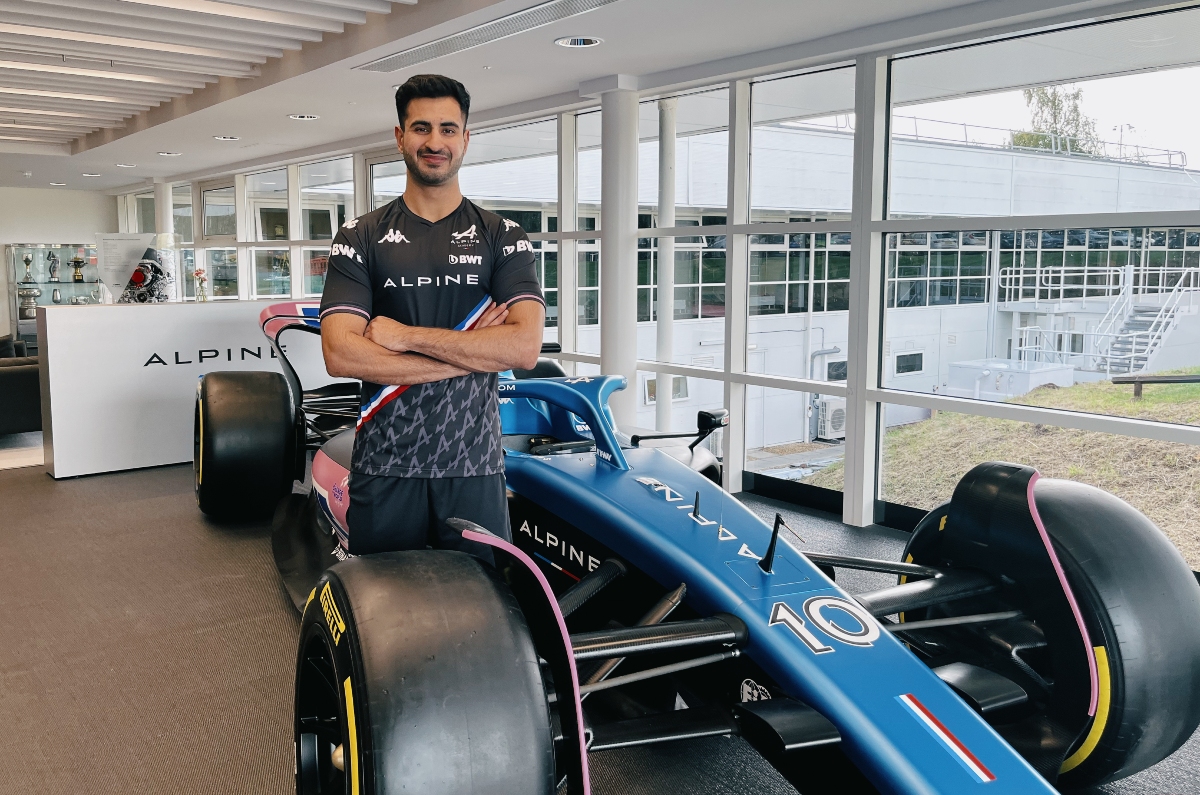
Indian Formula 2 rookie Kush Maini is the latest addition to the Alpine Academy – the F1 team’s young driver development programme. As part of the programme, Maini will benefit from the guidance of the Alpine F1 team as well as the wider Alpine Academy staff, along with access to the team’s state-of-the-art facilities at its Enstone base.
Maini currently 11th in the F2 championship
Being mentored by Mika Hakkinen
Piastri, Zhou former graduates of Alpine Academy
Maini made his single-seater debut in 2016, racing in the Italian F4 Championship. Since then, he’s gone on to race in Formula Renault Eurocup, British Formula 3 and FIA F3. He’s currently competing in his rookie season in FIA F2 with Campos Racing and is being mentored by none other than two-time F1 world champion Mika Hakkinen.
The 23-year-old currently sits 11th in the drivers’ standings. He scored his first-ever F2 podium at the Australian GP Sprint Race. “I am super excited to be joining the Alpine Academy. It’s a dream come true to be associated with a team like BWT Alpine F1 Team, where I can learn and grow to hopefully one day be ready to take the step into Formula 1. A massive thank you to Alpine for believing in me and giving me this opportunity,” said Maini.
Maini joins his F2 rivals Jack Doohan (who is currently reserve driver for the Alpine F1 team) and Victor Martins at the Alpine Academy. From the current crop of F1 drivers, both Oscar Piastri (McLaren) and Zhou Guanyu (Alfa Romeo) are graduates of the programme.
“We are happy to welcome Kush into the Alpine Academy. He is a young talent who we believe has strong potential and will be a great asset to our driver development programme,”said Julian Rouse, BWT Alpine F1 Team Interim Sporting Director.
By: HT Auto Desk | Updated on: 23 Oct 2023, 17:40 PM
As the overall air quality index of the national capital deteriorates, Delhi Environment Minister Gopal Rai has announced that the ‘Red Light On, Gaadi Off’ campaign will make a comeback from October 26. Like the previous editions, the campaign aims to reduce air pollution in the city by encouraging commuters to turn off their engines when waiting at red lights.
A picture from previous edition of the anti-pollution campaign in Delhi. (ANI)
The campaign was first launched in 2020 to reduce vehicular pollution as part of the15-point action plan to curb air pollution in the winter season across the city. A PTI report earlier informed that based on government estimates, the transport sector is responsible for 28 per cent of the PM2.5 emissions in the city. The vehicular contribution also makes up 80 per cent of nitrogen oxides and carbon monoxide in Delhi’s air.
The report also quoted data from the Petroleum Conservation Research Association (PCRA), which shows that if people switch off engines at traffic signals, pollution can be cut down by 13 to 20 per cent.
Rai also informed that the odd-even vehicle rationing system is not being considered at the moment. Under the scheme, private vehicles with registration plates ending in odd numbers ply in the capital on odd dates while those with even numbers ply on even dates.
The Environment ministry has put into force the phase two of Graded Response Action Plan (GRAP) to tackle “very poor” air quality of the city. Special teams will be deputed to identify and inspect local sources of pollution to that the government can work on the root cause of the issue.
The overall air quality in the national capital on Monday morning was recorded in the ‘Very Poor category’, with the Air Quality Index (AQI) at 306 against 302 recorded on Sunday afternoon, as per SAFAR-India.
Called Neo Steer by Toyota, this tech facilitates hand-operated driving and negates the need of foot-operated pedals.
Toyota will have an army of concept and production cars at the upcoming Japan Mobility Show, also known as Tokyo Motor Show 2023. The brand will also showcase NEO Steer – a yoke-style steering device instead of the traditional round steering wheel. This tech will be seen on the recently unveiled Toyota Land Cruiser Prado SUV that will be on display at the event.
Neo Steer by Toyota to debut at Tokyo Motor Show
Will be displayed on the new Land Cruiser Prado SUV
Lexus RZ SUV gets yoke-like steering by wire tech
Neo Steer by Toyota: what is it?
The Neo Steer takes inspiration from motorcycle handlebars by integrating the controls for acceleration and braking into the steering wheel, which eliminates the need for pedals as well. This yoke-style steering facilitates hand-operating driving, which means the SUV can also be driven by drivers with lower limb impairments.
On the yoke, the newly gained controls are mounted on the right side. They replace the acceleration and brake pedals, thus allowing drivers to enter/exit the vehicle with ease.
This is not the first time Toyota has equipped its vehicle from the factory with a yoke-like setup. Toyota’s luxury brand Lexus has introduced the ‘Steer by wire’ tech in the RZ EV SUV, which is essentially a Lexus version of the popular Toyota bZ4X SUV. The steer-by-wire tech on the Lexus RZ is offered as an alternative to the traditional steering wheel and has a similar yoke-style device.
What else is Toyota showing at the event?
Toyota will bring a fresh concept previewing an all-electric Land Cruiser Se SUV. Additionally, there will be the Toyota FT-3E, another born-EV SUV concept, as well as a born-EV sportscar called the Toyota FT-Se. More production vehicles and concepts will be on display at Tokyo Motor Show 2023, which starts later this week.
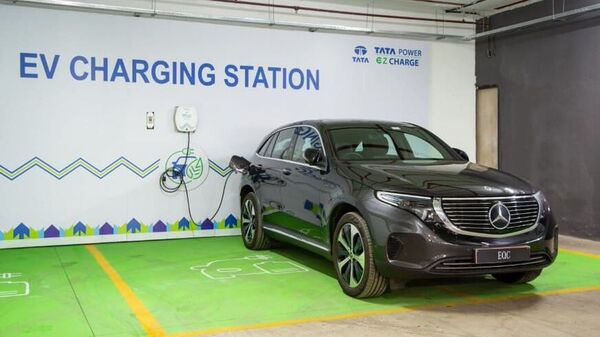
EV charging solutions provider Tata Power is powering electric vehicles of fans who are pulling up to the 2023 Cricket World Cup venues in their battery-powered models. The company has listed out its EV charging stations closest to all the World Cup venues across India. Thanks to the company’s extensive EV charging network, cricket fans are being encouraged to use green mobility.
By: HT Auto Desk | Updated on: 22 Oct 2023, 17:33 PM
A Mercedes EQC electric SUV charges at a Tata Power EZ EV charging station.
Tata Power’s nation-wide EV charging network is spread over 420 cities with more than 59,000 home chargers, 4,900 public and semi-public charging points, and 430 bus charging stations. These charging solutions are present at diverse and strategic locations across the country, providing easy accessibility to those in need.
ATata Power charging facility is located at The Oberoi Mumbai at Nariman Point, which is just 1.6 kilometres far from the Wankhede Stadium in Mumbai. Similarly, a charging station is located two kilometres away from the Arun Jaitley Stadium in Delhi, 450 m away from the M Chinnaswamy Stadium in Bengaluru and 1.1 kilometres away from the Eden Gardens in Kolkata, 2.5 kilometres away from the M.A. Chidambaram Stadium in Chennai, 1.5 kilometres away from the Rajiv Gandhi International Stadium in Hyderabad, to name a few.
The company says that it has been strategically installing EV charging points at diverse locations across the country to build an extensive and reliable network. All these charging stations are open 24 X 7 and monitored real-time by the Network Operation Centre located in Mumbai.
EV drivers can also navigate to their closest charging point using the EZ Charge app, book their charging slots in advance and pay with the EZ Charge card. “The hassle-free EZ Charge experience will ensure that fans can make the journey to witness their favourite teams play, knowing that their EVs will have the swift and EZ Charge they need,” said the company.
The Curvv EV will launch before the ICE model next year.
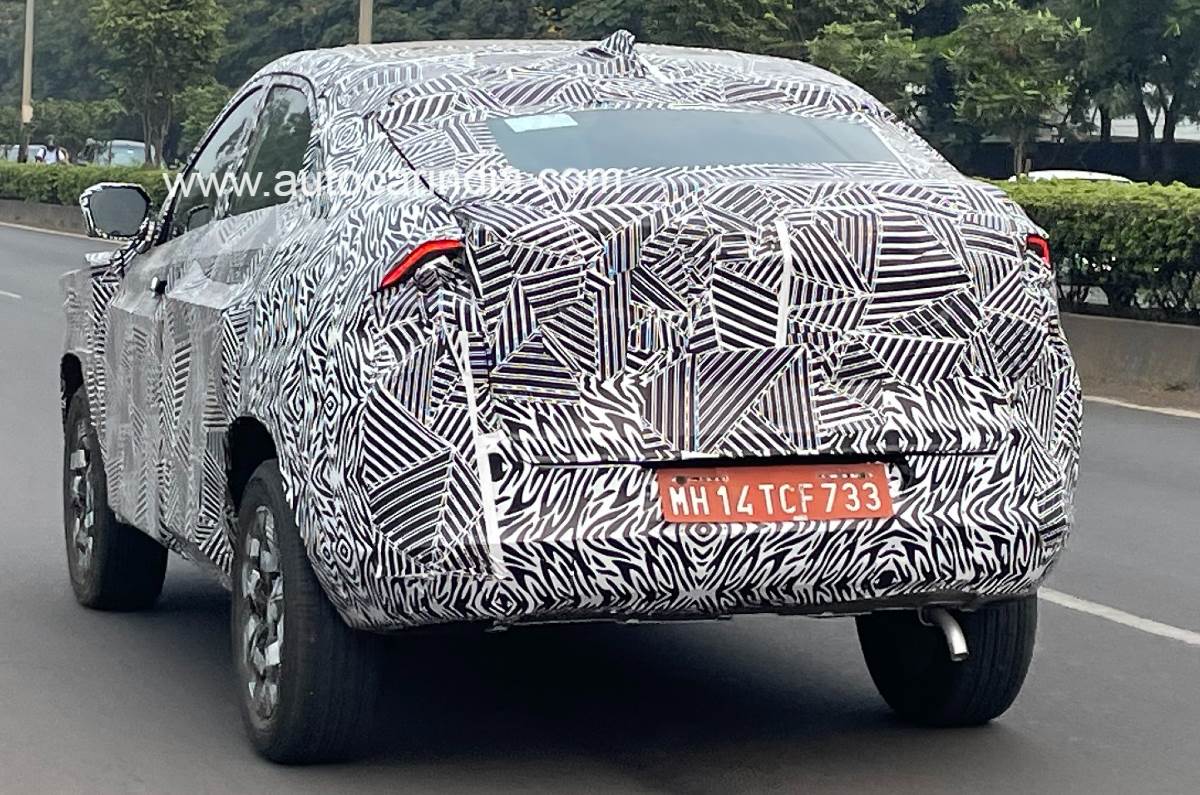
Over the past few months, the Tata Motors Curvv has been spied testing with heavy cladding to mask the shape of the vehicle. However, new spy shots now show the coupe-esque silhouette of the bodyshell.
No rear quarter glass present, confirms coupe shape
Turbo-petrol engine still undergoing development
Curvv SUV could get a CNG powertrain
Tata Curvv design
The Curvv test mule in the spy image reveals a few new details, particularly the sloping rear roofline and absence of a rear quarter glass. This confirms the notchback shape that was present on the Auto Expo display vehicle earlier this year. The sloping roofline gives it a unique look when compared to the other SUVs that it will rival.
The alloy wheels are different from the ones that were on the Auto Expo display vehicle, however, this could just be for testing purposes. The SUV retains the same muscular proportions that were shown in the concept vehicle with the squared-off wheel arches and moulding on the side to give it an overall rugged look.
Tata Motors has incorporated the design language from the Curvv into its recent launches. This is visible on exterior bits such as the front LED strip, vertical headlamp positioning and even the sculpted bonnet. In the spy shots, the rear LED strip is not visible, but slim tail-lights can be seen on either side of the boot.
On the inside, the two-spoke steering wheel, new infotainment screen and digital driver’s display have also been adapted from the Curvv concept shown earlier and we expect the Curvv to retain these elements upon launch.
Tata Curvv powertrain
In spite of the exhaust pipe being visible, we cannot say what powertrain is being tested. The vehicle in the spy shots could be testing out the new turbo-petrol unit, a CNG powertrain, or it could even be an EV. Tata Motors has used fake exhaust pipes on EV test mules in the past.
Recently, at the launch of the Harrier and Safari facelifts, Shailesh Chandra, managing director of Tata Motors Passenger Vehicles Ltd and Tata Passenger Electric Mobility Ltd, stated that the launch of the new petrol engine will take a while and, according to our sources, this was due to the development of the petrol motor proving to be a challenge.
In our previous report, we noticed a CNG button in a design sketch that was released by Tata Motors officially, hinting that the Curvv could also get a CNG powertrain.
Tata Motors had stated that they would launch the Curvv EV first, followed by the ICE models.
Infotainment systems have become a vital part of cars now. In the past few years, the infotainment system has developed significantly. Because of this, they have become an important factor when making a purchase decision when someone is buying a new car. However, there are still many old cars on the road which have a pretty basic infotainment system.
By: Paarth Khatri | Updated on: 21 Oct 2023, 17:35 PM
The infotainment system measures 9 inches so it would be able to fit most cars. However, additional fitment might be required depending on the vehicle.
Yes, the after-market is full of infotainment systems but there are very few well-reputed companies that are offering an infotainment system. One such company is Uno Minda, they are best known for supplying parts to OEMs and they have been doing this for several years. Now, they are entering the market with a new infotainment system of their own. It is called WTUNES-649TAACP and yes it is a very typical infotainment name. However, we got to test this new system and here is our review of it.
Uno Minda WTUNES-649TAACP: Runs on Android
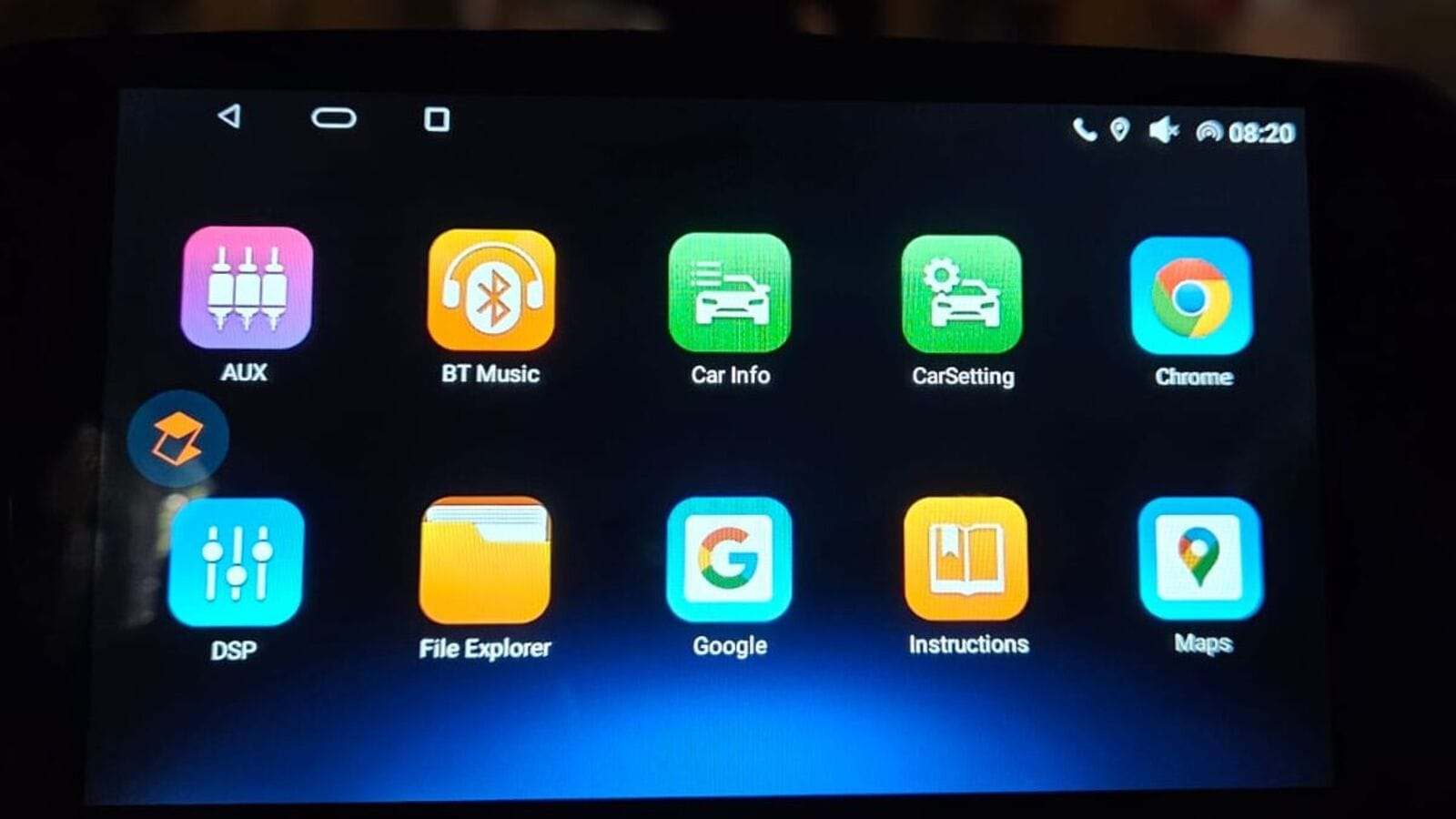
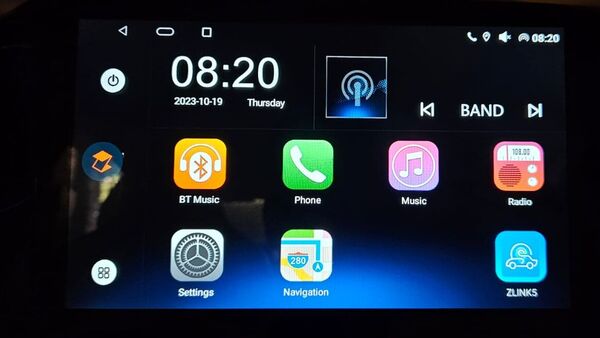
The infotainment system measures a good 9 inches so it is still within the driver’s reach. The system runs on an Android system which means that it can possibly run any application that can be used on an Android phone. It comes with a Play Store so the applications can be updated as well as new applications can be installed using Wi-Fi. Apart from this, there is split screen functionality on offer as well. Uno Minda uses a T5 processor so there are no lags or stutters throughout the user interface. It also has 4 GB RAM and 64 GB onboard storage. This means that it can multi-task quite easily and the on-board storage helps in case the driver wants to store a few media items on the system itself.
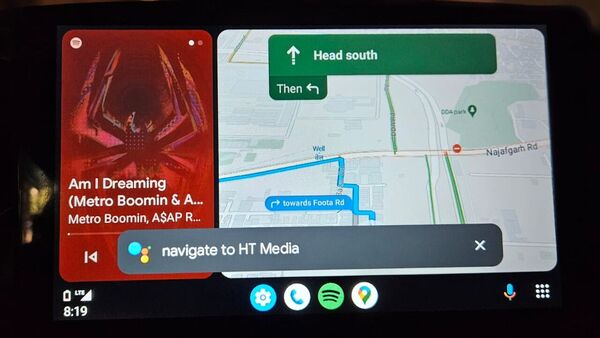
The latest update of Android Auto can run on a split screen. There can be Google Maps on one side and Spotify on the other. There are voice commands on offer as well.
Uno Minda WTUNES-649TAACP: Wireless Android Auto & Apple CarPlay
Honestly, most people will be using Android Auto or Apple CarPlay on the infotainment system. The best thing about the infotainment system is that it comes with Wireless Android Auto and Apple CarPlay. This means that you need to set it up just once and the next time you start the vehicle, the Android Auto or Apple CarPlay is automatically connected and is ready to go. I tested only Android Auto and it worked fine for the most part, I only faced two issues. The first one is that the touch is not as responsive as the OEM systems while the other one is that the Google Maps do not change the theme automatically. Because of this, the light theme does get annoying while riding at night and vice versa.
Moreover, the manufacturer has configured the system to turn on the hotspot automatically. This might look like a small thing but there are few aftermarket players in which the driver needs to turn on the hotspot manually.
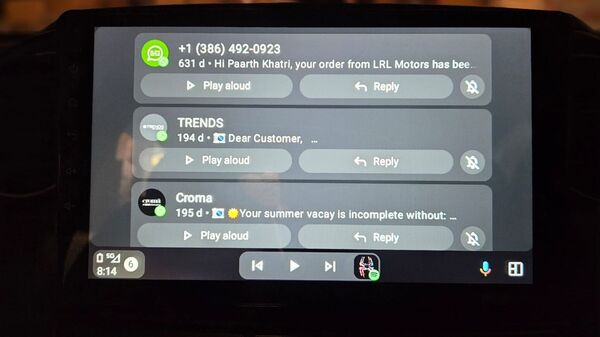
Android Auto also shows the notifications and the driver can hear them and reply to them as well. The music application shown below in the form of a bar so that the driver can change the music anytime he or she wants.
Uno Minda WTUNES-649TAACP: Audio quality
The manufacturer has equipped the infotainment system with a 36-band equalizer which also has presets. The audio quality of the system is also quite good. It also supports an amplifier and a sub-woofer, in case the person plans to fit them. Apart from this, there is also a setting for fader and balance.
Uno Minda WTUNES-649TAACP: Features
Uno Minda has added several features to the infotainment system. It comes with support for the 360-degree camera which will make parking in tight spots very easy if you get the cameras installed. You can also just use the front and rear cameras, it is not necessary to have all four cameras. Apart from this, the infotainment system also comes with in-built support for high-definition cameras. If your car has controls on the steering wheel then that can also connect to the system.
The infotainment system is based on Android so it can theoretically run most of the applications that are available on Google Play Store. There is FM/AM on offer as well.
Then there are some clever features such as the volume automatically lowering when the reverse gear is engaged. Moreover, the brightness automatically turns down and the backlit behind the buttons automatically turns on when the headlamps are switched on. The infotainment system comes with two USB ports that can be used to charge the mobile phone, connect a USB stick to transfer stuff or connect Android Auto or Apple CarPlay. However, we did notice that the battery would start falling while using these USB ports because they are not rated for high output.
Uno Minda WTUNES-649TAACP: Verdict
The MRP on the box of the unit is ₹34, 990. However, depending on the seller, there is a possibility that a person ends up paying less. One important thing to note is that the fitment of the system is not very simple. I had to get new housing for the AC vents so that the infotainment system would fit. However, this depends on the car that the person is using. Then there is the additional cost of the panel and fitting that a person might have to consider. Having said that, fitting an infotainment is a one-time job so if you are planning to keep a car for a long time and want the convenience of Android Auto or Apple CarPlay, the WTUNES-649TAACP from Uno Minda is a great option.
It was an all-Ducati podium, with Francesco Bagnaia and Fabio Di Giannantonio second and third, respectively.
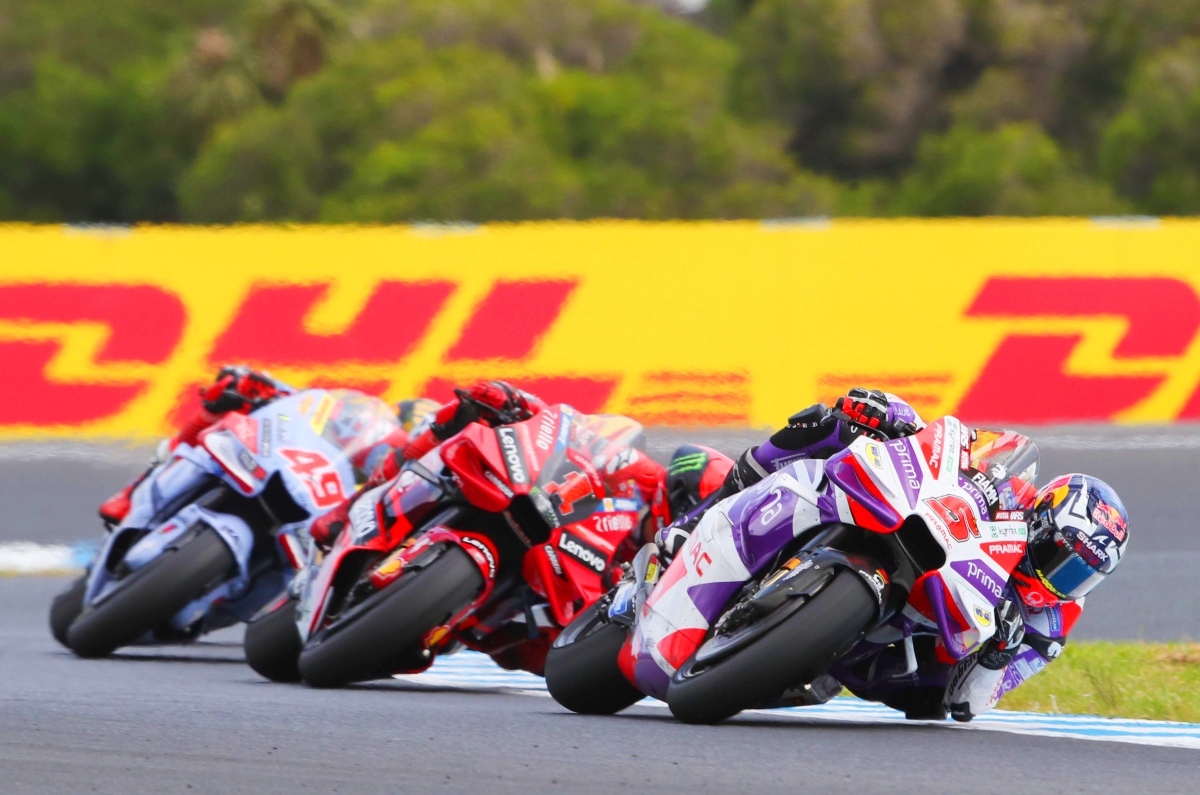
Phillip Island never disappoints and this year’s Australian GP victory seemed to be a foregone conclusion right until some last lap drama surrounding Jorge Martin. With his pace dropping significantly due to fading grip from a worn soft rear tyre, teammate Johann Zarco seized the opportunity and took his first-ever MotoGP victory.
Current championship leader Francesco Bagnaia finished second and Fabio Di Giannantonio took his first-ever MotoGP podium by rounding out the podium.
Bagnaia leads by 27 points
Martin finishes fifth
Zarco takes first win since Valencia 2016
Martin’s tyre troubles fortuitous for other Ducatis
For much of this race, Martin led with an over 3 secs advantage to the rider behind. But ultimately his fading soft rear tyre just wasn’t able to hold up and his teammate Zarco took the win.
Current world champion Bagnaia was also quick to inflict as much damage as he could to Martin’s title aspirations and followed Zarco through to take second place. Fabio Di Giannantonio took his first MotoGP podium, despite not having a confirmed seat on the grid next year, on the year-old Desmosedici GP22.
2023 MotoGP world championship standings
As it stands today, Bagnaia still leads the standings with a 27 point advantage over Martin with Bezzecchi still in third place overall.
Next weekend, the MotoGP championship heads to Thailand so keep watching this space for the latest updates.
Hero MotoCorp recently announced a host of offers across its two-wheeler range for the festive season. Under the Grand Festival of Trust (GIFT), the company has rolled out discounts, special finance schemes, incentives and more. Moreover, each Hero two-wheeler gets individualised offers that can be availed at the dealership at the time of purchase.
By: HT Auto Desk | Updated on: 20 Oct 2023, 18:23 PM
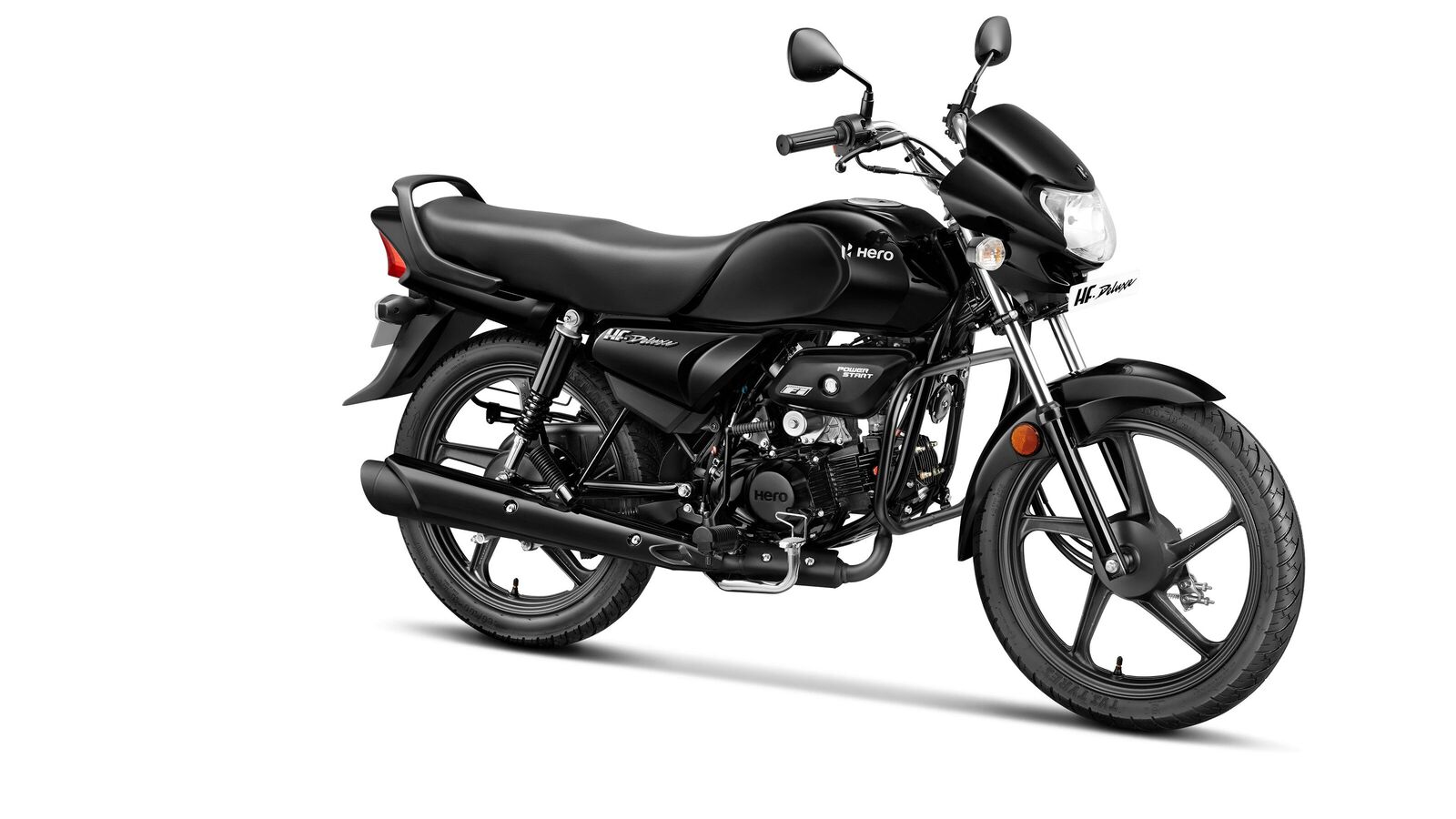
The 2023 Hero HF Deluxe is available with a cash discount and exchange bonus, while customers can avail the ‘buy now, pay later’ scheme as well
So, if you are in the market to bring a new Hero motorcycle or scooter home. Now would be a good time to consider the same. With popular selling models like the Hero HF Deluxe, the company has rolled out several special offers to make it more value-friendly this festive season. Let’s take a look at the offers available on the 2023 Hero HF Deluxe.
Under Hero GIFT, the 2023 Hero HF Deluxe commuter motorcycle can be had with a cash discount of up to ₹2,100 and an exchange bonus of ₹1,000. The two-wheeler giant has also extended its ‘Buy Now, Pay In 2024’ scheme to the motorcycle, which allows customers to purchase the bike now, while EMIs will begin from next year onwards.
Furthermore, Hero customers also get finance options with interest rates starting from 6.99 per cent. The company has also made cash-based EMIs possible for convenient repayment, while there are Aadhar-linked loan schemes for easy financing.
The Hero HF Deluxe continues with the same mechanicals powered by a 97.2 cc single-cylinder engine and is one of the most affordable motorcycles on sale
2023 Hero HF Deluxe: What you need to know
The Hero HF Deluxe is one of the most popular 100 cc motorcycles and contributes to a major chunk of the brand’s overall volumes after models like the Splendor and Passion series. The HF Deluxe is fairly loaded on the feature front with alloy wheels, tubeless tyres, a USB charger and i3S technology for achieving higher fuel efficiency. The bike also gets a five-year warranty and five free services as standard.
Power on the Hero HF Deluxe comes from the familiar 97.2 cc single-cylinder, air-cooled engine tuned for 7.9 bhp at 8,000 rpm and 8.05 Nm of peak torque at 6,000 rpm. The motor is paired with a 4-speed gearbox. The 2023 edition was updated to meet the latest BS6 Phase 2 norms bringing an OBD2 device for real-time emission data and E20 fuel compliance. Other components include telescopic front forks, dual shocks at the rear, drum brakes at either end and a halogen headlamp.
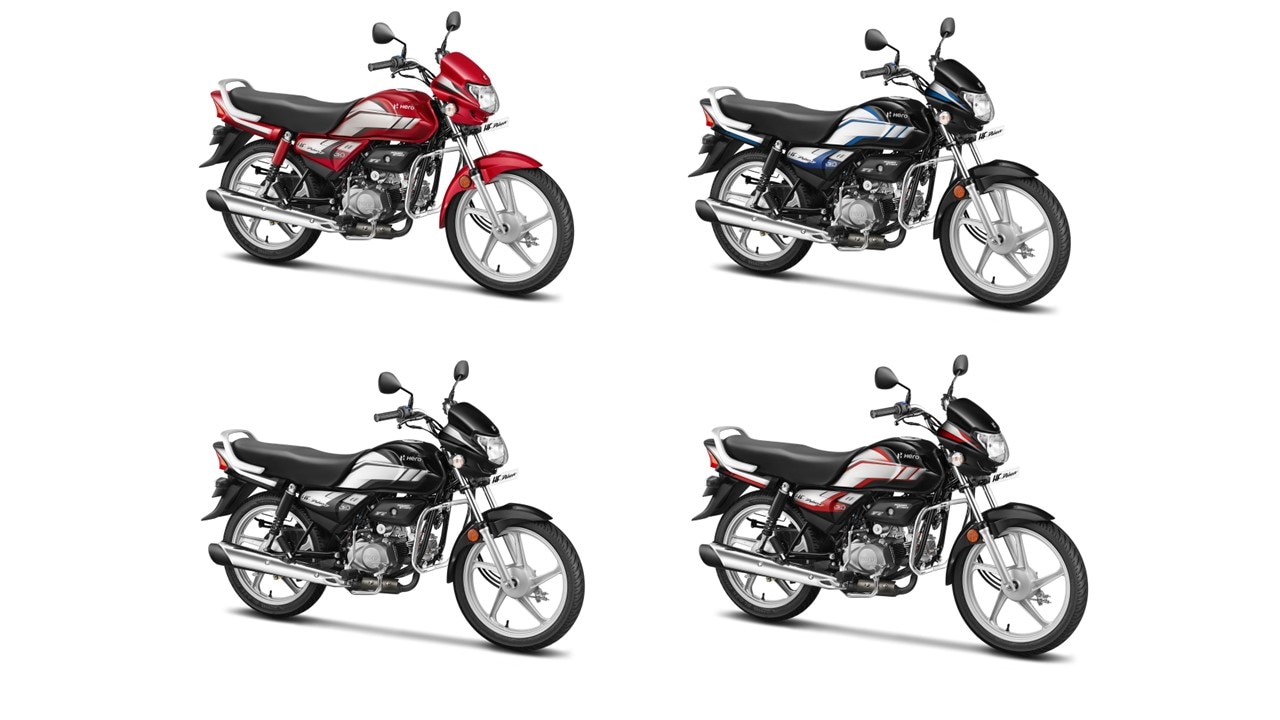
The 2023 Hero HF Deluxe is offered with a host of colour options and the bike was recently launched in the Black Canvas Edition with new colour schemes – Nexus Blue, Candy Blazing Red, Heavy Grey with Black and Black with Sports Red. Prices for the HF Deluxe start at ₹59,998, going up to ₹68,768 (ex-showroom, Delhi), which makes it one of the most affordable motorcycles on sale in the country. The commuter takes on the Honda Shine 100 and Bajaj Platina in the segment.





.jpg&c=0 "BMW X4 price, features, M40i, performance and design")
.jpg&c=0)
.jpg&c=0)



.jpg&c=0 "Toyota Land Cruiser Prado price, India launch details, yoke steering wheel")
.jpg&c=0)