New Himalayan 452 gets a liquid-cooled engine and new chassis that will also underpin future models.
We’ve already brought you engine specifications for the new Himalayan 452 as well as how much it weighs. Now we can report that the company will launch the Himalayan 452 on November 7 in India.
We will be riding the bike just a week before the launch so stay tuned for our reviews.
There’s already a lot that’s known about the new Himalayan 452 including the fact that its going to get all-LED lighting, a new instrument console, a USD fork and most likely an extensive range of accessories.
The biggest talking point is the brand-new liquid-cooled, 451.65cc, single-cylinder engine that’s rated for a peak power output of 40hp at 8,000rpm. This will be RE’s first liquid-cooled mill and to hear how it sounds, tap here. Interestingly, the peak power output and the rpms its made at is the exact same as the slightly smaller Triumph Speed 400.
The top-spec Himalayan 411 retails for Rs 2.28 lakh (ex-showroom, Chennai) and when this new 452 model is launched, expect it to be positioned near the Rs 3 lakh mark.
As the Audi A4 2021 gets ready for its debut in India, how much have things changed and how many of these changes are for the better? I got a test drive unit in the last few days of last year to find out if Audi’s big present for year 2021 is capable of carrying forward A4’s popularity in the luxury sedan segment and if it can indeed keep rivals mostly at bay.
And it was quite a revelation indeed. Let’s begin with the experience behind the wheel and behind the front seats.
Drive or be driven, A4 checks most boxes in bold font
The 2021 A4 is a facelift and we will come to the face and the lift in just a bit. Under the hood though is the debut of the 2.0-litre turbocharged petrol motor in this car and it belts out 190 hp and has a tantalizing 320 Nm of torque. For those who may still be wondering, no, this Audi too has no diesel on offer.
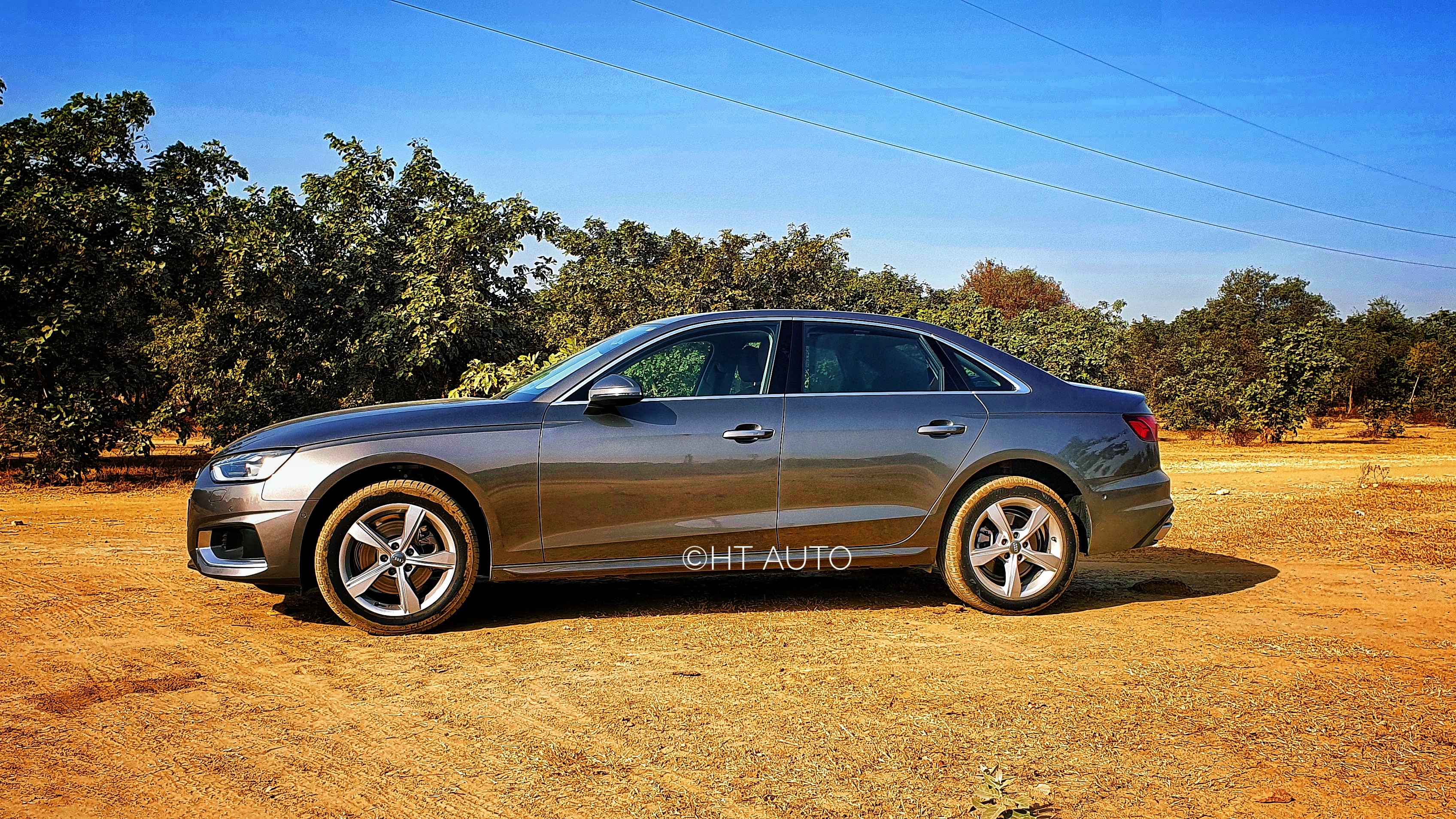
A4 from Audi has proportions that blend a classy look with a sporty touch. (HT Auto/Sabyasachi Dasgupta)
Get inside and get it to the drive mode and it is amply clear – yet again – that here is a sedan with the ambitions of being even more sporty than what the numbers would suggest. There is a nice humdinger aura around the A4 as it makes its way forward on city roads, the seven-speed dual-clutch automatic gearbox working in tandem with the TFSI engine to deliver a constant stream of momentum.
And once the city skylines begin to fade, the promise of a more sporty drive begins to permeate.
Now the A4 has never really been the sportiest executive sedan around and the latest model isn’t too keen on going down this road either. But in the interest of offering something to he or she who may choose to drive it around, it does offer a bit more bang – Audi claims the new A4 can fire to 100 kmph in just a fraction over seven seconds and it is a claim with weight.
That A4 can sprint a bit is quite evident in the right drive mode but what it doesn’t lose out on while trying to be an Usain Bolt is its ability to also be Mo Farah. But does it really bolt to be called Bolt? Not quite. The sedan does have a sense of purpose around it but it won’t really win many drag races because it continues to prioritize balance over sheer speed thrills. Traction control on or off, it swerves ever so slightly when the pedal is slammed from standstill on a straight line, realizing a micro-millisecond later what it is being asked to do – run and run as hell.
Ideally, I would have liked a bit more feedback from the steering wheel at high speeds because it mostly remains rather muted once one picks up pace. It is well-weighted but lacks a bit of character.
No such complaints on the quality of the drive though as I remained firmly in the seats even when taking a sharp turn or a sudden U, with body roll to a minimum. The suspension is also typically Audi and the A4 gobbles speed breakers while letting in some of the bigger road craters at moderate speeds. And while suspension set ups in cars in this segment usually tend to be on the slightly softer side, the A4 could have ever so slightly gone a bit more towards the middle line.
Jump to the back seats though and it is a fine ride back home.
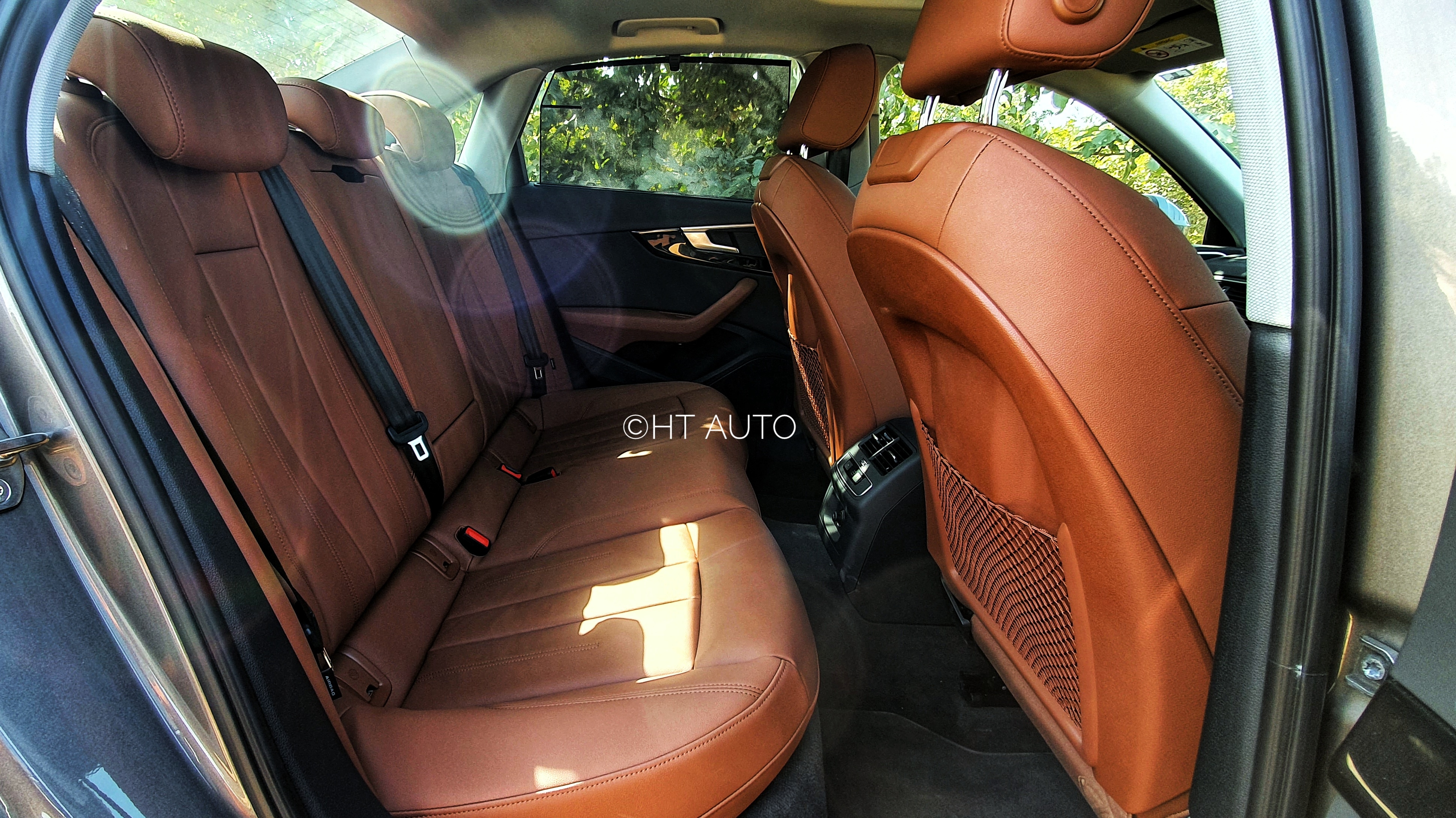
The recline of the rear seats are such that while the seating position is upright, it isn’t uncomfortable. A button for recline adjustment could have been great though. (HT Auto/Sabyasachi Dasgupta)
The rear seats are generous, plush and offer decent amount of space – for two. The space for legs and knees is commendable even if a tall driver is at the front, but the under-thigh support is just about adequate. The head room too is decent and the recline degree is such that even though you won’t be sitting uncomfortably upright, you will get breezy view of the surroundings. More on the cabin a bit later though.
For now, the style statement.
A4 gets botox treatment. And it works
The A4 is an executive luxury sedan and it is just great how the car has blended its stately looks with a profile that also appeals to those looking for something appealing. The 2021 A4 gets a number of visual updates but all of the changes appear to continue to enhance its bold-not-brazen exterior character.
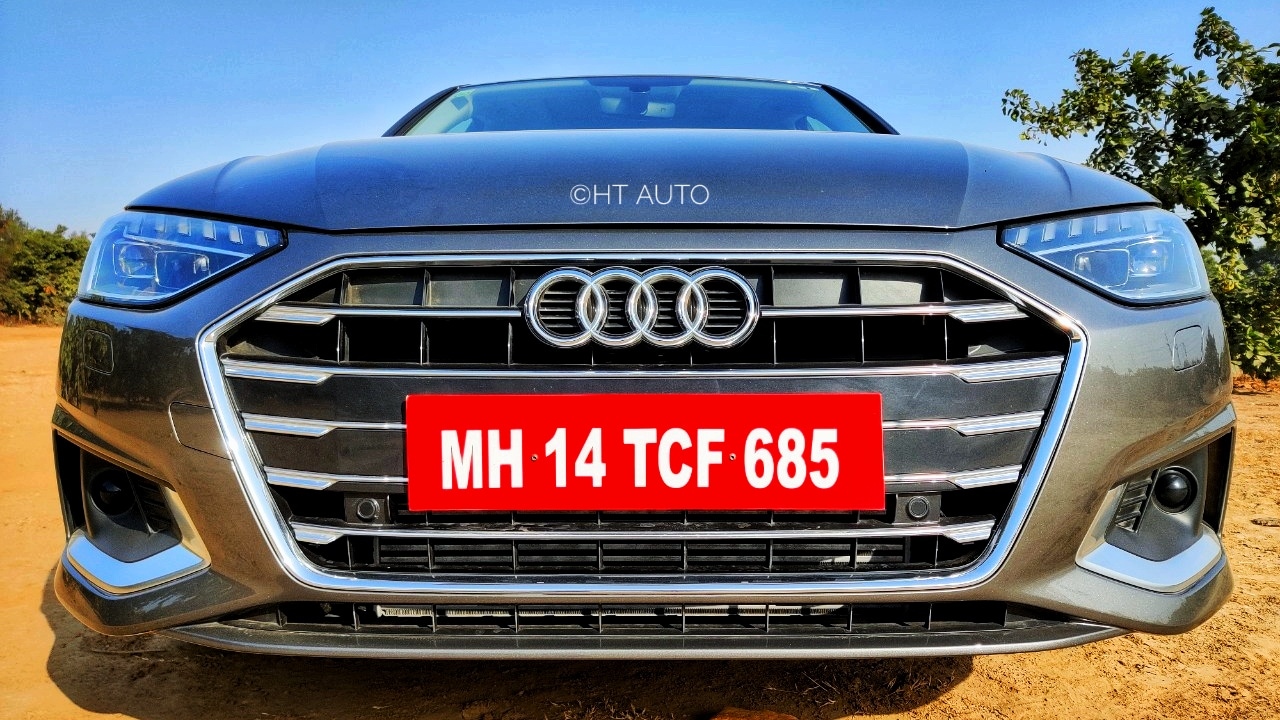
The single-frame front grille is absolutely new – it gets a chrome boundary line and chrome horizontal slats – and is now wider than before, underlined by a reworked grille. The LED head light unit is also sleeker than in the preceding model and now integrates the pattern turn lights. There is a bit more chrome on the fog lamp enclosing while the bonnet now gets two stretched out character lines on either side and is more sculpted – almost curvaceous – than before.
The imposing single-frame front grille is the defining element of the new A4’s face. (HT Auto/Sabyasachi Dasgupta)
My test unit sat on 17-inch alloy wheels but there is an option to get a larger 18-inch set as well. With either option though, the A4 looks smart from the side and, somehow, has a more stretched out appearance. There are body lines on the side doors and the windows are decently large and enclosed in a chrome casing.
Interestingly, the door handles now pull slightly upwards rather than outright straight out. One major grouch here though is that the doors have to be almost slammed with a sense of impunity because a congenial push is going to set the (door ajar) alarms ringing – literally. This is the most annoying when seated inside and pulling the doors in.
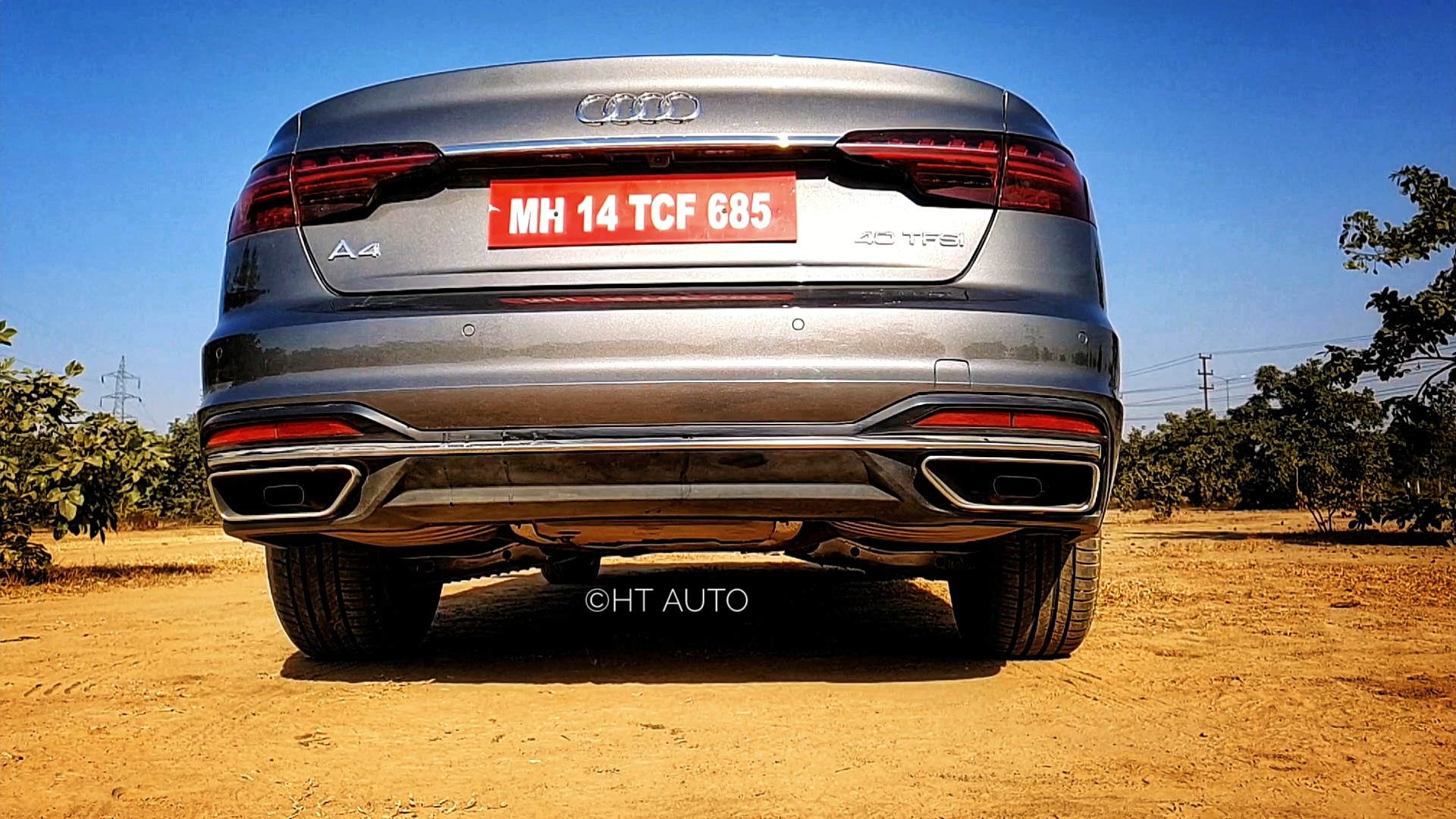
Out and over to the rear is where the re-designed tail lights are at and the slight curve up over the boot lid, the chrome exhaust tips and the grey skid plate all add to a very attractive posterior.
The A4 sedan has a clean rear profile with chrome only at a minimal. (HT Auto/Sabyasachi Dasgupta)
Classic cabin chronicles
The cabin of the new A4 is actually where the bulk of the updates are at. Step inside to see how the car has stepped away from its predecessor.
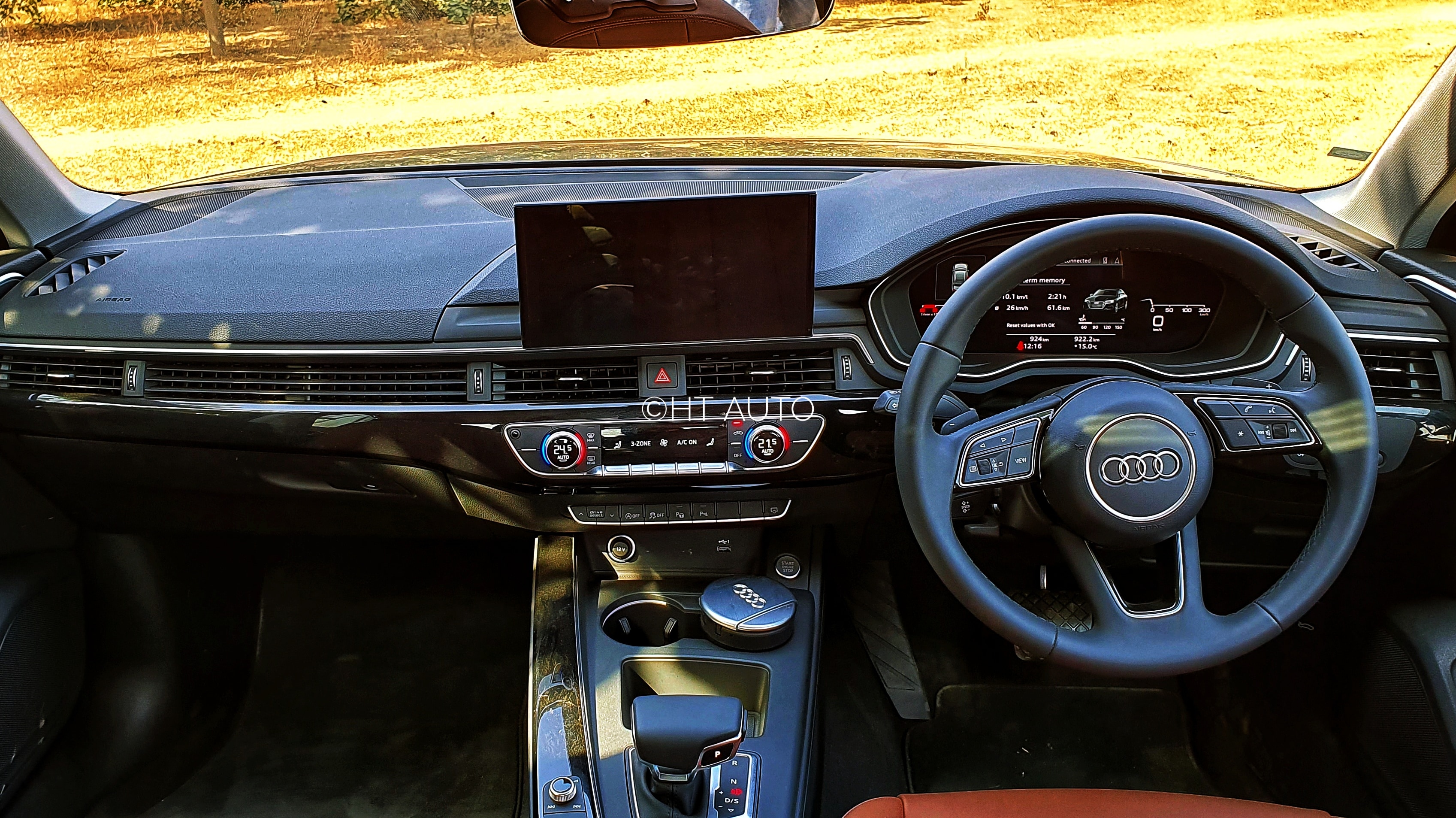
The standalone 10.1-inch main infotainment unit is just what I want to see in every Audi car – yes, including the Q2 which has a toy-like 8-inch-screen – because it is just so a) vivid, b) responsive and c) great to look at. Frankly, I really don’t mind that there is no second screen for air-conditioning because the physical dials just below the touchscreen work well to ensure the three-zone climate control is simple enough to set and forget.
The standalone 10.1-inch infotainment system sits much like a crown on the dashboard of the new Audi A4. High-quality materials give the A4 a premium cabin appeal. (HT Auto/Sabyasachi Dasgupta)
Between the AC dials are a number of switches for functions such as selecting drive modes, auto ignition cut off, traction control, park assist and for proximity sensors. And still below is a 12V charging socket and a USB point. There is a storage space for a phone here but one can also make use of wireless charging in the space under the central armrest.
The center console itself is done well in black and piano black finish and while it can be a dust magnet, it looks really premium if well maintained. The gear unit is well within reach – not something I can say about the drive select button – and has the two cup holders as well as space to secure the car key.
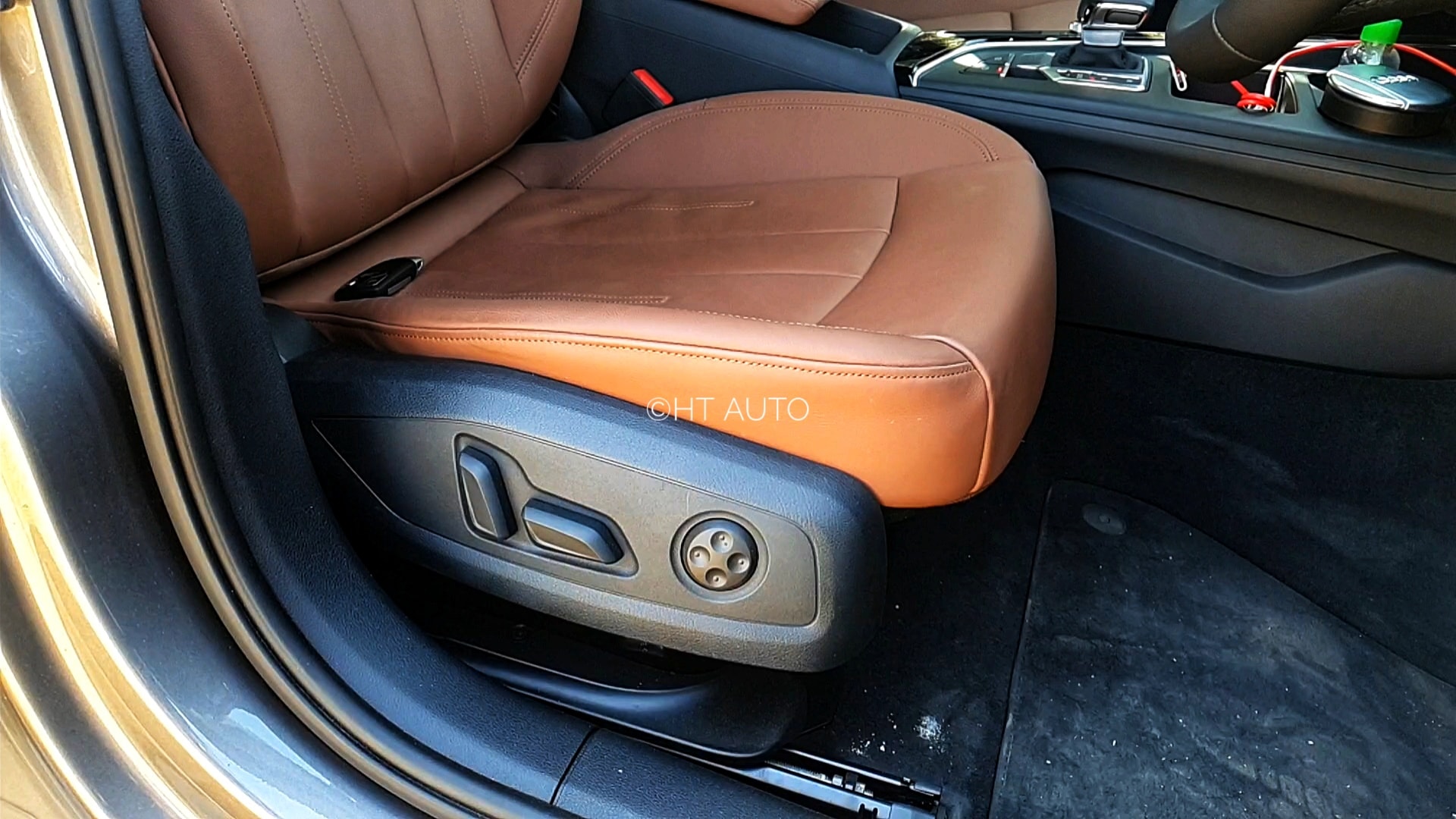
Knick-knacks aside, the cabin is actually defined by the soft-touch materials all around – from the dash to the side doors, and the nicely cushioned seats come with high-quality stitching. It is just so important for a premium car to look and feel premium, and thankfully, Audi has not cut corners in this regard. Obviously, the front seats can be electronically controlled for position, recline and support, while the steering wheel can be manually adjusted for rake and reach.
Buttons and switches to electronically adjust front seats is standard in this segment of cars. (HT Auto/Sabyasachi Dasgupta)
The A4 also gets a regular-sized sunroof which can be electronically controlled to allow more light to flow in to mix and match with the beige upholstery in this review car unit.
The same sense of pleasing aesthetics continues over at the rear with the same level of premium quality on the side doors and seat cushioning. The floor hump is quite high which means the third person in the middle is going to struggle but three is often a crowd anyway. Two at the back won’t have anything much – except perhaps the lack of any AV unit – to complain about.
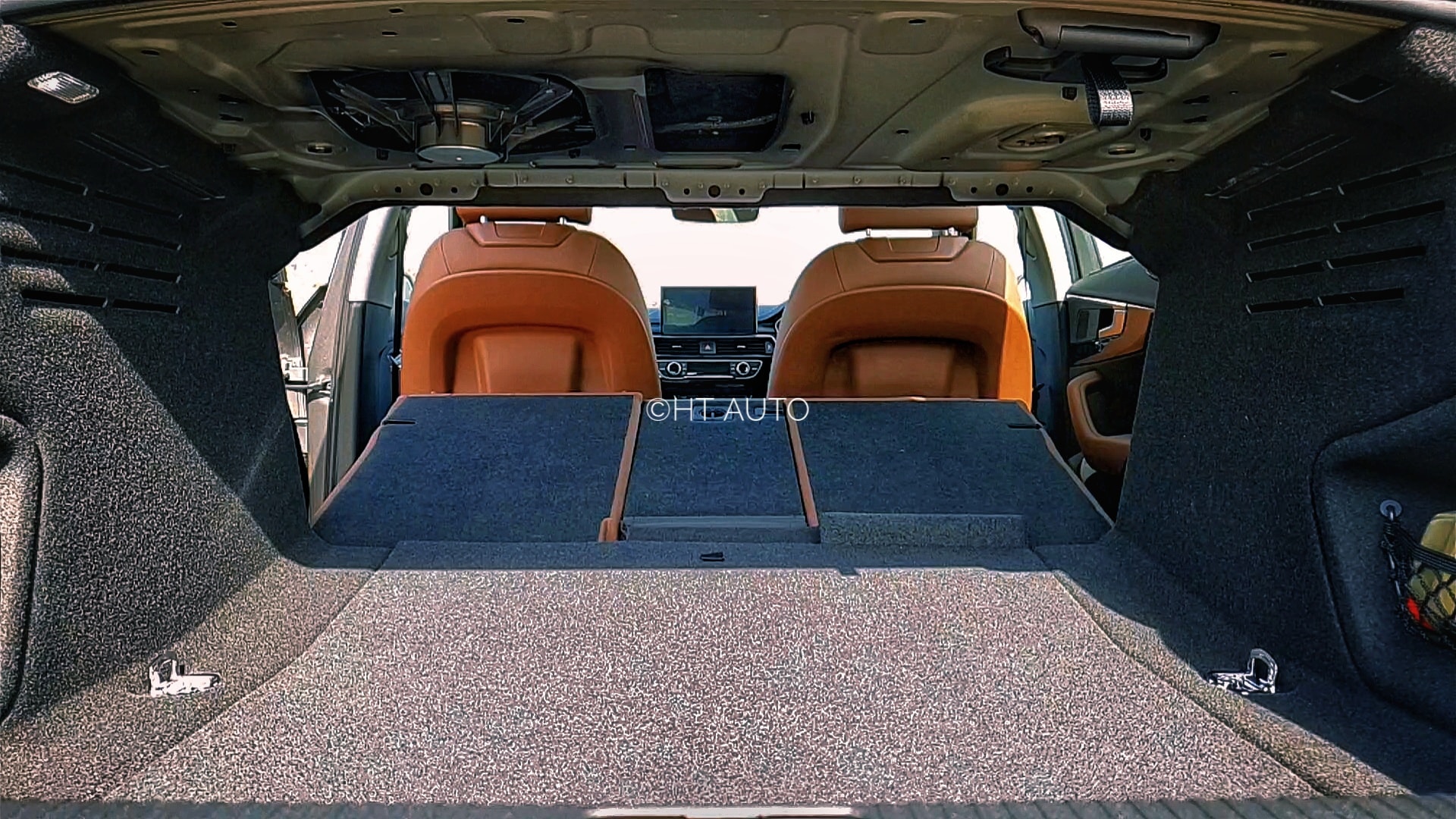
If packing in additional luggage emerges as a concern though, don’t fret. The rear seats fold down in 60:40 split for additional options in a near-flatbed layout. Just that these have to be done from within the cabin and there is no switch in the trunk which also misses out on a 12v charging point and instead, gets four luggage hook and a shopping bag hook to keep things in place.
The rear seats can be folded together or in 60:40 ratio for more luggage storage options. (HT Auto/Sabyasachi Dasgupta)
To buy or not to buy
The A4 from Audi has been a stellar performer for a number of reasons. It has pleasing visual aesthetics, a spacious cabin that is also premium and a drive attribute that is a nice balance between stately and sporty. Now, the 2.0 litre engine and the seven-speed automatic gearbox only go to add to the abilities of the A4. Add to it enhanced looks and updated cabin and there is no reason why Audi’s latest in 2021 shouldn’t make a whole lot of sense.
The only two points of note is a) pricing and b) rivals. The competing field is one that is packed with very capable performers as well, each making a solid claim to find a place in your garage. The much-acclaimed Mercedes-Benz C-Class, although slightly aged, and 3 Series from BMW have their own sets of strengths while the Jaguar XE is easily the most youthful of the lot, at least to drive. Then there is the new Volvo S60 that is ready for a March launch with the promise of more spunk in drive and the same mile-long list of safety highlights.
If Audi prices the A4 well, somewhere in the region of a starting tag of ₹42 lakh (ex showroom), it could once again become a disruptive force in its segment.
Arjun S Nair extends his lead in the JK Tyre Novice Cup after adding two more wins to his tally.
Dark Don Racing’s Arya Singh scored three LGB Formula 4 race wins as the 2023 JK Tyre National Racing Championship (JK NRC) resumed with Round 2 at the Kari Motor Speedway. The Royal Enfield Continental GT Cup, meanwhile, saw two different winners as Md. Samuel Zubair and Jagadeesh Nagaraj won a race each.
LGB Formula 4
The LGB Formula 4 category features made-in-India single-seaters, powered by a 1,298cc Suzuki engine. Singh kicked off Round 2 on a strong note, scoring two back-to-back wins on the opening day. He fended off his Dark Don Racing teammates to win Race 3 as well, but couldn’t repeat that feat in the final race, which followed the reverse grid format.
Starting from ninth on the grid, TS Diljith carved through the field to win the race ahead of Tijil Rao and Singh. This means Dark Don Racing took a clean sweep in the category.
Results
Race 1
1. Arya Singh (Dark Don Racing) 21mins 21.356secs
2. Diljith TS (Dark Don Racing) – 21mins 22.914secs
3. Ruhaan Alva (MSport) – 21mins 26.671secs
Race 2
1. Arya Singh (Dark Don Racing) – 22mins 09.690secs
2. Diljith TS (Dark Don Racing) – 22mins 10.104secs
3. Ruhaan Alva (MSport) – 22mins 11.147secs
Race 3
1. Arya Singh (Dark Don Racing) – 19mins 25.449secs
2. Tijil Rao (Dark Don Racing) – 19mins 29.336secs
3. T.S. Diljith (Dark Don Racing) – 19mins 29.549secs
Race 4
1. T.S. Diljith (Dark Don Racing) – 27mins 43.905secs
2. Tijil Rao (Dark Don Racing) – 27mins 48.538secs
3. Arya Singh (Dark Don Racing) – 27mins 49.901secs
JK Tyre Novice Cup
Carrying on the strong pace they showed in Round 1, both Arjun S Nair and Neythan McPherson won races in the Novice Cup category. Championship leader Nair claimed comfortable wins in the first two races, but met his match in McPherson in the final race, which went down to the wire.
Results
Race 1
1. Arjun S Nair (Momentum Motorsports) – 15mins 04.770secs
The Royal Enfield Continental GT Cup features a grid of both amateur and professional racers competing astride race-prepped Continental GT-R650s. In Race 1, Md Samuel Zubair outperformed several professional riders to score his first win in the championship.
Jagadeesh Nagaraj fended off pressure from Ullas Nanda and Abhishek Vasudev to win Race 2.
Results
Race 1
1. Md. Samuel Zubair – 13mins 45.394secs
2. Jagadeesh Nagaraj – 13mins 45.755secs
3. Abhishek Vasudev – 13mins 45.860secs
Race 2
1. Jagadeesh Nagaraj – 13mins 38.407secs
2. Ullas S. Nanda – 13mins 39.060secs
3. Abhishek Vasudev – 13mins 39.112secs
JK Tyre 250 Cup
Round 2 also hosted the JK Tyre 250 Cup race, with competitors racing on Suzuki Gixxer 250cc bikes. Sarvesh Balappa remains undefeated so far this season after claiming his second win in as many outings. Aldrin Babu and Ashish Patel completed the podium.
Bookings for the ePluto 7G Max are already open across India.
By: HT Auto Desk | Updated on: 08 Oct 2023, 17:00 PM
1/6
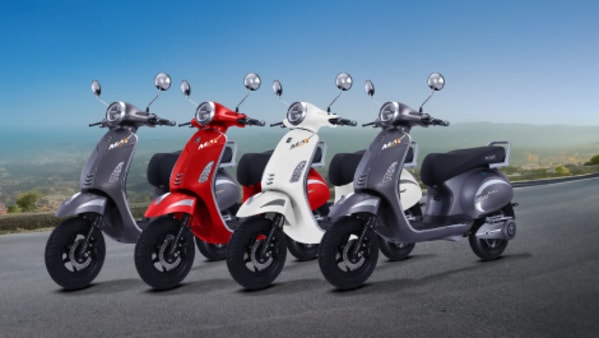
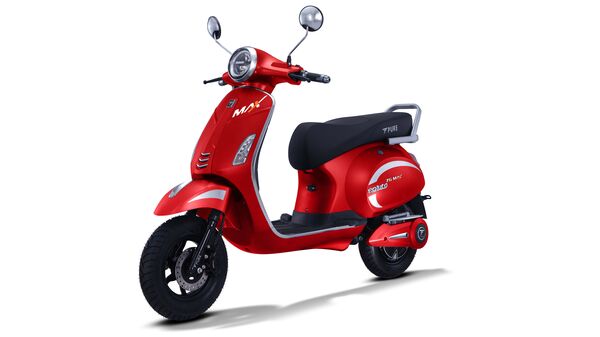
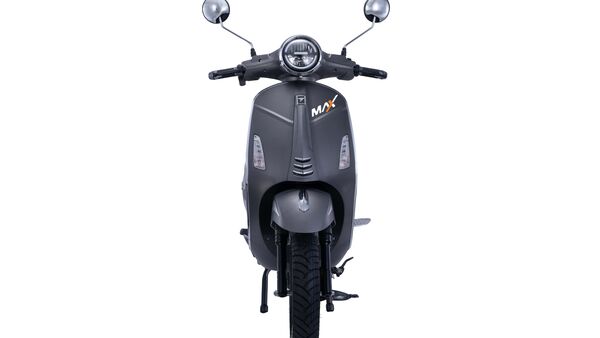
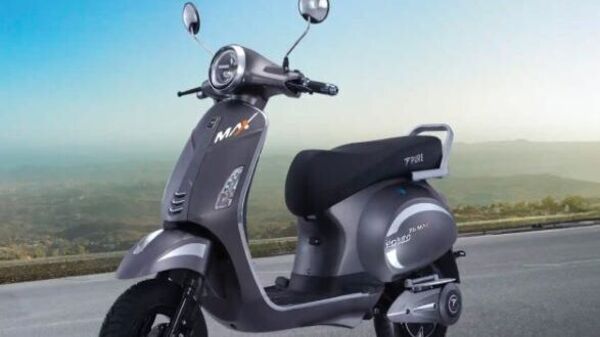
Pure EV has announced the launch of the ePluto 7G Max electric scooter at ₹114,999 (ex-showroom). The EV startup has also stated that bookings for the retro-themed electric scooter have been open across the country, with deliveries slated to commence during the upcoming festive season.
2/6
With the launch of the ePluto 7G Max electric scooter, Pure EV aims to increase its sales numbers during the upcoming festive season. The all-new electric scooter comes promising an impressive 201 km range on a single charge. Also, the EV comes with a host of advanced features such as hill-start assist, downhill assist, coasting regen, reverse mode, smart AI for battery longevity etc.
3/6
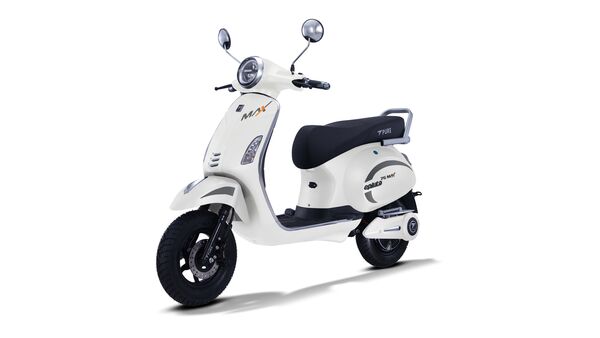
The retro-themed electric scooter is available in four different colour options: Matte Black, Red, Grey and White. Powering the all-new electric scooter is a 3.5 kWh lithium-ion battery pack that is mated to an electric motor capable of churning out 3.21 bhp peak power.
4/6
The AIS-156 certified battery pack claims to come with a smart battery management system powered by Artificial Intelligence (AI). The scooter gets three different riding modes. Pure EV has said that the scooter comes with a standard battery warranty of 60,000 kilometres and an extended warranty of 70,000 kilometres too is on offer.
5/6
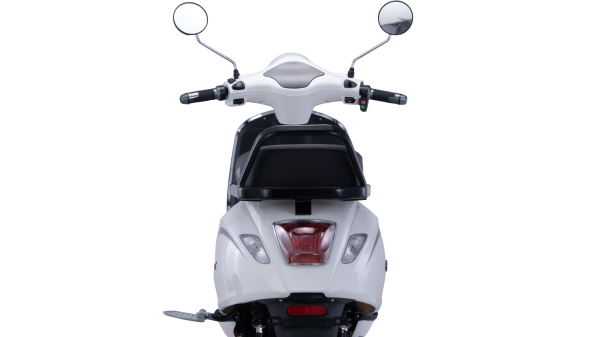
Speaking about the design of the ePluto 7G Max, the scooter dons an old-school design blended with modern elements like LED lights, a fully digital instrument cluster etc. The scooter is equipped with smart regenerative technology, claims the manufacturer. It gets reverse mode assist and parking assist features enhancing the convenience of the rider.
6/6
With the Auto Push function, the EV can move ahead at a steady speed of five kilometres per hour, which means the rider won’t have to push it manually. The model is targeted towards consumers driving around 100 km per day and do not want to go through the hassle of frequent charging.
New liquid-cooled 452cc engine makes 40hp; fit and finish appear better than Himalayan 411.
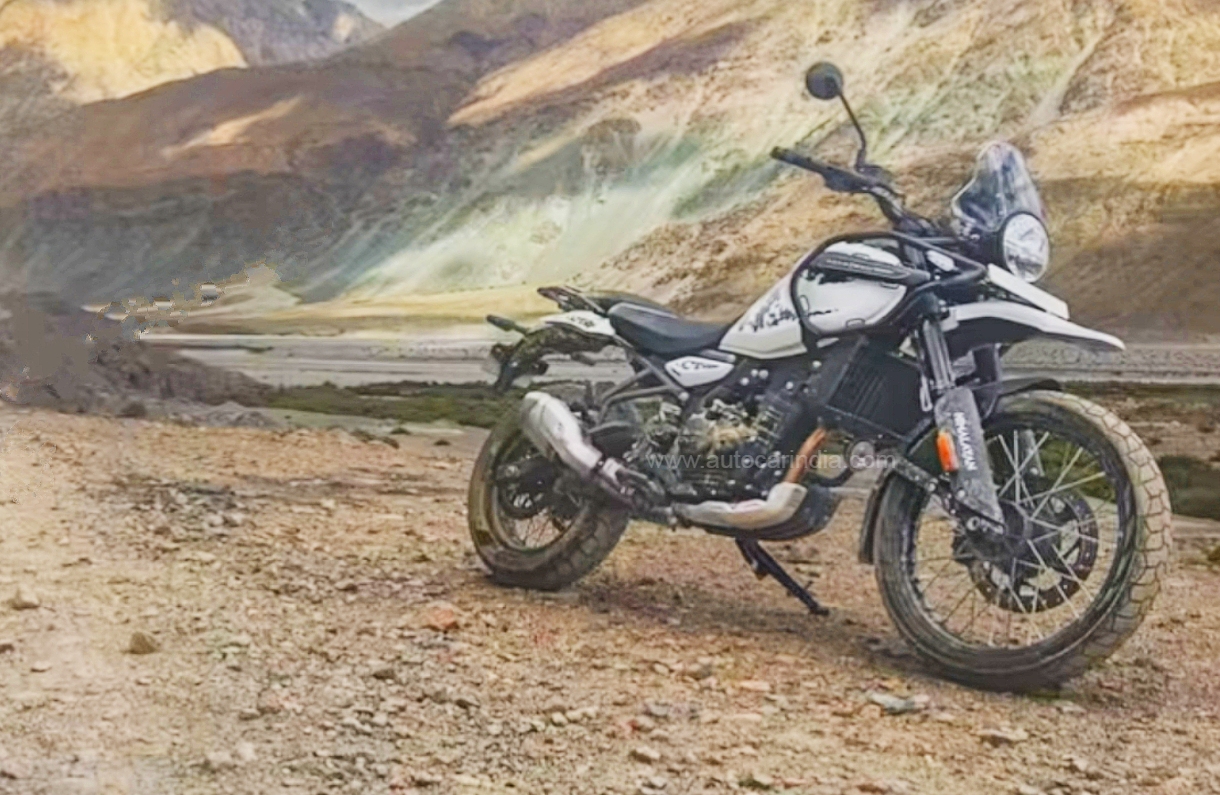
The latest reveal from Royal Enfield about the Himalayan 452 shows the bike in all its production-spec glory for the first time.
Gets mountain graphics on a white base paint scheme
New USD fork, new instrument console seen previously
India launch in November
As is evident from the large radiator, this is a liquid-cooled mill, and from a government homologation document, we already know the exact displacement and peak power output for this new bike. The Himalayan 452’s engine is rated for a peak power output of 40hp at 8,000rpm (identical to the new Triumph Speed 400).
What can also be seen here are big fork protectors on the front mudguard and despite its off-road credentials the rider’s seat looks quite approachable as does the pillion’s perch. This shouldn’t come as a surprise as most Himalayan owners tend to use their machines for long hauls fully loaded with luggage and a pillion.
The new fender and overall stance of the bike looks more muscular and purposeful, and it doesn’t appear as slim as the current bike, especially with that big curvy fuel tank. The new stubby exhaust muffler also has better finish levels than the exhaust on the 411. Considering the added performance the new engine has we could see taller ground clearance and added suspension travel than the existing Himalayan. When the Royal Enfield Himalayan 452 does launch in India in November, it will go up against the KTM 390 Adventure (Rs 2.80 lakh – Rs 3. 60 lakh) and BMW G 310 GS (Rs 3.25 lakh).
Verstappen secures his third consecutive F1 world title at Qatar, but Piastri denied him victory in the sprint race.
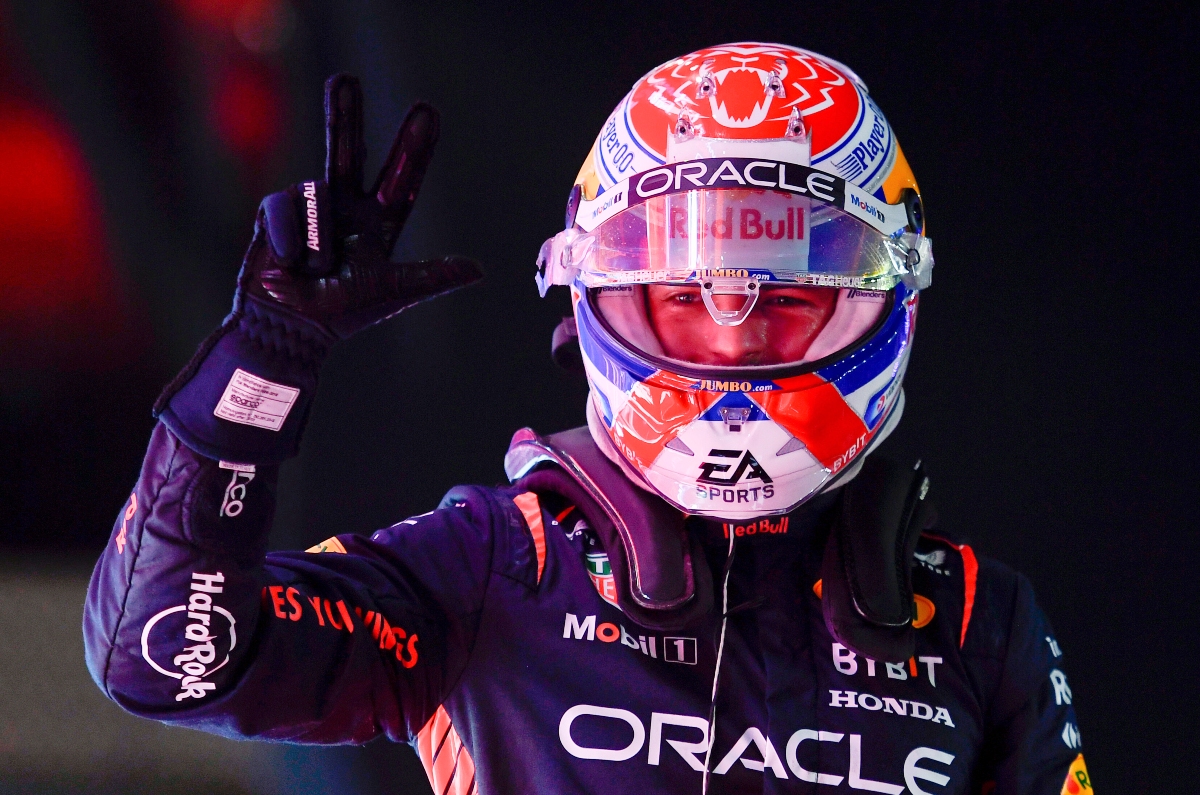
Max Verstappen has clinched his third F1 world title after finishing second in the Qatar GP sprint. Following his dominant Japanese GP victory, the Red Bull Racing driver needed to outscore his teammate Sergio Perez by just three points to wrap up the title. And Perez’ Lap 11 crash (after contact with Esteban Ocon and Nico Hulkenberg) meant that Verstappen achieved this feat before the sprint was even over.
The frenetic Qatar sprint also gave McLaren plenty of reasons to celebrate, with Oscar Piastri clinching his first win in F1 and Lando Norris rounding out the podium in third place.
Verstappen seals 2023 F1 title with six Grands Prix to go
Piastri wins sprint, 1.8 secs ahead of Verstappen
Norris P3 for McLaren
Piastri scores first F1 win
Armed with the resurgent MCL60, Piastri outperformed both Norris and Verstappen to bag pole position for the sprint race. All three drivers opted to start the race on medium tyres, while others like George Russell and the Ferrari duo of Carlos Sainz and Charles Leclerc started on the more aggressive softs.
Two Safety Car re-starts in quick succession benefitted those running on softs and helped Russell take the lead from Piastri. But the McLaren driver fought back to reclaim the lead. And the soft runners’ pace started falling off in the second half of the race, turning the tide in Piastri’s favour
Verstappen would have wanted to seal his third F1 title in style, with victory in the sprint. But he could only gain a couple of tenths on Piastri in the closing stages, and had to settle for second place.
“I’m very happy. It was a very stressful race! Safety Cars were my friend today, especially when Max got behind me,” said Piastri, who claimed his first victory in F1.
Verstappen claims third F1 title
On the back of a record-breaking season, Verstappen has sealed the 2023 F1 world championship with six more Grands Prix to go. He also becomes only the fifth driver in history to score three back-to-back F1 titles (the others being Juan Manuel Fangio, Michael Schumacher, Sebastian Vettel and Lewis Hamilton).
“Unbelievable guys,” said Verstappen on his cool-down lap.
“An incredible year. Thank you for providing me with such a car. It’s been a pleasure so far this year. I just want to say a big thank you to everyone here at the track, back at the factory for putting all the effort in. To have been able to achieve something like this, I can’t thank you all enough, and besides all the performance-related stuff, it’s also been a pleasure working with you all, and that’s definitely the most important in the end. Thank you very much.”
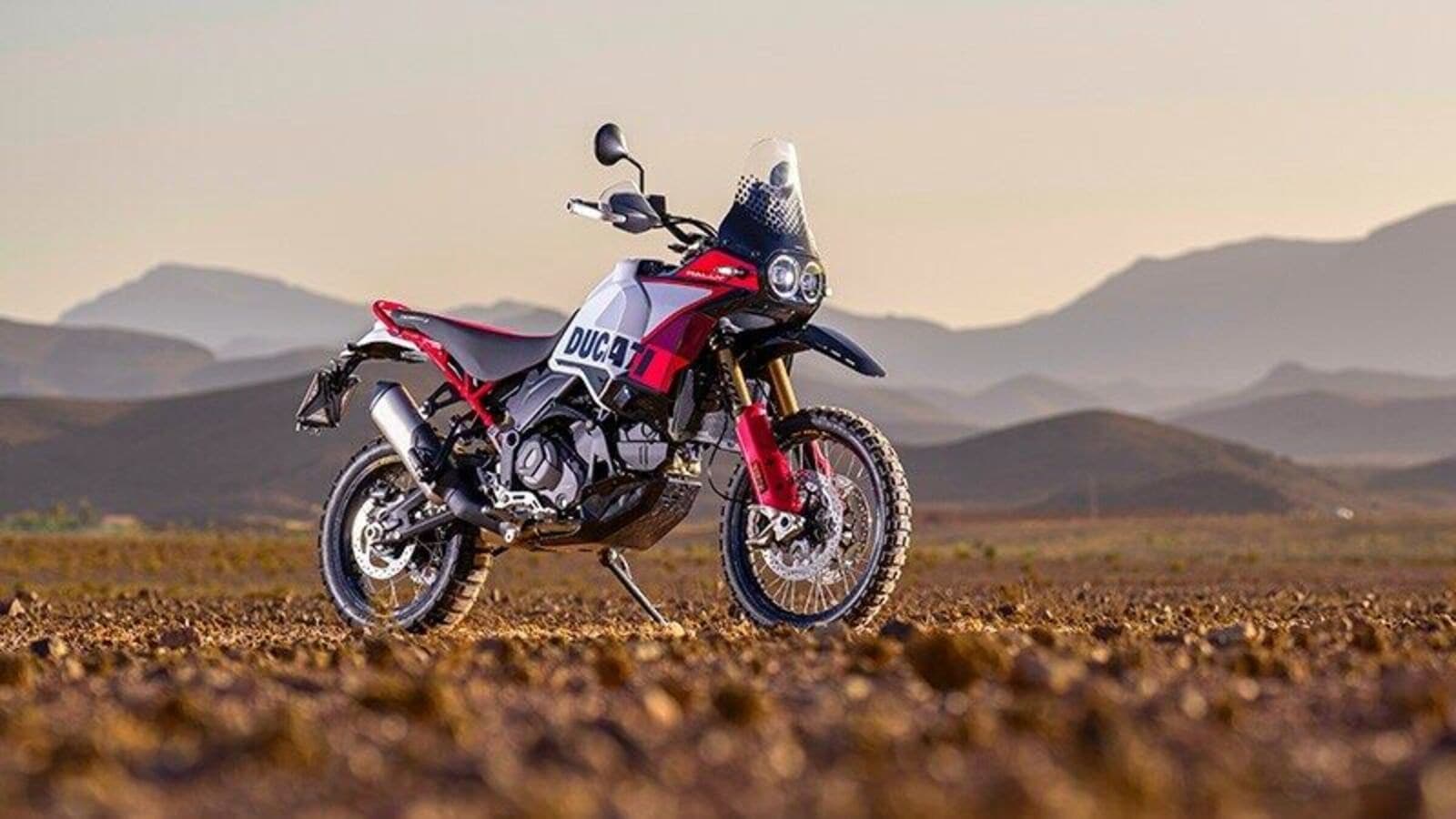
Ducati has officially unveiled a new version DesertX adventure motorcycle. It is called the DesertX Rally and it can be considered as a more hard-core version of the standard DesertX. The manufacturer has made some significant changes to the Rally version of the motorcycle. As of now, it is not confirmed whether Ducati will launch the DesertX Rally in the Indian market or not.
By: Paarth Khatri | Updated on: 07 Oct 2023, 14:00 PM
Ducati DesertX Rally comes with more suspension travel than the standard model
The DesertX Rally is the first Ducati to come with a 21-inch front rim and 18-inch rear. The manufacturer says that the motorcycle is developed and tested on racetracks and it participated in Erzbergrodeo 2023. The DesertX Rally boasts a new livery as well.
The front mudguard now has a beak-like design. The suspension is now taken from Kayaba has more suspension travel. To be precise, the rear wheel travel is increased by 20 mm whereas in the front, the travel is increased by 20 mm. Apart from this, there are new central-spoked wheels that do a better job of absorbing impacts when compared to standard alloy wheels.
The bike comes with a sump guard which is made up of forged carbon and the gear pedals and rear brake lever are machined. Despite so many changes, the Rally version is heavier by only 1 kg when compared to the standard DesertX.
The DesertX Rally is equipped with the 937 cc Ducati Testastretta 11° twin-cylinder with desmodromic distribution. It puts out 108 bhp of max power at 9,250 rpm and a peak torque output of 92 Nm at 6,500 rpm. The motorcycle will offer six riding modes – Sport. Touring, Urban, Wet, Enduro and Rally.
Ducati is also offering Cornering ABS, Ducati Traction Control (DTC) and Ducati Wheelie Control (DWC). There is a 5-inch colour TFT screen that comes with Ducati Multimedia System which connects with the smartphone. It enables functions such as music control, call management and Turn by Turn navigation (optional).
By: Paarth Khatri | Updated on: 06 Oct 2023, 19:36 PM
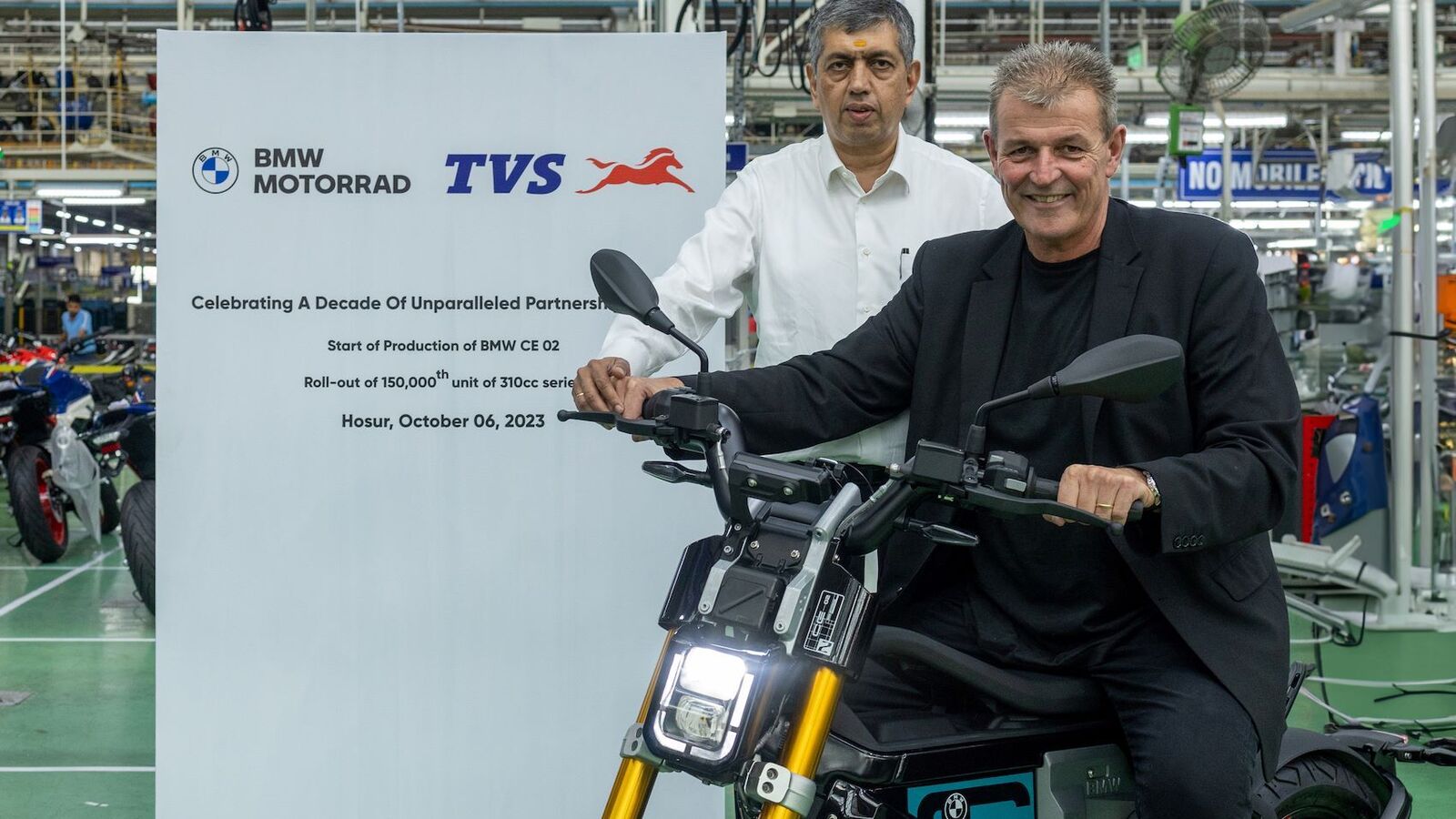
TVS Motor Company and BMW Motorrad today celebrated their 10-year long partnership. On this milestone, the production of BMW CE 02 started at TVS Motor’s Hosur manufacturing plant. Apart from this, TVS also rolled out the 1,50,000th unit of BMW Motorrad’s 310 cc series of motorcycles. Together, the two companies have developed and launched five iconic motorcycles, including the BMW G 310 R, BMW 310 GS, and BMW G310 RR, along with TVS Motor Company’s flagship motorcycles, TVS Apache RR 310 and the recently launched TVS Apache RTR 310.
Mr. KN Radhakrishnan, Director & CEO, TVS Motor Company with Dr. Markus Shramm, Head of BMW Motorrad with the BMW CE 02
The Apache RTR 310 received a lot of appreciation and the manufacturer has started production of the motorcycle. The brand will soon start deliveries and test rides. The motorcycle is priced between ₹2.43 lakh and ₹2.64 lakh. Both prices are ex-showroom.
Then there is BMW’s CE 02 electric scooter. As of now, it is not known whether it will go on sale in the Indian market or not. The electric motor uses a belt drive to transfer power and the motor itself produces a max power output of 54.91 Nm at 1,000 rpm. BMW is using a 48 V electrical system.
There are two riding modes, Surf and Flow. Apart from this, there is a reverse gear as well. Other features on offer are an LED headlamp, ABS on the front wheel, a USB-C charging socket, a keyless ride and a 3.5-inch TFT display.
Mr KN Radhakrishnan, Director & CEO, of TVS Motor Company, said, “Our decade long partnership with BMW Motorrad is based on shared values of innovation, quality, customer delight and engineering prowess. Aligning with our EV led global vision for growth, we are proud to extend this partnership with cutting-edge technologies and sustainable mobility solutions. In this next stage of our partnership, we are creating opportunities to jointly design and develop common platforms. Through our collaborative efforts we’ve achieved five extraordinary products in the 310cc series, including recent TVS Apache RTR 310. These products are now embraced by enthusiasts in over 100 markets globally. Taking our relationship to the next level, we have started the production of our first jointly designed, developed and industrialized EV together, the BMW CE 02, at Hosur Plant today. Together, we have achieved outstanding results, and we are excited about the future as we continue to explore new opportunities and push the boundaries of what’s possible in the world of two-wheelers.”
Dr Markus Schramm, Head of BMW Motorrad, said, “The 10th anniversary is an impressive proof of the success and strength of the collaboration between BMW Motorrad and TVS Motor Company. What began ten years ago has developed into an extraordinary success story. Our strong synergies have led to the development of impressive offerings in the Sub-500cc segment. Since the launch, BMW G 310 R and BMW G 310 GS single-cylinder models continue to enjoy unrivalled popularity and have become a key pillar of BMW Motorrad’s worldwide success. The extension and expansion of this partnership towards future technologies and sustainable mobility solutions including the unique and fully electric masterpiece BMW CE 02 is therefore a consistent step to also shape the future together with TVS Motor Company. And today’s start of production of our unique CE 02 marks a significant milestone in our joint and future cooperation.”
Bookings for both SUVs have officially commenced for Rs 25,000.
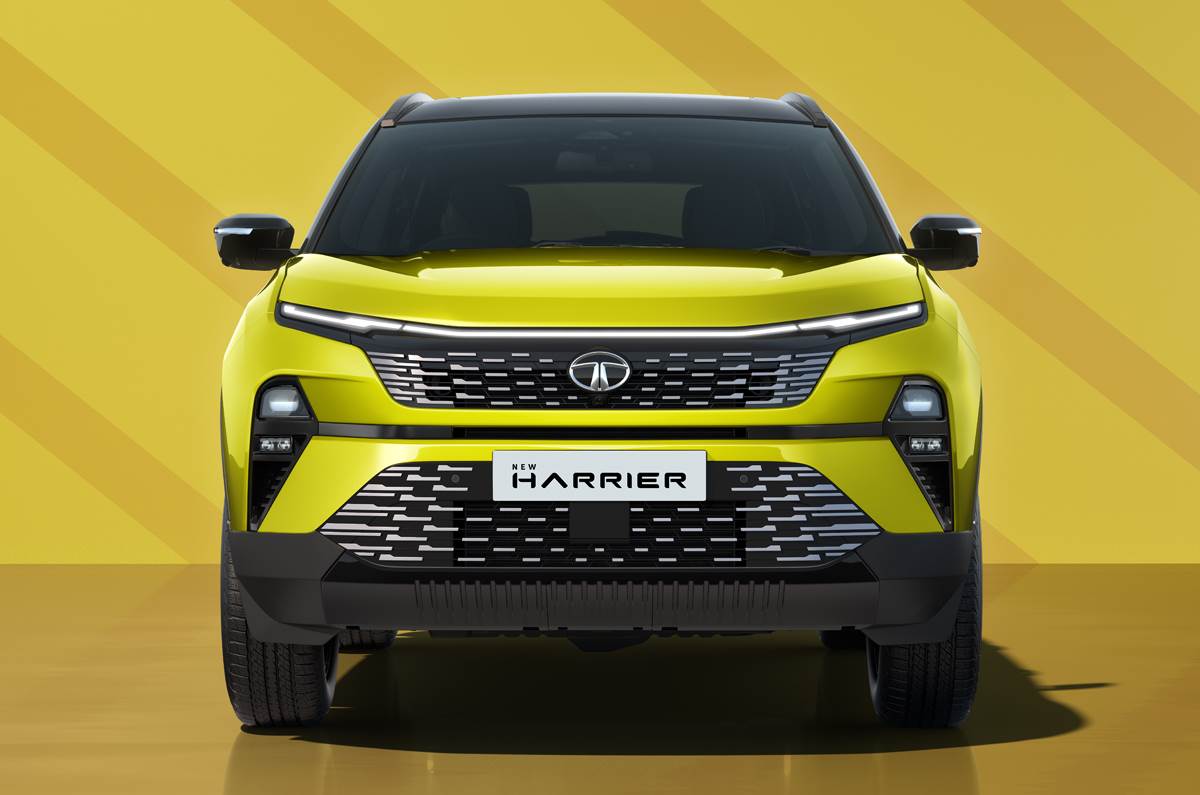
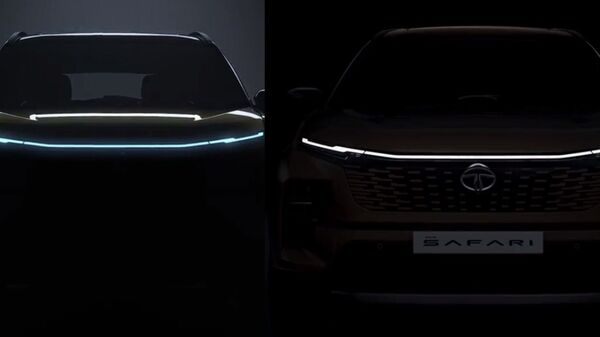
Following a slew of teasers, Tata Motors has now fully revealed the Harrier and Safari facelifts. Both SUV gets a comprehensively revised exterior and interior design, along with several new feature additions, although they remain mechanically unchanged from before.
Tata Motors has also officially commenced bookings for both models for a token amount of Rs 25,000. Expect prices to be announced in the coming weeks.
Harrier, Safari facelifts now more differentiated in design
Gets new features like dual-zone AC, paddle shifter, 19-inch wheels
Bookings open at Rs 25,000
Tata Harrier facelift exterior and interior
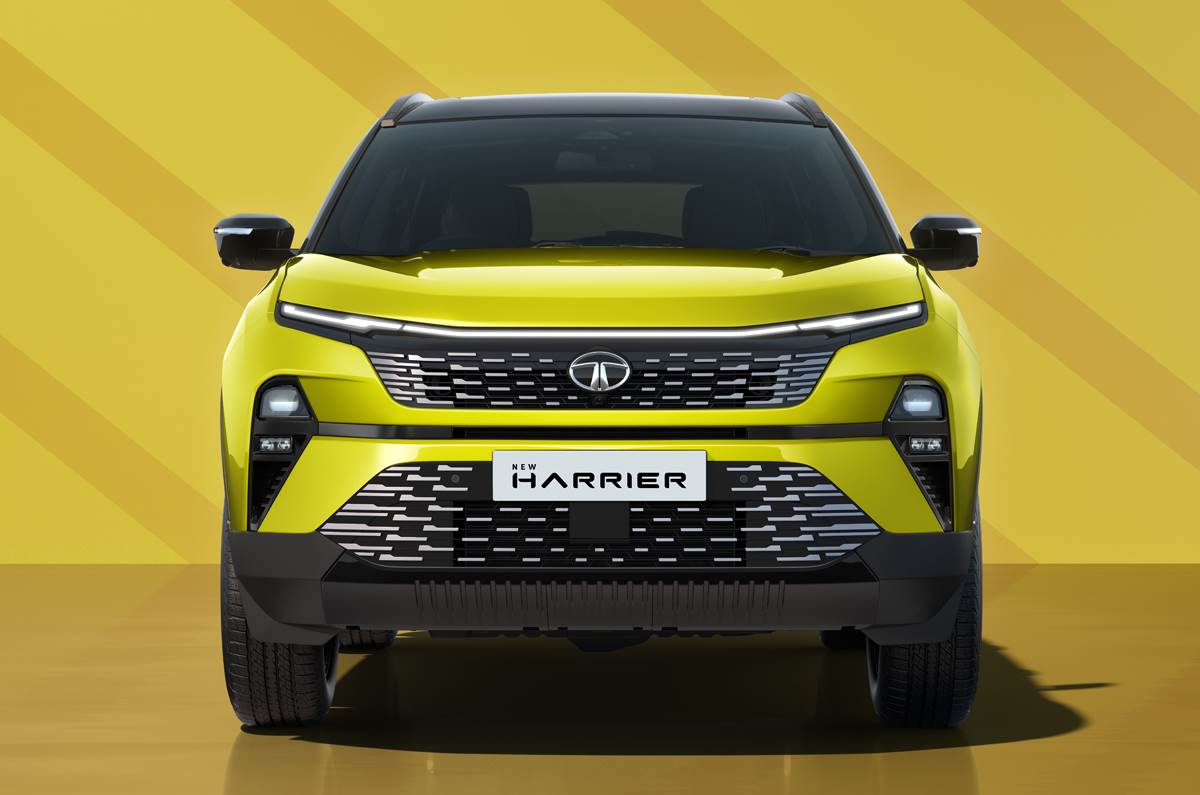
The most comprehensive updates are to the fascia of the SUV – it gets an all-new bumper that’s split into distinct upper and lower sections by a contrasting black band in between. The upper portion features a grille that’s grown broader but is sharper and is headlined by a full-width LED light bar. Meanwhile, the lower section features a gaping central air intake underlined by thick plastic cladding. Both the grille and the central air intake feature contrasting inserts.
The main headlamp clusters, meanwhile, are pushed towards the edges giving it a wider stance, and like the new Nexon, have a trapezoidal shape housed within a C-shaped enclosure.
In profile, not much has changed, but you get a new design for the five-spoke alloy wheels, while at the rear, the tail-lamp band has been revised with new LED internals, and it also appears a lot sleeker than before. The rear bumper also gets new protrusions for the reflectors and there’s a gloss-black finish for the rear skid plate. Unlike the Nexon facelift, which saw some sheet metal changes, the updates here are only to the soft plastic parts.
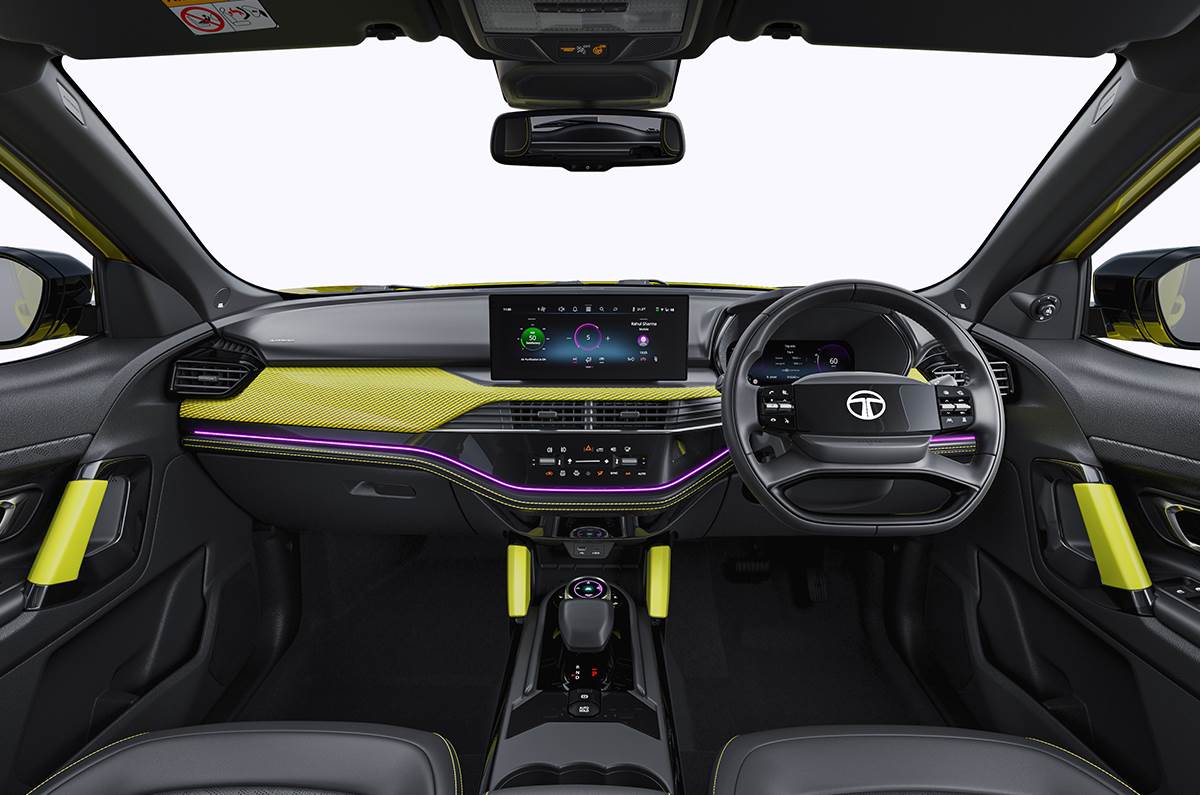
The interior has also been as comprehensively updated as the exterior. The central touchscreen is now a free-standing unit – it was previously integrated into the dashboard – and is offered in two sizes – 10.25-inch or 12.3-inch, depending on the trim. The facelift also ditches the faux wood trim on the dashboard for a mix of materials that includes a textured top panel, gloss black surfaces and leatherette padding with contrast stitching – all underlined by a slim strip of LED ambient light.
You also get the new touch-based HVAC control panel from the Nexon, a new four-spoke steering wheel with a backlit Tata logo and a 10.25-inch customisable digital instrument cluster with navigation. The centre console area has also been revised with a shorter, stubbier gear lever for automatic variants, and there’s a new rotary dial for the drive mode selector with a digital display. While higher-spec models get an electronic parking brake, the aircraft-style handbrake lever on the lower variants has been retained as is.
Tata Harrier facelift features
There are notable upgrades on the equipment front too – welcome and goodbye animations by the LED DRLs, up to 19-inch alloy wheels with aero inserts, dual-zone automatic AC, 10-speaker JBL sound system, paddle shifters for the automatic variants, rear window sunshades, ventilated and powered front seats with memory function, gesture-controlled powered tailgate and Bi-LED projector headlamps. The 360-degree camera, wireless charger, panoramic sunroof and ADAS suite have also been carried forward. It now gets up to 7 airbags, 6 of which are standard across the range.
Tata Safari facelift exterior and interior
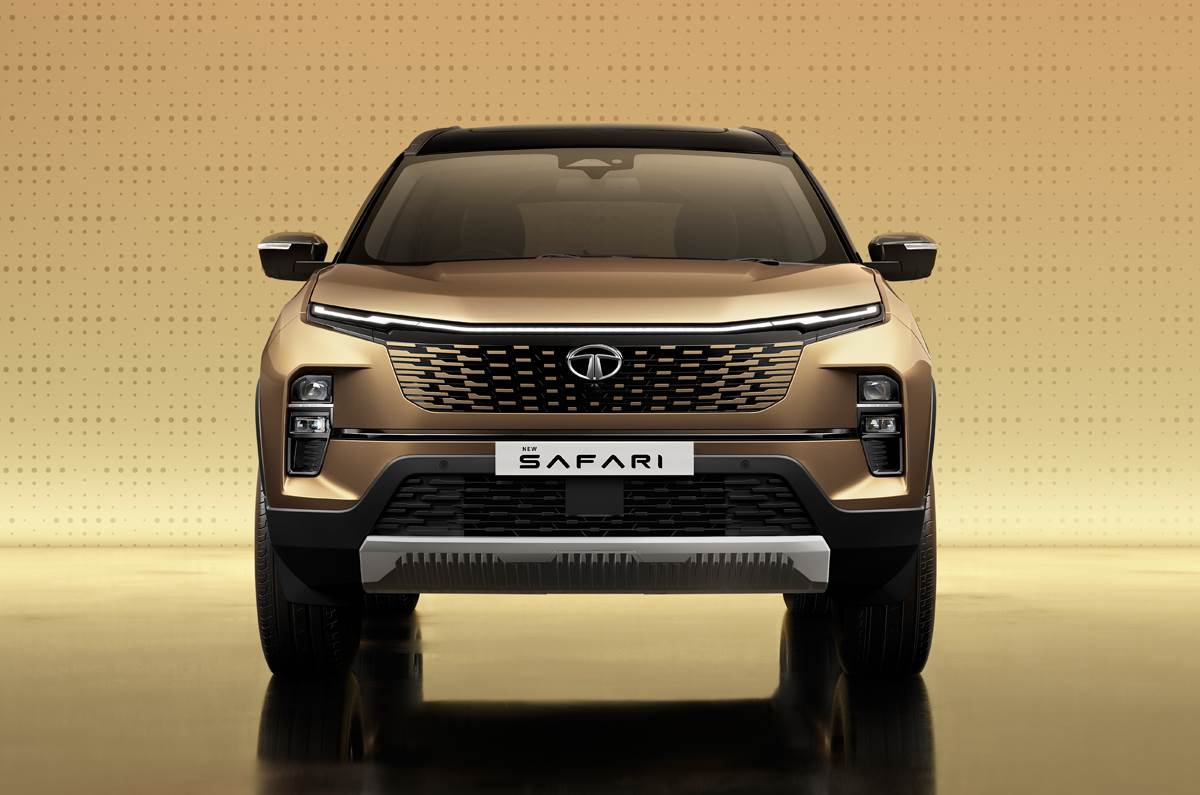
Unlike the outgoing Harrier and Safari, which looked near identical up front, the Safari is slightly more differentiated than its 5-seater sibling. The new grille, for instance, is even broader here on the Safari and the central air intake at the bottom also gets its own unique inserts. The biggest differentiator, however, are the headlamps that are positioned slightly higher up and have a rectangular shape. The C-shaped headlamp housing and the connected LED light bar treatment are common on both SUVs.
Like the Harrier, not much has changed in profile either, except for a new design for the 19-inch wheels that’s again unique to the Safari. At the rear, there’s a new tail-lamp band with a connected LED bar. The rear bumper also gets a cleaner design with rectangular protrusions at the edges, mimicking the front-end design.
The interior, however, isn’t all that differentiated from the Harrier except for a different finish for the central dashboard panel. Additional features of the Harrier include a ventilation function for the second-row seats.
Tata Harrier, Safari facelift trim details
Tata Motors has ditched the old trim nomenclature for the Harrier and Safari and has adopted new persona-based trim names that’s akin to the new Nexon. The Harrier is available in Smart, Pure, Adventure and Fearless trims, while the Safari is available in Smart, Pure, Adventure and Accomplished trims.
Like in the Nexon, these trims also come with their own unique colour options, as well as exterior and interior accents. The Harrier, for instance, gets a unique yellow paint with yellow accents on the inside while the Safari gets a unique gold finish. Both the Harrier and Safari will also continue to get the Dark Edition treatment on several trims.
Tata Harrier, Safari facelift powertrain options
Mechanically and under the skin, both SUVs remain unchanged from before. They continue to be powered by a 170hp, 350Nm, 2.0-litre four-cylinder diesel engine that’s mated to either a 6-speed manual or a 6-speed torque converter automatic gearbox, driving the front wheels. It comes with Terrain response modes (Normal, Rough & wet) and multiple drive modes (Eco, City & Sports), and Tata Motors claims that the suspension setup has also been retuned to better suit our road conditions.
BMW M 1000 R comes to India through CBU or Completely Built Up route.
By: HT Auto Desk | Updated on: 05 Oct 2023, 17:37 PM
1/7
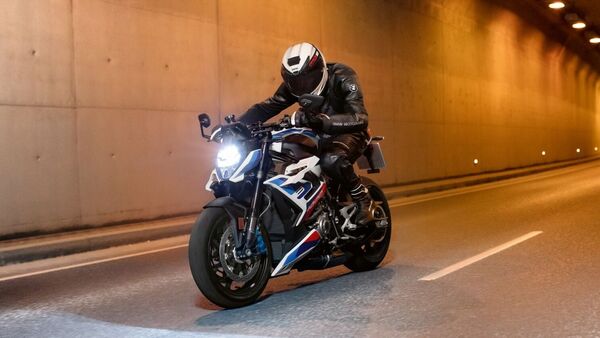
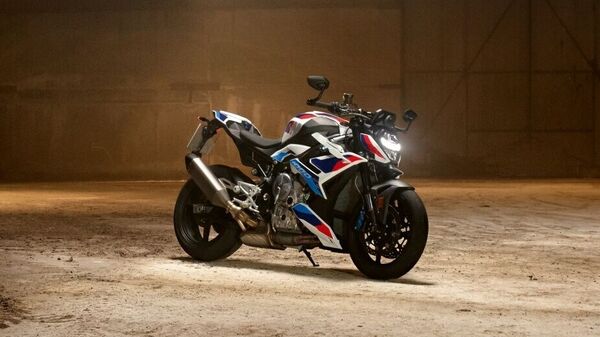
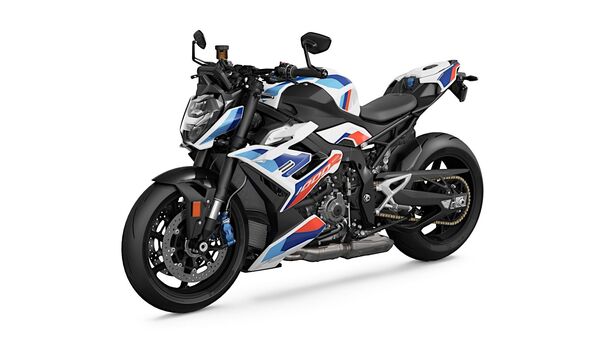
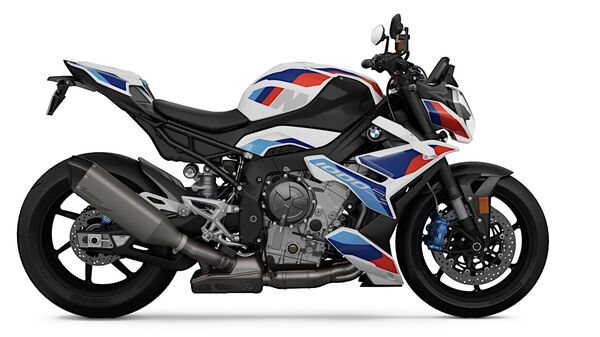
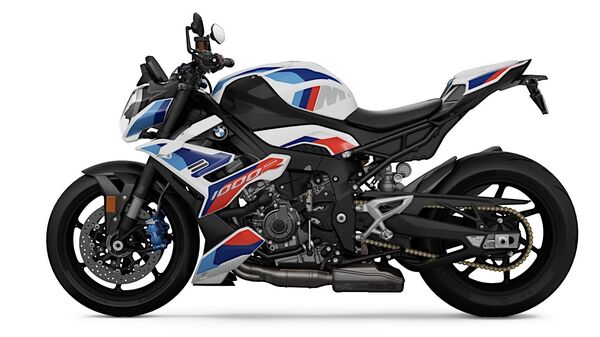
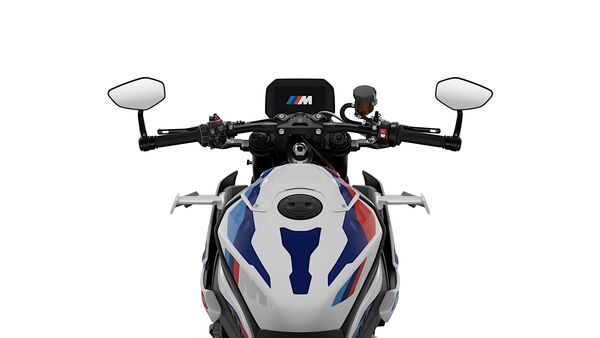
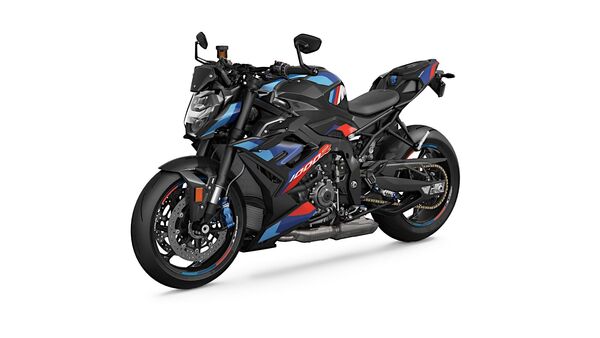
BMW Motorrad has launched the M 1000 R in the Indian market which comes through CBU or Completely Built Up route, because of which it is priced at ₹33 lakh (ex-showroom). There is also a Competition version which is priced at ₹38 lakh (ex-showroom).
2/7
The motorcycle can be pre-booked at BMW Motorrad India-authorised dealerships and deliveries will begin in January 2024. Powering the M 1000 R is a 999 cc, in-line four-cylinder engine that produces 209 bhp of max power at 14,500 rpm and a peak torque output of 113 Nm at 11,000 rpm.
3/7
BMW claims that the M 1000 R has a top speed of 280 kmph and can accelerate from 0-100 kmph in 3.2 seconds. BMW offers various riding modes to choose from. There is Rain, Road, Dynamic, Race and Race Pro. The gearbox is also ready for a reverse gear shift pattern and comes with an anti-hopping clutch.
4/7
The engine features BMW’s ShiftCam technology. It helps in increasing the torque output in low and mid-range. BMW is using titanium valves, a new spring assembly on the exhaust side, narrower and lighter cam followers and optimised camshafts. The intake system features shorter intake funnels for optimised charge exchange at high engine speeds.
5/7
The motorcycle comes with Dynamic Traction Control, Wheelie Control, 6-axis IMU, Engine Brake Control, Traction Control, Wheelie Control, ABS and ABS Pro. The manufacturer now also offers launch control and a pit-lane speed limiter.
6/7
Some of the other features that the BMW M 1000 R gets are a 6.5-inch TFT screen, a rear USB port to charge mobile devices, LED lights, electronic cruise control and heated grips.
7/7
The Competition version of the BMW M 1000 R bike costs more because it comes with M Carbon wheels, M rider footrest system, M Carbon parts such as rear wheel cover and chain guard, front wheel cover, tank covers, airbox cover with tapes, wind deflector, sprocket cover, the M pillion package as well as the M pillion cover and a milled, fully adjustable M rider footrest system.
MotoSoul will showcase custom built motorcycles from TVS and have a slew of motorsport events.
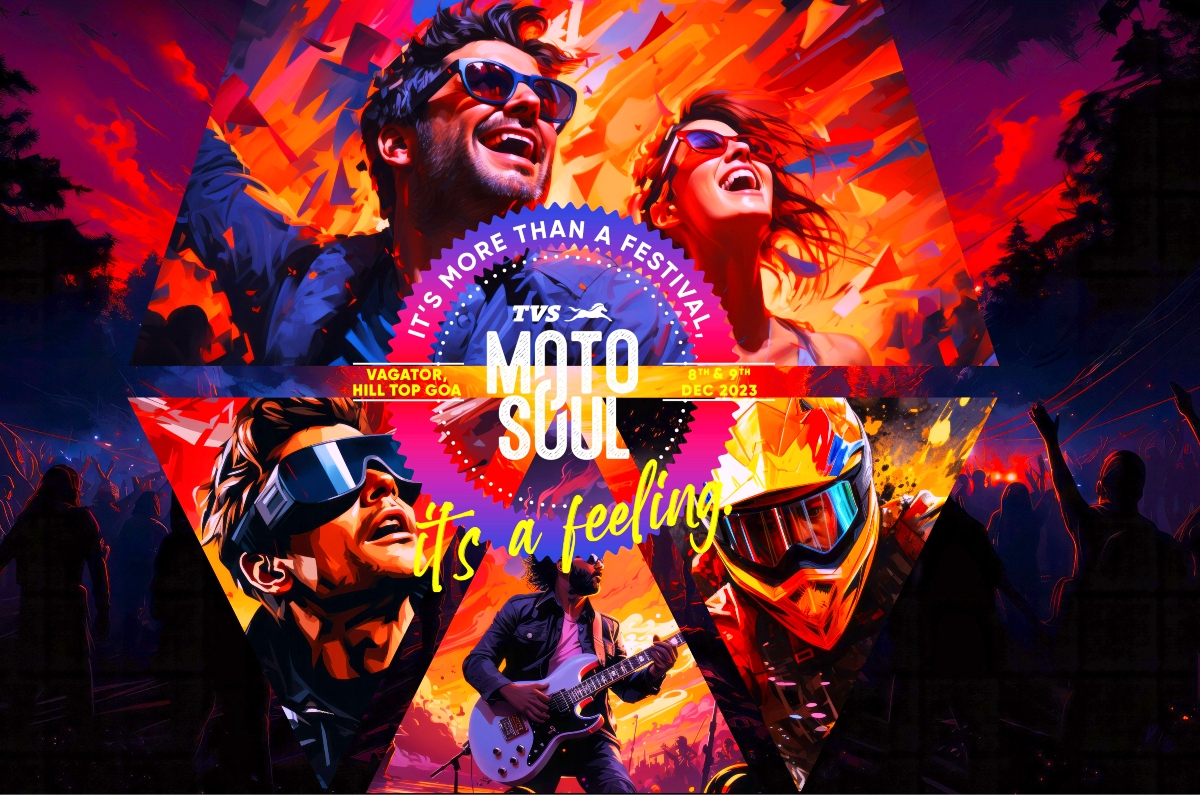
The third edition of the TVS MotoSoul festival will be held on December 8 and 9 at Goa. Those attending can participate in a variety of activities and will be treated to performances from top Indian and international artists.
New and current bikes to be showcased at TVS MotoSoul
Indian and international artists, DJs will perform live
TVS MotoSoul 2023: what activities can you take part in?
Some of the activities taking place at TVS MotoSoul 2023 include an obstacle race, a dirt race, a slow race and moto crossfit.
For those seeking knowledge and inspiration from the whos who of the biking world, TVS has organised Tech Talks by various moto personalities. On the other hand, there’s a section dedicated towards arts and culture that will feature live canvas painting and also allow attendees to click a 360-degree photo with a bike.
Additonally, for those looking to hone skills such as wheelies and stoppies, there will be a controlled area to do that. And, just like it has done at Kidzania, TVS will have a racing simulator at MotoSoul
As is the case with any biking festival, music plays a vital role in creating a vibrant atmosphere & MotoSoul will have a number of artists and DJs performing live.
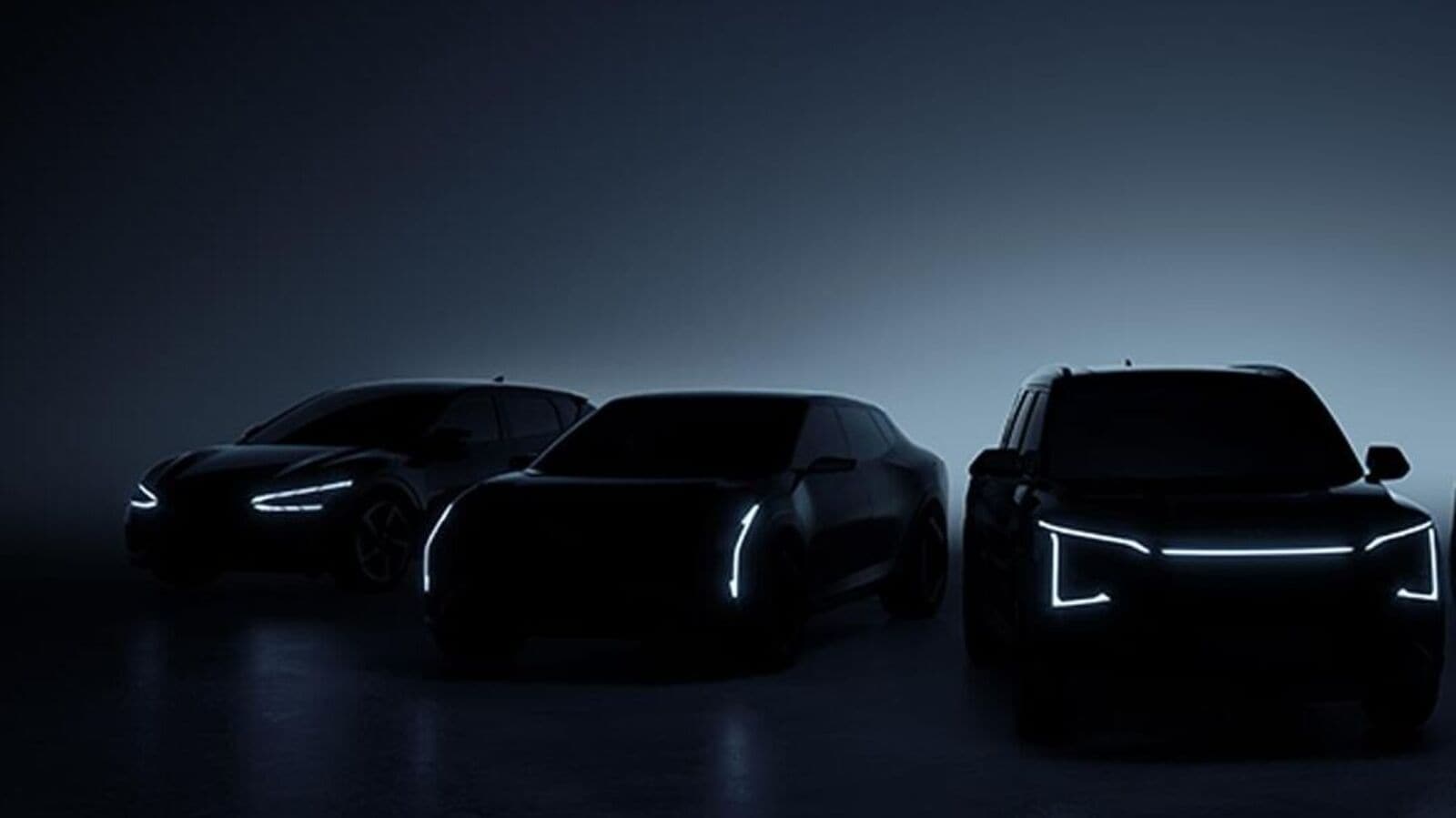
South Korean automaker Kia will observe ‘Kia EV Day’ on October 12 in Yeoju, Korea, where it will shed light on its future EV roadmap and display its entire EV lineup including two new concept EVs. During the event, the company will announce its global vision and strategy for battery-powered vehicles. The move is in line with the OEM’s vision to become a key player in sustainable mobility.
By: HT Auto Desk | Updated on: 04 Oct 2023, 16:25 PM
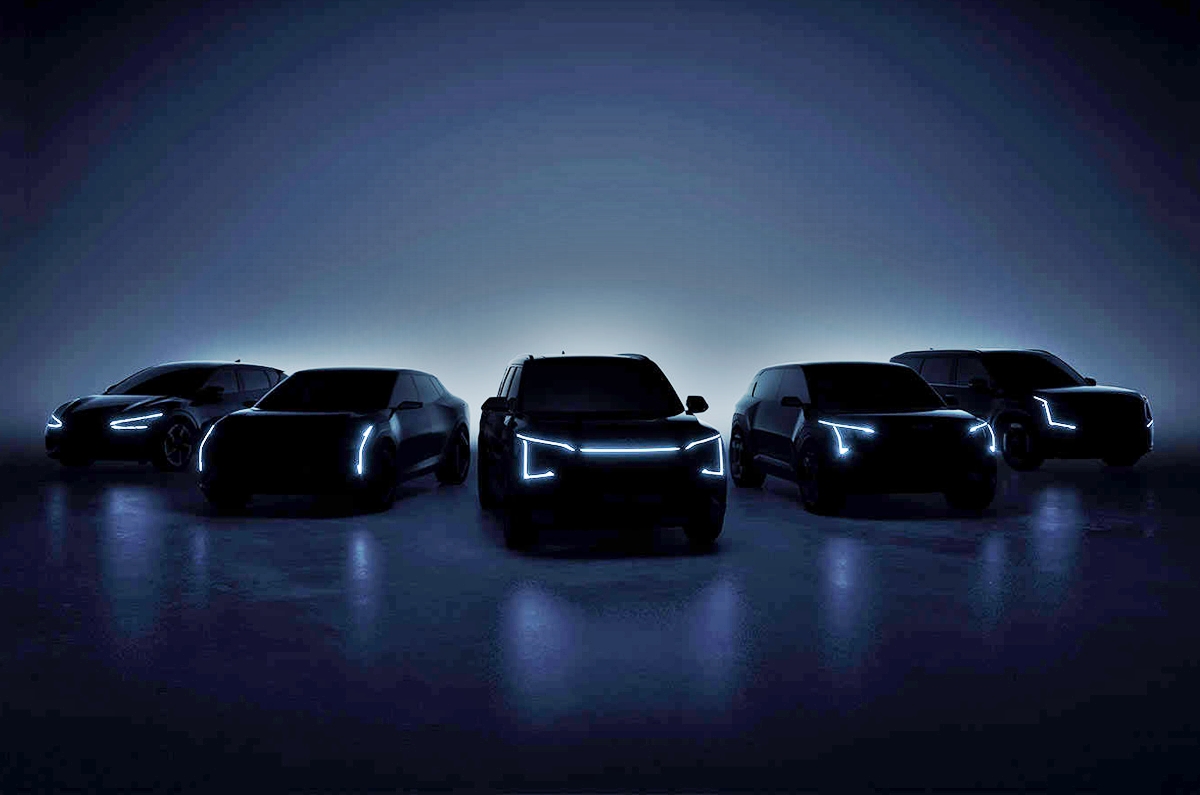
The Kia EV Day event in mid-October will see the company displaying its entire EV lineup, including the Kia EV5, EV6 GT and EV9, as well as two new concept EVs.
The event is set to become an annual tradition for the company, starting this year, wherein it will encourage stakeholders to discuss about sustainable mobility and future growth plans. At the event, Kia will showcase its new electric models, concepts, and technologies.
The event in mid-October will see the company displaying its entire EV lineup, including the Kia EV5, EV6GT and EV9. The EV5 was launched at the Chengdu Motor Show in August this year, and during the event, attendees will be given a detailed specification of the electric model. Kia will also introduce two new concept EVs.
Kia introduced the EV5 in production model in China last month, which comes as an all-electric alternative to the Kia Sportage. The compact electric SUV is slated to launch in China later this year before being introduced to other markets.
The EV6 GT debuted last year in August and the brand claims it to be the most powerful Kia production vehicle ever. With 800V multi-charging architecture, the Kia EV6 GT is ultra-fast DC charging enabled, implying that it can charge from 10 to 80 per cent in under 18 minutes.
The event will also see keynote speakers taking the stage to shed light upon topics significant to Kia’s transition to a sustainable mobility solutions provider. Subjects will include the brand’s comprehensive EV strategy, its ‘Opposites United’ design philosophy, updates on innovative customer experience strategies, and new product insights.
Two of these already exist globally, while more details on the rest are expected at the upcoming Kia EV day.
Kia has trademarked as many as eight new electric vehicles in India – the range starts with the EV1, goes all the way up to the EV9. The EV9 is Kia’s flagship electric model, and we already know its slated to arrive in India sometime next year, but while there’s no confirmation on the others, trademarking the names suggests that Kia could have its entire born EV portfolio in India in the future.
Kia has trademarked EV1 to EV9 born EVs in India
EV6 is already on sale in India
Kia’s future EVs: what do we know so far?
The nomenclature of the models suggests their size and positioning relative to each other with the EV1 sitting at the base of the range while the EV9 serves as the flagship.
Of these, the EV6 crossover is already on sale here, and the EV5 debuted in production form just a couple of months earlier. The 4.6-meter-long SUV will be offered for sale only in the China initially, but will also make it to select global markets eventually. Crucially, the trademarking comes just before Kia’s EV day on October 12, which is when we can expect more details on the remaining models.
Recently, in markets abroad, a Seltos-sized upright SUV was spotted testing that will likely be called the EV4 upon debut. It will measure about 4.2 meters in length and it is this model that we are expecting more details on at the upcoming Kia EV day.
A teaser for the event also shows the silhouette of an EV6-like coupe-crossover with distinctive LED lighting elements, although it’s not known what its size will be relative to the EV6.
There are, however, no details on the body style or size of the remaining four vehicles, neither is it known which of these will be brough to India. Expect more details to be revealed at the upcoming Kia EV day 2023.
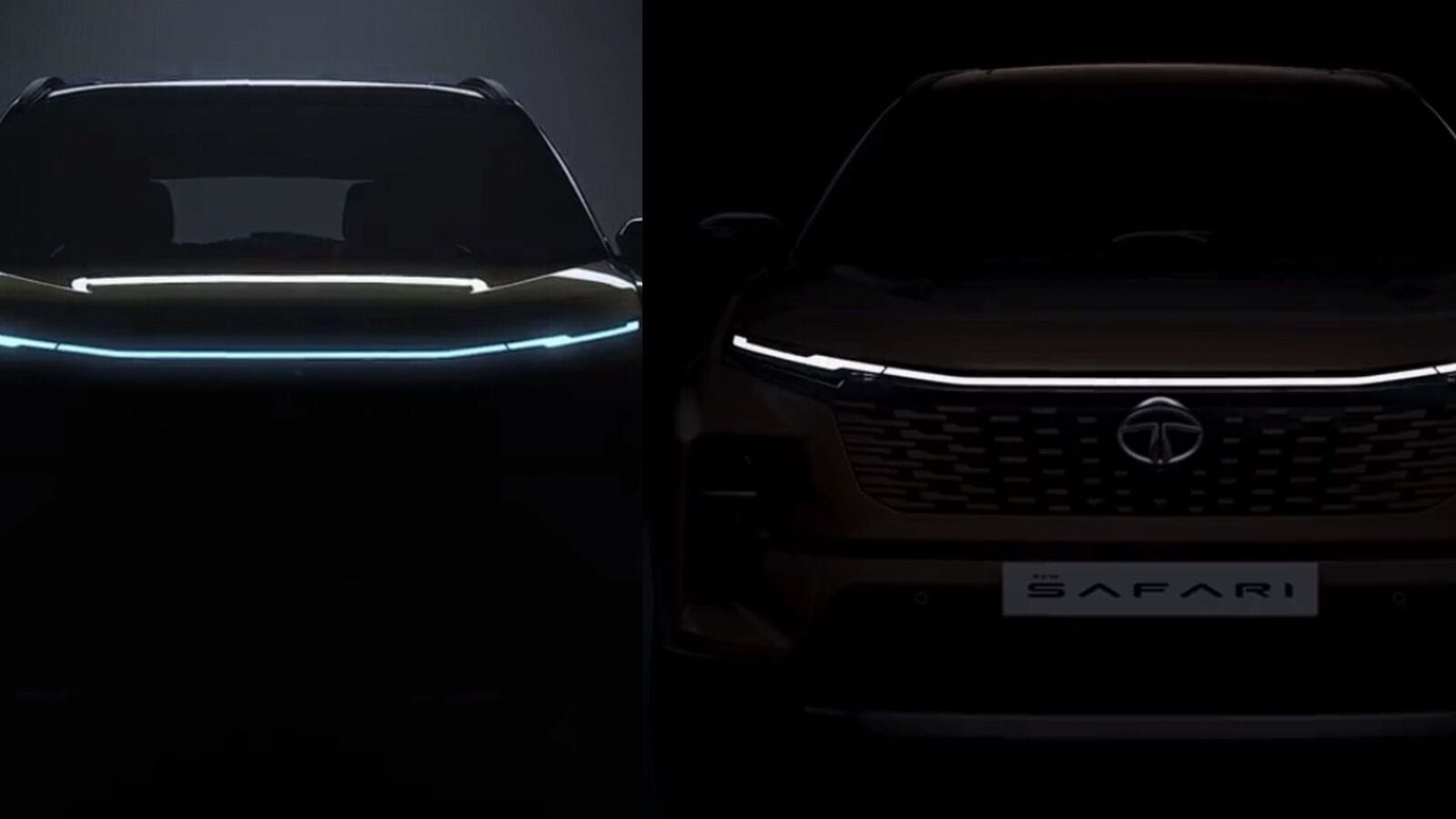
Tata Motors has officially teased the facelifted version of the Harrier and Safari for the very first time. The manufacturer will start accepting bookings of the Harrier and Safari facelift on 6th October. The updated SUVs will come with a revamped design language that will look like Curvv. The interiors will also be updated and there is a possibility that Tata might also introduce the petrol engine finally.
By: Paarth Khatri | Updated on: 03 Oct 2023, 18:17 PM
The Harrier and Safari will now come with a connected lightbar in the front.
Tata will continue to sell the Harrier and Safari with a Fiat-sourced 2.0-litre diesel engine that produces 168 bhp and 350 Nm of peak torque. It comes mated to a 6-speed manual gearbox or a 6-speed torque converter automatic transmission. There is a possibility that Tata will also introduce its new 1.5-litre petrol engine that uses direct-injection technology. It puts out 168 bhp and 280 Nm of peak torque.
The updated design language means that up-front there will be a split headlamp setup with the LED Daytime Running Lamp connected via a light bar. The main headlamp housing is new and is now positioned vertically. The grille on the Safari does look more up-market than the one found on the Harrier. It will probably be a big distinguishing factor between both the SUVs. On the sides, there will be a new set of alloy wheels. At the rear, it is expected that Tata will carry the same tail lamp setup but now there will be a connected lightbar.
The interior will also get a new steering wheel that has a digital Tata logo. There is a possibility that the manufacturer will bring in the new infotainment system and the digital instrument cluster from the Nexon to the Harrier and Safari. The HVAC controls will also be updated that debuted on the Nexon. Apart from this, the dashboard can be redesigned as well.
Carmaker aims to attract more customers with these special editions during the festive season.
Honda has launched two new special editions of the Honda City and Honda Amaze called the ‘Elegant Edition’ and ‘Elite Edition’, respectively. The City Elegant Edition is priced at Rs 12.57 lakh for the manual and Rs 13.82 lakh for the CVT, while the Amaze Elite Edition costs Rs 9.04 lakh for the manual and Rs 9.86 lakh for the CVT-equipped version. Honda will sell these cars in limited volumes and come in all colour options.
Honda special edition prices
Variant
Price
Honda City Elegant Edition MT
Rs 12.57 lakh
Honda City Elegant Edition CVT
Rs 13.82 lakh
Honda Amaze Elite Edition MT
Rs 9.04 lakh
Honda Amaze Elite Edition CVT
Rs 9.86 lakh
Both editions get a rear spoiler
Amaze gets tyre inflator, anti-fog wing mirrors
Honda City Elegant Edition features
The Elegant Edition is based on the ‘V’ trim, which means it comes equipped with features such as a sunroof, 15-inch alloy wheels, an 8-inch infotainment unit and a lane-watch camera.
A new exterior detail on the elegant edition is a rear spoiler on the boot with an LED high-mount stop lamp. Other exterior additions include an ‘Elegant Edition’ badging and a side step panel with ‘City’ illuminated. On the inside, the sedan gets an illuminated footwell and beige seat covers with ‘Elegant Edition’ markings.
Honda Amaze Elite Edition features
The Amaze Elite Edition is based on the VX variant, and like the special edition of the City, it gets exterior badging, a spoiler on the trunk and an illuminated sidestep. It also gets an anti-fog film on the wing mirrors.
On the inside, the Honda Amaze Elite Edition gets seat covers with special badging and a sliding armrest. This edition also comes equipped with a tyre pressure monitoring system and a tyre inflator.
Honda City and Amaze powertrains
The Honda City is offered with a 121hp, 1.5-litre petrol engine paired to either a 6-speed manual or a CVT gearbox, while the Amaze is offered with a 90hp, 110Nm, 1.2-litre i-VTEC petrol engine that comes mated to either a 5-speed manual or a CVT automatic gearbox. The City rivals the Skoda Slavia, Volkswagen Virtus, Maruti Suzuki Ciaz and the Hyundai Verna, and the Amaze rivals the Maruti Suzuki Dzire, Hyundai Aura and Tata Tigor.
Tesla reportedly sent out special apparel for the vehicle launch team members of the Cybertruck pickup truck. Tesla Cybertruck is one of the most anticipated electric vehicles in the world. The official launch of the electric pickup truck is inching closer and ahead of that, the automaker has sent out special apparel for the launch team, reported the Cybertruck Owners Club forum.
By: HT Auto Desk | Updated on: 02 Oct 2023, 16:27 PM
Tesla Cybertruck is one of the most awaited electric vehicles in the world. (Image: Cybertruck Owners Club)
Tesla has already started production of the Cybertruck pickup truck. However, the production of this pure electric pickup truck with an unusual design has started at a limited number. Tesla plans to ramp up its production numbers from early 2024. However, before that, the official launch event is expected to take place in a few weeks.
A user of the Cybertruck Owners Club forum has shared an image of the official apparel. The apparel comes with the ‘Cybertruck’ word printed on it along with the ‘Launch Team’ words.
Back in April this year, Tesla CEO Elon Musk hinted that the Cybertruck handover event would happen towards the end of the third quarter. Considering that, the third quarter has been already over. However, given Tesla’s reputation of keeping with the deadlines, that is not very unusual. But now with the apparels sent out to the launch team, we can expect the event to take place in a few weeks. Also, over the last few months, the prototypes of the Tesla Cybertruck spotted have hinted that the EV is in its final phase of testing.
Tesla Cybertruck was first unveiled back in November 2019. Since then, the automaker has set multiple deadlines for the launch of the EV but failed to keep its promises again and again. It was supposed to enter production several times in the past two years, but that never happened, partly because of the global microchip shortage caused by the Covid-19 pandemic.
Slavia also gets a new Matte Black edition, and both cars have been updated with new features.
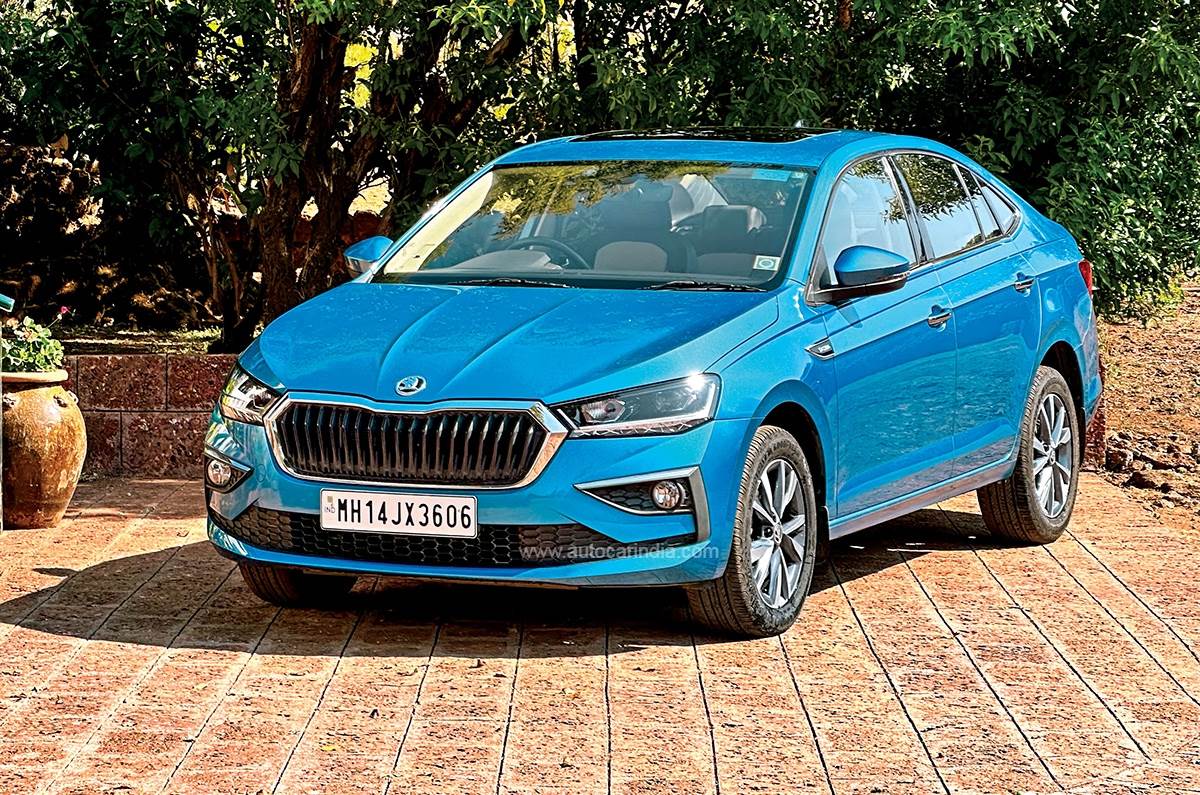
Skoda has introduced a new Matte Black edition of the Slavia sedan, and has also revised the base price of both Slavia and Kushaq to now start at Rs 10.89 lakh. That makes the base Slavia Rs 50,000 cheaper, and the base Kushaq Rs 70,000 cheaper, although both prices are limited just for the festive season. The Slavia Matte Black edition will also only be available for the festive season.
Slavia gets new Matte Black Edition
Slavia, Kushaq get powered front seats, footwell illumination
Base price of both models reduced for festive season
Skoda Slavia Matte Black Edition
The Slavia Matte Black edition gets the Carbon Steel exterior paint shade finished in matte, along with gloss-black finishing for the door handles and wing mirrors. The chrome finish for the grille, bumper garnishes and window lining, however, has been retained as is. The Kushaq has also been meted out a similar treatment before.
The Slavia Matte Black edition is available with all existing powertrain options, although Skoda hasn’t yet quoted a specific price for the special edition model.
Skoda Slavia, Kushaq get new features
Skoda has also updated both the Slavia and Kuhsaq’s top-spec Style trim with powered front seats and footwell illumination. These feature enhancements also extend to the Kushaq Monte Carlo variant. While Hyundai also offers powered adjustment for the driver’s seat on the Verna, powered adjustment for the front passenger seat is a segment first.
Royal Enfield on Sunday announced in a regulatory filing that the company witnessed marginal growth for the motorcycles that come with engines bigger than 350 cc. On the other hand, the motorcycles powered by engines of up to 350 cc displacement, recorded marginal growth in September. The homegrown motorcycle giant sold 70,345 units in September 2023 in the 350 cc segment, down by five per cent from 74,206 units registered in the same month a year ago.
By: HT Auto Desk | Updated on: 01 Oct 2023, 16:01 PM
Royal Enfield witnessed a sales slump in the 350cc category, while bigger motorcycles posted four per cent growth.
In the bigger bikes segment, where Royal Enfield sells models like Scram 411, Super Meteor 650, Continental GT, Interceptor etc., the company posted four per cent sales growth last month. In this category, Royal Enfield claims to have sold 8,235 motorcycles last month, as compared to 7,891 units retailed in the same month a year ago. However, sales in this segment in the first six months of this financial year were down by 10 per cent to 50,790 units. The company sold 56,387 units during the same period in the last financial year.
Watch: Royal Enfield Super Meteor 650: Road test review
On the other hand, in up to 350 cc segment, sales of the auto company between April and September this year were 406,196 units, up by 20 per cent as compared to 338,582 units sold during the first six months of last financial year. Royal Enfield’s total sales in September were down by four per cent to 78,580 units, as compared to 82,097 units recorded in the same month a year ago. The company claims to have sold a total of 456,986 motorcycles in the first six months of this financial year, up by 16 per cent, as compared to the same period a year ago when it retailed 394,969 units.
Despite being a major player in the Indian motorcycle market, Royal Enfield has a strong international business as well. However, the company witnessed a major slump in its export numbers in September as well as during the first six months of the current fiscal. Last month, the auto manufacturer shipped 4,319 motorcycles to overseas markets, down 49 per cent from 8,451 units sold in the same month a year ago. Between April and September this year, Royal Enfield sold 40,099 motorcycles in the overseas markets, down 26 per cent compared to 54,260 units sold in the same period a year ago.
Upsizing the wheels will have an impact on your ride and handling balance.
Published On Oct 01, 2023 09:30:00 AM
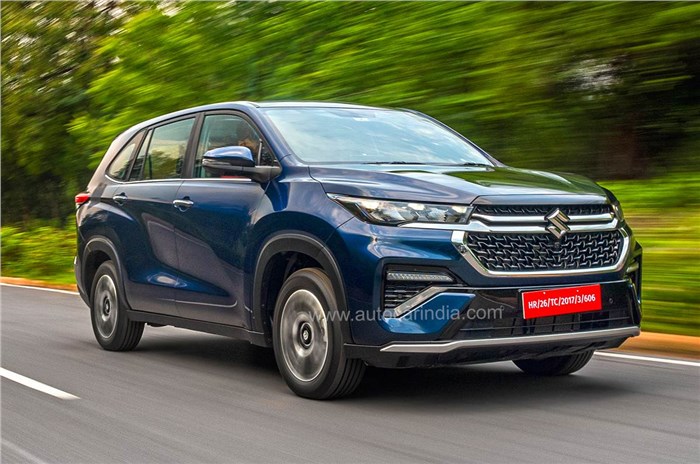
Can I retrofit larger 18-inch tyres in place of 17 inchers without voiding the warranty on my Invicto Alpha+? I also want to upgrade to a 9-speaker JBL system instead of the current six, change captain seats to bench seats and install fog lamps. Please help me decide.
J Neri, Mohali
Autocar India says: While it is possible to retrofit most of the parts – 18-inch rims and tyres, 9-speaker JBL audio setup, bench middle-row seat – in the Toyota Innova HyCross-derived Maruti Suzuki Invicto, it would not be advisable purely from a warranty standpoint.
In case of the upsized alloy wheels and tyres, Maruti Suzuki may reject any future warranty claim on the suspension components, citing the bigger rims and tyres.
Moreover, the existing wiring harness in the Invicto will not support the 9-speaker setup from the top-end HyCross, and a retro fitment would need replacing the existing harness with that of the HyCross. The installation would further entail stripping down the entire car, and if there is any electrical-related warranty claim in the future, Maruti Suzuki will reject it simply on the basis of non-standard wiring harness being fitted inside the car.
While a bench middle-row seat fitment looks like a bolt-on job, one would need to notify the RTO about the change in the vehicle’s seating capacity from 7 to 8 occupants, and get it endorsed on the car’s registration certificate. Since, the three-point seatbelt provision for the middle passenger will not be possible, the RTO will reject it. Future insurance claims will also be rejected due to the illegal conversion of the car to an eight seater.
Finally, while the HyCross offers it, there is no provision in the Invicto’s front bumper to house a pair of fog lamps. Hence, they cannot be retrofitted at all.
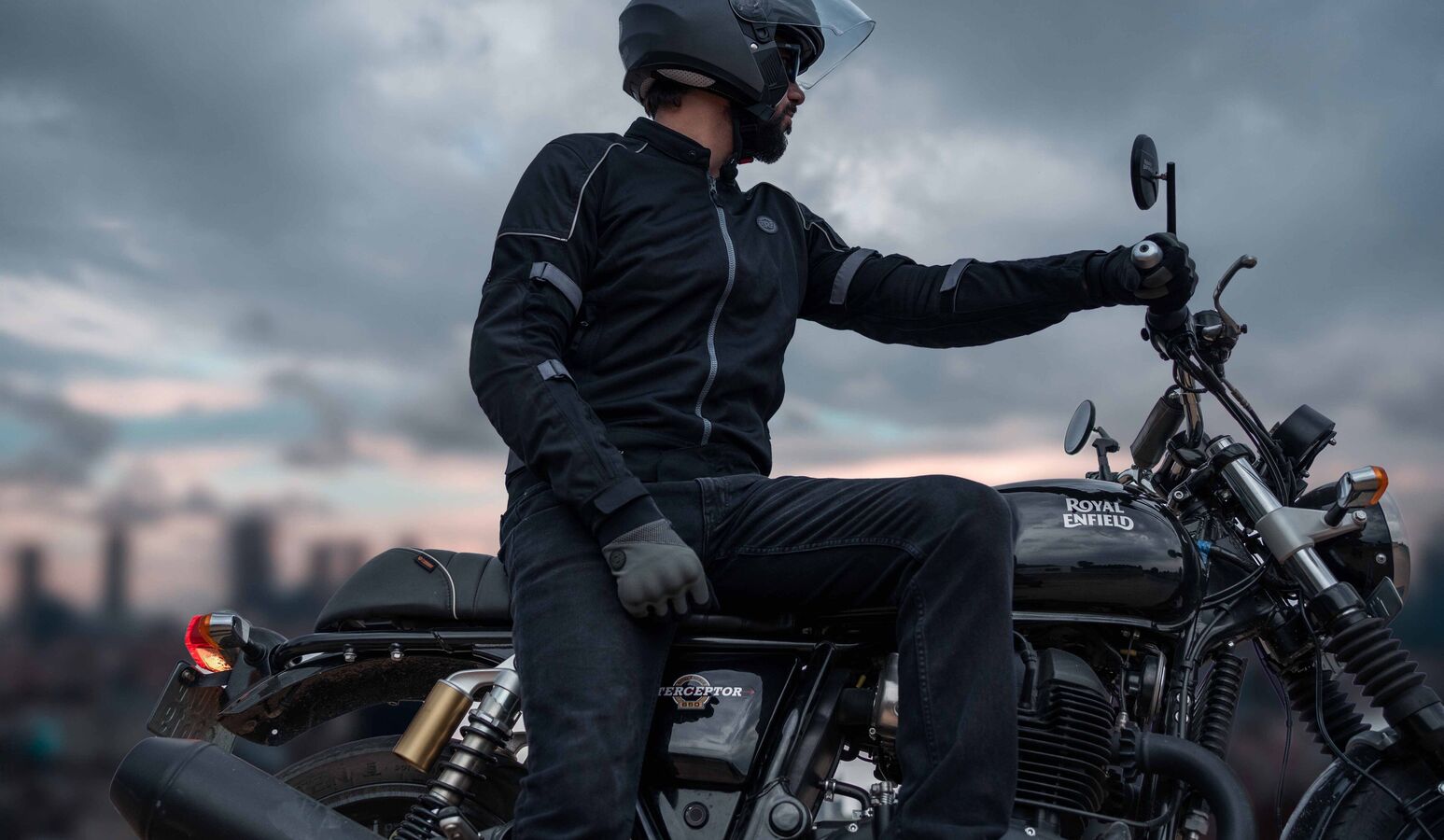
The jacket now comes with Ergo Pro Tech armor which is a Level 2 armor. It is fitted at the shoulders and elbows. There is space for a back protector as well as reflective elements for enhancing visibility during nighttime. Speaking of back protector, Royal Enfield’s Ergo Pro Tech Level 2 back armour is compatible with the jacket. The jacket is made up of Cordura fabric and has a mesh design. Royal Enfield says that the Streetwind V3 weighs just 1.17 kg and can be packed in laptop bags.
The jacket is made up of 90 per cent high abrasion-resistant polyester and 10 per cent 600D polyester. There are adjustable tabs located on the cuffs, waist, biceps, and forearms. Apart from this, two zipped pockets increase the practicality of the jacket. Royal Enfield is using YKK zippers which are considered one of the best in the segment. Other small elements that Royal Enfield is offering are a sunglass loop, velcro patch, pre-curved arms and snap fastener for the neck.
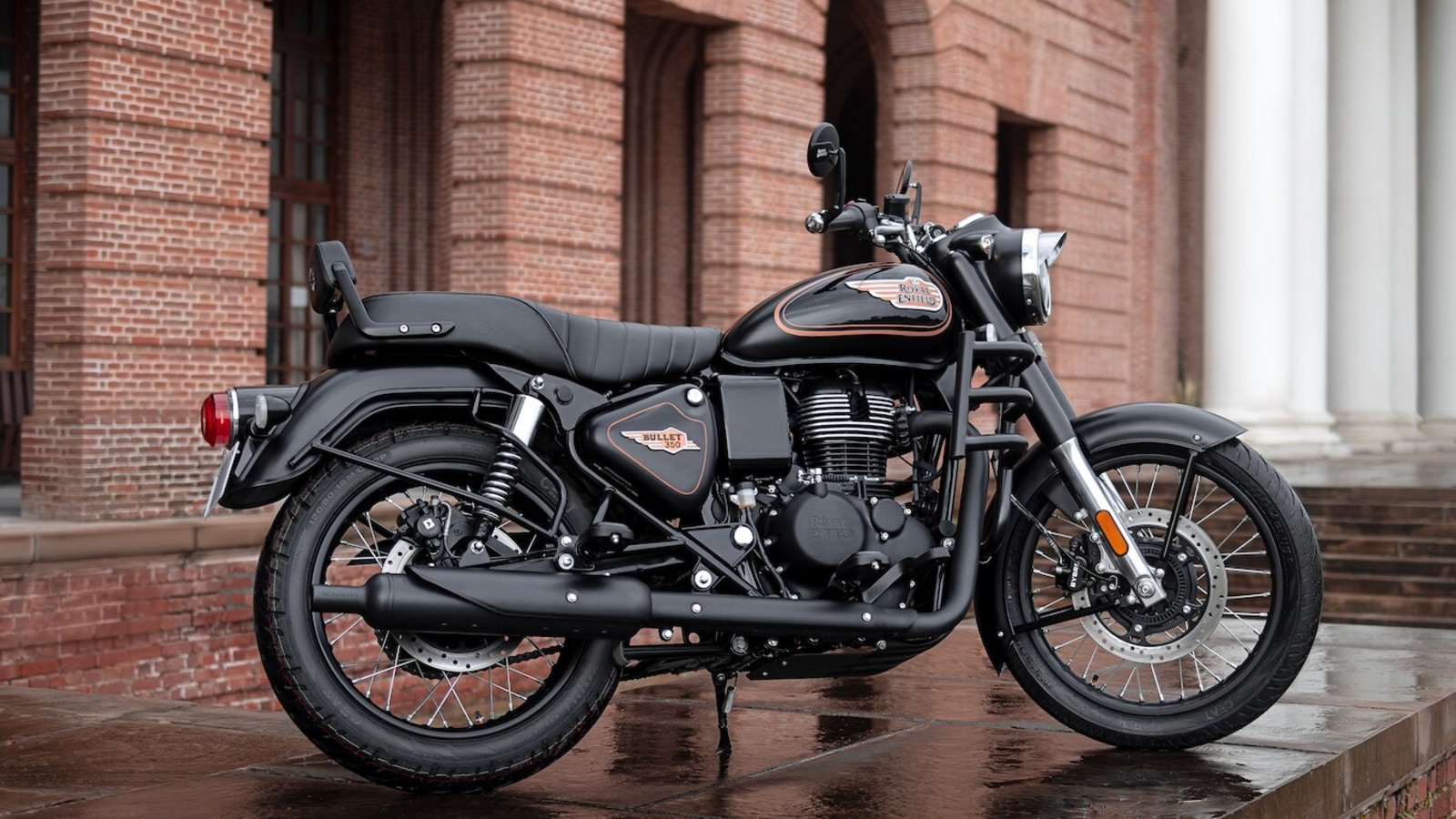
In other news, Royal Enfield is currently working on launching the Himalayan 450. It will be the manufacturer’s first motorcycle to come with a liquid-cooled engine. The training for the new motorcycle has been completed and the motorcycle will be launched in the coming months. It will sit above the current Himalayan which has a 411 cc engine. The new engine produces 40 bhp of max power and the initial response from the people who have ridden the motorcycle is quite positive.





.jpg&c=0 "Honda City price, Honda Amaze price, features, performance, special edition, elite edition, and elegant edition.")
.jpg&c=0)
.jpg&c=0)