
Last Updated:
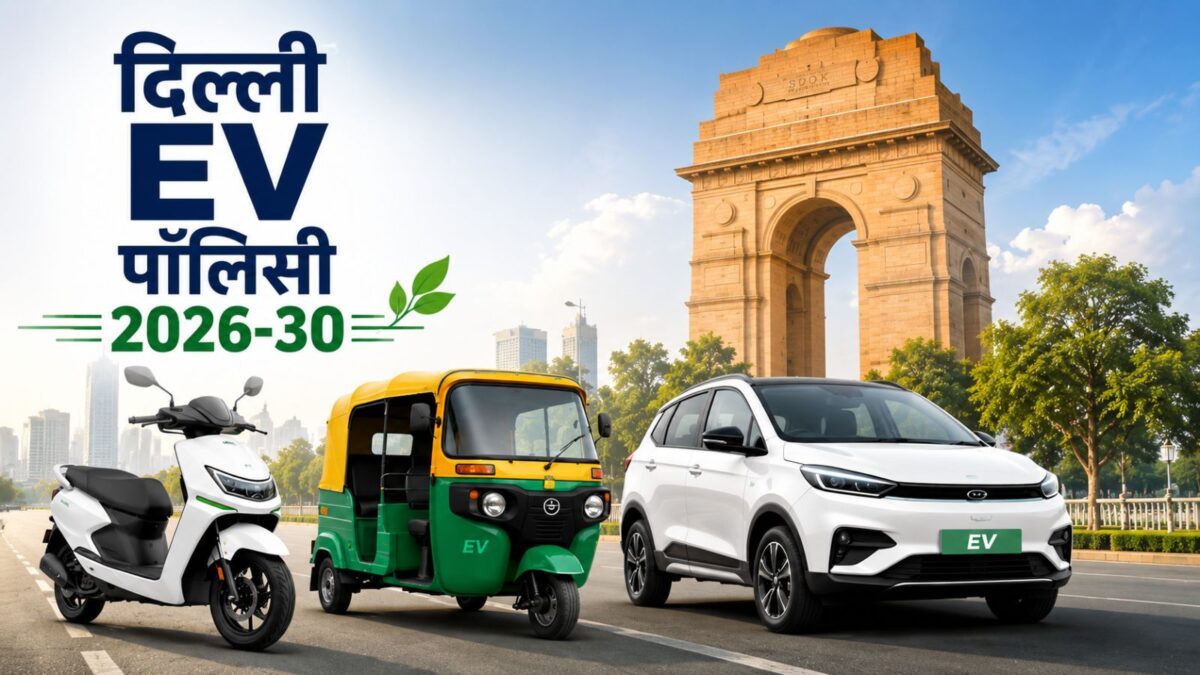
The draft of Delhi Government's new EV Policy 2026-30 has brought many big benefits for the common people. Proposals like subsidy of up to ₹ 30,000 on electric two-wheelers, scrapping incentive of ₹ 1 lakh on four-wheelers and 100% exemption in road tax are under discussion. Along with this, major rules which will be implemented from 2027 and 2028 have also come to the fore. Know what effect this new policy will have on you.
Know what has been offered in the new EV policy.
Delhi government has released the draft of the new EV Policy 2026-30 to reduce pollution and promote electric vehicles. Under this policy, electric two-wheeler buyers will get Rs 30,000 subsidy in the first year, three-wheeler buyers will get Rs 50,000 subsidy. Also, scrapping incentive of Rs 1 lakh will be given to BS-IV four-wheeler owners.
According to the policy, only electric autos will be registered from January 2027 and only electric two-wheelers will be new registered from April 2028. This policy is a big step towards improving the air quality of Delhi and reducing vehicle pollution (which causes about 23% of pollution in the capital).
Push EV Cell
The government aims to increase the share of EVs in new vehicles and to phase out old polluting vehicles. Subsidy will be given through Direct Benefit Transfer (DBT). The buyer should be a resident of Delhi and the vehicle should be registered in Delhi only. You will also get 100% rebate in road tax and registration fees on purchasing EV (on EVs up to Rs 30 lakh, till March 2030).
How much subsidy on two-wheeler?
The subsidy for two-wheelers has been decided on the basis of battery capacity (kWh). Rs 10,000 per kWh in the first year, maximum Rs 30,000. This will be limited to Rs 20,000 in the second year and Rs 10,000 in the third year. For three-wheeler (L5M), subsidy of Rs 50,000 (first year), Rs 40,000 (second) and Rs 30,000 (third year) will be available. There will be huge incentives for electric goods vehicles also.
Scraping incentive will also be available
Scrapping incentive will be available on scrapping old BS-IV or older Delhi registered vehicles and purchasing a new EV. Rs 10,000 on two-wheeler, Rs 25,000 on three-wheeler, Rs 1 lakh on four-wheeler and up to Rs 50,000 on goods vehicle. A new EV will have to be purchased within six months of scrapping. This model will encourage the adoption of EV along with the removal of old vehicles.
The policy also includes expansion of charging infrastructure, swappable battery stations, financing facilities and single window clearance. The target of 30% EV fleet in school buses has been set by 2030. The government estimates that this will lead to a major reduction in vehicle pollution and Delhi will move towards clean air.
who said what?
Rekha Gupta, Chief Minister
- Cabinet approves new EV policy.
- After the approval of LG, it will be implemented from July 1, 2026.
- The policy will remain effective till 31 March 2030.
- About ₹7,000 crore will be spent on the policy.
- Exemption in road tax and registration fee on pure EV.
- No subsidy to hybrid vehicles.
- No cap on EV purchase, benefits even on more than one vehicle.
Niharika, Transport Commissioner
- Incentives up to ₹30,000 on two-wheelers, ₹50,000 on autos and up to ₹1 lakh on N1 e-trucks.
- Additional incentive on scrapping of old vehicles.
- From January 1, 2027, new three-wheelers and N1 trucks will be registered only as EVs.
- From April 1, 2028, new two-wheelers will be registered only as EVs.
- 23,000 EV charging points will be installed during the policy period.
- The school bus fleet will be converted to EV in a phased manner.
- The focus of the policy is to reduce pollution caused by commercial vehicles.
Ashish Sood, Electricity Minister
- As EVs increase, power infrastructure will be expanded.
Dr. Pankaj Singh, Transport Minister
- The interests of Delhiites have been fully taken care of in the EV policy.
- Appeal to people to adopt EV policy.
Manjinder Singh Sirsa, Environment Minister
- The new EV policy will be a big step towards reducing pollution.
- The policy has been prepared on the basis of scientific studies.
- The policy is expected to significantly reduce Delhi's pollution levels.
About the Author
.jpg?impolicy=website&width=52&height=52 "authoring")
Ram Mohan Mishra, working as Senior Sub-Editor at News18 Hindi, is active in digital media since 2021 and is currently handling the Auto Desk. They provide car and bike related information in an easy, clear and reliable manner.read more
