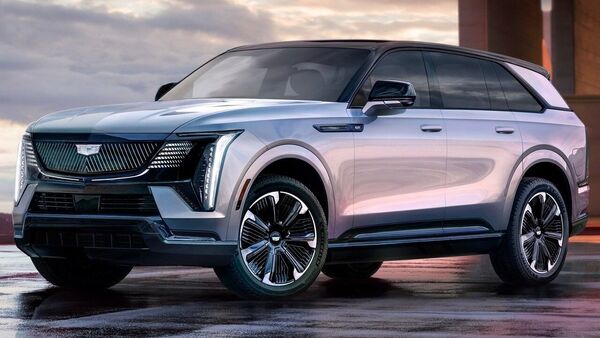
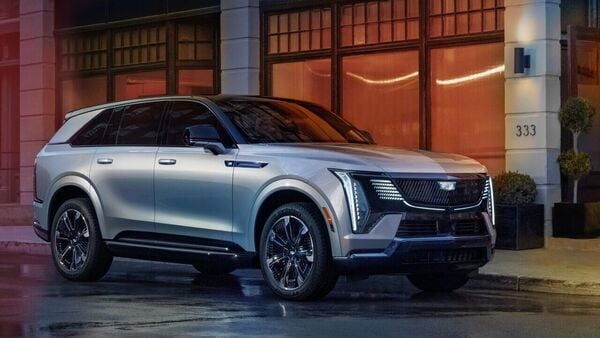
Cadillac is using a dedicated electric skateboard platform for the Escalade IQ.
By: HT Auto Desk | Updated on: 12 Aug 2023, 17:23 PM
1/10
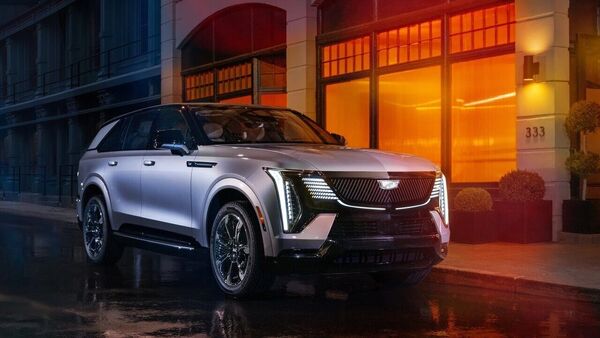
Cadillac has revealed the Escalade IQ which is essentially an electric version of the Escalade. However, it will not go on sale right now. Instead, Cadillac will launch Escalade IQ in 2025.
2/10
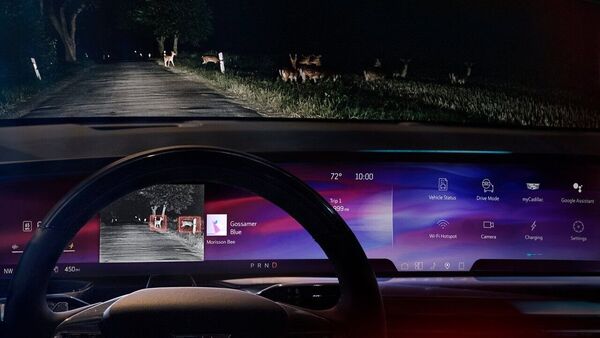
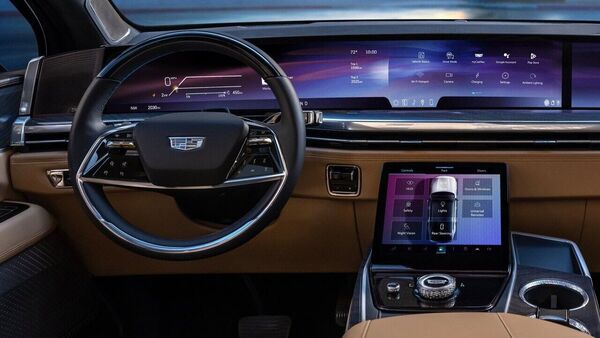
Being the Escalade, the interior is very luxurious. It comes with 55-inch-total-diagonal LED display powered by a next generation Snapdragon Cockpit Platform from Qualcomm Technologies.
3/10
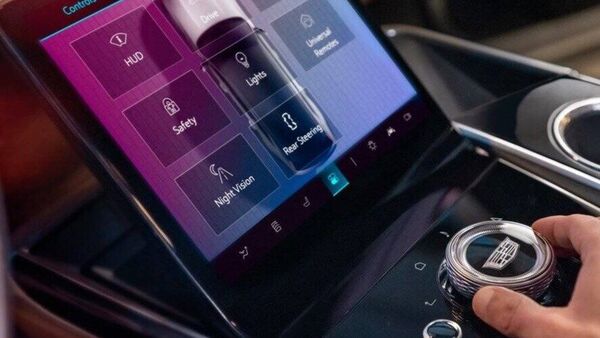
The rear occupants get their own 12.6-inch-diagonal screens with HDMI ports. Moreover, there is a centre screen as well that cna be used to control various functions of the car.
4/10
The Escalade IQ is based on GM’s Ultium platform which is a platform made for electric vehicles. It is essentially an electric skateboard platform where the wheels are placed on the corners and the floorboard forms the batteries. This helps in maximising the cabin space.
5/10
There are motors in the front as well as at the rear. So, it comes with an electric all-wheel drive system. Cadillac will offer four-wheel steering as standard. There will also be Arrival Mode and Low Ride Mode.
6/10
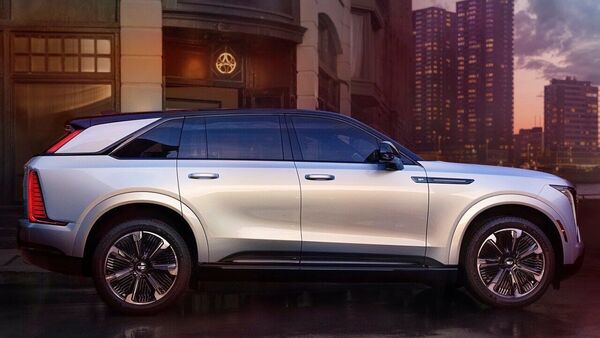
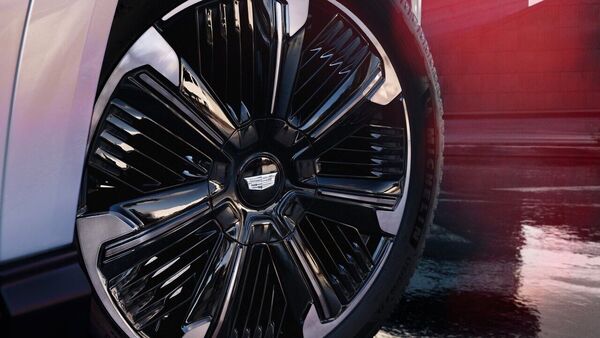
On the side, there are 24-inch alloy wheels that have an integrated aero design. The tyres measure 35-inch in size. There are flared wheel arches as well the enhance the side profile of the SUV.
7/10
The Escalade IQ is based on GM’s Ultium platform which is a platform made for electric vehicles. It is essentially an electric skateboard platform where the wheels are placed on the corners and the floorboard forms the batteries. This helps in maximising the cabin space.
8/10
Four-wheel steering reduces the turning circle while driving slowly as the rear tyres turn opposite to the front wheels. So, this helps in manoeuvring around a parking lot where there are tight turns. At higher speeds, the rear wheels turn in the same direction as the front wheels. This helps in increasing the stability.
9/10
The Arrival mode is basically the Crab Walk feature that we first saw on the Hummer EV. It helps the SUV drive diagonally which can come in handy during off-roading sessions. Caddilac says that it can also be helful while entering a tight parking lot.
10/10
The Low Ride mode enables the Escalade IQ to be driven at low speeds with the suspension fully lowered. This is possible because of the Adaptive Air Ride Suspension which can lowered by up to 50 mm and raised by 25 mm.
Bugatti has unveiled a new special edition of the Chiron Super Sport. It is called ‘Golden Era’ and is a one-off project for the manufacturer. The request came from a Bugatti collector with a deep appreciation for Bugatti history and the intricate engineering of the W16 engine. He chose Chiron Super Sport to celebrate the combustion engine design. He also wanted to pay homage to the history that had led to the creation of this engine.
By: Paarth Khatri | Updated on: 12 Aug 2023, 13:40 PM
Bugatti will only make one unit of Chiron Super Sport Golden Era.
So, Bugatti back through its history and found several landmark moments. They chose some icons that defined the Bugatti brand. The concept featured 45 sketches of the brand’s icons that would be hand-drawn directly onto the car itself. The owner immediately fell in love with the idea. However, it took a lot of patience and craftsmanship.
The special edition boasts 26 hand-drawn sketches on the passenger side. Some of them are the Type 41 Royale – lauded as the most luxurious car when revealed in 1926 – and the Type 57 SC Atlantic, widely regarded as the most beautiful car ever designed. On the driver’s side, there are 19 sketches which consist of EB110, Veyron and Chiron. New methods and processes were crafted to ensure that these details would stand the test of time. They sit proudly within the interior including subtle ‘Golden Era’ stitching and hand-written ‘One-of-One’ motifs.
Also watch: Bugatti Chiron Sport vs Rafale fighter jet: The mother of all drag races
Bugatti had to create a brand-new technique to achieve the desired finish for the exterior artwork. In all, this stage of the process took more than 400 hours because it was so complex. But the designers didn’t stop there. They also customized the interior. On each of the door panels, three Bugatti icons were hand-applied with a bespoke paint and fine paint brush that would allow one of the design team to draw directly onto the leather.
Four new Tata electric SUVs incoming; carmaker aims to build a portfolio of over 10 EVs by the end of 2025-’26.
Tata Motors says it hopes to sell about 10,000 electric vehicles every month as it expands its line-up to over half a dozen vehicles in the next year. The company has achieved the milestone of 1 lakh EVs in sales in the last five years, and expects to sell the next 1 lakh units within 12-14 months, said a senior executive of the company.
Celebrating its latest milestone, Shailesh Chandra, MD of Tata Passenger Electric Mobility, tells Autocar India, “The first 10,000 units would have taken us nearly 44 months. Then 50,000 [10,000 to 50,000 units] took us an additional 15 months, and the next 50,000 happened in nine months. Now, the next 1 lakh should happen in 12-14 months is what I would expect.”
With about 19,000 EVs in sales in the first quarter of FY24 (April-June 2023), group CFO PB Balaji has said Tata Motors is on the path to an annual volume of 1 lakh electric vehicles. The company, which seeded EVs in key markets, to begin with, has already penetrated over 130 cities with more than 250 dealers. In the last five years, over 6,500 public chargers have come up, which is fast moving to 10,000 chargers. There are chargers being set up at 1,500 residential complexes with 1 lakh home chargers already.
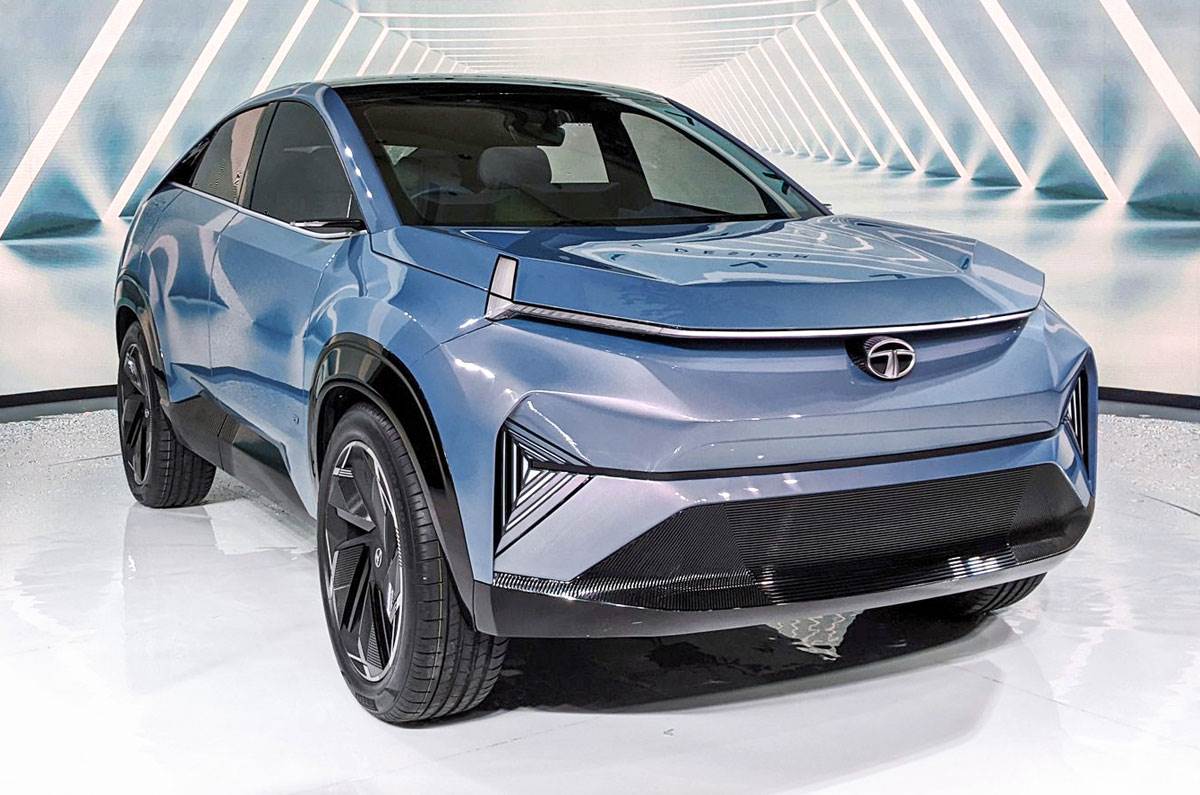
With the introduction of the Tiago EV, the penetration of zero-emission vehicles accelerated to 14-15 percent of the company’s total sales, and it has now set a vision of 50 percent penetration by 2030. Chairman Natrajan Chandrasekaran recently confirmed that in the next few quarters, four new EVs (Nexon EV facelift, Punch EV, Harrier EV and Curvv EV) will be launched, and this is set to expand the price point from Rs 8.5 lakh with Tiago EV at the entry-level to the Rs 30 lakh Harrier EV at the top.
‘A calculated gamble’: Shailesh Chandra
The management sees the journey as a transformational one, given the fact that when the company kicked off its EV business, the vendors didn’t believe them, customers felt that the EVs were the cars for the future, and there were hardly any players to invest in infrastructure. “When we entered the market, there were no enablers, and the market was not ready for electrification,” recalls Chandra on the journey. “But as a Group we took a bet given the challenges of pollution, climate change and higher dependence on imports, and the bet has paid off. Today, the suppliers want to invest, the customer mindset has transformed faster than we thought and the charging infrastructure came up faster than expected.”
He said it was a gamble, but a calculated gamble with a mitigation strategy of introducing electric powertrain through three different interventions – Gen-1 based on existing vehicle architecture; Gen-2 adapting new-gen architecture to accommodate both ICE and EV powertrains; and Gen-3 based on born-EV skateboard architecture. “This allowed us to launch EVs at almost 1/10th the cost, while gaining market insights,” Chandra says.
But these learnings came through addressing niggling issues. Since it is a new technology in a new environment, Chandra admits that Tata Motors faced certain problems and so did its customers. “The idea was that we respond to those problems fast and do the root cause analysis, doing combinations of immediate and permanent corrective actions, and today the technology has matured a lot. There are lesser problems today than we see,” he adds.
Tata Motors has a strong first-mover advantage and the learnings of the last five years will hold the company in good stead. The company today has a market share of over 85 percent and it is well funded to create a portfolio of over 10 EVs by the end of 2025-’26. It has committed an investment of USD 2 billion (roughly Rs 16,580 crore) in the EV business starting in 2022 over a period of five years.
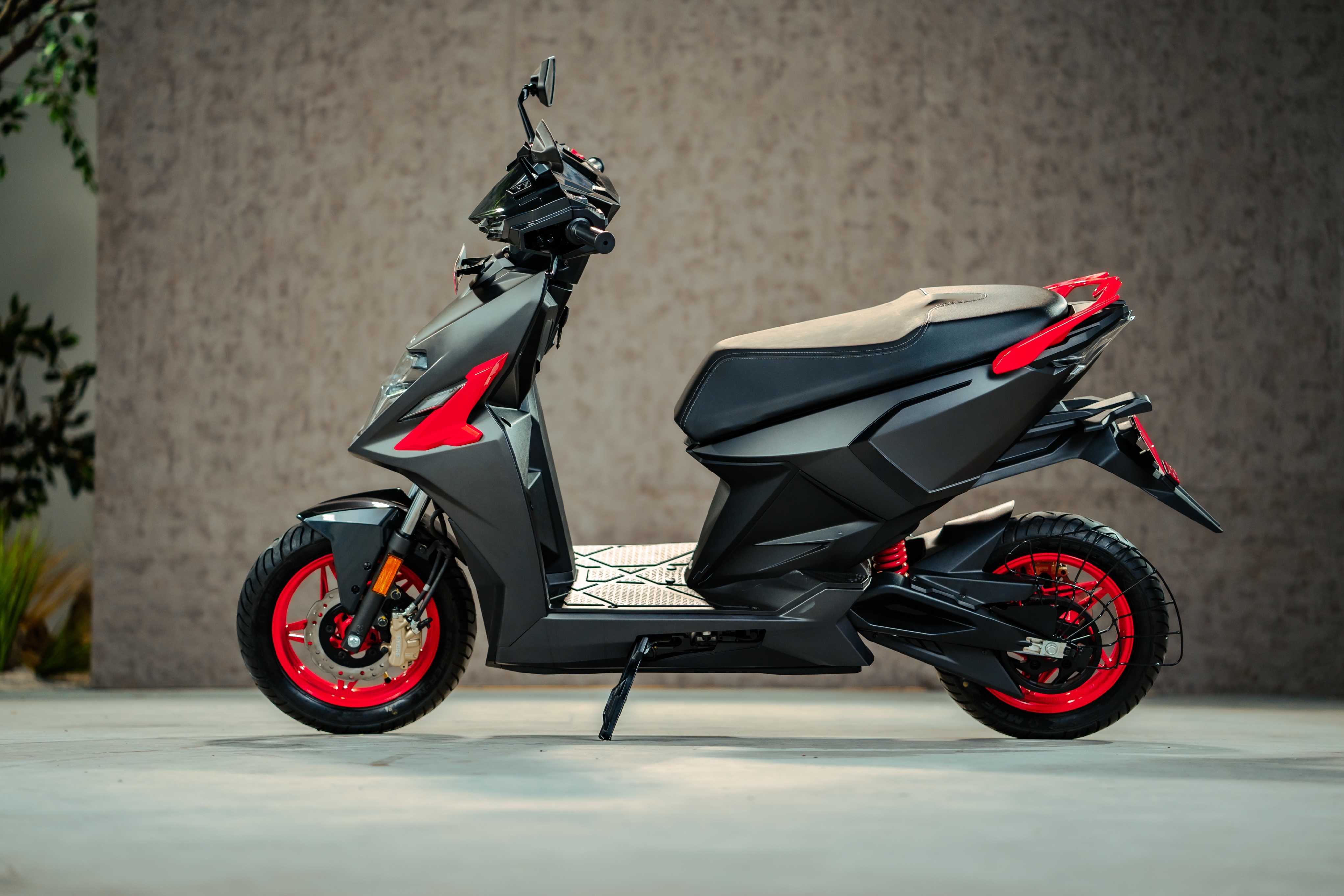
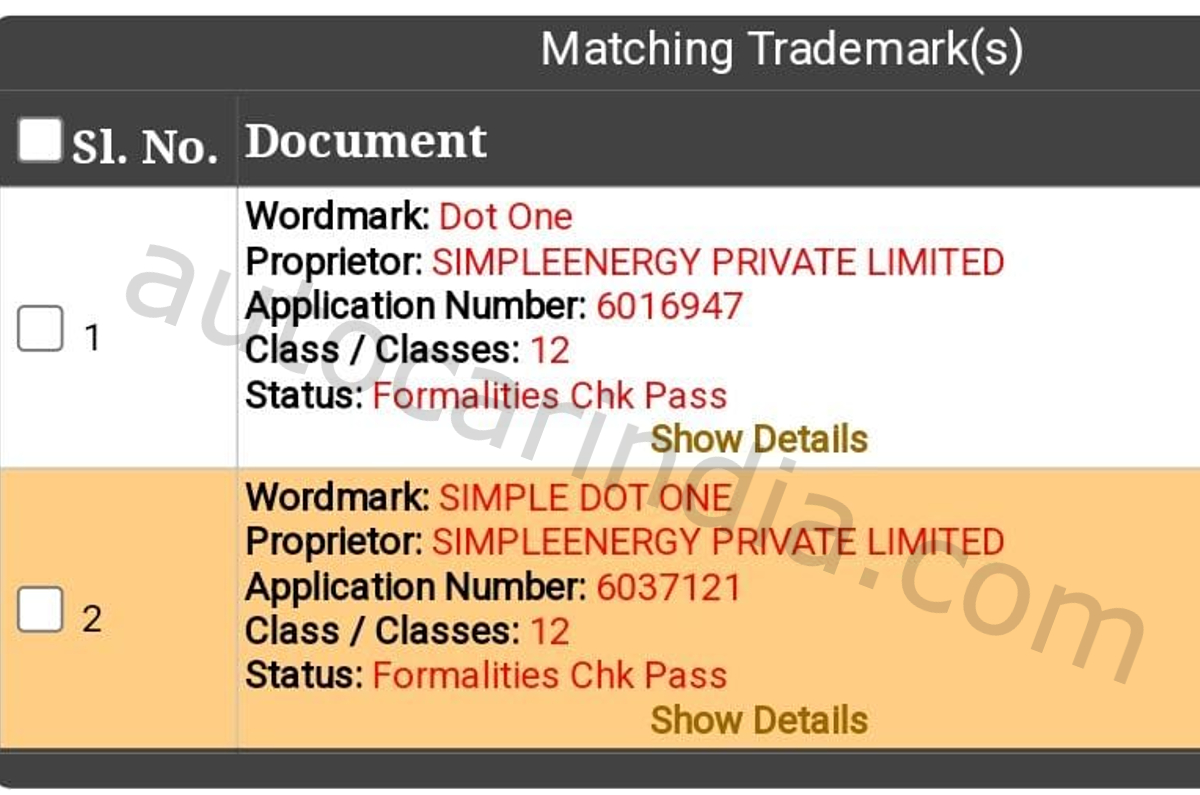
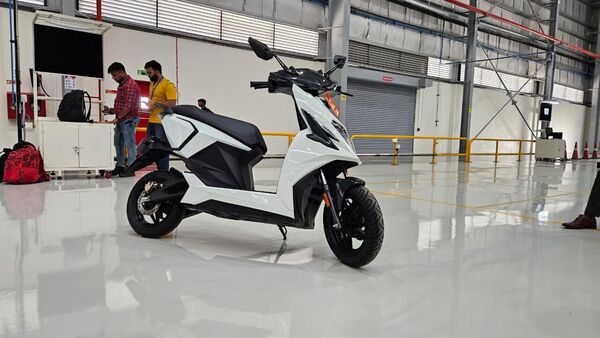
Bengaluru-based start-up Simple Energy has trademarked ‘Dot One’ and ‘Simple Dot One’ nameplates in India hinting at two new electric scooters in the works. The two new e-scooters will most likely be variants of each other with a few differences. Sources suggest the upcoming Simple Dot One and Dot One e-scooters will be positioned below the Simple One, launched earlier this year. The upcoming offerings will take on the newly-launched Ather 450S, Ola S1 Air and TVS iQube in the segment.
By: Sameer Fayaz Contractor | Updated on: 11 Aug 2023, 15:15 PM
Simple Energy will bring two new electric scooters to the market by October that will be positioned below the One in its stable
The Simple Dot One and Dot One e-scooters are expected to arrive as early as October with a range of about 180 km on a single charge. The company is likely to use the same platform as the One but plonk a smaller battery and fewer features to make it more cost-effective.
₹1.45 lakh, going up to ₹1.58 lakh (ex-showroom Bengaluru after subsidy). The new models will undercut this pricing” src = “https://images.hindustantimes.com/auto/img/static/1x1_img.gif” onclick=”sendGa(this);” title=”Prices for the Simple One start at ₹1.45 lakh, going up to ₹1.58 lakh (ex-showroom Bengaluru after subsidy). The new models will undercut this pricing” style=”width:auto;” >
Prices for the Simple One start at ₹1.45 lakh, going up to ₹1.58 lakh (ex-showroom Bengaluru after subsidy). The new models will undercut this pricing
Currently, the Simple One is priced from ₹1.45 lakh (ex-showroom, after FAME II subsidy) onwards, which positions itself at the premium end of the electric scooter segment. Do note that the One was originally announced with an asking price of ₹1.10 lakh (ex-showroom). However, the revision in FAME II subsidies meant the pricing witnessed a significant price bump, much like the rest of the competition.
The more affordable Simple Dot One and Dot One aim to make the e-scooter more accessible. At present, the One e-scooter comes equipped with an 8.5 kW (11.3 bhp) electric motor with a continuous power output of 4.5 kW (6 bhp) and a peak torque of 72 Nm. The model can sprint from 0-40 kmph in 2.77 seconds with a top speed of 105 kmph, which makes it one of the fastest scooters in its class.
The Simple Dot One will be produced at the company’s facility in Tamil Nadu and is likely to share its underpinnings with the One e-scooter
The Simple One gets a claimed range of 212 km on a single charge from its 5 kWh battery pack. The charging time will also differ, should the model not get fast charging. The Simple Dot One and Dot One will be built at the company’s facility in Shoolagiri, Tamil Nadu, with an annual production capacity of 10 lakh units. At the time of launch, Simple Energy said that it had over 1 lakh bookings for the One e-scooter, and the numbers should increase further when the Dot One hits the market. The start-up has begun deliveries of the One only in Bengaluru so far, while other cities should get the model in the coming months.
Sources close to the company quote an expected range claim of 180km.
Simple Energy already has its debut offering on sale, in the form of the One e-scooter that became available to buyers a few months ago. Now, the company has trademarked the Dot One nametag, and it’s likely that it could feature on an upcoming model that will be more affordable.
Priced between Rs 1.45 and 1.50 lakh, the One is a rather expensive proposition, and a big part of that is down to its rather large 5kWh total battery capacity. The recent cut in the FAME-2 subsidy will only have added to Simple’s challenges, and therefore the most likely possibility is that the new Dot One nametag will find its way onto a more affordable entry-level offering that will quite possibly sport a smaller battery pack.
Sources close to the company indicate a claimed range in the ballpark of 180km for the upcoming model, which is slightly lower than the 212km claimed IDC range for the One. This further supports the notion that the Dot One will receive a slightly smaller battery pack, and Simple could also cut down on some of the features to help reduce costs. The 5kWh capacity on the One is split between a fixed pack in the floorboard and a removable pack in the underseat area, and perhaps Simple could move to a ‘simpler’ design featuring only a single fixed battery pack.
Meanwhile, as Simple Energy seemingly prepares to launch new products, its debut offering has seen a slow start, with the government’s VAHAN portal showing just 32 Simple scooters registered since it became available to buyers in May. This comes two years after the company first ‘launched’ the product on 15 August 2021, then at Rs 1.1 lakh. Despite this, Simple Energy claims to have received over 1 lakh bookings in the pre-launch period of the One.
Toyota Kirloskar Motor (TKM) has trademarked the ‘Urban Cruiser Taisor’ nameplate in India and it’s quite likely that this will be the name of the automaker’s upcoming subcompact SUV. The automaker exited the subcompact SUV space with the discontinuation of the Urban Cruiser (badge-engineered Vitara Brezza) and will re-enter with another badge-engineered Maruti, the Fronx. This is expected to be the brand’s next launch after the Toyota Rumion.
By: Sameer Fayaz Contractor | Updated on: 11 Aug 2023, 12:20 PM
The Toyota Urban Cruiser Taisor name has been trademarked, which stems the possibility of a new subcompact SUV based on the Maruti Suzuki Fronx
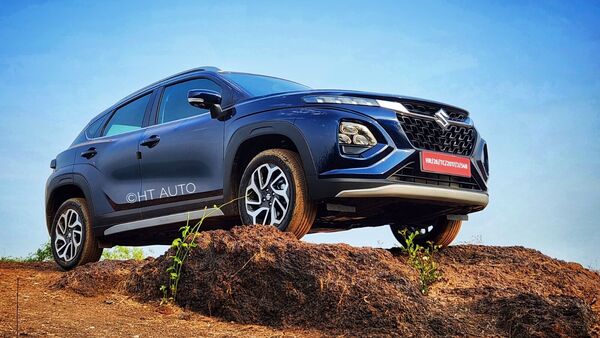
The Maruti Suzuki Fronx shares its underpinnings with the new generation Baleno but gets a more butch look inspired by the Grand Vitara. It won’t be surprising if Toyota opts for a styling similar to its Urban Cruiser Hyryder. What we do know is that the Fronx and the upcoming Taisor are likely to share most components, as badge-engineered models tend to be. Expect to see a revised grille, tailgate, bumpers, and new alloys among subtle styling updates to make it visually different from the Maruti Suzuki Fronx.
The 1.2-litre NA petrol is the more popular option on the Maruti Suzuki Fronx. It needs to be seen if the Toyota Taisor gets the turbo petrol too (HT Auto/Sabyasachi Dasgupta)
The cabin will largely retain the same design and equipment levels with minor tweaks including new upholstery, colours and more. The Fronx is fairly loaded with a 9-inch touchscreen infotainment system, a leather-wrapped steering wheel, a 360-degree camera, a head-up display, wireless charging and more.
The Fronx is offered with two engine options including the 1.0-litre BoosterJet turbo petrol with 99 bhp and 147 Nm of peak torque, as well as the more popular 1.2-litre naturally aspirated petrol with 88 bhp. It’s unclear as to which engine option will be offered on Taisor. Both engines are paired with a 5-speed manual. Automatic transmission options include a 6-speed torque converter on the turbo petrol, whereas the 1.2 NA uses a more cost-effective 5-speed AMT.
Watch: Maruti Suzuki Fronx SUV: First Drive Review
If Toyota opts to retail the turbo petrol engine, it will be a first for the automaker in India. That said, a CNG variant is also likely to join the stable considering it’s already available on the Fronx. The Toyota Urban Cruiser Taisor is expected to arrive around the festive period this year. But before that, the automaker is gearing up to introduce the Rumion, which is another badge-engineered offering based on the Maruti Suzuki Ertiga. The company will also begin deliveries of the Vellfire from November onwards.
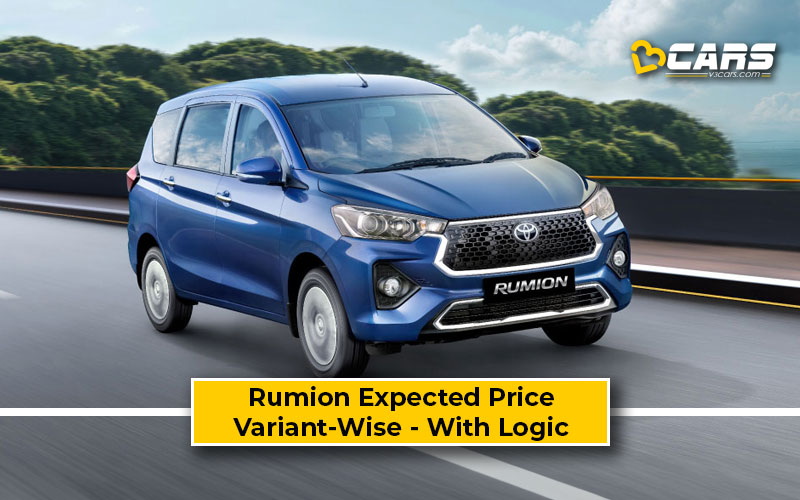
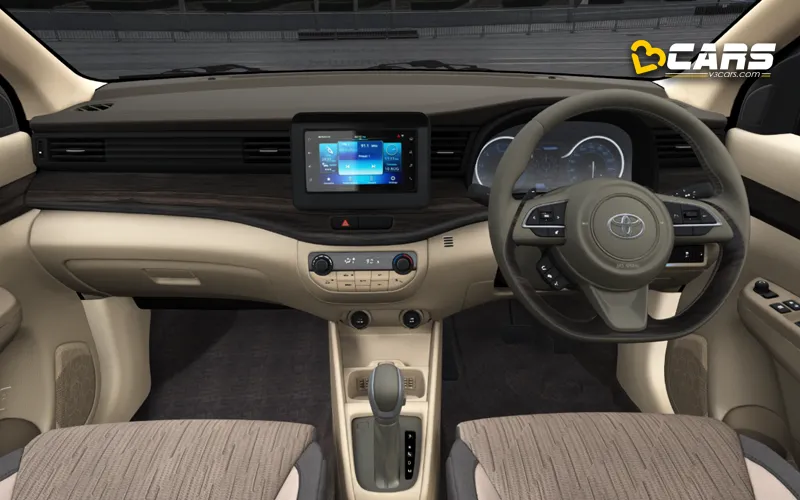
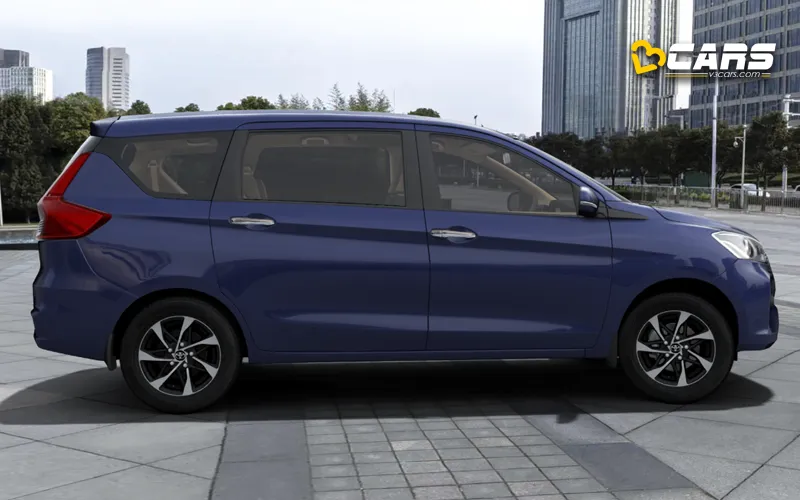
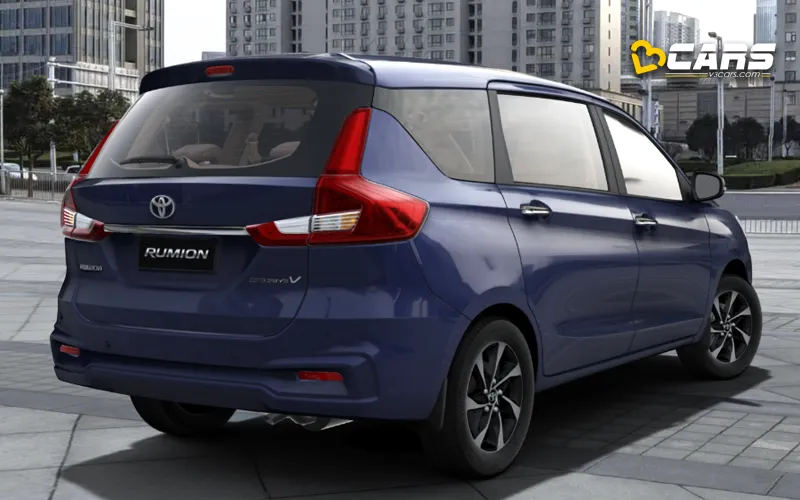
In this article, we’ll estimate the variant-wise ex-showroom price of the upcoming Rumion — Toyota’s new MPV to rival the Maruti Suzuki Ertiga, Kia Carens and Nexa XL6. We’ll explain the logic behind the calculations along with the reasons to support our estimations. As and when we get more information affecting our Toyota Rumion price estimations, we’ll update this article to accommodate new findings.
Toyota Rumion — Powertrain/Engine Options
In one glance, you could tell that the Toyota Rumion is essentially the Maruti Suzuki Ertiga with some Toyota design elements all around.
The Rumion will come in 3 variants – S, G and V. The base, S variant, will offer CNG-manual, petrol-manual and petrol-automatic powertrains. Since this is based on the Ertiga’s VXI variant, we expect it to cost Rs. 10.0 lakh with the petrol-manual powertrain. The CNG could cost another Rs. 1.0 lakh or so while the automatic could cost Rs. 1.30 lakh more.
The mid-spec G variant with the petrol-manual powertrain could cost Rs. 1.0 lakh more and carry an ex-showroom price of Rs. 11.0 lakh.
The top-spec V variant of the Rumion will come with petrol-manual and petrol-automatic powertrains. With the petrol-manual powertrain, it could cost Rs. 11.70 lakh while the automatic could cost Rs. 13.0 lakh (ex-showroom).
TOYOTA RUMION
EXPECTED EX-SHOWROOM PRICE (AUGUST 11, 2023)
Variant
CNG-Manual
Difference
Petrol-Manual
Difference
Petrol-Auto
S
Rs. 11.0 lakh
Rs. 1.0 lakh
Rs. 10.0 lakh
Rs. 1.30 lakh
Rs. 11.30 lakh
G
–
–
Rs. 11.0 lakh
–
–
V
–
–
Rs. 11.70 lakh
Rs. 1.30 lakh
Rs. 13.0 lakh
Now let’s look at the variant-wise expected prices of the Toyota Rumion to find out how we arrived at these numbers.
The Toyota Rumion starts from the S variant. It’s the VXI equivalent of the Maruti Ertiga. We aren’t missing the Ertiga LXI-equivalent variant of the Rumion as it doesn’t get several features, which are a must-have for a car of this size. So, we don’t recommend anyone to buy the Ertiga LXI and we wouldn’t have suggested our audience to buy the Rumion E either if it existed.
The Rumion S is available with 3 powertrain options — petrol-manual, petrol-automatic and CNG-manual. Here’s the list of Ertiga’s VXI variant ex-showroom prices:
MARUTI SUZUKI ERTIGA VXI
Powertrain
Ex-Showroom Price
CNG-manual
Rs. 10,73,000
Difference
Rs. 95,000
Petrol-manual
Rs. 9,78,000
Difference
Rs. 1,50,000
Petrol-automatic
Rs. 11,28,000
This variant of the Ertiga sells in good numbers. So, Toyota may not feel the need to market this one aggressively. Since the Rumion is essentially a Maruti R&D product, we should expect the Toyota version to carry a slight premium to give the Ertiga some breathing room.
Thus, we expect the Rumion with the petrol-manual powertrain to cost close to Rs. 10.0 lakh. This price will give the car a good starting price of (barely) under Rs. 10.0 lakh. Moreover, it’ll help Toyota to share part of the profits with Maruti Suzuki as they are sourcing the Rumion from them and using their R&D.
For the CNG, we expect Toyota to charge close to Rs. 1.0 lakh, thus stretching the S CNG variant’s price to Rs. 11.0 lakh. Here too, they can maintain a good Rs. 25,000-odd price premium to avoid an overlap with the Ertiga VXI.
For the torque converter automatic transmission, Toyota charge Rs. 1.20 lakh with Hyryder over the comparable petrol-manual variants. Meanwhile, Maruti Suzuki charge Rs. 1.50 lakh. But, Toyota aren’t doing charity with a lower premium for the automatic transmission. Their Hyryder manual variants are so expensive that the automatic comes across as a decent value. It tells us that Toyota are more interested in pushing the automatic transmission to the consumers.
Hence, we expect the Toyota Rumion S variant with the petrol-automatic to cost about the same as the Ertiga. Given Toyota’s high brand presence among fleet buyers, Toyota may manage to attract a good number of customers even with a higher price tag.
Here’s a look at the Ertiga VXI variant’s prices and what we expect the Toyota Rumion to cost:
ERTIGA VS RUMION
PRICE COMPARISON
Powertrain
Maruti Ertiga VXI
Ex-showroom Price
Difference
Toyota Rumion S
Expected Price
CNG-manual
Rs. 10,73,000
Rs. 27,000
Rs. 11,00,000
Difference
Rs. 95,000
Rs. 1,00,000
Petrol-manual
Rs. 9,78,000
Rs. 22,000
Rs. 10,00,000
Difference
Rs. 1,50,000
Rs. 1,30,000
Petrol-automatic
Rs. 11,28,000
Rs. 2,000
Rs. 11,30,000
Toyota Rumion G Expected Price – Rs. 11.0 Lakh (Petrol MT)
The Toyota Rumion G variant will only come with the petrol-manual powertrain. It could cost Rs. 11.0 lakh, which is Rs. 12,000 higher than the Ertiga ZXI.
Toyota Rumion V Expected Price – Rs. 11.70 lakh (Petrol MT), Rs. 13.0 Lakh (Petrol AT)
The Toyota Rumion V variant is the ZXI Plus equivalent of the Ertiga. If you buy the Ertiga ZXI Plus, then it’ll cost you Rs. 11.58 lakh with the petrol-manual and Rs. 13.08 lakh with the petrol-automatic powertrain.
Here too, we expect Toyota to maintain some premium over the Ertiga with the manual transmission. So, the Rumion V petrol-manual could cost Rs. 11.70 lakh, thus costing Rs. 12,000 more than the Ertiga VXI petrol-manual.
In terms of the automatic transmission, assuming a Rs. 1.30 lakh premium for the same, the V variant could cost Rs. 13.0 lakh, which actually makes it Rs. 8,000 cheaper than the Ertiga ZXI Plus auto. If you’re wondering how that is possible then here’s my explanation:
The Ertiga is a popular product among fleet owners and commercial vehicle buyers. So, the higher end variants end up selling in low-to-negligible numbers. The top-spec variants are the ones that bring in bigger profits as the margins are higher. Given Toyota’s higher brand value, they may have an easier time selling the top variant, that too with the automatic transmission. Therefore, offering a slight price advantage over the Ertiga’s top model may make the Rumion V automatic a desirable option for potential MPV buyers.
2023 Toyota Rumion Expected Price Summary
The base variant of the Toyota Rumion with the CNG-manual powertrain could cost Rs. 11.0 lakh. The petrol-manual variants could cost between Rs. 10.0 lakh and Rs. 11.70 lakh. The S and V variants with the petrol-automatic powertrain could cost Rs. 11.30 lakh and Rs. 13.0 lakh, respectively.
By: Paarth Khatri | Updated on: 10 Aug 2023, 17:11 PM
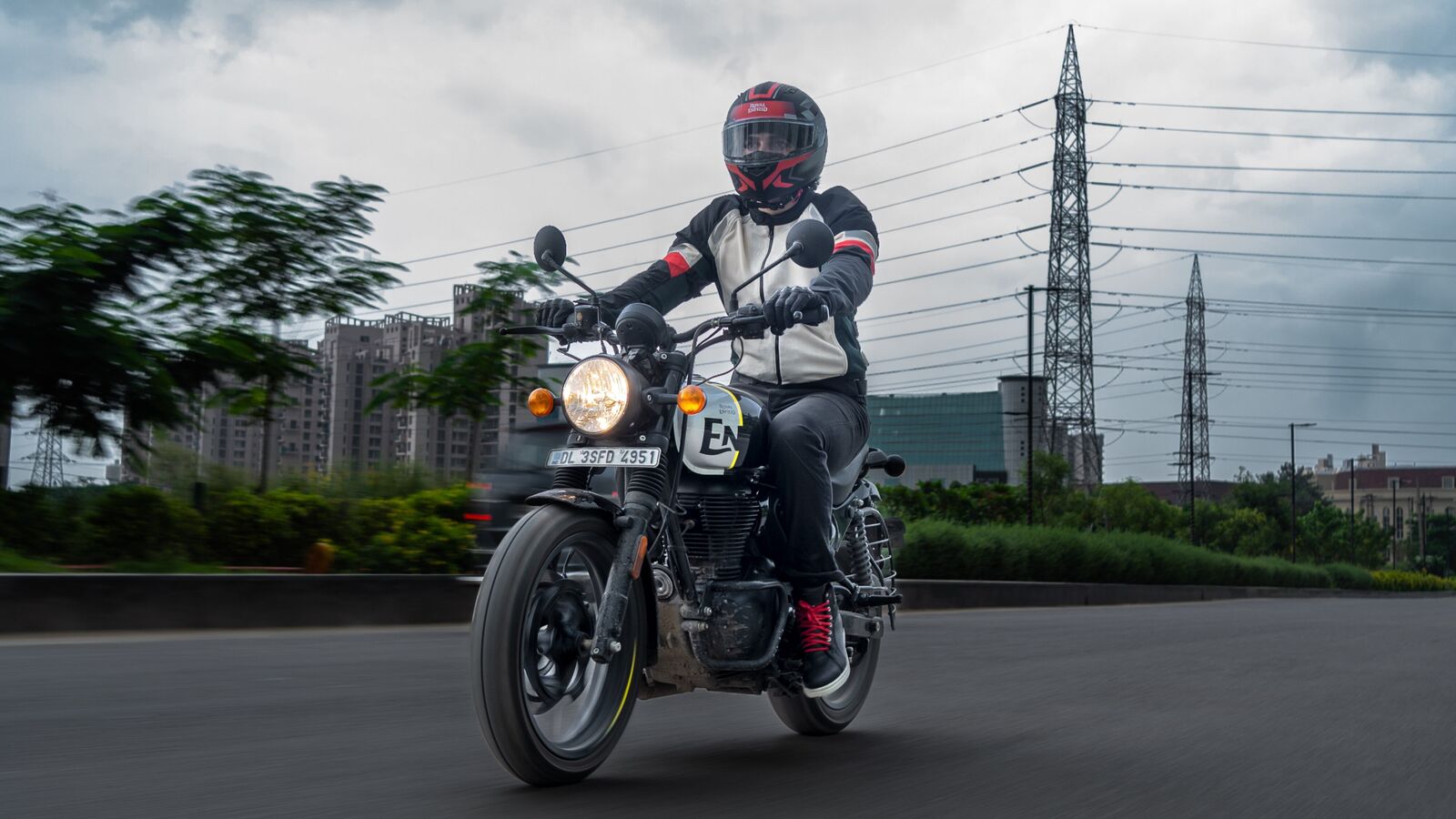
Royal Enfield has launched a new riding jacket in the Indian market. It is called Streetwind Eco and what is special about it is that is made up of 100% recycled materials such as recycled polyester shell fabric, recycled polyester mesh fabric and recycled nylon Cordura. The manufacturer also repurposed 75 plastic pet bottles for one single jacket. The Streetwind Eco is priced at ₹5,950.
Royal Enfield offers Streetwind in three colour schemes.
As the name suggests, the Streetwind Eco is a ventilated mesh jacket for summer use. The design consists of 90 per cent mesh for airflow. Despite being a lightweight jacket, it comes with newly launched Ergo Pro Tech CE level 2 armour.
It passes the latest CE 2 standards even under different conditions like ambient, wet, hot, and cold temperatures and their 3D construction ensures a perfect fit for the human body’s impact zones. The shoulder and elbow armours are contoured to provide a snug fit at the joints, allowing for comfortable movement without any discomfort. Moreover, the design considers easy integration into jackets and trousers, making it convenient for the riders. To promote breathability, multiple vents are incorporated into the design, ensuring the rider’s skin remains cool and comfortable. Royal Enfield is using a Hexa pattern, with strategically placed grooves which enhances the flexibility of the armours.
Commenting on the launch, B Govindarajan, CEO, Royal Enfield, said, “Central to Royal Enfield’s philosophy is the commitment to leave every place better. Our comprehensive approach to sustainability is not only limited to our products, but extends to vendors, manufacturing, and collaborations ensuring that the entire supply chain is environment friendly. Having developed an apparel and gear portfolio that caters to riders regardless of terrain, weather conditions, or destinations, we are charting the way to a more sustainable future. With the launch of The Streetwind Eco Riding Jacket, we aim to set new benchmarks that look ahead, towards a promising and eco-conscious future in the segment.”
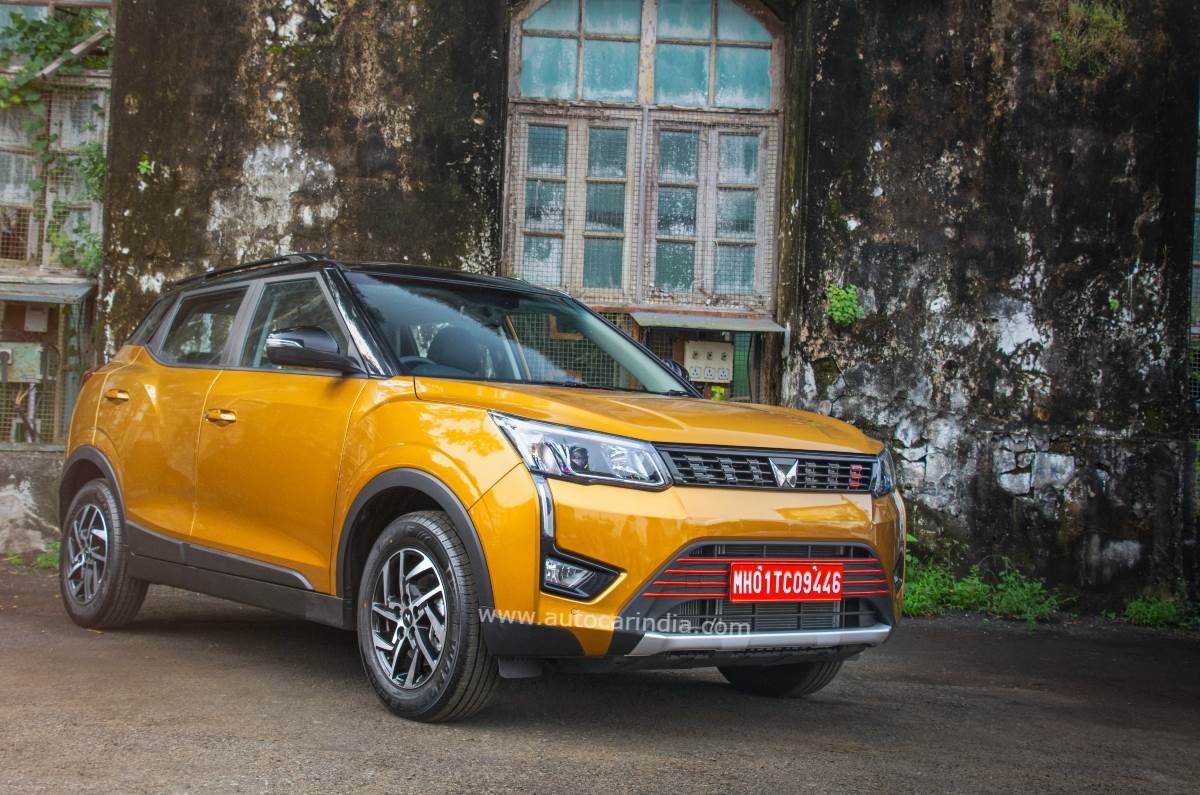
With the introduction of the W4, the sporty, high-performance 1.2 L mStallion TGDi petrol engine option is now available in a more affordable variant. Previously, this powertrain was exclusive to variants from W6 onwards. The powertrain offers a 0-60 km/h acceleration in just five seconds, thanks to 230 Nm of peak torque and 96 kW of power. Further, the company has enhanced the W4 variant line with a sunroof on both petrol and diesel models.
With the introduction of new entry-level W2 variant, the XUV300 range now starts at ₹7.99 lakh as against ₹8.65 lakh previously. The price goes up to ₹14.59 lakh for the W8(O) Turbo Diesel with AutoShift gear.
Mahindra XUV300 is available with both manual transmission and advanced auto SHIFT technology in both diesel and petrol engine options. The SUV claims to offer high fuel efficiency in its segment. It gets various first-in-segment features such as all 4-disc brakes and dual-zone automatic AC. The five-seater SUV gets a wide in-cabin space and rugged design.
Earlier in March,Mahindra updated XUV300 with new engines to meet stricter emission norms from April 1. The carmaker updated the XUV300 lineup with engines compliant with RDE norms which make them compatible with ethanol-based fuel. As a result, Mahindra has also increased the prices of the sub-compact SUV.
In addition to the W2, the company has also launched a base variant for the XUV300 TurboSport, the W4.
Mahindra has launched two new manual variants of the XUV300 compact SUV, and the compact SUV’s prices start at Rs 7.99 lakh.
All W4 variants get a sunroof
W4 variant extends to the Turbosport model
New, entry-level W2 variant introduced
Mahindra XUV300 W2
Mahindra has introduced a new W2 base variant on the compact SUV, which sits below the W4 variant. This variant is available exclusively with one engine and gearbox option – a 110hp, 200Nm, 1.2-litre turbo-petrol mated to a 6-speed manual gearbox. With this new base model costing Rs 7.99 lakh, ex-showroom, we expect that the vehicle will lose certain features that are available on the W4. However, the company has not shared any details with us yet.
Mahindra XUV300 Turbosport W4
The sportier model in the XUV line-up, the Turbosport, also gets a new W4 base trim that’s priced at Rs 9.29 lakh. It was previously available only from the W6 trim onwards, which is Rs 1.2 lakh less than the W6. This new W4 trim is available only with a 6-speed manual and has 131hp and 230Nm on tap.
Mahindra XUV300 price and variants
Variant
Petrol Manual
Petrol Automatic
TurboSport
Diesel Manual
Diesel Automatic
W2
Rs 7.99 lakh (new)
–
–
–
–
W4
Rs 8.65 lakh
–
Rs 9.29 lakh (new)
Rs 10.20 lakh
–
W6
Rs 9.99 lakh
Rs 10.69 lakh
Rs 10.49 lakh
Rs 10.99 lakh
Rs 12.29 lakh
W8
Rs 11.49 lakh
–
Rs 11.99 lakh
Rs 12.99 lakh
–
W8(O)
Rs 12.59 lakh
Rs 13.29 lakh
Rs 12.99 lakh
Rs 13.91 lakh
Rs 14.59 lakh
In addition, all W4 variants now get a sunroof, which was previously available only from the W6 variant onwards. Mahindra will also introduce a panoramic sunroof with the facelift of the XUV300 next year. The W4 variant is now available with three engine options – 2 petrol and a diesel – but only with a manual gearbox.
As is the case with the W2, the company has not shared the revised feature list with us, so it is not known what the W4 misses out on over the W6.
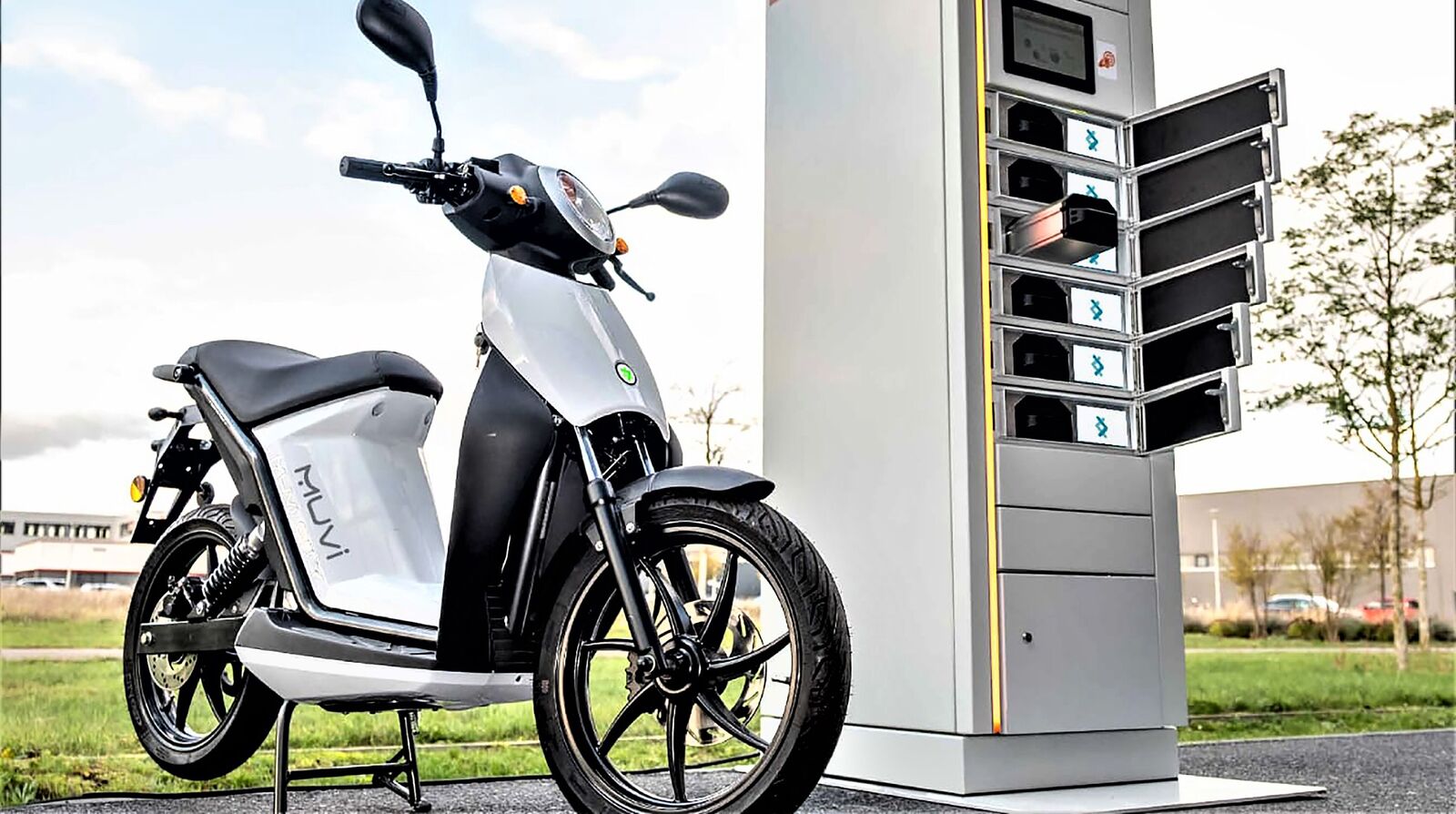
eBikeGo is all set to open order books for the upcoming Muvi electric scooter in India in October this year, the company has announced. Little is known about the bike’s specifications for the Indian market but the product image promises a city offering with large wheels, which will set it apart from conventional e-scooters on sale at the moment. eBikeGo has not revealed the booking amount for its upcoming model.
By: HT Auto Desk | Updated on: 09 Aug 2023, 15:52 PM
The eBikeGo Muvi is based on the Muvi City e-scooter built by Spanish electric two-wheeler firm Torrot
Prospective customers will be able to book the eBikeGo Muvi e-scooter online on the company’s official website. The manufacturer said that it was working to make the booking process “seamless” and will share detailed instructions soon. The e-scooter is likely to come with battery swapping technology but eBikeGo is yet to announce about building the infrastructure for the same.
Speaking about introducing the Muvi in India, Dr Irfan Khan, CEO – eBikeGo, said, “We are thrilled to open bookings for the Muvi soon. The incredible response we’ve received thus far showcases the growing interest in sustainable electric mobility. Our customers will soon get to experience the exceptional features and performance of the Muvi.”
The eBikeGo Muvi City electric scooter is based on the Spanish electric two-wheeler brand Torrot’s Muvi City e-scooter. eBikeGo has acquired the product licence to manufacture the model in the country. The Spanish-spec model weighs only 96 kg and is powered by a 2.65 kW motor with a top speed of 45 kmph and a range of 110 km in the Eco mode. A more powerful version called the Muvi Executive is also available that gets a 3 kW motor with a top speed of 70 kmph in Eco mode and a range of 85 km on a single charge. The e-scooter is designed and manufactured in Salt, Girona, on the outskirts of Barcelona in Spain.
With respect to features, the e-scooter comes with a 4-inch LCD display that can be customised through the mobile app. The model also comes equipped with an in-house ECU with CAN-BUS, Bluetooth, and OBD capabilities. More details about the upcoming offering should be available in October.
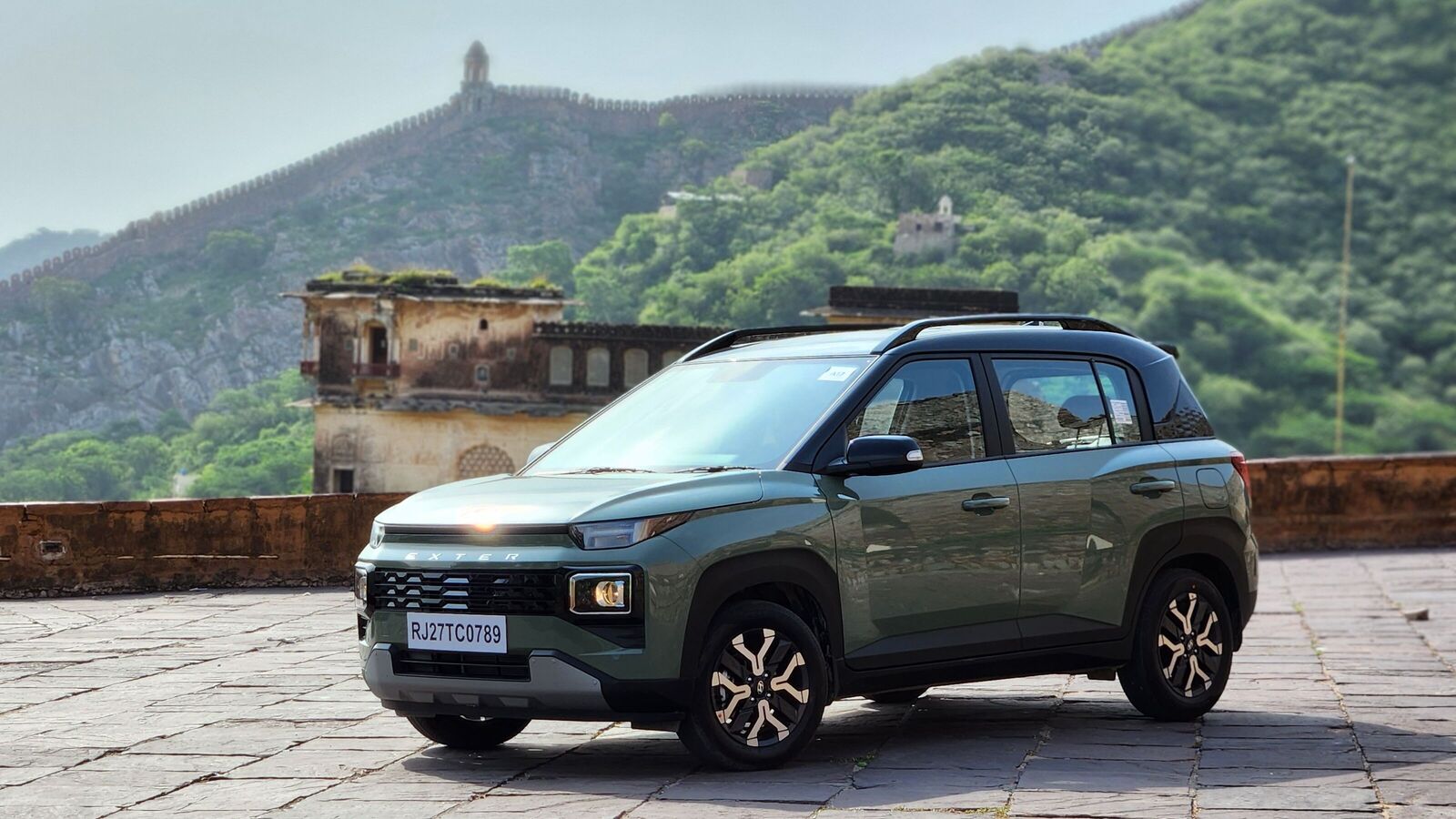
Hyundai Motor India Limited (HMIL) has announced that they have received more than 50,000 bookings for the Exter. Bookings grew from 10,000 to 50,000 in just 30 days of launch. Hyundai has also revealed that more than one-third of the bookings are for the AMT variants. Hyundai Exter’s main rival is the Tata Punch. The Exter is currently priced between ₹6 lakh and ₹10 lakh. Both prices are ex-showroom and introductory.
By: Paarth Khatri | Updated on: 09 Aug 2023, 14:21 PM
Hyundai Exter is the tallest and has the longest wheelbase in its segment. (HT Auto/Sabyasachi Dasgupta)
The Exter is being sold in seven variants. There is EX, EX(O), S, S(O), SX, SX(O) and SX(O) Connect. Hyundai Exter is offered with a 3-year (unlimited kilometres warranty) along with an option of 7 years of extended warranty. The micro SUV is available with 6 Monotone and 3 Dual tone exterior colour options.
The Exter really made a mark in the market by offering several segment-first features. It comes with footwell lighting, metal pedals, a shark-fin antenna, a smart electric sunroof, a dashcam with dual cameras, a wireless charger, rear AC vents, premium floor mats, paddle shifters, on-board navigation and support for multiple languages.
Powering the Exter is a 1.2-litre, four-cylinder naturally aspirated engine that is doing duty on other Hyundai models. It produces 81.86 bhp of max power and 113.8 Nm of peak torque. While running on CNG, these figures are reduced to 68 bhp and 95.2 Nm. The max power arrives at 6,000 rpm while the peak torque output arrives at 4,000 rpm.
The Petrol powertrain comes mated to a 5-speed manual gearbox or a 5-speed AMT. The CNG powertrain only gets a 5-speed manual gearbox. The engine is quite smooth and refined. Moreover, the manual gearbox also slots in with a positive feel and while the AMT gearbox shifts with a minimal head nod, making it one of the best AMTs in the market. Interestingly, the Exter AMT is also offered with paddle shifters.
Watch: Hyundai Exter SUV: First Drive Review
Commenting on the announcement, Mr. Tarun Garg, COO, Hyundai Motor India Ltd., said, “With Hyundai EXTER, we have continued our pursuit of democratizing advanced technology, superior quality, next-gen features, safety and comfort for customers. This SUV has redefined benchmarks in the country and offers customers superior safety with 6 Airbags as standard and ESC, VSM, HAC available across all trims as option. The response to EXTER is euphoric, so much so that the bookings have zoomed from 10,000 prelaunch to 50,000 plus in less than 30 days of launch. What is also interesting to witness is that the trims with sunroof constitute more than 75% of total bookings signaling a big thumbs up from the customers for the segment raising benchmark features introduced in the EXTER. HMIL would like to sincerely thank our customers for their trust and love for Hyundai EXTER and we are confident that the Hyundai SUV Life will continue to elevate their aspirations.”
The brand has confirmed that it will bring four electric SUVs by early 2024.
Tata Motors chairperson Natarajan Chandrasekaran says that while there is a big push towards electric vehicles in the Indian market, the internal combustion engine is not going to go away anytime soon. Chandrasekaran was addressing the shareholders at the 78th Annual General Meeting on Tuesday.
The focus on multi-powertrain has helped Tata Motors bring in incremental sales, however, the brand has no plans to bring in hybrid vehicles, a technology that the market leader Maruti Suzuki, along with its alliance partner Toyota, is betting on. At the meeting, Tata Motors also confirmed that it will bring as many as four electric SUVs – the Nexon EV facelift, Punch EV, Harrier EV and the Curvv EV – by early next year.
Chandrasekaran says that by the end of this decade, the EV penetration for passenger vehicles will be 50 percent, and so internal combustion engines like petrol, diesel and CNG will still have a strong presence. “Currently, we don’t have any plans for hybrids. We are focused on EVs, on commercial vehicles, and heavy trucks; we will have hydrogen trucks,” he adds.
Tata Motors has committed Rs 8,000 crore to its standalone business for the financial year of 2024, it has committed about USD 2 billion (approximately Rs 17,000 crore) to its EV business through its subsidiary, Tata Passenger Electric Mobility. On the long-term growth potential of the market, Chandrasekaran says, “The Indian market will move towards 10 million units per annum over time and Tata Motors is well positioned to capture the growth as well as gain market share.”
Note: If you prefer watching the review in Hindi instead of reading it in English, then you can play the following video:
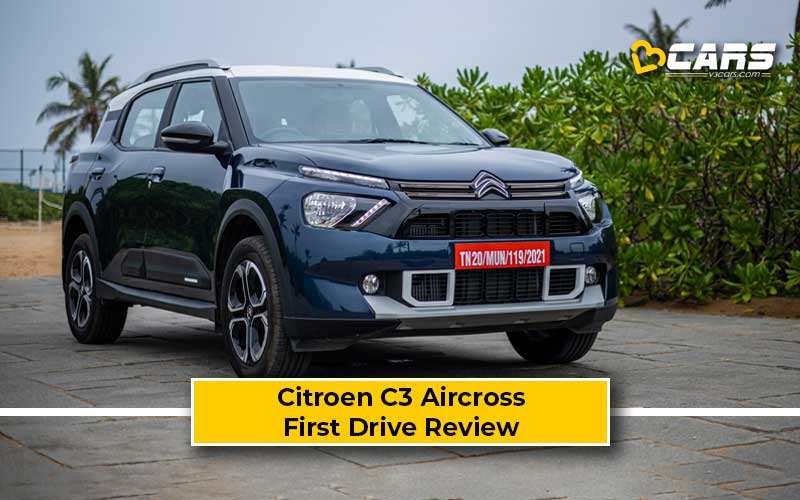
2023 Citroen C3 Aircross – Exterior Review
We recently drove the 7-seater version of the C3 Aircross. Still, in this article, we’ll briefly highlight the 5-seater version’s details wherever necessary. We have covered the Citroen C3 Aircross before, so you must be familiar with the basic design of the car, which remains consistent between the 5- and 7-seat versions. To know our thoughts about the C3 Aircross design, you can watch our following walkthrough video of the SUV:
Therefore, in this review, we will only discuss a few noteworthy design and exterior elements.
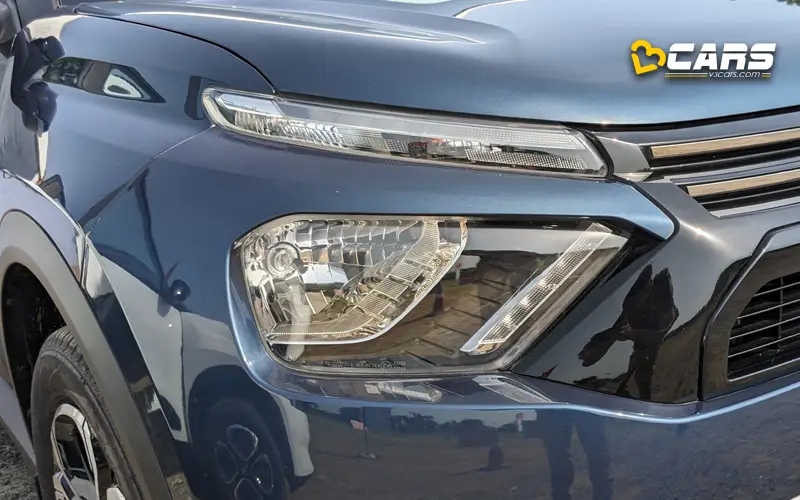
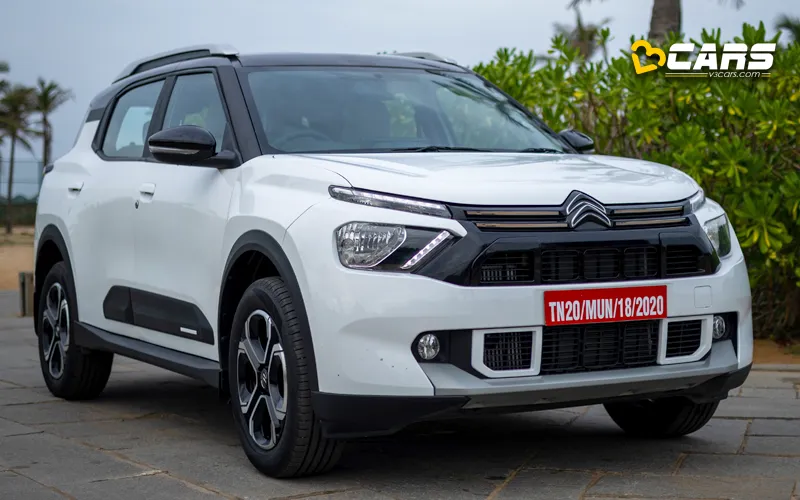
To start with, the C3 Aircross comes with halogen reflector type headlamps and fog lamps. While it does have two-part LED DRLs, the turn indicators are just regular bulbs. By design, the C3 Aircross is an SUV and gets a faux skid plate in the front, it doesn’t have very thick cladding around it to add to the visual mass.
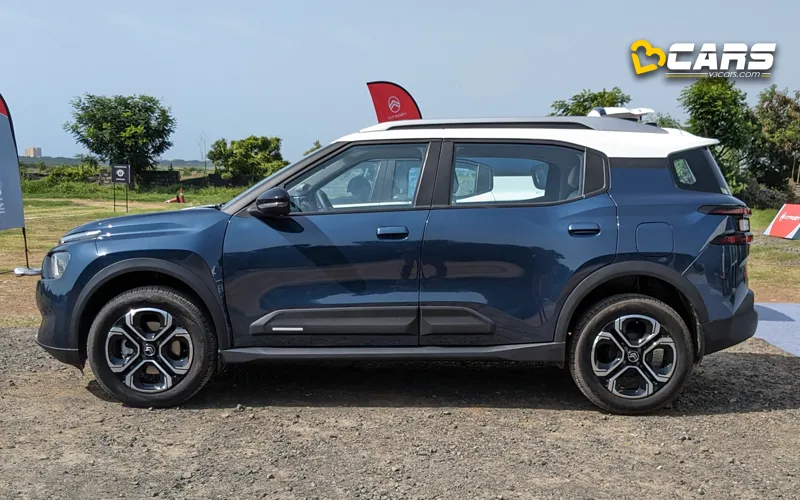
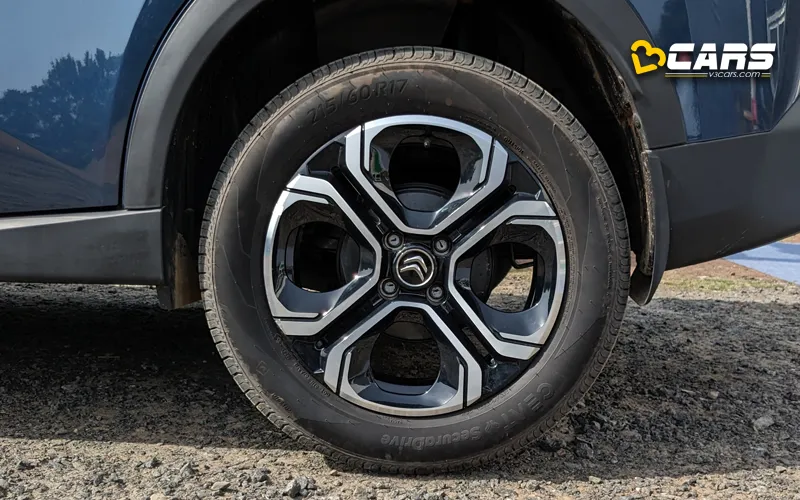
Its side proportions are pleasing with an almost horizontal roofline, an upright stance, 200mm ground clearance and 17-inch alloy wheels. I particularly like how the C-pillar is thick. It blends into the quarter glass and the windshield behind it, making the C3 Aircross appear longer than it really is.
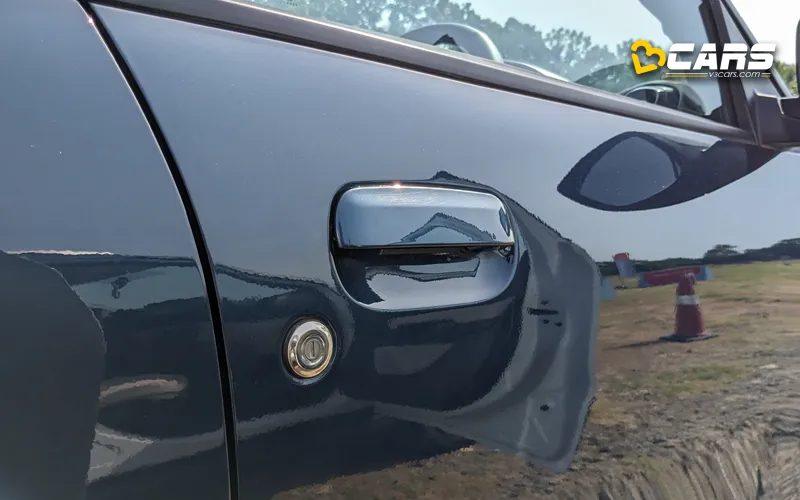
What I found unpleasant are the flap-type door handles, thin all-around cladding and the small rear door plastic moulding.
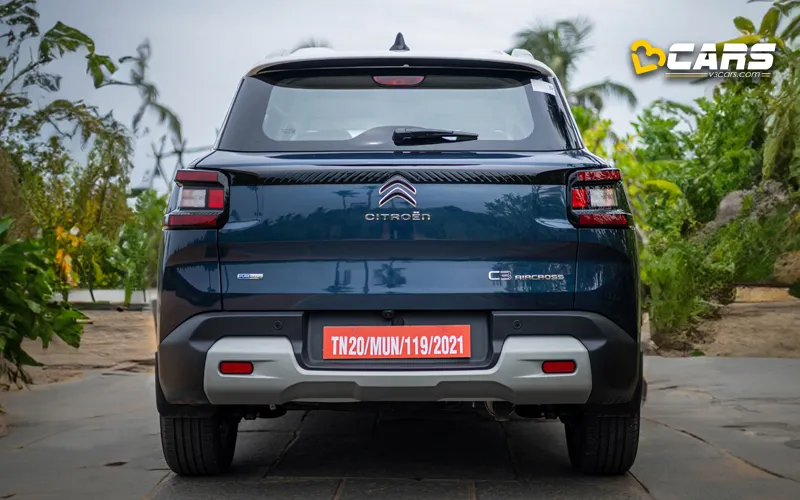
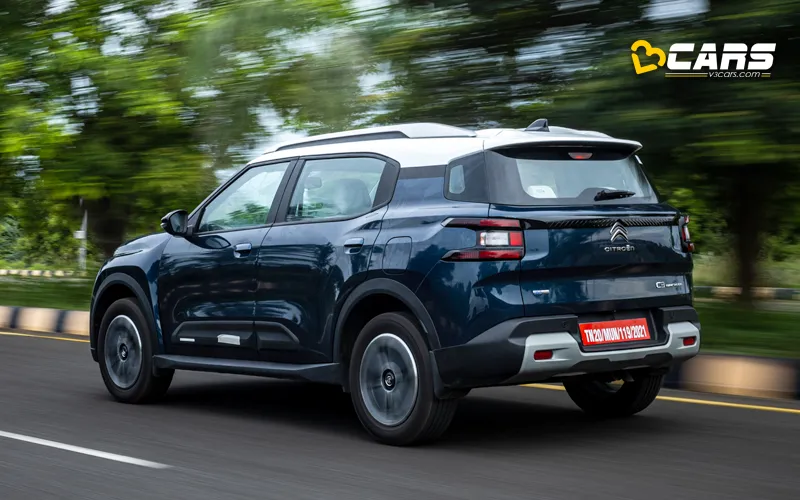
The design around the back is simple and elegant. The tail lamps are also halogen bulbs, but they have a frosted shell, giving them a modern appearance.
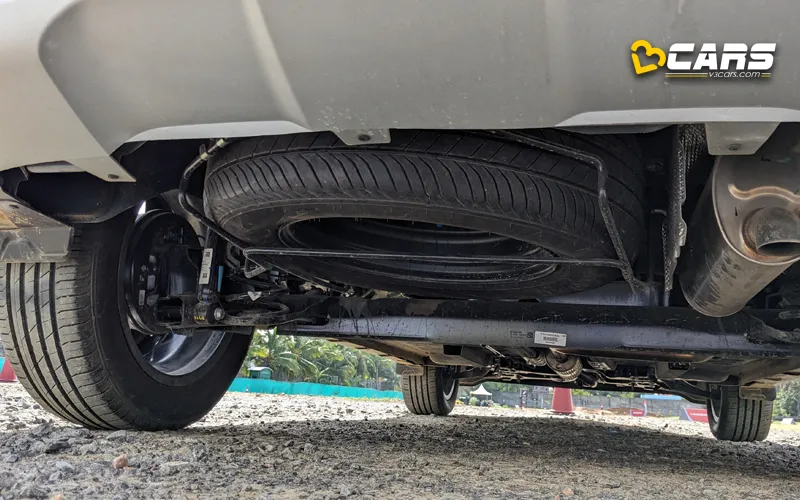
It’s worth noting that both the 5-seater and 7-seater versions of the C3 Aircross have a smaller 16-inch spare tyre mounted beneath the floor.
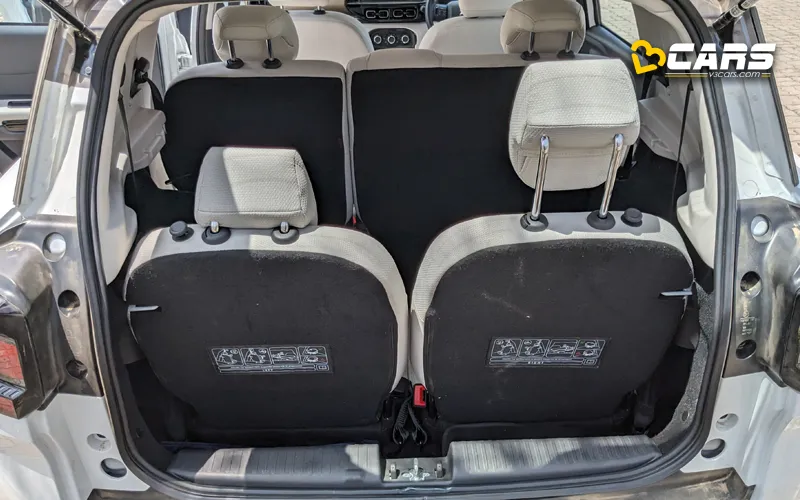
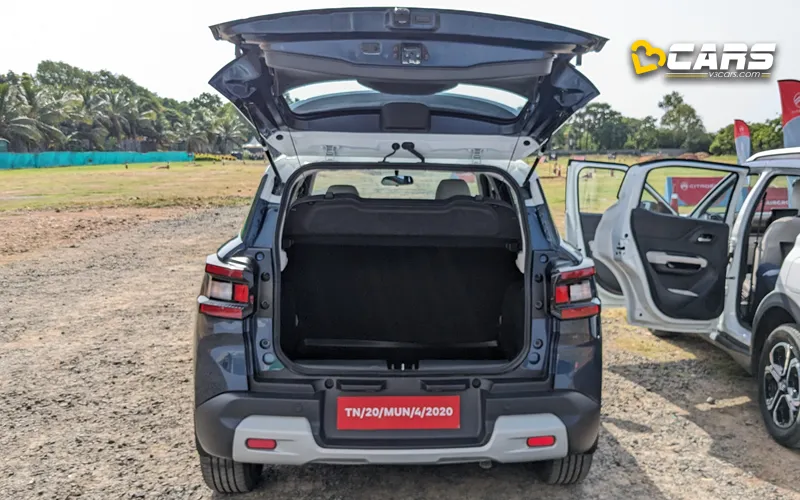
With the 3rd row upright, there’s a barely-usable, 44 litres of storage space – suitable just for shopping bags. The third row is completely removable and it’s quite easy to get these two seats out individually.
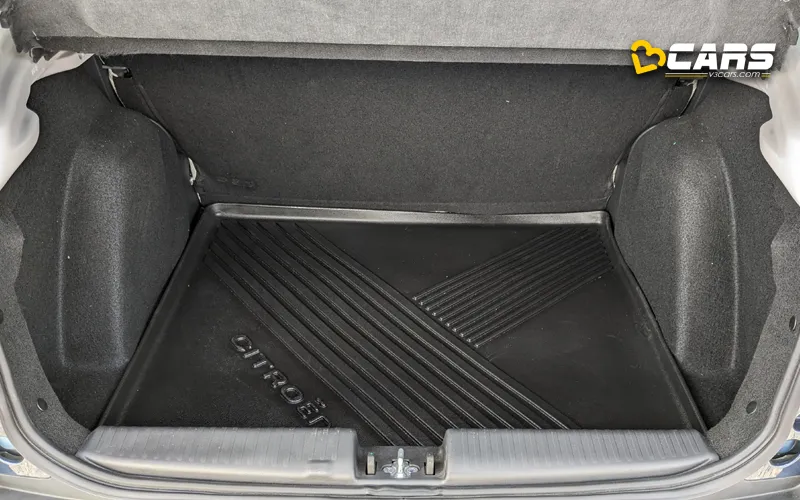
The 7-seater C3 Aircross has 511 litres of boot space with the 3rd row removed. In the 5-seat version, the boot space is 444 litres, mainly because its middle row has 40mm more leg space. We will compare the interior space of these cars in the next section.
Overall, the exterior design of the C3 Aircross is appealing, mostly due to its pleasing proportions. However, in several places, you’ll find elements suggesting that the car might be produced to a specific budget, like flap-type door handles and halogen bulbs for both headlamps and fog lamps.
To compensate, Citroen offers this in both 5- and 7-seat configurations, allowing you to pick the type of boot or cabin space you desire. The question now is whether there’s evidence of cost-cutting inside the cabin and if the seating configurations provide the practicality you’re looking for? Let’s find out.
C1-SEGMENT SUVs | DIMENSION COMPARISON
C3 AC
Elevate
Seltos FL
Creta
Gr. Vitara
Hyryder
Astor
Kushaq
Taigun
Length
4323mm
4312mm
4365mm
4300mm
4345mm
4365mm
4323mm
4225mm
4221mm
Width
1796mm
1790mm
1800mm
1790mm
1795mm
1795mm
1809mm
1760mm
1760mm
Height
1665mm/1669 (7S)
1650mm
1645mm
1635mm
1645mm
1635mm
1650mm
1612mm
1612mm
Wheelbase
2671mm
2650mm
2610mm
2610mm
2600mm
2600mm
2585mm*
2651mm
2651mm
Ground Clearance
200mm
220mm
190mm*
190mm*
208mm
208mm
180mm*
188mm
188mm
Boot Space
444L/44L
(511L 5S)
458L
433L
433L
373L (265L Hybrid)
373L (265L Hybrid)
448L*
385L
385L
Tyre Size (top)
215/60 R17
215/55 R17
215/55 R18
215/60 R17
215/60 R17
215/60 R17
215/55 R17
205/55 R17
205/55 R17
*Estimated
Citroen C3 Aircross Petrol – Interior Front Review
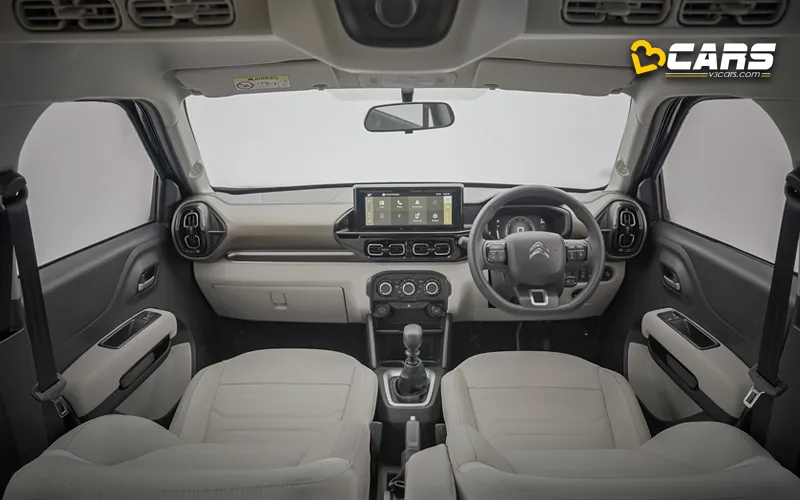
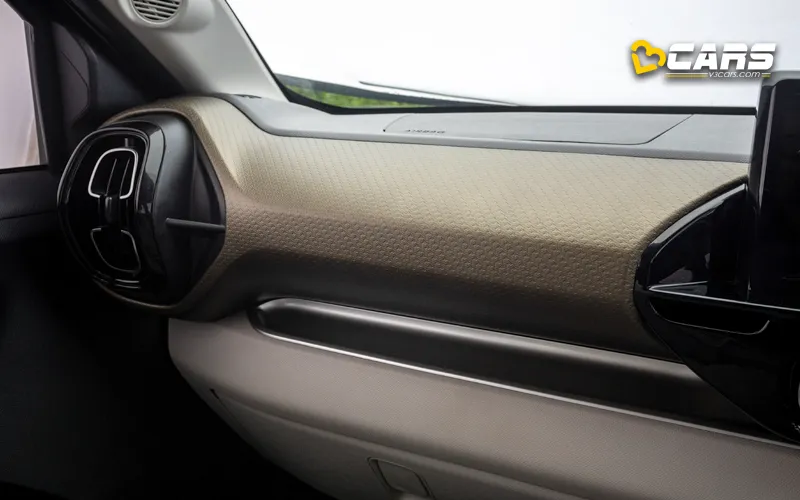
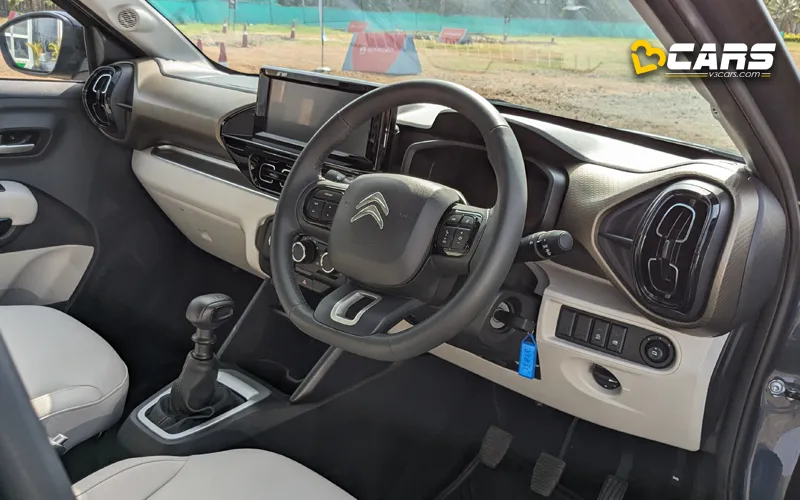
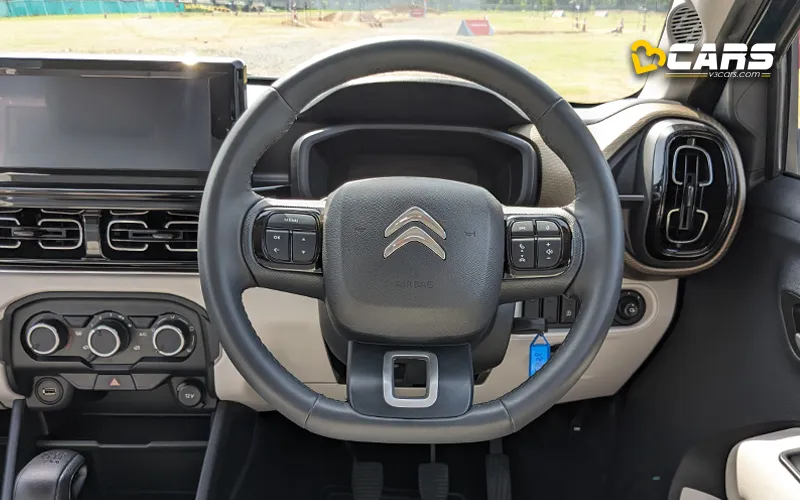
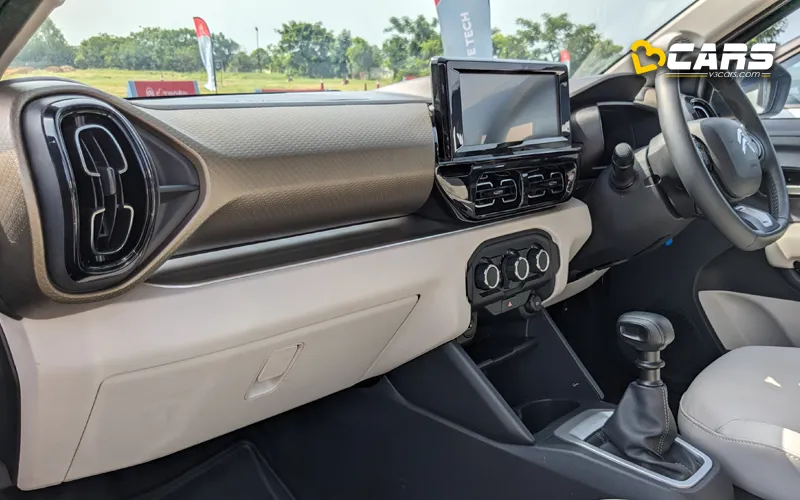
The C3 Aircross comes with a dual-tone beige-black interior. In its top Max variant, the dashboard also has copper, brushed aluminium, and glossy black detailing. We had covered its interior during its reveal just like we did with the exterior – so in this review, we will mainly discuss the cabin quality, feature experience and space-related aspects.
Starting with quality, the main touchpoints, meaning the dashboard, steering wheel and gear lever, are chunky and they both feel good to hold. Using small door lock controls, air con knobs, exposed USB ports and AC vents feels like you’re in a car from a lower segment.
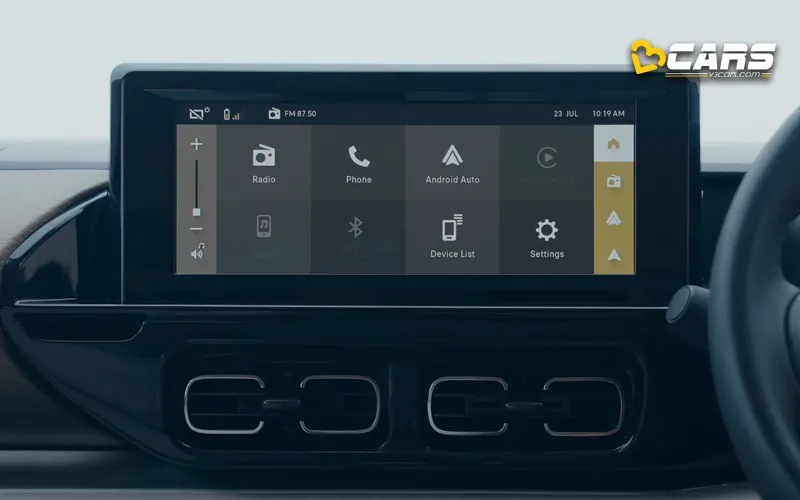
Talking about the screens – its 10.25-inch infotainment system has good touch sensitivity and feedback. Although it doesn’t offer many controls, it feels good to use. The audio output is satisfactory, and it can also pair wirelessly with phones. However, it doesn’t have a wireless charger. We believe that any car offering wireless smartphone pairing should also have wireless phone charging to make the connectivity experience feel complete.
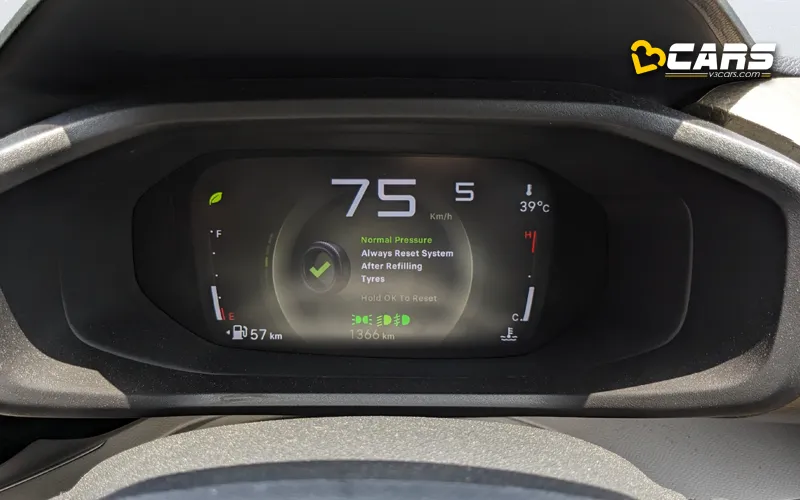
Moving to the second screen – the instrument cluster. It’s not very large and doesn’t appear very high definition either. But it has several settings and themes that I believe users would like to personalise.
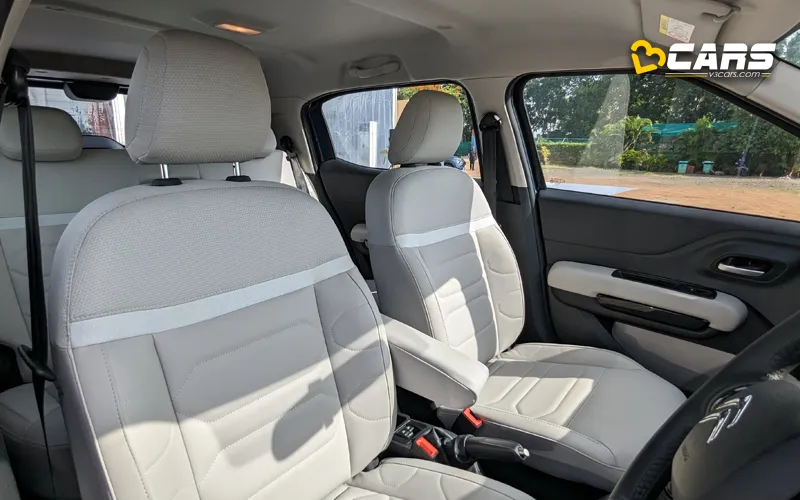
The driving position is vital. From the driver’s seat, you can clearly see the flared parts of the bonnet. Many drivers who prefer seeing the bonnet from the driving position will appreciate it as it gives the SUV vibe. Its windscreen is quite raked, so some drivers might find it small. I found the overall seat cushioning and size perfect for my height and I believe most buyers will also find it comfortable.
To achieve a good driving position, the steering wheel offers tilt adjustment, and the driver’s seat has height adjustment. From the driver’s perspective, other notable features are:
Rear parking camera
Integrated seat armrest
Power mirrors
Audio and instrument cluster controls on the steering wheel
Engine start/stop buttons
However, it lacks features like:
Auto-dimming inside mirror
Power folding mirrors
Cruise control
Auto AC
Keyless entry
Telescopic steering adjustment
So we feel it could carry a competitive price since these features are common among C-segment SUVs.
Citroen C3 Aircross – 2nd Row Interior Review
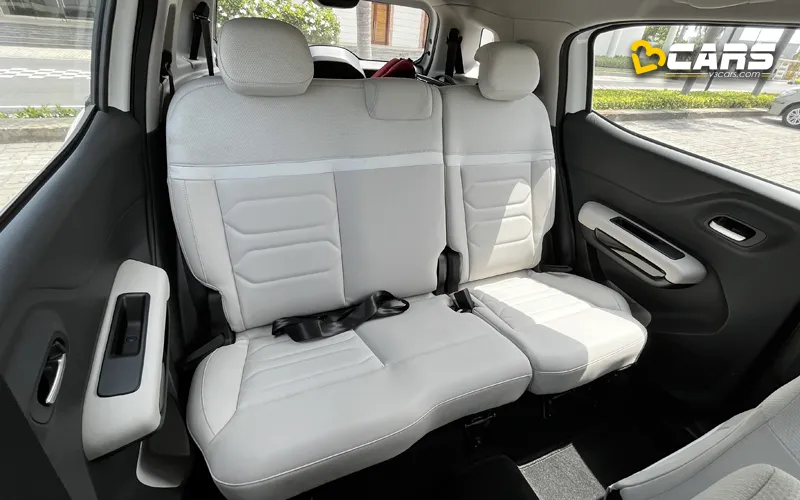
With the front seat adjusted to a 5-feet 8-inch driver’s comfort, there’s just adequate knee space for me and sufficient space under the front seat for my feet.
This being the 7-seat version, the middle row has 40mm less knee space compared to the 5-seat version, making the latter feel more spacious. However, the 7-seat C3 Aircross does have:
Roof-mounted rear AC vents
Reclining rear seatback
Slightly protruding neck cushion for the middle passenger
It’s worth noting that the rear AC vents only work as blowers, essentially pushing cool air from the front cabin to the rear. So, it doesn’t have a separate compressor to cool the rear cabin
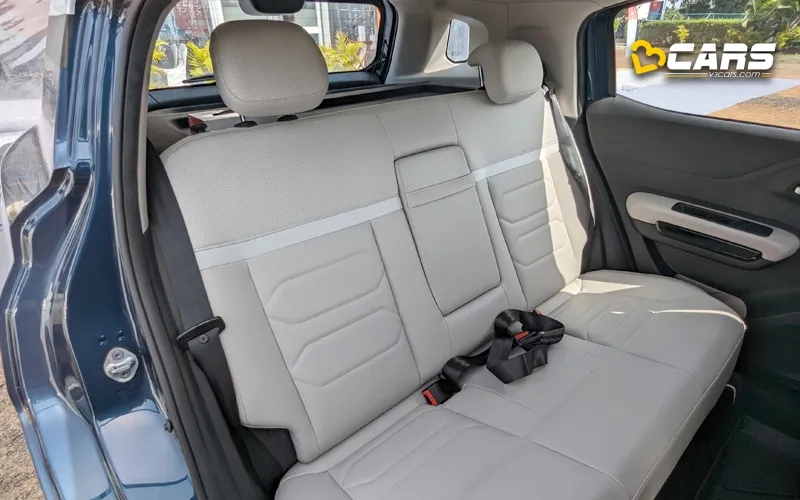
In the 5-seat version of the C3 Aircross, there’s an integrated rear seat armrest, and its fixed rear seatback angle is almost as much as the maximum recline angle of the 7-seater. Due to the extra kneeroom and armrest, the best 2nd-row experience is in the 5-seat version.
Both seating configurations provide middle row passengers with:
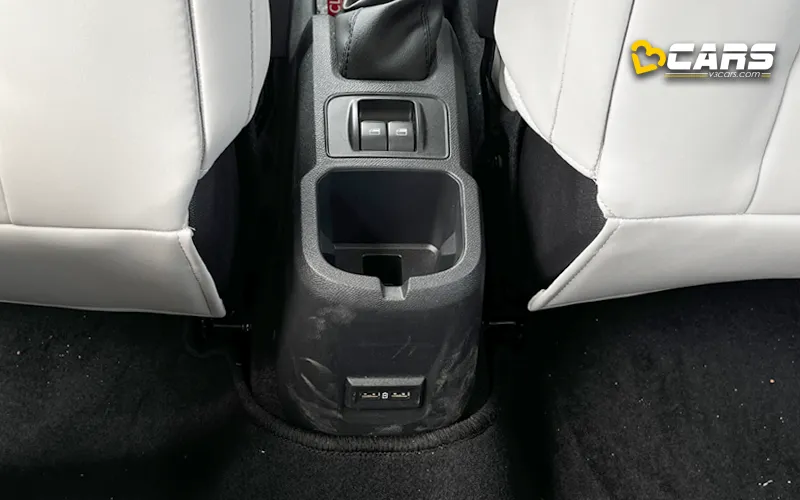
2 USB ports
1 cup holder
Power window controls
These controls are placed quite far, and the 2nd row passengers may need to stretch a bit to access them.
I find enough headroom for myself, and the shoulder space is decent as well. The 2nd row seat base cushioning is good. Despite a slight bucketing and protruding transmission tunnel, you can sit in the middle seat, but I believe it is comfortable for at most 2 adults and a child.
From the perspective of rear passengers, this car should have had features like:
Curtain airbags
Thorax airbags
Rear AC vents in the 5-seater version
Middle armrest in the 7-seater
Door-mounted power window controls
Let’s now move to its third row seats.
Citroen C3 Aircross – 3rd Row Interior Review
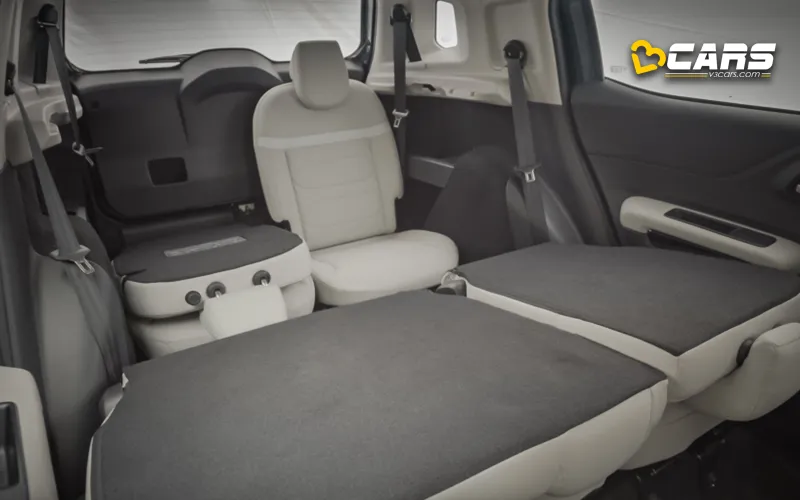
The 2nd row seats of the 7-seater C3 Aircross split in a 60:40 ratio, but only the one beyond the front passenger tumbles, making third-row access relatively easy. The 3rd row seats are on the floor, so you’ll have to crouch to sit, and the leg space is limited. For someone of my height, there isn’t much headroom, and the seats are also upright because their top part almost touches the boot. Clearly, these seats are only suitable for kids, and I doubt even they would find them comfortable.
I was surprised to find that the 3rd row in the 7-seat version has 2 cupholders and 2 USB charging ports. Removing the 3rd row seats is easy, but their hooks remain exposed afterward.
If I had to choose between the 5-seat and 7-seat C3 Aircross, I’d opt for the 5-seat version because it offers a better 2nd row seat experience – even without the rear blower. This is despite it missing out on the reclining function and 3rd row seats. The 3rd row seats appear suitable only on rare occasions.
Overall, the C3 Aircross lacks some features we now expect in cars of this segment. Thus, when sitting inside, you feel that it’s not up to the C-segment SUV standards in terms of features. Let’s now drive it.
Citroen C3 Aircross Petrol Manual – Engine Performance And Drive Review
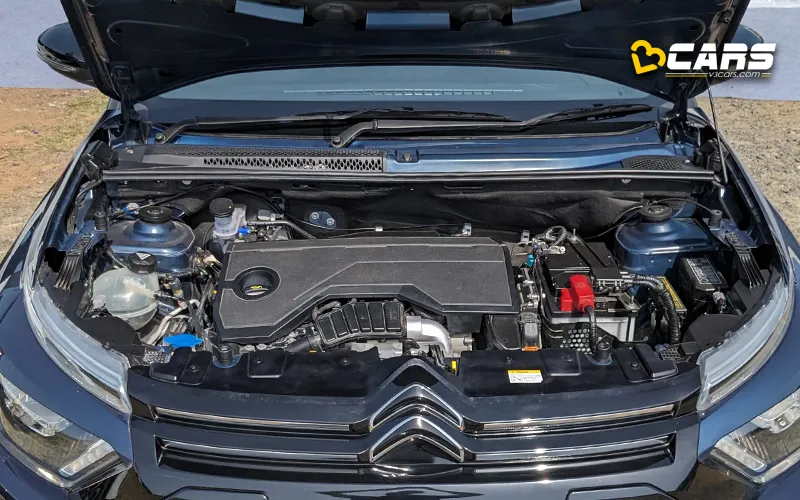
The C3 Aircross comes with a 1.2L, 3-cylinder, turbo-petrol engine that produces 110PS of power and 190Nm of torque. This is the same engine as the C3 turbo, in the same state of tune. The power-to-weight ratio for the C3 Aircross 7-seater is 86PS/tonne, and the torque-to-weight ratio is 149Nm/tonne. So on paper, its torque output looks impressive.
The peak torque of this engine starts at just 1750rpm, and the engine feels lively even below that rpm – meaning the car almost always feels responsive. As a result, its in-gear acceleration is good, and you won’t need to downshift frequently to pick up pace. Talking about outright performance, we did a brief 0-100kmph test on it, which it completed in around 12 seconds – it’s not lightning-fast, but it’s commendable.
Having driven it primarily on highways, we felt that it could handle long distance cruising with ease – though we wished it had cruise control. At 100kmph, it cruises in the 5th gear at around 2500rpm and also features a sixth gear. In the 6th gear, the cruising rpm at 100kmph is 2000 – which is quite relaxed, especially since you won’t need to downshift for overtaking.
In terms of driving experience, its turbo-petrol engine feels somewhat like a turbo diesel engine – making the drivability very pleasant. Being a 3-cylinder engine, you can feel its vibrations in the cabin at idle, but it smoothes out as you start moving.
Moving to the gearbox – as of now, this engine is only available with a 6-speed manual transmission. Its gear shifts are short and relatively smooth. However, the clutch felt a little heavier than we’re used to in other turbo petrol cars.
The primary reason you would want to drive the C3 Aircross daily is its ride quality, which stands out, especially on bad roads. Driving it on such terrains feels as if the suspension isolates the car from the road, handling everything independently. I believe the ride quality is this car’s biggest highlight – it’s that good.
We drove it mostly on straight roads, with light traffic – so as of now, its stability and braking performance seem apt. We intend to drive this car more extensively later to provide a better opinion on its ride, handling, braking, and fuel efficiency. Speaking of fuel efficiency, its claimed figure is 18.5kmpl, which is only surpassed by the Grand Vitara and Hyryder hybrid in the lower power output C1-segment SUVs. Now, let’s move on to the review’s verdict.
C SEGMENT SUVs | PETROL ENGINE SPECS
C3 AC
Creta
Seltos
Gr. Vitara / Hyryder
Gr. Vitara / Hyryder
Kushaq
Taigun
Astor
Engine
1.2L Turbo
1.5L
1.5L
1.5L
1.5L Hybrid
1.0L Turbo
1.0L Turbo
1.5L
Cylinder
3
4
4
4
3
3
3
4
Displacement
1199cc
1497 cc
1497 cc
1462cc
1490cc
999cc
999cc
1498cc
Power
110PS @ 5500rpm
115PS @ 6300rpm
115PS @ 6300rpm
103PS @ 6000rpm
115.5PS
115PS @ 5000rpm
115PS @ 5000rpm
110PS @ 6000rpm
Power:Weight
89PS/t (86PS/t)
92PS/t
94PS/t
90PS/t
90PS/t
97PS/t
97PS/t
NA
Torque
190Nm @ 1750rpm
144Nm @ 4500rpm
144Nm @ 4500rpm
137Nm @ 4400rpm
141Nm
178Nm @ 1750 – 4500rpm
178Nm @ 1750 – 4500rpm
144Nm @ 4400rpm
Torque:Weight
154Nm/t (149Nm/t)
115Nm/t
118Nm/t
119Nm/t
109Nm/t
150Nm/t
150Nm/t
NA
Manual
6-speed
6-speed
6-speed
5-speed
NA
6-speed
6-speed
5-speed
Manual FE
18.5kmpl
16.8kmpl
17.0kmpl
21.11kmpl (19.38kmpl AWD)
NA
17.76kmpl
19.87kmpl
NA
Automatic
–
CVT
CVT
6TC
CVT
6TC
6TC
CVT
Auto FE
–
16.9kmpl
17.70kmpl
20.58kmpl
27.97kmpl
18.09kmpl
18.15kmpl
NA
2023 Citroen C3 Aircross SUV – Verdict
After spending around 5-6 hours with the C3 Aircross, what impressed us the most is its ride. It feels like it floats on bad roads, ensuring a high level of comfort inside the vehicle. The cabin space and its road presence are also commendable. Given that its top variant isn’t brimming with features, we hope its pricing would be aggressive, hopefully starting around Rs. 10.0 lakh. The 5-seat version will come in 3 variants, while the 7-seat version will only go on sale in the top 2 variants.
For most buyers, we believe the 5-seat version will be the better choice because it offers a superior rear seat experience among the two seating configurations. If priced right, we feel the C3 Aircross could offer better value than its normal petrol competitors, positioning it as the affordable C1-segment SUV to purchase.
Ather Energy has released a new teaser on social media, which reveals that they will be launching the three electric scooters on 11th August. What has been confirmed is the launch of the 450S, which will be the most affordable electric scooter in Ather’s lineup. As of now, the manufacturer is selling only the 450X in the Indian market. It is offered in two versions – with the Pro Pack and without the Pro Pack.
By: HT Auto Desk | Updated on: 08 Aug 2023, 15:43 PM
Image of Ather 450X used for representational purpose only.
So, it can be expected that the two remaining scooters will be updated versions of the 450X electric scooter. One gripe that many people have reported is the charging time of the Ather 450X without the Pro Pack. So, there is a possibility that Ather might just reduce the battery size to reduce charging times. Apart from this, there is a possibility that Ather will also update the 450X electric scooter. However, nothing has been confirmed yet. The manufacturer will not be introducing a new design language or platform as of now. This was confirmed when Ather launched Atherstack 5.0.
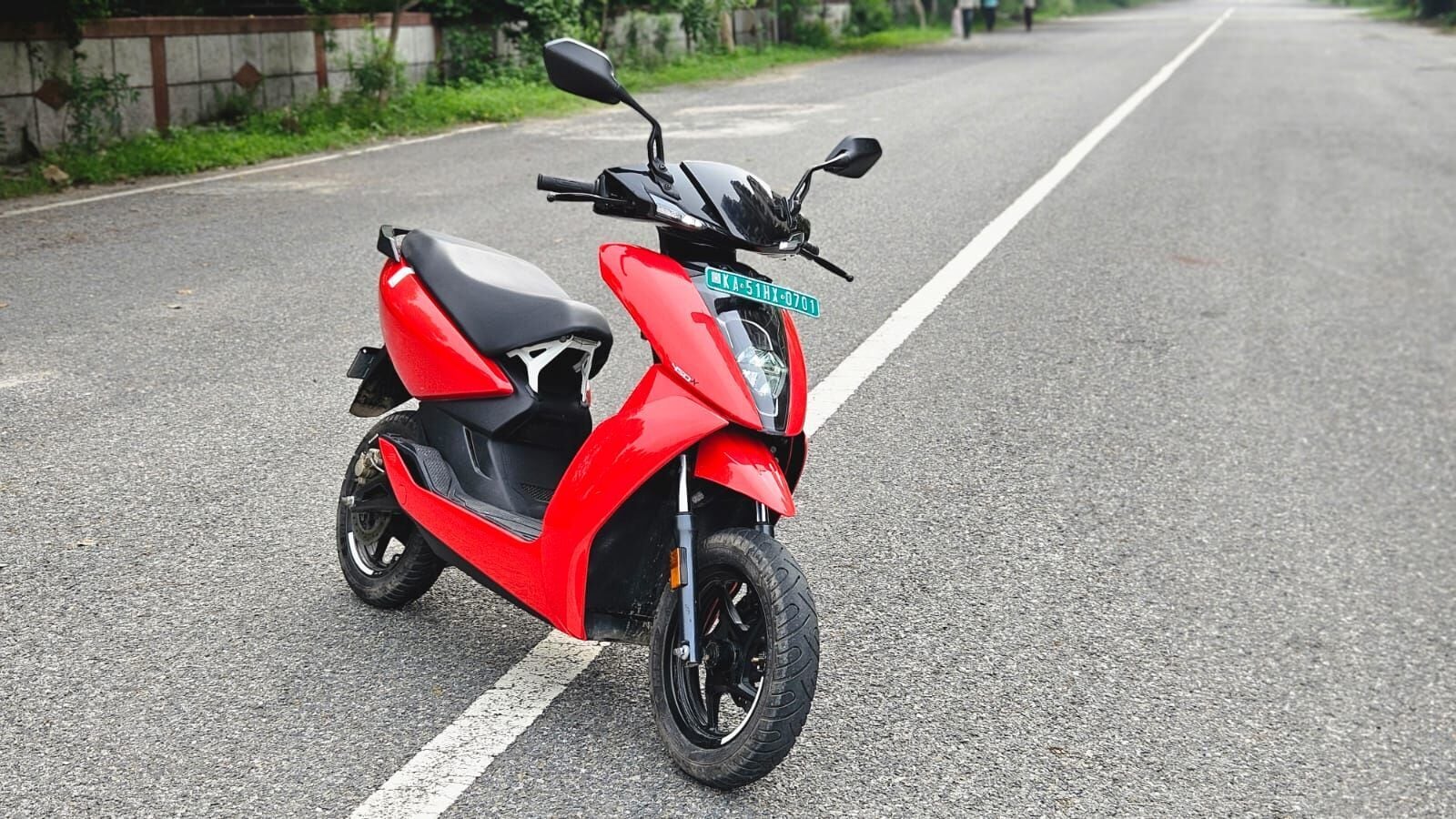
Speaking of the new scooter, the Ather 450S will look more or less the same as the 450X. However, it will come with a new LCD display with coloured elements. So, it is expected that the 450S will miss out on Google Maps and connected technology. Ather is promising a claimed range of 115 km on a single charge and a top speed of 90 kmph. It is expected that the 450S will use the same electric motor as the 450X, considering the top speed of both electric scooters is the same.
Ather Energy has already revealed the pricing details of the upcoming 450S electric scooter. It will be available at an introductory price of ₹129,999 (ex-showroom). Ather has not revealed to what extent the introductory pricing will be available for consumers.
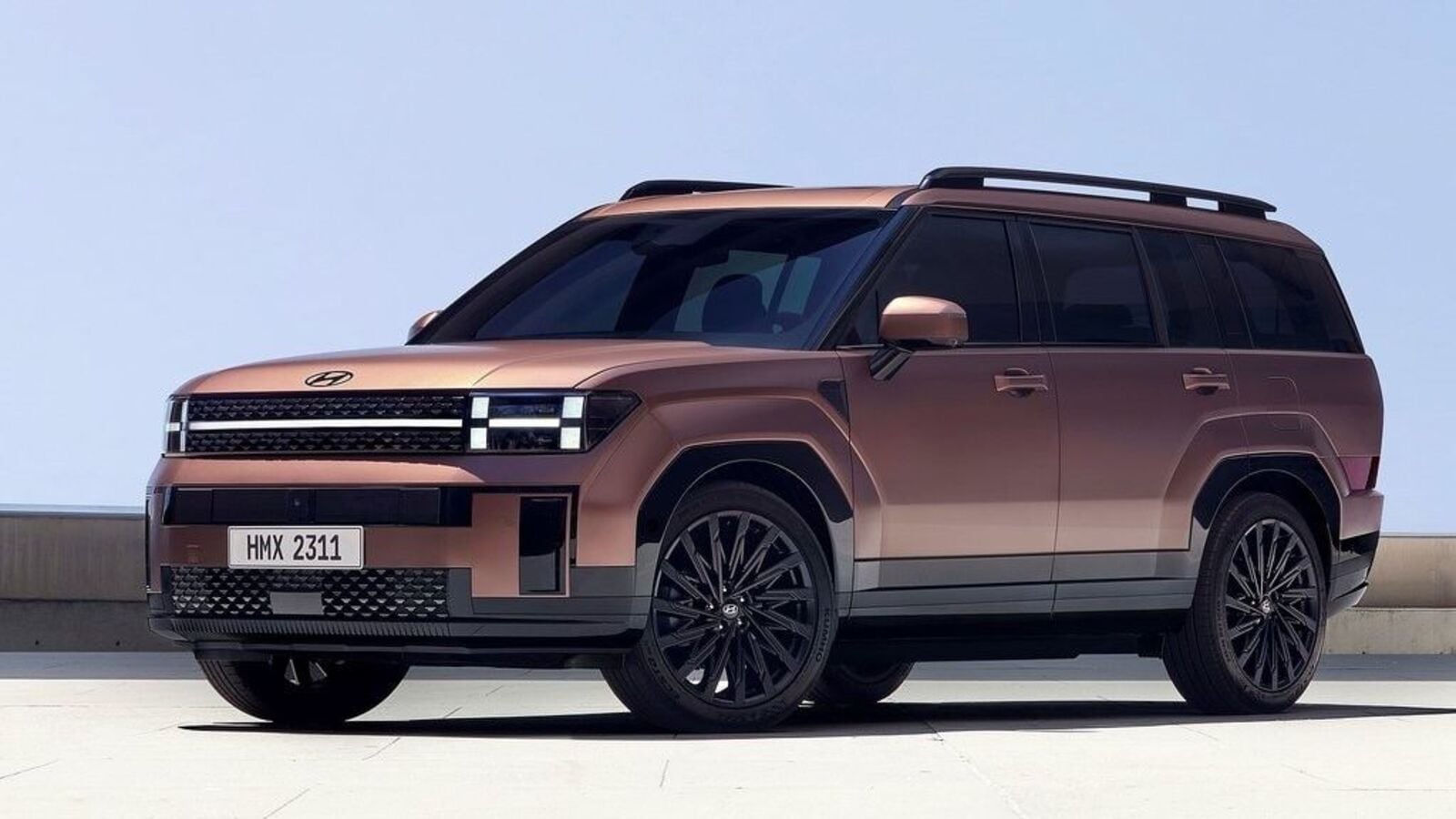
Even though Hyundai has already revealed the new Santa Fe SUV, there are many details still unknown. The South Korean automaker is ready to officially showcase the new Hyundai Santa Fe on August 10. Also, it is expected to reveal a host of details about the car as well. While the automaker previously unveiled the exterior and interior design elements of the new Santa Fe, on August 10, it is expected to reveal details about the specification.
By: HT Auto Desk | Updated on: 08 Aug 2023, 15:33 PM
The new Hyundai Santa Fe SUV looks radically different from the previous generation.
Speaking about the new Hyundai Santa Fe, it looks radically different compared to its previous iteration. It comes as a major departure from the current generation of Santa Fe’s design. The next-generation Hyundai Santa Fe comes with a squared-off and boxy look. It also features funky H motifs on the LED headlamps, something we have seen in the new Hyundai Exter that was launched in India a few weeks ago. The SUV could come available in multiple wheel size options, measuring between 18-21 inches, which will seat under the squared-off wheel arches.
The copper-coloured Hyundai Santa Fe that was revealed online featured 2.5T and HTRAC badges, which probably hint at a turbocharged 2.5-litre four-cylinder engine and an all-wheel drive powertrain. The current generation Hyundai Santa Fe is available with both turbocharged and non-turbocharged 2.5-litre engines. Also, there are hybrid and plug-in hybrid versions of the SUV. Expect the new generation SUV too to come with a wide range of powertrain options. The auto manufacturer is likely to reveal these details on August 10.
Inside the cabin, the new generation Hyundai Santa Fe will come carrying the band’s fresh cabin styling language. There will be a large touchscreen infotainment system complemented by a fully digital instrument cluster. Expect multi-zone automatic climate control, and wireless phone charging in the centre console to be there among other features.
It gets the 1,158cc V4 Granturismo engine from the Multistrada V4, albeit in a slightly different state-of-tune.
At the beginning of the year, Ducati announced its plan to launch nine new motorcycles in India in 2023, and the latest of these has just arrived in the form of the Diavel V4. Priced at Rs 25.91 lakh (ex-showroom, India), the Bologna brand’s power cruiser is powered by the same 1,158cc V4 Granturismo engine as the Multistrada V4.
Offered in just a single variant
Produces 168hp and 126Nm
Fully adjustable suspension at both ends
Ducati Diavel V4 engine
Though it is the same motor as the Multistrada, it does get a slightly different state-of-tune in the Diavel, and here it produces 168hp and 126Nm – 2hp less and 1Nm more than the adventure bike. This still marks a 9hp increase over the previous 1,262cc L-twin engine from the earlier Diavel 1260. An interesting feature on this new motor is a cylinder deactivation system, which shuts down the rear two cylinders as needed to reduce fuel consumption and heating. The engine is paired to a 6-speed gearbox that features a bi-directional quickshifter.
Ducati Diavel V4 chassis
Despite having gone from two cylinders to four, the Diavel has lost 12kg and now weighs 236kg. A large chunk of this is down to the frame, or rather the lack of one, which has helped save 8kg. Instead of the steel trellis frame of the outgoing Diavel, Ducati has given the new Diavel V4 an aluminium monocoque construction. The rear subframe, however, is still a steel trellis unit, while the swingarm is a single-sided cast aluminium unit.
Suspension duties are handled by a 50mm USD fork up front (120mm travel) and monoshock at the rear (145mm travel), both of which are fully adjustable. This marks a 15mm increase in travel over the Diavel 1260, and Ducati has also brought the handlebar 20mm closer to the rider for more comfortable ergonomics. Seat height stands at 790mm.
Ducati Diavel V4 features
New for the Diavel V4 is a fresh LED headlight with horseshoe-shaped LED DRLs, two-tone alloys with a diamond cut effect, an array of small LEDs under the tail section forming the tail lamp. These also mimic the horseshoe pattern of the DRLs up front. Perhaps the biggest ‘wow’ factor of this motorcycle’s appearance are the quad exhaust exits.
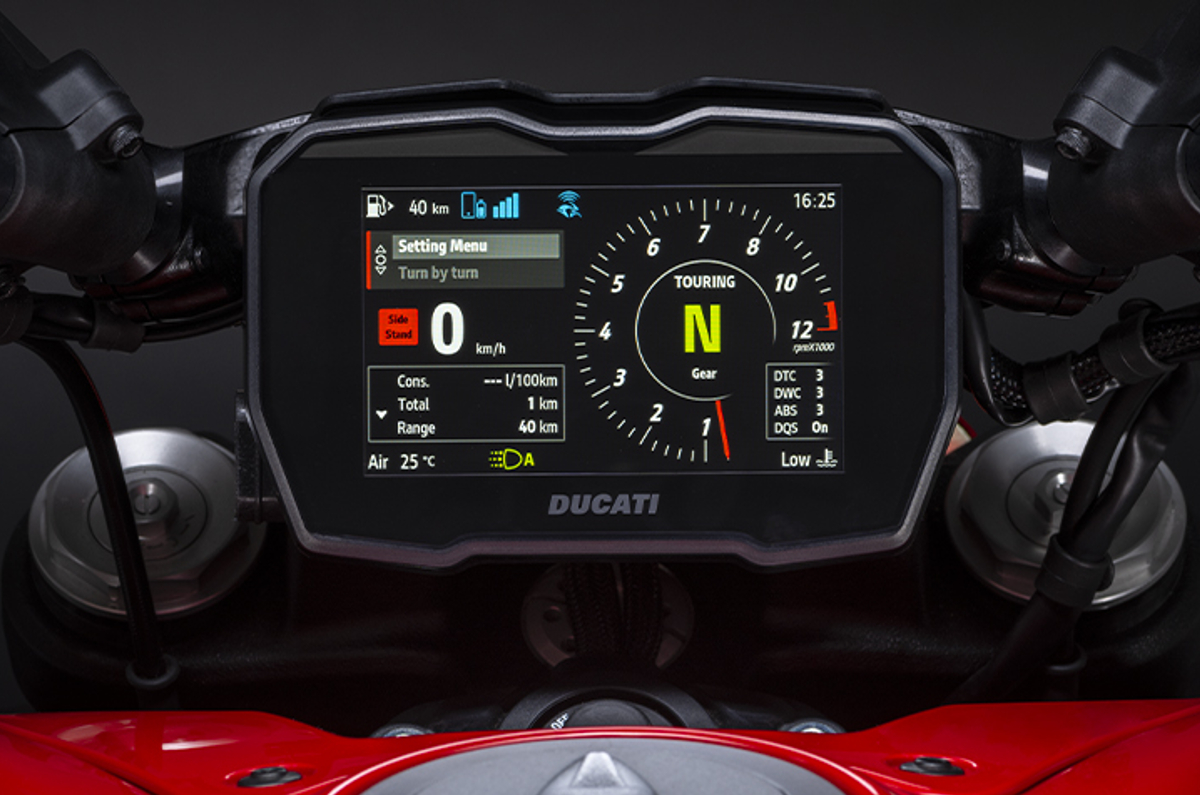
As for features, the 2023 Ducati Diavel V4 gets a 5.0-inch TFT display with Bluetooth connectivity, dynamic indicators, cruise control, launch control, a six-axis IMU, cornering ABS, traction control and wheelie control. The Ducati Diavel V4 will be available in two colours – Ducati Red and Thrilling Black, both commanding the same Rs 25.91 lakh asking price.
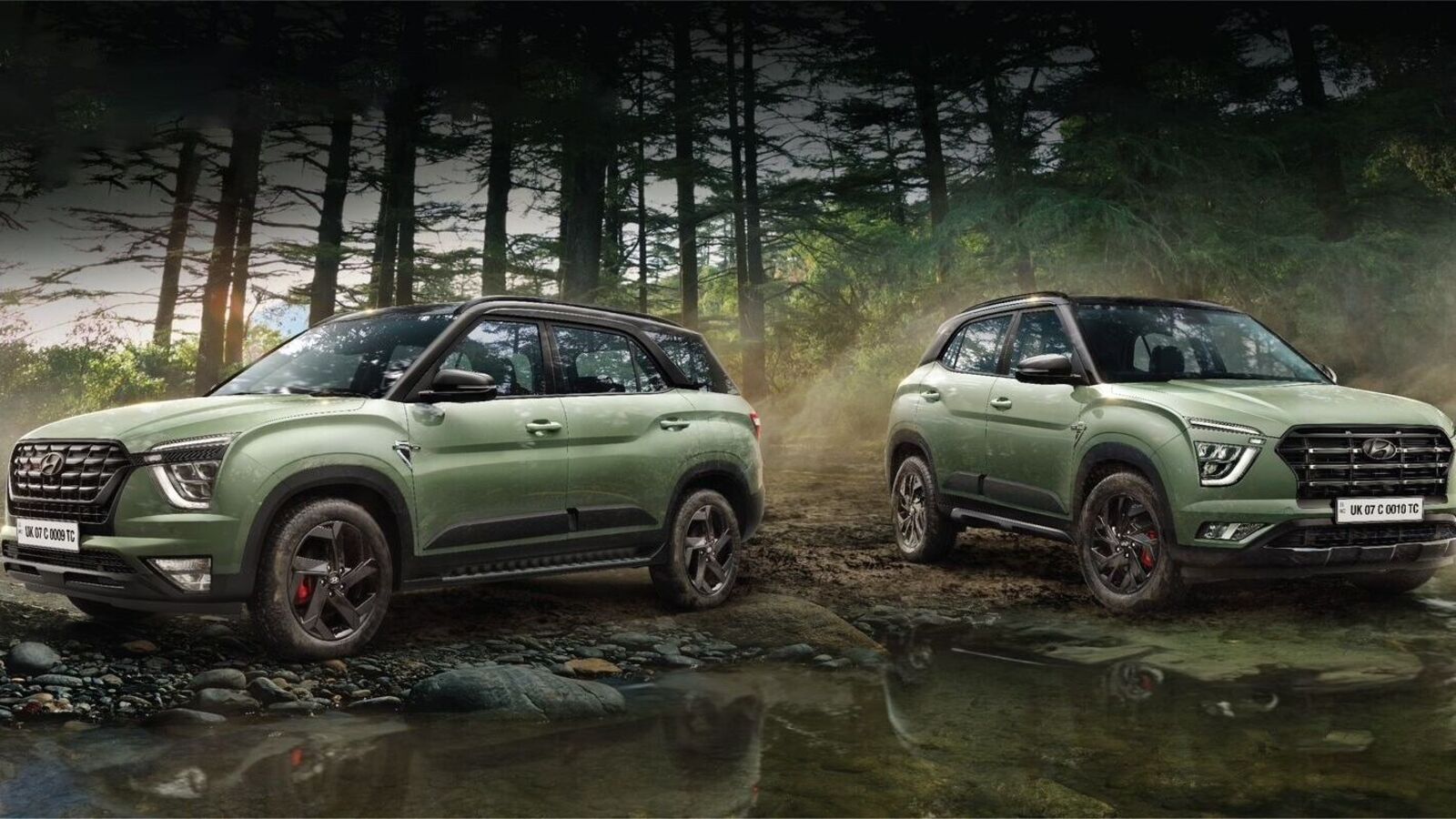
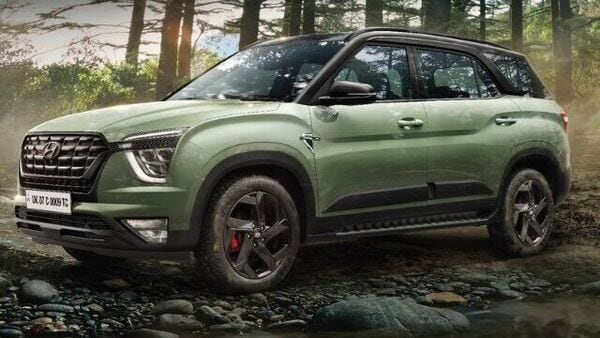
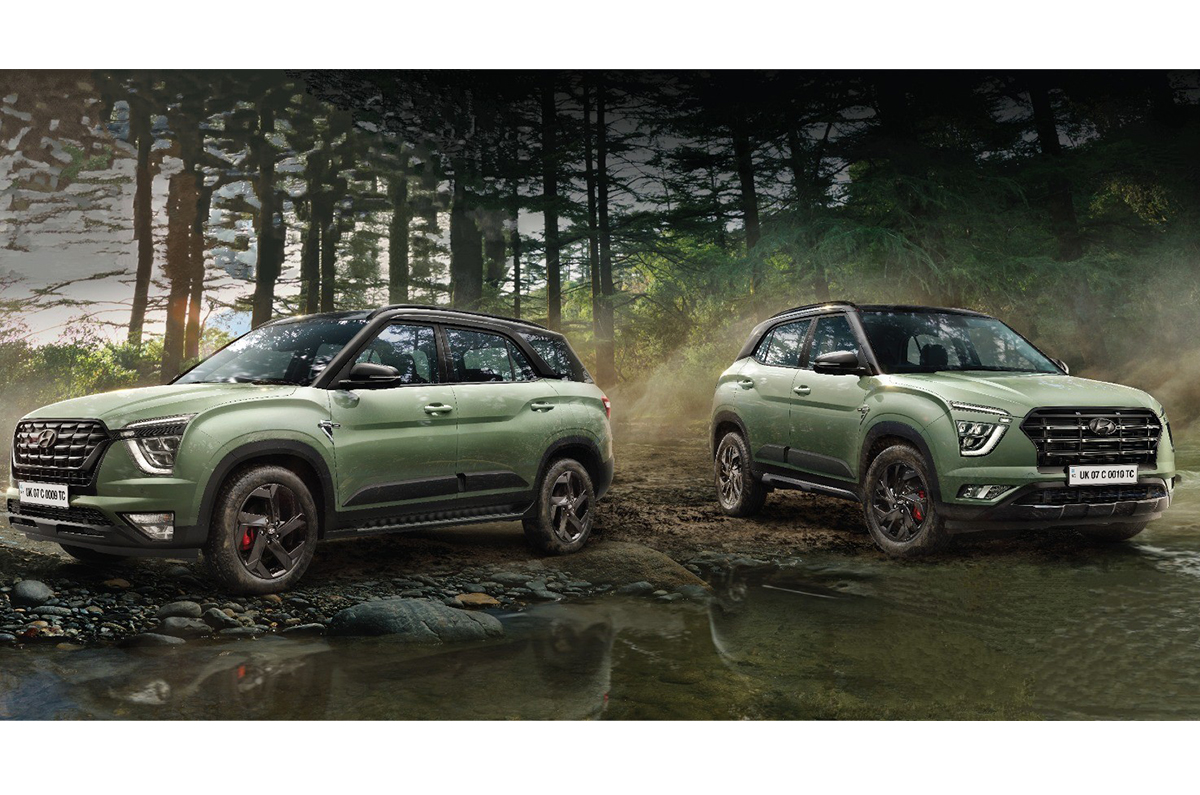
Hyundai Motor India on Monday officially launched the Creta and Alcazar Adventure Edition in the market here. Both Creta and Alcazar Adventure Editions offer as many as 21 unique features that set each of these apart from the variants sold thus far.
A look at the Adventure Edition versions of the Hyundai Alcazar (left) and Creta.
Hyundai Creta and Alcazar Adventure Edition versions are touted as models meant specifically for buyers who take frequent trips and are looking for a vehicle that not just looks unique but is also capable of taking on less than ideal road conditions.
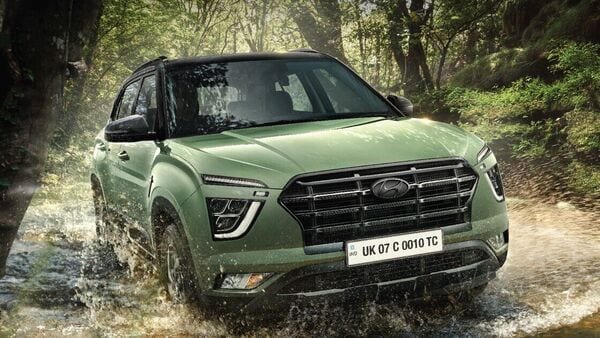
The Creta and Alcazar Adventure Edition models get specific exterior styling like a rugged door cladding, ‘Adventure’ emblem on the fender, Black front grille with the ‘Hyundai’ logo, model lettering on the rear in dark chrome, ‘Hyundai’ logo in dark chrome, Black fog lamp garnish (on Alcazar only), Black ORVM and Black painted alloy wheels. In the cabin of both models, the updates include dashcam with dual camera, 3D designer ‘Adventure’ mats and sporty metal pedals.
The Creta Adventure Edition is made available on the 1.5-litre petrol with manual transmission and iVT powertrain, and on the SX and SX(O) trims. The Alcazar Adventure Edition on the 1.5 l T-GDi Petrol 7DCT, 1.5 l Diesel 6MT and 6AT powertrains.
Hyundai Creta Adventure Edition pricing
Hyundai Creta Adventure Edition could further bolster sales prospects of the already popular mid-size SUV.
The Creta Adventure Edition is priced at ₹15.17 lakh for the SX variant and ₹17.89 lakh for the SX(O) variant (all prices are ex-showroom).
Hyundai Alcazar Adventure Edition pricing
Alcazar could get a much-needed sales boost through the Adventure Edition version.
The Alcazar Adventure Edition is priced from ₹19.03 lakh and tops out at ₹21.23 lakh (all prices are ex-showroom).
Creta & Alcazar Advenuture Edition prices
Prices (in Rs)
Alcazar 1.5T MT Platinum AE PETROL
19,03,600
Alcazar 1.5T DCT Signature(O)AE PETROL
20,63,600
Alcazar 1.5 MT Platinum AE DIESEL
19,99,800
Alcazar 1.5 AT Signature(O) AE DIESEL
21,23,500
Creta 1.5 MPi MT SX AE PETROL
15,17,000
Creta 1.5 MPi IVT SX(O) AE PETROL
17,89,400
(ex-showroom)
Hyundai Creta and Alcazar Adventure Edition colours
The Creta Adventure Edition will be offered with 4 Monotone (Abyss Black, Atlas White, Titan Grey & new Ranger Khaki) and 2 Dual Tone color options (Atlas White with Abyss Black & new Ranger Khaki with Abyss Black).Alcazar Adventure Edition will be offered with 4 Monotone (Abyss Black, Atlas White, Titan Grey & new Ranger Khaki) and 3 Dual Tone color options (Atlas White with Abyss Black, new Ranger Khaki with Abyss Black & Titan Grey with Abyss Black).
By: HT Auto Desk | Updated on: 07 Aug 2023, 14:01 PM
Bike-taxi aggregator Rapido has tied up with the Uttar Pradesh Police department to promote safe driving among two-wheeler riders. As a part of this initiative the police department distributed more than 100 Rapido-branded helmets to people in Noida. The free helmet distribution was held near the Botanical Garden Metro Station in Noida. The helmets were ISO certified that meet stringent quality standards.
UP Police distributing Rapido branded helmets to young riders in Noida.
The helmets were distributed to young commuters and low-income families who often lack access to proper protective gear. The distribution drive was carried out by Saurabh Srivastava, ACP Traffic, Gautam Buddha Nagar. The beneficiaries were also sensitized about the importance of wearing a helmet in context to safe driving practices.
The initiative is a part of Rapido’s commitment to promote safe driving practices amongst riders and “make two-wheeler riding a safe commuting avenue in the country”. By distributing free helmets, the company hopes to encourage the adoption of certified helmets among riders for increased personal safety and reducing chances of injuries and fatalities in case of road accidents.
Two-wheeler riders are the most vulnerable category on Indian roads and wearing a helmet can act as a protective gear, helping prevent fatalities in case of accidents. “The negligence amongst riders with regards to the use of preventive gears such as helmets is a cause of major concern. Wearing certified helmets properly can reduce serious injuries in accidents involving riders,” said Pavan Guntupalli, Co-Founder, Rapido. “We are thankful to have had this opportunity to participate in the UP Police led initiative for guiding riders on the pathway of safe driving practices.”
As per data found in the National Crime Records Bureau (NCRB), the highest number of fatalities in road accidents are of two-wheeler riders. In 2021, approximately 70,000 riders lost their lives in accidents, which is around 44% of the total fatalities due to traffic accidents.
Prices for the Creta and Alcazar Adventure editions start at Rs 15.17 lakh and Rs 19.04 lakh, respectively.
Hyundai has launched the Creta and Alcazar Adventure editions at Rs 15.17 lakh and Rs 19.04 lakh (ex-showroom, India), respectively. The Creta Adventure edition is available only with a petrol engine, while on the Alcazar, it is available with petrol and diesel engines.
While this is the first special edition of the Alcazar, the Creta already has a special Knight Edition. Here’s a detailed break-up of the prices of the new Adventure editions:
Both SUVs get a dashcam with the Adventure edition – a segment-first feature – that’s also available on the Exter and Venue N Line SUVs, and a blacked-out grille with a black ‘Hyundai’ logo. Other exterior bits that get the blacked-out treatment include the front, rear and side skid plates, wing mirrors, 17-inch alloy wheels, fog lamp housing, tailgate garnish (only on Alcazar) and the C-pillar trim (only on Creta). They also get special ‘Adventure’ edition badges on the front fenders.
The Adventure editions also get the new Ranger Khakhi colour option, which debuted on the new Exter SUV. Apart from this, they also are also available in Abyss Black, Atlas White and Titan Grey colours. While the Creta gets two dual-tone colours (Atlas White and Ranger Khaki with black roof), the Alcazar gets three (Atlas White, Ranger Khaki and Titan Grey).
The Adventure editions get an all-black interior theme with Sage Green inserts on the AC vents and switches. It also gets Sage Green inserts, piping and stitching on the seats, and they also get special mats and silver foot pedals.
As mentioned, the Creta Adventure edition is only offered with a 1.5-litre petrol engine that produces 115hp and 144Nm. It is available on the SX trim with the 6-speed manual gearbox and the SX (O) trim with the CVT.
On the Alcazar, the Adventure edition is available with both the 160hp, 253Nm, 1.5-litre turbo-petrol, a 116hp, 250Nm, 1.5-litre diesel engine and a 7-seat configuration. The Alcazar Adventure edition with the Platinum trim is available with only the 6-speed manual gearbox on the petrol and diesel engines. On the Signature (O) trim, the Adventure edition is available with the 7-speed dual-clutch automatic for the petrol and the 6-speed automatic with the diesel engine.
The Alcazar Adventure edition goes up against the various special editions of the Tata Safari – Dark, Red Dark and Adventure. Other rivals include the MG Hector Plus and Mahindra XUV700.



 ₹1.45 lakh, going up to