Maruti Suzuki Jimny becomes more affordable with new Thunder Edition

Maruti Suzuki Jimny becomes more affordable with new Thunder Edition

[ad_1]

The Thunder Edition comes with several accessories as standard. It gets a front skid plate, side door cladding, door visor, door sill guard, grip cover in rustic tan, floor mat and graphics on the exterior. There is also a garnish on the front bumper, ORVM, side fender and hood.

Maruti Suzuki has not made any other changes to the Jimny. It continues to come with a 1.5-litre, four-cylinder, K-series naturally aspirated petrol engine that produces 103 bhp of max power at 6,000 rpm and a peak torque output of 134 Nm at 4,000 rpm. It comes mated to a 5-speed manual gearbox or a 4-speed torque converter automatic transmission. The manual gearbox delivers a claimed fuel economy of 16.94 kmpl whereas the automatic transmission delivers 16.39 kmpl. The SUV comes with four-wheel drive as standard and the automatic transmission is available on both variants.

Also Read : Mahindra Thar five-door to break cover soon: Key expectations

In terms of safety equipment, the Jimny is equipped with 6 airbags, brake limited slip differential, ABS with EBD, Electronic Stability Program, Hill Hold Control, Hill Descent Control, Rear View Camera, Brake Assist Function and Engine Immobilizer.

The top-end Alpha variant is equipped with a push start/stop button, cruise control, leather-wrapped steering wheel, automatic climate control and a larger touchscreen infotainment system. Apart from this, it also comes with automatic LED headlamps, headlamp washers, fog lamps, dark green glass window, body-coloured door handles, alloy wheels and electrically foldable ORVMs.

Watch: Maruti Suzuki Jimny SUV: First Drive Review

In terms of dimensions, the Maruti Suzuki Jimny measures 3,985 mm in length, is 1,645 mm wide and stands 1,720 mm tall. It has a wheelbase of 2,590 mm. The main highlight of this version of the vehicle is that it offers more cabin space than its three-door twin because of the longer wheelbase.

First Published Date: 01 Dec 2023, 15:44 PM IST

[ad_2]
Source link

Bajaj Chetak price, Chetak Premium range, updated model India launch

Bajaj Chetak price, Chetak Premium range, updated model India launch

[ad_1]
Bajaj Chetak price, Chetak Premium range, updated model India launch

The updated Chetak Premium will also get new electronic features as well as a larger boot.

Just a few hours after the new entry-level Chetak Urbane‘s pricing details emerged, we have got our hands on some exclusive information pertaining to the updated Chetak Premium that will be launched very soon.

  1. Premium will get 3.2kWh battery pack, claimed 127km IDC range 
  2. New TFT dash will be available on “Tecpac” variant
  3. Price likely to go up marginally

Bajaj seems to be addressing all the shortcomings of the Chetak Premium in one fell swoop with this update. Let’s start with the most impactful one: the battery. The updated Chetak Premium will get a 3.2kWh battery with a claimed IDC range of 127km, which is a significant step up from the current model’s 2.88kWh unit and 108km range figure. With this step up in battery capacity, charging time has also risen, albeit not by a great deal. A 0 to 100 percent charge will now take 4 hours 30 minutes – an increase of just half an hour. 

The Chetak has proven to be quite efficient in our range tests and we got more than 100km on a single charge in Eco mode, so expect this updated model to have a similar improvement in real-world range. 

Also see:

Ather 450X vs Ola S1 Pro vs TVS iQube S vs Bajaj Chetak EV scooter comparison

Another area where the Chetak fell a little short of its rivals was its 63kph top speed. To remedy that, the updated model has a higher 73kph top speed. Currently, it isn’t known if any changes have been made to the motor to achieve this. 

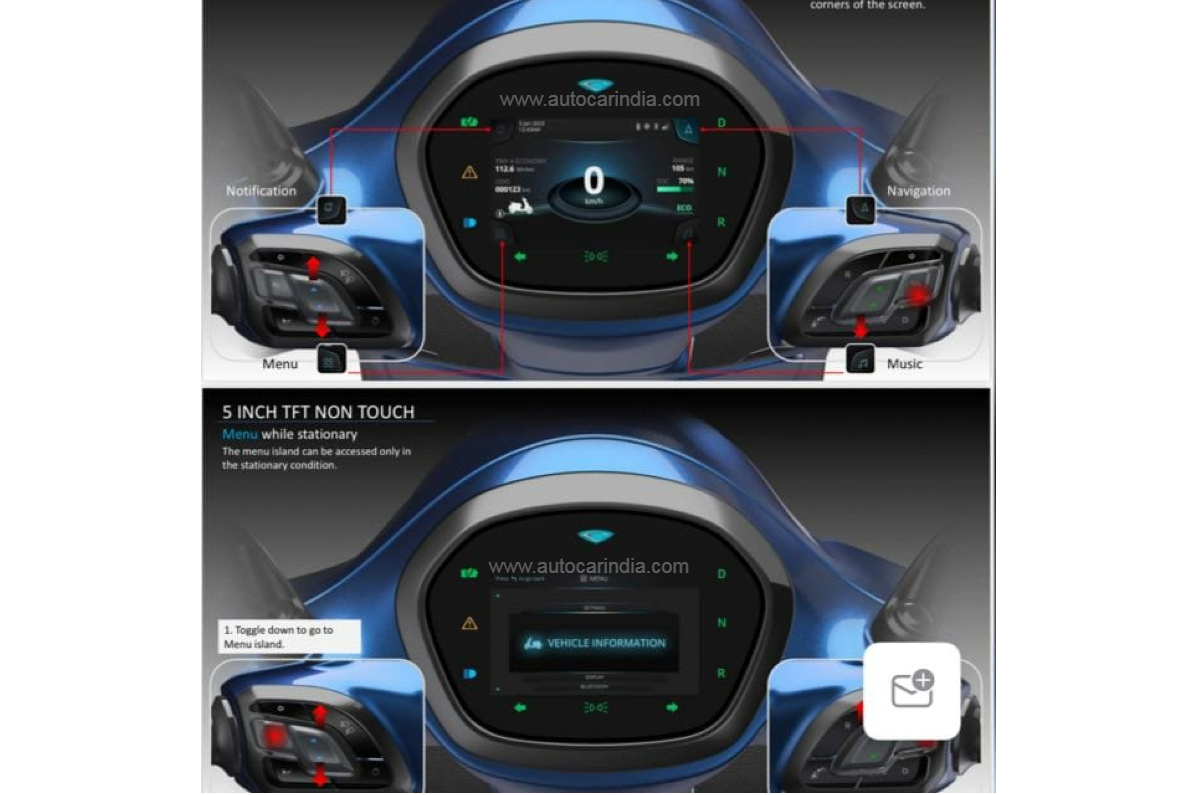
With just about every EV on the market offering a TFT dash (some even incorporating touch functionality), the Chetak’s rather simple LCD display was feeling a little out of place, especially at its asking price. With this update, the Chetak Premium will finally get a TFT dash with Bluetooth connectivity and will incorporate features such as turn-by-turn navigation, music playback, a tyre pressure monitoring system and remote immobilisation. All these features can be accessed by pairing your smartphone to the dash via the Chetak app. 

Last but not least, Bajaj has also endowed the updated Chetak Premium with a bigger underseat storage area. The capacity has risen from 18 litres to 21 litres, and while that doesn’t seem like a very big increase, we are given to understand that it will now be easier to fit a helmet in there. 

Considering that the Chetak Premium is getting its first comprehensive update since its launch, expect prices to go up to reflect that. 


[ad_2]
Source link

Toyota Taisor Expected Price Variant-Wise Calculation (Updated)

Toyota Taisor Expected Price Variant-Wise Calculation (Updated)

[ad_1]

In this article, we’ll estimate the variant-wise ex-showroom price of the upcoming Urban Cruiser Taisor SUV — Toyota’s upcoming small SUV to compete against Tata Nexon, Maruti Brezza, Hyundai Venue, Nissan Magnite, Renault Kiger and Maruti Fronx. We’ll explain the logic behind the calculations in the Taisor expected price table and support our conclusions. As and when we get more information affecting our estimations about the Toyota Taisor price, we’ll update our estimations to accommodate new findings.

Important Note: Toyota haven’t yet confirmed the Taisor for the Indian market. Considering the rumours that the Taisor could be Toyota’s version of the Maruti Suzuki Fronx, we’re fairly confident that the Taisor may materialise sometime before the 2023 festivities start. In fact, it may just pop out of nowhere on a fine day like the Rumion did. So, with the assumptions out of the way, let’s dive into the price estimations.

Toyota Taisor Expected Price Summary

If you’re not interested in getting to know how we arrived at these numbers, then the following table will quickly give you our estimates of the Toyota Taisor price:

TOYOTA URBAN CRUISER TAISOR

EXPECTED EX-SHOWROOM PRICE (SEPTEMBER 21, 2023)

Variant

CNG-MT

Difference

Petrol-MT

Difference

Petrol-Auto

E 1.2L

Rs. 8,55,000

Rs. 95,000

Rs. 7,60,000

–

–

S 1.2L

Rs. 9,45,000

Rs. 95,000

Rs. 8,50,000

Rs. 50,000

Rs. 9,00,000

S Plus 1.2L

–

–

Rs. 9,00,000

Rs. 50,000

Rs. 9,50,000

Difference

–

–

Rs. 1,00,000

–

–

S Plus Turbo

–

–

Rs. 10,00,000

–

–

G Turbo

–

–

Rs. 11,00,000

Rs. 1,50,000

Rs. 12,50,000

V Turbo

–

–

Rs. 12,00,000

Rs. 1,50,000

Rs. 13,50,000

Toyota Taisor — Powertrain/Engine Options

So far, we have seen that any Maruti Suzuki car that ends up with a Toyota badge retains the same powertrain options. In fact, in these cars, even the variant lineup has significant-to-full overlap with Maruti Suzuki cars. Only the variant names are different. The most prominent examples are Baleno-Glanza, Ertiga-Rumion and Vitara-Hyryder. In these cases, we have also noticed that the Toyota cars even retain the same feature distribution making it operationally efficient for the 2 brands to serve different customers with minimal overhead expenses besides the visual touch ups.

For the Taisor, we’re expecting to see the same wine in the same bottle with only a different label. This means that we are likely see the following 5 powertrain options for the Taisor:

  • 1.2L normal petrol with 5-speed manual transmission
  • 1.2L normal petrol with 5-speed AMT automatic transmission
  • 1.2L normal CNG bi-fuel with 5-speed manual transmission
  • 1.0L turbo petrol with 5-speed manual transmission
  • 1.0L turbo petrol with 6-speed torque converter automatic transmission

Also Read: Toyota Rumion Price Reaction — Expected Vs Launch Price

New Tata Nexon 2023 Price Reaction — Expected Vs Launch Price

Note: Check your Car EMI with our – Car Loan EMI Calculator

Toyota Taisor Variants

Just like the Baleno, we’re expecting to see 4 main variants of the Taisor besides the one Plus variant. It’s also fairly safe to assume that Toyota will follow the same variant naming as the Glanza as the Fronx itself is based on the Baleno hatchback.

We’re expecting to see the following 5 Toyota Taisor variant names:

TOYOTA TAISOR VS FRONX VARIANTS

Taisor Expected Variants

Fronx Equivalent Variants

E

Sigma

S

Delta

S Plus

Delta Plus

G

Zeta

V

Alpha

Toyota Taisor Price Range

To derive the expected ex-showroom pricing of the Taisor, we’ll first have to look at the prices of the Maruti Fronx in the following table:

MARUTI SUZUKI FRONX

EX-SHOWROOM PRICE (SEPTEMBER 21, 2023)

Variant

CNG-MT

Difference

Petrol-MT

Difference

Petrol-Auto

E 1.2L

Rs. 8,41,500

Rs. 95,000

Rs. 7,46,500

–

–

S 1.2L

Rs. 9,27,500

Rs. 95,000

Rs. 8,32,500

Rs. 55,000

Rs. 8,87,500

S Plus 1.2L

–

–

Rs. 8,72,500

Rs. 55,000

Rs. 9,27,500

Difference

–

–

Rs. 1,00,000

–

–

S Plus Turbo

–

–

Rs. 9,72,500

–

–

G Turbo

–

–

Rs. 10,55,500

Rs. 1,50,000

Rs. 12,05,500

V Turbo

–

–

Rs. 11,47,500

Rs. 1,50,000

Rs. 12,97,500

Rumion Effect

With the Rumion prices, we have seen that Toyota are lightening the demand side to balance the supply-demand equation as it’s too heavy right now. With the Fronx, we have seen that the car is in high demand and beginning to consistently hit a 10,000+ units sales figure every month despite carrying considerably higher than expected prices. So, Toyota have a good amount of breathing room to hike prices further to puff up their profit margins and pay Maruti Suzuki the royalty for borrowing their product and R&D.

Nexon Effect

With the Nexon, we have seen Tata push the envelope further as it became the first B2 segment SUV to cross the psychological barrier of Rs. 15.0 lakh. Hence, even if Toyota push the prices of the Taisor beyond where the Fronx’s stand right now, they will come across as value for money in comparison to the Nexon’s. At Rs. 12.0 lakh for the top model with the turbo petrol-manual powertrain, the Taisor will have a strong footing to challenge the Nexon Creative Plus. Even with an ex-showroom price of Rs. 11.70 lakh, the Nexon Creative Plus petrol-manual, it still feels incomplete as it doesn’t get front and rear armrests.

Toyota Effect

There are a lot of buyers who value a smooth ownership experience and long-term reliability a lot more than the fancy features and styling. The moment the Fronx gets the Toyota badge, it brings along Toyota’s trust in the product and their support throughout the ownership.

Not only is the new Nexon far from achieving quality levels comparable with a Toyota product, their 7-speed DCT is also a piece of first gen hardware. Toyota Taisor, on the other hand, will bring a tried and trusted torque converter type automatic with refinement levels you won’t find in a Tata R&D transmission anytime soon. Despite an inefficient torque converter automatic, the Taisor will deliver far better fuel efficiency figures than the Nexon in the real world. It’s, after all, a Maruti Suzuki product behind the Toyota logo. Moreover, it has the torque to offer similar drivability as the Nexon as it has less weight to haul.

To know more about how the weight of a car relates to the safety, you can watch the following video:

https://www.youtube.com/watch?v=gCnJNjLdlnw

Maruti Fronx Vs Toyota Taisor – Price Comparison

Before I go off the rails on an unrelated tangent, let’s pivot back to our Taisor’s expected prices and compare them with the Fronx. Just like the Baleno-Glanza and Ertiga-Rumion, we can expect the Taisor’s starting prices to remain closer to the Fronx while higher variants could deviate a fair bit like the Rumion did.

MARUTI FRONX VS TOYOTA TAISOR

EXPECTED EX-SHOWROOM PRICE COMPARISON (SEPTEMBER 21, 2023)

Variants

Fronx Price

Difference

Taisor Exp. Price

Exp. Variants

1.2L Normal Petrol-Manual

Sigma

Rs. 7,46,500

Rs. 13,500

Rs. 7,60,000

E

Delta

Rs. 8,32,500

Rs. 17,500

Rs. 8,50,000

S

Delta Plus

Rs. 8,72,500

Rs. 27,500

Rs. 9,00,000

S+

1.2L CNG-Manual

Sigma

Rs. 8,41,500

Rs. 13,500

Rs. 8,55,000

E

Delta

Rs. 9,27,500

Rs. 17,500

Rs. 9,45,000

S

1.2L Normal Petrol-Automatic (AMT)

Delta

Rs. 8,87,500

Rs. 12,500

Rs. 9,00,000

S

Delta Plus

Rs. 9,27,500

Rs. 22,500

Rs. 9,50,000

S Plus

1.0L Turbo Petrol-Manual

Delta Plus

Rs. 9,72,500

Rs. 27,500

Rs. 10,00,000

S Plus

Zeta

Rs. 10,55,500

Rs. 44,500

Rs. 11,00,000

G

Alpha

Rs. 11,47,500

Rs. 52,500

Rs. 12,00,000

V

1.0L Turbo Petrol-Automatic (TC)

Zeta

Rs. 12,05,500

Rs. 44,500

Rs. 12,50,000

G

Alpha

Rs. 12,97,500

Rs. 52,500

Rs. 13,50,000

V

We expect the Taisor 1.2L petrol-manual variants to cost between Rs. 7.60 lakh and Rs. 9.0 lakh. The 2 AMT variants of the Taisor could cost Rs. 9.0 lakh and Rs. 9.50 lakh (ex-showroom). The Taisor turbo petrol manual range could start from Rs. 10.0 lakh and stretch up to Rs. 12.0 lakh. With the turbo petrol engine and an automatic transmission, the Taisor’s top 2 variants could cost Rs. 12.50 lakh and Rs. 13.50 lakh. Finally, the Taisor E and S CNG variants could carry an ex-showroom price tag of Rs. 8.55 lakh and Rs. 9.45 lakh, respectively.

With these prices, the Taisor will have at least one turbo petrol variant (barely) under Rs. 10.0 lakh. Moreover, it’ll have the 2 petrol-AMT and CNG-manual variants well under Rs. 10.0 lakh (ex-showroom) price. The turbo petrol with the manual and automatic transmission will have no trouble maintaining its premium appeal as it’ll mostly hover well over the Rs. 10.0 lakh limit.

Most importantly, with the Taisor, Toyota will once again have a presence in the B2-SUV space. It’s one of the hottest segments right now and if they bring the Taisor ahead of the festive season, then they can capitalise on the festive shopping spree and steal some sales from other brands as well.

Also Read: Hyundai Creta 2024 Expected Price Range – With Logic

Citroen C3 Aircross Expected Price Calculation – With Logic

Note: Check your car’s fuel cost with Fuel Cost Calculator in India

[ad_2]
Source link

First Honda electric motorcycle India launch confirmed in 2024

First Honda electric motorcycle India launch confirmed in 2024

[ad_1]

Honda Global has confirmed plans to launch an electric motorcycle equivalent to 110-125 cc commuters in India next year. The announcement was a part of Honda Motor Co’s new motorcycle electrification strategy, which will see the manufacturer invest $3.4 billion by 2030 on new products and development. The two-wheeler giant also revised its global sales target from 3.5 million to 4 million electric motorcycles by 2030.

By: Sameer Fayaz Contractor
| Updated on: 01 Dec 2023, 03:21 AM

Honda two wheelers logo
Honda’s first electric motorcycle for India will go on sale next year, after the first two electric scooters are launched

The electric motorcycle will come with swappable batteries and will be built in India at the company’s existing manufacturing facility. It will be launched in India first, followed by other ASEAN markets, Japan and Europe. Honda announced electrification plans for India earlier this year promising two electric offerings equivalent to 110-125 cc offerings. While one e-scooter will get a fixed battery, the other model will come with swappable batteries.

Also Read : Honda to launch 2 electric two-wheelers in India in FY2024 with swappable battery.

Speaking during the presentation, Daiki Mihara, Executive Officer – Honda Motorcycle and Power Products Electrification Business Development Unit – Honda Motor Co., said, “Next year 2024, we will launch an electric motorcycle with swappable batteries starting in India and followed by ASEAN, Japan and Europe.”

Honda’s India operations will play a key role in the company’s motorcycle electrification strategy going forward. The company will use its existing facilities to build electric motorcycles from now till 2027 and plans to launch a dedicated plant beyond 2027 for electric motorcycles that will also manufacture important parts in-house to reduce cost. The new plants will have a production capacity of about one million units per year, per plant with an investment of 50 billion yen (approx. ₹2,800 crore) for each new facility.

Mihara further said that the two-wheeler maker will have a dedicated electric motorcycle plant in India, which will be followed up with another e-motorcycle manufacturing facility in the ASEAN region. Honda aims to reduce the cost of finished electric motorcycles by 50 per cent through optimising batteries, adopting modular platforms, and optimising production and procurement. The new assembly lines for electric motorcycles will be 40 per cent shorter when compared to ICE vehicles.

Furthermore, it plans to make major adjustments to its supply chains in order to achieve its goal of selling four million e-motorcycles by 2030 while achieving a 10 per cent operating profit margin. Honda also plans to repurpose its Kumamoto plant in Japan to produce larger-capacity electric motorcycles equivalent to 600-700 cc offerings.

Honda’s future strategy includes bringing 30 new electric motorcycles globally by the end of this decade. The upcoming offerings will pack new technologies including advanced connectivity, OTA updates, and modern data collection systems. The company is also working on improving battery technology and will use LFP battery cells going forward, alongside NMC lithium-ion batteries presently seen on its electric offerings.

First Published Date: 01 Dec 2023, 03:21 AM IST

[ad_2]
Source link

MG Hector price, MG Motor India, MG, SAIC-JSW Group joint venture

MG Hector price, MG Motor India, MG, SAIC-JSW Group joint venture

[ad_1]
MG Hector price, MG Motor India, MG, SAIC-JSW Group joint venture

Along with introducing a broader range of vehicles, the JV will look at augmenting local sourcing, improving charging infrastructure, and the expansion of production capacity.

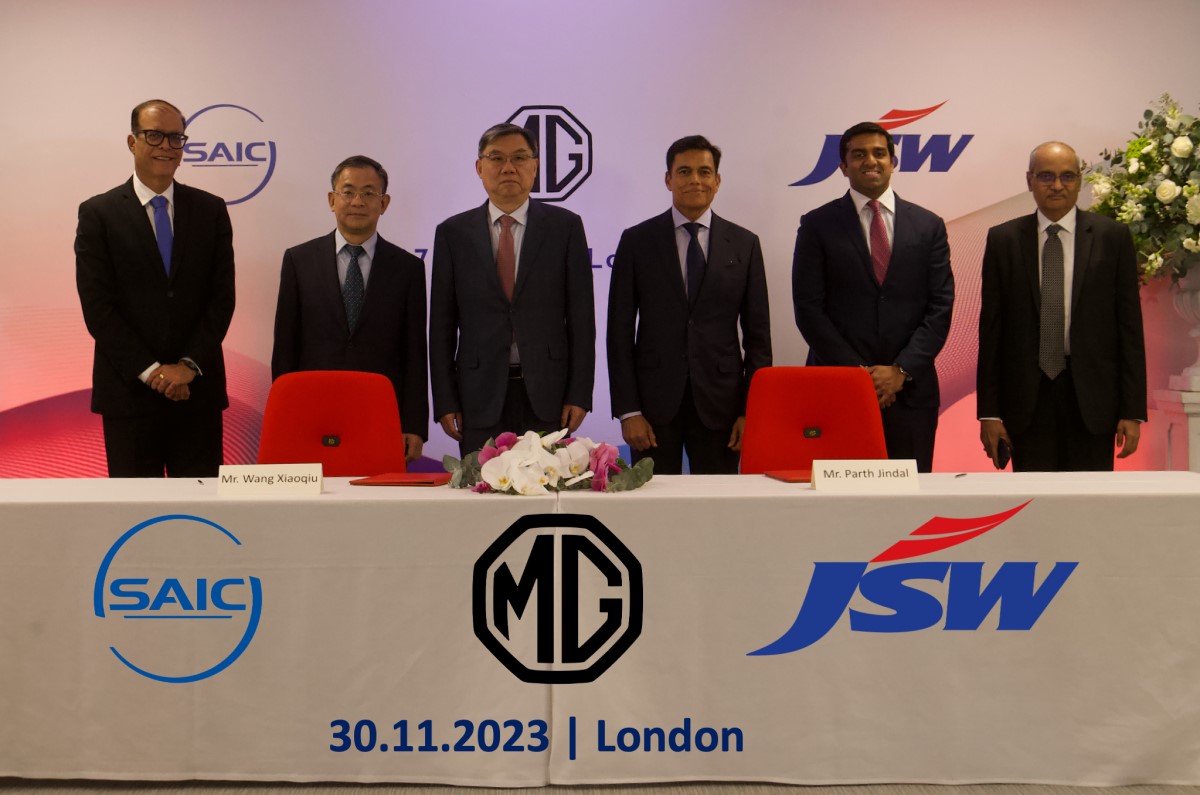
SAIC Motor and the JSW Group have entered into a strategic joint venture. The Shareholder Agreement and Share Purchase & Share Subscription agreement were signed by the President of SAIC Wang Xiaoqiu and JSW Group’s Parth Jindal at the MG Office in London, with the objective of accelerating the transformation and growth of MG Motor in India.

  1. Joint venture to expand MG Motor India’s presence
  2. JSW will hold 35 percent in the Indian joint venture
  3. Both NEVs and ICE vehicles to be introduced

SAIC Motor and JSW Group will create strategic synergies by bringing together resources in the field of automobiles and new technology. The joint venture will also undertake multiple new initiatives including augmenting local sourcing, improving charging infrastructure, expansion of production capacity, and introducing a broader range of vehicles with a focus on green mobility.

According to the agreement signed, JSW will hold 35 percent share in the Indian JV operations. SAIC will continue supporting the joint venture with advanced technology and products to deliver mobility solutions with a focus on the Indian consumer.

The joint venture is said to optimise SAIC Motor’s vast automotive experience and technical expertise to demonstrate MG’s spiritual cores – globalisation, digitalisation, rejuvenation, and young attitude. It will also leverage the large presence of JSW Group across B2B and B2C sectors of the Indian economy to augment local sourcing and establish a robust supply chain.

Together, SAIC and JSW Group will work towards creating a smart and sustainable automotive ecosystem in India by bolstering the development of NEVs (a four-wheeled EV that has a maximum speed greater than 32kph but not more than 40kph) and ICE vehicles with carbon neutrality, sustainability and green mobility at the centre of its shared vision. 

Also see:

SAIC announces global partnership with Audi to develop EVs

MG ZS EV price dropped by up to Rs 2.30 lakh


[ad_2]
Source link

Punch EV to Harrier EV: Upcoming new Tata Motors cars you should wait for

Punch EV to Harrier EV: Upcoming new Tata Motors cars you should wait for

[ad_1]

Tata Motors is expected to drive in more electric vehicles besides other new models to India in coming days. The upcoming Tata cars, some of which will be launched in the next few months, also include CNG and ICE models too. While Tata Motors has confirmed launch of at least three of these models by next year, the other models have already been showcased in either production version or in concept avatars recently by the carmaker.

By: HT Auto Desk
| Updated on: 30 Nov 2023, 14:15 PM

Tata Punch Curvv Harrier Altroz EV
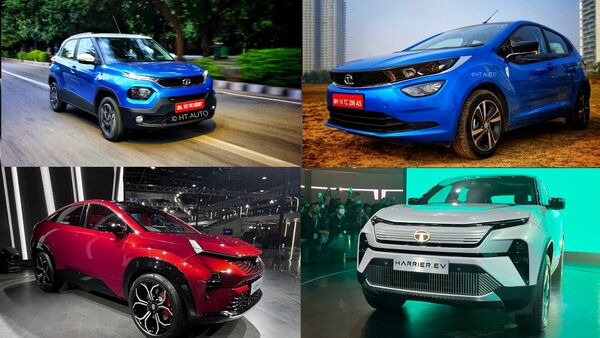
Tata Motors is expected to launch around eight new models in coming days. Some of these models, including the Punch EV and Harrier EV, have already been confirmed for launch by next year.

Tata Motors is currently the leading carmaker in India in the electric vehicle segment. It offers models like Nexon EV, Tiago EV and Tigor EV. Tata also has two of India’s best-selling SUVs in Nexon and Punch. The carmaker recently launched the facelift version of the Harrier and Safari SUVs. Besides EVs and ICE vehicles, Tata also offers a few CNG models including the Tigor, Tiago, Punch and Altroz. The carmaker will expand all these portfolios with new models in coming days.

Here is a look at some of the new and upcoming cars from Tata Motors stable worth waiting for.

Punch is the smallest SUV in Tata Motors’ lineup in India. The rival to Hyundai Exter, Punch is available in both petrol and diesel versions along with CNG kit too. In August this year, Tata Motors confirmed that it will launch four electric vehicles by early 2024. These upcoming electric vehicles also include the Punch EV, which has already been spotted a number of times during test runs. According to reports, the Punch EV will use the same Ziptron technology that is doing duty on the Nexon EV. The size of the battery could be the ones used for Tigor EV or the Nexon EV. Tata Punch EV could offer range of more than 300 kms in a single charge in the long-range version.

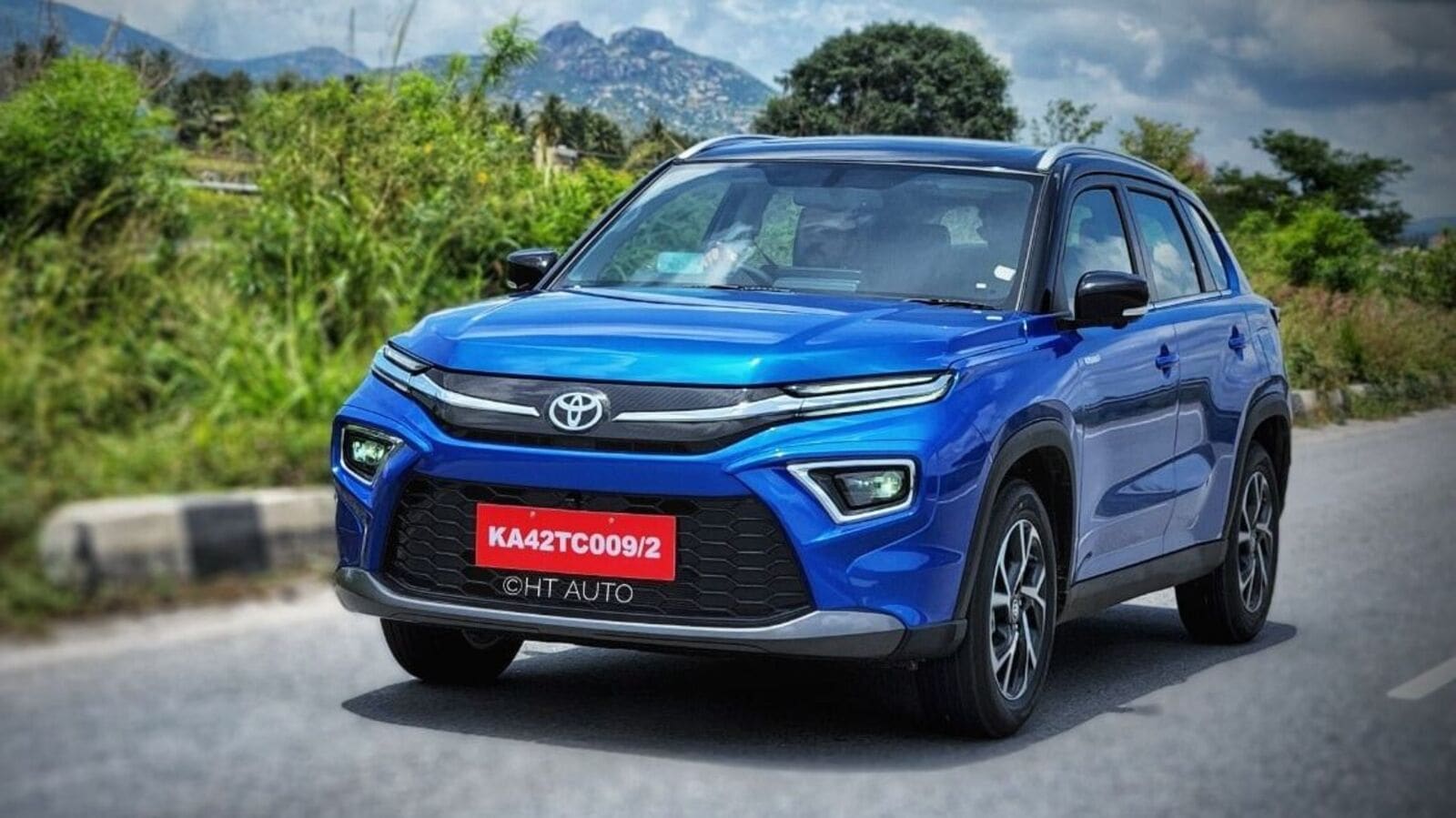
Tata Motors showcased the Curvv Concept model in 2022 highlighting how its design language will change for upcoming models. A year later, the carmaker is preparing to launch Curvv in the production form. Tata had showcased the ICE version of the Curvv at the Auto Expo held earlier this year. Sailesh Chandra, MD at Tata Motors, had confirmed that the Curvv ICE version will be launched in India ahead of its EV avatar by 2024. With either 1.2-litre and 1.5-litre petrol engines under its hood, the Curvv SUV is expected to take on the likes of Hyundai Creta, Kia Seltos, Maruti Suzuki Grand Vitara among others in the compact segment.

Tata Curvv EV

Showcased first as an electric concept, the Curvv SUV is likely to see its EV version launching in India after the ICE version. The Curvv EV will be based on Tata Motor’s X1 platform which will be heavily reworked to become EV ready. According to reports, the expected range of the Curvv electric SUV will be between 400 kms and 500 kms in a single charge. It is not clear if Tata Motors will use the same battery the Nexon EV facelift uses.

Tata Harrier EV

Tata Motors unveiled the Harrier EV at Auto Expo 2023 earlier this year. The carmaker has confirmed that the EV version of Tata’s flagship SUV will go on sale in 2024. It has been spotted testing on roads ahead of its launch within the next few months. Built on the Gen 2 EV architecture, the Harrier EV will come with V2L and V2V charging facilities. As far as design is concerned, the unit showcased by the carmaker at the Auto Expo is slightly different from the Harrier facelift SUV launched in October. Tata Motors has not revealed much about the powertrain and its specifications yet.

Tata Altroz EV

Showcased at the Auto Expo 2020 in concept form, Tata Altroz EV is one of India’s most awaited electric cars. This would be the second hatchback from the carmaker after the Tiago to get an electric version. The Tata Altroz EV is expected to draw power from the automaker’s Ziptron powertrain, which would comprise a permanent magnet AC motor channelling energy to the front wheels via a single-speed transmission. Expect the Altroz EV’s lithium-ion battery pack to offer a range of around 300 kms in a single charge, which could come with fast charging capability.

The Altroz premium hatchback is also expected to get its most powerful variant in the Racer version, which was showcased at the Auto Expo 2023. The sporty-looking version of the hatchback, complete with a dual-tone theme of red and black with white stripes, could be Tata’s answer to the likes if Hyundai i20 N Line. The Altroz Racer is powered by a 1.2-litre turbocharged petrol engine. It produces 120 bhp and 170 Nm of peak torque. These power outputs are more than the Altroz iTurbo. Also, the gearbox has been upgraded, the Altroz Racer gets a 6-speed unit instead of a 5-speed unit.

Tata Nexon CNG

The Nexon SUV, Tata Motors’ best-selling car in India, is currently offered with petrol, diesel and electric versions. However, the carmaker could complete Nexon’s family with the introduction of its twin-cylinder iCNG technology too. The carmaker recently launched the CNG version of Punch SUV. There are talks that Tata Motors is also planning to use the same technology in Nexon too. The sub-compact SUV’s key rival Maruti Suzuki Brezza is the only model in the segment which is offered with CNG technology.

The much-awaited Sierra SUV from Tata Motors was first showcased back in 2020 during Auto Expo. In the 2023 edition of the auto show, Tata Motors returned with an EV concept version of the SUV. Tata Motors has confirmed that the Sierra EV will be launched in India by 2025.
First Published Date: 30 Nov 2023, 14:15 PM IST

[ad_2]
Source link

Gogoro Crossover rugged electric scooter to be launched in India on December 12

Gogoro Crossover rugged electric scooter to be launched in India on December 12

[ad_1]

Taiwan-based electric two-wheeler giant Gogoro has announced it will launch a new offering in India on December 12, 2023. This will be the company’s electric scooter for the Indian market and the manufacturer will be bringing the Gogoro Crossover as its maiden offering. The Gogoro Crossover is a rugged electric scooter that was unveiled in October this year and the model is better equipped to handle rough terrains.

By: HT Auto Desk
| Updated on: 29 Nov 2023, 22:37 PM

Gogoro CrossOver
The Gogoro CrossOver looks rugged with fork gaiters, 12-inch wheels wrapped in Maxxis dual-purpose tyres, black elements and a lots of storage space

The new Gogoro Crossover electric scooter is pitched as a “two-wheeled SUV” by the company with utility and versatility in focus. The model gets 12-inch wheels wrapped in Maxxis dual-purpose tyres. It gets telescopic front forks with fork gaiters and more black panels across the bodywork. The wheelbase measures a decent 1,400 mm, while the e-scooter is underpinned by a modified steel tubular frame. Braking comes from 220 mm front and 180 mm rear discs.

Also Read : Gogoro unveils Crossover electric scooter with off-road capability.

The Gogoro Crossover gets a ground clearance of 142 mm, which may seem a lot but is still less than the Ather 450X’s 170 mm and the TVS iQube’s 150 mm. It needs to be seen if Gogoro will modify the ground clearance to make it more favourable for Indian road conditions. Gogoro also announced a host of storage accessories for the Crossover to make it more practical.

Other notable bits include the split seats that can fold to become a backrest for the rider while liberating additional space for cargo. Power on the international-spec version comes from a 7 kW electric motor with 26.6 Nm of peak torque, while there are two swappable battery packs with a combined capacity of about 1.6 kWh with a range of 100 km. It’s likely that the India-spec model will be toned down in performance with a smaller and more affordable motor in place to keep costs in check.

Gogoro is expected to bring both B2C and B2B versions to the Indian market and the latter is likely to be in focus first. The upcoming electric scooter will be built at the company’s plant in Maharashtra and the manufacturer is eyeing the last-mile delivery service operators with its new offering. It has already partnered with several players including Swiggy, Zomato and Zypp Electric. The company has also begun setting up swappable battery stations and the first such unit was set up in Gurugram earlier this year. Heavy localisation should give Gogoro the much-required cost advantage to stay competitive in the entry-level electric scooter segment.

First Published Date: 29 Nov 2023, 22:37 PM IST

[ad_2]
Source link

2024 Renault Duster makes global debut with 4×4 and hybrid powertrain

2024 Renault Duster makes global debut with 4×4 and hybrid powertrain

[ad_1]

Renault’s sister brand, Dacia has officially unveiled the new Duster in Portugal. Yes, the Duster is no longer on sale in the Indian market but the manufacturer has been selling it for the past 13 years. It is expected that the new Duster will go on sale in the Indian market sometime in 2025.

By: Paarth Khatri
| Updated on: 29 Nov 2023, 15:03 PM

The 2024 Renault Duster will be offered in three engine options.

View all Images

All-New Duster is built on the CMF-B platform which is a flexible platform that was first used on the latest Sandero and Logan models, then on Jogger. The new platform has helped in increasing space for the passengers, and luggage and has also helped in electrification of the SUV.

The 2024 Duster comes with 4×4 Terrain Control with 5 driving modes – Auto, Snow, Mud/Sand, Off-road and Eco. The 4×4 versions get a ground clearance of 217 mm with an approach angle of 31° and a departure angle of 36°.

The SUV now comes with a new 7-inch digital cluster and a new 10.1-inch central touchscreen. There is wireless Android Auto, Apple CarPlay, Arkamys 3D Sound System and navigation with real-time traffic data.

2024 Renault Duster
The 2024 Renault Duster is based on the Bigster concept.

Powering the 2024 Renault Duster are three engine options – Hybrid 140, TCe 130 and Eco-G 100. The four-cylinder, 1.6-litre petrol engine comes mated to two electric motors and an electric automatic gearbox. The petrol engine produces 92 bhp whereas one electric motor produces 48 bhp and the other motor is a high-voltage starter generator. The battery pack on offer is a 1.2 kWh unit that can be charged using brake regeneration. Moreover, the engine always starts on electric power.

Then there is a new 1.2-litre three-cylinder turbocharged petrol engine that runs on Miller cycle with a 48V mild hybrid motor. The electric motor helps the combustion engine when the car starts or accelerates and this also helps in reducing average consumption. The regenerative braking system charges the 0.8 kWh battery. This powertrain will be offered with a 6-speed gearbox in the 4×2 and 4×4 versions.

Also Read : Renault plans big EV and hybrid offensive, to launch three new models in India

Finally, there is the LPG option which runs on petrol as well. There are two tanks, one for petrol while the other one is for LPG. Both have a capacity of 50 litres. There is a button placed on the dashboard that changes the fuel type.

First Published Date: 29 Nov 2023, 15:03 PM IST

[ad_2]
Source link

Tata Nexon price, petrol and EV price trends and differences, future price of EVs

Tata Nexon price, petrol and EV price trends and differences, future price of EVs

[ad_1]
Tata Nexon price, petrol and EV price trends and differences, future price of EVs

Shailesh Chandra, MD of Tata Passenger Electric Mobility, says falling lithium-ion battery prices and low GST rates could help achieve this.

With battery costs falling to a record-low of around $130 (Rs 10,800 approx.) per kilowatt hour, there’s a potential to see a mass market electric car with a real-world range of 250km that’s priced similar to an ICE-powered vehicle within 18 months, says Shailesh Chandra, MD of Tata Passenger Electric Mobility.

  1. EVs currently priced 25-35 percent higher than ICE counterpart
  2. ICE to see price increase, while EV prices will decrease

Speaking at our sister publication Autocar Professional’s India EV Conclave, Chandra said that while early adopters of EVs are willing to pay a 20-30 percent premium over conventional ICE vehicles, mainstream buyers want an EV at the same price as an ICE vehicle. “In the foreseeable future – in less than 1 year, 1 and a half years – you are going to see a car with 200-250km real range in the mass market, hitting that level,” he added.
ICE and EV price trends

The head of India’s largest electric carmaker says the future “cost trend is locked in”, where the cost of an internal combustion engine will be “inflationary” in nature to meet the future emissions compliance, whereas for EVs will witness a “deflationary” trend with battery costs likely to fall. “It’s a given, EVs will see a deflationary trend. So, there is a breakpoint at some stage that you are going to see,” said Chandra.

There are several reasons why battery prices are going down. It’s primarily the LFP battery packs – Tata Motors uses LFP, while Mahindra uses NMC – that are becoming more affordable, due to declining raw material costs. This is due to both, a significant increase in lithium production capacity as well as the slowing growth rate of EVs across the globe.

The cost of an electric vehicle over a conventional ICE-powered car is still about 25-35 percent higher due to significant import content and high battery cost. For instance, top-spec variants of the Nexon and Nexon EV are priced at Rs 15.50 lakh and Rs 19.94 lakh (ex-showroom), respectively, which is roughly a difference of about 30 percent.

Chandra believes that with GST at 5 percent, benefit of falling battery cost and benefits accrued out of the government’s production linked incentive (PLI) scheme, the company will not only be able to price its products competitively but the EV business will also start generating profits.

In Tata Motors’ portfolio, models such as the Tiago and Tigor EVs have a real-world range of about 200km, and the upcoming Punch EV could also offer a similar range. Therefore, these entry-level models should be able to close the price gap with their ICE counterparts in the future. Tata Motors will also have an electric derivative of the Harrier, and the upcoming Curvv coupe-SUV too will have both ICE and electric versions. However, these larger vehicles with larger batteries may not be able to achieve the same cost competitiveness as the entry-level models.

Tata Motors’ share in EVs and investments

Tata Motors on its part has single-handedly helped in creating a market for EVs, and has a predominant share of over 85 percent in the nascent yet fast emerging space. The electric car market in India is likely to cross the 1 lakh mark for the first time ever this financial year, and the company is well on course for a six-digit annual sales mark within a year.

Tata Motors has committed USD 2 billion (around Rs 16,600 crore) in investment for its EV business and it has plans of building a portfolio of 10 electric vehicles by 2025. About 15 percent of its total sales comes from EVs, and the company expects EVs to account for 30 percent of its total volumes by 2025.

Also See:

New Renault Duster makes global debut

New car, SUV prices to be hiked from January 2024


[ad_2]
Source link

Royal Enfield Himalayan 450 vs Yezdi Adventure. Which ADV should you buy?

Royal Enfield Himalayan 450 vs Yezdi Adventure. Which ADV should you buy?

[ad_1]

Royal Enfield has finally launched the much-awaited Himalayan 450 in the Indian market. Now, that the new-gen Himalayan is here, the manufacturer will discontinue the Himalayan 411. One of the rivals of the Himalayan 450 is the Yezdi Adventure. Here is how the new motorcycle stacks against the adventure tourer from Yezdi.

By: HT Auto Desk
| Updated on: 28 Nov 2023, 16:47 PM

Royal Enfield Himalayan 450 Yezdi Adventure
The Himalayan is more powerful than the Adventure.

Royal Enfield Himalayan 450 vs Yezdi Adventure: Looks

In terms of looks, both adventure tourers have a function over form design language. However, the Himalayan now has more road presence. This is because of the large fuel tank and the larger proportions. Both motorcycles come with a windscreen, a circular LED headlamp, up-swept exhaust and a split seat setup.

Royal Enfield Himalayan 450 vs Yezdi Adventure: Engine

The new generation of Himalayan has spiced things up when it comes to the engine. Both engines are now liquid-cooled but it is the Himalayan that has a larger engine. As a result, it puts out around 40 bhp whereas the Yezdi produces 29 bhp. There is a huge difference in torque output as well. The Royal Enfield Himalayan’s engine produces 40 Nm whereas the Yezdi puts out 29 Nm. The gearbox on both motorcycles is a 6-speed unit that gets a slip-and-assist clutch.

Royal Enfield Himalayan 450 vs Yezdi Adventure: Features

In terms of features, the Himalayan comes with all LED lighting, riding modes, ride-by-wire, switchable ABS, Bluetooth connectivity and a new TFT instrument cluster that features full maps. Yezdi Adventure comes with a digital instrument cluster, turn-by-turn navigation with Bluetooth connectivity, all LED lighting and switchable ABS.

Also Read : Royal Enfield Shotgun 650 Motoverse Edition launched at ₹4.25 lakh

Royal Enfield Himalayan 450 vs Yezdi Adventure: Hardware

The Himalayan 450 uses up-side down forks in the front and gas gas-charged monoshock at the rear. On the other hand, the Yezdi Adventure uses telescopic forks in the front and a monoshock at the rear. Braking duties on both motorcycles are done by a disc in the front as well as at the rear.

Watch: Royal Enfield Himalayan review: Adventure icon with brand new fashion

Royal Enfield Himalayan 450 vs Yezdi Adventure: Price

The Himalayan 450 now starts at ₹2.69 lakh introductory whereas the Yezdi Adventure starts at ₹2.16 lakh. Both prices are ex-showroom.

First Published Date: 28 Nov 2023, 16:47 PM IST

[ad_2]
Source link

Tata Motors launches its fourth vehicle scrapping centre in Chandigarh

Tata Motors launches its fourth vehicle scrapping centre in Chandigarh

[ad_1]

Tata Motors has opened a new vehicle scrapping facility, its fourth, in Chandigarh today (November 28). Announcing the start of the new facility, the carmaker said the state-of-the-art facility will be able to scrap around 12,000 end-of-life vehicles each year. The vehicle manufacturer further stated that the new facility is named as Re.Wi.Re, which stands for Recycle with Respect. The new facility was unveiled by Shailesh Chandra, Managing Director at Tata Motors Passenger Vehicles and Tata Passenger Electric Mobility on Tuesday.

By: HT Auto Desk
| Updated on: 28 Nov 2023, 13:38 PM

Tata Motors Vehicle Scrapping Centre Chandigarh
Besides the new vehicle scrappage facility in Chandigarh, Tata Motors also has such centres in three other cities including Jaipur, Bhubaneswar and Surat.

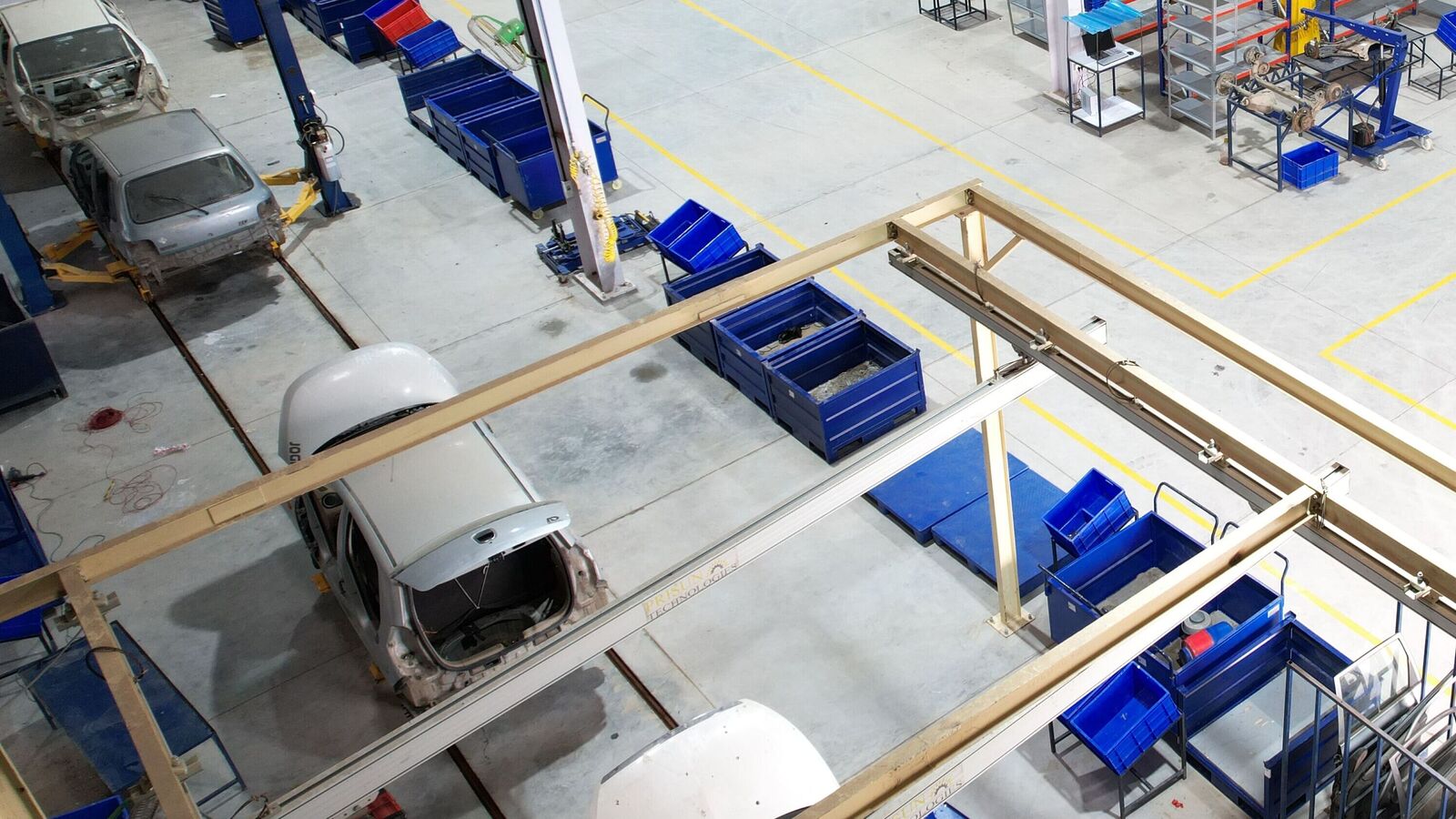
Tata Motors said that the facility has been developed and operated by its partner Dada Trading Company. According to the carmaker, the facility will help scrapping of vehicles using environment-friendly processes. The facility, which is fully digitalised, will be able to scrap both passenger and commercial vehicles. It has dedicated centres to dismantle components like batteries, tyres, as well as fuel, oil, liquid and gas. The carmaker said the scrapping centre has dedicated cell-type and line-type dismantling for both type of vehicles.

This new vehicle scrapping centre is the fourth such facility run by Tata Motors. Previously, the carmaker had opened three such centres in Jaipur, Bhubaneshwar and Surat. Shailesh Chandra, MD at Tata Motors, said, “This state-of-the-art facility not only emphasises our unwavering commitment to responsible manufacturing but also represents our dedication to creating a greener and cleaner environment. The establishment of the fourth such facility is a testament to our relentless pursuit of reducing carbon emissions, promoting a circular economy and cultivating a culture of recycling.” In September this year, Tata Motors inaugurated its Surat vehicle scrapping facility. It is capable of recycling 15,000 vehicles every year.

Also Read : Tata cars in India set to be pricier from January 2024

Tata Motors said scrapping of old vehicles will help in getting rid of polluting vehicles and make way for safer and more fuel-efficient vehicles to enter the market. It echoes Union Minister Nitin Gadkari’s vision to discard old vehicles. Gadkari had said that the Centre’s vehicle scrapping policy will increase automobile sales by 18 per cent. He had also said that using the raw materials sourced from scrapped vehicles will save 33 per cent cost on raw material procurement.

The Vehicle Scrappage Policy introduced for the first time in August 2021, focuses on phasing out old and unfit vehicles across India in order to reduce the vehicular pollution level as the older vehicles are known for polluting the environment more than the newer models. This policy aims to de-register private cars that are aged more than 20 years and commercial vehicles aged more than 15 years.

First Published Date: 28 Nov 2023, 13:38 PM IST

[ad_2]
Source link

The vintage elegance of the Mercedes W123

The vintage elegance of the Mercedes W123

[ad_1]

Ahead of the Mercedes-Benz Classic Car Rally, here’s getting behind the wheel of the legendary 230 sedan.

It is the Mercedes I used to draw in my school textbooks as a kid. The twin headlights in a single pod, the vertical chrome Mercedes grille, the ‘V’ bonnet. And later, when I just started driving, I got to spend a lot of time with a similar fuel-injected 230 E. 

So coming face to face with it again feels like meeting an old friend. The familiar lines have aged very little and many of the details and proportions are so ingrained in my memory, I seem to know every line, every curve. It’s much smaller on the inside than I remember, and some of the buttons on the dash are not the same, but the car feels so familiar that I just want to jump in and drive.


Still, as we walk around the rear, I see that this is a carburetted and not fuel-injected version, so no einspritz ‘e’ suffix after the 230 badge on the boot, from where the E-Class funnily got its name. And it has a sunroof with a unique metal cover; just what we need here in India. 

Getting behind the wheel is another nostalgia trip – the sights, the sounds, the smells just get me smiling. And then there’s the legendary build quality. No wonder, these cars ran for millions of kilometres as cabs, especially in Egypt and North Africa. The solid dash, the big four-spoke steering wheel, the manner in which the front seats slide along their rails.

The driver’s seat, with its nigh-perfect contours and large supportive frame, is comfortable even by today’s standards. And I just love those fox-eared headrests. The other thing I love is the huge upright dials with their orange accents and needles, and I absolutely love the manner in which the big chunky dial adjusts fan speed clacks through every slot.


Even better is the legendary door shut with that typical W123 thud and metallic clack from the door latch. Then I insert the key into the bottom left of the ‘70mm’ instrument panel and fire it up. The engine feels smooth, even 43 years on, and it revs in a creamy, silky manner. It is also pretty silent, apart from some mechanical clatter, and what gets the car moving effortlessly is that it has a nice torquey bottom end. Despite having a carburettor, it also accelerates smoothly; no jerks, no hiccups.

What’s exceptional, however, is the ride quality. The tall suspension seems to hover above the road and has plenty of travel. And what sort of sets it apart is that the wheels move under you in a soft, supple manner. The ride is good even by today’s standards.

There’s little doubt the W123 exudes an air of superior engineering. To say it’s a car built without a budget in mind would be something of an exaggeration, but it sure feels like that. 


Also see:

10th Mercedes Benz Classic Car Rally: The Showstoppers

2023 Modern Classic Car Rally video

Mercedes Benz Classic Car Rally 2022 image gallery


[ad_2]
Source link

Maruti Suzuki to hike prices of its cars from January

Maruti Suzuki to hike prices of its cars from January

[ad_1]

If you are planning to buy a Maruti Suzuki car soon, you have just one month to drive home one before it gets costlier. Maruti Suzuki, India’s largest passenger vehicle manufacturer, has announced today (November 27) that it will increase the price of its models from New Year. The new prices will be applicable from January 1 next year. However, Maruti Suzuki has not specified if the fresh price hike will be applicable across all models and also the rate of price increase. The latest hike in Maruti Suzuki car prices will be implemented due to rising production costs.

By: HT Auto Desk
| Updated on: 27 Nov 2023, 14:56 PM

Maruti Suzuki
Maruti Suzuki has announced that it will increase the prices of its cars in India from January 1 next year. (REUTERS)

On Monday, a regulatory filing from Maruti Suzuki said that the hike has become necessary due to ‘increased cost pressure driven by overall inflation and increased commodity prices.’ However, the carmaker assured that it is taking steps to minimise its effect on buyers. It said, “While the company makes maximum efforts to reduce cost and offset the increase, it may have to pass on some increase to the market. This price increase shall vary across models.”

Maruti Suzuki has not specified the quantum of the proposed price hike. The carmaker currently sells small to mid-size cars with few in the compact or large segment. Alto, its entry-level model as well as the smallest car in its lineup, comes at a starting price of ₹3.54 lakh (ex-showroom). The Invicto MPV, based on Toyota Innova HyCross, is the largest car Maruti sells. The price of Invicto starts from ₹24.80 lakh (ex-showroom).

Also Read : Audi cars in India all set to get more expensive from new year 2024

Models like Baleno, Swift and WagonR are the three top-selling cars from the Maruti stable. These three cars generally are the highest selling vehicles in India on a monthly basis. Of late, Maruti Suzuki has also stepped up its SUV game, and has become the largest SUV manufacturer with models like Brezza, Fronx, Grand Vitara and Jimny as offerings. Maruti Suzuki has grabbed 22% of the SUV market share, so far in FY24, which is quite close to its target of 25% for the financial year. The Grand Vitara compact SUV, rival to the likes of Hyundai Creta and Kia Seltos, recently became the fastest model in its category to clock one lakh sales since its launch last year.

First Published Date: 27 Nov 2023, 14:56 PM IST

[ad_2]
Source link

Mahindra’s five-door Thar SUV spotted testing again with sunroof

Mahindra’s five-door Thar SUV spotted testing again with sunroof

[ad_1]

Mahindra and Mahindra’s upcoming five-door Thar SUV has been spotted testing on Indian roads once again. The bigger version of Mahindra’s flagship lifestyle SUV is expected to be launched some time next year. The test mule captured on camera has revealed a few more details about the new Thar which includes some features. When launched, the five-door Thar SUV will take on Maruti Suzuki Jimny SUV as one of its key rivals in the segment. Here is a look at what the five-door is likely to offer.

By: HT Auto Desk
| Updated on: 27 Nov 2023, 14:31 PM

Mahindra Thar five-door
Mahindra and Mahindra has been spotted testing the Thar five-door SUV with hard-top and sunroof. (Image courtesy: Instagram/@_2ndhandluxury)

The video of the Mahindra five-door Thar test unit shared on social media shows the SUV with projector LED headlights placed on either side of a redesigned grille. The fog lights, placed on the bumper, are halogen units. At the rear, the five-door Thar is likely to get the square-shaped LED taillight units and a slightly tweaked bumper. The test mule seen in the video is a hard-top unit which will also offer an electric sunroof, a first in the segment if it makes it to the production version of the SUV. Earlier spy shots have revealed that the sunroof will be a single-pane unit.

The interior of the five-door Thar SUV will come with several changes as well, including updated features. The new Thar is expected to be offered with the same 8-inch digital touchscreen infotainment system that Mahindra offers in the Scorpio-N SUV. The bigger Thar is also likely to get new features like wireless phone charging and dual-zone climate control among others. Regular features like digital driver display, roof-mounted speakers, steering-mounted controls, wireless connectivity and more. Safety features coul include six airbags, parking sensors, tyre pressure monitoring system (TPMS), electronic stability control (ESC) among others.

Watch: Mahindra Thar 2020 First Drive Review

Under the hood, Mahindra is likely to use the same 2.0-litre petrol and 2.2-litre diesel engines for the five-door Thar SUV. The 2.2-litre mHawk 130 CRDe diesel can generate kicks out 130 bhp of power and 300 Nm torque. The 2.0-litre mStallion 150 TGDi petrol is capable of churning out 150 bhp of peak power and 320 Nm torque. However, the power output could be slightly different for five–door Thar. Both engines are likely to come mated to either a six-speed manual or a six-speed automatic gearbox. Mahindra is expected to offer the five–door Thar with both 4WD system as well as rear-wheel drive technology.

First Published Date: 27 Nov 2023, 14:31 PM IST

[ad_2]
Source link

Toyota Fortuner price, Hilux Champ, IMV0 SUV, India details

Toyota Fortuner price, Hilux Champ, IMV0 SUV, India details

[ad_1]

Toyota has taken the wraps off the all-new Hilux Champ pickup, its first model based on the recently unveiled IMV 0 platform. Earlier this month, we had reported to you that this new Toyota pickup will be christened Hilux Champ upon debut.

The Hilux Champ has been unveiled in Thailand, which is where it will first go on sale; in the future, it will be launched in more markets like Indonesia, Africa and South America.

  1. Toyota Hilux Champ gets two wheelbase options
  2. Three engines, two gearbox options on offer
  3. IMV 0 platform to spawn a future affordable off-roader

Toyota Hilux Champ: what exactly is it?

The Hilux Champ is the second product for Toyota’s Hilux brand. It has been introduced as a customisable vehicle with as many as 10 configurations, depending on the market. This means, apart from the platform, mechanicals and some body panels, the Hilux Champ can be customised as per a buyer’s needs by third-party car body-builders.

This pickup is primarily aimed at customers who are looking for an affordable alternative to the Hilux, which has now grown much larger in size and also in price from the original. Toyota previewed the Hilux Champ as the IMV 0 concept at the Japan Mobility Show, and as the Toyota Rangga concept in Indonesia a few months ago. The model was also shown in the Philippines where there is a huge demand for customisable vehicles. 

Toyota Fortuner price, Hilux Champ, IMV0 SUV, India details

In production form, the Hilux Champ gets three powertrain choices. First is the 2.4-litre diesel good for 150hp and mated to either a 5-speed manual (350Nm torque) or a 6-speed automatic (400Nm torque). It also gets two naturally aspirated 4-cylinder petrol engine options – a 2.0-litre unit good for 130hp and 183Nm, and a 2.7-litre unit that delivers 166hp and 245Nm of torque. Both these engines also get a 5-speed manual and a 6-speed automatic gearbox as options. Additionally, there are talks of a strong hybrid petrol option also making its way in some markets.

As far as wheelbase options are concerned, the Hilux Champ SWB is 4.9 metres long, 1.8 metres wide and 1.8 metres tall. It has a 2,750mm wheelbase, which is identical to the Toyota Innova Crysta. Meanwhile, the Hilux Champ LWB is 5.3 metres long, has a 3,085mm wheelbase, and is identical in width and height to the SWB version. Both versions get a 180mm ground clearance.

Toyota Hilux Champ interior


Toyota Hilux Champ could spawn an affordable Fortuner

While there is no official word on whether the Toyota Hilux Champ will make it to India, the IMV 0 platform, which is a ladder-frame unit, is meant for developing markets, and is likely to spawn an affordable version of the Fortuner. However, sources tell us the Hilux Champ is likely to make its way to India in the future, and the SUV derivative is expected to go on sale around a year after the pickup’s India launch.

IMAGE SOURCE

Also see:

Toyota Innova Crysta waiting period extends to 9 months

Toyota announces third manufacturing plant in India

Toyota Innova Hycross waiting period stretches to one year


[ad_2]
Source link

Triumph Thruxton 400 in the works? New spy shots reveal upcoming 400 cc cafe racer

Triumph Thruxton 400 in the works? New spy shots reveal upcoming 400 cc cafe racer

[ad_1]

Bajaj Auto and Triumph Motorcycles launched the maiden motorcycles from the partnership with the Speed 400 and Scrambler 400 X off to a good start. The bikes are made in India and will be sold globally as the most affordable Triumph bikes. It now seems the British bike maker is working on a third motorcycle as per the latest spy shots that surfaced on the internet. The new spy images reveal a cafe racer based on the Triumph Speed 400 in the works, which could be the new Triumph Thruxton 400.

By: HT Auto Desk
| Updated on: 27 Nov 2023, 00:08 AM

Triumph Thruxton 400 Spy Shot
The Triumph Thruxton 400 could arrive next year sharing underpinnings with the Speed 400

The latest images reveal the motorcycle to be identical to the Triumph Speed 400, while the biggest addition is the bubble-type fairing on the motorcycle. The old-school fairing appears similar to the one on the Triumph Speed Triple RR, which could also serve as an inspiration for the entry-level cafe racer.

Also Read : Made in India Triumph Speed 400 & Scrambler 400 X launched in Malaysia

Triumph Thruxton 400 Spy Shot
The Triumph Speed 400-based cafe racer gets a bubble fairing and clip-on handlebars

The test mule also reveals clip-on handlebars in place of a flat handlebar, while the rest of the bodywork including the fuel tank, side panels and tail section have been carried over. The riding posture also appears more dedicated thanks to the clip-ons, while the foot pegs remain slightly rear-set, like the Speed 400.

Triumph Motorcycles is all set to end the production of the Thruxton 1200 at the end of 2024 and it will be really interesting to see if the name could be revived for a brand new cafe racer based on the 400 platform. The bike is expected to continue using the 399 cc single-cylinder, liquid-cooled motor that belts out 39.5 bhp at 8,000 rpm and 37.5 Nm of peak torque at 6,500 rpm on the Speed and Scrambler 400. The engine is paired with a 6-speed gearbox.

Triumph Thruxton 400 Spy Shot
Triumph could continue the Thruxton name on the new 400 cc cafe racer, despite the Thruxton 1200 going out of production at the end of 2024

The Triumph Thruxton 400 will not only bring a more retro flair but also bring more visual volume to the motorcycle, which is otherwise missing on the tightly packaged Speed 400. Official details are yet to be confirmed but we expect Triumph to announce the motorcycle sometime next year. The company is currently working on commencing exports for the Speed 400 and Scrambler 400 X to Europe, while the Thruxton 400 could arrive globally by mid-2024 or in the second half of the year.

Images Source: 1000PS

First Published Date: 27 Nov 2023, 00:08 AM IST

[ad_2]
Source link

Toyota hopes SUVs will dominate Indian passenger vehicle market in 2024

Toyota hopes SUVs will dominate Indian passenger vehicle market in 2024

[ad_1]

Toyota hopes the Indian passenger vehicle market will continue its growth momentum of 2023 into next year. The Japanese car manufacturer also believes that SUVs will continue to propel the growth momentum of the country’s PV market in 2024, just like in 2023. Speaking to PTI, Toyota Kirloskar Motor Executive Vice President and Country Head Vikram Gulati said that the Indian passenger vehicle market would carry forward the momentum of 2023 to the next purely driven by economic fundamentals, having already moved beyond pent-up demand-induced growth.

By: HT Auto Desk
| Updated on: 26 Nov 2023, 12:13 PM

Toyota Urban Cruiser Hyryder
Toyota hopes SUVs will push the Indian passenger vehicle market’s growth momentum in 2024.

In 2023, the Indian market witnessed the rapid growth of SUVs, which even outpaced the demand for hatchbacks and small cars that have been conventionally the bestselling segment in the country for decades. Gulati believes that SUVs are expected to witness fast growth in general in 2024, while the mid to higher end of the segment will see faster acceleration. He also said that the small cars category will remain a concern for the automakers.

Also Read : Toyota Motor’s advertisement on Hilux pickup truck in eye of storm. Here is why it has been banned)

Watch: Toyota Urban Cruiser HyRyder: First Drive Review

The growth in the Indian passenger vehicle market will be very healthy in 2024, believes Gulati. “I think the market is growing. It will continue to grow in a very healthy way. We are well beyond the part when people were saying this is pent-up demand. We have built much beyond that, and the festive season has seen very good pickup,” he said talking about the outlook for 2024. He also stated that spending is going to be good in terms of people wanting personal mobility.

In 2023, the total sales of passenger vehicles in India are expected to cross the 40 lakh unit mark. In 2022, PV sales were at 37.93 lakh units, against 30.82 lakh in 2021. Clearly, the sales of passenger vehicles in India are moving upward at a fast pace, leaving behind the pandemic shock. SUVs are playing a major role in this growth momentum.

Watch: Toyota Innova HyCross: First Drive Impressions

The Toyota official believes that the current shift towards SUVs will continue in 2024 with more consumers willing to pay an additional amount for better features and safety. “In terms of performance and convenience, I think there is a very clear sign that customers will not compromise on that. What that basically means is going forward, we’ll see much of the current trend magnifying itself. Even within the SUVs, we see the mid to higher and SUVs growing,” he said.

While the SUVs are witnessing an ever-increasing demand and sales, small cars witnessing a significant slump in retail numbers. This remains a concern for the automakers and propelling the OEMs to shift towards utility vehicles. Speaking about this, Gulati said, “The challenge as we see today is more towards the smaller car segment. That will be interesting to see how that plays out.”

Toyota Kirloskar Motor is set for a record year in terms of sales in 2023. It has already clocked 1.92 lakh units in the January-October period of 2023, beating the previous highest yearly sales of 1.72 lakh units sold in 2012.

First Published Date: 26 Nov 2023, 12:13 PM IST

[ad_2]
Source link

Made in India Nissan Magnite AMT launched in South Africa

Made in India Nissan Magnite AMT launched in South Africa

[ad_1]

Nissan recently launched the Magnite EZ-Shift in the Indian market bringing the option of an AMT automatic gearbox to the subcompact SUV. The Japanese carmaker has now launched the Magnite AMT in South Africa with the model exported from the India plant. In fact, the Nissan Magnite is made for the world at the Renault-Nissan Alliance plant in Tamil Nadu and the new AMT variant is priced from 243,900 Rand (approx. ₹10.81 lakh) in South Africa.

By: HT Auto Desk
| Updated on: 25 Nov 2023, 16:18 PM

Nissan Magnite AMT
The Nissan Magnite EZ-Shift is made in India for domestic and export markets with South Africa being one of the first to get the new AMT option

The new Nissan Magnite EZ-Shift AMT brings the convenience of an automatic to the naturally aspirated 1.0-litre petrol engine. Previously, the Magnite was only offered with the CVT automatic transmission paired with only the 1.0-litre turbo petrol. The new 1.0-litre AMT combination arrives as a more cost-effective alternative and is priced from ₹6.50 lakh (introductory, ex-showroom Delhi).

Also Read : Nissan Magnite AMT introductory prices extended till November 30, bookings open

Nissan Magnite AMT
The Nissan Magnite EZ-Shift was recently launched in India with the 5-speed AMT paired to the 1.0-litre naturally aspirated petrol engine

The Nissan Magnite AMT for South Africa is available in three variants – Visia, Acenta, and Acenta Plus. The SUV sold in South Africa is identical to the Indian version. The base variant comes with halogen headlamps, 16-inch steel wheels, a 2-DIN audio system with Bluetooth connectivity, power windows and manual AC controls.

The mid-spec Acenta variant gets alloy wheels and a fancier 8-inch touchscreen infotainment system with Apple CarPlay and Android Auto. The top-spec Acenta Plus adds LED headlamps, a reverse camera, cruise control and TPMS to the subcompact SUV.

Watch: Nissan Magnite EZ Shift AMT review: Is it better than the CVT?

Power comes from the 1.0-litre naturally aspirated petrol engine tuned for 71 bhp and 96 Nm of peak torque. The motor is paired with a 5-speed automated manual transmission (AMT). In India, Nissan claims a fuel efficiency figure of 19.70 kmpl (ARAI certified) on the new automatic, which makes it mildly more frugal than the manual version. The new Magnite AMT also gets a creep and kick-down function to ensure more tractability at crawling speeds.

First Published Date: 25 Nov 2023, 16:18 PM IST

[ad_2]
Source link

2024 Porsche Panamera unveiled globally with major upgrades

2024 Porsche Panamera unveiled globally with major upgrades

[ad_1]

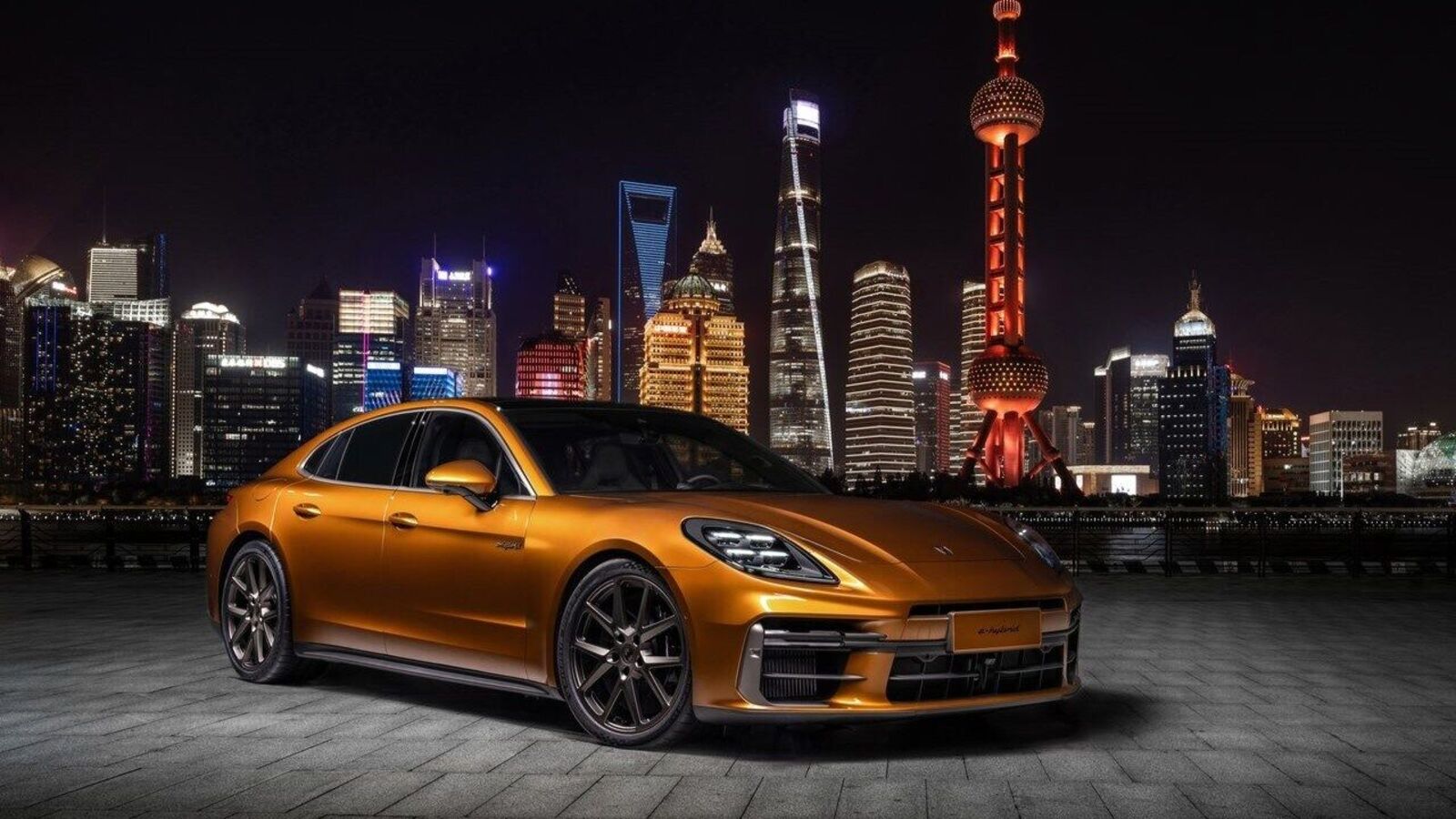
Porsche has unveiled the third generation of the Panamera in the global market. It is important to know that the 2024 Panamera is not an all-new car but Porsche has made enough changes that they are calling it a new generation. There are changes to the chassis, features, design, suspension and the engine too.

By: Paarth Khatri
| Updated on: 25 Nov 2023, 10:05 AM

2024 Porsche Panamera
The 2024 Porsche Panamera gets an all-new design while retaining its silhouette

The 2024 Panamera measures 5,052 mm in length, 1,937 mm in width and 1,423 mm in height. For the Executive versions, these figures will be bumped up to 5,202 mm, 1,937 mm and 1,428 mm. Up front, an additional air intake has been added above the number plate to help the engine breathe better and the window lines have been revised as well. Apart from this, there is a new set of headlamps and tail lamps as well. Overall, the 2025 Panamera looks sleeker and meaner.

The Panamera will now feature Matrix LED headlamps as standard. There is a new optional passenger display that measures 10.9 inches in size. The gear lever is mounted right next to the steering wheel and there are three driving modes – Normal, Sport and Sport Plus.

Powering the 2024 Panamera are four E-hybrid engines. The 4.0-litre twin-turbocharged V8 has been revised and it produces 670 bhp of max power in conjunction with a new electric motor which itself produces 187 bhp. The total torque output is rated at 930 Nm and the engine comes mated to a redesigned eight-speed PDK dual-clutch transmission.

The Panamera Turbo E-Hybrid sprints to 100 km/h in 3.2 seconds and boasts a top speed of 315 km/h. Its battery capacity is now 25.9 kWh. This enables an equivalent electric range of up to 91 kilometres in the combined WLTP cycle. A new 11 kW on-board AC charger shortens the charging time at suitable charging points to 2 hours and 39 minutes.

Also Read : Porsche to integrate Google Maps, Assistant and other apps in future vehicles

The Panamera and Panamera 4 variants will also be available at the time of the launch. They use a 2.9-litre turbo V6 engine that produces 348 bhp and 500 Nm of peak torque. This is an increase of 22 bhp and 50 Nm when compared to the previous generation. It now takes 5.2 seconds to reach 100 kmph and has a top speed of 272 kmph. The all-wheel drive variants have a top speed of 270 kmph but they take 4.8 seconds to reach 100 kmph.

First Published Date: 25 Nov 2023, 10:05 AM IST

[ad_2]
Source link