Kinetic Energy delivers 200 Flex electric scooters to students in Madhya Pradesh

Kinetic Energy delivers 200 Flex electric scooters to students in Madhya Pradesh

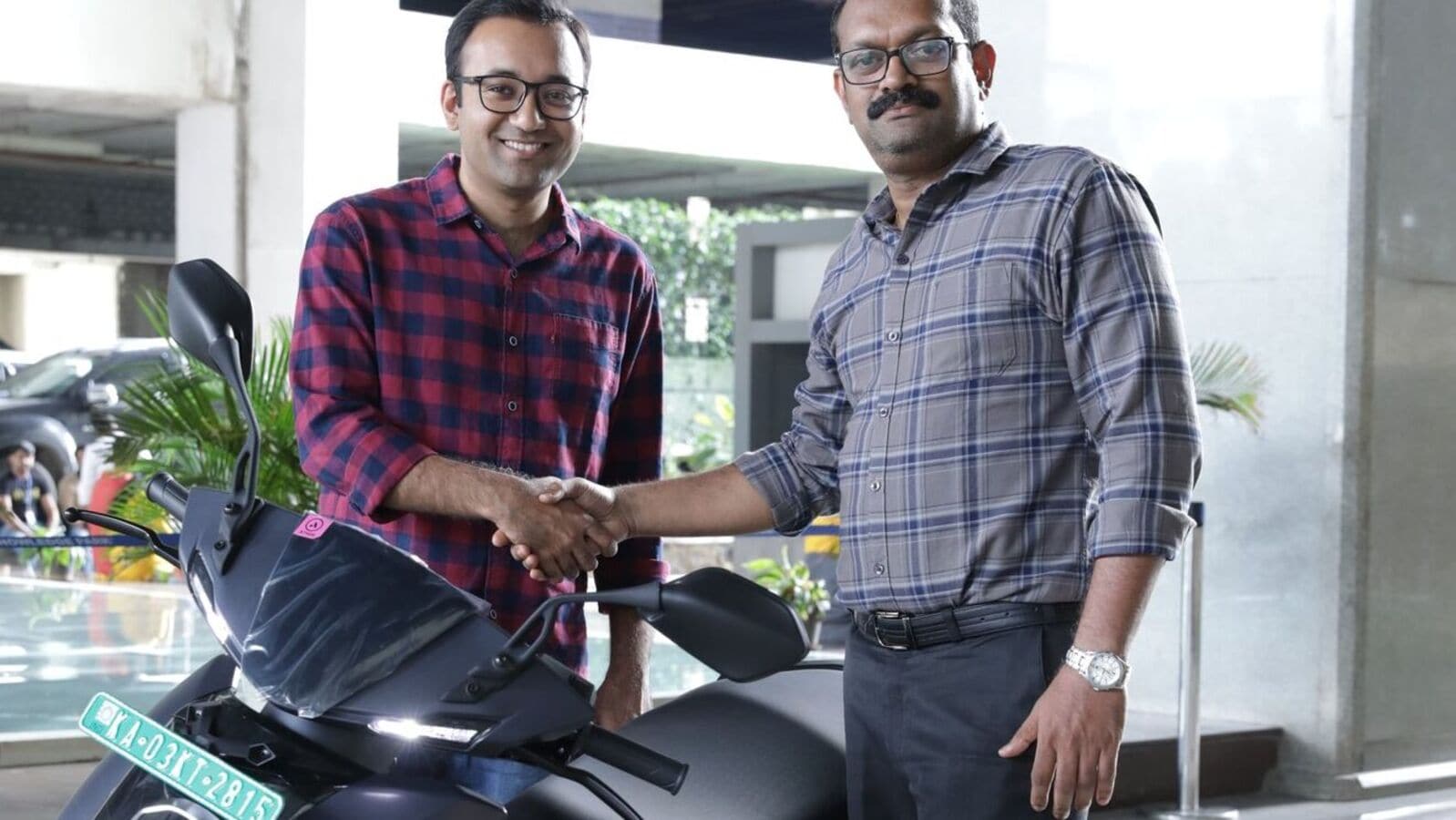
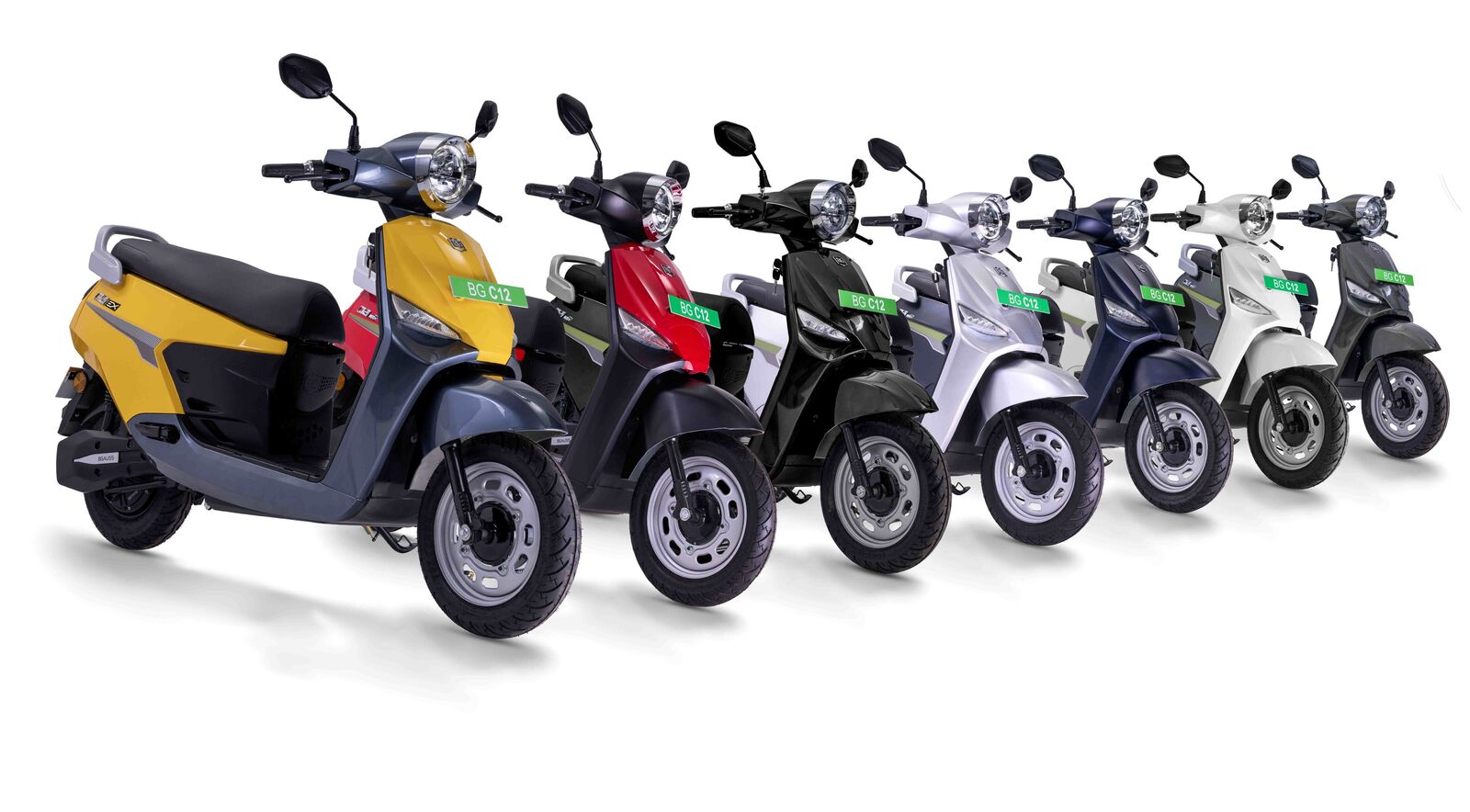
Pune-based Kinetic Green Energy and Power Solutions Limited has announced it delivered over 200 Flex electric scooters to the Madhya Pradesh government. These electric scooters have been awarded to the government school students for their outstanding performance in class 12. The Kinetic Green Flex electric scooters were handed over to students in the presence of MP Chief Minister Shivraj Singh Chauhan in the city of Damoh.

By: HT Auto Desk
| Updated on: 25 Aug 2023, 19:51 PM

The Kinetic Green Flex electric scooters were awarded to the Madhya Pradesh government school toppers for their outstanding performance in class 12

The Kinetic Green Flex is a high-speed electric scooter that promises a range of 120 km on a single charge from its 3.1 kWh battery pack. The e-offering gets a detachable lithium-ion battery that takes about 3-4 hours to fully charge. The retro-styled e-scooter comes with a round headlamp, flat seat, BLDC hub motor and alloy wheels. The e-scooter has a top speed of 72 kmph.

Also Read : All-electric Kinetic Luna moped launch confirmed; likely to be called eLuna

Commenting on the occasion, Sulajja Firodia Motwani, Founder and CEO of Kinetic Green, said, “I congratulate the students who have performed exceptionally well in class 12. I am honoured that these students will be the proud owners of Kinetic Green Flex. This makes me extremely happy to see that this generation is readily adopting electric mobility. I would like to thank the Madhya Pradesh government for giving us the opportunity to support them in the success of the initiative. It is a significant step towards promoting sustainable transportation and reducing carbon emissions in India. I hope that the program will inspire more people to adopt electric vehicles in the country.”

Kinetic Green said that its dealers located in and around Madhya Pradesh made the delivery possible with support from the district education department. On the feature front, the model gets the Central Braking System (CBS), a Home mode that keeps a charge in reserve; an anti-theft alarm, a digital display and more. The Kinetic Green Flex is priced at 1.18 lakh (ex-showroom).

First Published Date: 25 Aug 2023, 19:51 PM IST


Source link

2023 Aston Martin DB12 price, bookings, features, performance and more

2023 Aston Martin DB12 price, bookings, features, performance and more


The latest GT from the British brand uses a 680hp version of its predecessor’s AMG-sourced V8.

The Aston Martin DB12 will hit Indian shores for an official launch on September 29, 2023, just four months after its global debut. The car will make its India debut at the British High Commission in New Delhi, and deliveries are expected to begin in the last few months of 2023.

The successor to the DB11, the lineage is clear to see in the car’s design, but there are differences. The grille is much larger, the nose entirely more aggressive, and the new swept-back headlamps feature the brand’s new LED DRL signature. Around the sides the lines are more aggressive too, including a huge air vent emerging from the front wheel arch. The front and rear tracks, meanwhile, have been widened by 6mm and 22mm respectively, and that shows in the stance as well.

Aston Martin DB12 engine and performance

The Aston Martin DB12 uses an updated version of its predecessor’s chassis and mechanicals. This includes the 4.0-litre twin-turbo V8 sourced from Mercedes-AMG, which has now been uprated to 680hp and 800Nm. The V12 engine option has been dropped entirely, although with a weight saving of 100kg as a result, real-world performance is said to be even greater. Power goes to the rear wheels via an 8-speed automatic gearbox and new electronic rear differential, 0-100kph is claimed to be covered in 3.6sec, while the top speed is said to be 325kph.

Aston calls the DB12 a ‘super tourer’, alluding to its greater performance and handling. This is aided by a 7 percent stiffer chassis, uprated adaptive dampers, and an entirely new ESC system, all of which are said to give it a “wider breadth of abilities”, both on the performance and comfort fronts.

Aston Martin DB12 interior and features

The Aston Martin DB12 has been given an entirely new interior, an area that drew some criticism in its predecessor. Apart from a greater use of higher-quality materials all around, customers can avail of a much greater deal of customisation than before via the brand’s Q catalogue of options. As before, the two-door Grand Tourer features a set of rear seats.

The bigger news comes is the brand’s new proprietary electronic architecture and infotainment system, which will soon make its way into other Aston Martins. Ditching the generations-old Mercedes system of the DB11, the new system includes a 12.3-inch digital instrument cluster, and a 12.3-inch touchscreen. The latter features, among other things, Apple Carplay and Android Auto, onboard 4G connectivity and over-the-air updates.

Aston Martin DB12 Price and Bookings

The Aston Martin DB12 is priced from Rs 4.80 crore, ex showroom – India, before options. Of course, with the brand’s extensive ‘Q’ customisation programme, this price could easily shoot up quite a bit as customers personalise their own coupe, which can be done here. India bookings for the new luxury sports coupe were opened in June this year, shortly after the car’s global debut.

Also See:

Aston Martin DBX 707 India video review

Aston Martin DBX 707 India review: 700 horsepower British Brute


Source link

Yuma Energy partners with MCD & BSES to set up battery swapping stations in Delhi

Yuma Energy partners with MCD & BSES to set up battery swapping stations in Delhi

Yuma Energy, a joint venture between Magna and Yulu, has announced setting up battery-swapping stations across Delhi to strengthen the national capital’s charging infrastructure. The energy-as-a-service company partnered with the Municipal Corporation of Delhi (MCD) and BSES Rajdhani Power Limited (BRPL) for the same with the first battery-swapping station inaugurated at Siri Fort Auditorium in Delhi.

By: HT Auto Desk
| Updated on: 24 Aug 2023, 19:19 PM

The first Yuma Battery swapping station in Delhi is located at Siri Fort Auditorium

Yuma Energy is one of the bigger players in the battery charging and swapping stations business. The company already has over 120 swapping stations located across Bengaluru, Gurugram, Mumbai, Navi Mumbai and Delhi. The company says it supports half a million swaps and serves 125,000 customers every month. Yuma’s primary customer base includes Q-commerce (quick commerce) and food delivery platforms.

Also Read : Yulu launches its first electric two-wheeler Wynn, priced at 55,555

Muthu Subramanian, Managing Director and General Manager, Yuma Energy said, “We thank MCD and BRPL for their ongoing support in helping accelerate electric mobility in the Delhi region. We look forward to working together as MCD and BRPL advance their green-mobility initiatives, and we continue to grow Yuma’s footprint in Delhi.”

“MCD is making an all-out effort to create an optimal e-mobility eco-system in Delhi through the establishment of EV battery swapping stations and EV charging stations. Inauguration of battery swapping station at Siri Fort Auditorium by Yuma Energy, an EV charging infra partner of BRPL will help augment EV transportation in Delhi. We hope Yuma will bestow a great EV charging experience to the citizens of Delhi through their state-of-the-art EV charging infrastructure,” said Sh. Amit Kumar, Deputy Commissioner, MCD.

Sanjeev Gupta, Senior VP – BSES Rajdhani Power Limited, said, “BSES is leading the efforts in putting up e-vehicle infrastructure in Delhi. This partnership to set up battery-swapping stations in the national capital is the latest testimonial in these efforts. We will continue to drive innovation along with like-minded partners to make Delhi the EV capital of India.”

While Yuma’s battery swapping stations primarily cater to Yulu’s electric bike fleet, the company aims to open its services to more OEMs and electric mobility operators in a bid to make swaps more accessible to the end user. This should also promote shorter swap times.

First Published Date: 24 Aug 2023, 19:19 PM IST


Source link

Mahindra Thar price, Thar 5 door launch date, new touchscreen details

Mahindra Thar price, Thar 5 door launch date, new touchscreen details

The Thar 3 door comes with a much smaller 7-inch infotainment screen at the moment.

The Mahindra Thar family is all set to expand with the introduction of the Thar 5-door early next year. It is already known that the more practical Thar 5-door will have a lot in common with its shorter 3-door sibling, however, the latest spy shots suggest that it could also receive minor styling tweaks and feature additions, including a much larger touchscreen system.

  1. Thar 5-door could get a bigger touchscreen
  2. Will come with petrol and diesel engine options
  3. Will also come with a single-pane sunroof

Mahindra Thar 5-door to be loaded with features

With the Thar 5-door, Mahindra will be targetting SUV buyers who want a practical vehicle that can be used for daily commuting as well as for off-road and outdoor sorties. Therefore, a longer features list and more creature comforts are expected on the 5-door version.

Spy shots have confirmed that some variants will get a sunroof, front and rear centre armrests and a few other features, including an all-new infotainment screen. The 3-door model currently comes equipped with a 7-inch touchscreen, while the unit seen on a latest test mule could be around 10-inches, or an even larger, and comes in a completely new housing that has a floating look.

Larger touchscreen seen on a latest test mule of the Thar 5-door.

Mahindra currently offers touchscreens in various sizes in its SUV line-up, starting with the 7-inch on the Thar 3-door, going up to an 8-inch on the Scorpio N, the 9-inch unit on the XUV300 and XUV400, and a large 10.25-inch version on the XUV700.

The 7-inch screen on the Thar 3-door has been criticised for its mediocre interface and display, and also for its relatively smaller size as opposed to 8-inch units that’s pretty much the norms on almost every other mainstream car or SUV. The larger screen on the Thar 5-door will then be a major step up.

Mahindra Thar 5-door launch early next year

The production-spec Thar 5-door with petrol and diesel engines will go on sale only next year. The brand currently has its hands full with over 2.8 lakh vehicles to be delivered; the Thar itself has over 68,000 open bookings as of August 2023. The SUV currently garners 10,000 fresh orders every month for the 2WD and 4WD models. Mahindra has confirmed that the Thar 2WD’s demand is skyrocketing and it currently has a 15-month waiting period. The more expensive Thar 4WD has around a five-month waiting period at most locations.

Apart from the Thar 5-door, Mahindra is also readying a major update on the XUV300 compact SUV for a 2024 launch. Last week, Mahindra also unveiled the Thar.e concept as well as a Scorpio N-based pickup truck concept at its Futurescape event in Cape Town, South Africa.

Image Credit – Charles Naveen

Also See:

Mahindra Thar.e concept walkaround video

Production-spec Mahindra BE.05 electric SUV teased 


Source link

We will be volunteering to get our cars crash tested: Maruti on Bharat NCAP

We will be volunteering to get our cars crash tested: Maruti on Bharat NCAP

The Union Minister for Road Transport and Highways, Nitin Gadkari launched India’s own crash test norms on Tuesday. It is called Bharat New Car Assessment Programme (Bharat NCAP) and it will be enforced across the country from October 2023. Now, Maruti Suzuki has announced that they will send out their vehicles to be tested under the Bharat NCAP crash test.

Maruti Suzuki S-Presso in Global NCAP crash test

This information was confirmed by CV Raman, CTO, Maruti Suzuki India. Moreover, Mr Rahul Bharti, Executive Officer of Maruti Suzuki also said that they will offer at least three models for Bharat NCAP crash testing in the first batch. As of now, the name of the models has not been confirmed. However, it can be the manufacturer’s recent launches such as Grand Vitara and new-gen Baleno.

The past record of Maruti Suzuki is not very strong when it comes to crash test ratings. The S-Presso, Alto and Eeco have scored zero stars in the adult safety rating and two stars in the child safety rating. The WagonR and Swift scored two stars in adult as well as child safety rating whereas the Ertiga scored three stars. The safest car that the Maruti Suzuki currently makes is the Brezza with four and two stars for adult and child safety ratings respectively.

According to CV Raman, CTO, Maruti Suzuki India, “It is a welcome step and we are proud as we had been working along with the government and test agencies in the discussions around formulation of the standards. We will be volunteering to get our cars tested under the BNCAP standards, which are same as the revised GNCAP protocols.

“Any car that is launched in India follows the mandatory safety standards set by the government. For consumers seeking extra safety information the Bharat NCAP system is an authentic and objective rating system to empower the customer to make an informed choice. Maruti Suzuki welcomes this initiative of the Government and will offer atleast 3 models for BNCAP testing in the first lot itself. At the same time, we would request all users to fasten seatbelts whether in the front or rear seats as that is the most critical factor in keeping passengers safe.” said Mr Rahul Bharti, Executive Officer, Maruti Suzuki

First Published Date: 23 Aug 2023, 17:21 PM IST


Source link

Ola Diamondhead price, M1 name trademarked, India launch details

Ola Diamondhead price, M1 name trademarked, India launch details

Alongside the Diamondhead, a trio of names starting with the prefix M1 have been trademarked.

A little over a week ago, Ola revealed its updated e-scooter line-up alongside four radical-looking electric bike concepts. Now, we have learnt that the company has also trademarked four names supporting those concepts. 

The most talked-about concept at the event was the Diamondhead sportbike, and Ola has trademarked that name, although it is unlikely to go into production featuring that same outlandish design. 

The three other trademarks are M1 Adventure, M1 Cruiser and M1 Cyber Racer. The first two names are pretty straightforward and leave nothing to the imagination when it comes to which e-bike they’ll find themselves on down the line. The third one could possibly be what Ola calls its interpretation of a roadster. 

Despite these trademark filings, we think an official launch is still quite some time away because at the Independence Day event, very few details of the bikes were shown and absolutely no specifications were shared. The only clue launch timeline shared was ‘end 2024’ mentioned on a presentation slide. 

Also See:

Ola S1 X launched at Rs 89,999, gets 3 variants


Source link

Hero confirms 210 cc engine for Karizma XMR, will get dual-channel ABS as well

Hero confirms 210 cc engine for Karizma XMR, will get dual-channel ABS as well

Hero MotoCorp is preparing to launch the Karizma XMR on 29th August in the Indian market. The manufacturer has been releasing new teasers and they even brought back Hrithik Roshan as the brand ambassador for the motorcycle. Now, the latest teaser that the manufacturer has released reveals new information about the engine of the Karizma XMR.

By: HT Auto Desk
| Updated on: 22 Aug 2023, 17:58 PM

Hero Karizma XMR will come with a new 210 cc engine.

The teaser shows 210 looking on the motorcycle which confirms that the Karizma XMR will come with a 210 cc engine. It is expected to be a liquid-cooled unit with a single-cylinder setup. The power output of the engine is not yet officially confirmed. However, it can be expected to be around 25 bhp whereas the torque output will be around 30 Nm. The gearbox on duty is expected to be a 6-speed unit.

Another thing that the teaser confirmed is that Hero is using DOHC or Double Overhead Cam Setup for the engine. This setup allows more intake which helps the engine in breathing better. Moreover, it also helps the engine to rev freely and higher.

Speaking of revving, the instrument cluster of the Karizma XMR has also been revealed which shows a redline of 10,000 rpm. Hero is using a digital instrument cluster which shows a gear position indicator on the left side, just below that there is a temperature gauge and below it there is time.

The centre stage is taken by a circular tachometer with a speedometer right between it. Below the speedometer, there is a screen that should show various information. On the right-hand side, there is a fuel gauge and there would be other information also that the cluster would show. For instance, service reminder, odometer and trip meters.

Also Read : Hero MotoCorp to bring Zero electric motorcycles to India. Will be locally built

Other features on offer that Hero has confirmed are LEDs for Daytime Running Lamp, headlamp and tail lamp. There will be a dual-channel Anti-lock braking system on offer. Hero will offer alloy wheels, telescopic forks in the front and a monoshock at the rear with disc brakes at both ends.

First Published Date: 22 Aug 2023, 17:58 PM IST


Source link

Lexus LM price in India; Toyota Vellfire details, launch date

Lexus LM price in India; Toyota Vellfire details, launch date


The Vellfire-based Lexus LM MPV gets two powertrain and seating options overseas.

Lexus India has released the first set of teasers of its upcoming LM MPV. The Lexus LM is now in its second generation and is based on the new Toyota Vellfire MPV, which recently launched in India. The second-gen LM MPV was revealed at this year’s Shanghai Auto Show a few months ago.

  1. Second-gen Lexus LM launch in the coming months
  2. Expected to get petrol-hybrid powertrain
  3. Gets noise-reducing wheels and tyres 

Lexus LM: first Lexus MPV for India

So far, the LM has been a China-only model and now at the global debut of its second-gen, Lexus announced that the new LM will be sold in left- and right-hand-drive layouts, and in markets like Europe, Asia, the Middle East, the United Kingdom and China as well. The new LM, which stands for Luxury Mover, has now been designed specially for customers who are not looking for a chauffeur-driven SUV.

New Lexus LM: platform and styling

The second-gen Lexus LM is now based on Toyota’s GA-K modular platform, which is a common base for a long list of cars, including the Camry, the Lexus ES, the Lexus RX and SUVs like the Toyota RAV4 and Highlander sold overseas. It gets the latest iteration of Lexus’ oversized grille, stylish headlamps and more. In profile, a reworked glasshouse and subtle creases throughout the length help reduce the slab-sided look.

Talking of dimensions, its length remains the same at 5,130mm; it is 1,890mm wide and 1,945mm high. Two seating options are on offer on the Lexus LM overseas. It comes with sliding doors on each side and sits on a set of 17-inch or 19-inch alloy wheels.

New Lexus LM MPV: more luxurious than Vellfire

The new Lexus LM is armed with features airline-style recliner seats, a 48-inch widescreen TV, a premium, 23-speaker surround-sound audio system and pillow-style headrests. Passengers also get fold-out tables, several USB ports, wireless phone chargers, reading lights and vanity mirrors, a fridge, rear gloveboxes and an umbrella holder. Lexus also offers a dimmable glass panel that can be raised or lowered for privacy.

The new LM also gets a new voice control system that Lexus says is the first in the world to cater specifically to rear passengers, while an overhead console controls the doors, storage compartments and cabin temperature. Rear passengers also get a separate smartphone-style control panel to adjust the climate, seat functions, interior lighting, window blinds and audio settings.

Sound deadening and insulation has been key for Lexus with the second-gen LM as it gets a specially designed headliner along with improved sealing enhancing insulation by 40 percent. The MPV also gets noise-reducing wheels and tyres, and active noise control that cuts sounds detected through a microphone while driving. Drivers benefit from a digital rear-view mirror, a panoramic-view monitor, a digital infotainment system and digital dials.

New Lexus LM MPV: petrol-hybrid powertrain options

Two petrol-hybrid powertrain options are available on the new Lexus LM. The 2.5-litre self-charging hybrid engine, seen on other Toyota and Lexus models, will be available on the Lexus LM350h, which also gets four-wheel drive as standard. This could be the powertrain option for India as well. There will also be a more powerful LM500h that will join the global line-up at a later stage.

New Lexus LM India launch details

Lexus showcased the first-gen LM earlier this year in India at Auto Expo. While the new LM is yet to make its India debut, going by fresh details shared by Lexus India, we expect a price announcement in our market in the coming months.

Also see:

New Lexus GX 550 revealed; previews future Land Cruiser Prado SUV

Lexus LBX revealed, becomes brand’s smallest model


Source link

Ultraviolette launches F77 Space Edition, gets aerospace-grade materials

Ultraviolette launches F77 Space Edition, gets aerospace-grade materials

Ultraviolette Automotive claims that the F77 Space Edition comes drawing inspiration from India’s advent towards space research and technology. It claims to come equipped with a wide range of aerospace-grade materials across the body. This means the pure electric motorcycle comes significantly higher priced than the standard version of the model, which is available at a starting price of 3.80 lakh (ex-showroom). The EV maker has also said that bookings for the F77 Space Edition will open on August 22 evening, on its official website. The bike will be produced in exclusively limited numbers, only 10 units.

Also Read : VJ Rannvijay Singha takes delivery of limited edition Ultraviolette F77 electric bike

Watch: Ultraviolette F77 electric motorcycle | Review

Speaking about the new special edition electric motorcycle, it claims to have been designed following the advanced electronics and technology used in modern aircraft. The bike gets custom machined aerospace-grade aluminium components ensuring high durability. Also, it claims to come wearing aerospace-grade paint.

The motorcycle promises to deliver a 307 km range on a single charge. Its high-performance motor churns out 39.94 bhp peak power and 100 Nm of impressive maximum torque output. It is capable of accelerating 0-60 kmph in just 2.9 seconds and can run at a top speed of 152 kmph.

Speaking on the launch of the Ultraviolette F77 Space Edition, Narayan Subramaniam, Co-Founder and CEO of Ultraviolette Automotive, said that the manufacturer aims to constantly push the boundaries of science and technology and the new special edition is the best way for that. “As the aerospace industry is where the pinnacles of technology are achieved, the F77 Space Edition proudly commemorates India’s celestial journey. The very same DNA is clearly reflected in the Ultraviolette F77 Space edition. Infused with aerospace grade attributes and a distinctive design ethos, the F77 Space Edition stands as a testament to our resolute commitment in charting the course for the future of electric mobility,” he added.

First Published Date: 21 Aug 2023, 15:28 PM IST


Source link

Geoffrey Emmanuel on podium in 2023 Malaysian Superbike Championship

Geoffrey Emmanuel on podium in 2023 Malaysian Superbike Championship


Making his Malaysia Superbike Championship debut at Sepang, the Indian rider finished third in both races.

Geoffrey Emmanuel made an impressive debut in the Malaysia Superbike Championship. The 18-year-old finished on the podium in both races, with a pair of P3 results at the Sepang International Circuit (SIC).

  • Emmanuel third overall in the championship
  • Also competing in JuniorGP World Championship

Geoffrey Emmanuel P3 at Sepang

Earlier this year, Emmanuel – son of seven-time National Champion Emmanuel Jebaraj – became the first Indian to compete in the FIM JuniorGP World Championship. The series is considered a crucial stepping stone to MotoGP.

Alongside his JuniorGP commitments, the young Indian is now undertaking a campaign in the 2023 Malaysian Superbike Championship. He’s competing astride a Honda CBR250 in the 250cc category (A class) with team Gusto Racing India.

Despite limited track time to prepare for his championship debut, he collected a pair of P3 finishes. It was an especially close finish in Race 1, with Emmanuel missing out on the second place by just 0.039 secs.

“It was a very challenging weekend for me. We had barely three days to set up the stock CBR250 bike, apart from learning the track. Racing at the SIC was a big opportunity for me and another step towards achieving my goal of making it to MotoGP,” he said, summing up his debut weekend.

“The race itself was very competitive, but I managed to hold my position till the finish and I am absolutely delighted that I made the podium in both races.”

2023 Malaysia Superbike Championship

This year’s Malaysia Superbike Championship comprises six races across three rounds – all to be held at Sepang. Round 2 is scheduled for September 8-10, followed by the finale round on December 15-17. 

Emmanuel is currently third overall with a total of 32 points, eight points behind second-placed M.Farid Hakimi Farid Sezli and 18 points behind championship leader Muhd Irfan Haykhal Amidi.

Also see:

MotoGP India guide: Tickets, track updates explained

MRF Tyres seals European Rally Championship title for second year running


Source link

Thar.e won’t be just a concept, confirms Anand Mahindra

Thar.e won’t be just a concept, confirms Anand Mahindra

Mahindra has already grabbed a lot of eyeballs in the global automotive sector with its recently unveiled Thar.e EV concept which previews a full-grown five-door ure electric iteration of the internal combustion engine-powered Thar SUV. Mahindra Group Chairman Anand Mahindra has now confirmed that it will not just remain as a showcase prototype but will enter production in the near future.

While unveiling the Mahindra Thar.e EV concept, the automaker hinted that it would enter production in 2025. Anand Mahindra has not shared any such timeframe for the production of the Thar.e electric SUV, but his social media post indicates that the concept will enter into production.

(Also read: Mahindra Thar.e electric SUV concept makes global debut with looks more rugged than Thar)

By: HT Auto Desk
| Written By: Mainak Das
| Updated on: 20 Aug 2023, 17:32 PM

Mahindra Thar.e EV concept previewed a full-grown five-door pure electric iteration of the internal combustion engine-powered Thar SUV.

In his social media post, Anand Mahindra wrote, that from the moment there was the prototype the company was committed to making it a reality. “Nope. Not just a concept. From the moment we all saw the prototype we were committed to making this a reality,” Mahindra wrote in his X (Previously Twitter) post, along with a video demonstrating the offroading capability of the pure electric prototype.

Watch: Mahindra Thar.e Concept EV: The future of off-road SUVs?

The newly unveiled Mahindra Thar.e concept is based on the automaker’s INGLO P1 EV platform instead of the ladder frame chassis that underpins the internal combustion engine-powered Thar SUV. This new platform is dedicated to electric vehicles and is claimed to enhance the rigidity of the vehicle as well as offering significantly higher safety for the occupants. Also, this platform claims to offer a long range for the EV, thanks to its capability to accommodate a large battery pack.

The Mahindra Thar.e electric SUV is expected to play a key role in the brand’s Born Electric range of electric cars that the auto company plans to introduce later this decade. Also, the homegrown automaker aims to become a major player in the country’s electric car market by producing two lakh units of EVs between 2027 and 2029.

First Published Date: 20 Aug 2023, 17:32 PM IST


Source link

Honda Elevate price, launch September 4, variant details

Honda Elevate price, launch September 4, variant details


A few units of the Honda Elevate SUV have begun reaching dealerships.

Honda is all set to launch its long awaited Elevate SUV on September 4, with static display vehicles now reaching dealerships. The Elevate is Honda’s contender in the ever growing midsize SUV market, which includes the Hyundai Creta, Kia Seltos and Maruti Grand Vitara, among others. 

  1. Honda Elevate prices could start at Rs 11 lakh (ex-showroom)
  2. Gets a 1.5-litre petrol engine with two gearbox options
  3. Customer test drives to commence soon

Honda Elevate powertrain, fuel efficiency

Post its global debut in India, in July, the Elevate was recently homologated for our market. The Elevate shares its powertrain options with the City – 121hp, 145Nm, 1.5-litre petrol mated to either a 6-speed manual or 7-step CVT automatic. Honda has confirmed that it will not offer a petrol-hybrid powertrain on the Elevate, but will launch an all-electric SUV in future.

As far as fuel efficiency goes, the manual Elevate returns a claimed 15.31kpl, while the CVT returns 16.92kpl. Expect the real-world figures to be slightly different.

The Honda Elevate is sized on par with its arch rival, the Hyundai Creta. It measures 4,312mm in length, 1,790mm in width and 1,650mm in height, and has a wheelbase of 2,650mm. The Elevate also gets segment-leading 220mm ground clearance.

Honda Elevate features and equipment

The Honda Elevate is available in four trims – SV, V, VX and ZX. The entry-level SV gets LED projector headlamps, automatic climate control, 16-inch steel wheels and dual front airbags.

The fully loaded Elevate ZX gets a 10.25-inch touchscreen, six airbags, a single pane sunroof, ADAS, eight speakers, leatherette brown upholstery, soft-touch dashboard and auto-dimming interior mirror. It also gets a unique Phoenix Orange exterior paint shade on this variant, along with a few, optional dual-tone shades.

Honda Elevate test drive details, expected pricing

Test drives for the Elevate will commence soon and dealer sources tell us that it is expected to start from Rs 11 lakh. The Elevate will rival the Hyundai Creta and the recently launched Kia Seltos facelift, which get more features and a diesel engine option, the Maruti Suzuki Grand Vitara and the Toyota Hyryder, which get petrol-hybrid powertrain options, and the Skoda Kushaq and the Volkswagen Taigun.

Image source

What are your thoughts on the Honda Elevate? Let us know in the comments section.

Also see: 

Honda Elevate to skip hybrid and go straight to EV

Honda Elevate review: Was it worth the wait?

Honda Elevate to get 4 variants, features revealed


Source link

In pics: Lamborghini Lanzador is brand’s first EV concept with over 1,300 hp

In pics: Lamborghini Lanzador is brand’s first EV concept with over 1,300 hp

The production version of the Lanzador will debut sometime in 2028.

By: HT Auto Desk
| Updated on: 19 Aug 2023, 17:27 PM

1/11

Lamborghini has unveiled its first electric vehicle in concept form. It is called Lanzador. The production version of the EV is expected to go on sale sometime in 2028. 

2/11

Lamborghini announced its its strategy and its roadmap towards decarbonization and electrification in 2021. Before the Lanzador concept, the brand showcased the Revuelto which is a replacement to the iconic Aventador and is powered by a V12 plug-in hybrid.

3/11

It took 2 years for Lamborghini to present a high-performance, electrified vehicle that remains true to the heart and soul of the brand.

4/11

The all-electric concept is a grand tourer with a 2+2 seating arrangement. This is not the first time that the manufacturer is building a four-door vehicle. In the past, they have showcased the Estoque concept which came with a four-door body style.

5/11

Lamborghini is using an electric motor on the front axle as well as at the rear axle. This give a permanent all-electric all-wheel drive to the Lanzador. There will also be e-torque vectoring feature on offer.

6/11

Lamborghini says that the total power output of electric motors will be over one megawatt which roughly translates to 1,340 bhp. The manufacturer says they will use new generation high-performance battery, which also ensures a long range

7/11

Lamborghini will also offer active aerodynamics. It will help in increasing the driving range as the car will be slip through air more efficiently. Apart from this, aerodynamics will also help in increasing downforce and cornering ability.

8/11

The aerodynamics also offer Aerodinamica Lamborghini Attiva (ALA) system which is a well-known technology used in the Huracán Performante and Aventador SVJ. It is considered to be one of the best in the industry because it increases the grip and downforce significantly.

9/11

The Lanzador will come with Lamborghini Dinamica Veicolo Integrata (LDVI) which is essentially a driving dynamics control system. There will be several sensors and actuators that will be integrated into the system which ensures precise driving behavior.

10/11

Lamborghini will use sustainable materials. There will be sustainably tanned leather, 100 per cent merino wool, regenerated carbon, synthetic fibres from recycled plastic and a 3D printed process for plastic.

11/11

The interior will also look modern but will still retain Lamborghini’s design language. There will be a digital screen for the driver as well as the passanger. 

First Published Date: 19 Aug 2023, 17:27 PM IST


Source link

Ford Mustang GTD details, powertrain, limited edition

Ford Mustang GTD details, powertrain, limited edition

Ford is targeting a sub-seven-minute lap time at the Nurburgring with the Mustang GTD.

The new Ford Mustang GTD is a carbonfibre-bodied, aerodynamically optimised, track-ready “technological tour de force” that takes the crown as Ford’s most powerful road car yet. It will be built in limited numbers starting late next year, and initially be sold in the North America. The GTD is said to have been conceived with the aim of creating “a Mustang to take on the best of European sports cars”.

Ford is targeting a sub-seven-minute lap time at the Nurburgring, a feat that would put the GTD on par with European supercars, including the Porsche 911 GT2 RS, Lamborghini Aventador SVJ and Mercedes-AMG GT Black Series. Designed and engineered in partnership with motorsport outfit Multimatic, which built the Ford GT supercar, the new arrival is effectively a road-legal reworking of the Mustang GT3 that will race at Le Mans next year. It falls under the IMSA Sportscar Championship’s GTD classification, for cars built to the FIA’s GT3 specifications.

Ford Mustang GTD engine, performance

A targeted output of more than 811hp from the heavily reworked, supercharged V8 makes the GTD the most powerful Mustang yet, outpunching even 2019’s snarling 709hp Shelby GT500.

The bespoke 5.2-litre engine is larger than that fitted to the standard road-going Mustang and packs a suite of motorsport-derived modifications – including a dry sump, dual air inlets and a titanium active-valve exhaust system (which generates “exceptional notes”) – in pursuit of Lamborghini-aping performance figures.

It delivers its reserves to the 345mm-wide rear wheels via a lightweight carbon fibre driveshaft and eight-speed transaxle – the latter fitted in place of a standard gearbox to ensure “near 50:50” front-to-rear weight distribution, and because simulations proved that to be the most effective way to “put power to the ground”.

Ford Mustang GTD suspension tweaks, aero

The GTD is equipped with semi-active suspension, which brings variable spring rates and a 40mm lower ride height in Track mode. A motorsport-inspired “short-long arm” set-up for the front suspension is said to boost stiffness and responsiveness, and the rear suspension is mounted to a lightweight tubular subframe, as it is in the GT3 car. The suspension control units are housed alongside the transaxle cooling system at the rear, where the boot used to be.

The GTD has a track that’s nearly 100mm wider than that of the standard Mustang, which, together with massive 325mm-wide front tyres (wider than the rear tyres of the GT) boosts grip and cornering stability substantially. Buyers are offered a choice of 20-inch forged aluminium wheels or optional magnesium items available on the GT3 racer.

The aero package is obviously lifted nearly wholesale from the GT3 racer, with a massive hydraulically adjustable rear wing, a vented bonnet, chunky air scoops, a beefy front splitter and a wind-cheating rear diffuser boosting downforce at speed and stability through bends.

Stopping power is provided by huge carbon-ceramic disks, engineered to resist fade under repeated braking.

Ford Mustang GTD interiors

Inside, the GTD is closer to the standard Mustang than the race car, retaining digital displays and the standard infotainment system with over-the-air software-update functionality.

Notably, though, the rear seats have been removed to save weight, the front seats are swapped for track-ready Recaro buckets and the rotary dial, build plaque and paddle shifters are all 3D-printed using titanium recovered from retired F22 fighter jets.

Ford hasn’t given a weight figure for the GTD, but the carbon body panels and stringent lightweight methods mean it’s likely to tip the scales at substantially less than the 1,768kg Mustang Dark Horse.

The previous-gen Mustang was on sale in India for a short period, but since exiting the Indian market, Ford does not sell any new cars here anymore.

Also see: 

Ford Mustang Mach-E review, test drive


Source link

Volkswagen delivers 150 cars in a single day in Kerala on the occasion of Onam

Volkswagen delivers 150 cars in a single day in Kerala on the occasion of Onam

Volkswagen India has announced the delivery of 150 cars in Kerala in a single day on the first day of Onam, Chingam 1, which marks the new year in the Malayalam calendar. The automaker delivered the Virtus, Taigun and Tiguan models to customers, along with an additional 50 pre-owned cars under its Das WeltAuto (DWA) used car business.

By: HT Auto Desk
| Updated on: 18 Aug 2023, 19:17 PM

Volkswagen delivered 150 cars on a single day in Kerala on the occasion on Onam, Chingam 1

The occasion of Chingam 1 marks a new beginning for customers in Kerala and several automakers roll out special initiatives including discounts, offers, and more. Volkswagen has seen a significant uptick in sales since the arrival of its new model range in 2022 and the company will be expecting to end this festive season on a high as well.

Volkswagen also delivered an additional 50 pre-owned cars to customers under its Das WeltAuto (DWA) used car business

In related news, Volkswagen India recently hiked the Tiguan SUV’s price by 47,000. The Volkswagen Tiguan now is now priced at 35.17 lakh (ex-showroom, India). On the other hand, the Virtus is the brand’s entry-level offering and is priced from 11.48 lakh onwards, whereas the Taigun compact SUV is priced from 11.62 lakh onwards. All prices are ex-showroom, India.

Volkswagen India also announced the expansion of its retail presence in Gujarat with six new touchpoints. The new dealerships are located in Ahmedabad, Vadodara, Gandhinagar, Anand, Bharuch, and Bardoli. The dealer network strength now stands at 15 sales and eight service facilities across the state. VW’s total network stands at 183 sales and 131 service outlets across 135 facilities.

First Published Date: 18 Aug 2023, 19:17 PM IST


Source link

Toyota Innova Crysta price, Force Traveller, GS Design, interior, exterior, luxury modification price

Toyota Innova Crysta price, Force Traveller, GS Design, interior, exterior, luxury modification price


The vehicles will be made-to-order and offered with a 1-year warranty on customisations.

Indian industrialist Gautam Singhania has launched his latest venture called GS Design, which transforms standard people movers into luxury vehicles with plush interiors. Singhania also operates the Super Car Club Garage (SCCG), which restored Ravi Shastri’s iconic Audi 100.

  1. GS Design’s custom Innova Crysta costs Rs 45 lakh
  2. Custom designed Force Traveller costs Rs 85 lakh

Customised Innova Crysta by GS Design 

The modified Innova Crysta gets a complete interior makeover, with the second and third rows getting two captain’s chairs – that get a powered recline and ottoman function – draped in perforated leather. For privacy, there is a solid partition that separates the front of the cabin from the rear. The partition comes with additional storage spaces, and it is also where the 40-inch TV is mounted for rear-seat entertainment, however, sizes can range from 32 to 55 inches, depending on customer preference. The customised Crysta by GS Design is also equipped with internet and telephone connectivity, ambient lighting and a starlight headliner with a shooting star effect, like Rolls-Royce cars.

GS can build eight such Innovas simultaneously and the price for the custom Innova Crysta is around Rs 45 lakh (including the price of the vehicle), and the conversion process will take about 2.5 months.

Customised Force Traveller by GS Design

GS Design also offers customisations for the Force Traveller, which gets seven seats. Three of the seats are captain’s chairs like in the Innova with powered recline and ottoman functions. Like the customised Innova, this too comes with a 43-inchTV, internet and telephone connectivity, and ambient lighting, but that’s about where the similarities end. The customised Traveller gets a built-in chemical toilet and a mini pantry to keep occupants at ease on journeys.

The Traveller that was showcased had an election campaign vehicle and comes with a platform that can be raised via a Hydraulic lift to allow politicians to address crowds from the roof. There’s a fixed enclosure with guard rails present on the top to ensure the safety of users. The election campaign vehicle also boasts of two 32-inch LED TVs on the outside along with a PA system with external speakers.

The customised Force Traveller costs Rs 85 lakh, including the cost of the vehicle. GS Design says that they will take approximately three months to modify the Traveller and the workshop can build two of these vehicles simultaneously. Like with the Innova, the Force Traveller is offered in multiple customisation options.

Have a look at a video of the vehicles

GS Design Warranty, registration and future products

Since there is a change in seating configuration from the stock vehicle, this would have to reflect in the RC book and other official details. When asked if the company would be re-registering the vehicles, GS Design said that it would not be handling that aspect. A point worth noting is that the original warranty of the vehicle offered by the manufacturer will also be void once it’s customised. However, GS Design is offering a 1-year warranty on the customisations done to the vehicle.

Speaking to Autocar India, Singhania shared that the company has received over 20 orders for the Innova Crysta and Force Traveller over the past week. He also revealed that the company is looking at working on projects involving the Volvo Vanity Van, Kia Carnival and even the Toyota Vellfire.

Also see:

Ravi Shastri’s iconic Audi 100 fully restored


Source link

Can you import or use left-hand drive cars in India? All you should know

Can you import or use left-hand drive cars in India? All you should know

New Delhi, the national capital in India, is all set to host the upcoming G20 Summit in September. Hundreds of foreign delegates from 18 countries will arrive in the city in the coming days. While the preparations are in full swing, there is one unique issue Delhi Police is wary about. Around 100 left-hand drive cars to ferry delegates, around 50 of them being bullet-proof Audi cars from Germany, are set to arrive in the national capital. It has left Delhi Police with operational concerns in a country where left-hand drive cars are illegal.

By: HT Auto Desk
| Updated on: 17 Aug 2023, 17:11 PM

Left-hand drive cars are illegal to drive in India. According to the Motor Vehicles Act, LHD vehicles cannot be registered.

Is importing or driving a left-hand drive (LHD) car in India allowed? What are the traffic safety concerns if one chooses to travel in a LHD vehicle on the streets where most other vehicles are right-hand drive? What does the Motor Vehicles Act say on purchase and use of LHD vehicles? Here are all your queries answered:

Are left-hand drive cars illegal in India?

The Motor Vehicles Act clearly states that no person can purchase, register or drive a left-hand drive vehicle in the country. Section 180 of the Motor Vehicles Act 1939, says, “No person shall drive or cause or allow to be driven in any public place any motor vehicle with a left– hand steering control unless it is equipped with a mechanical or electrical signaling device of a prescribed nature and in working order.”

Why left-hand drive cars are not allowed in India?

There is no country in the world which allows both LHD and RHD cars at the same time. India is no exception. Road safety is the key reason behind this. In a country where all vehicles are right-hand drive, a left-hand drive vehicle can not only cause visibility issues for the driver but also pose a risk to public safety.

Is there any exception to left-hand drive car rule in India?

The Centre makes very few exceptions to the right-hand drive rule in India and is mostly case-specific. For instance, carmakers based in India can take approval from the government to import some LHD units for R&D purposes. Similarly, if foreign diplomats or dignitaries are visiting India, they may choose to drive in their choice of vehicles. Most recent instance is former US President Donald Trump visiting India and travelling in his iconic Beast, which is a left-hand drive.

Are there no left-hand drive cars in India?

Despite following the right-hand drive car rule, India is actually home to a few left-hand drive cars as well. Most of these cars are vintage and preserved for showcasing on special occasions. Some of these cars were owned by the royal families in the past and are now preserved by their families.

Why India chose to have right-hand drive cars?

India has always been used to right-hand drive vehicles. The reason being the colonial influence of the British who ruled the country till 1947. United Kingdom, like India, uses right-hand drive cars as a norm. This is evident is some of the vintage cars from the British era. Some of the other countries who were colonised by the British, like Australia and South Africa, also follow right-hand drive rule.

First Published Date: 17 Aug 2023, 17:11 PM IST


Source link

New TVS electric scooter to get smartwatch features, colour TFT display

New TVS electric scooter to get smartwatch features, colour TFT display


Teaser videos suggest that you will be able to unlock the scooter’s handlebar and boot using a smartwatch.

It is only a matter of days before TVS reveals its upcoming electric scooter. The initial teasers suggested that this will be a production-spec machine drawing inspiration from the Creon concept that the company showed a few years ago, and now, the latest teasers give us an idea of some of the features it will have.

The first teaser pertains to the display itself, which will be a colour TFT screen. A number of snapshots of the display are shown in the teaser, and there are a couple of interesting observations to be made. One of the screens shows the speedometer reading 105kph, suggesting this will be a performance-oriented product. This backs up the Creon connection, since that concept was also quite a hardcore little thing.

Another snapshot shows what appear to be music playback controls on the screen. This seems to confirm the presence of Bluetooth connectivity – something that is once again backed up by the second teaser. This second clip shows a smartwatch display containing a few controls for the scooter. These seem to be locking/unlocking the underseat boot, locking/unlocking the handlebar, and some sort of alarm that could have an anti-theft purpose or serve to locate the scooter.


Source link

Gen2 Ola S1 Pro first impressions: Significant updates for Ola’s flagship

Gen2 Ola S1 Pro first impressions: Significant updates for Ola’s flagship

Ola Electric invited HT Auto to its FutureFactory in Tamil Nadu to sample the second-generation S1 Pro. The electric scooter has seen massive upgrades since it was first revealed in August 2021, only this time the upgrades extend to the hardware apart from the numerous over-the-air (OTA) revisions that the model received over the years.

By: Sameer Fayaz Contractor
| Updated on: 16 Aug 2023, 17:14 PM

The Gen2 Ola S1 Pro is based on a heavily redesigned platform along with a new and more powerful electric motor and battery pack

The Gen2 Ola S1 Pro is now underpinned by a new platform and gets a more powerful motor and safer battery pack. Ola says that these changes were necessary as an evolutionary step in the product’s lifecycle, determined by functionality, costs and overall user experience. We had a brief ride astride the Gen2 Ola S1 Pro and here are our quick impressions of the same.

Also Read : Gen2 Ola S1 Pro e-scooter launched with upgrades, priced at 1.47 lakh

The Gen2 platform is ligther, stiffer and stronger than before. It also makes way for a double-sided swingarm on the new S1 Pro

Gen2 Ola S1 Pro: What’s changed?

The Gen2 Ola S1 Pro has moved up to the new platform that now underpins the Ola range including the S1 Air and the all-new S1X. The new chassis has moved from a tubular frame to a hybrid architecture with a redesigned rear subframe. It uses 70 per cent fewer parts than before, which translates to 14 per cent lighter weight on the frame itself. The new frame also makes way for a flat floorboard as we saw on the S1 Air.

Ola has also moved to a double-sided swingarm at the rear instead of a single-sided unit on the Gen1 version. The panel covers have been dropped on either side. The result is a swingarm with exposed welds and houses the single-shock absorber at the rear, all of which are visible to the eye and look rather unfinished than they did on the Gen1 S1 Pro.

The single-sided front fork has been replaced by telescopic forks on the Gen2 S1 Pro. These are said to offer the same rigidity as the older model while being more cost-effective

The Gen2 S1 Pro has also moved to the conventional telescopic front forks as against the single-sided front fork design seen on the Gen1 version. This is a big step for the company considering it claimed the robustness of its single-sided fork design over the last few years. Instead, the telescopic forks are now standard across the lineup. Ola says the new forks are not only cost-effective but also provide the same results as the front monoshock did previously in terms of rigidity.

On the design front, the S1 Pro Gen2 gets subtle changes. The headlamp design is the same but now houses new internals. The LED taillight is slimmer and gets the smoked treatment. The split grab rails make way for the single-piece unit from the S1 Air that looks built to cost. Lastly, the multi-spoke alloy wheels have been replaced with new 5-spoke alloy wheels, which we are told are lighter and more cost-effective.

Also Read : Planning to buy Ola S1 Air? Key features you should know

Under-seat storage capacity is down by 2 litres to 34 litres but it's still an ample-sized unit. The new utilitarian single-piece grab rail is shared with the S1 Air
Under-seat storage capacity is down by 2 litres to 34 litres but it’s still an ample-sized unit. The new utilitarian single-piece grab rail is shared with the S1 Air

Furthermore, the revised design has shrunk the under-seat storage capacity by two litres, which now stands at 34 litres. It’s still a sizeable space with a flat bottom and will store everything from a portable charger to grocery bags, two half-face helmets and more. A full-size helmet still won’t fit here. The Gen2 model sits taller by 5 mm at 805 mm, while the ground clearance is reduced to 160 mm, down by 3 mm. Other cycle parts remain the same including the disc brakes at either end from ByBre and the horizontally-stacked rear single-shock.

The new S1 Pro now uses a centralised computing system. This brings a shorter wiring harness across the vehicle integrating all the critical functions and reducing the weight by 8 per cent and energy consumption by 25 per cent. This should also make the vehicle more reliable with most functions. Overall, the Gen2 S1 Pro is about 25 per cent cheaper to manufacture.

The mid-drive motor is now 30% more powerful, making the S1 Pro one of the fastest electric scooters on sale at the moment

Gen2 Ola S1 Pro: New powertrain

The Gen2 Ola S1 Pro utilises a redesigned electric motor that integrates the Motor Control Unit (MCU). The result is a lighter motor overall, which is also 30 per cent more powerful than before. Peak power stands at 11 kW (14.7 bhp) with continuous output at 5 kW (6.7 bhp), as against a peak of 8.5 kW (11.3 bhp) and continuous power of 5.5 kW (7.3 bhp). The end result is a higher top speed of 120 kmph, as against 115 kmph on the Gen1 S1 Pro, while 0-40 kmph comes up in just 2.6 seconds, 0.3 seconds faster than the predecessor.

Also Read : Ola S1 Air first ride review: Big on features, low on budget

The Gen2 battery pack uses 33 per cent fewer parts than before and gets an upgraded Battery Management System (BMS) for improved thermal performance. Still a 4 kWh unit, it’s been redesigned for better insulation and wiring. The changes help make it more efficient with a claimed range of 195 km on a single charge, as opposed to 181 km on the Gen1 model. We’ll need to spend some more time with the new S1 Pro to determine its range in real-world conditions.

The Gen2 Ola S1 Pro feels faster, especially in the Hyper mode, but throttle input isn't the most seamless
The Gen2 Ola S1 Pro feels faster, especially in the Hyper mode, but throttle input isn’t the most seamless

Gen2 Ola S1 Pro: Riding experience

The overall changes have helped shave off 5 kg from the Gen2 S1 Pro, which now has a kerb weight of 116 kg. On the move, the electric scooter feels faster and there’s a notable difference in acceleration, especially in the Hyper mode. In our brief ride within the factory premises, the Gen2 S1 Pro impressed with its acceleration and there’s a certain excitement whenever you twist the throttle. It’s not clear though how long can we hold on to the top speed or sustain high-speed acceleration without heating up the battery pack.

Some of the older issues also crop up. It’s not as smooth as some of its rivals and the e-scooter tends to accelerate with a lag of a few milliseconds after giving the input. The motor cuts off the moment you brake, which will make riding in crawling traffic a problem. That said, braking remains strong with little and the ride quality was gentle for the most part. The riding posture remains comfortable as ever and is a highlight of the scooter.

Ola has also managed to retain the 7-inch touchscreen digital console, which is shared with the S1 Air. The unit gets a lower resolution now at 800×480 but it does not largely hamper your viewing experience. However, fit and finish still remain key problematic areas with the S1 Pro. From panel gaps to exposed welds, there’s plenty Ola can do to make the model better finished before it reaches customers.

Also Read : Ola S1X launched in two variants: Price, features, range compared

The Gen2 Ola S1 Pro receives substantial changes over its predecessor and still remains attractively priced despite the increment of <span class=₹7,500 ” src = “https://images.hindustantimes.com/auto/img/static/1x1_img.gif” onclick=”sendGa(this);” title=”The Gen2 Ola S1 Pro receives substantial changes over its predecessor and still remains attractively priced despite the increment of ₹7,500 ” style=”width:auto;” >
The Gen2 Ola S1 Pro receives substantial changes over its predecessor and still remains attractively priced despite the increment of 7,500

Gen2 Ola S1 Pro: Should you buy?

Priced at 1.47 (ex-showroom), the Gen2 Ola S1 Pro gets significant upgrades that make it more capable in the segment. The new offering is about 7,500 more expensive than its predecessor, which is marginal considering the bulk of changes. If you’ve been eyeing to bring the S1 Pro home, this version does much better on most counts even though cost-cutting remains evident. A more detailed review will come up soon once we get the e-scooter in our hands.

First Published Date: 16 Aug 2023, 17:14 PM IST


Source link

Mahindra Scorpio price, Bolero EV, Scorpio EV details, launch date

Mahindra Scorpio price, Bolero EV, Scorpio EV details, launch date


The Scorpio.e and Bolero.e will be based on the INGLO platform; ICE-powered iterations to continue on ladder-frame setup.

At its annual Independence Day event, Mahindra unveiled the Scorpio N-based pickup and an electric Thar concept, among several other announcements. The brand also confirmed that along with the Thar, the Scorpio and Bolero will get electric variants, and that these EV SUVs too will use the ‘.e’ moniker. 

At the event, the brand also unveiled the new logo for its born-EV SUV line-up. Mahindra executive director and CEO (Auto and Farm Sector) Rajesh Jejurikar said, “Over a period of time, we will electrify all our ICE brands.”   

Mahindra Scorpio.e, Bolero.e: platform and powertrain

As far as powertrain goes, the Scorpio and Bolero EVs will get a RWD set-up with motors sourced from Volkswagen. The Scorpio.e could also get AWD with a dual-motor set-up. Both SUVs are expected to use the Thar.e’s rugged P1 version of the INGLO platform, which will help with the SUV’s off-road character. The other versions of the same platform will be aimed at the road-focused SUV line-up.

Mahindra Scorpio.e, Bolero.e: India launch timelines

While there was no launch timeline given for these two SUVs, Mahindra has already confirmed as many as four born EV SUVs that will launch between December 2024 and April 2026, which means a market launch of the Scorpio.e and Bolero.e is only likely to take place after April 2026. 

Scorpio Classic, Scorpio N, Bolero diesel to continue

The Scorpio Classic, Scorpio N and the Bolero line-up will continue to be sold with ICE powertrains underpinned by ladder-frame chassis. These models are major cash cows for Mahindra in the Indian market, which is why the brand will continue to offer both petrol and diesel iterations of these SUVs, and will further invest in these brands and their respective ladder-frame platforms. 

Also See:

Mahindra eyeing ASEAN, Australia with the Scorpio N-based pickup


Source link