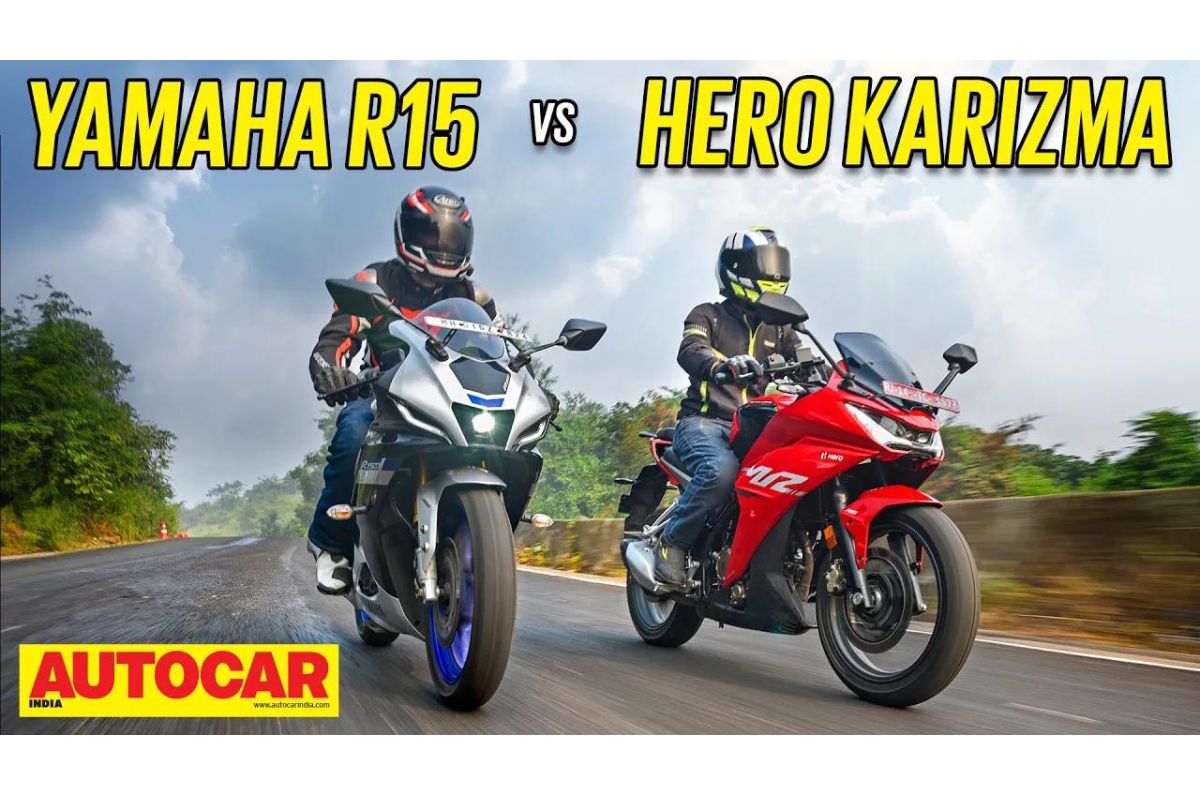
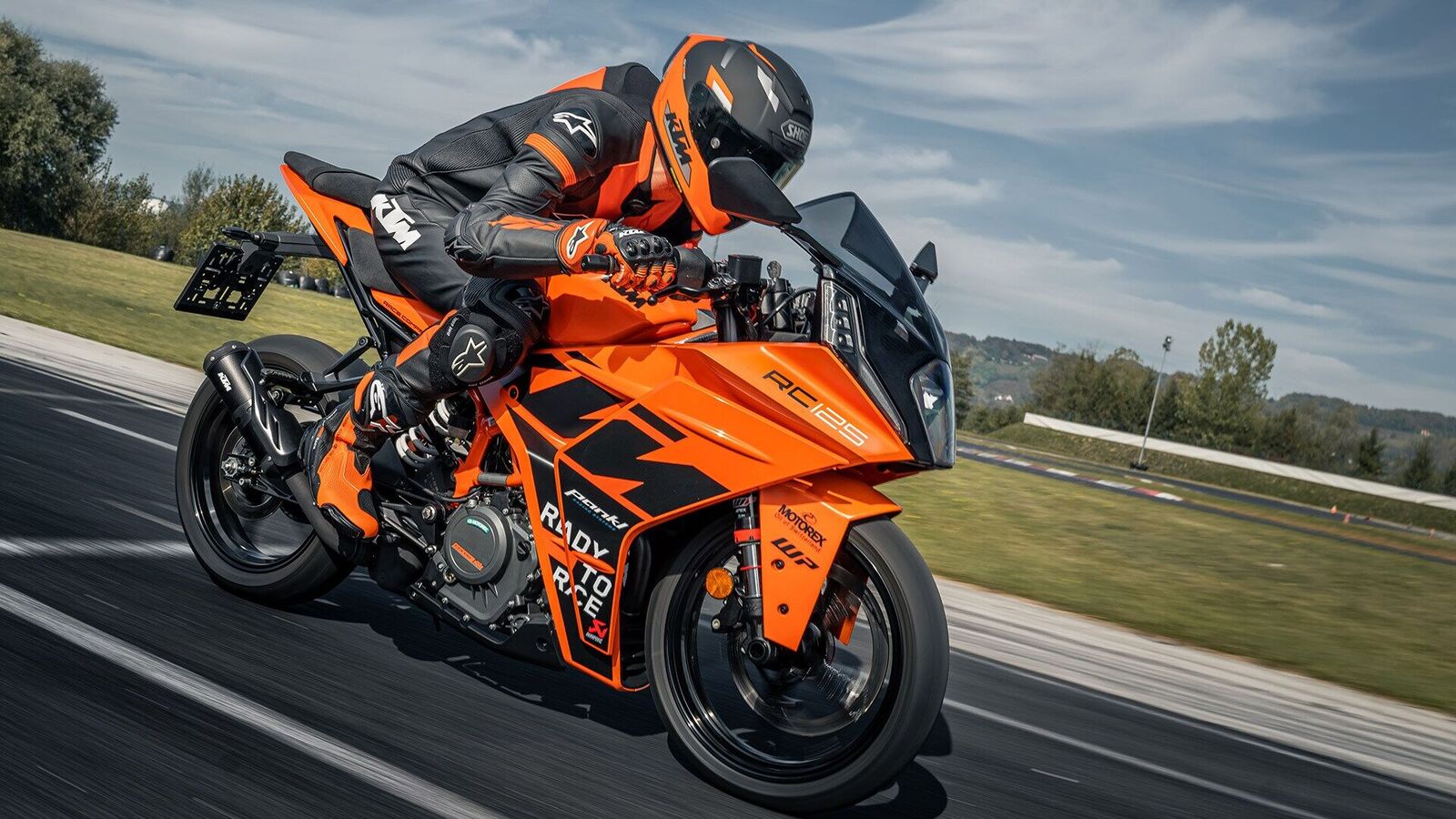
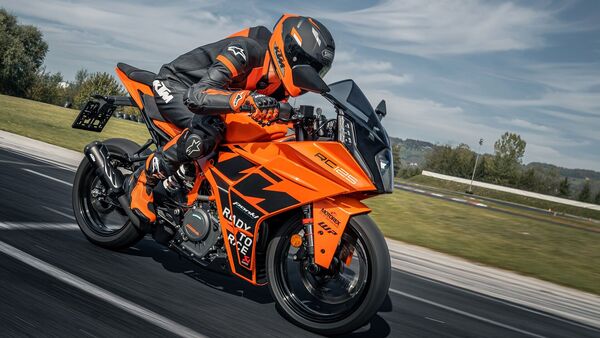
Yamaha Motor has launched the R15 V4 in Japan updated for the 2024 model year. The 2024 Yamaha R15 V4 joins the 2024 R125, also launched in the bike maker’s home market. Both bikes get new colour options while retaining the same mechanicals. The 2024 R15 V4 gets a new all-black paint scheme ‘Black Metallic 12’, which seems to be inspired by the larger R7. The colour option is complemented by the new blacked-out components.
By: HT Auto Desk | Updated on: 26 Sep 2023, 21:58 PM
The 2024 Yamaha R15 V4 gets three new paint options in Japan including the all-black ‘Black Metallic 12’
Up next is the new ‘Deep Purplish Blue Metallic C’ that is essentially a blue and black shade borrowed from the larger R1, and ensures the R15 looks a part of the R1 family. Lastly, the 2024 R15 V4 gets the new ‘Dark Bluish Gray Metallic’ shade that brings more flare to the full-faired offering. This includes the neon yellow finished alloy wheels complementing the bodywork finished with the grey-blue shade with neon yellow pinstripes.
The 2024 Yamaha R15 V4 for Japan also gets the neon yellow and Dark Bluish Gray Metallic shade
Apart from the new colour options, the 2024 Yamaha R15 V4 retains the same hardware as the outgoing model. Power comes from the familiar 155 cc single-cylinder, SOHC, liquid-cooled, four-valve engine with VVA system. The motor is tuned to develop 18.1 bhp and 14.1 Nm of peak torque, paired with a 6-speed gearbox. The bike gets a bi-directional quickshifter as well as an assist and slipper clutch. The bike also comes with dual-channel ABS.
The 2024 Yamaha R15 V4 in Japan is priced at 550,000 Yen (approx. ₹3.08 lakh), which makes it nearly twice as expensive as the Indian version. The India-spec R15 V4 is priced from ₹1.82 lakh (ex-showroom, Delhi) onwards. The R125, meanwhile, is not on sale in the Indian market.
Having announced its entry earlier this year, Skoda Auto has commenced sales in Vietnam, marking an all-new market for the Czech automaker. Skoda Auto has partnered with the TC Group for local distribution and production and a celebratory event was held earlier recently with representatives of the Vietnamese and Czech governments in attendance. Skoda Auto India will play a significant role in supplying products to Vietnam from the Chakan plant.
(L-R) Martin Jahn, Skoda Auto Board Member for Sales and Marketing and Le Do, General Director of Skoda project with the Kodiaq
Skoda has commenced operations with the sale of the Karoq and Kodiaq SUVs in Vietnam, which are being imported as Completely Built Units (CBU). The automaker plans to introduce the Kushaq compact SUV in the second half of 2024, which will be exported from India. The Skoda Kushaq will arrive in Vietnam via the Completely Knocked Down (CKD) route and will be locally assembled in the country by the TC Group. Skoda Auto expects to expand to as many as 30 dealer partners and annual sales of over 40,000 units beyond 2030.
The Skoda Kodiaq and Karoq arrive in Vietnam as full imports from Europe
Speaking on the occasion, Klaus Zellmer, Skoda Auto CEO, said, “We are excited to engage with Vietnam’s dynamic economy and a new group of customers in this fast-growing market. This is also the next step in our accelerating internationalisation strategy, strengthening our brand in the ASEAN region and intensifying the synergies between our two key markets of India and Europe. During the preparations, it has been clear that in TC Group we have an excellent partner for the production and sale of our attractive model portfolio. I look forward to starting a successful future together.”
Martin Jahn, Skoda Auto Board Member for Sales and Marketing, said, “Today marks an important milestone in the history of Skoda Auto. By entering the Vietnamese market, we are further strengthening our position in the global automotive industry. We have a clear strategy, ambitious targets, and a strong local partner in TC Motor. Our medium-term plan is to engage around 30 local contractual partners, assemble around 30,000 cars from CKD kits, and realise a sales potential of more than 40,000 vehicles annually beyond 2030. This move solidifies Škoda’s commitment to serving our Vietnamese customers and becoming an important presence in the local market.”
Also Watch: Skoda Kushaq: First Drive Review
Sales for the Skoda Karoq and Kodiaq commenced on September 25 from the automaker’s first dealership in Hanoi, the capital of Vietnam. The company plans to open additional showrooms in central and south Vietnam with 20 outlets to be inaugurated by 2025 and 30 by 2028. Apart from the Karoq and Kodiaq, the automaker plans to introduce the Octavia and Superb soon. The Skoda Enyaq electric SUV is also slated to arrive in the market at a later date.
Starting in the second half of 2024, Škoda will be tapping into significant regional synergies. By then, the first Kushaq vehicles will have been exported from the Pune facility in India to Vietnam for assembly from CKD (Completely Knocked Down) kits, with the Slavia set to follow in 2025. Construction of a production line at the Viet
Skoda’s first dealership in Vietnam is located in the capital city of Hanoi with 20 more outlets planned by 2025 and 30 by 2028
Hung Industrial Park in Quang Ninh province by Škoda’s local partner TC Group is already underway. Based on market trends, there are ambitions to ramp up production, potentially assembling as many as 27,000 vehicles annually after 2027. Skoda could use its local assembly facility in Vietnam to export models to other key markets in the ASEAN region.
Flying Spur is the second hybrid by Bentley and has an electric-only range of up to 41km.
Bentley has launched the Flying Spur Hybrid at Rs 5.25 crore (ex-showroom, Delhi, before options). Powering the plug-in hybrid Bentley is a 2.9-litre twin-turbo V6 engine paired with an electric motor, and combined, it has a range of up to 805km.
Gets a 2.9-litre twin-turbo V6 paired with an e-motor
Combined, the hybrid powertrain has a range of up to 805km
By 2024, Bentley’s entire portfolio will have a hybrid powertrain option
Bentley Flying Spur Hybrid exterior and interior
The Flying Spur Hybrid will be available in 60 colour options, including Mulliner customisation options as well. Bentley is also offering its blackline specification for the Flying Spur Hybrid that gets a blacked-out treatment for the chrome trims like the grille, window surrounds, headlight surrounds, door trims and handles as well as exhaust pipes and the Flying B mascot. Furthermore, the only identifier that this Flying Spur is a hybrid is the ‘hybrid’ badge on the boot lid.
Inside, Bentley offers customers 15 colour options for the upholstery, with five standard and 10 optional colours. They also get an option of eight veneer options for the dashboard. To up the customisation quotient, Bentley also offers contrast stitching, piping and emblems on the seats.
Bentley Flying Spur Hybrid powertrain
As mentioned, the plug-in hybrid Flying Spur is powered by a 2.9-litre twin-turbo V6 engine with an electric motor that, combined, produced 544hp and 750Nm. Bentley claims that the Flying Spur Hybrid can do the 0-100kph spring in 4.3 seconds and has a range of up to 805km with up to 41km of electric-only range.
Future Bentley models
Bentley also mentioned that by 2024 its entire model range – Continental GT, Flying Spur and Bentayga – will be available with a hybrid powertrain option. Now, with the Flying Spur and Bentayga getting a hybrid powertrain option, only the Continental GT remains. In 2025, the British Marque will launch an all-electric model and by 2030, its entire portfolio will only consist of EVs.
Bentley Flying Spur Hybrid rivals
Globally, the Flying Spur Hybrid rivals the Mercedes-Maybach S580e but does not have any direct rivals in India. The standard Flying Spur competes with the likes of the Mercedes-Maybach S-Class (Rs 2.69 crore – 3.40 crore) and the Rolls Royce Ghost (Rs 6.95 crore – 7.95 crore).
Under this initiative, Indian Oil Corporation (IOCL) has embarked on a meticulously designed program to conduct operational trials of 15 Fuel Cell buses powered by Green hydrogen.
These trials will encompass designated routes in Delhi, Haryana, and Uttar Pradesh. The project’s inaugural moment saw the launch of the first set of two fuel cell buses from India Gate. This program is the first of its kind in India to dispense green hydrogen at 350 bar pressure for operating fuel cell buses.
Furthermore, Indian Oil has established a cutting-edge dispensing facility at its research and development (R&D) campus in Faridabad. This facility can refuel green hydrogen produced through electrolysis using solar photovoltaic panels.
According to SM Vaidya, Chairman of Indian Oil, the launch of these two buses signifies the commencement of a comprehensive assessment of the performance and durability of this new technology. The trial period, spanning more than 3 lakh kilometres across all buses, will generate vital data that will serve as a national repository.
This repository is expected to play a pivotal role in shaping the future of zero-emission mobility in India, powered by green hydrogen. In his address, Hardeep Singh Puri emphasized, the Indian government’s commitment to clean and green energy. Hardeep Singh Puri said, “The Future of our transport will be on green hydrogen”.
BMW is among the automakers who have been working on hydrogen fuel cell technology over the last few years, as hydrogen could be a potential green and clean fuel for future cars.
India’s endeavours in the realm of low-carbon development, including emerging fuels like hydrogen and biofuels, are central to these efforts. Puri said, “India has one of the largest synchronous grids in the world, capable of handling intermittent renewable energy and we have achieved ‘One Nation-One Grid-One Frequency’.”
India, with its extensive synchronous grid capable of handling intermittent renewable energy, is poised to be a global champion in hydrogen production and exports. “We have recently witnessed the launch of the world’s first Bharat Stage 6 (BS 6) (Stage II) Electrified Flex Fuel vehicle prototype that encompasses both the flex fuel engine as well as an electric powertrain that offers higher use of ethanol combined with better fuel efficiencies. With Industry and Government collaboration, India is on its way to becoming a global hub for cleaner technologies and achieving self-reliance in energy soon”, Puri said.
Hydrogen, hailed as the fuel of the future, holds immense potential in helping India achieve its decarbonization targets. The global demand for hydrogen is projected to surge four to seven times by 2050, reaching 500-800 million tonnes. Domestically, demand is set to quadruple, from the current 6 million tonnes to 25-28 million tonnes by 2050.
The Ministry of Petroleum and Natural Gas is actively driving initiatives related to green hydrogen, including production and utilization in refineries, hydrogen blending in natural gas pipelines, localization of electrolyzer-based technologies, and promoting bio-pathways for green hydrogen production.
Fuel cells, the heart of these green hydrogen-powered buses, employ hydrogen and air to generate electricity for propulsion.
These buses are environmentally friendly, with the only byproduct being water, offering a stark contrast to conventional buses running on diesel and petrol.
Fuel cells are also highly efficient compared to internal combustion engines. Fuel cells boast an electrical efficiency of 55-60 per cent, a notable improvement over the thermal efficiency of 25 per cent for conventional internal combustion engines.
These buses are set to achieve a remarkable fuel economy of around 12 km per kilogram of hydrogen, compared to 2.5-3 km per litre for diesel buses.
Hardeep Singh Puri commended IOCL and Tata Motors for their collaborative efforts in developing indigenous solutions for fuel cells and hydrogen infrastructure for heavy-duty buses in passenger transport applications.
Puri stated, “I would like to congratulate the IOCL team for undertaking this collaborative approach along with Tata Motors for the development of indigenous solutions pertaining to Fuel Cell and hydrogen infrastructure in the country, for heavy-duty buses for passenger transport application. I am sure that the ecosystem developed through efforts like these can integrate a larger economy with the energy sector”.
He stressed that this green hydrogen-powered bus initiative could potentially transform India into a net exporter of clean hydrogen energy and set a global precedent in technology transfer and green hydrogen production.
The initiative has plans to soon operate an additional 15 fuel cell buses in the National Capital Region (NCR). Minister Puri expressed his commitment to closely monitoring this project, highlighting its importance on the national stage and its potential to revolutionize city transport in India.
India’s foray into green hydrogen technology signifies a significant stride toward achieving energy self-reliance and global leadership in the realm of sustainable energy solutions.
Honda Cars India has achieved a significant milestone for its latest product, the Elevate SUV. It delivered a total of 200 units of the mid-size SUV in Chennai in a single day at a mega event. The OEM is currently focusing on deliveries of the newly launched product to its customers across the country. The model is available at an introductory price ranging from ₹10,99,900 to ₹15,99,900 (ex-showroom, Delhi).
A total of 200 Honda Elevate SUVs were delivered at a mega event in Chennai in a single day.
Elevate SUV is offered in a single-engine option but with two transmission choices. The 1.5-litre DOHC i-VTEC petrol unit is capable of generating 119 bhp of maximum power and 145.1 Nm of peak torque. It will come mated to either a six-speed manual gearbox and an advanced CVT gearbox. Honda says that the Elevate SUV has a mileage of 15.31 kmpl in manual variants while the CVT versions will offer 16.92 kmpl of mileage.
Watch: Honda Elevate SUV: First drive review
The SUV is available in four variants – SV, V, VX, and ZX. In terms of design, it comes with a boxy front profile and a large black radiator grille, LED headlights, integrated LED DRLs, LED taillights, black fog lamp housing and large wheel arches housing sporty 17-inch alloy wheels.
The character lines at the sides, along with the black claddings, increase the model’s visual appeal. The SUV also gets a massive 220 mm of ground clearance, which is the highest in the segment.
On the inside, the SUV is spacious yet simple. There is a 10.25-inch touchscreen infotainment system which is compatible with wireless smartphone connectivity. There is also a 7-inch HD colour TFT driver display. One also gets other features like automatic climate control, among others.
Single-tone colour options on the Elevate include Platinum White Pearl, Lunar Silver Metallic, Obsidian Blue Pearl, Radiant Red Metallic, Golden Brown Metallic, Meteoroid Gray Metallic and Phoenix Orange Pearl. There will also be three dual-tone options available on the top-end variants – Phoenix Orange Pearl with Crystal Black Pearl Roof, Platinum White Pearl with Crystal Black Pearl Roof and Radiant Red Metallic with Crystal Black Pearl Roof.
The Buddh International Circuit was a hit with riders, but did the Indian GP do enough to earn a spot on next year’s calendar? We take a look.
“We kind of made it against all odds,” is what Amit Sandill – co-founder of Fairstreet Sports said to Autocar India when asked about the first ever MotoGP race on Indian soil. There was a lot resting on the event going ahead; after all, it’s the first time that the Buddh International Circuit has hosted a world championship event in a decade.
Given our history with F1 and with next year’s Formula E Hyderabad round under threat, pulling off this MotoGP race was crucial to establish India as a country ready to host international motorsports. So did the inaugural edition do enough? We take a look at all the key talking points.
1. BIC exceeded expectations
Riders were pretty apprehensive about the Buddh International Circuit heading into the race weekend, especially given that the circuit was still pending FIM homologation with just a handful of days to go. The track was originally built for F1, so a number of changes had to be made to make it suitable for motorcycle racing. This included extending the run-off areas and gravel sections, installing upgraded barriers and more.
It was a very different story once the riders actually got some track time, though, with several of them praising the technical nature of the track with its significant elevation changes. The banked parabola section of Turn 8/9 was another hit among riders and MotoGP fans alike.
“The track is very technical, you must be very precise, but all in all, it is beautiful,” said reigning MotoGP world champion Francesco Bagnaia after the opening practice sessions on Friday. Of course, the fact that it is a new track also levelled the playing field a bit, allowing riders like Marc Marquez and Fabio Quartararo – who’ve had a tough spell recently – to shine.
2. The heat was on
With temperatures ranging from 32-35 degree Celsius all weekend, and humidity levels above 80 percent, it was a gruelling venue for the riders. So, it was no surprise when riders asked for the race distances to be shortened. And following feedback from the official tyre suppliers, Dorna and the FIM obliged – the MotoGP Sprint and junior class races were shortened by one lap each, while the Sunday MotoGP race was shortened by three laps.
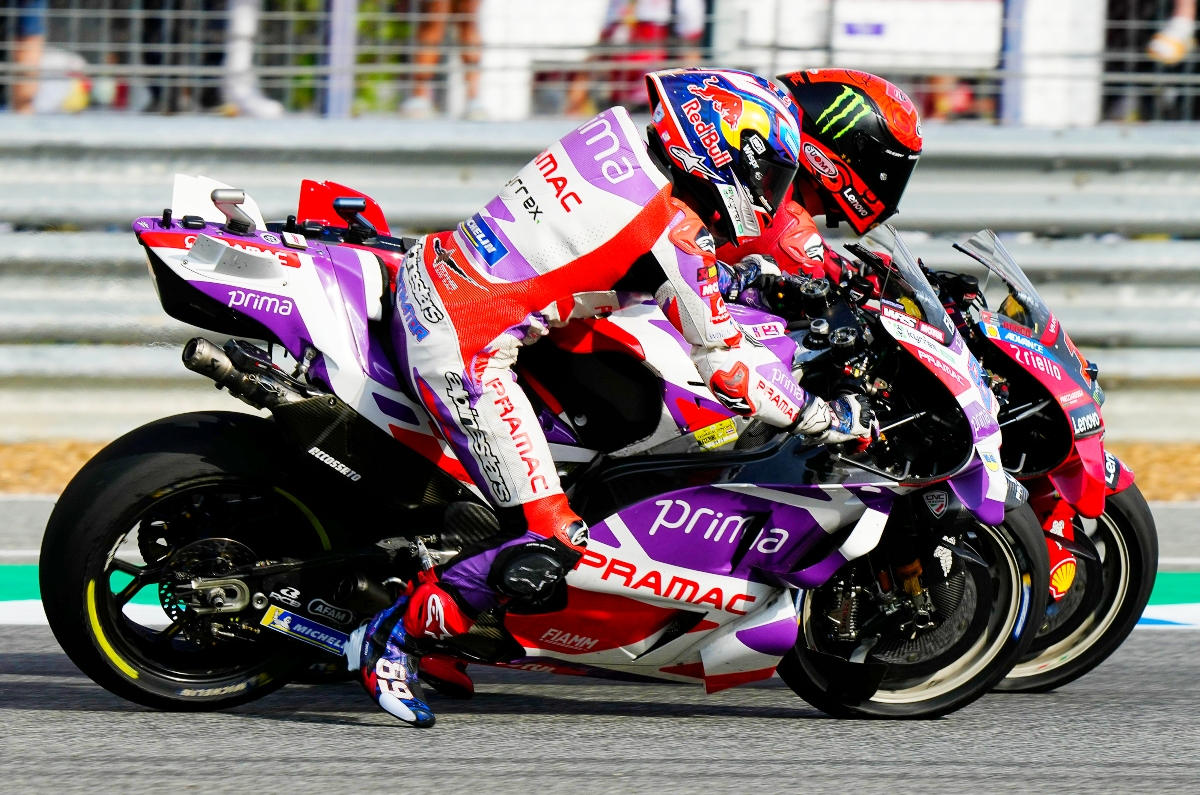
And we still saw Jorge Martin suffer from dehydration in the closing stages of the race. Running on a medium rear tyre, compared to most of the grid on softs, the Prima Pramac racer wore himself out trying to hold on to second place and later had to be attended to by the MotoGP medical team.
So, it’s not surprising that organisers are now looking to give the race an October slot if it does go ahead next year, with Sandill saying “[the track is] technical, therefore it’s tiring, and the weather doesn’t help. It’s probably a good idea to have it in October, or November even.”
3. Not a sell-out crowd
Around 58,000 fans attended the race in person on Sunday and over 1,11,000 across the weekend. While those aren’t necessarily bad numbers (Qatar had an attendance of just 17,972 in 2022), it doesn’t paint a good picture to see empty stands, that too when India happens to be one of the largest markets for two-wheelers in the world. Some events like the French GP see over 2,70,000 fans make their way to Le Mans over the weekend.
Organisation plays an important role here. Ticket sales only started in late-June, just three months before the race, with prices ranging from Rs 800-40,000. But uncertainty surrounding the race also had a role to play, potentially holding back people from booking tickets.
Work on the track started fairly late following a legal battle between the Yamuna Expressway Industrial Development Authority (YEIDA) and Jaypee Associates Ltd. Ultimately MotoGP organisers took on the responsibility to foot the bill for all the repair work. Given this race against time, Sandill admits the focus was simply on making the event happen: “We did it in three months. The event had to happen looking at the time constraints. Marketing did take a bit of a backseat, which to me is not the best way to do it.”
4. Still plenty of work to do for 2024
While the track itself exceeded expectations, there’s plenty of work to be done if MotoGP returns here in the future. Several key staff and even riders like Marc Marquez were affected by visa issues. There were also a number of uncanny track delays; Autocar India understands that Friday’s Moto3 track action was delayed by 45 minutes due to a drinking water shortage for the marshals.
The track itself could also do with some tiny tweaks, with riders pointing out some areas where the walls are a bit too close to the track. There were also some instances where marshal action was not as prompt as one would hope for, but that improved as the weekend went on. But these are all areas that can be worked on.
“There are improvements which will be done, this is the first time. To an extent, it’s also a learning curve for us. If there are any shortfalls, next year we’ll take care of all that,” said Sandill. “I think for the first time, it has been successful. The services have to be improved, I do think that we need more awareness to be built. But that’s not a showstopper.”
He added, “The buildings are a bit dated now and need a proper renovation, which we will do for the following year.”
Dorna and Fairstreet Sports have signed a seven-year deal for the Indian GP. But with several new venues like Hungary looking for a spot on the MotoGP calendar, it remains to be seen if the first edition of the Indian GP did enough for the race to stay on the calendar.
5. Title fight thrown wide open
It’s game on in the 2023 MotoGP championship following the Indian GP. Bagnaia’s costly crash dealt a big blow to his championship hopes, as Marco Bezzecchi cruised to a dominant win at the BIC.
Martin’s second place finish means he’s just 13 points behind leader Bagnaia now. Bezzecchi, meanwhile, is 31 points behind Martin.
The inaugural MotoGP Grand Prix of India ended on a high with VR46 team rider Marco Bezzecchi taking an uncontested win on his Ducati. The Italian rider led the race from the pole position and was unchallenged for most of the 21-lap race as defending world champion Francesco (Pecco) Bagnaia crashed out. The first-ever Indian GP has thrown open a three-way title fight as the top three riders are separated by 44 points in the world rider championship standings.
VR46 rider Marco Bezzecchi took an uncontested win in the inaugural Indian GP main race. Also finishing on the podium were Jorge Martin and Fabio Quartararo (Grand Prix of India/MotoGP)
Marco Bezzecchi started on the pole but a better start for Jorge Martin catapulted him to P1. Pecco also moved up to P2 with the VR46 rider moving down to P3 in the opening corners. But Bezzecchi clearly had better pace on his GP22 Ducati as he reeled back in the lead at Turn 4. There were no crashes on the opening lap since all riders were being extra cautious of Turn 1 braking, unlike the sprint race. Bezzecchi began building his lead with defending champion Pecco Bagnaia right on his tail at the end of the opening lap. Just what the rider needed after a disappointing crash with teammate Luca Marini wiped him in Lap 1, Turn 1 of the sprint race.
Behind Bezzecchi and Bagnaia was Jorge Martin, followed by Honda riders Joan Marc Marquez and Joan Mir. Bagnaia defended his position for the first half of the race as Martin began closing in, battling for P2. The Ducati factory rider had to cut his podium run short though with a crash on Lap 13, Turn 5, removed from contention. The incident promoted Martin to P2, while Fabio Quartararo moved up to P3, as an early crash put Marc Marquez at the back of the order from running fourth in the early stages.
At the front, Bezzecchi built a lead of well over two seconds by Lap 6, extending it further to 5 seconds by Lap 13. The rider remained untouched with a sizeable difference in pace over the rest of the grid. The 24-year-old managed to claim the victory in the first-ever Indian GP with a lead of 8.649 seconds.
Meanwhile, with Pecco out of contention, Fabio turned out to be the unexpected fighter in the Yamaha as he moved in sync with the Pramac Ducati to battle it out for P2. Quartararo managed to pass Martin briefly but the Pramac rider was not the one to give it away that easy and passed the Yamaha again, ensuring to keep the order that way till the end of the race.
Fabio Quartararo finished third in an impressive turnaround for Yamaha this weekend (HT Auto/Sameer Contractor)
Coming in fourth was Brad Binder on the KTM, in what was salvaging a disappointing weekend overall, while Joan Mir finished fifth after battling it out with Binder for P4. Johann Zarco finished sixth, while Franco Morbidelli finished seventh in a dramatic improvement of pace for Yamaha through the weekend. Maverick Vinales finished at P8, while Marc Marquez crossed the chequered flag in ninth place, an impressive finish considering his crash earlier in the race.
Rounding off the top 10 was Raul Fernandez on the RNF Aprilia, followed by Takaaki Nakagami of LCR Honda at 11th place. Miguel Oliveira of RNF Aprilia finished 12th ahead of Pol Espargaro of Tech3. Jack Miller concluded the weekend in 14th place while Stefan Bradl of LCR Honda concluded the list of points scorers in the race. Also finishing the race was Michele Pirro on the Ducati.
The Yamaha R3 hasn’t been on sale in India since the introduction of the BS6 emission norms in early 2020. Yamaha is now bringing back its parallel twin sport bike and it will also come with its street bike sibling, the MT-03.
The bikes will initially launch here as CBU imports from Indonesia with Yamaha intending to switch to CKD production further down the line. With that in mind, it is fair to expect that these will be expensive motorcycles, with ex-showroom prices starting from above the Rs 4 lakh mark. The previous-gen Yamaha R3 last retailed at Rs 3.5 lakh ex-showroom before and the new bike comes with numerous upgrades including fresh style, LED headlamps and a USD fork.
The MT-03 has never been sold in India before this and it is effectively the naked version of the R3 with a similar main chassis and the same 321cc parallel twin engine that produces 42hp.
The Yamaha R3 and MT-03 will both be retailed out of the company’s premium Blue Square dealer network.
This article will give you a perspective of the engine specs like, displacement, power, torque, mileage and transmission details of the BMW 2 Series Gran Coupe M petrol and diesel engines.
Considering the body style, size and price range of the BMW 2 Series Gran Coupe M, it competes with the following cars:
Mercedes-Benz AMG C 43 4MATIC Coupe M
What Are The Engine Specs Of BMW 2 Series Gran Coupe M?
BMW 2 SERIES GRAN COUPE M | ENGINE SPECS
Engine
2.0L Turbo Petrol
2.0L Turbo Diesel
Displacement
1998cc
1995cc
Cylinder
4
4
Power
179PS @ 5100rpm
193PS @ 4000rpm
Power:Weight
131.03PS/t
115.85PS/t
Torque
280Nm @ 1350 – 4600rpm
400Nm @ 1750 – 2500rpm
Torque:Weight
193.10Nm/t
243.90Nm/t
Manual
NA
NA
Automatic
8-speed TC
8-speed TC
The BMW 2 Series Gran Coupe M is only available with a 2.0L turbo petrol engine and a 8-speed TC transmission. This engine makes 190PS of power at 5000rpm and 280Nm of torque between 1350 and 4600rpm.
What Is The Mileage Or Fuel Efficiency Of BMW 2 Series Gran Coupe M?
BMW 2 SERIES GRAN COUPE M | MILEAGE OR FUEL EFFICIENCY
Engine
2.0L Turbo Petrol
2.0L Turbo Diesel
Manual FE
NA
NA
Automatic FE
14.82kmpl
18.64kmpl
The BMW 2 Series Gran Coupe M 2.0L turbo petrol engine has a mileage of 14.82kmpl with the 8-speed TC transmission. The 2.0L turbo diesel engine has a mileage of 18.64kmpl with the 8-speed TC transmission.
Read more about how you can get the best mileage or fuel efficiency from your car:
Maruti Suzuki India has partnered with the Indian Navy to create awareness about career opportunities amongst the Northeastern youth through ab outreach program, called the ‘Khamree Mo Sikkim’. As a part of this association, 45 Navy officials will be driving five Maruti Suzuki vehicles for the next few weeks, covering some key regions in the country such as Mhow, Jhansi, Lucknow, Varanasi and Patna.
By: HT Auto Desk | Updated on: 24 Sep 2023, 12:26 PM
Maruti Jimny off-roader SUV
The five vehicles will include three Maruti Jimny off-roader and two Grand Vitara ALL GRIP SUVs. The 6,500-km long expedition was flagged off from the Indian Navy base at Lonavala on 24 September, Sunday. Other key regions being covered include Bagdogra, Gangtok, Lachen, Gurudongma, Kolkata, Bhubaneshwar, Vishakhapatnam, and Hyderabad.
Watch: Maruti Suzuki Jimny SUV: First Drive Review
The expedition will take place across three stretches with the first stretch going from INS Shivaji to Bagdogra, the second stretch comprehensively covering Sikkim, and the third stretch extending from Gangtok, Sikkim, to INS Shivaji, with a particular focus on empowering the youth in rural areas along the eastern coastal region. “Our association with the Indian Navy underscores our unwavering dedication to fostering progress in the Northeastern region and nurturing the potential of our nation’s youth,” said Shashank Srivastava, Senior Executive Officer, Marketing & Sales, Maruti Suzuki India Limited.
As the convoy will traverse across diverse states, participants will engage with local communities and provide them with guidance on defense entrance exams at esteemed educational institutions. Along the route, participants will also visit historically significant monuments. “This initiative is a collaborative effort to contribute to the progress and well-being of Northeast India. Our primary goal is to enlighten and inspire the youth about the abundant prospects within the Navy,” said Srivastava.
This article will give you details about the dimensions, or length, width, height and wheelbase of the BMW 2 Series Gran Coupe M. We’ll also look at the ground clearance, boot space, fuel tank capacity and tyre size of the BMW 2 Series Gran Coupe M.
The BMW 2 Series Gran Coupe M is 4526mm long, 1800mm wide and 1420mm tall. Bigger exterior dimensions give a car a stronger road presence. The 2 Series Gran Coupe M has a 2670mm long wheelbase. A longer wheelbase makes the car more stable at high speeds and gives better legroom in the back seat, while a shorter wheelbase makes the car more agile.
BMW 2 SERIES GRAN COUPE M DIMENSIONS
Length
4526mm
Width
1800mm
Height
1420mm
Wheelbase
2670mm
Ground Clearance
152mm
Boot Space
430L
Fuel Tank Capacity
50L
Wheel Size (Base)
205/55 R16
Wheel Size (Top)
205/55 R16
The BMW 2 Series Gran Coupe M has a fuel tank capacity of 50 litres and a boot space measuring 430 litres. The 2 Series Gran Coupe M has a ground clearance of 152mm. The tyre size of the BMW 2 Series Gran Coupe M base model is 205/55 R16 and the top model rides on 205/55 R16 tyres. Cars running on bigger wheels provide better handling and styling. However, these advantages come at the cost of efficiency. Having bigger wheels means more metal and more rotating mass. Therefore, it adversely impacts your drivability, performance and mileage.
What Are The Dimensions Of BMW 2 Series Gran Coupe M?
The BMW 2 Series Gran Coupe M is 4526mm long, 1800mm wide and 1420mm tall.
What Is The Length Of BMW 2 Series Gran Coupe M?
The BMW 2 Series Gran Coupe M is 4526mm long. Here’s the length of 2 Series Gran Coupe M in other units like centimetres, metres, feet and inches:
BMW 2 Series Gran Coupe M Length
Millimetres
4526mm
Centimetres
452.6cm
Metres
4.526m
Inches
178.19in
Feet
14.85ft
What IsThe Width Of BMW 2 Series Gran Coupe M?
The BMW 2 Series Gran Coupe M is 1800mm wide. Here’s the width of 2 Series Gran Coupe M in other units like centimetres, metres, feet and inches:
BMW 2 Series Gran Coupe M Width
Millimetres
1800mm
Centimetres
180cm
Metres
1.8m
Inches
70.87in
Feet
5.91ft
What Is The Height Of BMW 2 Series Gran Coupe M?
The BMW 2 Series Gran Coupe M is 1420mm tall. Here’s the height of 2 Series Gran Coupe M in other units like centimetres, metres, feet and inches:
BMW 2 Series Gran Coupe M Height
Millimetres
1420mm
Centimetres
142cm
Metres
1.42m
Inches
55.91in
Feet
4.66ft
What Is The Fuel Tank Capacity Of BMW 2 Series Gran Coupe M?
The BMW 2 Series Gran Coupe M has a fuel tank capacity of 50 litres.
What Is The Wheelbase Of BMW 2 Series Gran Coupe M?
The BMW 2 Series Gran Coupe M has a wheelbase measuring 2670mm. Here’s the wheelbase of 2 Series Gran Coupe M in other units like centimetres, metres, feet and inches:
BMW 2 Series Gran Coupe M Wheelbase
Millimetres
2670mm
Centimetres
267cm
Metres
2.67m
Inches
105.12in
Feet
8.76ft
What Is The Boot Space Of BMW 2 Series Gran Coupe M?
The BMW 2 Series Gran Coupe M has a boot space measuring 430 litres. Here’s the boot space information of 2 Series Gran Coupe M in other units like cubic centimetres, cubic metres, cubic inches and cubic feet:
BMW 2 Series Gran Coupe M Boot Space
Litres
430L
Cubic Centimetres
430000cm3
Cubic Metres
0.43m3
Cubic Inches
26240.32in3
Cubic Feet
15.19ft3
What Is The Ground Clearance Of BMW 2 Series Gran Coupe M?
The BMW 2 Series Gran Coupe M has a ground clearance of 152mm. Here’s the ground clearance of 2 Series Gran Coupe M in other units like centimetres, metres, feet and inches:
The Prima Pramac Racing rider reduces his championship deficit to reigning world champion Bagnaia to 33 points.
After a delayed start due to unseasonal rain, the first ever MotoGP Sprint race in India saw Prima Pramac Racing’s Jorge Martin take a dominant victory, leading every lap and crossing the chequered flag 1.4 seconds ahead of fellow Ducati rider Francesco Bagnaia.
Having spent all weekend establishing itself as the strongest team at the Indian GP, the Mooney VR46 squad had a disastrous sprint race, with both its riders involved in a turn 1 incident on lap one. Having gotten a strong start from 4th place, Luca Marini left his braking a little too late and ended up slamming into the rear of teammate and pole-sitter Marco Bezzecchi. The former crashed out, while the latter was pushed wide and dropped to last position, before making an impressive recovery through the field to finish in 5th. Despite his salvage effort and the 5 points it earned him, Bezzecchi sees his gap to the championship lead grow to 69 points.
Martin stamps his authority
As the dust settled from the turn 1 incident, it was Jorge Martin who emerged in the lead, and he held that position for the entirety of the race. He was followed by Ducati Lenovo man Francesco Bagnaia, who gradually dropped back over the course of the race, before slightly reducing the gap towards the end. The Italian continues to lead the world championship standings, but sees his lead cut down to 33 points by a hard-charging Martin.
Mixed fortunes for Repsol Honda
Rounding out the podium was Repsol Honda man Marc Marquez, who resisted race-long pressure from Red Bull KTM rider Brad Binder to hold onto 3rd place. A strong showing for the Japanese manufacturer thus far was slightly dampened when Joan Mir failed to capitalise on his second row starting position, crashing out at turn 3 soon after having run wide at turn 1 and lost 4th position.
Heading into tomorrow’s 21-lap main race, Bezzecchi will once again set off from pole position, ahead of Bagnaia and Martin. Full qualifying results are available here. Marini, meanwhile, has been diagnosed with a broken collarbone after today’s crash, and will miss the rest of the weekend.
This article will give you a perspective of the engine specs like, displacement, power, torque, mileage and transmission details of the BMW 6 Series Gran Turismo petrol and diesel engines.
Considering the body style, size and price range of the BMW 6 Series Gran Turismo, it competes with the following cars:
What Are The Engine Specs Of BMW 6 Series Gran Turismo?
BMW 6 SERIES GRAN TURISMO | ENGINE SPECS
Engine
2.0L Turbo Petrol
2.0L Turbo Diesel
Displacement
1998cc
1995cc
Cylinder
4
4
Power
258PS @ 5000rpm
190PS @ 4000rpm
Power:Weight
138.71PS/t
99.48PS/t
Torque
400Nm @ 1550 – 4400rpm
400Nm @ 1750 – 2500rpm
Torque:Weight
215.05Nm/t
209.42Nm/t
Manual
NA
NA
Automatic
8-speed TC
8-speed TC
The BMW 6 Series Gran Turismo is only available with a 2.0L turbo petrol engine and a 8-speed TC transmission. This engine makes 258PS of power at 5000rpm and 400Nm of torque between 1550 and 4400rpm.
The 6 Series GT is also available with a 2.0L turbo diesel engine which comes paired with an 8-speed TC automatic transmission. This engine makes 190PS of power at 4000rpm and 400Nm between 1750rpm and 2500rpm.
What Is The Mileage Or Fuel Efficiency Of BMW 6 Series Gran Turismo?
BMW 6 SERIES GRAN TURISMO | MILEAGE OR FUEL EFFICIENCY
Engine
2.0L Turbo Petrol
2.0L Turbo Diesel
Manual FE
NA
NA
Automatic FE
13.32kmpl
18.65kmpl
The BMW 6 Series Gran Turismo 2.0L turbo petrol engine has a mileage of 13.32kmpl with the 8-speed TC transmission. The 2.0L turbo diesel engine has a mileage of 18.65kmpl with the 8-speed TC transmission.
Read more about how you can get the best mileage or fuel efficiency from your car:
Toyota Kirloskar Motor has announced that it has decided to temporarily halt bookings for the new Rumion E-CNG variant in the country. This has been done due to the overwhelming response for the MPV. The Toyota Rumion is a rebadged Maruti Suzuki Ertiga and the company says the CNG variants are witnessing a strong demand. Toyota did not disclose the number of bookings received so far for the Rumion E-CNG.
By: Sameer Fayaz Contractor | Updated on: 23 Sep 2023, 11:36 AM
Toyota Rumion gets few cosmetic changes when compared to the Maruti Suzuki Ertiga and is offered with pure-petrol and CNG options
Meanwhile, bookings for the Toyota Rumion petrol will continue, the company confirmed. The Rumion draws power from the 1.5-litre K-Series petrol engine paired with manual and automatic transmission options. It’s made by Maruti for itself and Toyota. The Toyota Rumion is priced from ₹10.29 lakh (ex-showroom) onwards.
A statement from Toyota read, “We launched the All-New Toyota Rumion in August this year and have received an overwhelming response from our customers who have been waiting for a Toyota vehicle in the B-MPV segment. We are heartened to see the increasing inflow of enquiries and healthy bookings for the All New Toyota Rumion. The demand has surpassed our expectations, resulting in a long delivery time across variants, especially for the E-CNG option. This has necessitated us to temporarily halt bookings of the E-CNG option ONLY to avoid customer inconvenience due to a longer waiting period. However, we continue to accept bookings for the PETROL (NeoDrive) variants of the All-New Toyota Rumion.
As a brand that is deeply committed to delivering the best experience to its valued customers, we will continue to regularly assess the situation and do our best to resume the order booking of the said variant at the earliest. We appreciate our customer’s understanding as we work towards meeting the market demand in a timely and most suitable manner.”
This article will give you a perspective of the engine specs like, displacement, power, torque, mileage and transmission details of the Audi Q8 petrol engine.
Considering the body style, size and price range of the Audi Q8, it competes with the following cars:
What Are The Engine Specs Of Audi Q8?
AUDI Q8 | ENGINE SPECS
Engine
3.0L Turbo Petrol
Displacement
2995cc
Cylinder
6
Power
340PS @ 5200rpm
Power:Weight
156.68PS/t
Torque
500Nm @ 1370 – 4500rpm
Torque:Weight
230.41Nm/t
Manual
NA
Automatic
8-speed TC
The Audi Q8 is only available with a 3.0L turbo petrol engine and a 8-speed TC transmission. This engine makes 340PS of power at 5000rpm and 500Nm of torque between 1370 and 4500rpm.
What Is The Mileage Or Fuel Efficiency Of Audi Q8?
AUDI Q8 | MILEAGE OR FUEL EFFICIENCY
Engine
3.0L Turbo Petrol
Manual FE
NA
Automatic FE
8.84kmpl
The Audi Q8 3.0L turbo petrol engine has a mileage of 8.84kmpl with the 8-speed TC transmission.
Read more about how you can get the best mileage or fuel efficiency from your car:
This article will give you a perspective of the battery-motor specs, such as displacement, power, torque, range and transmission details, of the Mercedes-Benz EQE EV.
Considering the body style, size and price range of the Mercedes-Benz EQE EV, it competes with the following cars:
BMW iX
Jaguar i-Pace
Audi Q8 e-Tron
What Are The Electric Motor Specs Of Mercedes-Benz EQE EV?
The Mercedes-Benz EQE EV is a D2-segment electric luxury SUV that comes with 2 electric motors at either axles, giving it all-wheel-drive capabilities. The Mercedes-Benz EQE EV is available with a single battery-motor configuration in India. The 90.56kWh battery pack with the all-wheel drivetrain offers a claimed range between 465km to 550km. The combined power output from the 2 electric motors is 414PS, while the torque output stands at 858Nm.
What Is The Charging Time Of Mercedes-Benz EQE EV?
The Mercedes-Benz EQE EV comes with a single battery pack option – a 90.56kWh battery pack. The charging options for this battery pack include an 11kW AC charger and a 100kW DC charger.
With the 11kW AC home charger, it takes about 9 hours and 30 minutes to charge the battery pack from 10% to 100% of the battery capacity. With the 100kW DC charger, it takes about 32 minutes to charge the battery from 10% to 80%. The DC charging power capacity of the EQE is expandable up to 170kW.
This article will give you a perspective of the engine specs like, displacement, power, torque, mileage and transmission details of the Audi Q5 petrol engine.
Considering the body style, size and price range of the Audi Q5, it competes with the following cars:
BMW X3
Lexus NX
Volvo XC60
What Are The Engine Specs Of Audi Q5?
AUDI Q5 | ENGINE SPECS
Engine
2.0L Turbo Petrol
Displacement
1984cc
Cylinder
4
Power
265PS @ 5000rpm
Power:Weight
134.40PS/t
Torque
370Nm @ 1600 – 4300rpm
Torque:Weight
197.33Nm/t
Manual
NA
Automatic
7-speed DCT
The Audi Q5 is only available with a 2.0L turbo petrol engine and a 7-speed DCT transmission. This engine makes 252PS of power at 5000rpm and 370Nm of torque between 1600 and 4300rpm.
What Is The Mileage Or Fuel Efficiency Of Audi Q5?
AUDI Q5 | MILEAGE OR FUEL EFFICIENCY
Engine
2.0L Turbo Petrol
Manual FE
NA
Automatic FE
13.47kmpl
The Audi Q5 2.0L turbo petrol engine has a mileage of 13.47kmpl with the 7-speed DCT automatic transmission.
Read more about how you can get the best mileage or fuel efficiency from your car:
At Ola Electric’s recent event, they showcased four new electric motorcycles. They are named Diamondhead, Adventure, Cruiser and Roadster for now. The production version of the first motorcycle is expected to go on sale by the end of 2024. Ola Electric has showcased the four electric motorcycles at their stall at the MotoGP Bharat 2023.
Ola Diamondhead at the manufacturer’s stall at Buddh International Circuit
Ola Electric is also an industry partner of MotoGP Bharat. The electric two-wheeler manufacturer has provided 150 S1 electric scooters for mobility duties around the track. The electric scooters will also be there for marshall support.
The Diamondhead is designed as a sports bike with a dedicated riding triangle as it has clip-on handlebars and rear-set footpegs. There is an aggressive front with full fairing to improve aerodynamics. The Roadster has sharp body panels, a sleek LED Daytime Running Lamp, split seats and a slightly committed riding position.
As the name suggests, the Adventure is an off-road adventure tourer with a tall stance and comfortable riding posture. There are USD forks, a monoshock at the rear, spoked wheels, chain drive, knuckle guards, a TFT screen and a tall windscreen.
Finally, there is the Cruiser which seems like it is inspired by the Ducati Diavel. It has a wide LED Daytime Running Lamp, front-seat footpegs, a wide handlebar, a TFT screen for instrumentation and aerodynamically efficient body panels. The motorcycle uses 17-inch wheels, USD forks and a monoshock at the rear.
Watch: Ola Electric motorcycle concepts breaks cover | To launch in 2024
Apart from the electric motorcycles, Ola Electric is working on MoveOS 4 which is slated to go public next month. The manufacturer is currently beta-testing the software. With the MoveOS 4, Ola will add its own maps which will be called Ola Maps. Ola Electric says that they have improved features such as regeneration, hill hold, charging time prediction, charging and riding range as well. The Hypercharging is now faster and so is the document syncing, contact syncing, pairing and touch response.
This article will give you details about the dimensions, or length, width, height and wheelbase of the BMW 6 Series Gran Turismo. We’ll also look at the ground clearance, boot space, fuel tank capacity and tyre size of the BMW 6 Series Gran Turismo.
The BMW 6 Series Gran Turismo is 5091mm long, 1902mm wide and 1538mm tall. Bigger exterior dimensions give a car a stronger road presence. The 6 Series Gran Turismo has a 3070mm long wheelbase. A longer wheelbase makes the car more stable at high speeds and gives better legroom in the back seat, while a shorter wheelbase makes the car more agile.
BMW 6 SERIES GRAN TURISMO DIMENSIONS
Length
5091mm
Width
1902mm
Height
1538mm
Wheelbase
3070mm
Ground Clearance
138mm
Boot Space
610L
Fuel Tank Capacity
68L
Wheel Size (Base)
245/50 R18
Wheel Size (Top)
245/50 R19
The BMW 6 Series Gran Turismo has a fuel tank capacity of 68 litres and a boot space measuring 610 litres. The 6 Series Gran Turismo has a ground clearance of 138mm. The tyre size of the BMW 6 Series Gran Turismo base model is 245/50 R18 and the top model rides on 245/50 R18 tyres. Cars running on bigger wheels provide better handling and styling. However, these advantages come at the cost of efficiency. Having bigger wheels means more metal and more rotating mass. Therefore, it adversely impacts your drivability, performance and mileage.
What Are The Dimensions Of BMW 6 Series Gran Turismo?
The BMW 6 Series Gran Turismo is 5091mm long, 1902mm wide and 1538mm tall.
What Is The Length Of BMW 6 Series Gran Turismo?
The BMW 6 Series Gran Turismo is 5091mm long. Here’s the length of 6 Series Gran Turismo in other units like centimetres, metres, feet and inches:
BMW 6 Series Gran Turismo Length
Millimetres
5091mm
Centimetres
509.1cm
Metres
5.091m
Inches
200.43in
Feet
16.7ft
What IsThe Width Of BMW 6 Series Gran Turismo?
The BMW 6 Series Gran Turismo is 1902mm wide. Here’s the width of 6 Series Gran Turismo in other units like centimetres, metres, feet and inches:
BMW 6 Series Gran Turismo Width
Millimetres
1902mm
Centimetres
190.2cm
Metres
1.902m
Inches
74.88in
Feet
6.24ft
What Is The Height Of BMW 6 Series Gran Turismo?
The BMW 6 Series Gran Turismo is 1538mm tall. Here’s the height of 6 Series Gran Turismo in other units like centimetres, metres, feet and inches:
BMW 6 Series Gran Turismo Height
Millimetres
1538mm
Centimetres
153.8cm
Metres
1.538m
Inches
60.55in
Feet
5.05ft
What Is The Fuel Tank Capacity Of BMW 6 Series Gran Turismo?
The BMW 6 Series Gran Turismo has a fuel tank capacity of 68 litres.
What Is The Wheelbase Of BMW 6 Series Gran Turismo?
The BMW 6 Series Gran Turismo has a wheelbase measuring 3070mm. Here’s the wheelbase of 6 Series Gran Turismo in other units like centimetres, metres, feet and inches:
BMW 6 Series Gran Turismo Wheelbase
Millimetres
3070mm
Centimetres
307cm
Metres
3.07m
Inches
120.87in
Feet
10.07ft
What Is The Boot Space Of BMW 6 Series Gran Turismo?
The BMW 6 Series Gran Turismo has a boot space measuring 610 litres. Here’s the boot space information of 6 Series Gran Turismo in other units like cubic centimetres, cubic metres, cubic inches and cubic feet:
BMW 6 Series Gran Turismo Boot Space
Litres
610L
Cubic Centimetres
610000cm3
Cubic Metres
0.61m3
Cubic Inches
37224.64in3
Cubic Feet
21.54ft3
What Is The Ground Clearance Of BMW 6 Series Gran Turismo?
The BMW 6 Series Gran Turismo has a ground clearance of 138mm. Here’s the ground clearance of 6 Series Gran Turismo in other units like centimetres, metres, feet and inches:
Repsol Editions get dual-tone Ross White and Vibrant Orange paint scheme.
Honda has launched Repsol Editions of the Dio 125 and Hornet 2.0 for Rs 92,300 and Rs 1.4 lakh, respectively, which will be sold via its Red Wing outlets. Both models have been introduced just ahead of the MotoGP race in India this weekend.
Honda says that the new Repsol graphics represent the brand’s rich racing legacy. Both models come with a dual-tone colour combination of Ross White and Vibrant Orange with Repsol-style graphics that have been one of the most popular editions for Honda.
The Honda Dio 125 comes with a 123.92cc, 4 stroke, single-cylinder engine that’s BS6 Phase 2 compliant and puts out 8.3hp and 10.4Nm. It comes with Combi-Brake System (CBS) with Equaliser, a 12-inch front wheel with telescopic suspension and a three-step adjustable rear suspension.
The Hornet 2.0 Repsol comes with a 184.40cc, 4 stroke, single-cylinder engine that churns out 17hp and 15.9Nm, and comes with a new slipper clutch. It also gets dual petal disc brakes with a single-channel ABS.